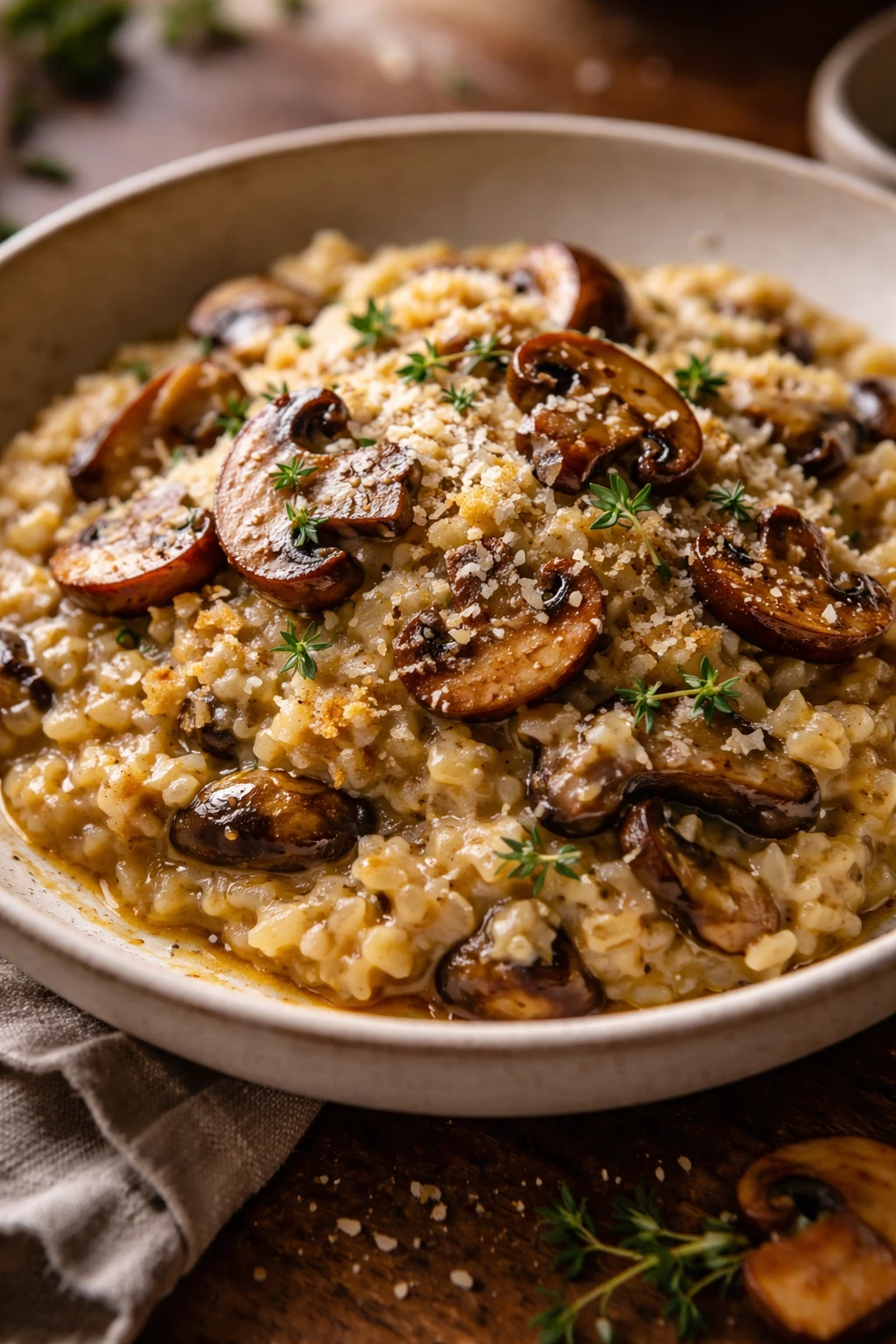
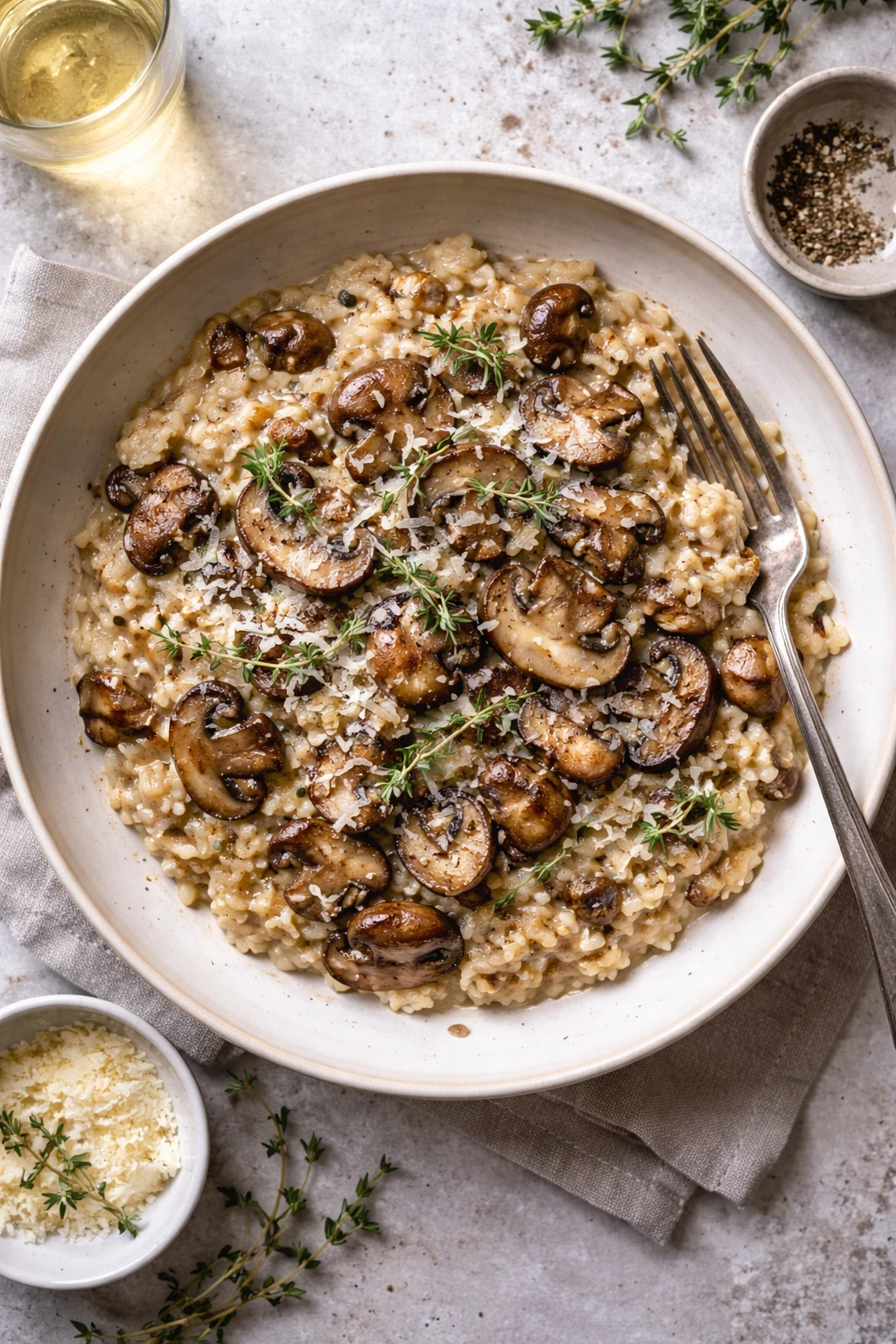
This mushroom and thyme risotto is pure comfort in a bowl. The fresh thyme adds a fragrant lift to the creamy, earthy mushrooms. Great for a cozy dinner when you want something soothing but special.
Introduction
I first fell in love with mushroom risotto during a chilly fall trip to Italy, where every meal felt like a warm hug. Since then, I've been perfecting my own version at home that’s just as comforting but a little quicker to make. This recipe stands out because I use fresh thyme along with cremini mushrooms, which gives it an earthy, aromatic depth that really elevates the dish. The trick I learned is toasting the Arborio rice gently in olive oil before adding broth, which helps the grains stay perfectly tender and creamy without turning mushy. Also, stirring patiently and adding broth slowly is key — it lets the rice release its starch slowly, creating that luscious texture we all crave. When it’s done, the risotto is rich, creamy, and fragrant, with just the right bite and a hint of thyme that makes it feel special. I usually serve it on a simple weeknight because it’s hearty but not heavy, and it’s always a crowd-pleaser at dinner parties. Plus, it pairs wonderfully with a crisp salad or roasted veggies, making it a versatile meal you’ll want to make again and again.
How To Do It
Step 1
Heat the vegetable broth in a saucepan over low heat and keep it warm throughout the cooking process. This is important because adding cold broth to the rice can disrupt the cooking temperature and slow down the starch release, which affects the creamy texture of the risotto.
⏱ Time: 5 minutes
✓ Doneness: Broth is steaming gently but not boiling
Step 2
In a large skillet or saucepan, heat the olive oil over medium heat. Add the finely chopped onion and cook, stirring occasionally, until translucent and soft but not browned, about 5 minutes. This slow cooking develops sweetness in the onion, which adds a subtle depth to the risotto base without overpowering the mushrooms.
⏱ Time: 5 minutes
✓ Doneness: Onions are soft and translucent
Step 3
Add the minced garlic to the onions and cook for another minute until fragrant. Be careful not to burn the garlic, as it will turn bitter and ruin the delicate flavor balance of the dish.
⏱ Time: 1 minute
✓ Doneness: Garlic aroma fills the kitchen without browning
Step 4
Add the sliced mushrooms to the pan and sauté until they release their moisture and become golden brown, about 7–8 minutes. This step intensifies their earthy flavor and prevents the risotto from becoming watery later on.
⏱ Time: 7-8 minutes
✓ Doneness: Mushrooms are golden and reduced in size
Step 5
Stir in the Arborio rice and cook for 2 minutes, stirring constantly. Toasting the rice lightly in the pan coats the grains with oil and heat, which helps them maintain a firm texture and absorb the broth evenly during cooking.
⏱ Time: 2 minutes
✓ Doneness: Rice grains look translucent at the edges
Step 6
Pour in the white wine and stir until it’s mostly absorbed. The wine adds acidity and complexity, balancing the richness of the butter and cheese. Don’t rush this step; letting the alcohol cook off is crucial for smooth flavor.
⏱ Time: 3-4 minutes
✓ Doneness: Wine is mostly evaporated, pan looks less liquid
Step 7
Add one ladle of warm broth to the rice and stir gently but continuously until the liquid is mostly absorbed. Repeat this process, adding broth one ladle at a time, stirring often, until the rice is tender but still has a slight bite in the center. This gradual absorption is what creates risotto’s signature creamy texture without mushiness.
⏱ Time: 20-25 minutes
✓ Doneness: Rice is creamy and slightly firm to the bite
Step 8
Stir in the fresh thyme leaves and butter until melted and fully incorporated. The butter adds extra richness and the thyme brings a fragrant, herbal note that lifts the whole dish beautifully.
⏱ Time: 2 minutes
✓ Doneness: Butter is glossy and thyme is evenly distributed
Step 9
Remove the pan from heat and stir in the grated Parmesan cheese. Season with salt and freshly ground black pepper to taste. Let the risotto rest for a minute to thicken slightly before serving. This resting allows the cheese to meld in perfectly and the risotto to set to the ideal consistency.
⏱ Time: 3 minutes
✓ Doneness: Risotto is creamy, cheesy, and well seasoned
Pro Tips
Use warm broth throughout cooking.
Adding cold broth lowers the pan temperature and slows starch release from the rice, which negatively affects texture. Warm broth maintains a steady temperature, promoting even cooking and creaminess.
Stir gently but frequently while cooking.
Frequent stirring encourages the rice to release starch gradually, creating a creamy sauce. However, vigorous stirring can break grains apart, so gentle motions preserve the rice’s structure.
Toast the rice before adding liquid.
Toasting coats the grains with oil and heat, sealing the surface slightly. This helps the rice absorb liquid slowly and prevents it from turning mushy, resulting in perfectly al dente grains.
Don’t rush adding broth; add it ladle by ladle.
Slow addition allows the rice to fully absorb liquid before more is added, ensuring even cooking and a creamy texture without excess liquid pooling in the pan.
Sauté mushrooms until golden and moisture evaporates.
This caramelizes flavors and prevents watery risotto. Mushrooms release water as they cook; browning them concentrates flavor and improves texture.
Add butter and Parmesan off the heat.
This prevents the cheese from clumping and ensures a smooth, glossy finish. It also enriches the risotto without overheating and breaking the sauce.
Use fresh herbs for finishing flavor.
Fresh thyme adds bright, aromatic notes that dried herbs can’t match. Adding it near the end preserves its delicate flavor.
Common Mistakes to Avoid
Adding all broth at once.
Why it happens Many assume faster cooking means better results, so they pour in all the liquid upfront.
Fix Add broth gradually, one ladle at a time, stirring between additions. This slow absorption is essential for creamy risotto texture and prevents sogginess.
Skipping toasting the rice.
Why it happens Some cooks overlook this step thinking it’s unnecessary or time-consuming.
Fix Always toast the rice in oil or butter for a couple of minutes until edges turn translucent. This step seals the grains and improves texture.
Using cold broth.
Why it happens Forgetting to warm broth or rushing prep leads to adding cold liquid.
Fix Keep broth warm on a low simmer so it doesn’t lower the pan temperature when added, ensuring even cooking.
Overcooking the mushrooms.
Why it happens Trying to speed up cooking by using high heat or crowding the pan.
Fix Cook mushrooms over medium heat in batches if needed, allowing moisture to evaporate and develop golden color.
Not seasoning properly at the end.
Why it happens Some season early and don’t adjust after adding cheese.
Fix Taste and season with salt and pepper after stirring in Parmesan to balance flavors perfectly.
Variations
Add Crispy Pancetta
For a smoky twist, stir in crispy pancetta or bacon bits at the end. The salty, crunchy texture pairs wonderfully with creamy risotto and mushrooms, adding extra depth.
Note: Cook pancetta separately until crisp, then fold in just before serving to maintain texture.
Use Mixed Wild Mushrooms
Swap cremini for a mix of wild mushrooms like shiitake, chanterelle, and oyster for a more complex, earthy flavor. This variation elevates the dish but requires careful cleaning to avoid grit.
Note: Wild mushrooms may have more moisture; sauté thoroughly to prevent watery risotto.
Make it Vegan
Replace butter with olive oil and omit Parmesan or use a vegan cheese alternative. Nutritional yeast can add a cheesy flavor without dairy, making this dish suitable for vegan diets.
Note: Use a high-quality vegan cheese or nutritional yeast and increase seasoning to compensate for lost richness.
Add Peas and Lemon Zest
For a fresh pop, stir in sweet peas and a touch of lemon zest at the end. This adds color and brightness, balancing the earthiness of mushrooms with a light, springtime feel.
Note: Add peas in the last 2 minutes of cooking to keep them tender-crisp.
Use Chicken Broth Instead of Vegetable
Substitute chicken broth for a richer flavor if you prefer a non-vegetarian option. It deepens the savory notes and complements mushrooms well.
Note: Adjust salt carefully, as chicken broth can be saltier than vegetable broth.
Nutrition
Per Serving:
Nutritional values are estimates and may vary based on specific ingredients used.
Storage & Tips
Room Temperature
Risotto can safely sit out for up to 2 hours if covered. Beyond that, bacteria growth increases, so refrigerate promptly. Cover loosely with foil or a clean towel to prevent drying.
Refrigerator
Store leftovers in an airtight container for up to 3 days. Risotto firms up when cold but reheats well. Add a splash of broth or water when reheating to restore creaminess.
Freezer
Freeze risotto for up to 1 month in a sealed freezer-safe container. Thaw overnight in the fridge before reheating. Texture may be slightly softer after freezing but still delicious.
Reheating
Reheat gently on the stovetop over low heat, stirring and adding broth as needed to loosen the texture. Microwave reheating works but may dry out the dish, so cover and add liquid.
Make Ahead
You can prepare the mushroom sauté and broth ahead, even toast the rice. Combine and finish cooking the risotto on the day of serving for best texture and freshness.
FAQ
Can I use regular long-grain rice instead of Arborio?
Long-grain rice lacks the high starch content of Arborio, so it won’t create the creamy texture risotto is known for. It will cook differently and likely result in a drier, less cohesive dish. For authentic risotto, Arborio or other short-grain rice like Carnaroli is best.
What if I don’t have white wine on hand?
You can substitute with an equal amount of additional broth and a splash of lemon juice or white wine vinegar to add acidity. However, the flavor depth from wine will be missing, so the risotto might taste a bit flatter.
How do I know when the risotto is done?
The rice should be tender but still have a slight bite (al dente) in the center. The texture is creamy and fluid but not soupy. Taste testing during the last few minutes is the best way to judge doneness.
Can I make risotto in advance and reheat it?
Risotto is best fresh but can be refrigerated and reheated. It thickens when cold, so add broth or water when reheating to restore creaminess. Avoid freezing if possible, as texture can change.
Why is my risotto too watery?
This usually happens if too much broth is added at once or the mushrooms released too much moisture. Cook mushrooms thoroughly to evaporate water and add broth gradually, letting the rice absorb it before more liquid.
Can I use dried thyme instead of fresh?
Dried thyme is more concentrated but less vibrant. Use about one-third the amount of fresh thyme and add it earlier in cooking to allow flavor to develop. Fresh thyme is preferred for its bright aroma.
What’s the best way to clean mushrooms?
Avoid soaking mushrooms in water; instead, wipe them clean with a damp cloth or soft brush. Mushrooms absorb water easily, which can affect cooking and flavor.
Is it necessary to stir constantly?
You don’t have to stir nonstop, but frequent gentle stirring is important to prevent sticking and encourage starch release. Too much stirring can break grains, so balance is key.
Final Thoughts
I hope you enjoy making this mushroom and thyme risotto as much as I do. It’s a comforting dish that’s surprisingly approachable, so give it a try and let me know how it turns out!