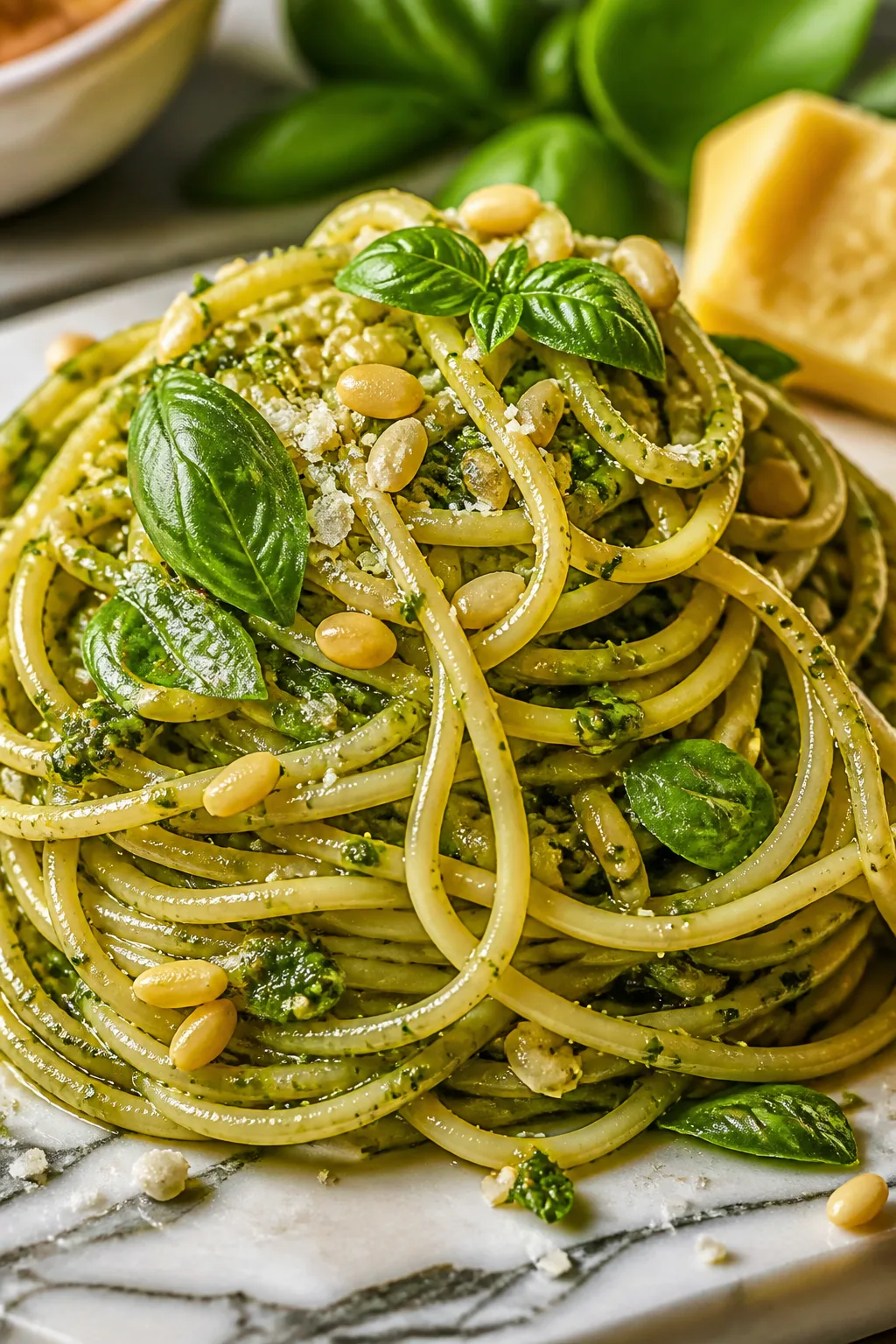
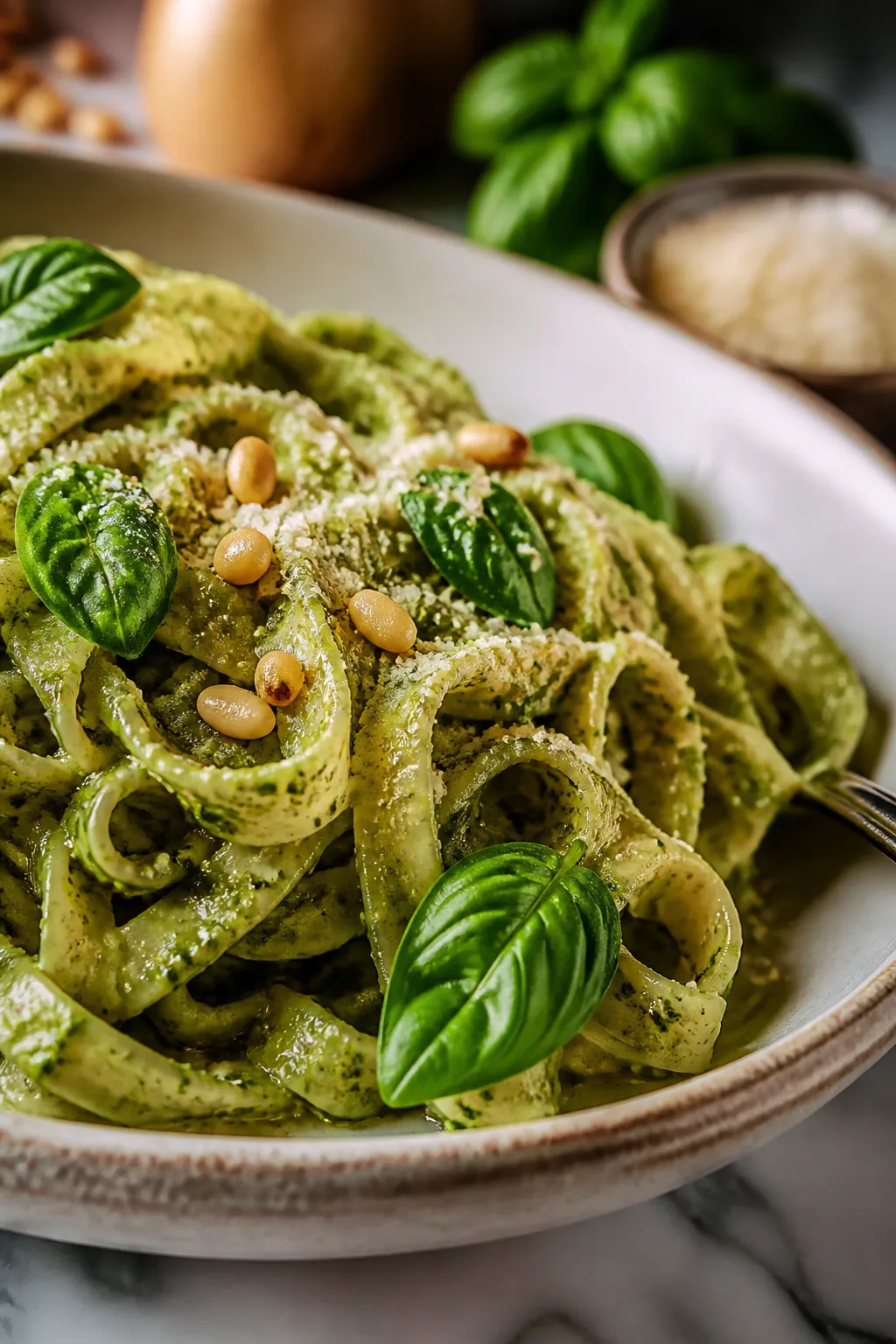
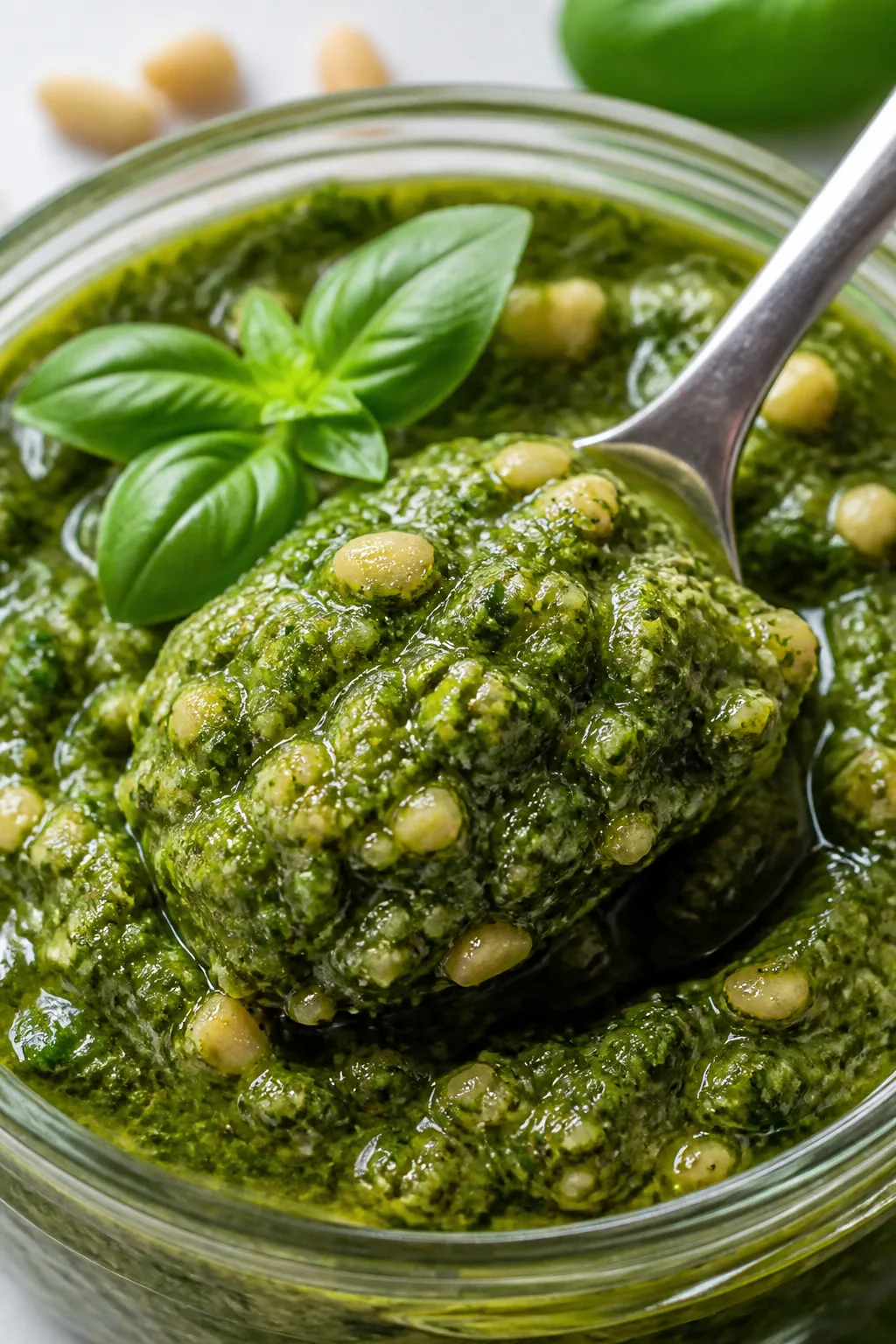
This basil pesto is bursting with fresh flavors thanks to fragrant basil and just a hint of garlic. It’s super quick to whip up and adds a delicious punch to pasta, sandwiches, or even roasted veggies. Perfect for a last-minute dinner upgrade!
Introduction
I first made basil pesto years ago when I stumbled upon a bunch of fresh basil at the farmer’s market. I was skeptical about how a few simple ingredients could transform into such a vibrant sauce. What makes my version stand out is the balance between fresh basil’s brightness and the nuttiness of pine nuts, plus just enough garlic to give it a gentle kick without overpowering. I’ve learned that using good quality olive oil and freshly grated Parmesan really elevates the flavor, and blending everything just right keeps the texture perfectly creamy yet slightly coarse. Whenever I toss this pesto with pasta or spread it on crusty bread, it feels like a little celebration of fresh, simple ingredients. It’s one of those recipes that’s quick enough for a weeknight but elegant enough for guests. Honestly, the first time I rushed the blending and ended up with a watery pesto, I realized the importance of pulsing carefully to keep that perfect texture. Now, it’s a staple in my kitchen that brings a fresh punch to almost any dish.
What You'll Need
Approximately 1 cup, serves 4
- 2 cups fresh basil leaves, packed
- 1/2 cup grated Parmesan cheese
- 1/3 cup pine nuts
- 2 cloves garlic, peeled
- 1/2 cup extra virgin olive oil
- Salt to taste
- Freshly ground black pepper to taste
How To Do It
Step 1
Start by washing and thoroughly drying your basil leaves. Excess water will make the pesto watery and less vibrant. Use a salad spinner or pat them dry with a clean towel. This step is crucial because wet basil can dilute the flavors and affect the sauce’s texture. Once dry, add the basil leaves to your food processor bowl. If you skip drying, the pesto might separate or become too runny.
⏱ Time: 5
✓ Doneness: Basil should look fresh and dry, not wet or bruised.
Step 2
Add the pine nuts and garlic cloves to the food processor with the basil. Pulse a few times until roughly chopped. This breaks down the nuts and garlic just enough to release their flavors but keeps some texture. If you over-blend here, the nuts could turn into a paste, which might make the pesto too dense. The aroma should start to smell nutty and garlicky at this point.
⏱ Time: 3
✓ Doneness: Mixture should be coarse and fragrant, not smooth.
Step 3
Add the grated Parmesan cheese to the processor. Cheese adds a salty, savory depth that balances the fresh basil. Grate it fresh for the best flavor—pre-grated can be dry or powdery. Pulse a few more times to combine evenly with the basil, nuts, and garlic. Don’t overdo it; you want the cheese incorporated but still some texture.
⏱ Time: 2
✓ Doneness: Ingredients should look well mixed but not completely smooth.
Step 4
Slowly drizzle in the extra virgin olive oil while pulsing the food processor. Adding oil gradually emulsifies the sauce, creating that luscious, creamy texture. If you add the oil too fast or pour it all at once, the pesto can separate or become greasy. Keep the processor running and add the oil in a thin stream until fully combined.
⏱ Time: 5
✓ Doneness: Pesto should look creamy and glossy, not oily or separated.
Step 5
Taste your pesto and season with salt and freshly ground black pepper. The salt enhances all the flavors, while pepper adds a subtle warmth. Add a little at a time and taste between additions—you can always add more, but you can’t take it out. Seasoning at the end lets you adjust for the saltiness of the cheese and freshness of the basil.
⏱ Time: 2
✓ Doneness: Balanced flavor with no one ingredient overpowering.
Step 6
If your pesto is too thick, add a teaspoon or two of warm water or more olive oil to loosen it slightly. This helps when tossing with pasta or spreading on bread. But don’t add too much liquid, or the pesto will lose its vibrant flavor and texture. Stir gently after adding any liquid to maintain the creamy consistency.
⏱ Time: 2
✓ Doneness: Pesto should be pourable but still thick and rich.
Step 7
Store your pesto in an airtight container with a thin layer of olive oil on top to prevent oxidation. This keeps the vibrant green color and fresh taste longer. If you plan to use it within a day or two, refrigerate it. For longer storage, freezing in ice cube trays works well for small portions. Avoid leaving pesto uncovered or exposed to air, which causes browning.
⏱ Time: 3
✓ Doneness: Pesto remains bright green and fresh-smelling after storage.
Step 8
When serving with pasta, reserve some pasta water before draining. Toss the pasta with pesto and a splash of that starchy water to help the sauce coat the noodles evenly. This technique makes the dish silky and helps the pesto cling better. Skip this, and your pasta may be dry or unevenly coated.
⏱ Time: 3
✓ Doneness: Pasta should be glossy and fully coated with pesto.
Step 9
For sandwiches or bruschetta, spread pesto generously on toasted bread or buns. The heat from the bread warms the pesto slightly, releasing its aroma and flavor. Add fresh tomatoes, mozzarella, or grilled veggies for an easy, fresh meal. Don’t apply pesto to cold bread if you want to maximize aroma and flavor release.
⏱ Time: 2
✓ Doneness: Pesto is aromatic and evenly spread, enhancing the sandwich.
Pro Tips
Always dry basil leaves thoroughly before blending.
Water dilutes the pesto and can cause it to separate or become watery. Dry leaves ensure a thicker, more vibrant sauce with concentrated flavor, preserving the bright green color and fresh aroma.
Pulse ingredients gradually instead of blending continuously.
Pulsing controls texture, preventing over-processing that can turn pesto into a paste. It helps maintain a slightly coarse texture that’s traditional and more enjoyable to eat, preserving the integrity of the nuts and basil.
Add olive oil slowly while blending.
Slowly incorporating oil emulsifies the sauce properly, creating a rich and creamy texture. Adding oil too fast can cause separation, resulting in an oily, uneven pesto that lacks body.
Use fresh, high-quality ingredients for best flavor.
Since pesto relies on few ingredients, the quality of each one directly impacts the final taste. Fresh basil, good olive oil, and fresh Parmesan create a vibrant, balanced sauce that tastes homemade and fresh.
Reserve pasta water to mix with pesto and pasta.
The starchy pasta water helps the pesto cling to the noodles, creating a silky, cohesive sauce rather than dry or clumpy pasta. It also slightly loosens the pesto for better coverage without watering it down.
Toast pine nuts lightly for deeper flavor.
Toasting releases the nuts’ natural oils and enhances their buttery, nutty flavor. However, they must be watched carefully to avoid burning, which causes bitterness and ruins the pesto’s balance.
Store pesto with a thin layer of olive oil on top.
This prevents oxidation and browning, keeping the pesto fresh and green longer. Exposure to air causes the basil to darken and flavors to dull, so sealing the surface with oil preserves quality.
Common Mistakes to Avoid
Using wet basil leaves.
Why it happens People often wash basil and add it directly without drying, assuming water won’t affect the sauce.
Fix Always dry basil leaves completely before blending using a salad spinner or towel. This prevents watery, dull pesto that separates easily.
Over-blending the pesto.
Why it happens Trying to get a smooth sauce leads to pulsing too long or blending continuously.
Fix Pulse in short bursts to keep some texture. Stop blending once ingredients are combined but still slightly coarse.
Adding olive oil too quickly.
Why it happens Rushing this step can cause the oil to separate instead of emulsifying.
Fix Slowly drizzle oil while pulsing the processor to create a creamy, stable sauce.
Using pre-grated cheese.
Why it happens Pre-grated cheese is convenient but often contains additives that affect texture and flavor.
Fix Grate Parmesan fresh for best flavor and creaminess in your pesto.
Skipping seasoning adjustments.
Why it happens Assuming the cheese and nuts provide enough salt without tasting.
Fix Always taste pesto at the end and add salt and pepper gradually to balance flavors.
Variations
Walnut Basil Pesto
Swap pine nuts for toasted walnuts for a richer, earthier flavor. Walnuts add a heartier texture and a slightly bitter note that pairs well with robust pasta dishes. This variation is great if pine nuts are pricey or unavailable.
Note: Toast walnuts lightly before blending to enhance flavor. The texture will be slightly chunkier and less buttery than pine nut pesto.
Vegan Basil Pesto
Replace Parmesan cheese with nutritional yeast or vegan Parmesan alternatives to make this pesto dairy-free. It still delivers that cheesy umami flavor without animal products, perfect for vegan diets.
Note: Use the same quantities and blend until combined. Nutritional yeast adds a nutty, cheesy flavor but won’t thicken the sauce as much as cheese.
Spicy Basil Pesto
Add a pinch of red pepper flakes or a small fresh chili to the blender for a spicy kick. This variation adds warmth and depth, great for those who love a bit of heat with their fresh herbs.
Note: Start with a small amount of chili and adjust to taste. Blend thoroughly to evenly distribute the heat.
Lemon Basil Pesto
Add fresh lemon juice and a touch of zest to brighten the pesto even more. This adds a refreshing citrus note that pairs wonderfully with seafood or grilled chicken dishes.
Note: Add juice and zest after blending the main ingredients. Stir gently to combine without breaking the texture.
Basil and Spinach Pesto
Mix fresh spinach leaves with basil to stretch the pesto and add mild earthiness. This is a great way to sneak extra greens into your meal while keeping that classic pesto flavor.
Note: Use half basil and half spinach by volume. Spinach is milder, so it won’t overpower the basil but will make the pesto a bit lighter in color.
Nutrition
Per Serving:
Nutritional values are estimates and may vary based on specific ingredients used.
Storage & Tips
Room Temperature
Pesto can safely sit at room temperature for up to 2 hours if covered. Beyond that, refrigerate to prevent spoilage. Keep it in a tightly sealed jar to maintain freshness and prevent oxidation.
Refrigerator
Store pesto in an airtight container with a thin olive oil layer on top for up to 5 days. The flavor may mellow slightly when cold; bring to room temperature before serving for best taste and texture.
Freezer
Freeze pesto in small portions using ice cube trays, then transfer cubes to a freezer bag. Freeze for up to 3 months. Thaw in the fridge overnight and stir well before use to restore texture.
Reheating
Pesto is best served fresh or at room temperature. If using with hot dishes, gently warm pesto in a pan or stir into hot pasta off heat to preserve its fresh flavors. Avoid boiling or microwaving pesto directly, which can dull color and flavor.
Make Ahead
Prepare pesto 1-2 days ahead and store in the fridge with olive oil on top. For longer storage, freeze in portions. On serving day, toss with freshly cooked pasta or spread on bread for quick assembly.
FAQ
Can I use other nuts instead of pine nuts?
Absolutely! Walnuts, almonds, or cashews are great alternatives. Each nut brings a slightly different flavor and texture—walnuts add earthiness, almonds are a bit sweeter, and cashews yield a creamier pesto. Just toast them lightly for best flavor.
How do I keep pesto green and fresh-looking?
Prevent oxidation by covering the pesto with a thin layer of olive oil before storing it in an airtight container. Refrigerate promptly and avoid exposure to air. Using fresh basil and serving pesto soon after making it helps maintain vibrant color.
Can I freeze homemade pesto?
Yes, pesto freezes well. Portion it into ice cube trays, freeze, then transfer cubes to a sealed bag. Thaw in the fridge overnight before use and stir to recombine. Freezing preserves flavor and color better than refrigeration alone for longer storage.
What if my pesto is too thick or too thin?
Adjust thickness by adding a little extra olive oil or a teaspoon of warm water to loosen the sauce. If too thin, add more cheese or nuts and pulse briefly. The right texture is creamy but not runny.
Is it okay to use pre-minced garlic?
Fresh garlic cloves are best for vibrant flavor. Pre-minced garlic can be harsh or lack freshness. If you must use pre-minced, add less and taste carefully to avoid overpowering the pesto.
How long does homemade pesto last in the fridge?
Stored properly with olive oil on top, pesto lasts about 4-5 days refrigerated. Its flavor may mellow over time, so for best taste, consume within a few days or freeze for longer storage.
Can I make pesto without a food processor?
Yes! Traditionally, pesto is made with a mortar and pestle, which produces a chunkier texture and releases flavors differently. Alternatively, finely chop ingredients by hand and whisk in olive oil gradually for a rustic pesto.
What dishes go best with basil pesto?
Pesto is incredibly versatile—toss it with pasta, spread on sandwiches, drizzle over roasted vegetables, or use as a dip. It pairs beautifully with grilled chicken, fish, and fresh mozzarella for a quick flavor boost.
Final Thoughts
Give this vibrant basil pesto a try—you’ll love how it brightens up simple dishes. Don’t forget to share your pesto creations with friends and family!