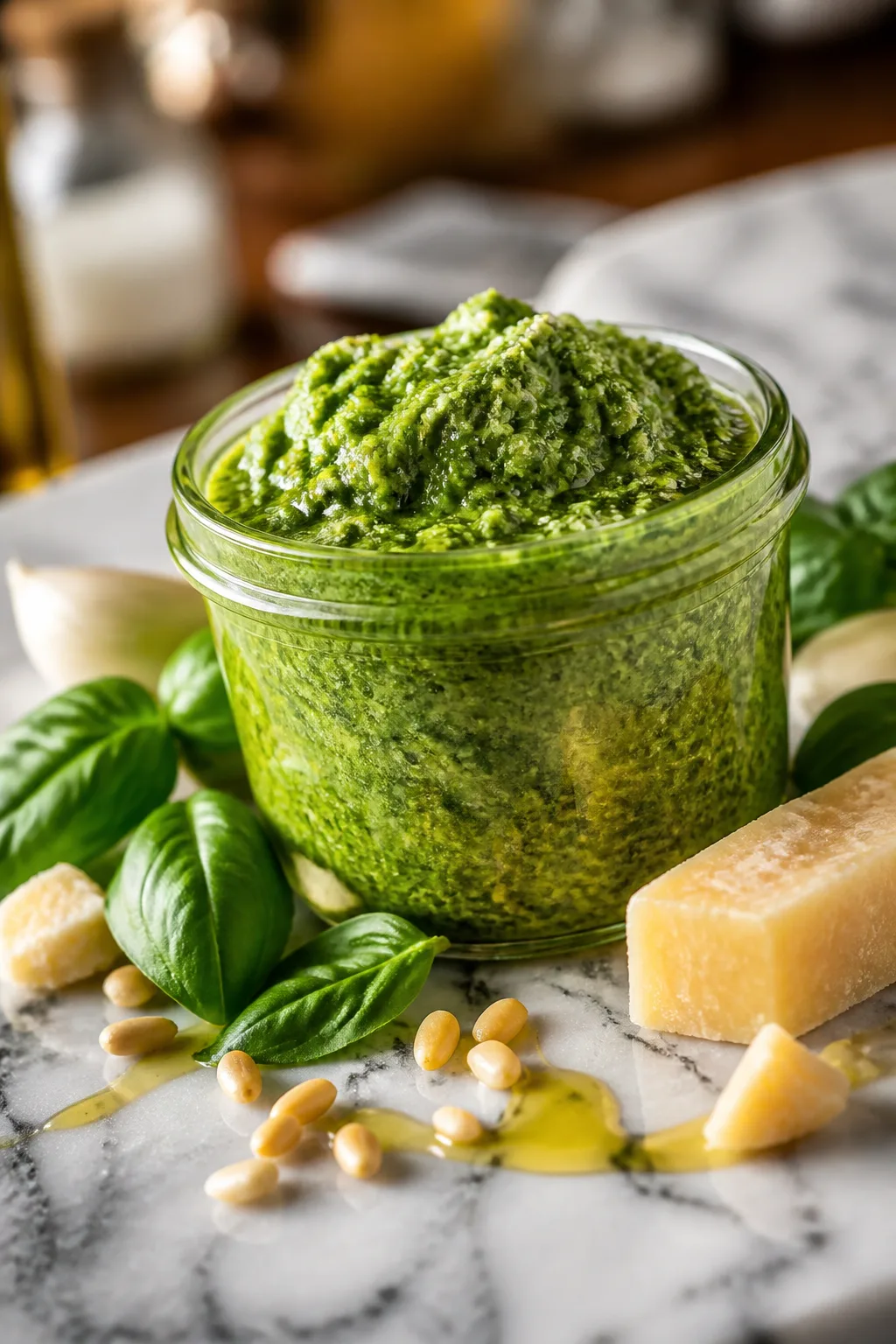
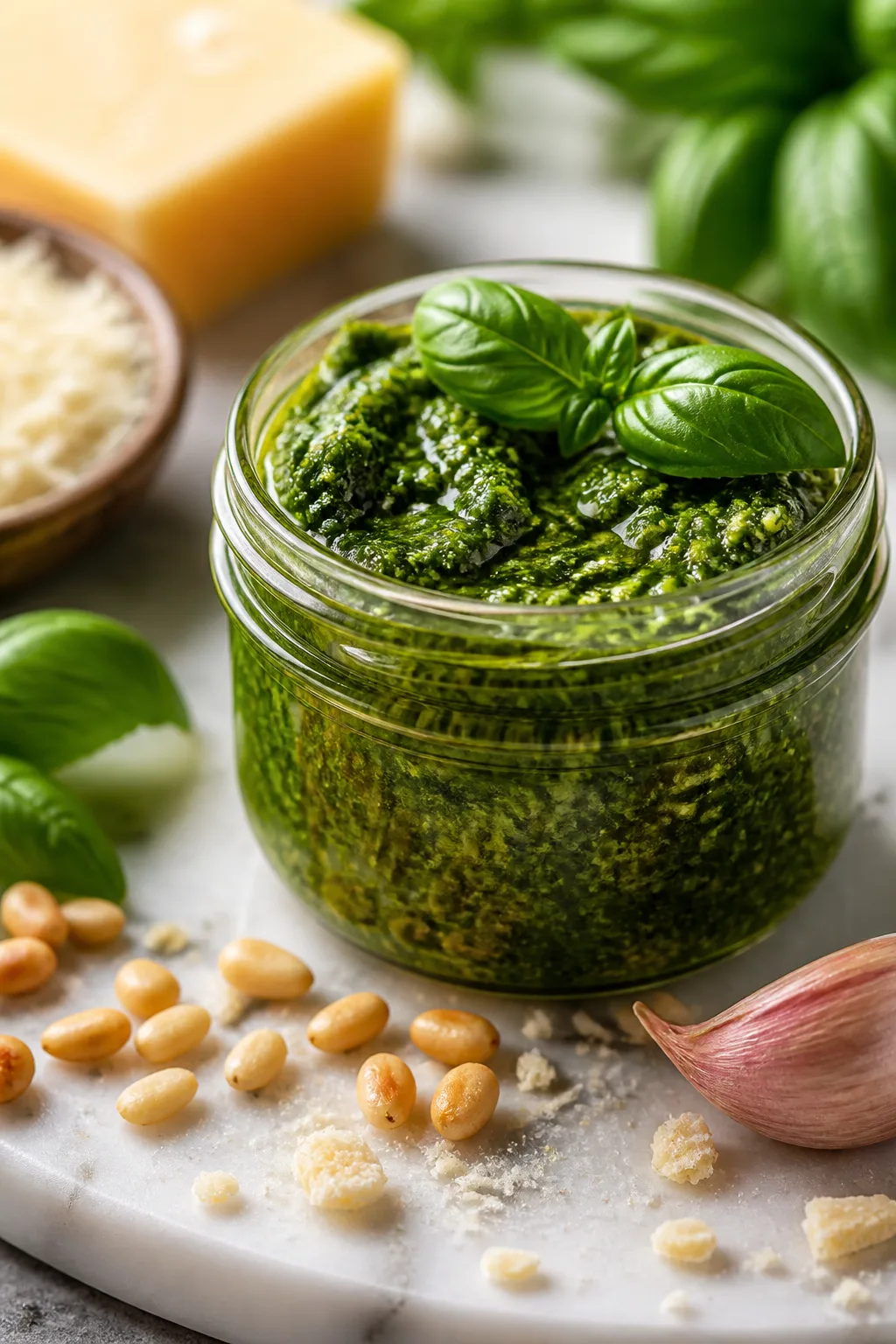
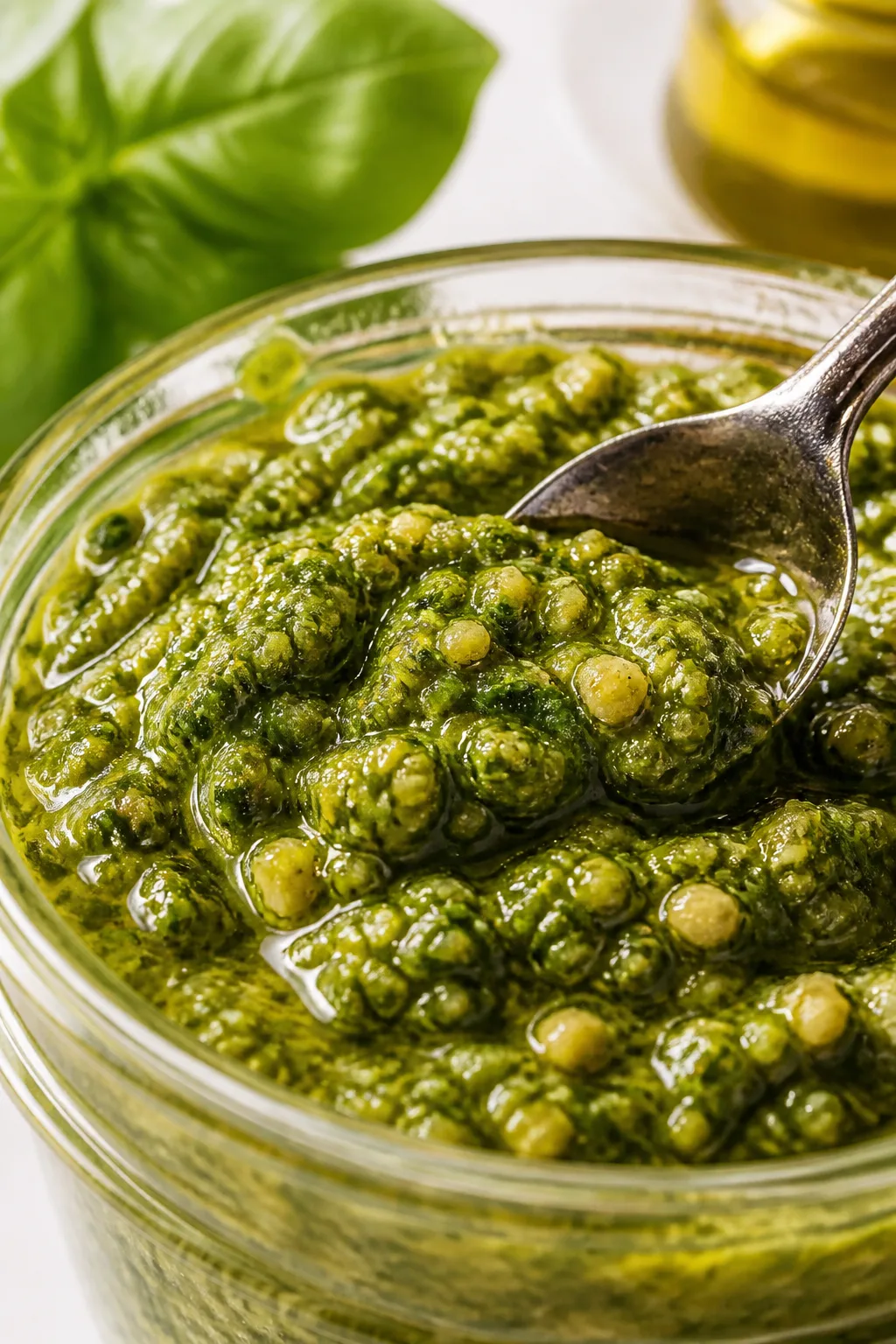
This fresh basil pesto is my secret weapon for adding a punch of flavor in minutes. Using toasted pine nuts and fresh garlic, it’s perfect tossed with pasta or spread on sandwiches. Great for quick dinners!
Introduction
I’ve been making this vibrant basil pesto for years — it’s honestly my go-to when I want to add a quick punch of flavor without fuss. I first discovered how simple and fresh pesto could be when I tried making it with toasted pine nuts instead of the usual walnuts, and that little swap made a huge difference in flavor and texture. The trick I learned early on is to toast the pine nuts lightly — it brings out their nuttiness and gives the pesto a richer depth. Also, I like to add a squeeze of lemon juice at the end to brighten everything up, especially if the basil isn’t as fresh as I’d like. This pesto comes together in a flash, no cooking required, and it’s perfect tossed with pasta, spread on sandwiches, or even drizzled over roasted veggies. The finished pesto is super fresh, slightly nutty, and garlicky without being overpowering. It’s always a hit in my house, and I think you’ll love how easy it is to make your meals instantly tastier with this sauce.
What You'll Need
Approximately 1 cup pesto, 4 servings
- 2 cups fresh basil leaves, packed
- 1/3 cup pine nuts, toasted
- 2 cloves garlic, peeled
- 1/2 cup extra virgin olive oil
- 1/3 cup freshly grated Parmesan cheese
- Salt and freshly ground black pepper, to taste
- Juice of half a lemon (optional, for brightness)
How To Do It
Step 1
Start by toasting the pine nuts in a dry skillet over medium heat. Keep a close eye on them and stir frequently to prevent burning. Toasting is key because it deepens their flavor and adds a subtle crunch that really elevates the pesto. If you skip this step, the pesto can taste a bit flat and lack that warm, nutty note. Once they’re golden and fragrant, transfer them to a plate to cool — this prevents them from cooking further in the residual heat.
⏱ Time: 5 minutes
✓ Doneness: Pine nuts should be lightly golden and emit a warm, nutty aroma without any burnt smell.
Step 2
Place the fresh basil leaves, toasted pine nuts, and peeled garlic cloves into a food processor. Pulse several times to start breaking down the ingredients. This helps release the basil’s essential oils and blends the flavors together. Be careful not to over-process at this point, or the basil can turn bitter and the texture too mushy.
⏱ Time: 1-2 minutes
✓ Doneness: The mixture should be coarsely chopped, with visible bits of basil and pine nuts.
Step 3
With the food processor running on low speed, slowly drizzle in the extra virgin olive oil. Adding the oil gradually allows the sauce to emulsify properly, creating a creamy and cohesive pesto rather than a separated oily mess. This step also helps control the texture so it’s not too runny or thick.
⏱ Time: 2-3 minutes
✓ Doneness: The mixture should look smooth and slightly glossy, with no large chunks.
Step 4
Stop the processor and scrape down the sides with a spatula to ensure everything is evenly mixed. Then add the grated Parmesan cheese, a pinch of salt, and freshly ground black pepper. Pulse a few more times to combine. The cheese adds richness and a salty umami flavor that balances the fresh basil and nutty pine nuts perfectly.
⏱ Time: 1 minute
✓ Doneness: Pesto should be creamy but still have some texture, with cheese evenly distributed.
Step 5
Taste the pesto and adjust seasoning as needed. If you want a little brightness, squeeze in some fresh lemon juice and pulse once more. Lemon juice lifts the flavors and cuts through the richness, especially if you plan to use the pesto as a sandwich spread or dip.
⏱ Time: 30 seconds
✓ Doneness: Balanced flavor with fresh, nutty, garlicky, and slightly tangy notes.
Step 6
Transfer the pesto to a clean jar or bowl. If you’re not using it immediately, cover the surface with a thin layer of olive oil to prevent oxidation and keep the vibrant green color. This little trick helps keep your pesto fresh and appetizing for days.
⏱ Time: 2 minutes
✓ Doneness: Pesto should be vibrant green and glossy on top with no discoloration.
Step 7
To serve, toss the pesto with freshly cooked pasta, adding a splash of pasta water to loosen the sauce if needed. This technique helps the pesto cling to the noodles and creates a silky texture that’s irresistible. Don’t overheat the pesto or it can lose its fresh flavor.
⏱ Time: 5 minutes
✓ Doneness: Pasta should be coated evenly with a glossy, fragrant green sauce.
Step 8
Alternatively, spread the pesto on toasted bread or mix it into a sandwich for a fresh, flavorful boost. It also works wonderfully as a dip for veggies or a topping for grilled meats. The versatility means you can enjoy it in lots of ways, making it a kitchen staple.
⏱ Time: 1 minute
✓ Doneness: Pesto retains its creamy texture and fresh aroma when used as a spread or dip.
Step 9
Store any leftovers in the refrigerator in an airtight container, with olive oil on top to protect the pesto. Use within 4-5 days for best flavor and color. You can also freeze pesto in ice cube trays for longer storage and use cubes as needed.
⏱ Time: 1 minute
✓ Doneness: Pesto remains bright green and aromatic after storage, without browning or off flavors.
Pro Tips
Toast the pine nuts gently to enhance flavor without burning.
Toasting releases the nuts’ natural oils and creates complex flavors through the Maillard reaction. Burning them results in bitterness that can ruin the pesto’s balance, so keep the heat medium-low and stir often.
Add olive oil slowly while blending to create a smooth emulsion.
Drizzling oil gradually allows it to bind evenly with the basil and nuts, producing a creamy texture. Pouring too fast can separate the sauce, leaving oily pockets and a broken texture.
Use fresh basil leaves and process gently to avoid bitterness.
Over-processing basil releases chlorophyll and bitter compounds. Pulsing the food processor in short bursts keeps the pesto bright and fresh-tasting.
Add lemon juice at the end to brighten flavors and preserve color.
Acid from lemon juice balances the richness from oil and cheese while slowing oxidation, which keeps the pesto’s vibrant green hue longer.
Scrape down the sides of the processor bowl to mix evenly.
Ingredients can stick to the sides and not blend well, causing uneven texture and flavor. Scraping ensures a consistent, smooth pesto.
Store pesto with a thin layer of olive oil on top to prevent browning.
Exposure to air causes oxidation and browning. The oil barrier blocks air contact, preserving flavor and color for several days in the fridge.
Use freshly grated Parmesan cheese for the best texture and flavor.
Pre-grated cheese often includes additives that affect melting and taste. Freshly grated cheese melts smoothly and adds authentic umami to the pesto.
Common Mistakes to Avoid
Over-processing the basil leaves.
Why it happens Beginners often blend the basil too long, thinking it will make the pesto smoother, but this actually releases bitter chlorophyll.
Fix Pulse the food processor in short bursts and stop as soon as the basil is chopped but still vibrant. This keeps the flavor fresh and avoids bitterness.
Skipping toasting the pine nuts.
Why it happens Some cooks want to save time and add raw nuts directly, unaware that raw pine nuts lack flavor depth.
Fix Toast nuts gently in a dry pan until golden and fragrant. This step dramatically improves the pesto’s nuttiness and overall flavor.
Adding all olive oil at once.
Why it happens Rushing the blending process can cause the oil to separate from solids, resulting in a greasy sauce.
Fix Drizzle the oil slowly while blending to create a smooth emulsion and prevent separation.
Not seasoning enough or too late.
Why it happens Many forget to add salt or add it only after serving, which means the pesto can taste flat initially.
Fix Add salt during blending and adjust at the end as needed. Seasoning is key to balance all flavors.
Using low-quality olive oil.
Why it happens Using bland or rancid oil dulls the pesto’s flavor, but cooks may not realize the importance of oil quality.
Fix Choose a fresh, fruity extra virgin olive oil for the best taste and aroma.
Variations
Walnut Basil Pesto
Swap pine nuts for toasted walnuts for a slightly earthier, richer flavor. Walnuts are more affordable and add a heartier texture. The pesto will be a bit less sweet but still beautifully fresh and nutty.
Note: Toast walnuts similarly to pine nuts but watch closely as they brown faster. Texture may be a bit chunkier.
Vegan Basil Pesto
Omit the Parmesan and add nutritional yeast or a vegan hard cheese alternative. This keeps the pesto creamy and flavorful while making it dairy-free and perfect for plant-based diets.
Note: Nutritional yeast adds umami but lacks the saltiness of cheese, so adjust salt accordingly.
Spicy Basil Pesto
Add a small pinch of red pepper flakes or a fresh chili to the food processor for a subtle heat. This variation pairs wonderfully with grilled meats or spicy pasta dishes.
Note: Start with a small amount of chili to avoid overpowering the fresh basil flavor.
Lemon Basil Pesto
Increase the lemon juice and add some zest for an extra bright, citrusy pesto. This version works great in summer salads or as a topping for fish and chicken.
Note: Add lemon zest before blending to infuse oils with fresh citrus aroma.
Kale and Basil Pesto
Mix half basil and half kale leaves to create a nutrient-packed pesto with a deeper green color and a slightly earthier taste. Great for adding extra greens to your diet.
Note: Blanch kale briefly before processing to soften leaves and mellow bitterness.
Nutrition
Per Serving:
Nutritional values are estimates and may vary based on specific ingredients used.
Storage & Tips
Room Temperature
Pesto can safely sit out at room temperature for up to 2 hours if covered. Beyond that, it’s best refrigerated to prevent spoilage. Always cover pesto tightly to avoid exposure to air.
Refrigerator
Store pesto in an airtight container with a thin layer of olive oil on top to preserve color and freshness. It keeps well for up to 5 days, though the flavor is best within 2-3 days. Cold pesto may thicken; let it come to room temperature or stir in a little olive oil before serving.
Freezer
Freeze pesto in ice cube trays, then transfer cubes to a freezer-safe bag for up to 3 months. This prevents waste and makes portioning easy. Thaw cubes in the fridge overnight or add frozen cubes directly to hot pasta or sauces.
Reheating
Pesto is best served fresh or at room temperature. If warming, gently heat on the stovetop or microwave just until warm—avoid boiling as heat breaks down fresh flavors. Add a splash of olive oil or pasta water to loosen consistency if it thickens.
Make Ahead
You can prepare pesto 1-2 days in advance and store it refrigerated with olive oil on top. For longer storage, freeze it as described. Make pasta fresh on the day of serving and toss with pesto just before eating for the best texture and flavor.
FAQ
Can I use other nuts instead of pine nuts?
Absolutely! Walnuts, almonds, or cashews work well as substitutes. Just toast them lightly to bring out their flavor. Keep in mind that each nut changes the flavor and texture slightly, so choose based on your preference.
How do I keep my pesto from turning brown?
Pesto browns due to oxidation when exposed to air. To prevent this, store it in an airtight container and pour a thin layer of olive oil on top before refrigerating. Also, use fresh basil and consume within a few days.
Can I freeze pesto?
Yes, freezing pesto is a great way to preserve it. Freeze in small portions like ice cube trays, then transfer to a freezer bag. Thaw in the fridge or add frozen cubes directly to hot dishes for convenience.
What if I don’t have a food processor?
You can make pesto by finely chopping basil, garlic, and nuts with a sharp knife and whisking in olive oil and cheese by hand. It takes more effort but yields a rustic, chunky pesto with great flavor.
Can I use dried basil instead of fresh?
Fresh basil is essential for authentic pesto flavor and vibrant color. Dried basil lacks the fresh oils and will produce a dull, less flavorful sauce. If you have only dried, it’s better to try a different sauce.
How much garlic should I add?
Typically, 2 cloves of fresh garlic provide a nice balance of pungency without overpowering the pesto. Adjust to taste, but be cautious—too much raw garlic can make the pesto harsh.
Is it okay to use pre-grated Parmesan cheese?
Pre-grated cheese often contains anti-caking agents that can affect texture and flavor. For the best taste and creaminess, grate your cheese fresh.
How long does homemade pesto last in the fridge?
Properly stored with olive oil on top, pesto lasts about 4-5 days in the refrigerator. After that, it may lose its bright color and fresh flavor, so try to consume it within this timeframe.
Final Thoughts
Give this vibrant basil pesto a try and watch it transform your meals with fresh, bold flavors. I’d love to hear how you use it—don’t forget to share your results!