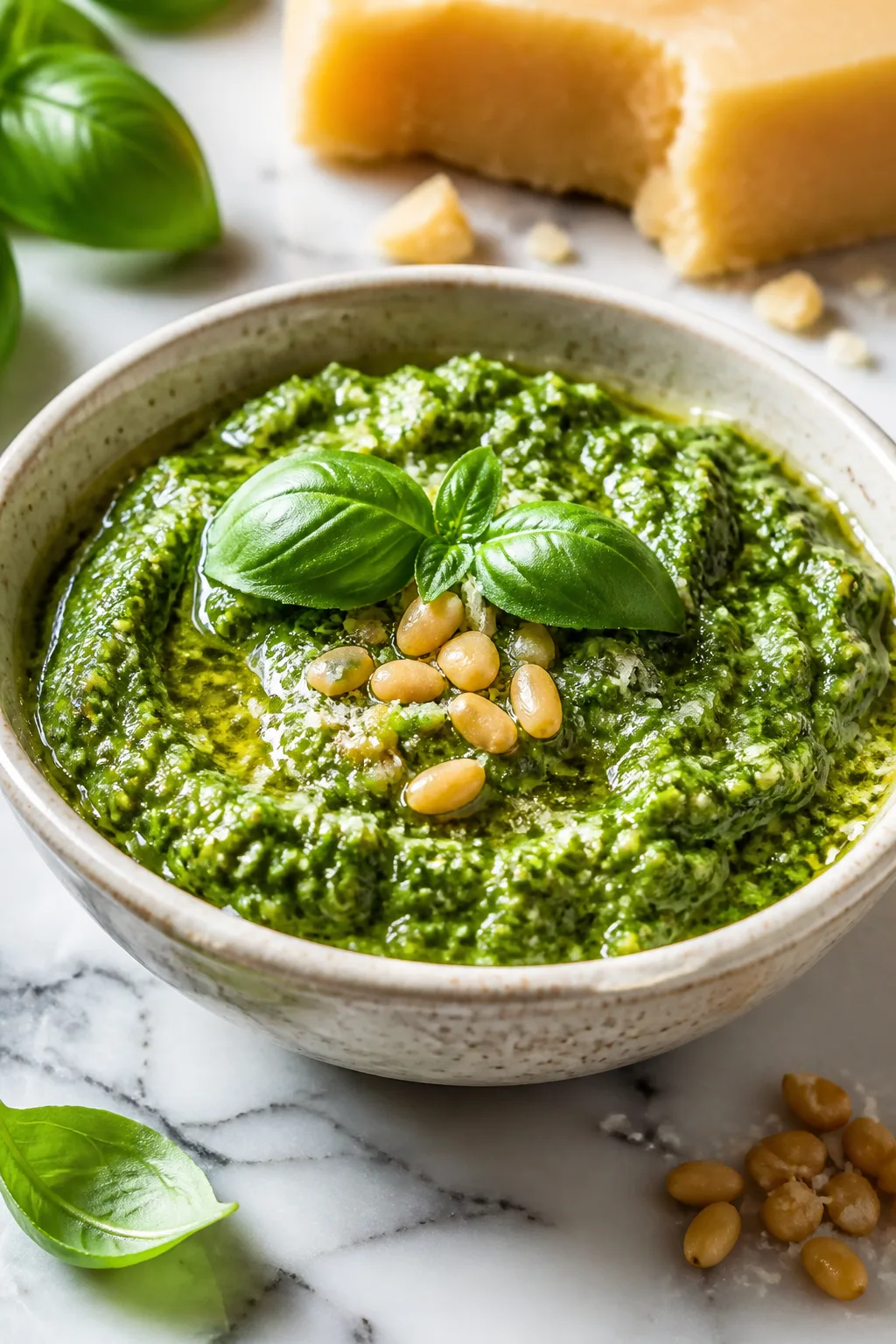
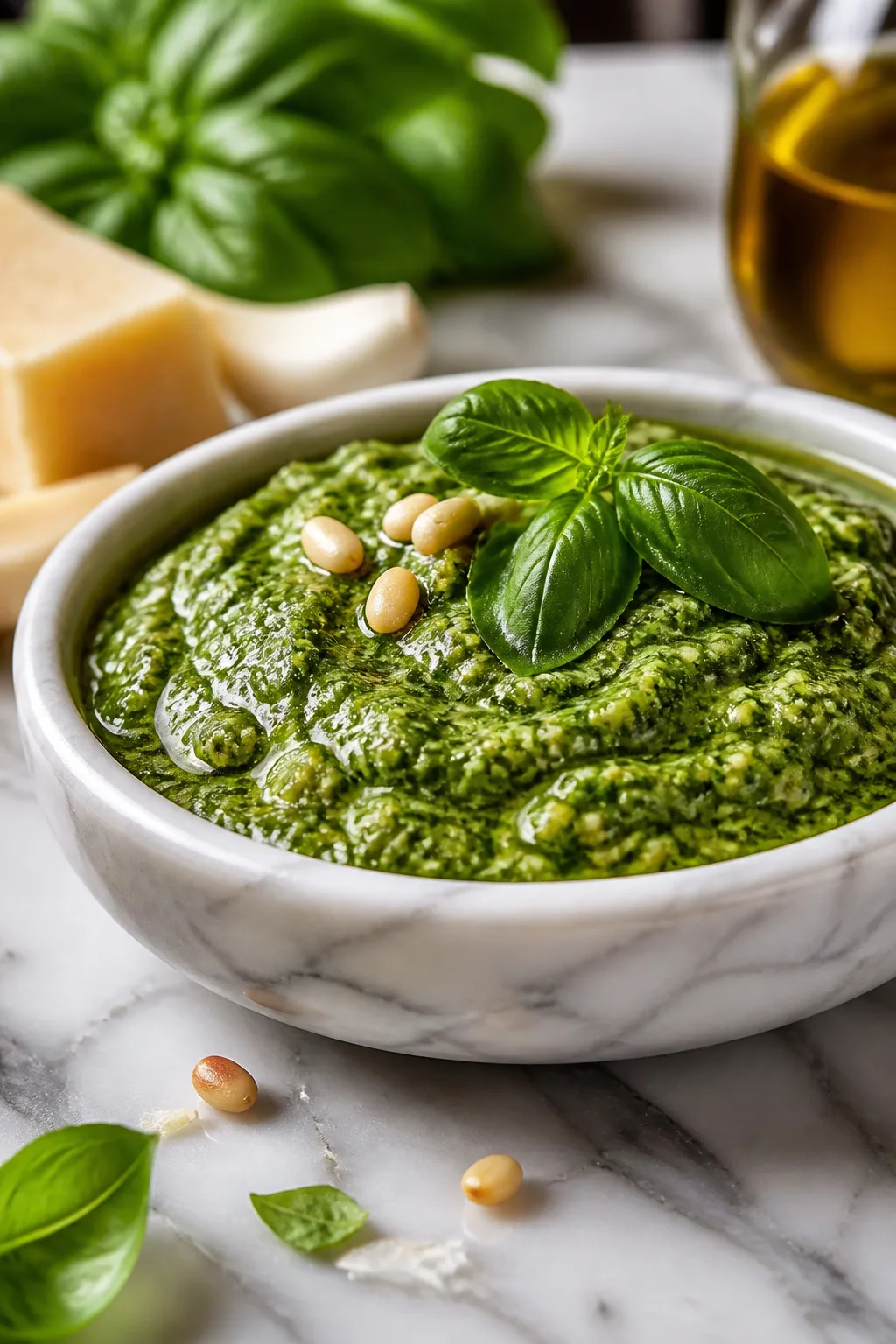
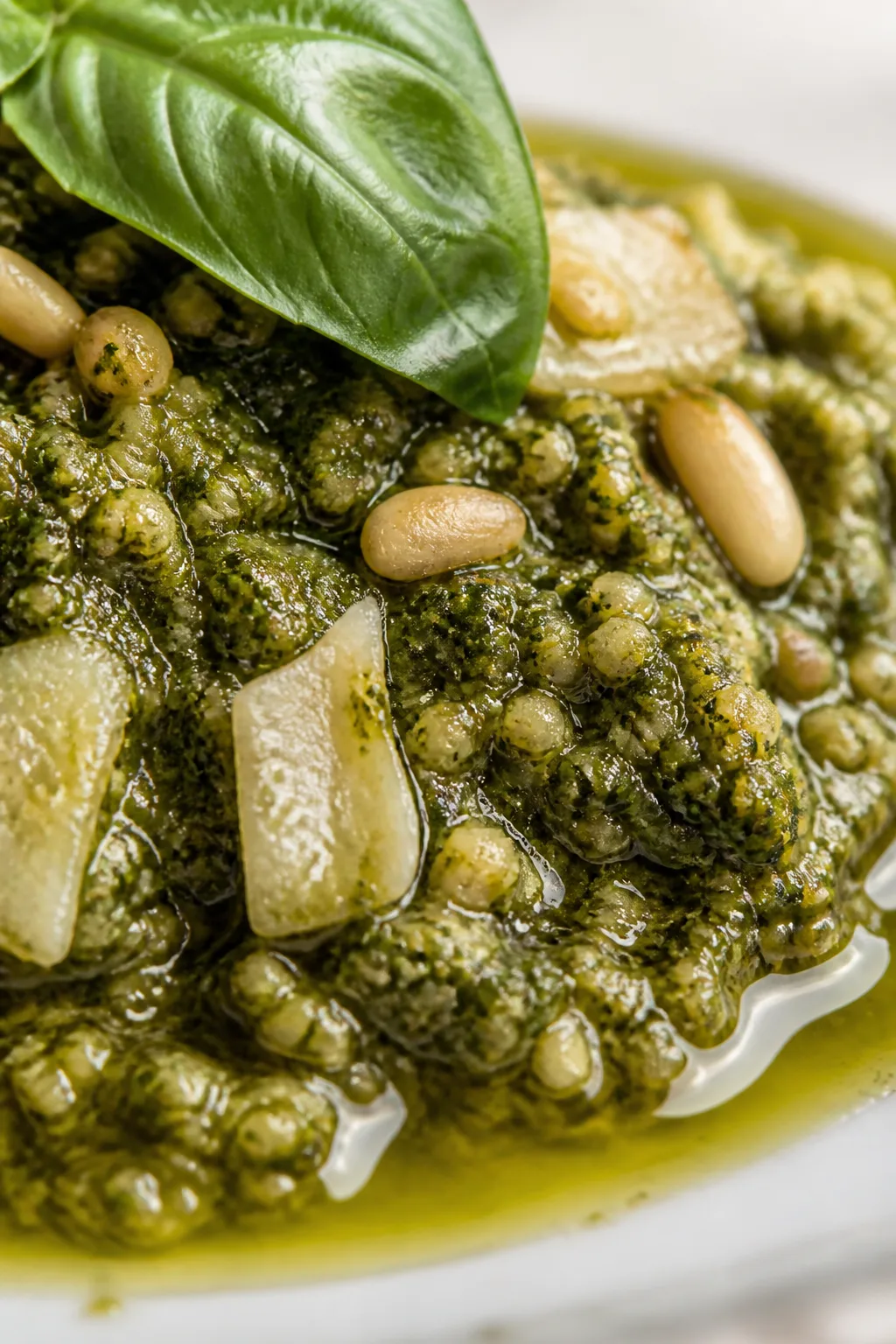
This vibrant basil pesto bursts with fresh flavors thanks to toasted pine nuts and sharp Parmesan. It’s perfect tossed with pasta or spread on a crusty sandwich. I love how the toasting adds a subtle nutty depth!
Introduction
I first stumbled upon the magic of toasting pine nuts when making pesto a few years ago. Before that, my pesto was good but felt a bit flat. Toasting the nuts lightly in a dry pan changed everything — it brings out a warm, nutty aroma that adds depth and complexity to the sauce. Since then, this has become my go-to pesto recipe for everything from quick pasta dinners to sandwich spreads or even dolloped on roasted veggies. What I love about this version is how fresh and vibrant it tastes, with the basil shining through but backed by that lovely toasted nuttiness. The trick I learned is not to rush the toasting — a gentle toss in the pan until golden and fragrant is perfect. Also, I usually add a splash of lemon juice at the end to brighten it up, but that's totally optional. The finished pesto is thick yet silky, packed with flavor, and just a little bit addictive. It’s one of those recipes that feels fancy but comes together in no time, making weeknight meals feel special without any fuss.
What You'll Need
Approximately 1 cup, 4 servings
- 2 cups fresh basil leaves, packed
- 1/3 cup pine nuts
- 1/2 cup freshly grated Parmesan cheese
- 2 cloves garlic, peeled
- 1/2 cup extra virgin olive oil
- Salt to taste
- Freshly ground black pepper to taste
- Juice of 1/2 lemon (optional)
How To Do It
Step 1
Start by placing the pine nuts in a dry skillet over medium-low heat. Toast them gently, stirring frequently to ensure even browning and prevent burning. This step usually takes about 3-5 minutes. You’ll know they’re done when they turn a light golden color and fill the kitchen with a warm, nutty aroma. Be careful not to rush or leave them unattended, as pine nuts can burn quickly and turn bitter, ruining the delicate flavor of your pesto.
⏱ Time: 5 minutes
✓ Doneness: Light golden brown color and a fragrant nutty smell
Step 2
Once toasted, let the pine nuts cool slightly while you prepare the basil. Rinse the fresh basil leaves gently under cold water and pat them dry with a clean towel or spin them in a salad spinner. Dry leaves ensure your pesto won’t be watery and helps the oil blend better for a creamy texture.
⏱ Time: 3 minutes
✓ Doneness: Basil leaves are clean and dry without bruising
Step 3
In a food processor, combine the basil leaves, cooled pine nuts, and peeled garlic cloves. Pulse a few times to roughly chop the ingredients; this helps release their flavors and creates a good base for your pesto. Don’t over-process here — you want some texture, not a puree.
⏱ Time: 1-2 minutes
✓ Doneness: Mixture is coarsely chopped and aromatic
Step 4
Add the grated Parmesan cheese to the food processor. This salty, umami-rich cheese is essential for that classic pesto flavor. Pulse again to combine the cheese with the basil mixture evenly. Be sure to use freshly grated Parmesan for the best texture and taste — pre-grated cheese often contains anti-caking agents that affect creaminess.
⏱ Time: 1 minute
✓ Doneness: Cheese is well incorporated with the herbs and nuts
Step 5
With the processor running, slowly drizzle in the extra virgin olive oil through the feed tube. This gradual addition helps emulsify the oil with the other ingredients, creating a smooth, creamy sauce rather than a greasy oil slick. If you add it too quickly, the sauce can separate. Scrape down the sides as needed to ensure everything blends evenly.
⏱ Time: 2-3 minutes
✓ Doneness: Pesto is smooth, glossy, and uniformly combined
Step 6
Stop the processor and taste your pesto. Season with salt and freshly ground black pepper to your liking. If you want a bit of brightness, add the juice of half a lemon and pulse once or twice to mix it in. The lemon juice helps balance the richness and keeps the green color vibrant.
⏱ Time: 1 minute
✓ Doneness: Balanced flavor with a fresh, vibrant finish
Step 7
Transfer your pesto to a clean jar or bowl. If not using immediately, cover it tightly with plastic wrap, pressing the wrap directly onto the surface of the pesto to prevent oxidation and browning. A thin film of olive oil on top also helps preserve the bright green color.
⏱ Time: 2 minutes
✓ Doneness: Pesto is stored without discoloration or drying out
Step 8
To serve with pasta, cook your favorite pasta according to package directions until al dente. Reserve a cup of pasta water before draining. Toss the hot pasta with a few spoonfuls of pesto and add pasta water gradually to loosen the sauce and help it cling beautifully to every strand.
⏱ Time: 10 minutes
✓ Doneness: Pasta is coated evenly with a silky pesto sauce
Step 9
For sandwiches or as a spread, simply spread the pesto on your bread or toast and layer with your favorite fillings like fresh mozzarella, tomato slices, or roasted vegetables. The fresh, nutty flavor of the pesto instantly elevates any simple sandwich.
⏱ Time: 2 minutes
✓ Doneness: Pesto spread smoothly and enhances sandwich flavor
Pro Tips
Toast pine nuts gently over low heat, stirring constantly.
Toasting activates the nuts’ natural oils and flavors but happens quickly and unevenly if the heat is too high. Stirring constantly ensures even browning and prevents burning, which would impart bitterness and ruin the pesto’s delicate taste.
Dry basil leaves thoroughly before blending.
Any water clinging to basil dilutes the pesto and prevents proper emulsification with the oil, resulting in a watery, less flavorful sauce. Using a salad spinner or patting dry keeps the pesto thick and vibrant.
Add olive oil slowly while processing to emulsify.
Drizzling the oil gradually allows it to blend smoothly with the basil and nuts, creating a creamy texture. Pouring too fast causes the oil to separate, making the pesto greasy and less cohesive.
Use freshly grated Parmesan cheese for best flavor and texture.
Freshly grated cheese melts better and blends evenly, adding savory umami notes and a slight graininess that balances the smooth oil and crunchy nuts. Pre-grated cheese can be dry and contain additives that affect texture.
Taste and adjust seasoning at the end.
Pesto flavors develop as ingredients combine. Adding salt, pepper, or lemon juice after blending ensures the right balance without over-salting or overpowering the fresh basil.
Store pesto with a thin layer of olive oil on top.
Exposing pesto to air causes oxidation, turning the sauce brown and dulling flavors. A layer of oil acts as a barrier, preserving the vibrant green color and fresh taste.
Use a food processor for even texture but pulse to avoid over-blending.
Pulsing controls the texture, leaving small pieces of nuts and basil intact for a more rustic, flavorful pesto. Over-processing can make it too smooth and oily.
Common Mistakes to Avoid
Burning the pine nuts during toasting
Why it happens Many cooks toast nuts over too high heat or leave them unattended, thinking they can multitask. Pine nuts burn very quickly, turning bitter and ruining the pesto.
Fix Toast pine nuts over low to medium-low heat, stirring constantly and watching carefully. Remove from heat as soon as they turn golden and fragrant.
Using wet basil leaves
Why it happens Skipping the drying step after washing leads to water diluting the pesto and affecting the oil’s ability to emulsify.
Fix Use a salad spinner or pat basil dry with paper towels before blending to keep the pesto thick and flavorful.
Adding olive oil too quickly
Why it happens Pouring oil too fast causes it to separate instead of emulsify, resulting in greasy pesto.
Fix Slowly drizzle oil into the food processor while it’s running to create a smooth, creamy sauce.
Over-processing the pesto to a puree
Why it happens Some try to make pesto very smooth, but this loses the pleasant texture and makes it oily.
Fix Pulse the food processor and stop as soon as the ingredients are combined but still have some texture.
Using pre-grated Parmesan cheese
Why it happens Pre-grated cheese often contains anti-caking agents and lacks freshness, leading to less flavor and a grainy texture.
Fix Always grate fresh Parmesan right before making pesto for best results.
Variations
Walnut Basil Pesto
Swap pine nuts for toasted walnuts to give the pesto a richer, earthier flavor. Walnuts are more affordable and add a slightly bitter note that pairs well with basil. Expect a slightly chunkier texture and deeper color.
Note: Toast walnuts gently and pulse less to maintain some texture, as walnuts can become oily faster than pine nuts.
Spinach and Basil Pesto
Add fresh spinach leaves to the basil for a milder, greener pesto. This variation is great for those who want a less intense herb flavor but still crave that fresh, vibrant sauce.
Note: Use equal parts basil and spinach, and be sure to dry leaves thoroughly to avoid watery pesto.
Vegan Basil Pesto
Skip the Parmesan and add nutritional yeast for a cheesy flavor without dairy. This version is perfect for vegans or those with dairy allergies but still delivers that classic pesto taste.
Note: Add a touch more salt and lemon juice to compensate for the missing cheese’s saltiness and brightness.
Spicy Basil Pesto
Add a pinch of red pepper flakes or a small fresh chili to the food processor for a spicy kick. This adds warmth and complexity, great for pasta dishes with a bit of heat.
Note: Start with a small amount of chili and taste as you go to avoid overpowering the pesto.
Pesto with Lemon Zest
Add finely grated lemon zest along with the juice to brighten the pesto even more. The zest adds a fragrant citrus aroma that pairs beautifully with basil’s freshness.
Note: Zest only the yellow part of the lemon to avoid bitterness from the white pith.
Nutrition
Per Serving:
Nutritional values are estimates and may vary based on specific ingredients used.
Storage & Tips
Room Temperature
Pesto can safely stay at room temperature for up to 2 hours if covered tightly, but it’s best stored in the fridge to preserve freshness and prevent spoilage.
Refrigerator
Store pesto in an airtight container with a thin layer of olive oil on top for up to 5 days. The color may darken slightly but the flavor remains bright. Serve cold or let come to room temperature before use.
Freezer
Freeze pesto in small portions in airtight containers or ice cube trays for up to 3 months. Wrap tightly to prevent freezer burn. Thaw overnight in the fridge and stir well before using. Texture may be slightly less vibrant but still delicious.
Reheating
Pesto is typically served cold or at room temperature. If adding to hot pasta, toss pesto off heat to preserve fresh flavors. Avoid heating pesto directly as it can lose its brightness and become bitter.
Make Ahead
You can toast the pine nuts and grate the cheese a day ahead. Store them separately in airtight containers. Assemble the pesto just before serving for the freshest taste and best texture.
FAQ
Can I use other nuts instead of pine nuts?
Absolutely! Walnuts, almonds, or even cashews work well as substitutes. Each nut gives the pesto a slightly different flavor and texture. Toast them lightly as you would pine nuts to bring out their best flavor. Just keep in mind that pine nuts give the classic buttery taste that defines traditional pesto.
Why is my pesto watery?
Watery pesto usually means the basil leaves were not dried properly or too much oil was added too quickly. Make sure your basil is thoroughly dried after washing, and add olive oil slowly while blending to help emulsify the sauce rather than separate it.
How long does homemade pesto last in the fridge?
Stored properly in an airtight container with a thin layer of olive oil on top, pesto lasts about 5 days in the refrigerator. The oil prevents oxidation, which causes browning and flavor loss. Always check for any off smells before using.
Can I freeze pesto?
Yes! Pesto freezes really well. Portion it into ice cube trays or small containers, cover tightly to avoid freezer burn, and freeze for up to 3 months. Thaw in the fridge overnight and stir before use. Note that the texture might be a little less vibrant but still tasty.
Is it okay to use pre-grated Parmesan cheese?
I recommend using freshly grated Parmesan whenever possible. Pre-grated cheese often contains anti-caking agents and lacks the depth of flavor and smooth texture fresh cheese provides, which can affect your pesto’s taste and consistency.
How can I keep pesto green and fresh-looking?
To prevent browning, cover the pesto surface with a thin layer of olive oil and store it in an airtight container. Also, adding a little lemon juice brightens the color and slows oxidation. Use it within a few days for best color and flavor.
Can I make pesto without a food processor?
Yes, you can make pesto by hand using a mortar and pestle, which actually results in a more rustic texture and can bring out different flavors. If not, finely chop the ingredients and whisk together while slowly drizzling in olive oil.
What if I want a spicier pesto?
Try adding a pinch of red pepper flakes or a small fresh chili pepper when blending. Start small and taste as you go to avoid overpowering the fresh basil flavor. Spicy pesto is a great twist for pasta or sandwiches!
Final Thoughts
I hope you give this toasted pine nut basil pesto a try soon — it’s such a fresh, flavorful boost to so many dishes. Let me know how yours turns out!