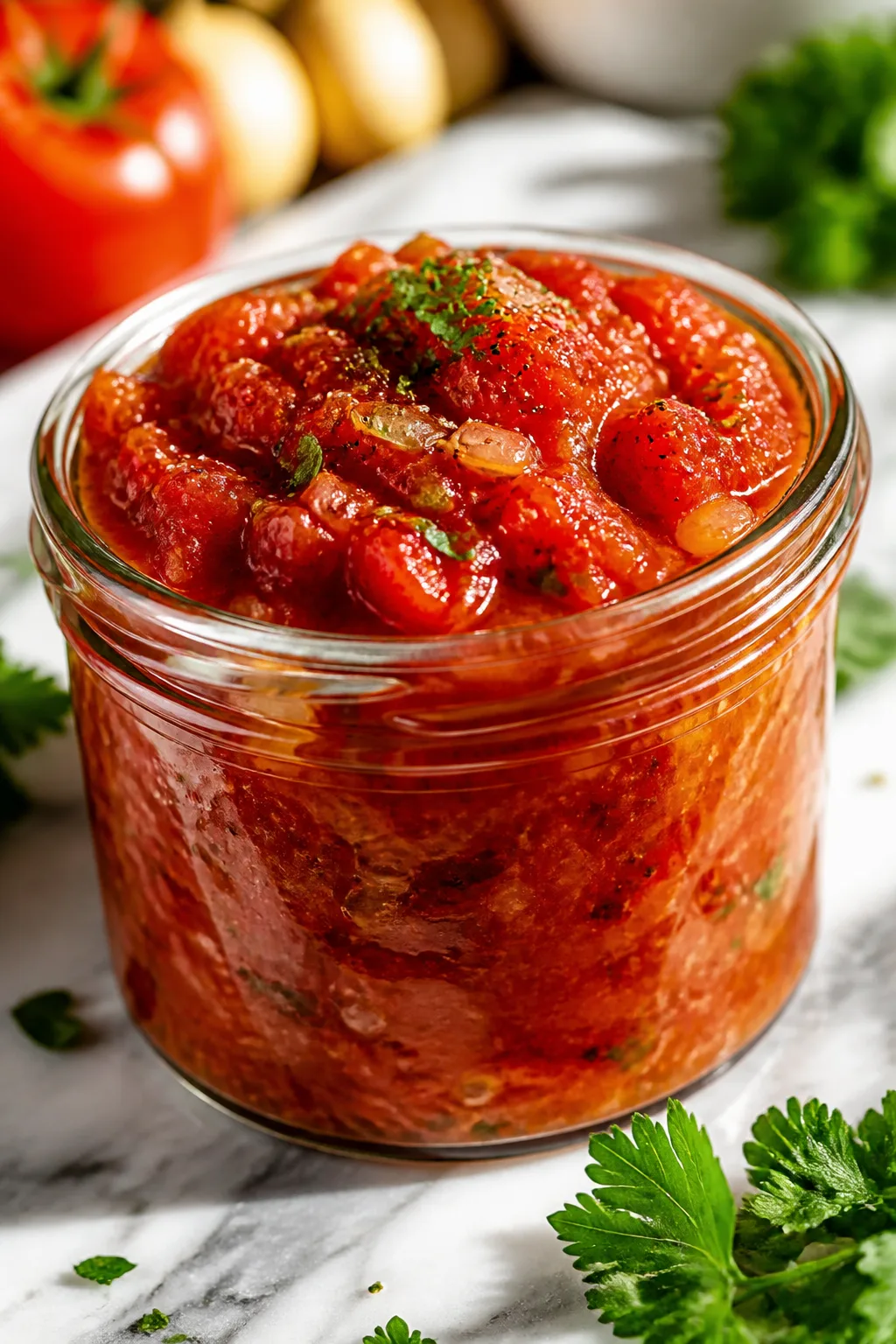
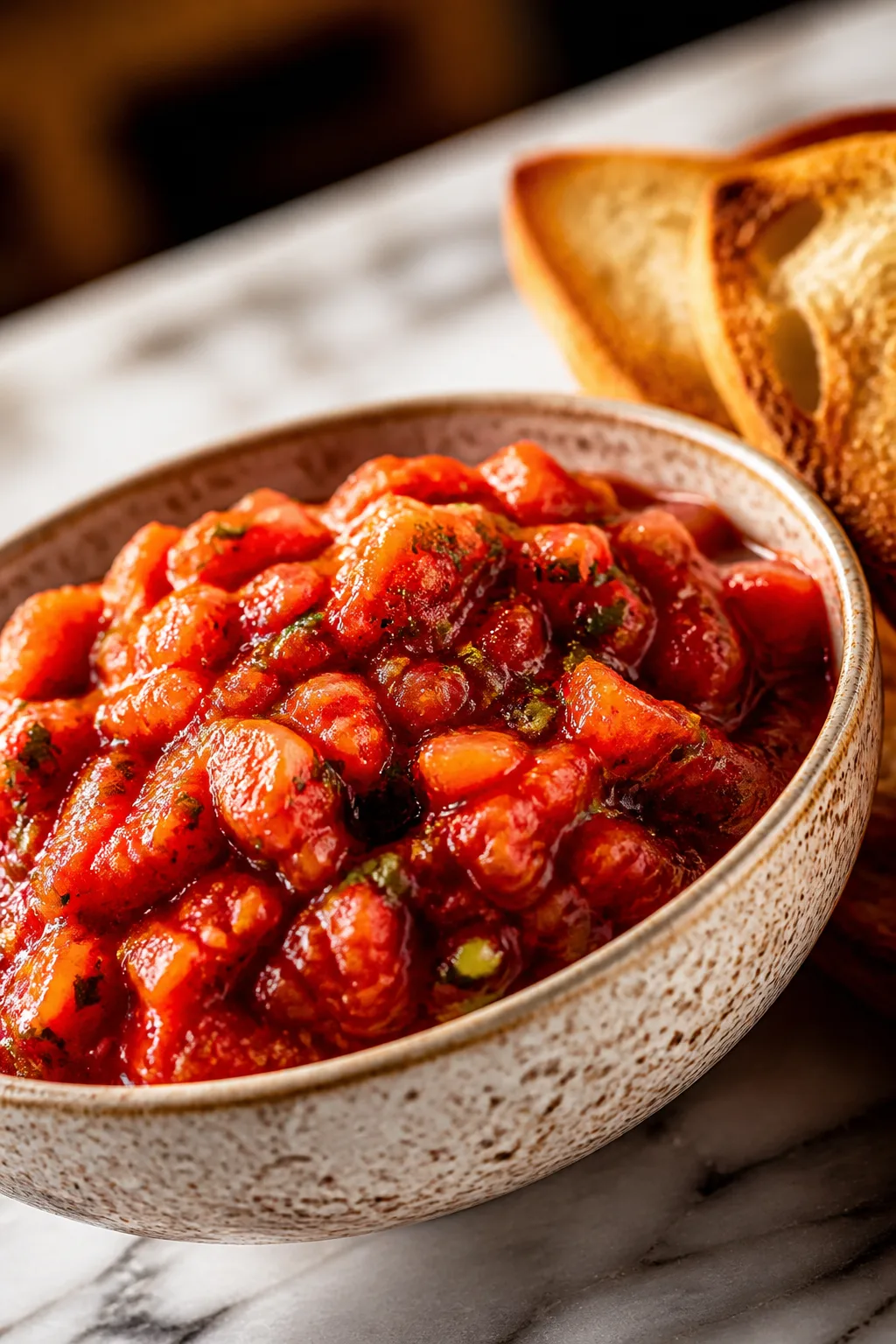
This tomato relish is a classic with a twist—slow simmered to deepen its sweet and tangy flavors. It’s my go-to condiment for grilled meats or sandwiches when I want that nostalgic, homemade touch.
Introduction
I first stumbled upon this tomato relish recipe years ago while rummaging through my grandma’s old cookbook. It instantly became a staple in my kitchen because of its comforting balance of sweet and tangy flavors. What makes this version stand out is the slow simmering process—it really deepens the taste and softens the tomatoes into a luscious texture. I’ve tried quicker methods before, but nothing compares to the richness you get when you take your time with it. Another trick I learned is adding mustard seeds early on; they add a subtle warmth without overpowering the relish. When it’s done, the relish is thick, glossy, and bursting with layers of flavor that pair beautifully with grilled meats, burgers, or even just simple sandwiches. It’s like a little jar of nostalgia that brightens up any meal. Honestly, I’ve had my share of overcooked or too-sweet versions in the past, but this recipe nails the balance every time. If you love condiments that bring a homemade touch and a little kick of flavor, you’re going to adore this.
What You'll Need
Approximately 3 cups, 6 servings
- 4 cups ripe tomatoes, chopped
- 1 medium onion, finely diced
- 1/2 cup brown sugar, packed
- 1/2 cup apple cider vinegar
- 1 tablespoon mustard seeds
- 1 teaspoon ground ginger
- 1/2 teaspoon salt
- 1/4 teaspoon black pepper
- 1 small chili pepper, finely chopped (optional)
How To Do It
Step 1
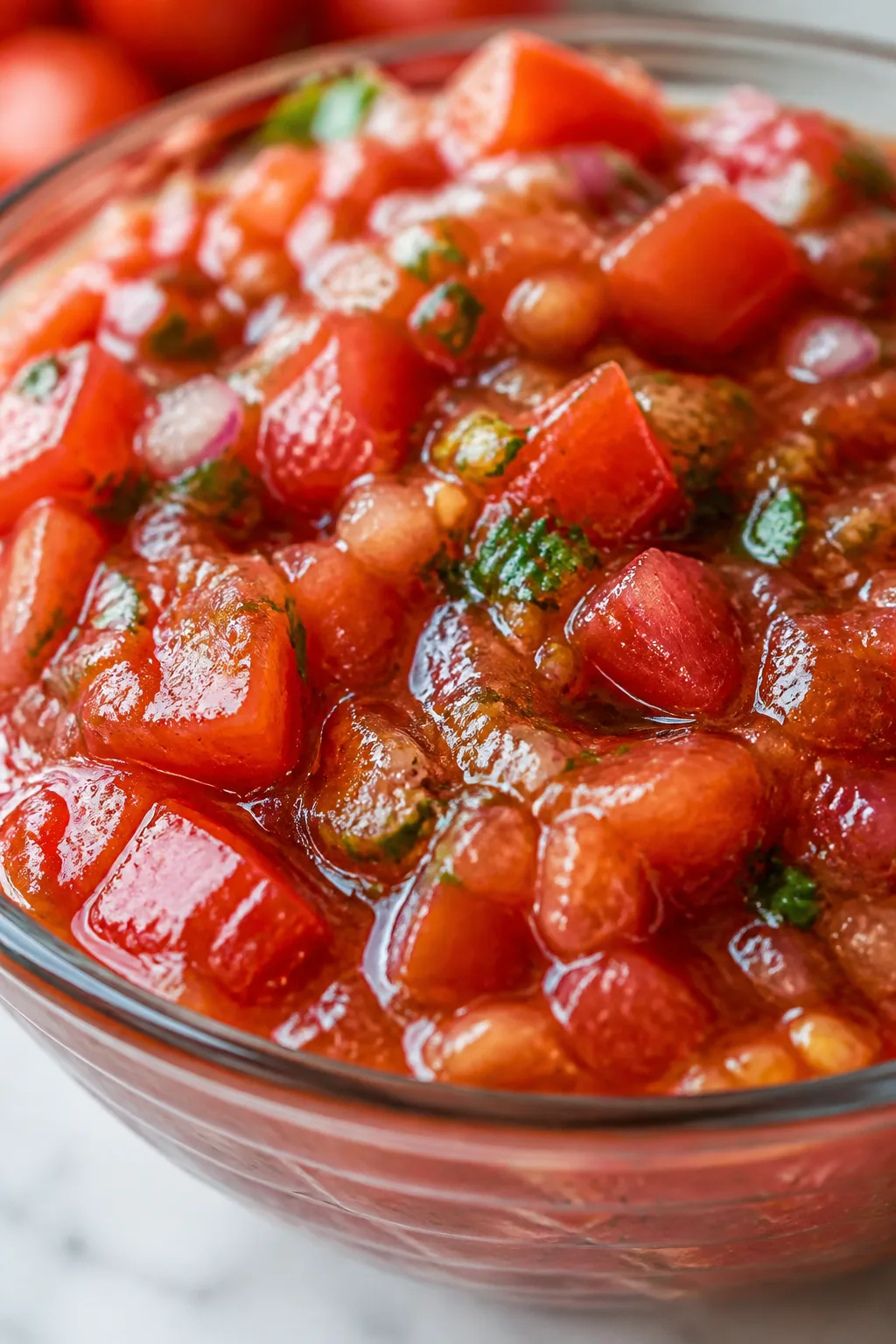
Start by washing and chopping your ripe tomatoes into small chunks. The quality of your tomatoes really matters here, as they form the base of your relish. Use ripe but firm tomatoes to ensure the relish doesn’t turn too watery. Chop the onion finely because it needs to soften completely during cooking. This initial prep sets the stage for a well-textured relish that’s not too chunky or watery.
⏱ Time: 10 minutes
✓ Doneness: Tomatoes and onions are evenly chopped and ready to cook
Step 2
In a large heavy-bottomed pot, combine the chopped tomatoes and onions with the brown sugar, apple cider vinegar, mustard seeds, ground ginger, salt, and black pepper. If you like a bit of heat, add the chopped chili pepper. Stir everything together well to evenly distribute the spices and sugar. This mixture will slowly break down and thicken over time, so getting everything well mixed at the start is key.
⏱ Time: 5 minutes
✓ Doneness: Ingredients are fully combined and beginning to release juices
Step 3
Place the pot over low heat and bring the mixture to a gentle simmer. It’s important to keep the heat low to avoid burning the sugars and to allow the flavors to meld gradually. Stir occasionally to prevent sticking, but don’t rush it. The slow simmer is what deepens the flavor and thickens the relish without turning it mushy.
⏱ Time: 45 minutes
✓ Doneness: Relish is noticeably thickened, glossy, and aromatic
Step 4
As the relish simmers, taste it every 15 minutes or so. This helps you adjust seasoning if needed—sometimes a pinch more salt or sugar balances the acidity. Also, watch the texture; it should be thick but still have some body, not totally pureed. If it looks too watery at any point, increase the heat just a little to speed evaporation, stirring more frequently to avoid burning.
⏱ Time: Throughout simmering
✓ Doneness: Balanced sweet-tangy taste and thick, spoonable texture
Step 5
Once the relish has thickened to your liking, remove the pot from heat and let it cool slightly. The cooling allows the flavors to settle and intensify. If you want a smoother texture, you can pulse it briefly in a food processor, but I prefer it chunky for that classic relish feel.
⏱ Time: 10 minutes
✓ Doneness: Relish cooled but still warm, thick and chunky
Step 6
Transfer the tomato relish into sterilized jars or airtight containers. Make sure the containers are clean and dry to keep the relish fresh longer. Let it cool completely before sealing to avoid condensation inside the jar, which can reduce shelf life.
⏱ Time: 10 minutes
✓ Doneness: Relish fully cooled and jarred properly
Step 7
Store the relish in the refrigerator for at least 24 hours before serving if possible. This resting time lets the flavors deepen even more. The taste improves over the first few days and makes a great gift for friends or family who love homemade condiments.
⏱ Time: Minimum 24 hours rest
✓ Doneness: Relish flavor fully developed and ready to enjoy
Step 8
Serve the relish alongside grilled meats, burgers, or sandwiches. It also pairs wonderfully with cheese boards or as a tangy topping for roasted vegetables. The sweet and tangy notes add a fresh burst of flavor that livens up any dish.
⏱ Time: As desired
✓ Doneness: Relish complements and enhances the main dish
Step 9
For longer storage, consider freezing small batches in freezer-safe containers. This way, you can enjoy the relish throughout the year without worrying about spoilage. Just thaw in the fridge overnight before use.
⏱ Time: Optional freezing step
✓ Doneness: Relish properly frozen and stored for future use
Pro Tips
Use a heavy-bottomed pot to prevent scorching during slow simmering.
A heavy-bottomed pot distributes heat evenly, reducing the risk of hot spots that can burn the sugars or tomatoes. Scorching would ruin the flavor and texture, so this ensures a smooth, consistent cook.
Don’t rush the simmering process—low and slow is key.
Simmering slowly allows flavors to meld and sugars to caramelize gently, creating depth without bitterness. High heat evaporates liquid too fast and can cause uneven cooking.
Sterilize jars before storing the relish to extend shelf life.
Properly sterilized containers prevent bacterial growth and spoilage, keeping your homemade relish fresh longer. It also avoids off-flavors from contamination.
Adjust seasoning towards the end of cooking after tasting.
Flavors concentrate as the relish cooks, so adding salt or sugar too early can lead to an imbalanced taste. Tasting late helps you fine-tune the perfect sweet-tart balance.
Add chili pepper for a subtle heat boost, but use sparingly.
Chili adds complexity without overpowering. Too much can mask the tomato’s natural flavor, so a small amount enhances rather than dominates.
Use fresh, ripe tomatoes for best texture and flavor.
Fresh tomatoes contribute both sweetness and acidity essential for a balanced relish. Overripe tomatoes release too much water, risking a watery texture.
Cool the relish completely before sealing jars to avoid condensation.
Sealing warm relish traps steam inside, causing moisture build-up that encourages spoilage. Cooling prevents this and extends shelf life.
Common Mistakes to Avoid
Cooking at too high a temperature
Why it happens Many cooks want to speed up the process and crank up the heat, thinking it will save time.
Fix Keep the heat low and steady to allow flavors to develop gradually. High heat can cause the sugar to burn and the relish to become bitter or unevenly cooked. Stir regularly and be patient for the best results.
Using underripe or watery tomatoes
Why it happens Sometimes, tomatoes are chosen based on availability rather than quality.
Fix Select firm, ripe tomatoes to ensure the relish thickens properly and has a rich flavor. Avoid overly soft or watery tomatoes which dilute the relish.
Skipping the resting period before serving
Why it happens Impatience to taste the relish right away can lead to underdeveloped flavors.
Fix Let the relish rest in the fridge for at least 24 hours to allow flavors to meld and deepen. This step makes a noticeable difference in taste.
Not stirring enough during simmering
Why it happens Forgetting or rushing can cause sticking and burning on the bottom of the pot.
Fix Stir the relish occasionally to prevent scorching and ensure even cooking. Use a wooden spoon and scrape the pot’s bottom gently.
Improper jar sterilization
Why it happens Assuming clean jars are sterile without proper boiling or sanitizing.
Fix Sterilize jars by boiling or using a dishwasher’s sanitize cycle. This prevents spoilage and keeps your relish safe to eat longer.
Variations
Spicy Tomato Relish
Add extra chili peppers or a pinch of cayenne for a fiery kick. You can also include smoked paprika for a smoky depth. This variation is perfect if you love bold, spicy flavors with your grilled meats.
Note: Monitor the heat level carefully to avoid overpowering the tomato’s natural sweetness. Adjust simmering time slightly if adding smoky spices.
Herb-Infused Tomato Relish
Stir in fresh herbs like basil, thyme, or rosemary towards the end of cooking for a fragrant twist. This version pairs beautifully with lighter dishes like grilled chicken or fish.
Note: Add herbs late to preserve their fresh aromas and avoid bitterness from overcooking.
Sweet and Fruity Tomato Relish
Incorporate diced apples or peaches along with the tomatoes for a sweeter, fruitier profile. This variation is great for serving with pork or cheese boards.
Note: Adjust sugar levels to balance the natural sweetness of the fruit and maintain proper acidity.
Vinegar-Free Tomato Relish
Skip the vinegar and use lemon juice for acidity if you prefer a brighter, fresher taste. This version is lighter and less tangy but still delicious.
Note: Add lemon juice at the end of cooking to preserve its fresh flavor.
Chunky Tomato and Pepper Relish
Leave the tomatoes and peppers in larger chunks for a rustic texture that works well as a topping for toasted bread or burgers.
Note: Reduce simmering time slightly to keep chunks intact and avoid over-softening.
Nutrition
Per Serving:
Nutritional values are estimates and may vary based on specific ingredients used.
Storage & Tips
Room Temperature
Tomato relish can safely sit at room temperature for up to 2 hours when covered, but it’s best stored refrigerated to maintain freshness and prevent spoilage.
Refrigerator
Store in an airtight container or sterilized jar in the fridge for up to 2 weeks. The flavor often improves after a day or two chilled. Serve cold or at room temperature.
Freezer
Freeze in small portions in freezer-safe containers or bags for up to 3 months. To prevent freezer burn, remove as much air as possible before sealing. Thaw overnight in the fridge before use.
Reheating
Reheat gently on the stovetop over low heat if desired, stirring occasionally. Avoid boiling to preserve texture and flavor. Add a splash of water if too thick.
Make Ahead
Prepare the relish up to 2 days ahead and refrigerate. This resting time enhances the flavor. On serving day, bring to room temperature or warm slightly before serving.
FAQ
Can I use canned tomatoes instead of fresh?
Yes, canned tomatoes can be used if fresh aren’t available. Opt for whole peeled or diced canned tomatoes with no added salt or preservatives. Drain excess liquid to avoid a watery relish, and adjust simmering time as canned tomatoes are softer.
How long does homemade tomato relish last?
When stored properly in sterilized jars in the fridge, tomato relish lasts about 2 weeks. Freezing extends this to 3 months. Always check for off smells or mold before consuming.
Can I make this relish vegan and gluten-free?
Absolutely! This recipe is naturally vegan and gluten-free as it uses basic ingredients like tomatoes, sugar, and vinegar. Just ensure your sugar is vegan-certified if that’s a concern.
What if my relish is too sweet or too tangy?
Adjust balance by adding a little more vinegar if too sweet, or a pinch of sugar if too tangy. Tasting during simmering helps you fine-tune the flavor to your liking.
Why is my relish watery after cooking?
This usually happens if tomatoes are very juicy or cooking time was too short to evaporate excess liquid. Simmer longer on low heat, stirring often, to thicken the relish properly.
Can I add other spices or herbs?
Yes, adding spices like cinnamon, cloves, or fresh herbs like basil can personalize the relish. Add dried spices early in cooking and fresh herbs near the end to keep their flavors vibrant.
Is it necessary to sterilize jars for storing relish?
Sterilizing jars is highly recommended to prevent bacterial growth and extend shelf life. You can boil jars or use a dishwasher sanitize cycle before filling.
Can I double this recipe?
Yes, doubling works well but use a larger pot to allow for even cooking and evaporation. Cooking time may increase slightly to achieve the desired thickness.
Final Thoughts
Give this tomato relish a try and bring a little homemade magic to your meals. I’d love to hear how it turns out for you—don’t forget to share your favorite ways to serve it!