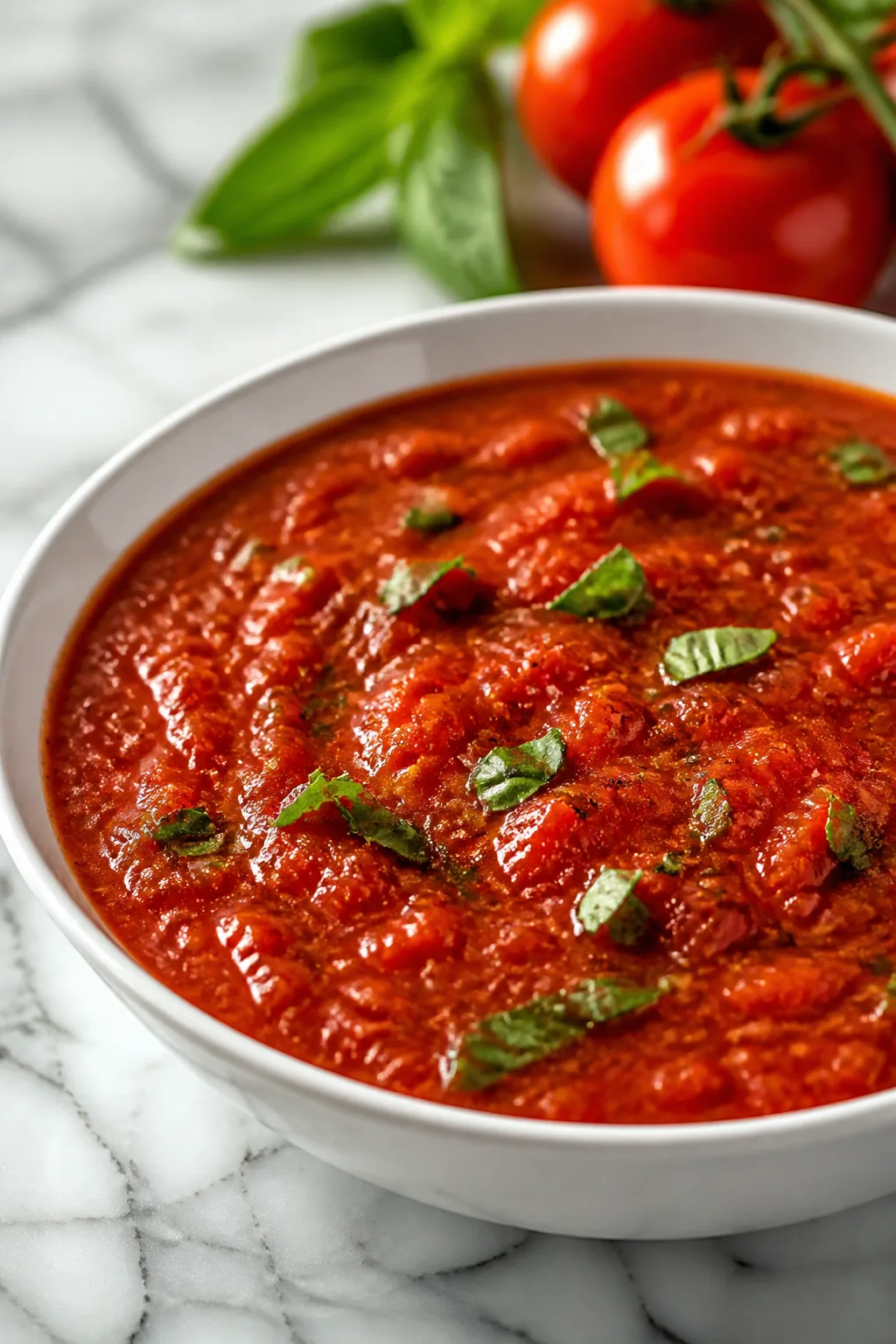
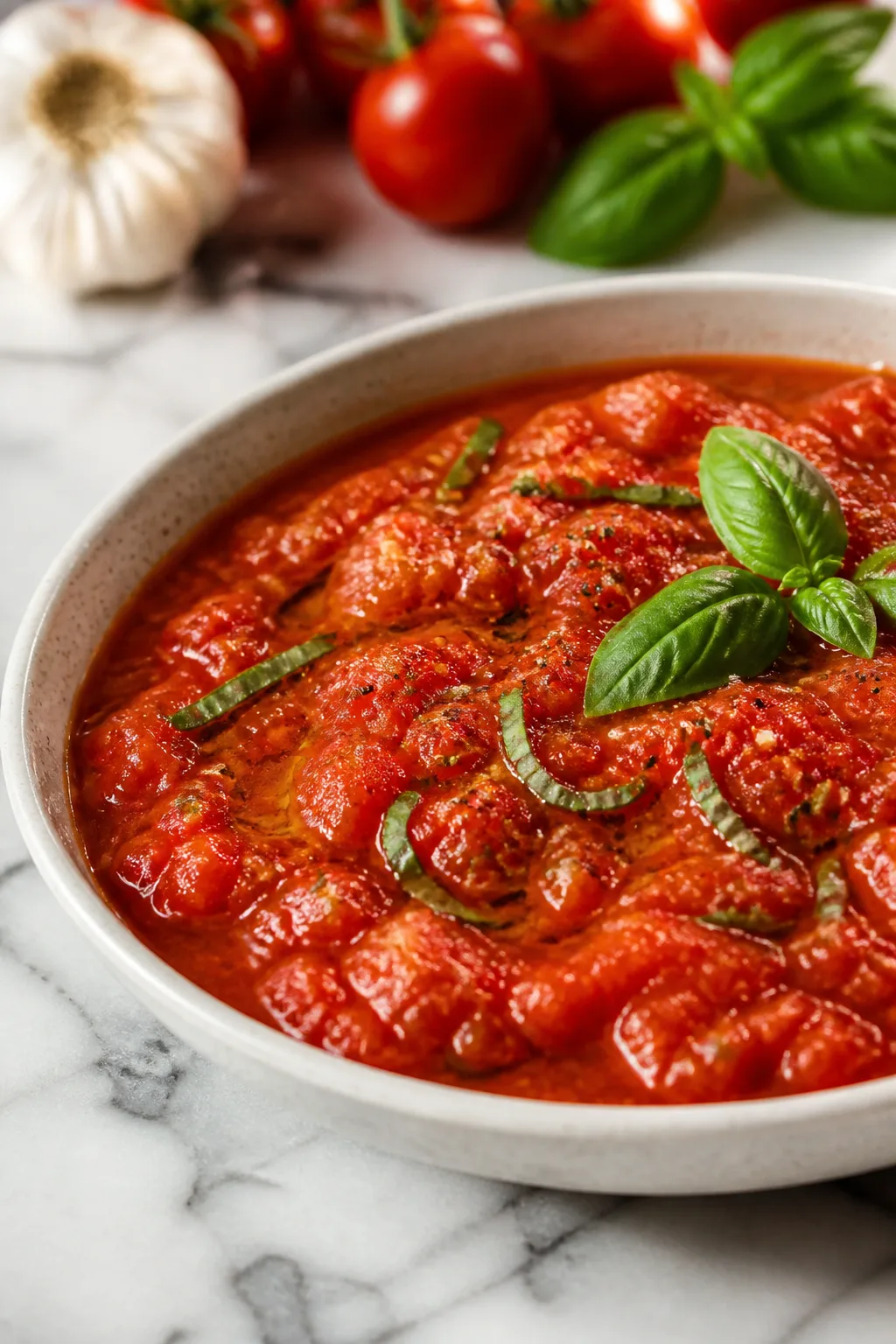
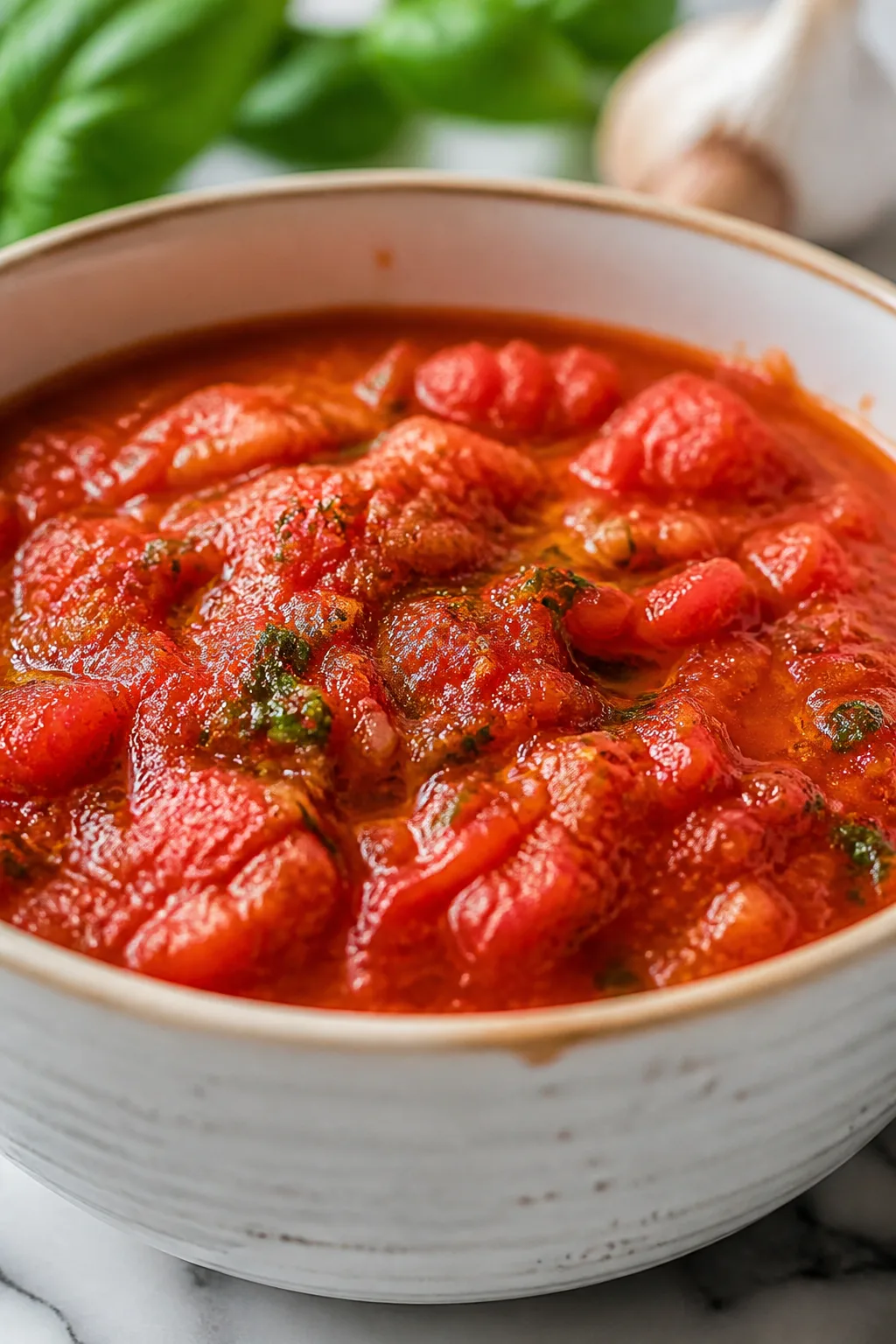
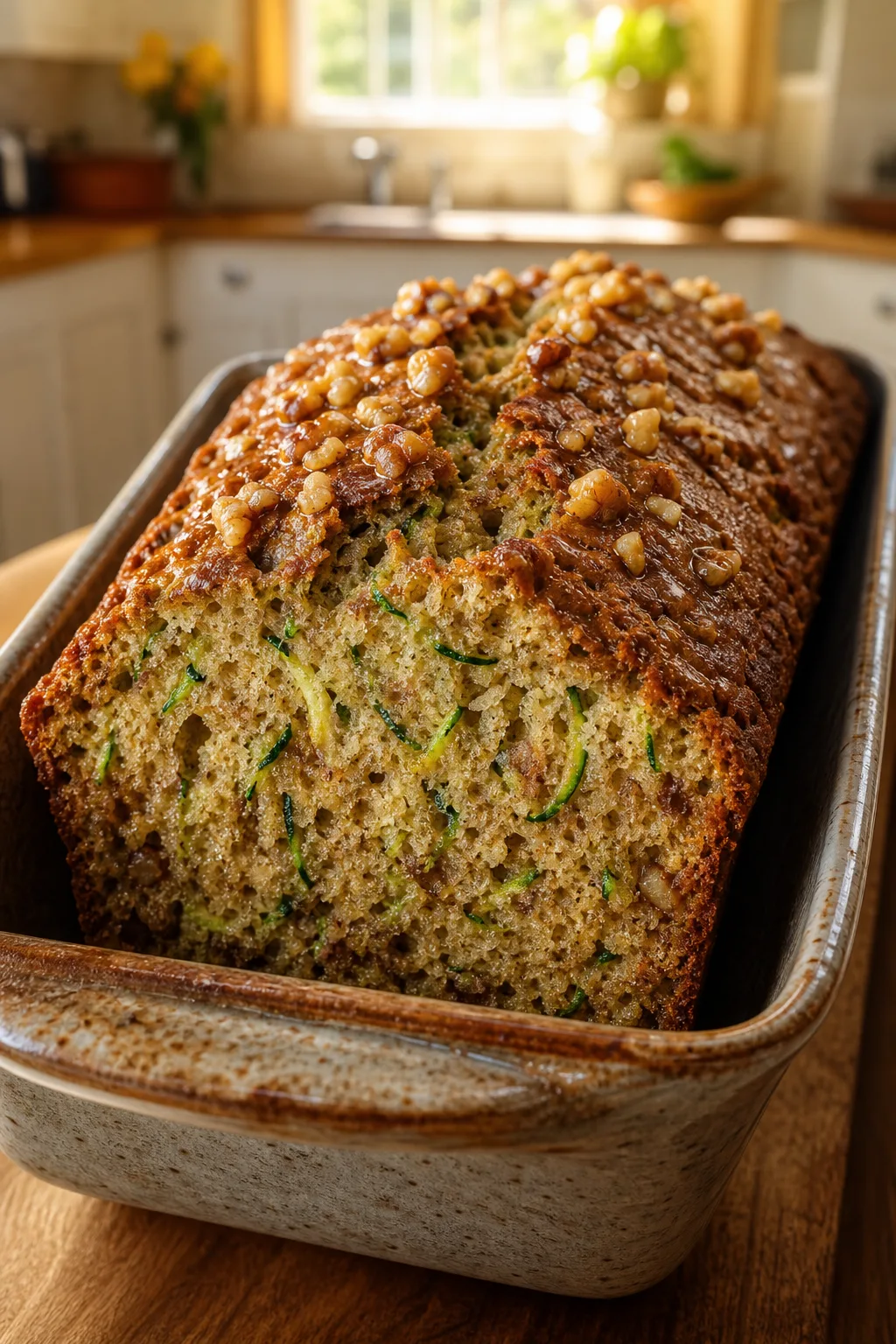
This rich tomato sauce is my go-to for cozy dinners. Slow-simmered with fresh garlic, it’s simple but packed with flavor. Perfect for any pasta night or as a base to build on!
Introduction
I've been making this Italian tomato sauce for years, and it’s honestly my favorite go-to for a quick, comforting meal. The first time I tried a slow-simmered version with fresh garlic, I realized how much depth it adds compared to the jarred stuff. What sets this recipe apart is the simplicity—just a handful of ingredients, but the magic happens with the slow simmer that lets the flavors meld beautifully. I usually crush the tomatoes by hand to keep some nice texture, but you can blend it smooth if you prefer. One trick I learned is to add a pinch of sugar to balance the acidity without making it sweet. The finished sauce is thick, rich, and bursting with garlic and herbs. It clings perfectly to any pasta, making weeknight dinners feel special. Plus, it’s versatile—you can use it as a base for meatballs, pizza, or even a hearty vegetable stew. Honestly, nothing beats the smell of this sauce simmering on the stove. It’s like a warm hug in a pot!
What You'll Need
Approximately 4 cups, 4 servings
- 2 tablespoons extra virgin olive oil
- 4 cloves fresh garlic, minced
- 1 can (28 ounces) whole peeled tomatoes, crushed by hand
- 1 teaspoon salt
- 1/2 teaspoon freshly ground black pepper
- 1 teaspoon dried oregano
- 1 teaspoon sugar (optional)
- Fresh basil leaves, a handful (optional)
How To Do It
Step 1
Heat the olive oil in a medium saucepan over medium-low heat. Add the minced garlic and sauté gently for about 1-2 minutes until fragrant but not browned. This step is crucial because garlic can burn quickly and turn bitter, so keep the heat low and stir frequently. The goal is to infuse the oil with garlic flavor, which forms the base of your sauce’s aroma and taste.
⏱ Time: 2 minutes
✓ Doneness: Garlic looks lightly golden and smells fragrant without any burnt smell
Step 2
Add the crushed tomatoes to the saucepan along with salt, pepper, and dried oregano. Stir well to combine everything. Using crushed tomatoes (either hand-crushed or canned) helps retain a bit of texture, which makes the sauce feel more homemade and rustic. Bring the mixture to a gentle simmer over medium heat.
⏱ Time: 5 minutes
✓ Doneness: Sauce starts bubbling gently around the edges
Step 3
Reduce heat to low and let the sauce simmer uncovered for 30-40 minutes. Stir occasionally to prevent sticking or burning on the bottom. The slow simmer allows the flavors to deepen and the sauce to thicken naturally. Resist the urge to rush this step; patience makes all the difference in flavor and texture.
⏱ Time: 30-40 minutes
✓ Doneness: Sauce thickens and develops a rich, deep red color
Step 4
Taste the sauce and adjust seasoning if needed. If the tomatoes taste too acidic, stir in a small pinch of sugar to balance it out. This subtle sweetness enhances the natural tomato flavor without making it taste sugary. Seasoning at the end ensures the flavors are perfectly balanced to your liking.
⏱ Time: 2 minutes
✓ Doneness: Balanced flavor with no sharp acidity or overpowering saltiness
Step 5
If using fresh basil, tear the leaves and stir them into the sauce just before serving. Fresh herbs add a bright, fresh note that complements the richness of the tomatoes perfectly. Adding basil too early can dull its flavor, so it’s best added last for maximum aroma.
⏱ Time: 1 minute
✓ Doneness: Bright green basil leaves wilt slightly but retain color
Step 6
Serve the sauce hot over your favorite pasta, or use it as a base for other dishes like meatballs or eggplant parmesan. This sauce clings wonderfully to noodles, giving every bite a rich and flavorful coating. If storing, let it cool before refrigerating in an airtight container.
⏱ Time: Immediate
✓ Doneness: Sauce is hot, thick, and evenly coats pasta or other dishes
Step 7
For a smoother texture, you can use an immersion blender directly in the pot after simmering. Blend gently to your desired consistency. This is great if you prefer a silky sauce without chunks. Just be careful not to over-blend or splash hot sauce.
⏱ Time: 2 minutes
✓ Doneness: Smooth, uniform sauce texture without lumps
Step 8
If the sauce is too thick after cooling, stir in a splash of pasta water or broth to loosen it up before reheating. This helps restore the perfect consistency and makes it easier to coat pasta evenly. Avoid adding water while simmering, as it dilutes flavors.
⏱ Time: 1 minute
✓ Doneness: Sauce pours easily and coats pasta without clumping
Step 9
For deeper flavor, try adding a splash of red wine or a pinch of red pepper flakes during the simmering step. These add complexity and warmth, but keep the additions subtle so the tomato stays front and center. Experiment to find your favorite tweak!
⏱ Time: Optional, during simmer
✓ Doneness: Sauce has a slightly richer aroma and subtle heat if using pepper flakes
Pro Tips
Use low heat when sautéing garlic to avoid bitterness.
Garlic contains sulfur compounds that turn bitter when burnt. Cooking it gently over low heat releases its natural sweetness and aroma without burning, which would ruin the sauce’s flavor.
Crush canned tomatoes by hand instead of blending for better texture.
Hand crushing retains small chunks and pulp, giving the sauce a rustic, homemade feel. Blending too much can make the sauce overly smooth and less interesting in texture.
Simmer the sauce uncovered to thicken naturally.
Simmering uncovered allows water to evaporate, concentrating flavors and thickening the sauce without adding thickeners. Covering traps steam and keeps the sauce watery.
Add fresh basil at the end to preserve its flavor.
Basil’s delicate essential oils evaporate with heat. Adding it last brightens the sauce and adds fresh herbal notes that cooking would otherwise dull.
Adjust acidity with a pinch of sugar if needed.
Tomatoes vary in acidity. A small amount of sugar balances sharpness without making the sauce sweet, creating a more rounded flavor.
Stir occasionally to prevent sticking and burning.
Tomato sauce can stick to the pan’s bottom and scorch, especially during long simmers. Stirring promotes even heat distribution and prevents bitter burnt bits.
Use good quality canned tomatoes for best flavor.
The flavor of canned tomatoes varies widely. Choosing high-quality, well-ripened tomatoes results in a naturally sweet, flavorful sauce without needing extra seasoning.
Common Mistakes to Avoid
Burning the garlic at the start
Why it happens Many cooks use too high heat or leave garlic unattended, causing it to brown or blacken quickly.
Fix Use low heat and stir constantly when cooking garlic. Remove from heat immediately if it starts to brown to avoid bitterness.
Skipping the simmering step
Why it happens In a rush, some skip simmering and serve sauce right after adding tomatoes.
Fix Allow the sauce to simmer uncovered for at least 30 minutes. This develops flavor and thickens the sauce naturally.
Not tasting and adjusting seasoning
Why it happens Some assume canned tomatoes are perfectly balanced and don’t check flavor before serving.
Fix Always taste before serving, add salt, pepper, or a pinch of sugar to balance acidity as needed.
Adding fresh herbs too early
Why it happens Adding delicate herbs like basil during simmering causes flavor loss.
Fix Add fresh basil at the very end or just before serving to keep its bright flavor intact.
Using low-quality canned tomatoes
Why it happens Budget cans often have bland or metallic flavors that ruin the sauce.
Fix Invest in good quality canned tomatoes labeled for sauces or Italian recipes for best results.
Variations
Spicy Arrabbiata Style
Add crushed red pepper flakes during the garlic sauté step for a spicy kick. This variation pairs beautifully with penne pasta and grated Parmesan for a fiery dinner option.
Note: Be cautious with red pepper quantity; start small and adjust to taste to avoid overpowering the sauce.
Meaty Tomato Sauce
Brown ground beef or Italian sausage before adding garlic, then proceed with the tomato sauce. This adds heartiness and depth for a classic Bolognese-inspired sauce.
Note: Drain excess fat after browning meat to prevent greasy sauce; simmer longer for richer flavor.
Fresh Tomato Summer Sauce
Use fresh, ripe tomatoes instead of canned. Blanch, peel, and chop them before cooking. This gives a bright, fresh flavor perfect for summer meals.
Note: Fresh tomatoes have higher water content; simmer longer to thicken sauce properly.
Creamy Tomato Basil Sauce
Stir in a splash of heavy cream or coconut cream at the end of cooking for a luscious, creamy texture that softens the acidity and adds richness.
Note: Add cream off heat or at low temperature to prevent curdling.
Roasted Garlic Tomato Sauce
Roast whole garlic cloves until soft and sweet, then mash and add to the sauce instead of sautéing fresh garlic. This gives a mellow, caramelized garlic flavor.
Note: Roasting garlic takes longer but adds complexity; adjust seasoning accordingly.
Nutrition
Per Serving:
Nutritional values are estimates and may vary based on specific ingredients used.
Storage & Tips
Room Temperature
The sauce can be kept at room temperature for up to 2 hours in a covered pot or bowl. Beyond that, it’s safer to refrigerate to prevent bacterial growth.
Refrigerator
Store the sauce in an airtight container for up to 5 days. Flavor may deepen but sauce can thicken; reheat gently with a splash of water or broth to loosen before serving.
Freezer
Freeze the sauce in freezer-safe containers or bags for up to 3 months. To prevent freezer burn, remove as much air as possible before sealing. Thaw overnight in the fridge before reheating.
Reheating
Reheat on the stovetop over low heat, stirring occasionally. Add a little water or broth if the sauce is too thick. Avoid boiling vigorously as it can change texture and flavor.
Make Ahead
You can prepare the sauce up to 2 days in advance and store it refrigerated. On the day of serving, reheat gently and add fresh basil for brightness. This makes weeknight dinners a breeze!
FAQ
Can I use fresh tomatoes instead of canned?
Absolutely! Fresh tomatoes can be used, especially in summer when they’re ripe. You’ll want to blanch, peel, and chop them before cooking. Keep in mind fresh tomatoes have higher water content, so simmer longer to thicken the sauce and concentrate flavors.
How do I prevent the garlic from burning?
Burning garlic happens when the heat is too high or it’s left unattended. Use low to medium-low heat and stir frequently. Remove the pan from heat if the garlic starts to brown prematurely. This keeps the garlic sweet and aromatic.
Can I freeze this tomato sauce?
Yes, this sauce freezes very well. Cool completely before transferring to airtight containers or freezer bags. Freeze for up to 3 months. Thaw overnight in the fridge and reheat gently. Adding a splash of water or broth while reheating helps restore the perfect consistency.
Is it necessary to add sugar to the sauce?
Sugar isn’t mandatory but often helps balance the natural acidity of canned tomatoes. If your sauce tastes too sharp or sour, add a small pinch of sugar and taste again. It rounds out flavors without making the sauce sweet.
Can I use dried basil instead of fresh?
Dried basil can be used but add it early in the cooking process since it needs time to rehydrate and release flavor. Fresh basil is best added at the end to retain its bright aroma and taste.
What’s the best way to store leftover sauce?
Store leftovers in airtight containers in the fridge for up to 5 days. For longer storage, freeze in portions. Make sure the sauce cools completely before sealing to avoid condensation and spoilage.
Why does my sauce taste bitter sometimes?
Bitterness often comes from burnt garlic or poor-quality tomatoes. Cook garlic gently and avoid browning. Use good-quality canned tomatoes without preservatives or metallic taste. Adding a pinch of sugar can also help balance bitterness.
Can I make this sauce in advance?
Yes, it’s perfect for making ahead! Prepare the sauce up to 2 days before serving and refrigerate. It actually tastes better the next day as the flavors meld. Just reheat gently and add fresh herbs before serving.
Final Thoughts
I hope you enjoy making this classic Italian tomato sauce as much as I do! It’s simple, cozy, and always a hit—don’t forget to share how yours turns out!