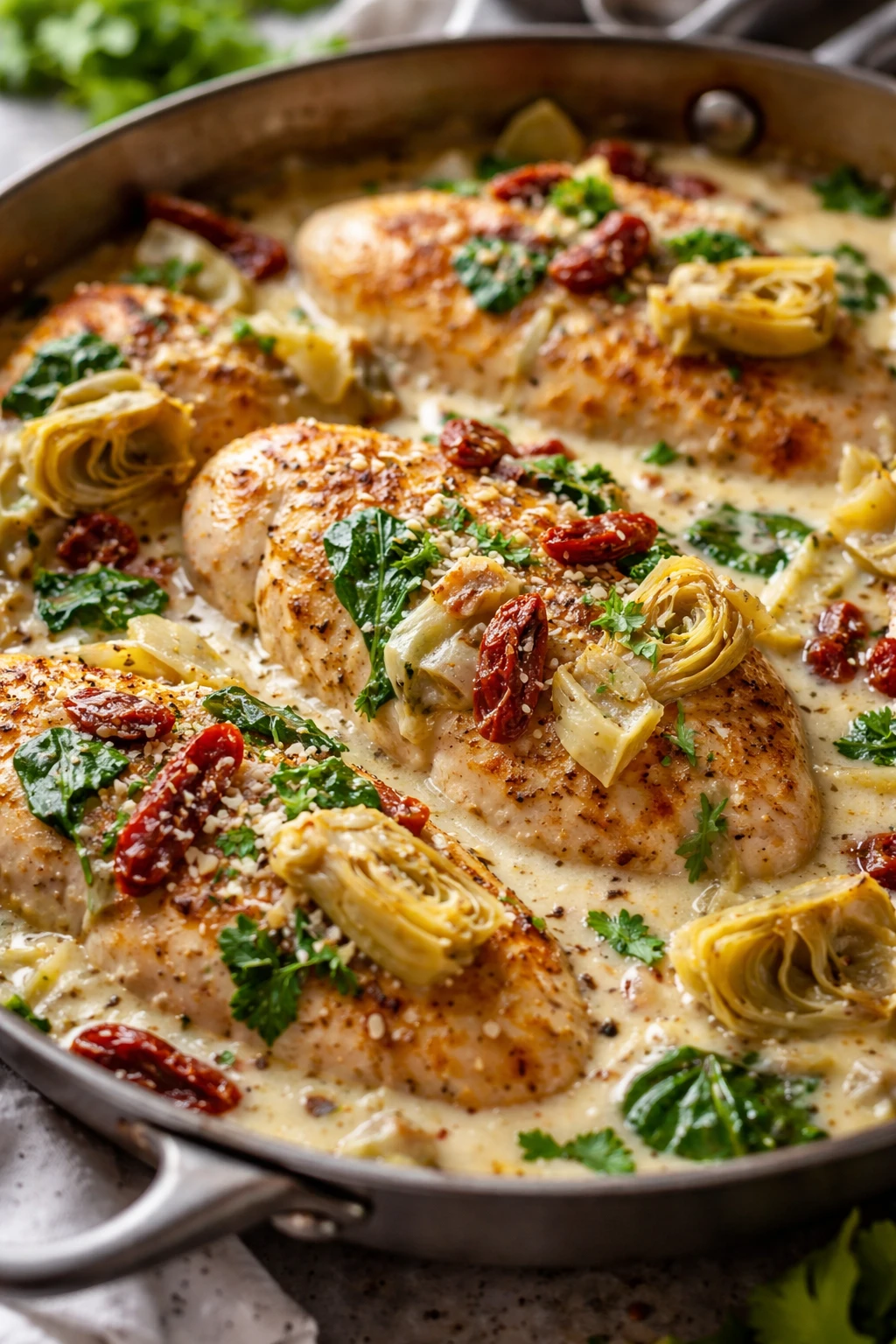
This skillet meal combines tender chicken with tangy artichokes in a silky cream sauce that's quick and satisfying. The artichokes add a bright twist, making it perfect for a busy weeknight dinner.
Introduction
I first made this creamy chicken with artichokes a few years ago on a hectic weeknight when I needed something quick yet comforting. It stood out because of how the artichokes added a subtle tang that cut through the richness of the cream sauce. Over time, I tweaked the recipe to get the sauce just right — silky but not too thick, with enough seasoning to bring out all the flavors without overpowering the tender chicken. The trick I learned was to brown the chicken first to lock in juices, then gently simmer it in the sauce so it stays moist and flavorful. This dish always turns out creamy and satisfying, with a lovely balance of richness and brightness. It’s become a staple for me when I want a fuss-free dinner that feels a little special. Plus, it’s easy to throw together in one skillet, which means less cleanup — always a bonus!
How To Do It
Step 1
Heat the olive oil in a large skillet over medium-high heat. Pat the chicken breasts dry and season both sides with salt and pepper. Add them to the skillet and sear each side for about 4-5 minutes until golden brown. This browning step is crucial because it locks in the juices and creates a flavorful crust. Avoid moving the chicken too much during this step to get a nice sear. Once browned, transfer the chicken to a plate and set aside. You'll know it's done when the surface is golden and releases easily from the pan.
⏱ Time: 10 minutes
✓ Doneness: Golden brown crust on both sides, chicken releases easily from skillet
Step 2
In the same skillet, reduce heat to medium and add the chopped onion. Cook, stirring occasionally, until softened and translucent, about 3-4 minutes. Then add the minced garlic and cook for another 30 seconds until fragrant. This step builds the flavor base for the sauce. Be careful not to burn the garlic as it can turn bitter. Cooking the onion until soft helps develop sweetness that balances the tangy artichokes later.
⏱ Time: 5 minutes
✓ Doneness: Onions are translucent and soft; garlic is fragrant but not browned
Step 3
Add the artichoke hearts to the skillet and gently stir to combine with the onions and garlic. Let them cook for about 2 minutes to warm through and release their flavor. The artichokes add a subtle tang and texture contrast. Stirring gently ensures they don't break apart too much, preserving their shape and bite.
⏱ Time: 2 minutes
✓ Doneness: Artichokes are warmed and slightly softened but still hold their shape
Step 4
Pour in the chicken broth and heavy cream, stirring to combine. Bring the mixture to a gentle simmer. This liquid base will become your creamy sauce. Allowing it to simmer gently helps thicken the sauce without curdling the cream. If the heat is too high, the sauce can separate, so keep it moderate.
⏱ Time: 3 minutes
✓ Doneness: Sauce is bubbling gently and starting to thicken
Step 5
Stir in the grated Parmesan cheese and dried thyme until the cheese melts into the sauce, creating a smooth texture. Parmesan adds depth and a salty, nutty note that enhances the creaminess. Whisk gently to avoid clumps. The thyme adds a subtle herbal aroma that complements the chicken and artichokes.
⏱ Time: 2 minutes
✓ Doneness: Sauce is smooth, creamy, and slightly thickened
Step 6
Return the browned chicken breasts to the skillet, nestling them into the sauce. Spoon some sauce over the top. Reduce heat to low, cover, and let simmer gently for 10-12 minutes. This allows the chicken to cook through while soaking up the flavors of the sauce. Keeping the heat low prevents the cream from breaking and keeps the chicken tender.
⏱ Time: 12 minutes
✓ Doneness: Chicken is cooked through with an internal temperature of 165°F and sauce is thickened
Step 7
Remove the skillet from heat and let the dish rest uncovered for a few minutes. This resting time helps the sauce thicken slightly more and the chicken juices redistribute, making it juicier. Resist the urge to serve immediately for best texture and flavor.
⏱ Time: 5 minutes
✓ Doneness: Sauce has thickened to coat the chicken nicely; chicken is juicy
Step 8
Taste the sauce and adjust seasoning with salt and pepper as needed. Sometimes the Parmesan adds enough salt, so taste first. Balancing seasoning at the end ensures the flavors are just right without overdoing it.
⏱ Time: 2 minutes
✓ Doneness: Sauce tastes balanced with no overpowering salt or blandness
Step 9
Garnish with freshly chopped parsley for a pop of color and fresh flavor. Serve the creamy chicken and artichokes hot, ideally with crusty bread or over rice to soak up the sauce. The parsley adds brightness and a fresh herbal note that lifts the dish.
⏱ Time: 1 minute
✓ Doneness: Parsley is vibrant and fresh; dish is visually appealing and ready to eat
Pro Tips
Pat the chicken dry before seasoning and searing.
Removing excess moisture ensures the chicken browns properly instead of steaming. Browning creates complex flavors and a better texture through the Maillard reaction. Wet chicken can stick to the pan and cook unevenly.
Don’t rush simmering the sauce; keep it gentle.
High heat can cause the cream to split or curdle, ruining the smooth texture. A gentle simmer allows the sauce to thicken gradually while developing flavor. Patience here makes a big difference.
Use freshly grated Parmesan cheese instead of pre-grated.
Freshly grated cheese melts more smoothly and adds better flavor. Pre-grated often contains additives that can affect texture and prevent proper emulsification in the sauce.
Let the dish rest a few minutes off heat before serving.
Resting allows the sauce to thicken slightly as it cools and the chicken juices to redistribute, resulting in juicier meat and a silkier sauce. Serving immediately can mean a thinner sauce and drier chicken.
Season the chicken generously with salt and pepper before cooking.
Proper seasoning enhances the chicken’s natural flavor and helps build a savory crust during searing. Under-seasoned chicken can taste bland even with a rich sauce.
Use a heavy-bottomed skillet for even heat distribution.
A sturdy pan prevents hot spots that can burn the sauce or chicken. Even heat ensures consistent cooking and better browning.
Drain artichokes well to avoid watery sauce.
Excess liquid from canned artichokes can thin the sauce and dilute flavor. Patting them dry or draining thoroughly keeps the sauce creamy and concentrated.
Common Mistakes to Avoid
Skipping the sear on the chicken.
Why it happens Some cooks assume simmering in sauce is enough and skip browning to save time.
Fix Always sear chicken first over medium-high heat until golden. This locks in juices and adds flavor through the Maillard reaction. Without this, chicken can be bland and dry.
Cooking the cream sauce at too high heat.
Why it happens Rushing the sauce thickening leads to boiling the cream aggressively.
Fix Keep heat at a gentle simmer to prevent curdling. Stir often and watch closely. Patience yields a silky sauce.
Using watery artichokes without draining.
Why it happens Overlooking the liquid in canned artichokes dilutes the sauce.
Fix Drain and pat artichokes dry before adding. This keeps the sauce rich and thick.
Not resting the chicken before serving.
Why it happens Impatience can cause serving immediately after cooking.
Fix Let the dish rest 5 minutes off heat to thicken sauce and redistribute juices for moist chicken.
Overcrowding the pan when searing.
Why it happens Trying to cook all chicken pieces at once without enough space.
Fix Sear in batches if needed to ensure proper browning and avoid steaming.
Variations
Spinach and Artichoke Chicken Skillet
Add fresh spinach to the skillet along with artichokes for a boost of greens and color. The spinach wilts into the creamy sauce, adding a mild earthy flavor and extra nutrients. This variation feels more like a complete one-pan meal.
Note: Add fresh spinach in the last 3-4 minutes of simmering to prevent overcooking and maintain bright color.
Lemon Herb Creamy Chicken with Artichokes
Add a tablespoon of fresh lemon juice and zest to the sauce for a brighter, fresher flavor. Use fresh herbs like thyme and parsley for an aromatic lift. This version is lighter and more vibrant, perfect for spring dinners.
Note: Add lemon juice at the end of cooking to preserve its brightness and avoid bitterness.
Mushroom and Artichoke Creamy Chicken
Sauté sliced mushrooms with the onions and garlic for an earthy depth of flavor. Mushrooms add a meaty texture that pairs beautifully with the tangy artichokes and creamy sauce.
Note: Cook mushrooms until browned and their liquid evaporates before adding other ingredients to prevent watery sauce.
Spicy Creamy Chicken with Artichokes
Add a pinch of red pepper flakes or a dash of hot sauce to the sauce for a subtle heat kick. This variation adds warmth and complexity without overpowering the creamy base.
Note: Add spice gradually and taste to balance heat with creaminess.
Dairy-Free Artichoke Chicken Skillet
Substitute heavy cream with full-fat coconut milk and omit Parmesan to make this recipe dairy-free. The coconut milk adds a subtle sweetness that complements the artichokes nicely.
Note: Simmer gently as coconut milk can separate if boiled vigorously; adjust seasoning as coconut milk is less salty.
Nutrition
Per Serving:
Nutritional values are estimates and may vary based on specific ingredients used.
Storage & Tips
Room Temperature
This dish can safely sit out covered for up to 2 hours. Beyond that, bacteria growth increases, so refrigerate promptly to keep it safe.
Refrigerator
Store leftovers in an airtight container for up to 3 days. The sauce may thicken or firm up when cold; gently reheat on the stovetop with a splash of broth or cream to loosen it before serving.
Freezer
Freeze in a sealed container for up to 2 months. Wrap the container with foil or plastic wrap to prevent freezer burn. Thaw overnight in the fridge before reheating slowly on the stove to maintain sauce texture.
Reheating
Reheat gently over low heat on the stovetop, stirring occasionally. Add a little chicken broth or cream if the sauce is too thick. Avoid microwaving at high power as it can cause uneven heating and curdling.
Make Ahead
You can prepare the sauce and sear the chicken up to 1 day ahead. Store separately if possible. Combine and gently reheat just before serving for the best texture and flavor.
FAQ
Can I use chicken thighs instead of breasts?
Absolutely! Boneless skinless thighs work great and tend to stay juicier. Just adjust cooking time slightly as thighs may need a few extra minutes to cook through. The sauce pairs beautifully with the richer flavor of thighs.
What can I use instead of heavy cream?
You can substitute full-fat coconut milk for a dairy-free version or use half-and-half for a lighter sauce, though it may be less rich and not thicken as much. Avoid skim milk as it lacks fat needed for a creamy texture and may curdle.
How do I prevent the cream sauce from curdling?
Keep the heat low when simmering the sauce and avoid boiling it vigorously. Adding the cream gradually and stirring constantly helps maintain a smooth emulsion. Also, adding cheese slowly prevents clumping.
Can I make this recipe ahead of time?
Yes, you can sear the chicken and prepare the sauce a day ahead. Store separately in the fridge and combine when ready to reheat gently. This keeps the chicken juicy and sauce fresh.
What sides go well with this dish?
Crusty bread, rice, or buttered noodles are perfect for soaking up the creamy sauce. Steamed vegetables or a simple green salad balance the richness nicely.
How do I know when the chicken is fully cooked?
Use a meat thermometer to check for an internal temperature of 165°F (74°C). The chicken should be opaque and no longer pink inside. Cooking times vary by thickness, so thermometer use is best.
Can I use fresh artichokes instead of canned?
Fresh artichokes can be used but require more prep and cooking time to tenderize. They offer a fresher flavor but for convenience canned or jarred artichokes are ideal here.
Is this recipe gluten-free?
Yes, this recipe is naturally gluten-free as long as you use gluten-free chicken broth and check that your Parmesan is gluten-free. Always read labels to be sure.
Final Thoughts
I hope you give this creamy chicken with artichokes a try — it’s one of those comforting dishes that feels special but comes together so easily. Let me know how it turns out!