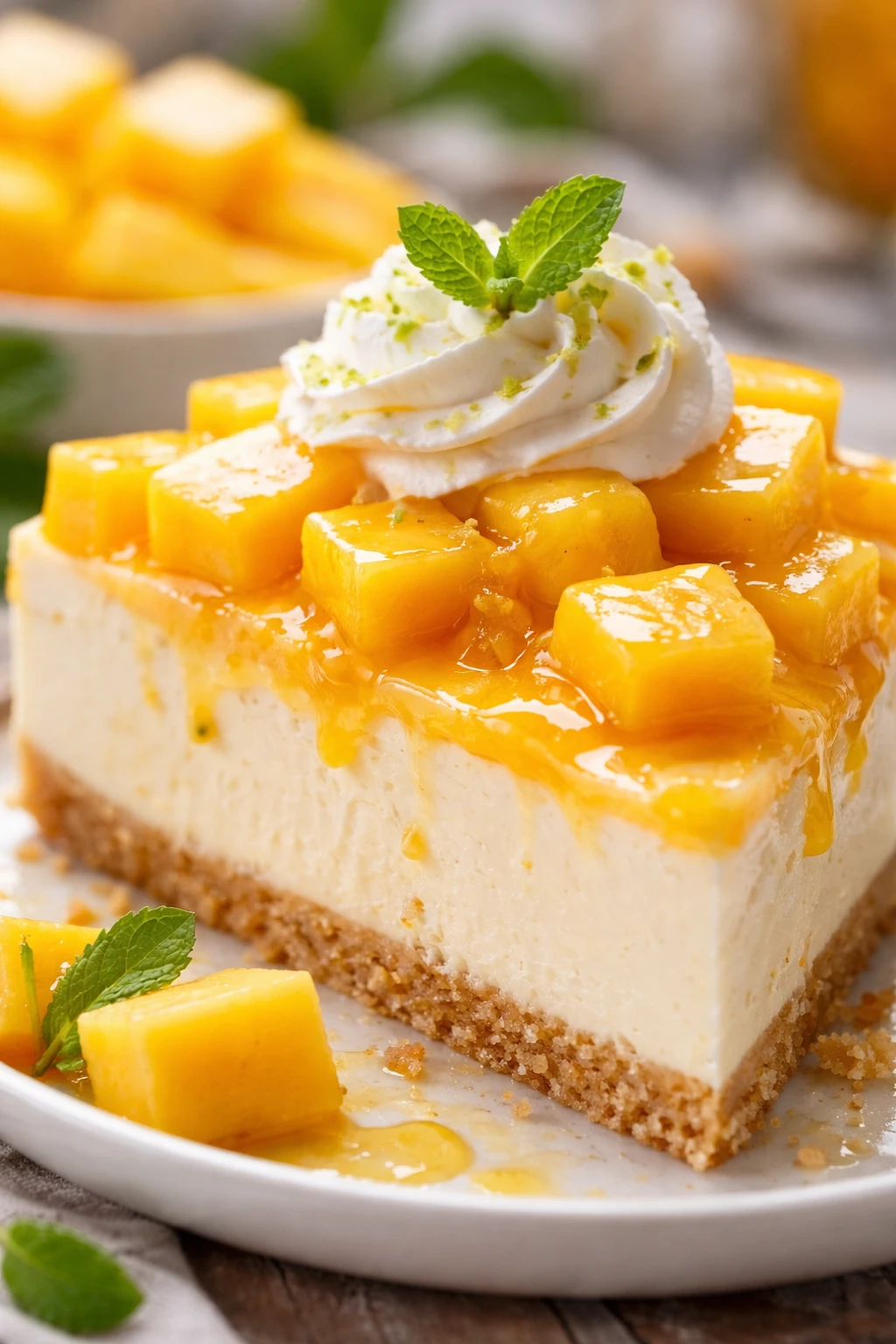
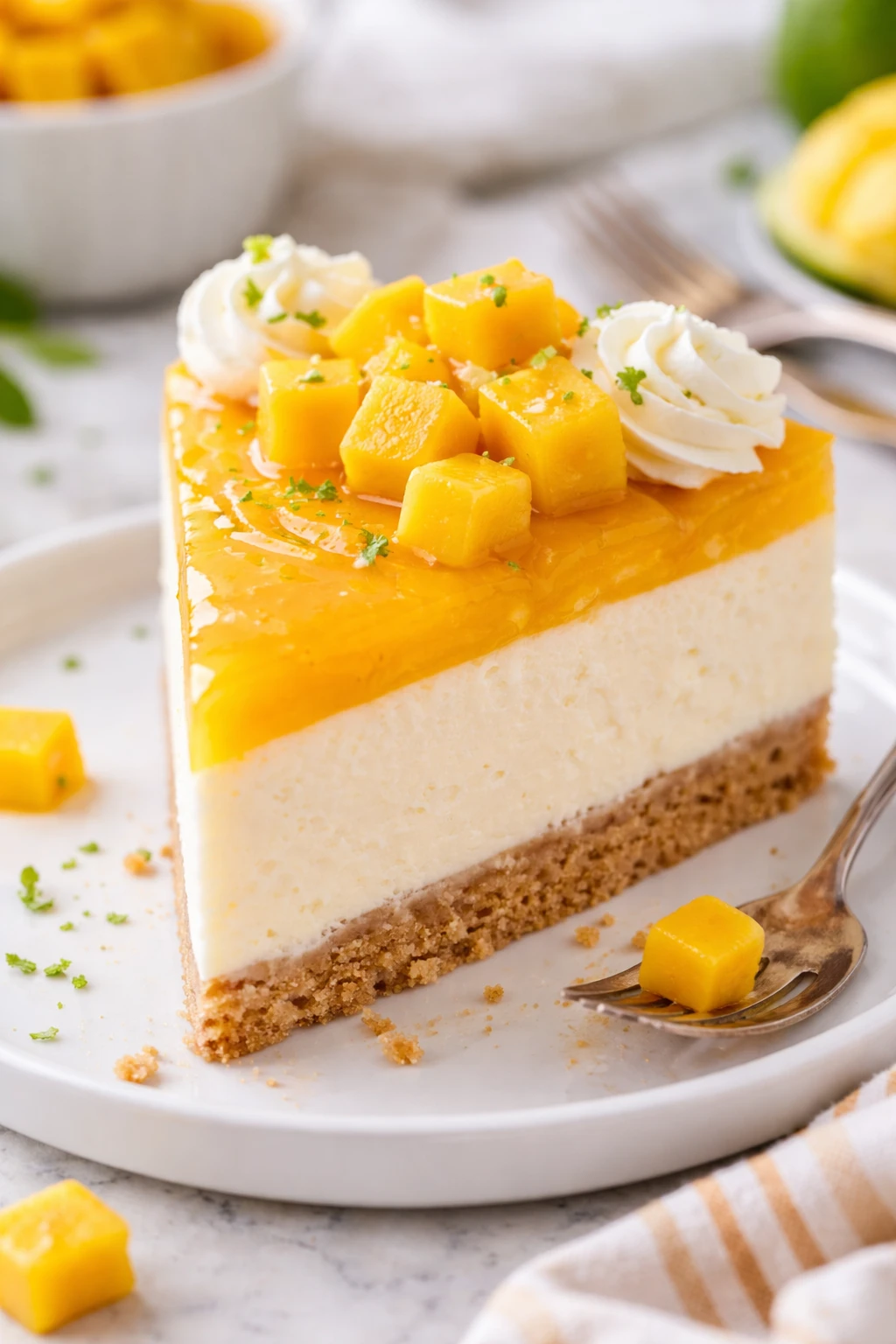
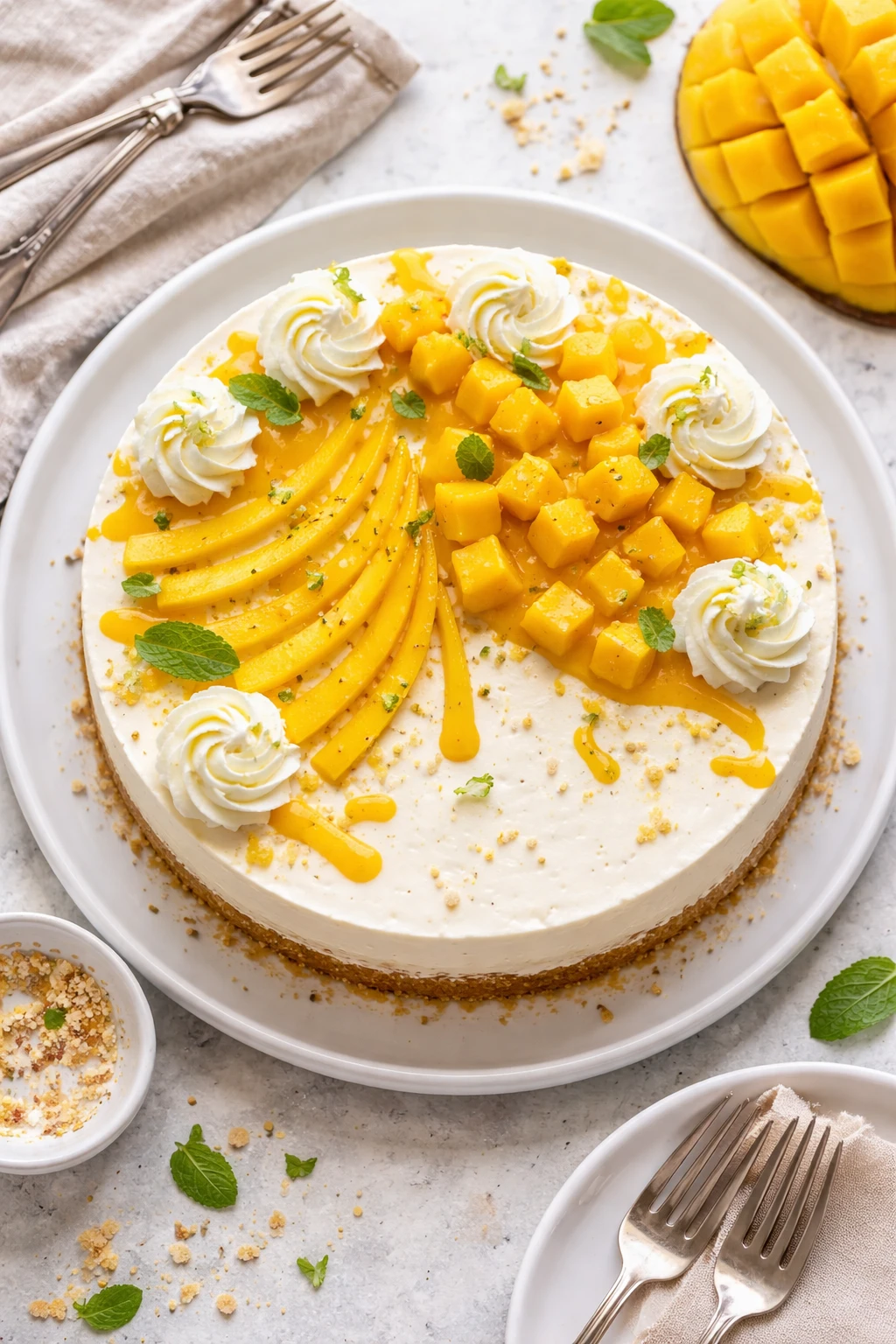
This no-bake mango cheesecake is a summer dream—airy, creamy, and naturally sweet thanks to fresh mango puree. The whipped cream gives it a light texture, making it perfect for quick desserts or parties.
Introduction
I stumbled upon this no-bake mango cheesecake recipe during a scorching summer when turning on the oven felt impossible. I wanted something light, creamy, and bursting with fresh fruit flavor without the fuss. After a few tries, I found that whipping the cream just right makes all the difference—it gives the cheesecake an airy, melt-in-your-mouth texture that’s so refreshing. The fresh mango puree brings natural sweetness and a tropical vibe that’s better than any store-bought dessert. I also learned the hard way that properly blooming the gelatin is key to getting the perfect set without lumps or a rubbery texture. This cheesecake is my go-to when I want a quick dessert that feels special but doesn’t take all day. It looks beautiful with its golden mango color and tastes like sunshine in every bite—ideal for summer dinners, BBQs, or just treating yourself. Honestly, once you try this, you might never want to bake a cheesecake the traditional way again!
What You'll Need
One 8-inch cheesecake, serves 8
- 200g digestive biscuits, crushed
- 100g unsalted butter, melted
- 400g cream cheese, softened
- 300ml heavy cream, chilled
- 150g powdered sugar
- 250g fresh mango puree (about 2 ripe mangoes)
- 1 tbsp lemon juice
- 1 tsp vanilla extract
- 1 tbsp gelatin powder
- 3 tbsp cold water
How To Do It
Step 1
Start by making the crust. Crush the digestive biscuits finely until they resemble coarse sand. Mixing the crumbs with melted butter helps them bind together, so the crust holds its shape without baking. Press this mixture firmly into the bottom of an 8-inch springform pan to create an even layer. Using the back of a spoon or a glass helps compact the crumbs well. This step is crucial because a loose crust will crumble when slicing, so make sure it’s packed tight and flat.
⏱ Time: 10
✓ Doneness: The crust should be evenly packed, firm to the touch, and hold together when pressed.
Step 2
Bloom the gelatin by sprinkling the powder over cold water and letting it sit for about 5 minutes. This softens the gelatin granules and ensures they dissolve smoothly later. Then, gently warm the gelatin mixture in short bursts in the microwave or over a double boiler until fully liquid but not boiling. If you rush this or overheat, the gelatin can lose its setting power or clump, which ruins the cheesecake’s texture.
⏱ Time: 7
✓ Doneness: The gelatin should be completely dissolved, clear, and liquid without any lumps.
Step 3
In a large bowl, beat the softened cream cheese with powdered sugar until smooth and fluffy. This creates a creamy base that’s sweet but not grainy. Be sure the cream cheese is at room temperature; if it’s too cold, you’ll end up with lumps that won’t blend well. Scrape the sides of the bowl often to ensure everything is incorporated evenly.
⏱ Time: 5
✓ Doneness: The mixture should be silky smooth and slightly fluffy, with no visible lumps.
Step 4
Add the fresh mango puree, lemon juice, and vanilla extract to the cream cheese mixture. The lemon juice balances the sweetness and brightens the mango flavor. Mix gently but thoroughly so the mango is evenly distributed, giving the cheesecake a consistent color and taste throughout. Avoid overmixing here to keep the texture light.
⏱ Time: 5
✓ Doneness: The batter should have a uniform pale orange color with no streaks of cream cheese.
Step 5
Whip the heavy cream in a chilled bowl until soft peaks form. This means the cream holds shape but still looks smooth and fluffy. Whipping cream adds the airy texture that makes this cheesecake feel light and dreamy instead of dense. Be careful not to overwhip to stiff peaks, or it might become grainy and separate.
⏱ Time: 7
✓ Doneness: Soft peaks that gently hold their shape but still look glossy and smooth.
Step 6
Slowly pour the warm gelatin into the mango cream cheese mixture while stirring continuously. This ensures the gelatin is evenly dispersed and prevents it from setting too quickly in lumps. The mixture will thin slightly but that’s expected. Stir well but gently to keep the air in the whipped cream intact later.
⏱ Time: 5
✓ Doneness: The gelatin should be fully incorporated with no visible streaks or lumps.
Step 7
Fold the whipped cream carefully into the mango mixture using a spatula. Folding means gently cutting through the mixture and lifting it over to combine without stirring vigorously. This technique keeps the batter light and airy. Overmixing here will deflate the cream and make the cheesecake dense.
⏱ Time: 5
✓ Doneness: The batter should look uniform and fluffy with no streaks of whipped cream or cream cheese.
Step 8
Pour the filling over the prepared crust and spread evenly with a spatula. Tap the pan gently on the counter a few times to release any air bubbles and level the surface. This helps the cheesecake set smoothly without cracks or holes.
⏱ Time: 5
✓ Doneness: The surface should be smooth and even with no visible bubbles.
Step 9
Refrigerate the cheesecake for at least 4 hours or overnight to allow it to set fully. The gelatin needs time to firm up, giving the cheesecake its sliceable texture. Avoid rushing this step because cutting it too soon will cause it to collapse or be too soft.
⏱ Time: 240
✓ Doneness: The cheesecake should feel firm to the touch and slice cleanly without wobbling.
Pro Tips
Always bloom gelatin in cold water before heating.
Blooming gelatin hydrates the granules evenly, preventing lumps and ensuring it dissolves smoothly. If you skip this step or add gelatin powder directly to hot liquid, it can clump and ruin the cheesecake’s texture.
Whip cream to soft peaks, not stiff.
Soft peaks hold their shape but remain smooth and fluffy, which helps keep the cheesecake airy. Overwhipping leads to grainy texture and separation, making the filling dense and less pleasant.
Press the crust firmly into the pan.
A tightly packed crust prevents crumbling when slicing. Using the bottom of a glass to compact the crumbs ensures the crust holds together well and provides a sturdy base for the creamy filling.
Use ripe mangoes for the puree.
Ripe mangoes are naturally sweet and flavorful, which means less added sugar is needed. Unripe or underripe mangoes can be tart and watery, negatively affecting taste and texture.
Refrigerate the cheesecake overnight if possible.
Gelatin needs time to fully set and develop the right firmness. Slicing too soon results in a runny or collapsing cheesecake, so patience is key for perfect slices.
Fold whipped cream gently into the batter.
Folding preserves the air bubbles from whipping, keeping the filling light. Stirring too hard deflates the cream, making the cheesecake dense and heavy.
Let cream cheese come to room temperature.
Room temperature cream cheese blends smoothly with other ingredients. Cold cream cheese lumps and doesn’t mix well, which can leave an uneven texture in the cheesecake.
Common Mistakes to Avoid
Gelatin clumping or not dissolving properly
Why it happens Often caused by adding gelatin powder directly to warm or hot liquids without blooming, or overheating the gelatin mixture.
Fix Always bloom gelatin in cold water first, then warm gently until just dissolved. Avoid boiling. Stir well to ensure smooth integration.
Overwhipping the cream
Why it happens Getting eager and whipping cream beyond soft peaks to stiff peaks or butter stage.
Fix Stop whipping as soon as soft peaks form—when cream holds shape but looks smooth. This keeps the texture light and prevents graininess.
Crust falling apart when slicing
Why it happens Crumbs not pressed firmly or crust too thin.
Fix Use the bottom of a glass to compact crust tightly and evenly. Don’t skimp on butter as it binds crumbs.
Cheesecake too soft or runny
Why it happens Gelatin not fully set due to insufficient chilling time or incorrect gelatin amount.
Fix Refrigerate at least 4 hours or overnight. Double-check gelatin quantity matches recipe for proper firmness.
Lumpy cream cheese mixture
Why it happens Using cold cream cheese or not beating it long enough.
Fix Soften cream cheese to room temperature and beat well until smooth before adding other ingredients.
Variations
Coconut Mango Cheesecake
Swap half the heavy cream with coconut cream and add shredded coconut to the crust. This adds a tropical twist with extra richness and a hint of coconut flavor that pairs beautifully with mango.
Note: Coconut cream whips differently so ensure it’s chilled and thick. The crust may need a bit more butter to hold shredded coconut.
Spicy Mango Cheesecake
Add a pinch of cayenne pepper or chili powder to the mango puree for a subtle heat that contrasts nicely with the creamy sweetness. Great for adventurous palates!
Note: Mix spices into the mango puree thoroughly. Start with a small amount and adjust to taste to avoid overpowering the dessert.
Berry Swirl Mango Cheesecake
Swirl in a mixed berry puree into the filling before chilling to create a colorful marbled effect and add tartness that balances the mango’s sweetness.
Note: Add berry puree gently and use a toothpick or skewer to create swirls without fully mixing.
Vegan Mango Cheesecake
Use dairy-free cream cheese and coconut cream, and replace gelatin with agar-agar. This version is perfect for vegan diets but requires careful handling of agar to set properly.
Note: Agar sets faster and firmer than gelatin; dissolve it fully in boiling water and mix quickly before it sets.
Mango Cheesecake Pops
Pour the filling into silicone molds with sticks inserted, then freeze to make frozen mango cheesecake pops. A fun, portable summer treat!
Note: Freeze at least 6 hours or until solid. Let pops sit at room temp a few minutes before eating to soften slightly.
Nutrition
Per Serving:
Nutritional values are estimates and may vary based on specific ingredients used.
Storage & Tips
Room Temperature
Keep cheesecake covered tightly and consume within 2 hours at room temperature to avoid spoilage. Best served chilled for texture and flavor.
Refrigerator
Store in an airtight container or cover the springform pan with plastic wrap. Keeps well for up to 3 days. The texture remains creamy but may firm more; let sit at room temp 10 minutes before serving.
Freezer
Wrap cheesecake tightly in plastic wrap and foil to prevent freezer burn. Freeze for up to 2 months. Thaw overnight in the fridge. Texture may soften slightly but remains delicious.
Reheating
No reheating needed. Serve chilled or at room temperature. If too firm, leave out for 10-15 minutes before slicing for best texture.
Make Ahead
Prepare crust and filling 1 day in advance. Assemble and refrigerate overnight to save time on serving day. This also improves flavor melding and texture.
FAQ
Can I substitute gelatin with agar-agar?
Yes, agar-agar is a plant-based alternative to gelatin, perfect for vegans. However, it sets differently—agar sets more firmly and quickly. You’ll need to dissolve it in boiling water and mix fast before it gels. The texture will be slightly different, more jelly-like but still delicious.
What if I don't have fresh mangoes?
You can use frozen mango chunks thawed and pureed, but fresh mangoes give the best flavor and texture. Avoid canned mangoes with syrup as they add extra sweetness and moisture that can alter the cheesecake consistency.
How do I prevent lumps in the cream cheese?
Make sure the cream cheese is softened to room temperature before mixing. Beat it thoroughly with powdered sugar until smooth before adding other ingredients. Cold cream cheese tends to clump and doesn’t blend well.
Can I make this cheesecake gluten-free?
Absolutely! Use gluten-free cookies or graham crackers for the crust. Just ensure they’re finely crushed and mixed with enough butter to hold together well.
How long does this cheesecake last?
Stored properly in the fridge, it lasts up to 3 days. Beyond that, the texture and flavor start to degrade. Always keep it covered to prevent it from absorbing fridge odors.
Why did my cheesecake not set properly?
Common reasons include insufficient gelatin, not blooming the gelatin properly, or cutting chilling time short. Make sure to measure gelatin accurately, bloom it in cold water, and chill the cheesecake for at least 4 hours or overnight.
Can I use low-fat cream cheese?
Low-fat cream cheese contains more water and less fat, which can result in a runnier, less creamy cheesecake. For best results, stick to full-fat cream cheese.
Is it necessary to add lemon juice?
Lemon juice brightens the flavor and balances the sweetness. It also helps stabilize the cream cheese mixture. You can reduce the amount if you prefer less tang but it’s recommended for best taste.
Final Thoughts
I hope you give this no-bake mango cheesecake a try soon—it’s one of those desserts that’s both effortless and impressive. Don’t forget to share how it turns out!