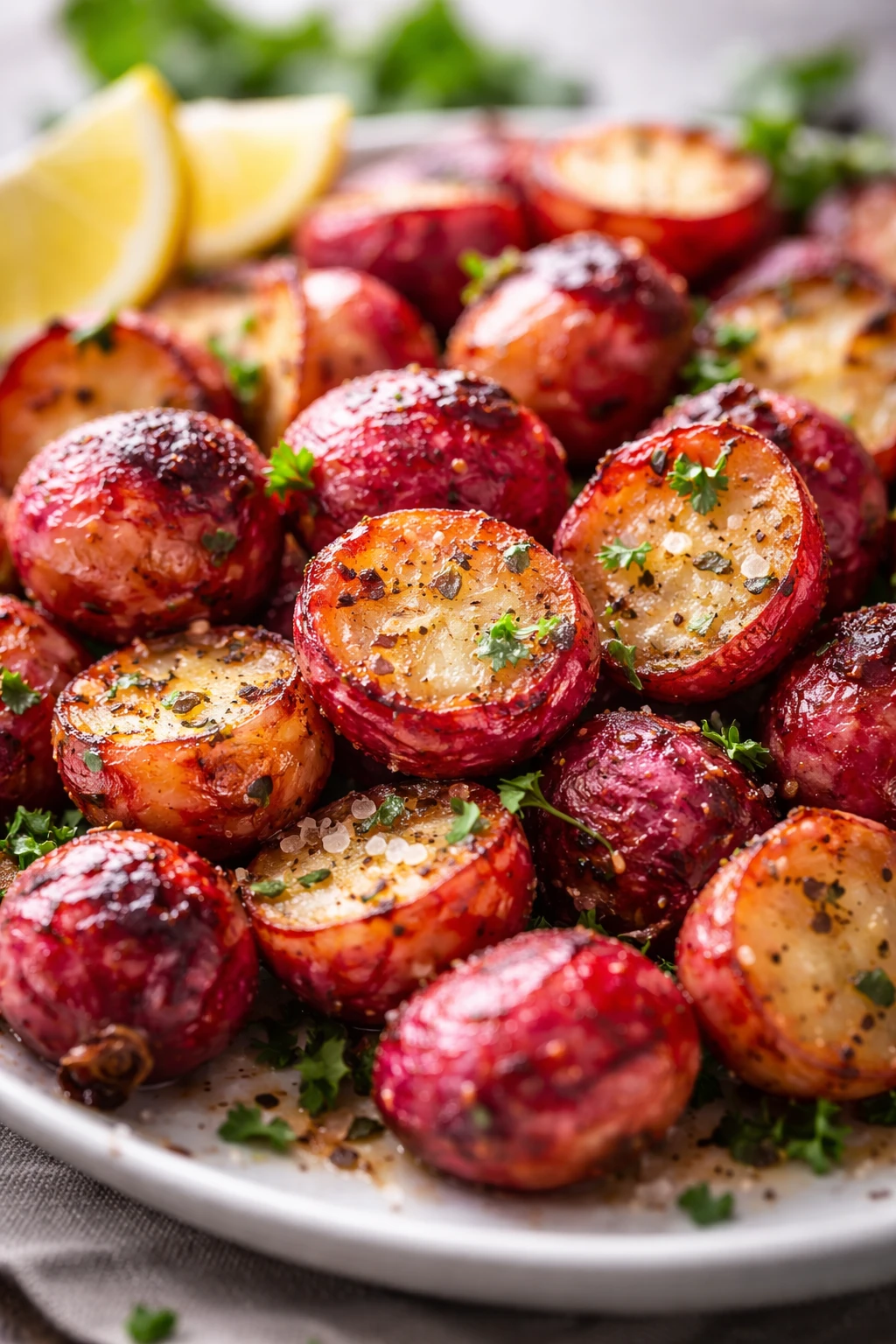
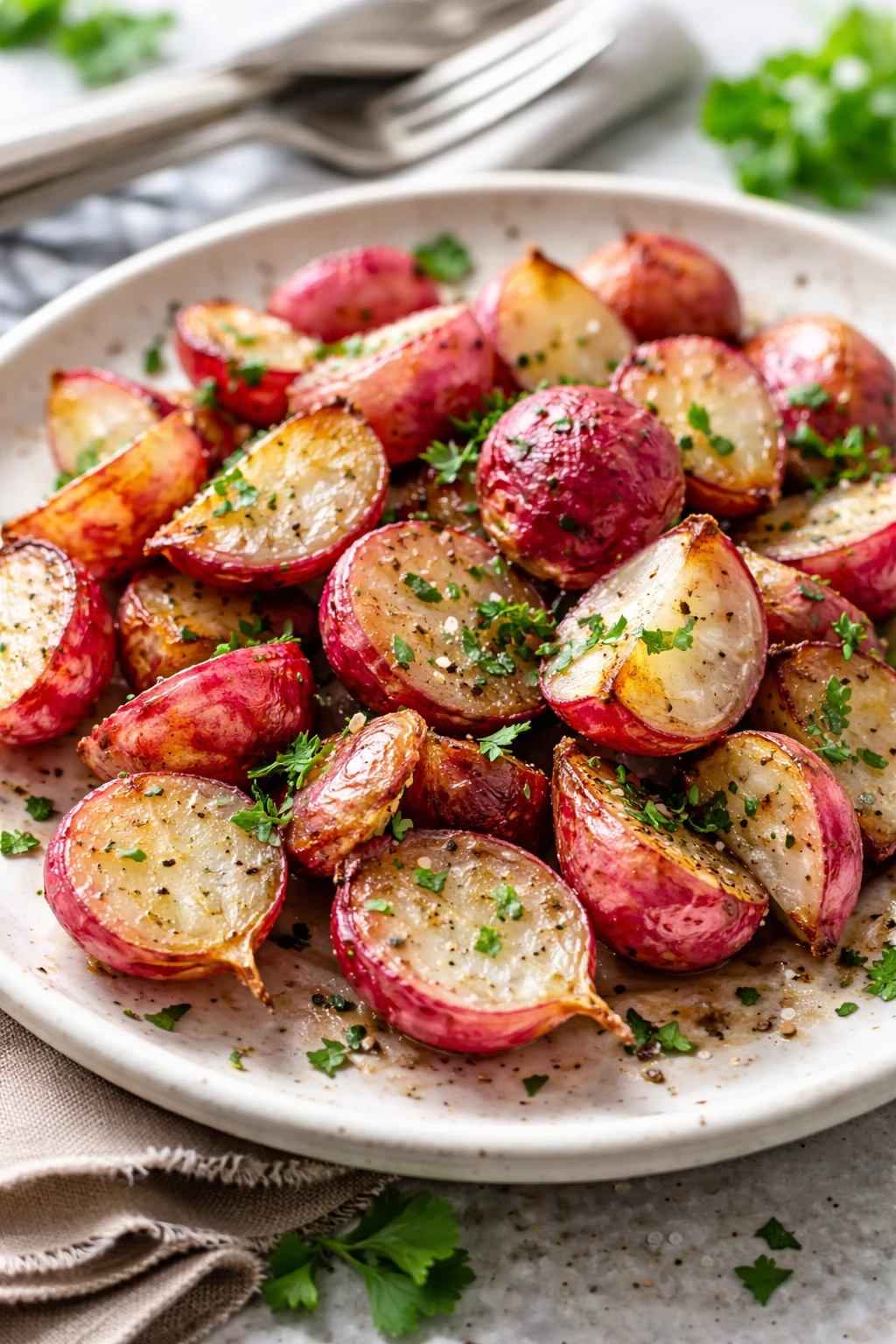
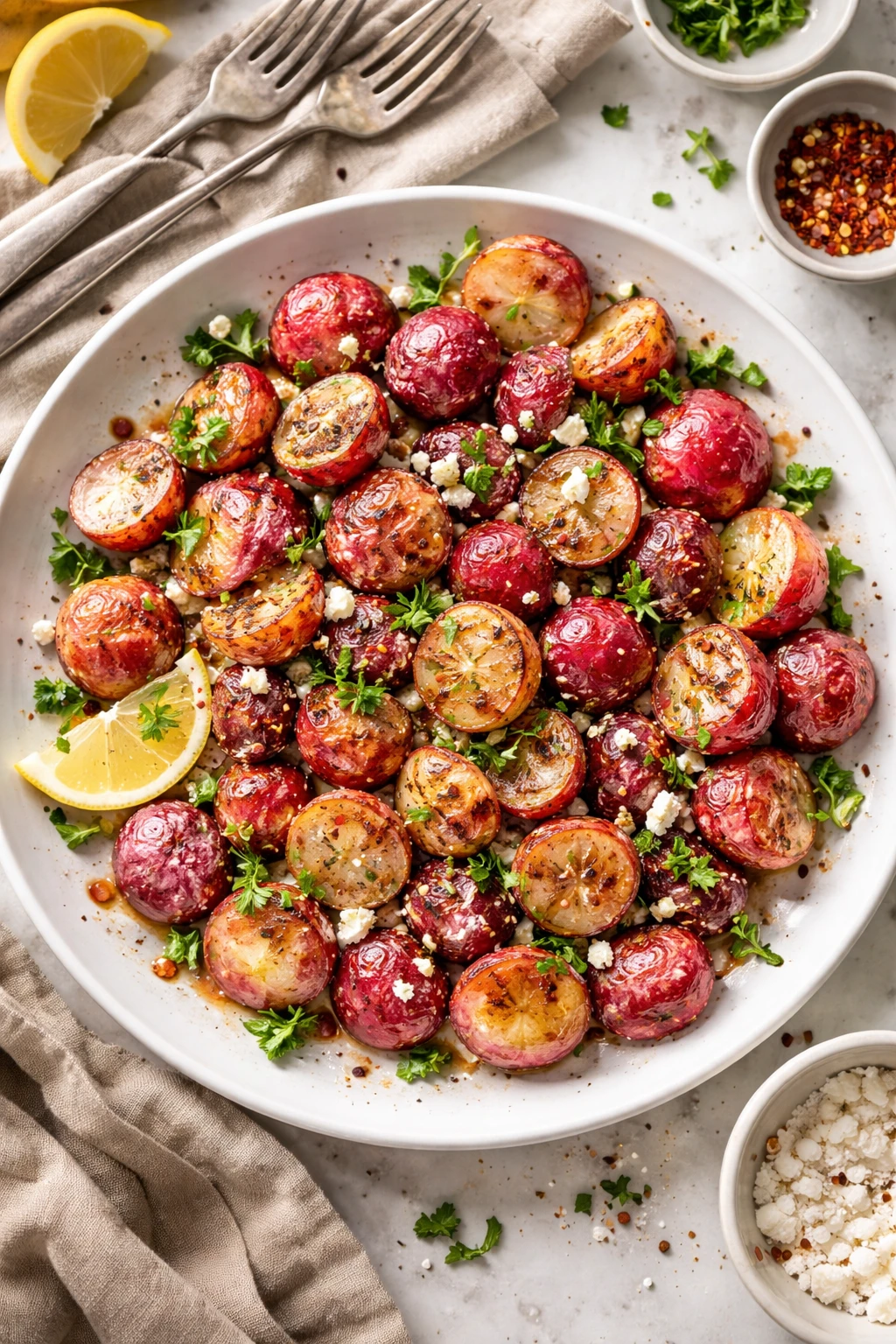
These roasted radishes are surprisingly tender inside with a crisp, golden exterior. Roasting transforms their sharpness into a mild, sweet flavor that’s perfect as a snack or side dish anytime.
Introduction
I first tried roasting radishes a few years ago when I wanted to find a new way to enjoy this often overlooked veggie. Honestly, I was skeptical because raw radishes have such a sharp bite, but roasting completely changes their personality. The trick I learned is to roast them long enough to get a golden crust while keeping the inside tender and sweet. This method softens their natural peppery edge and brings out a subtle earthiness that’s surprisingly addictive. I love serving these as a side with grilled chicken or just as a snack with a sprinkle of fresh herbs. What makes this version better than others I’ve tried is the simple seasoning and the perfect roasting time that avoids turning them soggy or burnt. The finished dish looks beautiful with those crispy edges and bursts of color, and it’s so easy to whip up on a weeknight. If you’re used to eating radishes raw, give this a shot—you might just find a new favorite way to enjoy them!
How To Do It
Step 1
Preheat your oven to 425°F (220°C). This high heat is essential because it helps the radishes develop that beautiful golden crust while keeping the inside tender. If the oven isn’t hot enough, they’ll steam rather than roast, making them mushy instead of crispy. Spread the halved radishes on a baking sheet in a single layer so they roast evenly. Avoid overcrowding, or they’ll steam each other.
⏱ Time: 10 minutes
✓ Doneness: Radishes start turning golden brown around the edges and smell nutty and sweet.
Step 2
Drizzle the olive oil over the radishes and sprinkle with salt and pepper. Toss everything together so each piece is coated evenly. This step helps the radishes crisp up and enhances their natural sweetness. Don’t skimp on the olive oil—it’s what creates that golden crust and prevents sticking. If you skip the salt, the radishes can taste flat and bland once roasted.
⏱ Time: 5 minutes
✓ Doneness: Radishes are glistening and evenly coated with oil and seasoning.
Step 3
Arrange the radishes back on the baking sheet in a single layer, cut side down if possible. This maximizes contact with the pan, encouraging a crispier bottom. Roast in the preheated oven for about 20-25 minutes, flipping halfway through. Keep an eye on them so they don’t burn, especially after flipping.
⏱ Time: 20-25 minutes
✓ Doneness: Radishes are tender when pierced with a fork and have a golden, crispy exterior.
Step 4
Once roasted, remove radishes from the oven and sprinkle with fresh thyme leaves and lemon zest if using. These add a bright, herbal note that complements the sweet earthiness perfectly. Toss gently to distribute the flavors without bruising the radishes.
⏱ Time: 2 minutes
✓ Doneness: Aromatic herbs and zest evenly distributed, brightening the dish visually and flavor-wise.
Step 5
Transfer the radishes to a serving dish immediately to avoid sogginess that can happen if left on the hot baking sheet. Serve warm as a side or snack. They’re best enjoyed right away when the exterior is still crisp and the inside warm and tender.
⏱ Time: 1-2 minutes
✓ Doneness: Radishes remain crisp and visually appealing on the plate.
Step 6
If you want to add a little extra flavor, drizzle a small amount of balsamic glaze or sprinkle some grated Parmesan cheese over the radishes before serving. This adds a savory contrast to the sweetness and crunch.
⏱ Time: Optional, 2 minutes
✓ Doneness: Enhanced flavor layers without overpowering the radishes.
Step 7
For a spicy variation, sprinkle a pinch of crushed red pepper flakes right after roasting. It adds a nice kick without overwhelming the delicate roasted flavor.
⏱ Time: Optional, 1 minute
✓ Doneness: Even distribution of heat that complements rather than masks.
Step 8
Let the radishes cool slightly if serving as a snack. This allows the flavors to meld and the texture to become pleasantly chewy but still crispy.
⏱ Time: 5 minutes
✓ Doneness: Slightly cooled radishes with maintained crunch and intensified flavor.
Step 9
Store any leftovers in an airtight container in the fridge and reheat briefly in a hot skillet or oven to restore crispness before serving again.
⏱ Time: Varies
✓ Doneness: Radishes regain some crisp texture without becoming soggy.
Pro Tips
Don’t overcrowd the baking sheet when roasting.
Overcrowding traps steam and prevents the radishes from getting crispy. Spreading them out allows hot air to circulate, promoting even browning and caramelization. If you have a lot, roast in batches or use two pans.
Flip the radishes halfway through roasting.
Flipping ensures even cooking and browning on all sides. Without flipping, one side might burn while the other remains undercooked, resulting in uneven texture and flavor.
Use a high oven temperature around 425°F.
High heat is necessary to trigger the Maillard reaction, which creates the golden crust and sweet flavor. Lower temperatures will steam the radishes, making them soggy instead of crisp.
Trim radish greens before roasting.
Removing the greens prevents them from burning in the oven and keeps the radishes roasting evenly. Plus, it improves handling and presentation.
Add fresh herbs and lemon zest after roasting.
Adding these ingredients post-roast preserves their fresh aroma and flavor, which can be lost if exposed to high heat. It brightens the dish and balances the roasted earthiness.
Use kosher salt for seasoning.
Kosher salt’s coarse grains dissolve slowly, seasoning the radishes evenly and helping draw out moisture for better roasting. Table salt can be too intense if used in the same amount.
Serve immediately for best texture.
Roasted radishes taste best warm when the exterior is still crisp and the interior tender. Letting them sit too long can cause them to lose their crunch and become soggy.
Common Mistakes to Avoid
Roasting at too low temperature
Why it happens Many assume lower temperatures are gentler and better for veggies, but radishes need high heat to crisp.
Fix Set your oven to 425°F or higher. This high heat creates the Maillard reaction that crisps and sweetens radishes, avoiding soggy results.
Overcrowding the pan
Why it happens Trying to roast everything at once saves time but traps steam.
Fix Spread radishes in a single layer with space between pieces. Use two pans if needed to ensure proper roasting.
Skipping flipping halfway
Why it happens Sometimes people think one flip isn’t necessary or forget.
Fix Flip radishes halfway through cooking to get even browning and prevent burning on one side.
Using old or soft radishes
Why it happens Radishes lose crunch and flavor as they age, but it’s easy to overlook.
Fix Choose firm, fresh radishes with bright color and no blemishes for best texture and taste.
Adding herbs before roasting
Why it happens Some add herbs early thinking it infuses flavor better.
Fix Add fresh herbs and lemon zest after roasting to preserve bright, fresh flavors that heat can destroy.
Variations
Spicy Roasted Radishes
Add 1/2 teaspoon of smoked paprika and a pinch of cayenne pepper to the olive oil before tossing the radishes. This adds a smoky, spicy kick that pairs beautifully with the natural sweetness of the radishes. Great for those who like a little heat in their sides.
Note: Spices should be mixed with oil before roasting to allow flavors to infuse during cooking without burning.
Parmesan Herb Roasted Radishes
Sprinkle freshly grated Parmesan and chopped rosemary over the radishes immediately after roasting. The cheese melts slightly on the warm radishes, adding a savory, umami layer that complements the crispy texture.
Note: Add cheese after roasting to prevent burning and maintain its flavor.
Garlic Butter Roasted Radishes
Melt 2 tablespoons of butter with minced garlic and toss with radishes instead of olive oil. This richer version is perfect for comfort food lovers and adds a mellow garlic aroma.
Note: Use melted butter at moderate heat to avoid burning garlic; toss radishes well for even coating.
Lemon and Dill Roasted Radishes
After roasting, toss radishes with fresh dill and a squeeze of lemon juice instead of zest. The dill adds a fresh, slightly tangy note, making the dish feel light and summery.
Note: Add lemon juice and dill after cooking to keep their flavors bright and fresh.
Honey Glazed Roasted Radishes
Drizzle a teaspoon of honey over the radishes during the last 5 minutes of roasting. The honey caramelizes slightly, enhancing sweetness and adding a glossy finish, perfect for a slightly sweet side dish.
Note: Add honey near the end to prevent it from burning in the oven.
Nutrition
Per Serving:
Nutritional values are estimates and may vary based on specific ingredients used.
Storage & Tips
Room Temperature
Roasted radishes can safely sit out covered at room temperature for up to 2 hours. Beyond this, bacteria growth increases, so it’s best to refrigerate leftovers promptly.
Refrigerator
Store leftovers in an airtight container in the fridge for up to 3 days. The radishes may lose some crispness but can be reheated quickly to restore texture. They can also be eaten cold, though the texture will be softer.
Freezer
Freezing roasted radishes is not recommended as they become mushy upon thawing. If you must freeze, wrap tightly in plastic wrap and a freezer bag for up to 1 month, then thaw gently in the fridge.
Reheating
Reheat in a hot skillet over medium heat for 3-5 minutes to revive crispness. Avoid microwaving as it can make radishes soggy. Add a splash of olive oil if needed to refresh the crust.
Make Ahead
You can trim and halve radishes 1-2 days ahead and store them in water in the fridge to keep fresh. Toss with oil and season just before roasting to ensure the best texture and flavor.
FAQ
Can I roast radishes without oil?
You can roast radishes without oil, but they won’t develop the same crispy, golden crust. The oil helps conduct heat and promotes caramelization. Without it, the radishes may steam and become soggy rather than crisp.
How do I know when radishes are done roasting?
They’re done when the exterior is golden brown and crisp, and the inside is tender when pierced with a fork. This usually takes about 20-25 minutes at 425°F, flipping halfway through for even cooking.
Can I use red or watermelon radishes for this recipe?
Absolutely! Both red and watermelon radishes roast beautifully and add lovely color. Their flavors mellow with roasting, just like regular radishes, so feel free to experiment.
What if my radishes turn out mushy?
Mushy radishes usually mean they were overcrowded or roasted at too low a temperature. Make sure to spread them out on the pan and roast at 425°F or higher to get a crisp texture.
Can I prepare radishes ahead of time?
Yes, you can trim and halve radishes a day or two ahead and store them submerged in water in the fridge to keep them fresh. Just dry well and season with oil right before roasting.
Is it okay to add herbs before roasting?
Fresh herbs are best added after roasting to preserve their bright flavor. Adding them before can cause them to burn and become bitter.
Can I use a different oil like avocado or vegetable oil?
You can use other oils with a high smoke point, like avocado oil, which will also crisp the radishes nicely. Avoid strongly flavored oils like sesame unless you want that flavor to come through.
How do I make this recipe vegan?
This recipe is naturally vegan if you use olive oil and omit any optional cheese toppings. It’s a perfect plant-based side dish.
Final Thoughts
Give these roasted radishes a try—you might be surprised how much you love them! Don’t forget to share your crispy creations with me.