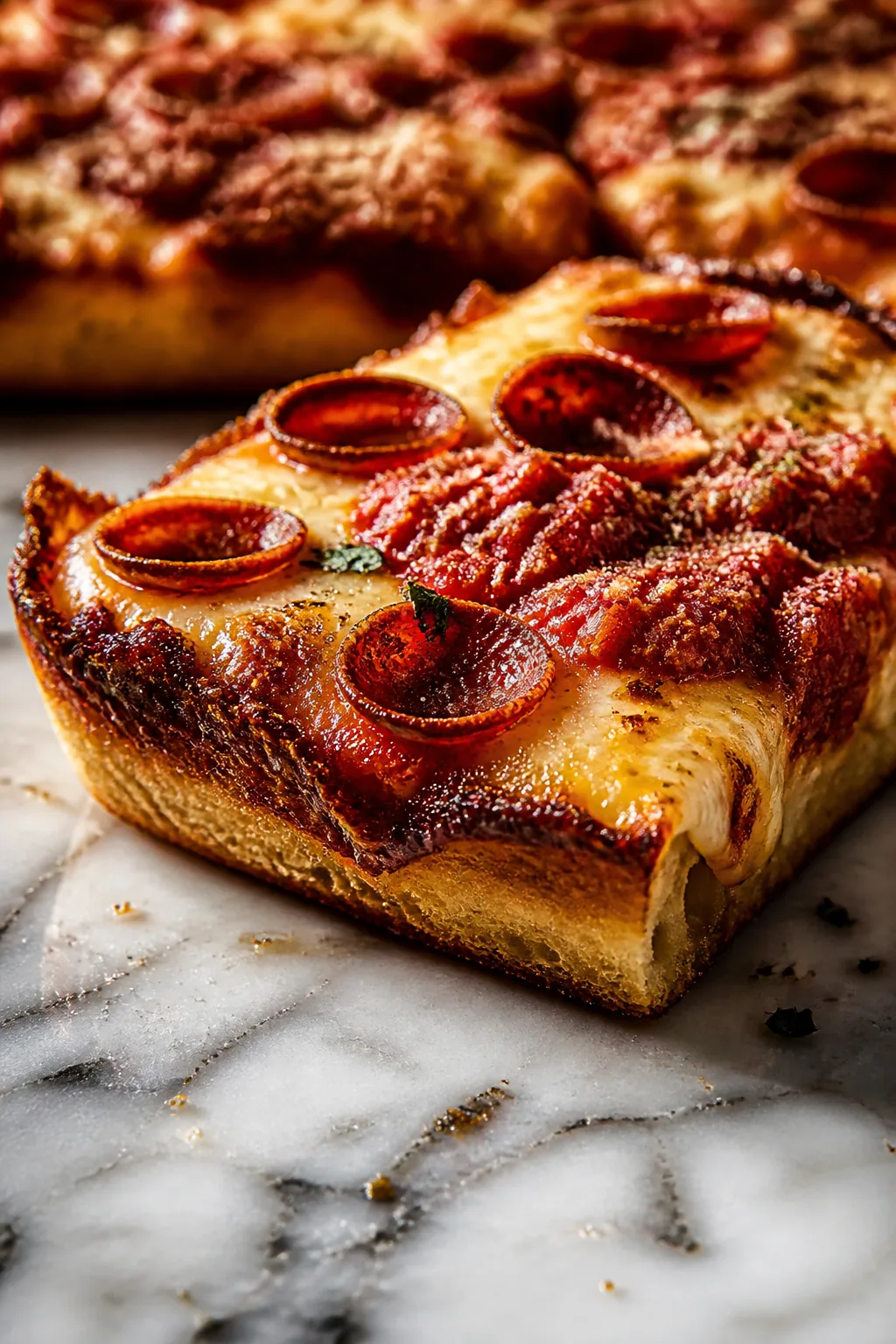
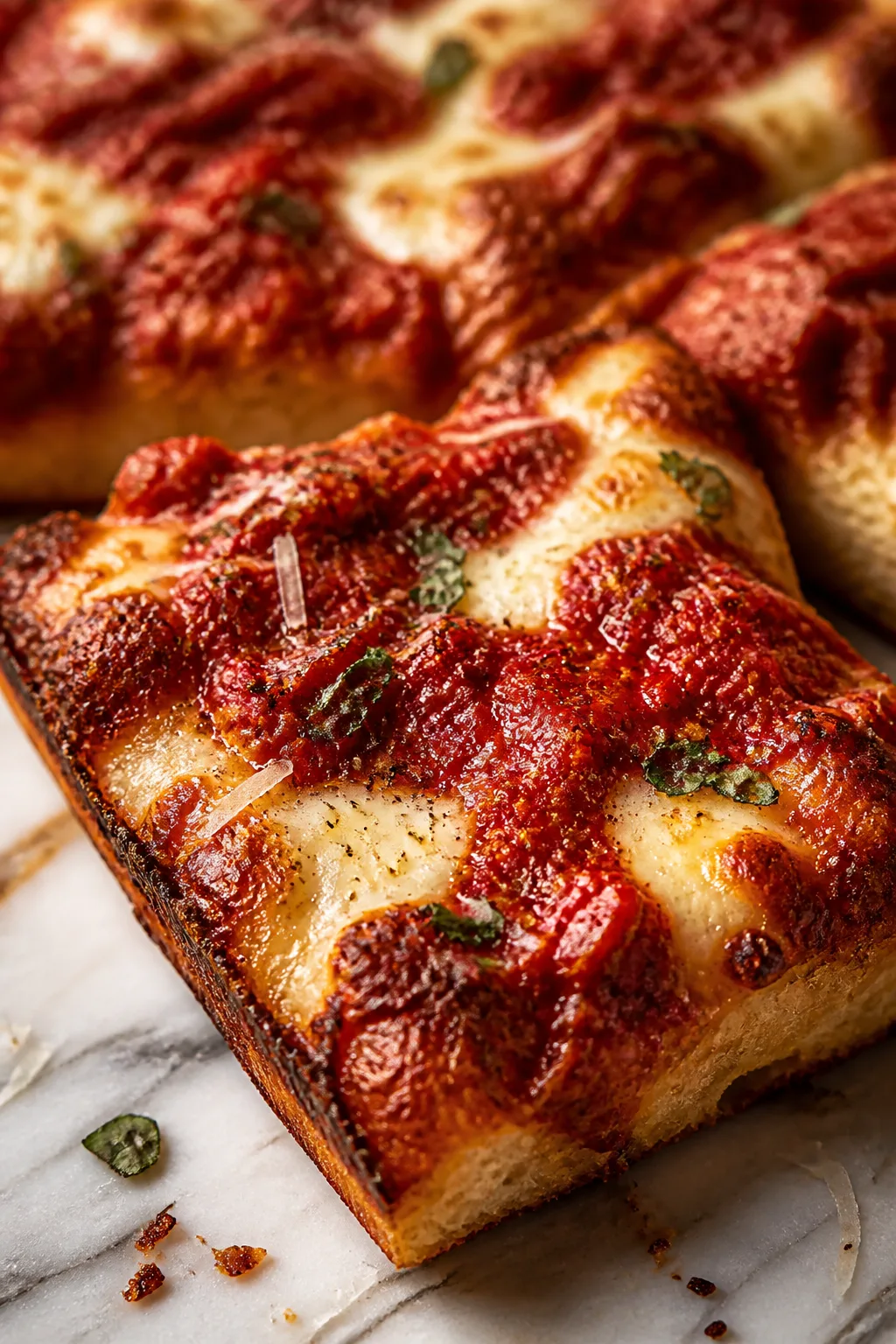
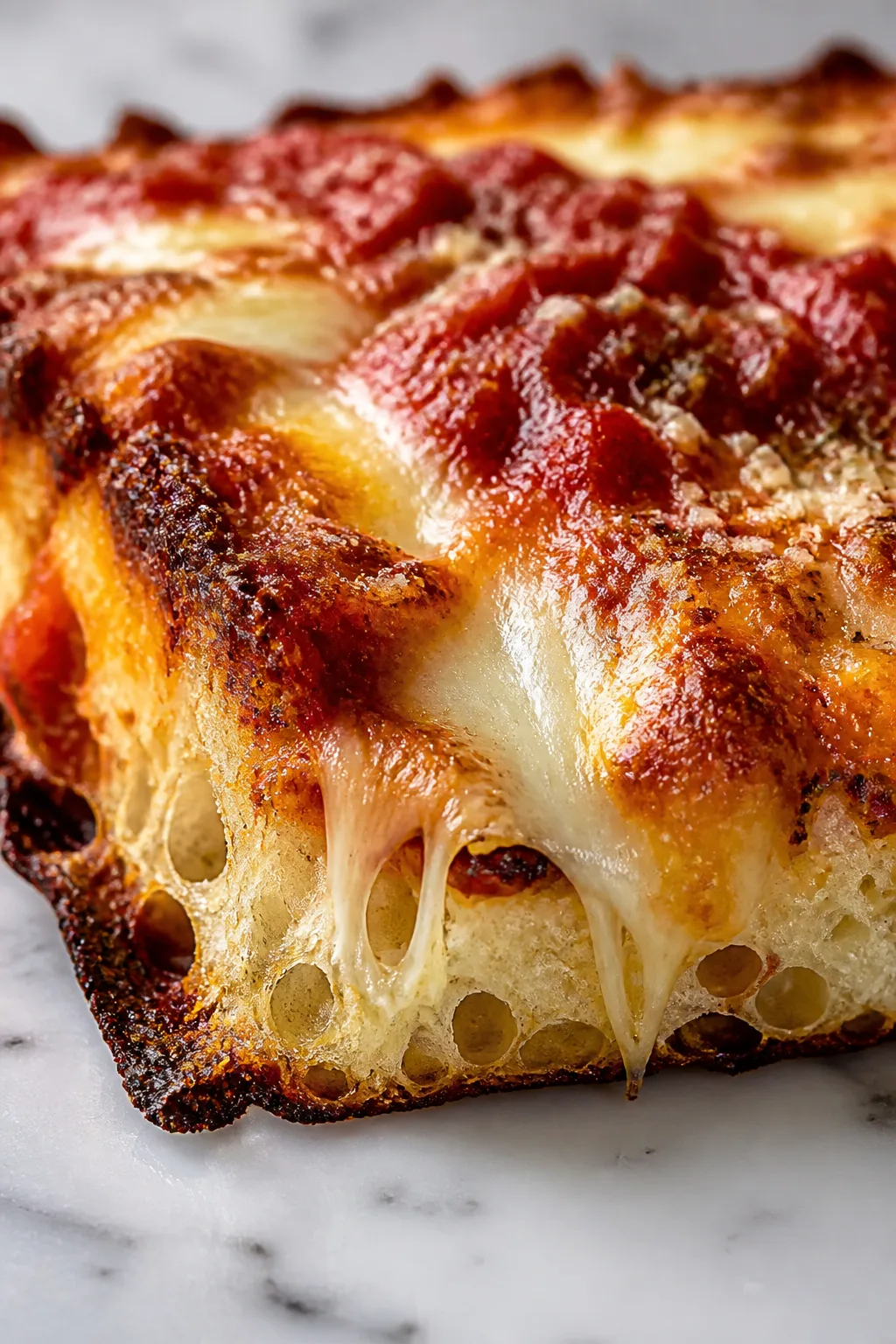
This Detroit style pizza nails that thick, soft crust with a crispy, caramelized cheese edge. The trick is layering cheese under the sauce for that perfect crunch. Ideal for cozy weekend dinners or sharing with friends.
Introduction
I first stumbled upon Detroit style pizza a few years ago during a trip to Michigan, and I was hooked immediately. That thick, airy crust with the crispy, caramelized cheese edges is unlike any pizza I’d tried before. I’ve been making this version at home ever since, tweaking the dough and layering technique to get it just right. The real magic is putting the cheese directly on the dough before the sauce, which melts and caramelizes along the edges, creating that signature crispy crust that’s oh-so-addictive. My family loves it because it’s filling but still light and airy inside, perfect for sharing on a relaxed weekend night. I’ve tried making it with different cheeses and sauces, but sticking to brick cheese and a simple tomato sauce is what really captures that authentic Detroit flavor. Plus, the pan you use makes a difference—I recommend a heavy, well-oiled rectangular pan to get that perfect crunch. When you bake it, you’ll see the cheese bubble up and brown just so, and the crust will have that golden, slightly chewy texture that’s hard to resist. Trust me, once you make it yourself, you’ll want to keep this recipe in your regular rotation.
What You'll Need
One 9x13 inch pizza, 4 servings
- 3 1/2 cups bread flour, room temperature
- 1 1/4 cups warm water (about 110°F)
- 1 packet (2 1/4 tsp) active dry yeast
- 1 tsp sugar
- 2 tsp salt
- 2 tbsp olive oil, plus more for pan
- 12 oz brick cheese, cubed or shredded
- 1 cup pizza sauce, slightly thickened
- Optional: pepperoni slices for topping
How To Do It
Step 1
Start by activating your yeast: combine the warm water (around 110°F) with sugar and yeast in a bowl. Let it sit for about 5-10 minutes until it becomes foamy. This step is crucial because it tells you if your yeast is alive and active. If it doesn’t foam, your yeast might be old or the water too hot or cold, which means your dough won’t rise properly. Once foamy, you know your dough will have that light, airy texture.
⏱ Time: 10 minutes
✓ Doneness: Foamy, bubbly surface on the yeast mixture
Step 2
In a large bowl, mix the bread flour and salt. Slowly pour in the yeast mixture and olive oil while stirring with a wooden spoon or dough hook attachment on a stand mixer. The dough should come together into a sticky ball. Knead by hand or mixer for about 7-10 minutes until it’s smooth and elastic. Proper kneading develops gluten, giving the dough strength and that chewy texture you want in the crust. Avoid adding too much extra flour here; a slightly sticky dough is perfect.
⏱ Time: 10 minutes
✓ Doneness: Smooth, elastic dough that springs back when poked
Step 3
Lightly oil a large bowl and place your dough inside. Cover it with plastic wrap or a damp towel, then let it rise at room temperature for about 1.5 to 2 hours, or until doubled in size. This slow rise lets the dough develop flavor and air pockets, which create that airy interior. Don’t rush this step by putting it in a warm spot or using too much yeast; it can cause off flavors or a dense crust.
⏱ Time: 1.5 to 2 hours
✓ Doneness: Dough has doubled in size and looks puffy
Step 4
Generously oil a 9x13 inch Detroit style pizza pan or similar rectangular pan. Gently press the dough into the pan, stretching it to the corners but don’t overwork it. The oil helps the dough fry slightly against the pan during baking, creating the signature crispy and chewy crust. If your dough resists stretching, let it rest for 10 minutes to relax gluten.
⏱ Time: 5 minutes
✓ Doneness: Dough evenly spread to the edges, with some bubbles visible
Step 5
Now add the cheese—brick cheese is traditional because it melts beautifully and caramelizes well. Spread the cheese evenly over the dough, making sure to cover all edges. This layer of cheese underneath the sauce is the key to that crispy, caramelized cheese edge that Detroit style pizza is famous for. Don’t skimp on cheese here; it creates both flavor and texture contrast that’s essential.
⏱ Time: 5 minutes
✓ Doneness: Cheese evenly spread, touching the edges of the dough
Step 6
Spoon your pizza sauce over the cheese in three stripes or dollops, leaving some cheese visible between. This style of sauce application prevents the crust from getting soggy and lets the cheese crisp up nicely on the edges. Use a thicker sauce to avoid watery results. If you want pepperoni, add it on top of the sauce now.
⏱ Time: 5 minutes
✓ Doneness: Sauce arranged in stripes with cheese visible underneath
Step 7
Preheat your oven to 500°F (or as hot as it goes) and bake the pizza on the middle rack for about 15-20 minutes. The high heat ensures the crust crisps up quickly while the cheese melts and caramelizes. Keep an eye on the edges; they should turn golden brown and bubbly but not burnt. If your oven runs hot, you might need to reduce time slightly.
⏱ Time: 15-20 minutes
✓ Doneness: Golden brown crust with bubbly, browned cheese edges
Step 8
Once baked, remove the pizza from the oven and let it rest for 5 minutes before slicing. This rest time allows the cheese to set slightly so it doesn’t slide off when cut. Use a sharp knife or pizza cutter to slice into squares, the classic Detroit style serving method. The crust should be crispy on the bottom and edges but soft and airy inside.
⏱ Time: 5 minutes
✓ Doneness: Pizza holds its shape when sliced, cheese slightly firmed
Step 9
Serve your Detroit style pizza warm with your favorite toppings or sides. It pairs well with a simple salad or garlic bread. Leftovers reheat nicely in a skillet or oven to restore crispness. Enjoy the combination of chewy, airy dough with crispy, caramelized cheese edges and tangy sauce—pure comfort food!
⏱ Time: Immediate
✓ Doneness: Warm, delicious slices ready to enjoy
Pro Tips
Let the dough rise slowly at room temperature for better flavor.
A slow, room temperature rise allows yeast to develop complex flavors and produces a better crumb structure. Rushing with warm or hot spots can cause uneven fermentation and less flavorful dough. Patience here pays off in taste and texture.
Use a heavy rectangular pan for authentic crust development.
A sturdy pan like a Detroit style steel pan or cast iron helps conduct heat evenly and promotes that crispy, fried crust. Thin or flimsy pans won’t hold heat well, leading to uneven baking and less crispiness.
Apply cheese directly on dough before sauce for caramelized edges.
This layering technique ensures the cheese melts and browns against the pan oil, creating those signature crispy edges. Sauce on top protects the cheese and prevents burning while adding moisture and flavor.
Don’t overload the pizza with toppings to keep crust crispy.
Too many toppings release excess moisture, which can make the crust soggy and prevent cheese caramelization. Keep toppings balanced to maintain texture contrast.
Preheat your oven fully to the highest temperature before baking.
High heat is needed to quickly crisp the crust and brown the cheese without drying out the dough. Baking in a cold oven results in a dense, undercooked crust.
Rest the pizza after baking before slicing.
Allowing the pizza to rest lets cheese set slightly, making slicing cleaner and preventing toppings from sliding off. This also helps the crust firm up just enough for perfect texture.
Use bread flour instead of all-purpose for better chewiness.
Bread flour’s higher protein content develops more gluten, giving the dough strength and elasticity needed for the airy yet chewy Detroit style crust.
Common Mistakes to Avoid
Using too little oil in the pan
Why it happens Many think less oil means healthier or less greasy pizza, but the oil is essential for frying the crust edges and preventing sticking.
Fix Generously oil the pan before pressing in the dough. This creates the crispy, golden crust that’s signature to Detroit style pizza and prevents the dough from sticking during baking.
Skipping the yeast proofing step
Why it happens Some skip proofing to save time or assume the yeast is fine, but old or dead yeast won’t rise dough properly.
Fix Always proof yeast in warm water with sugar before mixing. If it doesn’t foam, get fresh yeast to ensure a good rise and airy dough.
Spreading sauce too thickly or evenly
Why it happens People often spread sauce over the entire pizza out of habit, but this can make the crust soggy and prevent cheese from caramelizing.
Fix Apply sauce in stripes or dollops on top of the cheese. This keeps the cheese exposed to the pan for crisping while adding flavor without sogginess.
Overloading with toppings
Why it happens It’s tempting to add lots of toppings, but this releases moisture and weighs down the dough.
Fix Use toppings sparingly to keep the crust crispy and cheese edges caramelized. Too many toppings can ruin the texture balance.
Baking at too low temperature
Why it happens Not everyone has a super hot oven or forgets to preheat fully, leading to undercooked or dense crust.
Fix Preheat oven to highest setting (around 500°F) and bake pizza on middle rack. High heat quickly crisps crust and browns cheese perfectly.
Variations
Pepperoni Detroit Style Pizza
Add pepperoni slices on top of the sauce before baking for a classic meaty twist. The pepperoni crisps up nicely and adds a smoky, spicy flavor that complements the cheesy crust perfectly.
Note: Add pepperoni just after the sauce layer to ensure it crisps without burning. Watch baking time as pepperoni can brown quickly.
Vegetarian Detroit Style Pizza
Top the sauce with sautéed mushrooms, bell peppers, and onions for a veggie-packed version. The veggies add sweetness and earthiness, balancing the rich cheese and crispy crust.
Note: Sauté vegetables beforehand to remove excess moisture and prevent sogginess in the crust.
Spicy Detroit Style with Jalapeños
Add sliced jalapeños either fresh or pickled on top of the sauce for a spicy kick. This variation adds a nice heat contrast to the creamy cheese and rich sauce.
Note: Use fresh jalapeños for sharper heat or pickled for tanginess. Adjust quantity to taste.
White Detroit Style Pizza
Skip the tomato sauce and use a garlic cream sauce or olive oil base with herbs. Top with mozzarella and ricotta for a rich, creamy take on the classic.
Note: Bake slightly shorter to prevent cream sauce from drying out; watch cheese browning closely.
Gluten-Free Detroit Style Pizza
Use a gluten-free bread flour blend and add xanthan gum to mimic gluten structure. The crust will be less chewy but still thick and satisfying with crispy cheese edges.
Note: Gluten-free dough needs gentle handling and often less rise time; expect a different texture but similar flavor.
Nutrition
Per Serving:
Nutritional values are estimates and may vary based on specific ingredients used.
Storage & Tips
Room Temperature
You can keep leftover Detroit style pizza at room temperature for up to 2 hours if covered loosely with foil or a clean towel. Beyond that, bacteria growth increases, so refrigerate promptly to stay safe.
Refrigerator
Store pizza slices in an airtight container or wrapped tightly in plastic wrap for up to 3-4 days. The crust may lose some crispness when cold, so gently reheat in the oven or a skillet to restore texture before eating.
Freezer
Freeze leftover pizza slices by wrapping them individually in plastic wrap and then in foil or a freezer bag to prevent freezer burn. Freeze for up to 2 months. Thaw in refrigerator overnight before reheating for best texture.
Reheating
Reheat pizza in a preheated oven at 375°F for 8-10 minutes or in a skillet over medium heat until the crust crisps and cheese melts. Avoid microwaving as it can make the crust soggy and chewy. Adding a splash of water to the skillet helps create steam and melts cheese evenly.
Make Ahead
You can prepare the dough a day ahead and refrigerate it after the first rise. Bring it to room temperature before shaping. The pizza can also be assembled and refrigerated for a few hours before baking. This makes dinner prep easier on busy days.
FAQ
Can I use all-purpose flour instead of bread flour?
You can, but the crust won’t be as chewy or have the same structure. Bread flour has higher protein which develops gluten needed for that airy, elastic dough. If you only have all-purpose, expect a slightly denser crust but it will still taste good.
What if I don’t have brick cheese?
Brick cheese is ideal for melting and caramelizing, but you can substitute a blend of mozzarella and Monterey Jack. Avoid low-fat or pre-shredded cheeses with anti-caking agents, as they don’t melt as well or brown properly.
How important is the pan choice?
Very important! A heavy rectangular pan like a Detroit style steel pan or cast iron conducts heat evenly and creates the crispy, fried crust. Thin or flimsy pans don’t hold heat well and lead to uneven cooking.
Can I make the dough ahead and freeze it?
Yes, you can freeze the dough after the first rise by wrapping it tightly. Thaw overnight in the refrigerator, then let it come to room temperature before shaping. This helps with planning ahead without sacrificing texture.
Why does the cheese need to go under the sauce?
Placing cheese directly on the dough allows it to melt and caramelize against the oiled pan, creating the crispy edges Detroit style pizza is famous for. Sauce on top protects the cheese from burning and adds moisture and flavor.
Can I add more toppings?
You can, but keep in mind that too many toppings add moisture and weight, which can make the crust soggy and prevent cheese caramelization. Use toppings sparingly to maintain the signature texture balance.
How do I know when the pizza is done?
Look for golden brown crust with bubbly, browned cheese edges. The crust should be crispy on the bottom and edges but soft inside. The cheese should be melted and caramelized without burning.
Is it okay to use a pizza stone instead of a pan?
For Detroit style pizza, a rectangular pan is key to getting the crispy cheese edges and fried crust. A pizza stone won’t produce the same effect, as it lacks the high sides and oil needed for that signature texture.
Final Thoughts
Give this Detroit style pizza a try and enjoy that crispy, cheesy crust and airy dough at home! I’d love to hear how yours turns out—don’t forget to share your creations!