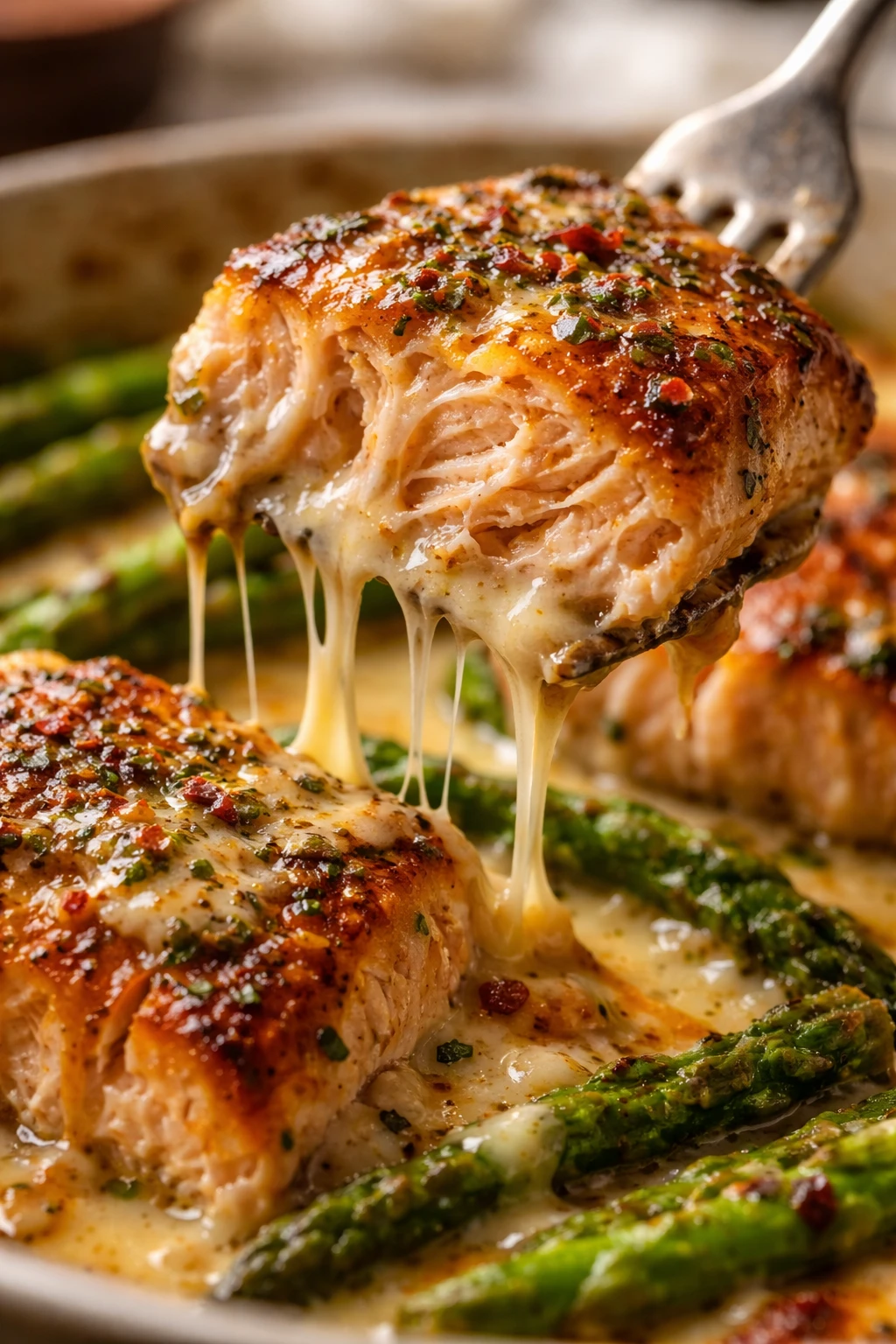
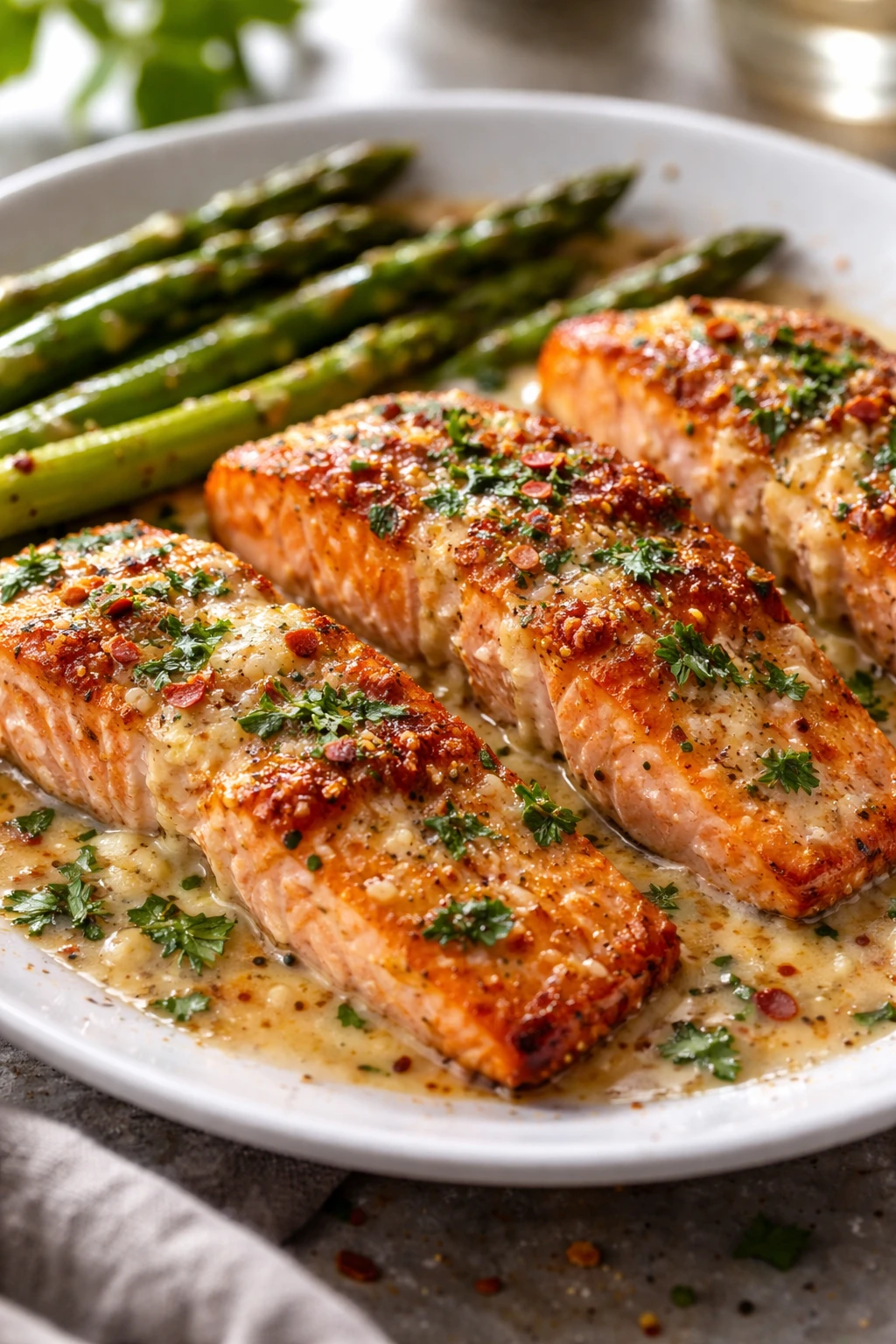
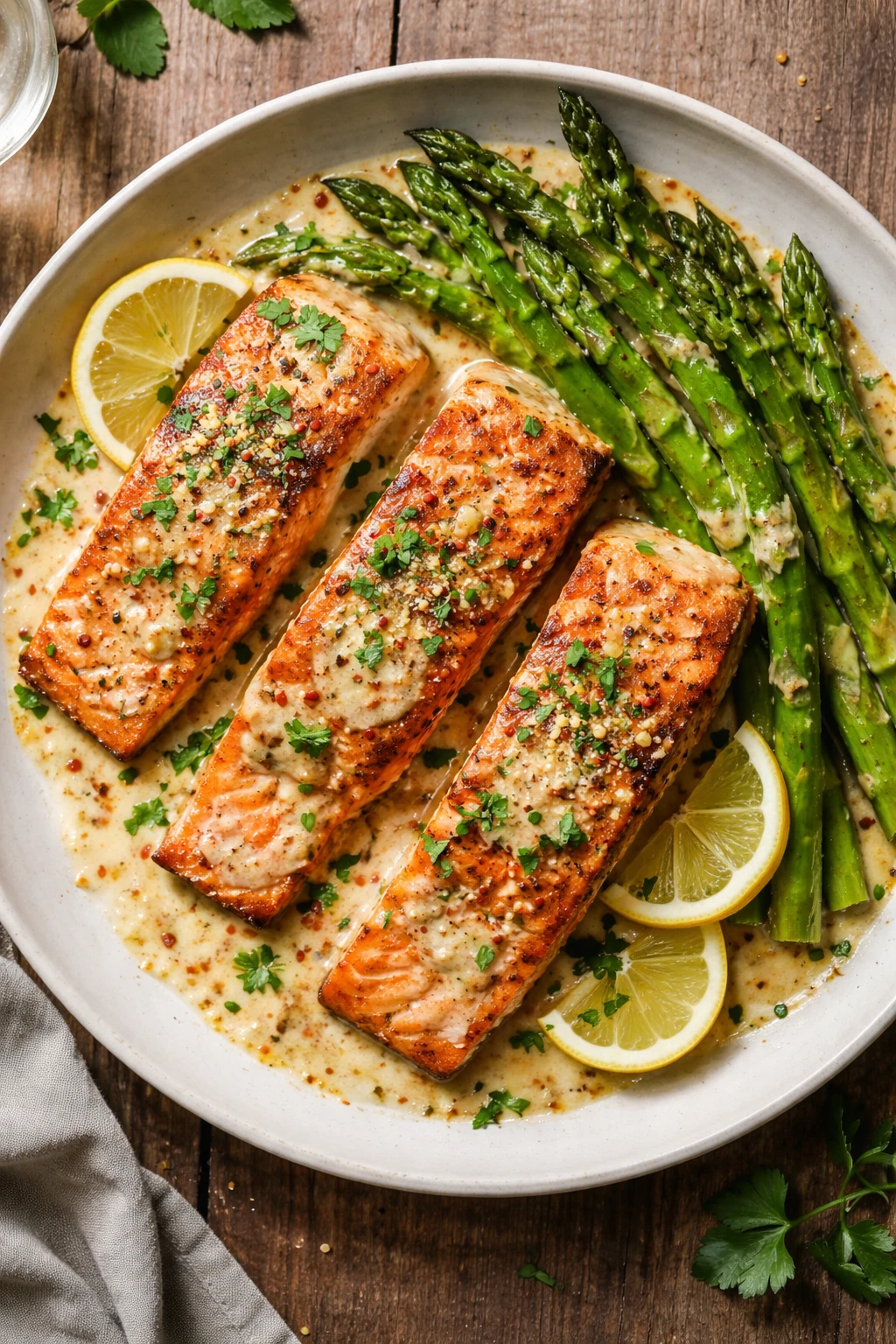
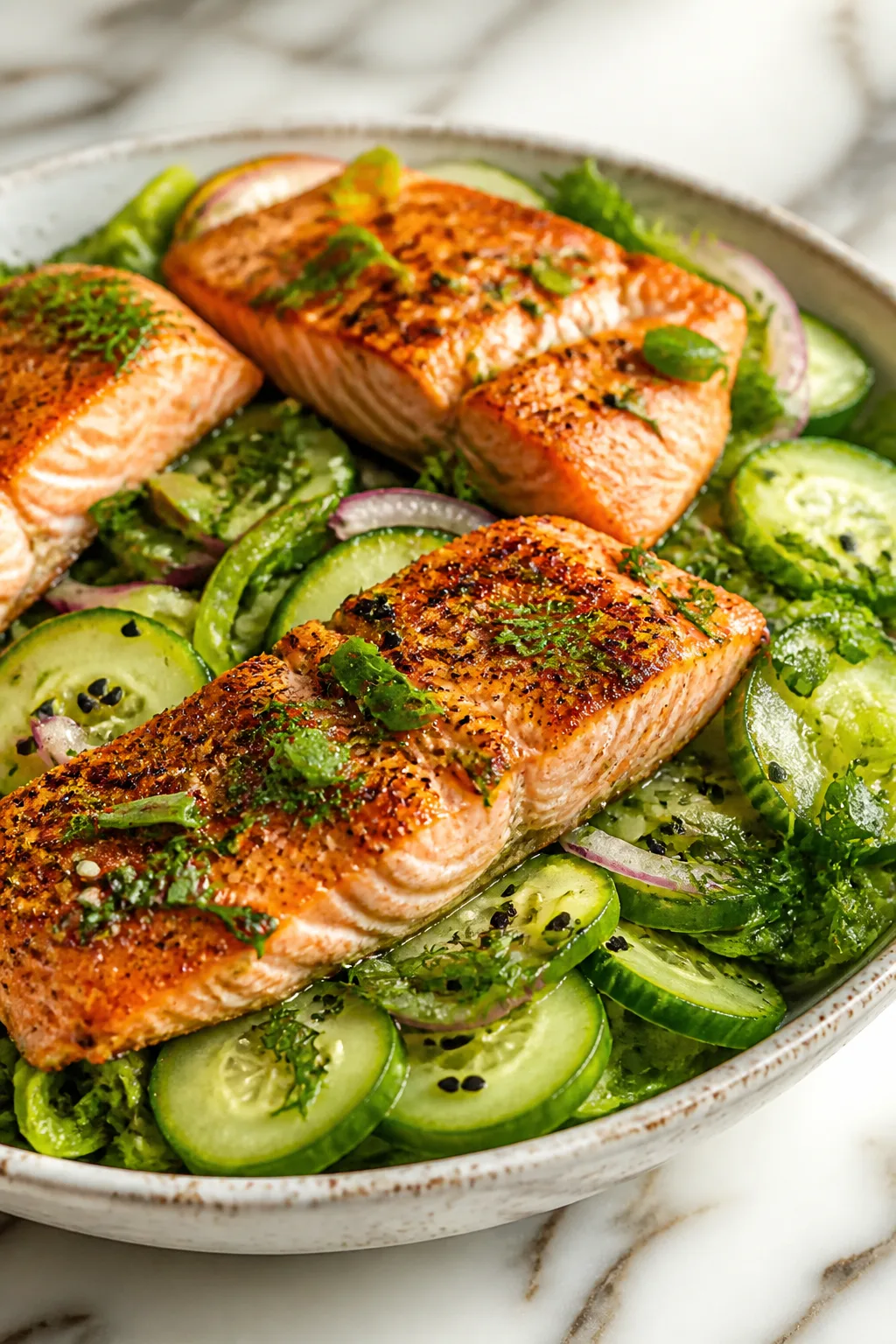
This salmon recipe is a quick, creamy delight that pairs tender fish with garlicky butter sauce and crisp asparagus. The splash of cream makes the sauce irresistibly smooth. Perfect for a fancy weeknight dinner!
Introduction
I first tried making this creamy garlic butter salmon on a busy weeknight when I wanted something quick but still special enough to impress my family. I’d had salmon many ways before, but adding a splash of cream to the garlicky butter sauce completely transformed the dish. It gave the sauce this silky smooth texture that clings perfectly to the fish and asparagus. The asparagus adds a fresh, crisp contrast, so you get a nice balance of flavors and textures. What makes this version different is how the cream and lemon juice brighten the whole thing without overpowering the salmon’s delicate flavor. I remember the first time I rushed through the garlic step and the sauce lacked depth, so I learned to let the garlic gently sizzle in butter to coax out its sweetness without burning. The result is a flaky, tender salmon with a luscious sauce that feels indulgent but takes under 30 minutes to pull off. It’s become a favorite for those nights when you want a little fancy without spending hours in the kitchen. Plus, cleanup is a breeze since everything cooks in one pan!
How To Do It
Step 1
Start by prepping your salmon fillets: pat them dry with paper towels to remove excess moisture. This step is crucial because dry skin crisps up better during cooking. Season both sides generously with salt and freshly ground black pepper. Let them rest at room temperature for about 10 minutes while you prepare the asparagus. This resting helps the salmon cook evenly and prevents the flesh from sticking to the pan.
⏱ Time: 10
✓ Doneness: Salmon surface feels dry to the touch and seasoned evenly
Step 2
Heat 1 tablespoon of olive oil and 1 tablespoon of butter in a large skillet over medium-high heat. Once the butter melts and starts to foam, add the salmon fillets skin-side down. Cook without moving them for about 5-6 minutes until the skin is crispy and golden brown. Resist the urge to flip too early; this ensures a nice crust forms and the fish releases naturally from the pan.
⏱ Time: 6
✓ Doneness: Skin is crisp and golden, fish easily lifts from the pan
Step 3
Flip the salmon carefully using a spatula and cook the other side for 3-4 minutes, depending on thickness. The salmon should be opaque about two-thirds of the way up the fillet and slightly translucent in the center. Avoid overcooking to keep it tender and juicy. Remove the salmon from the pan and set aside on a warm plate.
⏱ Time: 4
✓ Doneness: Salmon is mostly opaque with slight translucency in thickest part
Step 4
In the same skillet, add the remaining 2 tablespoons of butter and minced garlic. Lower the heat to medium to gently sauté the garlic for about 1 minute until fragrant but not browned. This slow cooking extracts sweet, mellow flavors from the garlic without bitterness, which is key for the sauce’s smooth taste.
⏱ Time: 1
✓ Doneness: Garlic is aromatic and soft but not browned
Step 5
Add the trimmed asparagus to the skillet and toss to coat in the garlic butter. Cook for about 5 minutes, stirring occasionally, until the asparagus is bright green and tender-crisp. Cooking it just right keeps a pleasant crunch that contrasts beautifully with the creamy sauce and flaky salmon.
⏱ Time: 5
✓ Doneness: Asparagus is tender yet still firm and vibrant green
Step 6
Pour in the heavy cream and stir to combine with the garlic butter and asparagus. Let it simmer gently for 2-3 minutes to thicken slightly. The cream adds richness and helps emulsify the sauce, giving it that luxurious texture that clings to the fish perfectly.
⏱ Time: 3
✓ Doneness: Sauce is slightly thickened and creamy
Step 7
Stir in fresh lemon juice and season the sauce with salt and pepper to taste. The lemon brightens the richness and balances the flavors, making the dish feel fresh and vibrant. Taste as you go to make sure the balance suits your preference.
⏱ Time: 1
✓ Doneness: Sauce has a fresh, tangy aroma with balanced seasoning
Step 8
Return the salmon fillets to the skillet, spooning some sauce and asparagus over the top. Let them warm through for a minute or two without cooking further to keep the salmon tender. This final step melds the flavors and ensures each bite has sauce and veggies.
⏱ Time: 2
✓ Doneness: Salmon is warmed through and sauce coats fillets evenly
Step 9
Serve immediately, plating the salmon alongside the garlic asparagus and drizzling extra sauce on top. Garnish with fresh herbs if you like. This dish shines best hot, with the creamy sauce silky and the asparagus crisp. Enjoy with a simple side like rice or crusty bread to soak up every bit of sauce.
⏱ Time: 1
✓ Doneness: Dish looks glossy with vibrant colors and fresh aroma
Pro Tips
Pat salmon dry before seasoning.
Removing excess moisture from the salmon skin helps it crisp up beautifully in the pan. If the skin is wet, it steams instead of sears, resulting in a soggy texture and less flavor.
Cook garlic on medium heat slowly.
Garlic burns quickly and develops bitterness when cooked too hot. Cooking it gently in butter extracts its natural sweetness, which enriches the sauce without harsh flavors.
Don’t overcrowd the pan when searing salmon.
Crowding lowers the pan temperature and causes uneven cooking, preventing a crispy crust. Cook in batches if needed to maintain heat and achieve the perfect sear.
Add lemon juice off the heat.
Adding lemon juice after cooking preserves its bright, fresh flavor. Cooking lemon juice too long can dull the acidity and make the sauce taste flat.
Use fresh asparagus, not frozen.
Fresh asparagus holds its texture and vibrant color better when sautéed. Frozen asparagus tends to become mushy and watery, which affects the dish’s balance.
Let salmon rest briefly before serving.
Resting allows juices to redistribute inside the fillet, resulting in moist, tender fish. Cutting into it immediately can cause moisture to run out, making it dry.
Simmer sauce gently to thicken.
A gentle simmer thickens the cream and butter sauce without curdling. High heat can break the emulsion, causing separation and a grainy texture.
Common Mistakes to Avoid
Cooking salmon straight from the fridge.
Why it happens Many cooks want to save time and put cold salmon directly into the pan, but this causes uneven cooking and can make the fish tough.
Fix Let the salmon rest at room temperature for 10-15 minutes before cooking. This helps it cook more evenly and prevents the outside from overcooking while the inside warms through.
Burning the garlic in the sauce.
Why it happens Garlic cooks very fast and can burn if the heat is too high or if left unattended, leading to a bitter taste.
Fix Keep the heat medium or medium-low when sautéing garlic and stir frequently. Remove from heat as soon as it becomes fragrant and lightly golden.
Overcooking the salmon.
Why it happens Salmon continues to cook after removal from heat, so leaving it in the pan too long makes it dry and rubbery.
Fix Cook salmon until it’s just opaque on the outside but still slightly translucent in the center, then remove from heat and let it rest. This ensures moist, tender fillets.
Skipping the lemon juice.
Why it happens Some skip lemon juice thinking it’s optional, but it’s key to balancing the richness of the sauce.
Fix Always add a splash of fresh lemon juice at the end to brighten the dish and cut through the creamy butter sauce.
Using frozen or limp asparagus.
Why it happens Frozen asparagus or old stalks lose their crisp texture and fresh flavor, resulting in a soggy side dish.
Fix Choose fresh, firm asparagus with closed tips. If using frozen, thaw completely and pat dry before cooking to reduce excess moisture.
Variations
Spicy Creamy Salmon
Add a pinch of red pepper flakes or a dash of cayenne to the garlic butter sauce for a little heat. This gives the dish a nice kick without overpowering the creamy texture. Pair with lemon wedges to balance the spice.
Note: Add spices when sautéing garlic to infuse the butter with heat; adjust amount to taste.
Herb-Infused Cream Sauce
Stir in fresh chopped herbs like dill, parsley, or chives into the cream sauce just before serving. The herbs add fresh, aromatic notes that complement the richness of the salmon and butter.
Note: Add herbs off heat to preserve their bright flavor and color.
Dairy-Free Version
Replace butter with olive oil and heavy cream with full-fat coconut milk or cashew cream to make this recipe dairy-free. The texture will be slightly different but still creamy and delicious.
Note: Use gentle heat to prevent coconut milk from separating; flavor profile will be subtly coconutty.
Roasted Asparagus Swap
Instead of sautéing asparagus in the pan, roast it separately with olive oil, salt, and pepper. This adds a smoky depth and crispy texture that pairs wonderfully with the creamy salmon sauce.
Note: Roast asparagus at 425°F for 12-15 minutes until tender and slightly charred.
Lemon Butter Caper Sauce
Add capers to the garlic butter sauce for a briny, tangy twist. The capers add bursts of flavor that brighten the dish and add complexity, perfect for when you want a slightly more savory profile.
Note: Add capers after garlic sautéeing, allowing them to warm gently without overcooking.
Nutrition
Per Serving:
Nutritional values are estimates and may vary based on specific ingredients used.
Storage & Tips
Room Temperature
This salmon dish should not be left at room temperature for more than 2 hours. Cover it loosely with foil if you need to keep it out briefly, but refrigeration is best for safety and freshness.
Refrigerator
Store leftovers in an airtight container for up to 3 days. The sauce may thicken when cold; gently reheat on the stovetop with a splash of water or cream to loosen it. The asparagus may soften but still tastes good warmed.
Freezer
Freeze cooked salmon and sauce separately in airtight containers or freezer bags for up to 2 months. Wrap tightly to avoid freezer burn. Thaw overnight in the fridge before reheating gently to preserve texture.
Reheating
Reheat on low heat in a skillet with a splash of cream or water to restore sauce consistency. Avoid microwave reheating as it can dry out salmon and make sauce separate. Warm just until heated through to keep salmon tender.
Make Ahead
You can prep the garlic butter sauce and trim asparagus 1 day ahead, storing separately in the fridge. Cook salmon fresh to keep it moist. Assemble and finish cooking the asparagus and sauce on the day you plan to serve.
FAQ
Can I use frozen salmon for this recipe?
Yes, but thaw it completely in the refrigerator overnight before cooking. Pat it dry thoroughly to ensure the skin crisps up properly. Cooking frozen or partially frozen salmon can lead to uneven cooking and watery texture.
What can I substitute for heavy cream?
You can use half-and-half or whole milk for a lighter sauce, but it won’t be as rich or thick. For dairy-free options, coconut milk or cashew cream works well but will add a different flavor. Add these gently to avoid curdling.
How do I know when the salmon is cooked perfectly?
Look for salmon that is opaque about two-thirds of the way up and slightly translucent in the center. It should flake easily with a fork but still be moist. Overcooked salmon becomes dry and crumbly.
Can I make this recipe gluten-free?
Absolutely! All ingredients in this recipe are naturally gluten-free. Just ensure any added sides or garnishes are gluten-free as well to keep the meal safe for gluten-sensitive diets.
Is it okay to use frozen asparagus?
Frozen asparagus tends to be softer and releases more water, which can make the sauce thinner and the texture mushy. Fresh asparagus is best for crispness and flavor, but if using frozen, thaw and pat dry before cooking.
Can I prepare this recipe ahead of time?
You can prep the sauce and asparagus a day ahead and store separately in the fridge. Cook the salmon fresh to maintain its texture. Reheat the sauce gently before serving and warm the asparagus just until tender.
What side dishes go well with this salmon?
Simple sides like steamed rice, mashed potatoes, or crusty bread are great for soaking up the creamy sauce. A light salad or roasted vegetables also complement the rich flavors nicely.
How do I prevent the sauce from separating?
Simmer the cream and butter mixture gently on medium to low heat. High heat causes the fats to separate from the liquid. Stir frequently and avoid boiling the sauce.
Final Thoughts
I hope you love making this creamy garlic butter salmon as much as I do! It’s a quick, comforting meal that feels special — please share how it turns out for you!