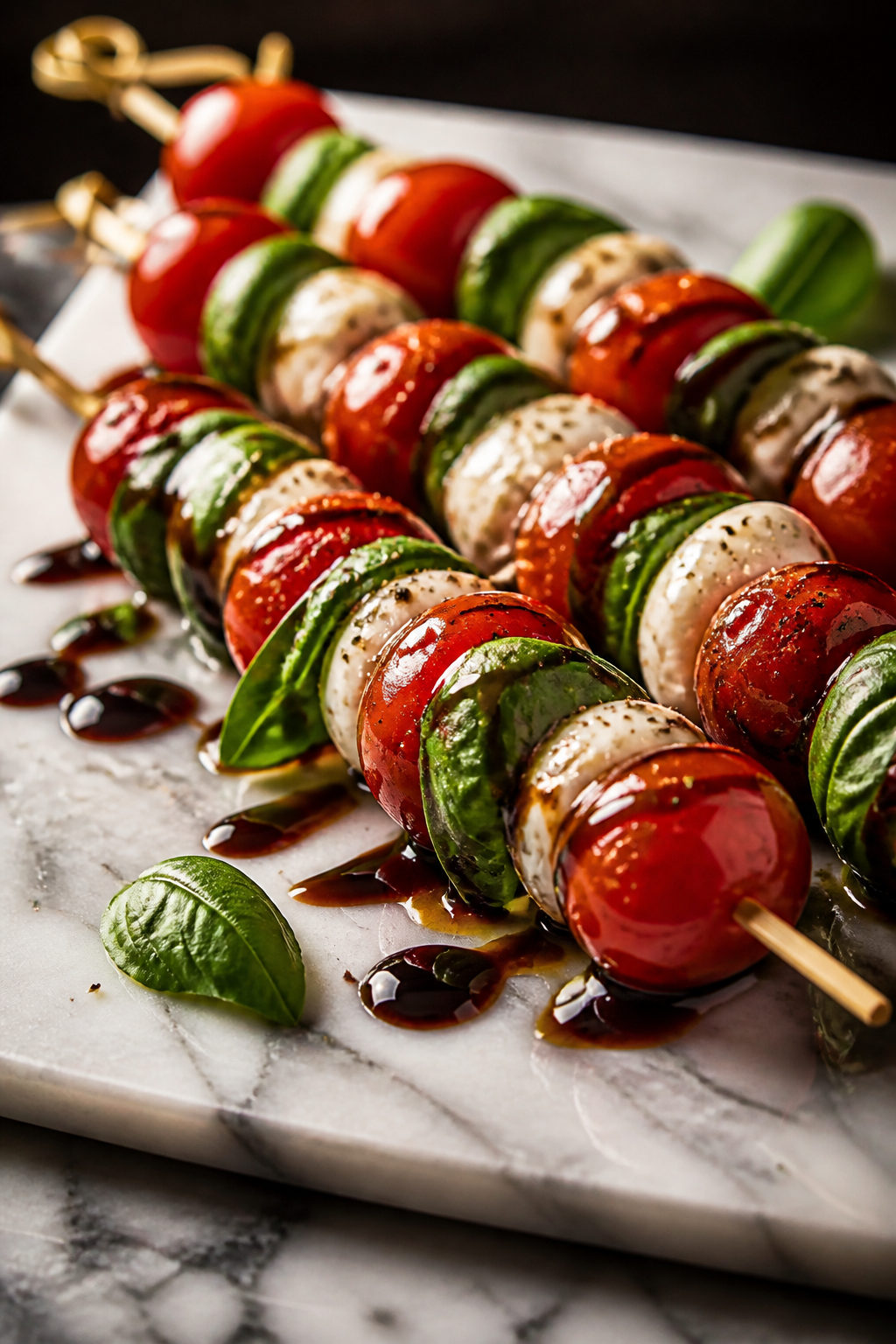
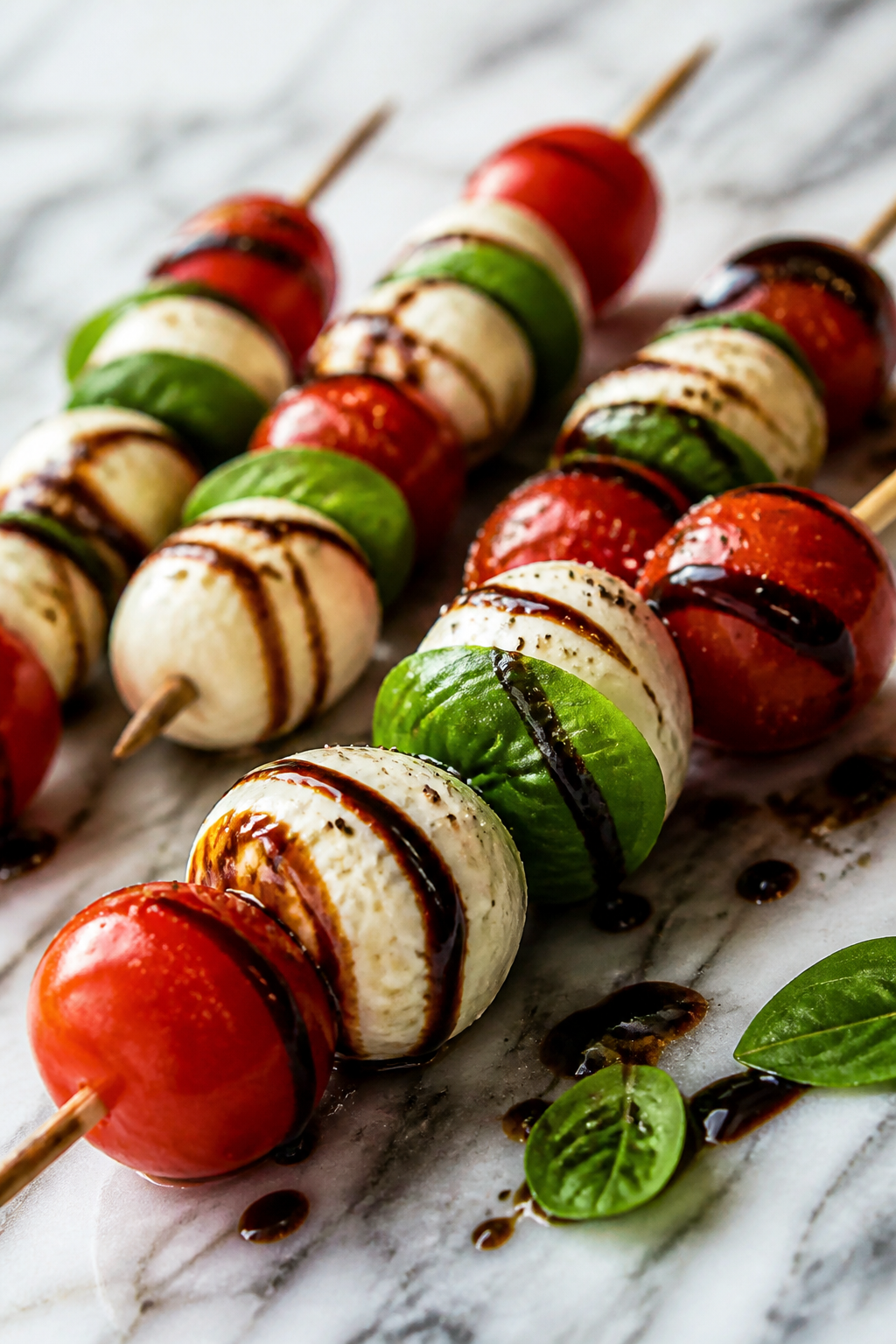
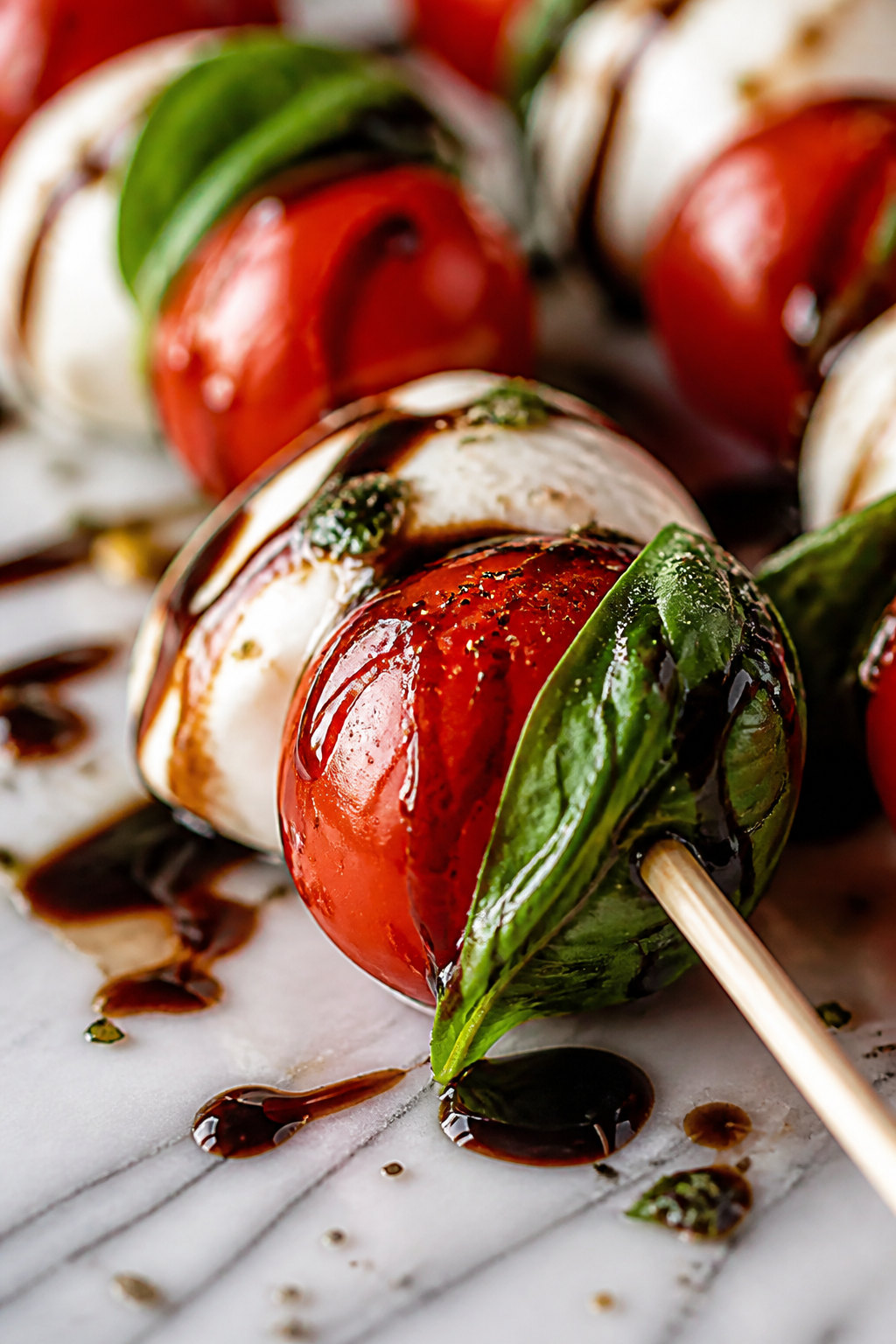
These Caprese skewers are a fresh, colorful bite perfect for spring or summer get-togethers. Juicy tomatoes and creamy mozzarella meet fragrant basil, all topped with a sweet balsamic drizzle. Super simple and always a crowd-pleaser!
Introduction
I first made these Caprese skewers a few springs ago when I was looking for a light, fuss-free appetizer for a small picnic. What I love about this recipe is how effortlessly the fresh ingredients come together—juicy cherry tomatoes, creamy mozzarella, and fragrant basil, all balanced with a sweet balsamic glaze that I make from scratch. It’s a simple twist that really lifts the flavors and makes these skewers stand out. Unlike the usual Caprese salad, skewers are so easy to serve and eat, making them perfect for gatherings or even a quick snack at home. One secret I discovered is gently warming the balsamic vinegar with honey to create a luscious, syrupy glaze—it’s a game changer! The finished skewers look so vibrant and inviting, and the combination of textures and tastes is just spot on. My family always reaches for seconds, and I think you’ll love how fresh and bright they feel without any heavy prep or cooking. Plus, they come together in about 15 minutes, which is a win when you want something impressive but easy.
What You'll Need
Approximately 20 skewers, serves 4
- 1 pint cherry tomatoes, halved
- 8 oz fresh mozzarella balls (bocconcini), drained
- Fresh basil leaves, about 20
- 1/2 cup balsamic vinegar
- 2 tablespoons honey
- Wooden skewers or toothpicks
How To Do It
Step 1
Start by preparing the balsamic glaze—pour the balsamic vinegar into a small saucepan and add the honey. Warm it over medium heat, stirring occasionally until it reduces by about half and thickens into a syrupy consistency. This step is key because the reduction concentrates the vinegar’s sweetness and acidity, creating a balanced glaze that clings beautifully to the skewers. Be careful not to let it boil vigorously or burn, as that can make it bitter. Once thickened, remove it from heat and let it cool to room temperature before drizzling.
⏱ Time: 10 minutes
✓ Doneness: The glaze should coat the back of a spoon and drizzle slowly without running off immediately.
Step 2
While the glaze is cooling, rinse the cherry tomatoes and basil leaves under cold water and pat dry gently with a kitchen towel. Drying is important here because excess moisture can make the skewers soggy and dilute the flavors. Then halve the tomatoes and drain the mozzarella balls thoroughly. If your mozzarella feels watery, wrap it in paper towels to absorb extra moisture. Prepping these ingredients carefully ensures each bite is fresh and flavorful without watery distractions.
⏱ Time: 5 minutes
✓ Doneness: Tomatoes should be clean and dry, mozzarella balls firm and not dripping.
Step 3
Assemble the skewers by threading one half cherry tomato, followed by a basil leaf (folded if large), and then a mozzarella ball. Repeat this pattern if your skewers are long enough, or keep it simple with one set per skewer. The order is important to balance flavors and textures in each bite—tomato’s juiciness, basil’s freshness, and mozzarella’s creaminess. Avoid overcrowding the skewers to keep them easy to handle and pretty when served.
⏱ Time: 7 minutes
✓ Doneness: Skewers look colorful and balanced with ingredients evenly spaced.
Step 4
Arrange the assembled skewers on a serving platter. Drizzle the cooled balsamic glaze evenly over the top, making sure each skewer gets a touch. The glaze adds a glossy finish and a sweet tang that ties all the flavors together. If you drizzle while the glaze is still warm or runny, it won’t stick properly and might pool at the bottom. Letting it cool ensures a nice, sticky coating.
⏱ Time: 3 minutes
✓ Doneness: Skewers have an even shiny glaze without excess pooling.
Step 5
Optionally, sprinkle a pinch of flaky sea salt or freshly cracked black pepper over the skewers to enhance the flavors. Salt brightens the tomatoes and mozzarella while pepper adds a subtle kick. This finishing touch makes a noticeable difference, bringing out the best in the fresh ingredients without overpowering them.
⏱ Time: 2 minutes
✓ Doneness: Seasoning is light and evenly distributed without clumps.
Step 6
Serve the Caprese skewers immediately or cover and refrigerate for up to 2 hours before serving. They’re best enjoyed fresh to keep the basil crisp and the mozzarella soft but not rubbery. If refrigerated, bring them to room temperature for about 10 minutes before serving to let the flavors come alive again.
⏱ Time: 5 minutes prep, up to 2 hours chill
✓ Doneness: Skewers are fresh-looking and basil leaves remain vibrant.
Step 7
If you want to prep ahead, you can assemble the skewers without the balsamic glaze, cover tightly, and refrigerate up to 4 hours. Drizzle the glaze just before serving to keep the presentation fresh and avoid sogginess. This helps when hosting and needing extra prep time without sacrificing quality.
⏱ Time: 5 minutes
✓ Doneness: Skewers stay intact and fresh without glaze until serving.
Step 8
For a fun twist, try adding a small piece of prosciutto or a green olive to each skewer for extra flavor and texture contrast. This variation adds a salty, savory note that pairs beautifully with the sweet glaze and fresh ingredients. Just be sure not to overload the skewers so they stay easy to eat.
⏱ Time: 5 minutes
✓ Doneness: Additional ingredients are balanced and don’t weigh down skewers.
Step 9
Clean up any drips or spills on the serving platter before presenting. A tidy presentation makes these simple skewers look extra inviting. Plus, wipe any excess glaze off the edges of the serving dish to keep things neat and professional-looking, especially if serving guests.
⏱ Time: 2 minutes
✓ Doneness: Platter looks clean and appetizing with no sticky spots.
Pro Tips
Use room temperature ingredients for best flavor.
Cold mozzarella and tomatoes straight from the fridge can mute their flavors and make the texture firmer. Letting them sit at room temperature for about 15 minutes before assembling allows the ingredients to release their natural aromas and flavors, giving you a more vibrant, enjoyable bite.
Don’t skip drying the tomatoes and basil after washing.
Excess moisture can dilute flavors and make the skewers soggy, especially with fresh mozzarella. Patting ingredients dry ensures the glaze sticks well and the skewers hold their structure, preserving the fresh texture and appearance.
Warm the balsamic glaze gently and watch carefully.
Reducing balsamic vinegar requires a low to medium heat to avoid burning. Burnt vinegar tastes bitter and unpleasant. Stirring occasionally and removing from heat at the right consistency ensures a sweet, tangy glaze that enhances the dish.
Fold large basil leaves before skewering.
Large leaves can be unwieldy and may tear when skewering. Folding them keeps the bites manageable and helps distribute the fresh basil flavor evenly in each skewer, making every bite balanced and enjoyable.
Serve skewers shortly after drizzling glaze.
The glaze is best when fresh and sticky. If left too long, it can pool or make the skewers soggy. Drizzling just before serving preserves the appealing texture and glossy look, ensuring a beautiful presentation and fresh taste.
Use wooden skewers soaked in water if grilling.
If you decide to grill these skewers for a smoky twist, soaking wooden skewers for 30 minutes prevents them from burning. This simple step protects your skewers and keeps your hands safe while adding a subtle char flavor.
Add a pinch of flaky sea salt before serving.
Salt acts as a flavor enhancer, intensifying the sweetness of tomatoes and the creamy mozzarella. Flaky sea salt adds a pleasant crunch and bursts of salty flavor that elevate the overall taste experience.
Common Mistakes to Avoid
Using watery or low-quality mozzarella.
Why it happens Many people buy pre-packaged shredded mozzarella or cheap fresh mozzarella without checking moisture content, thinking it’s easier or cheaper.
Fix Choose fresh bocconcini or ciliegine mozzarella and drain it well. If it feels too wet, wrap it in paper towels to absorb excess moisture. This keeps your skewers from becoming soggy and preserves the creamy texture.
Not reducing the balsamic glaze enough.
Why it happens In a rush, some skip the reduction or don’t simmer long enough, resulting in a runny glaze that doesn’t stick.
Fix Simmer balsamic vinegar with honey until it thickens and coats the back of a spoon. This concentrated glaze clings to the ingredients and delivers full flavor without pooling.
Assembling skewers too far ahead.
Why it happens Planning ahead is great, but assembling hours before serving can cause basil to wilt and mozzarella to lose freshness.
Fix Assemble the skewers up to 4 hours ahead without glaze, keep refrigerated, and drizzle glaze just before serving to maintain freshness and texture.
Skipping drying ingredients after washing.
Why it happens It’s easy to rinse and immediately assemble, but wet ingredients dilute flavors and cause sogginess.
Fix Pat tomatoes and basil dry gently with paper towels to remove surface moisture, ensuring flavor concentration and better texture.
Overcrowding skewers with too many ingredients.
Why it happens Trying to fit everything on one skewer can make bites messy and hard to eat.
Fix Stick to one tomato half, one basil leaf, and one mozzarella ball per skewer for balanced, neat bites that are easy to handle.
Variations
Add Prosciutto for a Savory Twist
For a salty, savory upgrade, wrap a small slice of prosciutto around the mozzarella before skewering. This adds an extra layer of flavor and a satisfying texture contrast that pairs beautifully with the sweet balsamic glaze. Expect a richer, more indulgent appetizer perfect for special occasions.
Note: Prosciutto is delicate, so fold it gently and avoid overcrowding skewers to keep them easy to eat.
Use Heirloom Cherry Tomatoes for Color
Swap out regular cherry tomatoes for colorful heirloom varieties to make your skewers pop visually. The flavor profiles are often more complex and sweet, enhancing the fresh taste. This variation adds an attractive, rustic look and a slightly different tomato flavor.
Note: Heirloom tomatoes can be softer, so handle gently and use shortly after prepping.
Make a Vegan Version with Tofu
Replace mozzarella balls with firm tofu cubes marinated in lemon juice and olive oil for a vegan-friendly option. The tofu soaks up the glaze well and adds a mild, creamy texture. This swap keeps the dish light and fresh but completely plant-based.
Note: Press tofu well to remove excess moisture to avoid watery skewers.
Add Fresh Fruit Like Strawberries
For a sweet surprise, add halved fresh strawberries to the skewers along with the tomatoes. Strawberries complement the balsamic glaze and basil beautifully, adding a juicy, slightly tart note that’s perfect for summer.
Note: Use firm but ripe strawberries to avoid mushy skewers.
Drizzle with Pesto Instead of Balsamic
Skip the balsamic glaze and drizzle fresh basil pesto over the skewers for a herbaceous, nutty flavor. This variation is great if you want a less sweet and more savory appetizer that still highlights fresh basil and mozzarella.
Note: Use a thin pesto or thin it with olive oil to drizzle easily.
Nutrition
Per Serving:
Nutritional values are estimates and may vary based on specific ingredients used.
Storage & Tips
Room Temperature
Caprese skewers can be safely kept at room temperature for up to 2 hours if covered. Beyond that, the fresh ingredients risk spoiling or wilting, so keep them chilled if not serving immediately.
Refrigerator
Store assembled skewers without balsamic glaze in an airtight container for up to 2 days. Add the glaze just before serving to prevent sogginess. Serving cold is refreshing, but letting them sit at room temperature for 10 minutes enhances flavor.
Freezer
Freezing is not recommended for Caprese skewers as fresh ingredients like tomatoes and basil lose texture and become watery upon thawing.
Reheating
This dish is best served cold or at room temperature. Reheating is not advised since mozzarella melts and basil wilts, changing the intended fresh texture.
Make Ahead
You can prep and assemble skewers (without glaze) up to 4 hours ahead, store them covered in the fridge, and drizzle the balsamic glaze just before serving. This keeps everything fresh and vibrant.
FAQ
Can I use regular mozzarella instead of fresh mozzarella balls?
Regular shredded or block mozzarella doesn’t work as well because it lacks the creamy, moist texture of fresh mozzarella balls. The fresh balls hold their shape and provide a soft, milky bite that balances the acidity of the tomatoes and balsamic. If you can’t find fresh mozzarella balls, try slicing fresh mozzarella and draining it well before assembling.
How long can I store the balsamic glaze?
You can store the balsamic glaze in an airtight container in the fridge for up to 2 weeks. Just warm it slightly before drizzling to loosen it up again. This makes it easy to prepare ahead and have on hand for other dishes too.
Can I make these skewers vegan?
Absolutely! Replace the mozzarella with firm tofu cubes marinated in lemon juice and olive oil or use a vegan cheese alternative. The rest of the ingredients remain the same. Just be sure to press the tofu well to remove excess moisture for the best texture.
Why does my balsamic glaze taste bitter?
Bitterness usually comes from overheating or burning the balsamic vinegar during reduction. Keep the heat medium to low, stir often, and remove the glaze from heat as soon as it thickens. Avoid boiling vigorously to prevent a burnt taste.
Can I assemble the skewers a day in advance?
It’s best to assemble the skewers no more than 4 hours ahead without the glaze. Storing them longer can cause basil to wilt and mozzarella to become rubbery. Drizzle the glaze just before serving to keep them fresh and vibrant.
What’s a good substitute for basil if I don’t have any?
Fresh mint or arugula leaves can work as substitutes, offering a different but pleasant herbal note. Mint adds a cool freshness, while arugula brings a peppery bite. Use sparingly to avoid overpowering the delicate flavors.
Can I grill the skewers?
Yes! Grilling adds a smoky flavor that pairs nicely with the fresh ingredients. Use soaked wooden skewers to prevent burning and grill quickly over medium heat until just warmed and lightly charred. Avoid overcooking to keep the mozzarella from melting.
How do I prevent the skewers from getting soggy?
Pat all ingredients dry after washing and drain mozzarella well. Assemble skewers close to serving time and add the balsamic glaze last. Avoid storing assembled skewers with glaze for long periods to keep textures fresh.
Final Thoughts
I hope you enjoy making and sharing these vibrant Caprese skewers as much as I do! They’re such a fresh, easy crowd-pleaser—let me know how yours turn out!