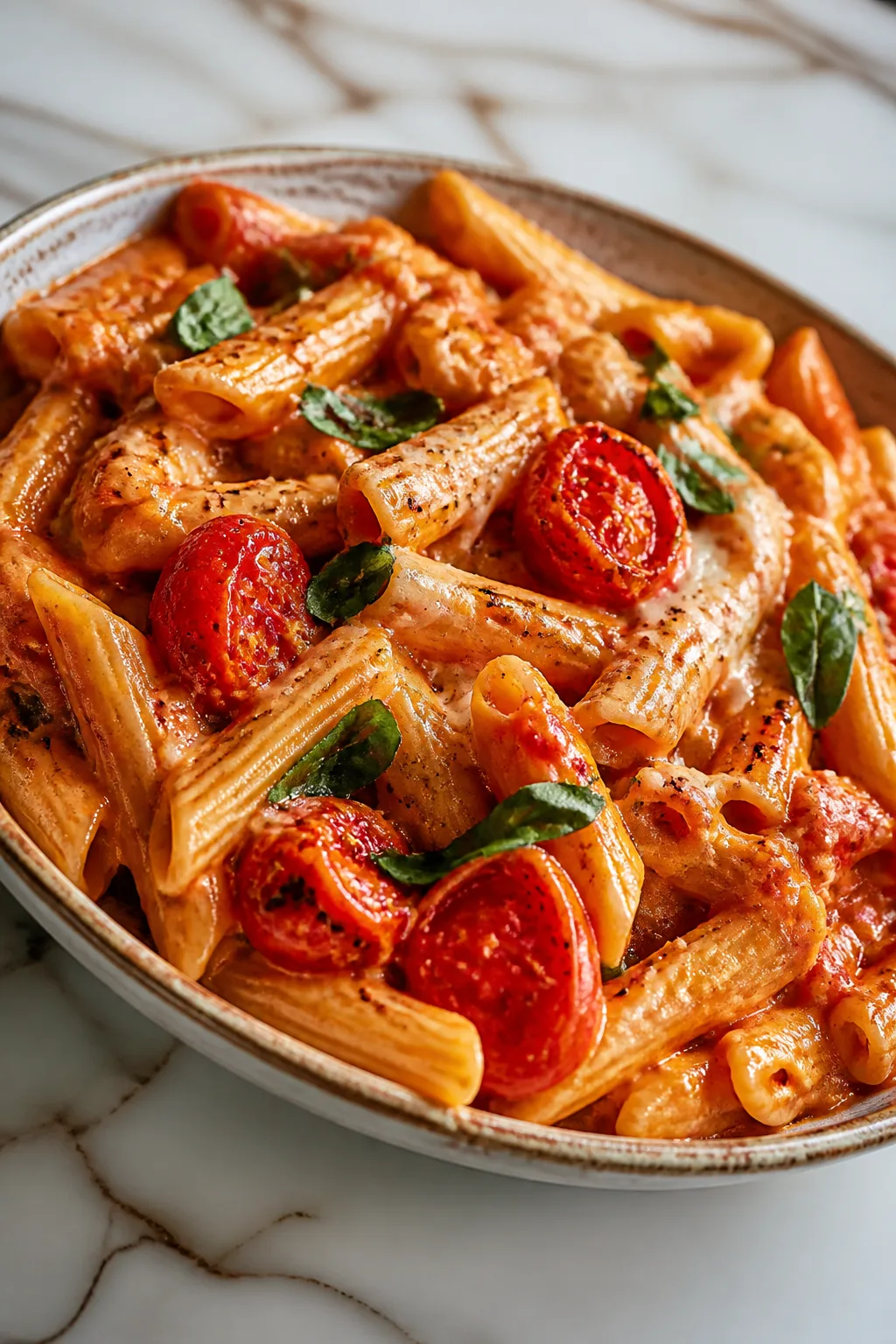
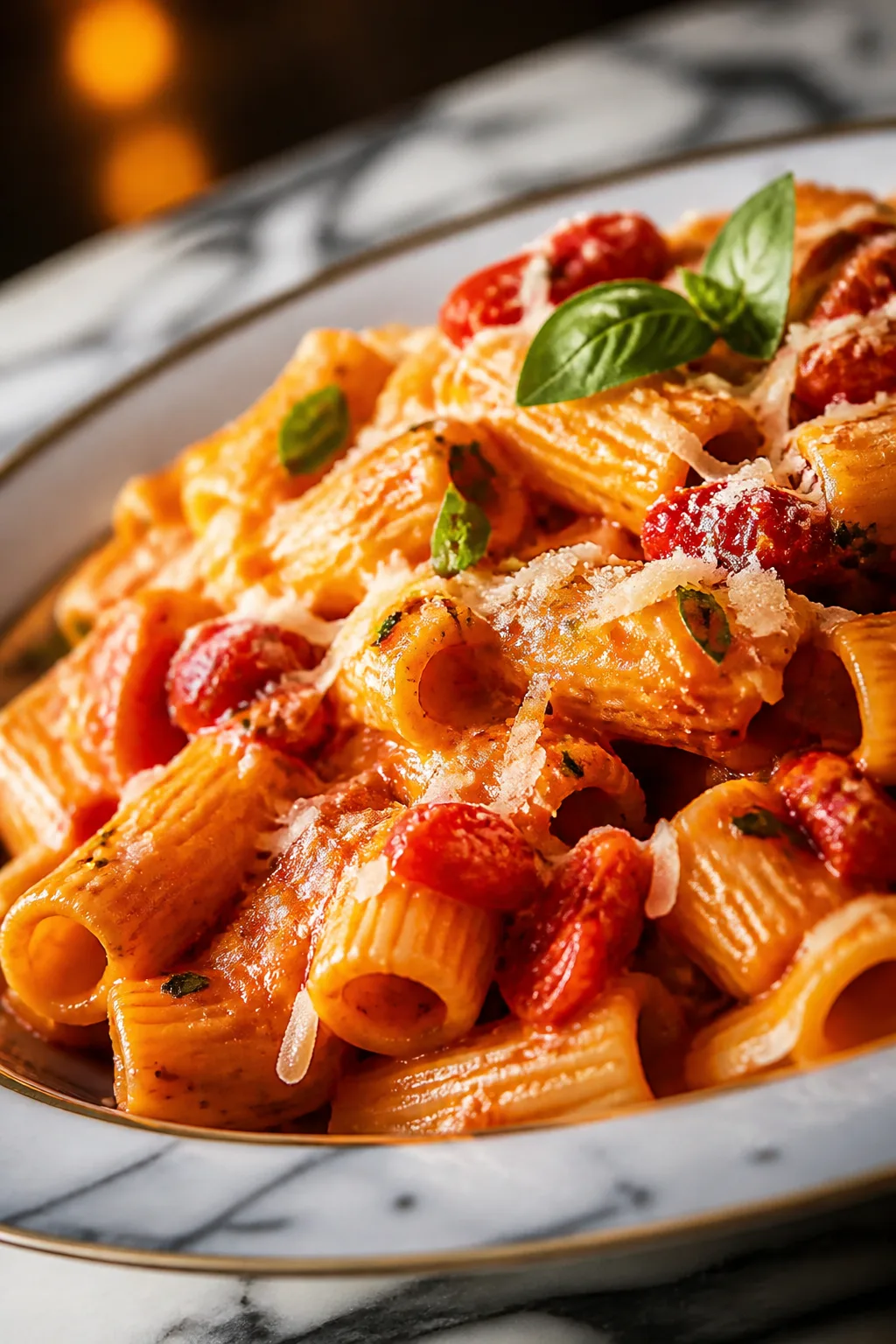
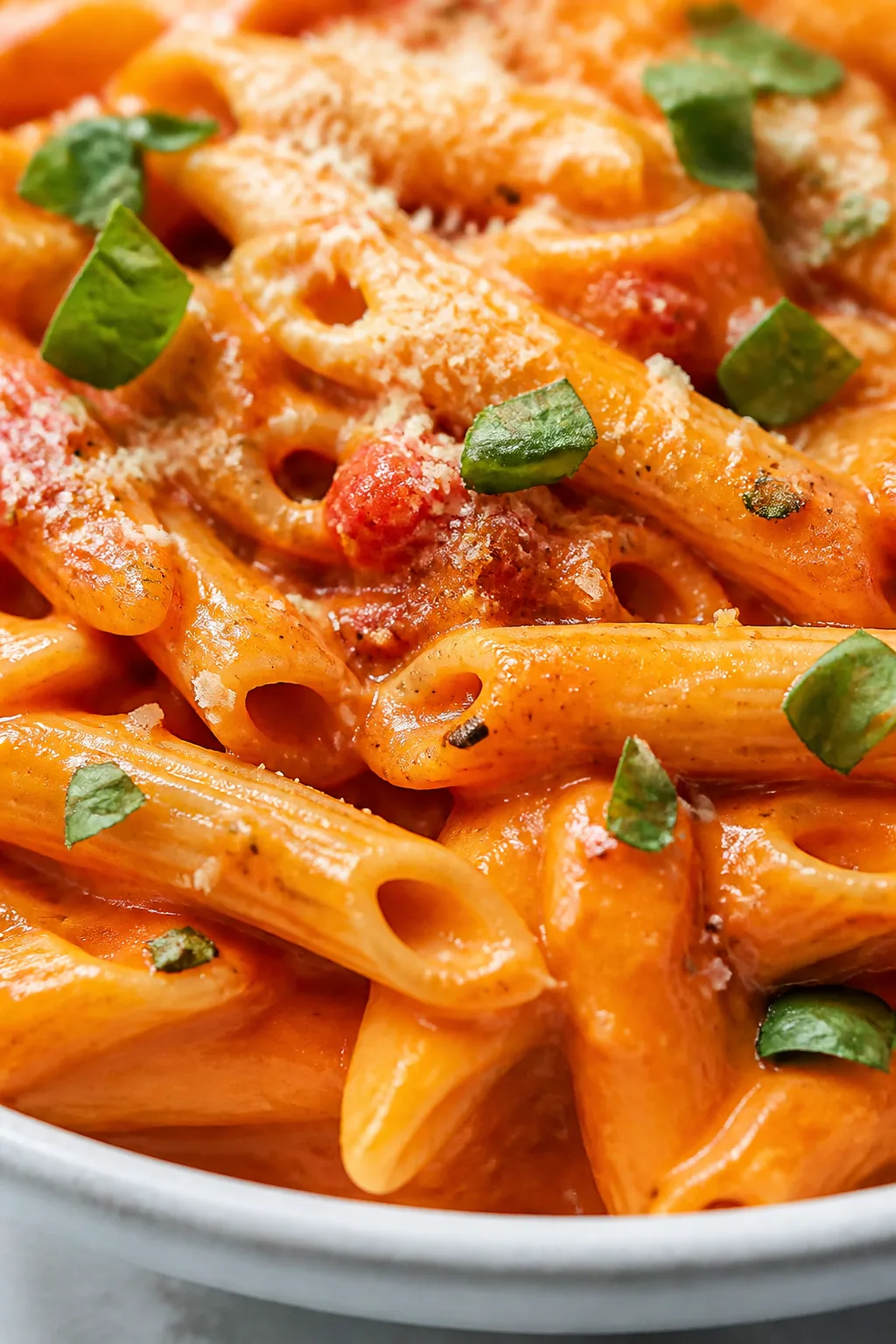
This cheesy tomato pasta is my quick fix for busy evenings. The sauce is rich and creamy with just the right amount of melty cheese that makes it feel like comfort food. Perfect when you want something cozy and fuss-free.
Introduction
I first stumbled on this cheesy tomato pasta recipe on a hectic weeknight when I needed something comforting but quick. I’ve made plenty of tomato pastas before, but this one stands out because of the way the cheese blends into the sauce, making every bite so creamy and satisfying without being heavy. What I love most is that it doesn’t rely on complicated ingredients or hours of simmering. Instead, I sauté the onions and garlic gently before adding crushed tomatoes and a touch of sugar to balance the acidity. Then comes the magic: stirring in cream and two types of cheese, mozzarella for that gooey pull and Parmesan for a sharp, nutty finish. The result is a sauce that clings beautifully to the pasta, making it feel indulgent but still easy enough for a weeknight dinner. I’ll admit, my first attempt was a bit too watery because I rushed the sauce, but once I learned to let it thicken just right, it became a staple in my kitchen. The finished dish is vibrant, cozy, and perfect for serving with a simple green salad or garlic bread. It’s one of those meals that feels like a warm hug when you need it most.
How To Do It
Step 1
Bring a large pot of salted water to a boil and cook the pasta according to package instructions until al dente, usually about 10-12 minutes. Cooking pasta just right is key because overcooked pasta will become mushy when mixed with the sauce later. Once done, drain the pasta but reserve about a cup of the pasta water; this starchy water will help loosen the sauce if it gets too thick later.
⏱ Time: 12 minutes
✓ Doneness: Pasta should be tender but still firm to the bite (al dente)
Step 2
While the pasta cooks, heat olive oil in a large skillet over medium heat. Add the finely chopped onion and sauté gently for about 5 minutes until soft and translucent. This slow cooking extracts sweetness from the onions, which balances the acidity of the tomatoes. Avoid browning the onions too much as it can add bitterness.
⏱ Time: 5 minutes
✓ Doneness: Onions should be soft and translucent without any browning
Step 3
Add the minced garlic to the skillet with the onions and cook for another 1-2 minutes until fragrant. Garlic burns quickly so keep stirring and watch closely to prevent bitterness. The garlic flavor infuses the sauce and adds depth.
⏱ Time: 2 minutes
✓ Doneness: Garlic is fragrant but not browned or burnt
Step 4
Pour in the crushed tomatoes along with dried oregano and sugar. Stir well and bring the mixture to a gentle simmer. The sugar helps cut the natural acidity of the tomatoes, making the sauce smoother and more balanced. Let the sauce simmer uncovered for about 10 minutes to thicken and concentrate flavors.
⏱ Time: 10 minutes
✓ Doneness: Sauce thickens slightly and smells rich and tomatoey
Step 5
Season the sauce with salt and freshly ground black pepper to taste. Seasoning early allows the flavors to meld. Taste and adjust seasoning as needed because the cheese will add saltiness later.
⏱ Time: 1 minute
✓ Doneness: Sauce tastes balanced with a little seasoning
Step 6
Lower the heat and stir in the heavy cream slowly. The cream softens the tomato’s tang and adds a luscious texture. Make sure the heat is low to prevent the cream from curdling. Stir until fully incorporated and the sauce turns a lovely pinkish hue.
⏱ Time: 2 minutes
✓ Doneness: Sauce is creamy and smooth with no lumps
Step 7
Add the shredded mozzarella and grated Parmesan cheeses gradually, stirring constantly to melt them evenly into the sauce. The combination of cheeses creates a perfect balance of creaminess and sharp flavor that clings to the pasta. Avoid adding cheese all at once or on high heat to prevent clumping.
⏱ Time: 3 minutes
✓ Doneness: Cheese is melted smoothly, sauce is thick and glossy
Step 8
Add the drained pasta to the sauce and toss gently to coat every piece. If the sauce feels too thick, add a splash of reserved pasta water to loosen it up and help it stick to the pasta better. This step ensures the pasta is well coated without being dry or clumpy.
⏱ Time: 2 minutes
✓ Doneness: Pasta is fully coated in creamy sauce and looks glossy
Step 9
Serve immediately, garnished with fresh basil leaves if you like. The fresh herb adds a bright, fragrant contrast to the rich sauce. Enjoy this dish hot for the best melty cheese texture and comforting flavors.
⏱ Time: 1 minute
✓ Doneness: Dish is hot, aromatic, and visually appealing with basil garnish
Pro Tips
Reserve some pasta water before draining.
The starchy pasta water is a natural thickener and helps loosen the sauce without watering it down. It also helps the sauce cling better to the pasta, creating a silky finish rather than a dry or clumpy dish.
Sauté onions gently until translucent, not browned.
Cooking onions slowly releases their natural sweetness, balancing the acidity of the tomatoes. Browning them too much can add bitterness and overpower the delicate tomato flavor.
Add cream on low heat and stir constantly.
Heavy cream can curdle if added to high heat too quickly. Low heat and constant stirring ensure a smooth, creamy sauce without lumps or separation.
Use a combination of mozzarella and Parmesan cheese.
Mozzarella provides gooey meltiness while Parmesan adds sharpness and depth. Together they create a complex cheese flavor and perfect sauce texture.
Don’t overcook the pasta; aim for al dente.
Al dente pasta has a firm bite that holds up well when mixed with sauce. Overcooked pasta becomes mushy and can turn the dish soggy.
Season the sauce gradually and taste as you go.
Because cheese adds saltiness, seasoning early and adjusting prevents over-salting. Tasting lets you balance acidity, salt, and sweetness perfectly.
Garnish with fresh basil right before serving.
Fresh basil adds a bright, aromatic contrast that cuts through the richness of the sauce, balancing the flavors beautifully.
Common Mistakes to Avoid
Adding cream on high heat causing curdling.
Why it happens Many cooks rush this step or add cream to a boiling sauce, which causes the fat to separate and the cream to curdle.
Fix Lower the heat to a gentle simmer before stirring in the cream slowly. Stir constantly to incorporate it smoothly and avoid lumps.
Using pre-shredded mozzarella with anti-caking agents.
Why it happens Pre-shredded cheese often contains additives that prevent melting properly, resulting in clumps or a greasy texture.
Fix Use freshly shredded mozzarella from a block for better melt and texture.
Overcooking pasta until too soft.
Why it happens It’s tempting to cook pasta longer for softness, but it loses structure and becomes mushy when mixed with sauce.
Fix Follow package instructions and test pasta a minute or two before the suggested time to ensure it’s al dente.
Not seasoning the sauce enough before adding cheese.
Why it happens Some assume cheese will cover seasoning needs, but under-seasoned sauce tastes bland even after cheese is added.
Fix Season with salt and pepper after simmering tomatoes and taste before adding cheese, adjusting as needed.
Skipping the reserved pasta water step.
Why it happens People often drain pasta without saving water, missing out on a natural emulsifier that smooths the sauce.
Fix Always reserve a cup of pasta water before draining and add it gradually to the sauce if needed.
Variations
Spicy Cheesy Tomato Pasta
Add a pinch of red pepper flakes when sautéing the garlic for a subtle kick. You can also stir in some chopped jalapeños or a dash of hot sauce before adding the cream. This variation adds warmth and depth without overpowering the creamy cheese sauce.
Note: The heat can cause cream to curdle if added too quickly; maintain low heat and stir well.
Veggie-Loaded Cheesy Tomato Pasta
Toss in sautéed mushrooms, bell peppers, or spinach to the sauce for added texture and nutrition. This makes the dish heartier and adds a fresh, earthy flavor that pairs nicely with the creamy tomato base.
Note: Cook veggies separately until tender to avoid excess moisture diluting the sauce.
Gluten-Free Cheesy Tomato Pasta
Swap regular pasta for your favorite gluten-free variety. The sauce stays the same, so you get all the creamy, cheesy goodness without gluten. This adaptation is perfect for those with dietary restrictions without sacrificing flavor.
Note: Be mindful that gluten-free pasta cooks faster and can become mushy easily; monitor closely.
Vegan Cheesy Tomato Pasta
Use cashew cream or coconut cream instead of dairy cream and choose vegan cheese shreds. Nutritional yeast adds a cheesy flavor. This version keeps the comforting texture while being plant-based and delicious.
Note: Vegan cheeses melt differently; stir gently and adjust cream quantity for smoothness.
Herb-Infused Cheesy Tomato Pasta
Add fresh thyme or rosemary while simmering the tomato sauce for a fragrant twist. These herbs add complexity and a subtle woodsy aroma that complements the richness of the cheese sauce.
Note: Remove woody stems before serving to avoid unpleasant texture.
Nutrition
Per Serving:
Nutritional values are estimates and may vary based on specific ingredients used.
Storage & Tips
Room Temperature
This pasta is best enjoyed fresh. It can safely sit at room temperature for up to 2 hours if covered. Beyond that, bacteria growth increases, so refrigerate promptly.
Refrigerator
Store leftovers in an airtight container for up to 3 days. The sauce may thicken and the cheese can firm up when cold; reheat gently with a splash of water or cream to restore creaminess.
Freezer
Freeze the pasta in a freezer-safe container for up to 2 months. Wrap tightly to prevent freezer burn. Thaw overnight in the fridge before reheating. The texture may soften slightly after freezing.
Reheating
Reheat on the stovetop over low heat, stirring frequently and adding a splash of cream or pasta water to loosen the sauce. Microwave reheating works but can dry out the dish; cover and stir halfway through.
Make Ahead
Prepare the sauce up to the simmering step 1-2 days ahead and refrigerate. Cook pasta fresh when ready to serve, then combine and melt in the cheese. This keeps pasta texture ideal and saves time.
FAQ
Can I use fresh tomatoes instead of canned crushed tomatoes?
You can, but fresh tomatoes need to be peeled and cooked longer to break down properly. Use ripe Roma or plum tomatoes, blanch and peel them, then crush by hand or blend. Simmer longer to reduce excess water and develop flavor.
What if I don’t have heavy cream? Can I substitute it?
You can use half-and-half or whole milk, but the sauce will be less creamy and a bit thinner. Mixing a tablespoon of flour or cornstarch can help thicken it. For a dairy-free option, coconut cream or cashew cream works well.
How do I prevent the sauce from being watery?
Simmer the tomato sauce uncovered to let excess liquid evaporate and thicken naturally. Also, avoid adding too much reserved pasta water at once—add gradually to reach the desired consistency.
Can I make this recipe ahead of time?
Yes! Make the sauce a day before and refrigerate. Cook the pasta fresh when ready to serve to maintain texture. Combine and reheat the pasta with sauce just before eating.
Why does my cheese sauce sometimes separate or become greasy?
This usually happens if cheese is added to boiling sauce or if the heat is too high when adding cream. Lower the heat and stir gently. Using fresh shredded cheese instead of pre-shredded helps maintain smooth texture.
Can I use other types of pasta for this recipe?
Absolutely! Penne, rigatoni, fusilli, or even spaghetti work well. Just adjust cooking times according to the pasta shape and brand to achieve al dente texture.
Is it okay to add vegetables to this pasta?
Yes, sautéed veggies like spinach, mushrooms, or bell peppers add flavor and nutrition. Cook them separately to avoid extra moisture diluting the sauce and add them in the final step.
How do I store leftovers to keep the best flavor?
Store pasta in an airtight container in the fridge and consume within 3 days. Reheat gently with a splash of cream or water to restore sauce consistency and avoid drying out.
Final Thoughts
I hope you give this cheesy tomato pasta a try — it’s become a real favorite in my house. Let me know how yours turns out and what variations you love!