This basil salt is a quick and easy way to bring fresh, herby flavor to anything from roasted veggies to grilled meats. Using dried basil and coarse sea salt makes it super convenient. I always keep some nearby for a last-minute seasoning lift!
Introduction
I first stumbled upon basil salt when I wanted a way to keep fresh herb flavor handy without constantly running to the garden or fridge. It’s such a simple mix but adds a surprisingly bright note to so many dishes. What makes this version stand out to me is using coarse sea salt instead of fine salt — it gives a nice crunch and bursts of flavor when you bite in. I also like crushing the basil leaves just enough to release their aroma but keeping some texture; it’s all about that balance. I’ve tried a few versions before, but this one feels just right: fresh, fragrant, and versatile. It’s my go-to for quick seasoning on roasted veggies, grilled chicken, scrambled eggs, or even popcorn for a fun twist. Honestly, once you have a jar of basil salt, you’ll find yourself sprinkling it on everything. It’s a small touch that makes a big difference in bringing meals to life without any extra fuss.
What You'll Need
Approximately 3/4 cup basil salt, enough for multiple uses
- 1/4 cup dried basil leaves, crushed
- 1/2 cup coarse sea salt
How To Do It
Step 1
Start by gently crushing the dried basil leaves using a mortar and pestle or your fingers. This helps release the essential oils and aroma without pulverizing the leaves into a powder. Taking your time here matters because lightly crushed basil keeps a nice texture and stronger flavor bursts compared to finely ground herbs. Avoid over-processing or you’ll lose that fresh, vibrant note that makes this salt special.
⏱ Time: 5 minutes
✓ Doneness: Leaves are broken into small pieces but not powdery, and you can smell the basil’s fragrance clearly.
Step 2
In a bowl, combine the crushed basil with coarse sea salt. Stir thoroughly to evenly distribute the herb throughout the salt crystals. Using coarse salt is key here; it provides texture and pockets of concentrated flavor. If you mix too quickly or use fine salt, you might end up with a flat taste. Take a moment to mix gently but well so each pinch delivers that herby saltiness.
⏱ Time: 3 minutes
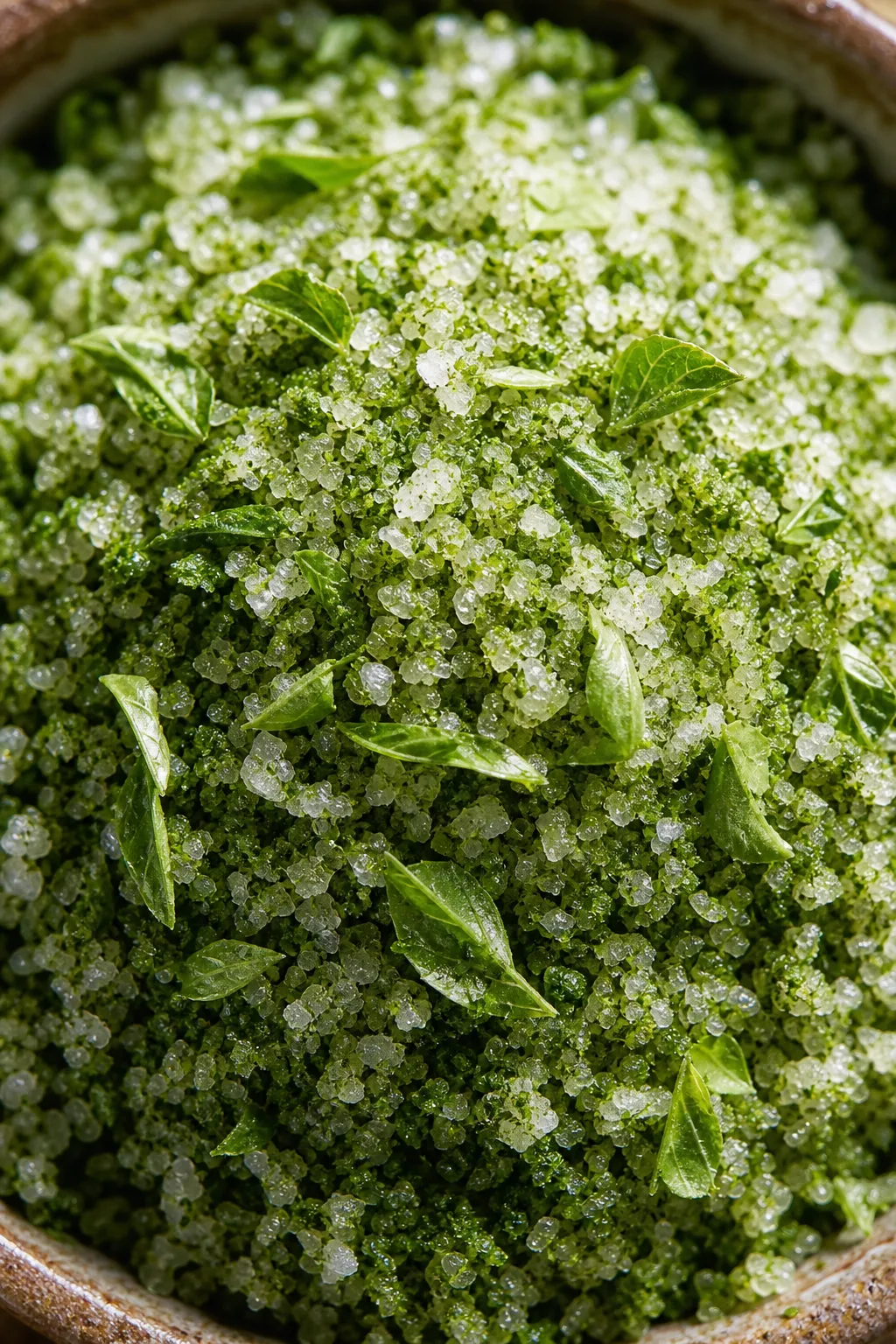
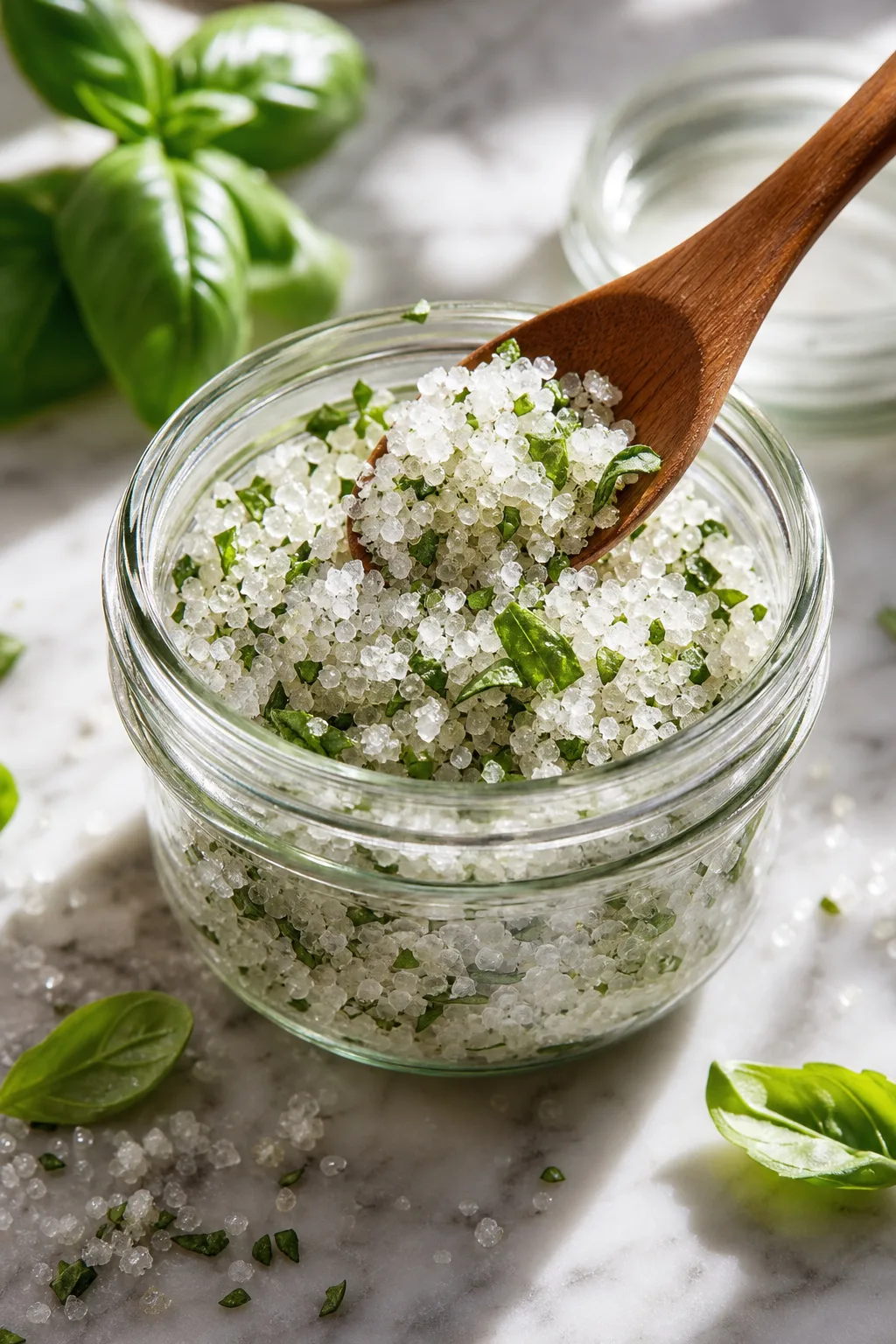
✓ Doneness: The mixture looks evenly speckled with green basil pieces among the white salt grains.
Step 3
Transfer the basil salt into an airtight container or glass jar for storage. Make sure the container seals well to keep moisture out because salt can clump if exposed to humidity. Label the jar with the date so you know how fresh it is. Stored properly, this basil salt will keep its flavor and texture for several months, ready whenever you need a quick seasoning boost.
⏱ Time: 2 minutes
✓ Doneness: Salt is dry, free-flowing, and stored in a tightly sealed jar with no moisture.
Step 4
Before using, give the jar a gentle shake or stir to redistribute the basil and salt evenly. Herbs can settle, so this step refreshes the mixture ensuring consistent flavor. You’ll notice the aroma intensify after stirring, which means it’s ready to sprinkle on your favorite dishes.
⏱ Time: 1 minute
✓ Doneness: Even distribution of basil and salt with a fresh, herby aroma.
Step 5
Try adding basil salt to roasted vegetables just after they come out of the oven. The warm veggies help release the basil aroma, enhancing the flavor. Sprinkle lightly at first, then taste and adjust. It’s easy to over-season, so start small and add more as you go.
⏱ Time: 0 minutes (application step)
✓ Doneness: Veggies have a subtle herby saltiness with no overpowering bitterness.
Step 6
Use basil salt to season grilled chicken or fish before cooking. The coarse salt helps form a flavorful crust while the basil adds freshness. Pat the meat dry first so the salt sticks well. This simple seasoning method lets the natural flavors shine with a herbal twist.
⏱ Time: 0 minutes (application step)
✓ Doneness: Meat surface looks evenly coated with herb salt and smells fragrant.
Step 7
For a fun snack twist, sprinkle basil salt on popcorn instead of regular salt. The herb flavor pairs surprisingly well with buttery popcorn and makes movie night extra special. Toss the popcorn gently after sprinkling to coat evenly without crushing the kernels.
⏱ Time: 0 minutes (application step)
✓ Doneness: Popcorn is lightly coated with visible basil flakes and tastes fresh.
Step 8
When using basil salt in recipes that call for salt and herbs separately, try substituting it directly for the salt component. This can simplify your seasoning and add a subtle complexity without changing the recipe otherwise. Just reduce any extra herbs to balance flavors.
⏱ Time: 0 minutes (application note)
✓ Doneness: Dish tastes balanced with a mild herbal note without excess saltiness.
Step 9
Remember to store your basil salt away from direct sunlight and humidity. Keep it in a cool, dry place like a pantry or spice drawer. This preserves the flavor and prevents clumping. Regularly check the jar for any moisture buildup and give it a stir if needed to refresh the texture.
⏱ Time: 0 minutes (storage note)
✓ Doneness: Salt remains dry and free-flowing with a strong basil scent.
Pro Tips
Use a mortar and pestle to crush basil leaves gently instead of grinding.
Crushing by hand releases essential oils without pulverizing the leaves into powder, preserving texture and aroma. Over-grinding can make the basil flavor flat and dusty, losing the fresh herbal punch you want.
Always store basil salt in an airtight container away from humidity.
Salt attracts moisture, which can cause clumping and degrade the herbs. Keeping it dry preserves the texture and potency of the basil, ensuring your seasoning stays fresh and easy to sprinkle.
Use coarse sea salt rather than fine salt for better texture and flavor release.
Coarse salt dissolves slowly, giving bursts of saltiness and holding the basil pieces well. Fine salt can absorb moisture quickly and cause the mixture to become pasty or lose its herbal crunch.
Label your basil salt jar with the date you made it.
Herbs lose potency over time. Knowing when you made your basil salt helps you track freshness and decide when to make a new batch for best flavor.
Shake or stir the jar before each use to redistribute herbs and salt.
Herbs tend to settle, so mixing refreshes the seasoning and ensures an even flavor in every pinch.
Try basil salt on warm dishes to enhance aroma and flavor.
Heat releases volatile oils in basil, making the seasoning more fragrant and flavorful on roasted or grilled foods.
Start with a small amount when seasoning and adjust to taste.
It’s easy to over-salt with coarse blends. Adding gradually prevents overpowering your dish and lets you control the flavor balance.
Common Mistakes to Avoid
Using finely ground basil instead of crushed leaves
Why it happens Many assume grinding herbs finely is better for seasoning blends, but it can flatten flavor and make the mixture powdery.
Fix Lightly crush basil leaves with a mortar and pestle or fingers to preserve texture and aroma. Avoid electric grinders that pulverize the herb.
Storing basil salt in a humid environment
Why it happens People often keep spice jars near the stove or sink where moisture accumulates, causing clumping.
Fix Keep basil salt in a dry, cool pantry or cupboard in an airtight container to prevent moisture absorption and maintain texture.
Using fine salt instead of coarse salt
Why it happens Fine salt is common in kitchens and might seem easier to mix, but it absorbs moisture quickly.
Fix Choose coarse sea salt for better texture and slower salt release, which preserves the herb and avoids clumping.
Adding too much basil salt at once
Why it happens Because it looks mild, people tend to over-salt dishes, overpowering the flavor.
Fix Sprinkle lightly and taste as you go to balance saltiness and herbal notes.
Not labeling the jar with the preparation date
Why it happens It’s easy to forget when you made homemade blends, leading to stale seasoning.
Fix Always note the date on the container to track freshness and refresh your basil salt regularly.
Variations
Lemon Basil Salt
Add zest from one lemon to the basil and salt mixture for a bright, citrusy twist. This variation pairs wonderfully with seafood and salads, adding a fresh pop of flavor that’s perfect for summer meals.
Note: Use finely grated lemon zest and mix thoroughly with the basil salt. Avoid the white pith to prevent bitterness.
Garlic Basil Salt
Mix in a teaspoon of garlic powder to the basil salt for a savory boost. This blend works great as a rub for grilled chicken or roasted potatoes, adding depth and a mild garlicky kick.
Note: Add garlic powder last and mix well to evenly distribute without clumping.
Spicy Basil Salt
Incorporate a pinch of crushed red pepper flakes into your basil salt for some heat. This variation is fantastic on roasted veggies or popcorn when you want a little spice with your herbs.
Note: Adjust red pepper quantity carefully to control heat level and avoid overpowering basil flavor.
Mixed Herb Salt
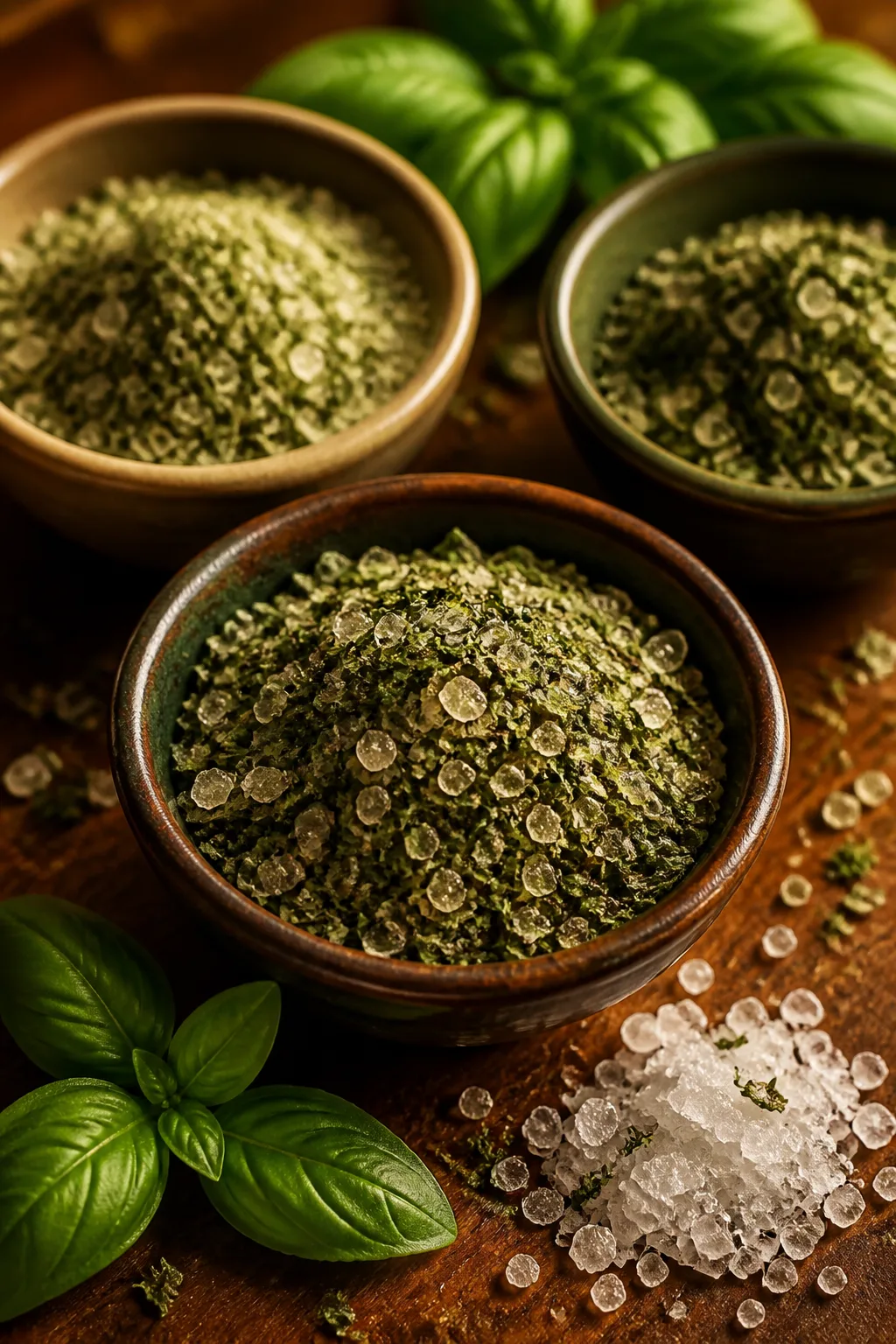
Combine dried oregano and thyme with basil and coarse salt to create a versatile herb salt blend. This mixture works well for Mediterranean dishes and adds complexity to simple roasted dishes.
Note: Use equal parts dried herbs crushed gently to maintain texture and balanced flavor.
Smoked Basil Salt
Use smoked sea salt instead of regular coarse salt to add a subtle smoky flavor to the basil salt. It’s lovely on grilled meats or roasted vegetables for a rustic touch.
Note: Ensure smoked salt crystals are similar in size to basil flakes for even mixing and seasoning.
Nutrition
Per Serving:
Nutritional values are estimates based on salt content; serving size is small.
Storage & Tips
Room Temperature
Basil salt keeps well at room temperature for up to 6 months if stored in an airtight container away from heat and moisture. Avoid storing near the stove or sink to prevent clumping.
Refrigerator
Refrigeration is not recommended as moisture can cause the salt to clump and lose texture. Keep basil salt dry and at room temperature instead.
Freezer
Freezing basil salt is unnecessary and may cause condensation and clumping when thawed. Best to make small batches and store in a cool, dry place.
Reheating
No reheating needed. Basil salt is a finishing seasoning added after cooking or just before serving.
Make Ahead
You can prepare basil salt up to 1 month ahead and store it in a sealed jar. Shake or stir before use to refresh the mix.
FAQ
Can I use fresh basil instead of dried to make basil salt?
Fresh basil has a high moisture content and won't mix well with salt for storage. It will spoil quickly and become mushy. Dried basil is best because it’s dry and preserves well when combined with salt.
How long does homemade basil salt last?
Stored properly in an airtight container away from moisture and heat, basil salt can last up to 6 months. Over time, the basil flavor may fade, so it’s best to use within a few months for peak freshness.
Can I use table salt instead of coarse sea salt?
While you can, table salt is finer and absorbs moisture more quickly, which can cause clumping and reduce shelf life. Coarse sea salt is preferred for texture and preservation.
Is basil salt suitable for low-sodium diets?
Basil salt still contains salt, so it’s not suitable for strict low-sodium diets. However, the herb flavor may allow you to use less salt overall by enhancing taste.
How do I prevent basil salt from clumping?
Keep it stored in a dry, airtight container away from humidity and moisture. Avoid storing near the stove or sink. If clumping occurs, you can break it up gently with a fork or spoon.
Can I add other herbs or spices to basil salt?
Absolutely! You can customize your basil salt by adding garlic powder, lemon zest, crushed red pepper, or other dried herbs. Just be sure to keep the mix dry and balanced.
What dishes work best with basil salt?
Basil salt is versatile — great on roasted vegetables, grilled meats, scrambled eggs, salads, and even popcorn. It adds a fresh, herby note to many meals without overpowering them.
Can I use basil salt during cooking or only as a finishing salt?
It’s best used as a finishing salt or sprinkled just before serving to preserve the fresh basil aroma. Cooking it for long periods may dull the herb’s flavor.
Final Thoughts
Give this basil salt a try and keep a jar handy for easy, fresh seasoning anytime you cook. I’d love to hear how you use it—share your favorites!