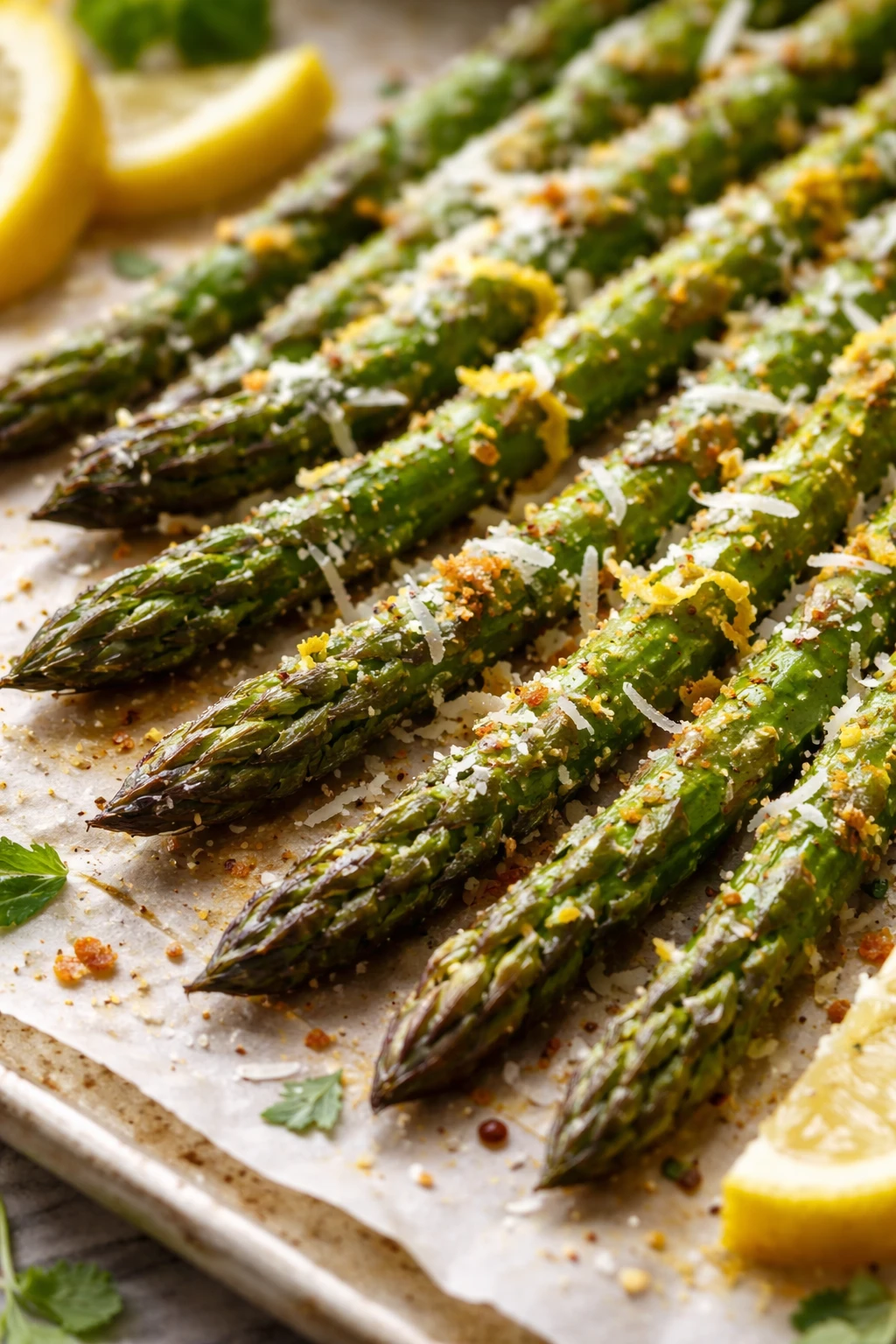
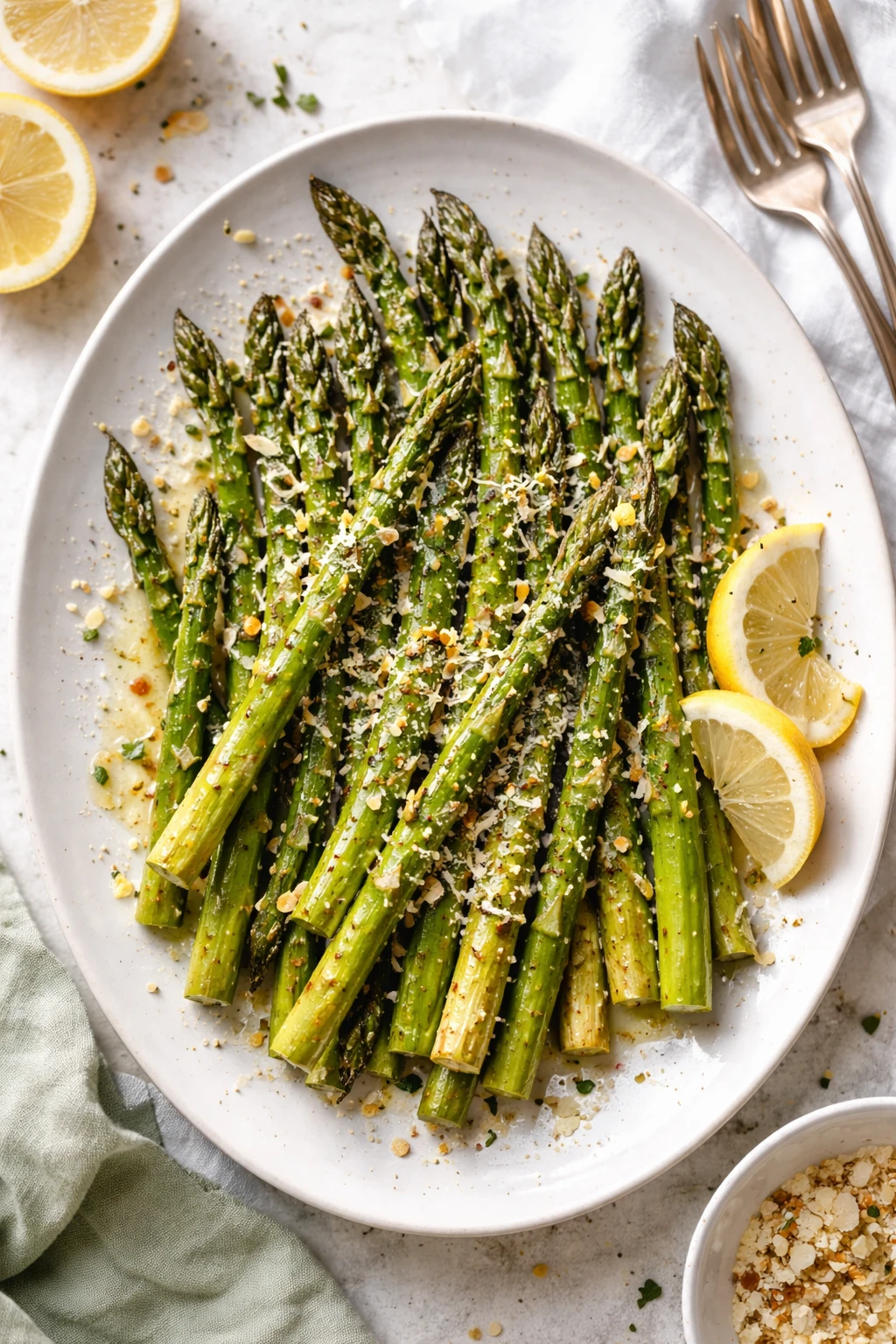
This roasted asparagus gets a nutty twist from Parmesan and a fresh zing from lemon zest. Roasting keeps it tender but crisp, making it perfect for a quick side or festive dinner addition.
Introduction
I first tried roasted asparagus a few years ago, and it quickly became one of my go-to sides. What I love about this recipe is how simple it is yet how much flavor it packs. Roasting brings out the natural sweetness of the asparagus without making it mushy, and adding freshly grated Parmesan plus lemon zest gives it this bright, nutty pop that feels special. I remember the first time I skipped the lemon zest—big mistake! The zest really lifts the dish and balances the richness of the cheese. I usually toss the asparagus in olive oil and season it just right before roasting at a high temp to get those tender-crisp stalks with slightly caramelized edges. It’s perfect for weeknight dinners but also fancy enough to serve for holiday meals. Plus, it’s fast—ready in about 25 minutes total. I think you’ll love how this simple side can brighten up any plate.
How To Do It
Step 1
Preheat your oven to 425°F (220°C). This high temperature is key for roasting asparagus so it gets tender but still crisp with slightly caramelized edges. Line a baking sheet with parchment paper or foil for easy cleanup. Spread the trimmed asparagus stalks out in a single layer so they roast evenly. Crowding the pan can cause steaming instead of roasting, which makes them soggy.
⏱ Time: 10 minutes
✓ Doneness: Asparagus tips start to brown slightly and stalks look glossy but not wilted
Step 2
Drizzle the asparagus evenly with olive oil, then sprinkle with salt and freshly ground black pepper. Toss gently with your hands or tongs to coat each stalk well. The oil helps the asparagus roast without drying out, and the seasoning brings out their natural flavors. Don't skip this step—seasoning is what elevates this simple veggie.
⏱ Time: 5 minutes
✓ Doneness: Each stalk is lightly coated and seasoned, no dry spots
Step 3
Place the baking sheet in the oven and roast for about 12-15 minutes. Halfway through, shake the pan or use tongs to flip the asparagus so it browns evenly. The roasting time depends on the thickness of the stalks; thinner ones cook faster. Watch closely near the end to avoid burning but aim for tender-crisp texture with some browning.
⏱ Time: 12-15 minutes
✓ Doneness: Asparagus is tender when pierced with a fork but still has a slight snap
Step 4
Remove the asparagus from the oven and immediately sprinkle with the grated Parmesan cheese. The residual heat will gently melt the cheese for a creamy, nutty finish. Adding cheese after roasting keeps it from burning or becoming bitter.
⏱ Time: 2 minutes
✓ Doneness: Cheese starts to soften and adhere to the warm asparagus
Step 5
Sprinkle the fresh lemon zest over the asparagus right before serving. The lemon zest adds a refreshing, bright note that balances the richness of the Parmesan and enhances the natural flavor of the asparagus. Avoid using lemon juice here as it can make the asparagus soggy.
⏱ Time: 1 minute
✓ Doneness: Zest is evenly distributed, aroma is fresh and citrusy
Step 6
Serve the asparagus warm as a side to your favorite main dishes. It pairs wonderfully with roasted chicken, grilled steak, or pasta. If you need to prepare ahead, hold off on adding lemon zest until serving so it stays fresh and vibrant.
⏱ Time: Immediate
✓ Doneness: Asparagus is warm, cheesy, and bright with fresh lemon aroma
Step 7
For an extra touch, you can add a sprinkle of toasted pine nuts or chopped fresh herbs like parsley or thyme after roasting. These add texture and more layers of flavor that really impress guests.
⏱ Time: Optional
✓ Doneness: Nuts are golden and herbs are fresh, complementing the dish
Step 8
If you want a little heat, toss a pinch of red pepper flakes with the asparagus before roasting. It adds a subtle spicy kick that contrasts nicely with the creamy Parmesan and bright lemon.
⏱ Time: Optional
✓ Doneness: Slight redness visible, flavor has a gentle warmth
Step 9
Clean up is a breeze thanks to the parchment or foil lining. Just toss it after roasting. Try not to let any cheese burn on the pan as it can be tough to scrub off. Soaking the pan briefly with warm water helps if needed.
⏱ Time: 5 minutes
✓ Doneness: Pan is clean or easy to wipe down without stuck-on residue
Pro Tips
Trim asparagus ends by snapping them instead of cutting.
Snapping naturally breaks off the tough woody ends at the right point, preserving more tender stalk. Cutting can leave some fibrous parts attached, making bites less pleasant and tougher to chew.
Don’t overcrowd the pan when roasting asparagus.
Crowding traps steam and prevents proper caramelization. Roasting requires dry heat circulation to create those flavorful browned edges and maintain a crisp texture.
Add lemon zest only after roasting is complete.
Zest contains volatile oils that lose flavor and can become bitter if exposed to high heat too long. Adding it last keeps the bright citrus aroma fresh and vibrant.
Use freshly grated Parmesan cheese instead of pre-grated.
Freshly grated melts more smoothly and has a richer flavor. Pre-grated often contains anti-caking agents that affect melting and can taste chalky.
Toss the asparagus halfway through roasting.
Flipping the stalks ensures even browning on all sides and prevents burning on one side. It also helps the oil and seasoning distribute evenly.
Use a rimmed baking sheet lined with parchment or foil.
This prevents asparagus from sticking and makes cleanup easier. It also reflects heat for more even roasting.
Serve the asparagus immediately after adding cheese and zest.
The cheese melts best while warm, and the zest aroma is most vibrant fresh. Delays can cause the dish to lose its appealing texture and flavor punch.
Common Mistakes to Avoid
Overcooking the asparagus until mushy.
Why it happens Many assume asparagus should be very soft, but overcooking destroys its natural snap and makes it limp and unappetizing.
Fix Roast at a high temperature for a shorter time, checking for tenderness but still a slight bite. Use a fork to test doneness early to avoid mushiness.
Adding Parmesan before roasting.
Why it happens Some think cheese should be baked with the veggies, but Parmesan burns easily at high heat, resulting in bitterness.
Fix Add Parmesan immediately after roasting while asparagus is hot so it melts gently without burning.
Skipping seasoning or under-salting the asparagus.
Why it happens People often underestimate how much salt veggies need to bring out their flavor.
Fix Season generously with salt and pepper before roasting to enhance the natural taste and balance the cheese and lemon.
Using lemon juice instead of zest.
Why it happens Lemon juice makes the asparagus soggy and dilutes flavors instead of adding bright notes.
Fix Use only fresh lemon zest after roasting to add vibrant citrus aroma without compromising texture.
Not trimming woody ends properly.
Why it happens Cutting ends unevenly or not trimming enough leaves tough, fibrous parts that are unpleasant to eat.
Fix Snap the ends off by hand where they naturally break to remove all woody sections.
Variations
Garlic Roasted Asparagus
Add 2 minced garlic cloves to the asparagus before roasting for a savory twist. The garlic infuses the oil and asparagus with rich flavor. Expect a fragrant, slightly spicy note that pairs well with the Parmesan.
Note: Add garlic at the beginning with the oil to roast gently without burning; watch closely as garlic can brown quickly.
Spicy Parmesan Asparagus
Toss in a pinch of red pepper flakes with olive oil before roasting for a subtle heat. This variation balances creaminess and spice, perfect for those who like a little kick with their veggies.
Note: Adjust red pepper flakes to taste; too much can overpower the delicate asparagus flavor.
Herb-Infused Roasted Asparagus
Mix fresh chopped herbs like thyme, rosemary, or parsley into the oil before roasting. The herbs add an earthy aroma and complexity that elevate this simple side dish.
Note: Add fresh herbs at the start for roasting or sprinkle some fresh after cooking for a brighter flavor.
Vegan Parmesan Asparagus
Use a vegan Parmesan alternative or nutritional yeast sprinkled after roasting for a dairy-free version that still delivers cheesy, nutty notes.
Note: Nutritional yeast doesn’t melt like cheese but adds a similar umami flavor when sprinkled on warm asparagus.
Balsamic Glazed Asparagus
Drizzle a tablespoon of balsamic vinegar over the asparagus before roasting for a sweet tangy glaze. This adds depth and a subtle acidity that pairs beautifully with the Parmesan.
Note: Use a good quality balsamic and watch the roasting time to avoid burning the sugars.
Nutrition
Per Serving:
Nutritional values are estimates and may vary based on specific ingredients used.
Storage & Tips
Room Temperature
Roasted asparagus can be safely kept at room temperature for up to 2 hours if covered loosely with foil or a clean kitchen towel to prevent drying out.
Refrigerator
Store leftovers in an airtight container in the fridge for up to 3 days. The asparagus may lose some crispness but reheating gently restores texture. Add fresh lemon zest after reheating to brighten flavor.
Freezer
Freezing roasted asparagus is not recommended as it can become mushy upon thawing. If necessary, freeze in a single layer wrapped tightly for up to 1 month and thaw slowly in the fridge.
Reheating
Reheat gently in a 300°F oven for 5-7 minutes or in a skillet over low heat with a splash of olive oil to prevent drying. Avoid microwaving as it can make asparagus rubbery.
Make Ahead
You can trim and toss asparagus with oil and seasoning a day ahead, storing it in the fridge covered. Roast fresh before serving and add Parmesan and lemon zest last minute for best flavor.
FAQ
Can I use frozen asparagus for this recipe?
Frozen asparagus tends to be softer and may release water when roasted, leading to soggy results. Fresh asparagus is best for roasting to get that crisp texture and caramelized flavor. If using frozen, thaw and pat dry thoroughly before roasting.
How do I know when asparagus is done roasting?
The asparagus should be tender when pierced with a fork but still have a slight snap. The tips will be slightly browned and the stalks glossy. Overcooking causes limp, mushy asparagus, so check early if your stalks are thin.
Can I prepare this dish ahead of time?
You can trim and season the asparagus a day ahead and refrigerate it, but roast just before serving. Add Parmesan cheese and lemon zest right after roasting for best flavor and texture.
What can I substitute for Parmesan cheese?
Pecorino Romano or Asiago are good alternatives with similar salty, nutty flavors. For a dairy-free option, nutritional yeast works well to provide umami without melting.
Why do I need to toss the asparagus halfway through roasting?
Tossing ensures even exposure to heat and browning on all sides. Without flipping, one side may burn while the other remains undercooked, affecting texture and flavor.
Is it okay to add lemon juice instead of zest?
Lemon juice can make the asparagus soggy and dilute flavors. Zest provides aromatic oils without adding moisture, preserving the crisp texture and bright taste.
Can I roast asparagus at a lower temperature?
Lower temperatures will cook asparagus but won’t develop the same caramelized flavor or crisp texture. Roasting at 425°F is ideal for quick, flavorful results.
How do I prevent asparagus from sticking to the pan?
Use enough olive oil to coat the asparagus evenly and line your baking sheet with parchment paper or foil. This helps prevent sticking and makes cleanup easier.
Final Thoughts
Give this roasted asparagus a try—you'll be surprised how such a simple veggie can steal the show! Don’t forget to share your results; I’d love to hear what you think.