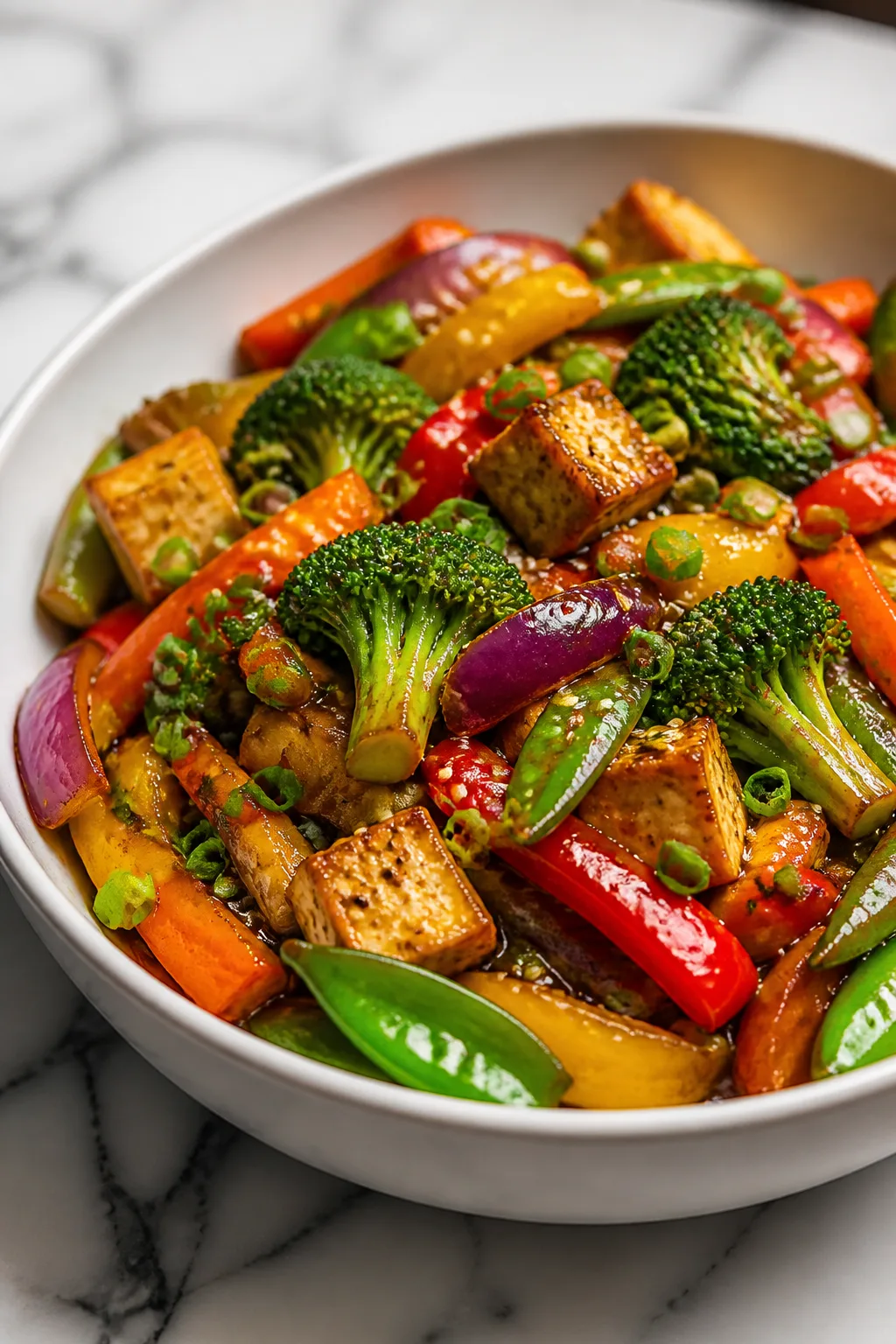
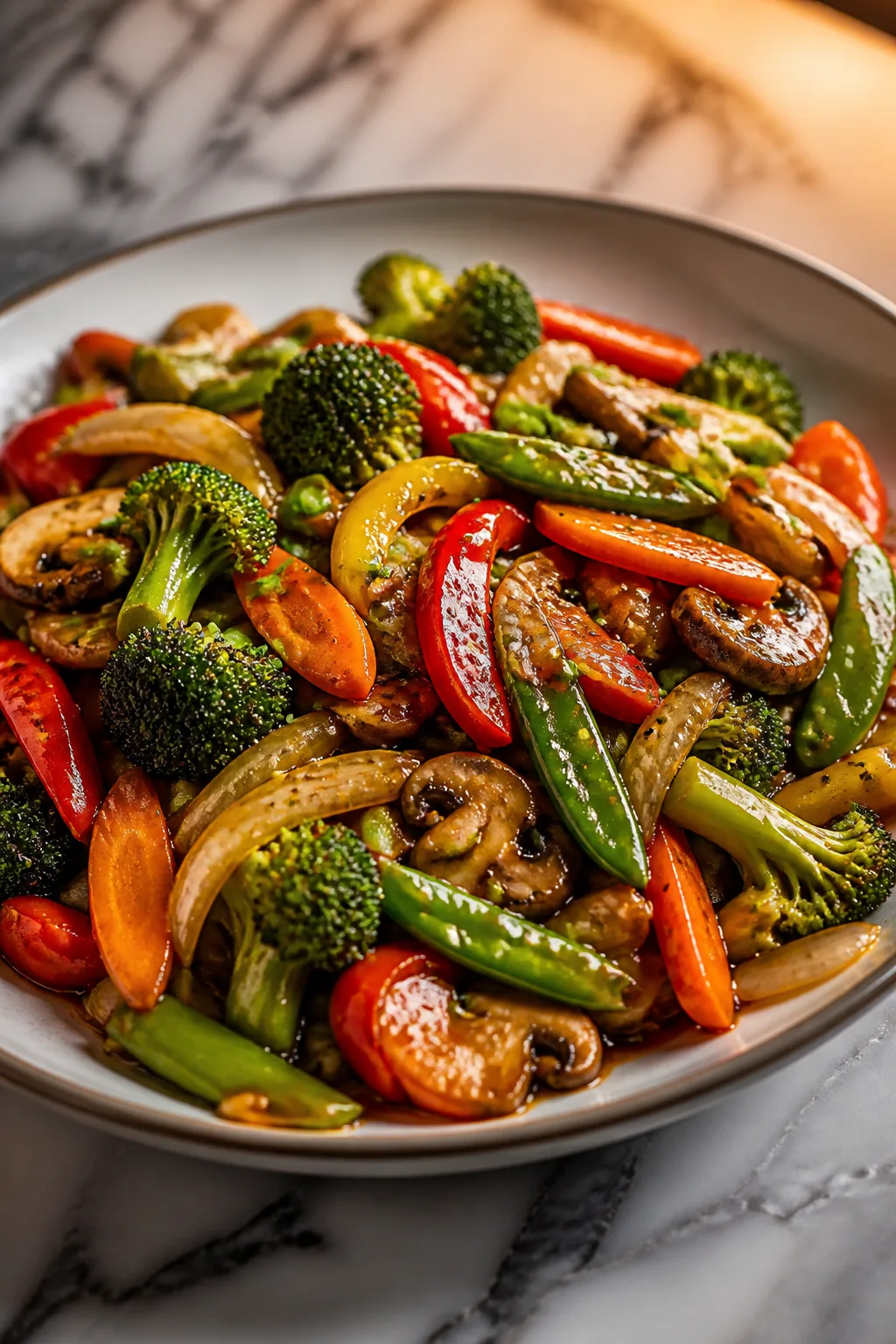
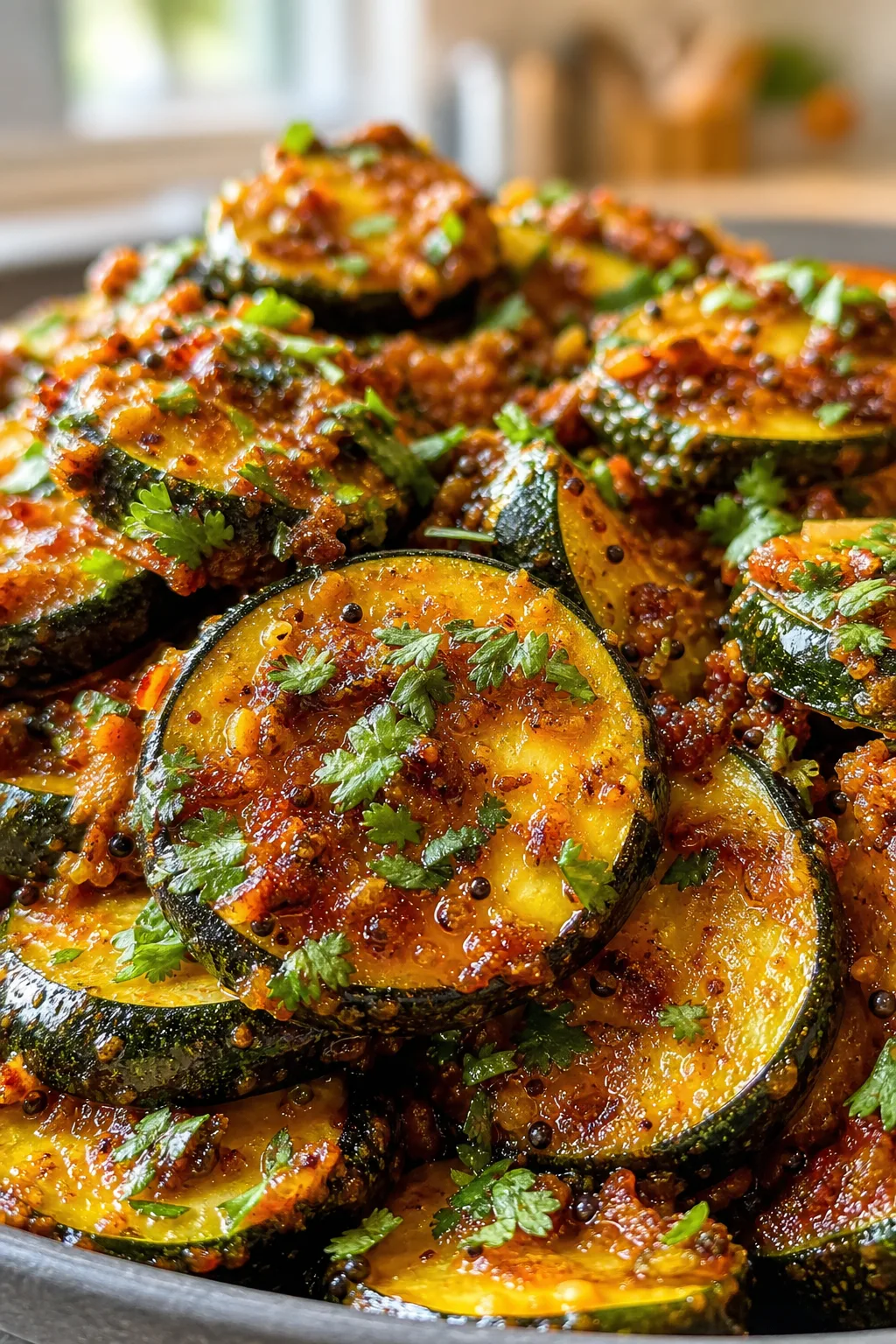
This veggie stir fry is a vibrant, speedy dinner that keeps all the veggies crisp and fresh. The savory sauce adds a perfect punch without overpowering. Ideal for busy weeknights when you want something healthy and fast!
Introduction
I've been making this vegetarian stir fry for years now, and it’s become my go-to when I want something colorful, fresh, and fast. The first time I tried a stir fry like this, I was surprised how much flavor you could get without meat or heavy sauces. What makes this version stand out is the balance — the veggies stay crisp-tender because I cook them quickly over high heat, and the sauce is just the right mix of savory and slightly sweet, thanks to the hoisin and soy. I’ve learned that adding a cornstarch slurry at the end thickens the sauce just enough to coat every bite without making it gloopy. You’ll get a vibrant plate full of bell peppers, snap peas, and broccoli that looks as good as it tastes. This dish feels light but satisfying, perfect for a weeknight dinner when you want something nourishing but don’t have a ton of time. Plus, it’s easy to customize with whatever veggies you have on hand. I hope you love it as much as my family does!
How To Do It
Step 1
Heat 1 tablespoon of vegetable oil in a large wok or skillet over medium-high heat until shimmering. Add the minced garlic and grated ginger, stirring quickly for about 30 seconds until fragrant but not browned. This step is key because garlic and ginger release their flavors best when cooked briefly in hot oil, infusing the entire dish. Be careful not to burn them, as burnt garlic can taste bitter and spoil the sauce’s delicate balance.
⏱ Time: 1
✓ Doneness: You’ll smell a fresh, aromatic scent and see the garlic just starting to turn golden without any dark spots.
Step 2
Add the sliced bell peppers, carrot, broccoli florets, snap peas, and mushrooms to the wok. Stir-fry everything quickly, tossing constantly to ensure even cooking. High heat and fast movement keep the vegetables crisp-tender rather than mushy. Cooking too slowly or overcrowding the pan will cause steaming, making the veggies soggy. Aim for about 5-7 minutes until veggies are bright and just tender but still have a bite.
⏱ Time: 7
✓ Doneness: Veggies should be vibrant in color and easily pierced with a fork but still firm, not mushy.
Step 3
While the veggies cook, whisk together the soy sauce, hoisin sauce, rice vinegar, and sesame oil in a small bowl. This sauce blend balances salty, sweet, tangy, and nutty notes, giving the stir fry its signature flavor. Having the sauce ready before the veggies finish ensures a quick addition that won’t overcook the vegetables.
⏱ Time: 3
✓ Doneness: Sauce should be smooth and well combined, with no separation.
Step 4
Pour the prepared sauce over the cooked vegetables in the wok. Stir well to coat all the veggies evenly. The heat will help the sauce meld with the vegetables’ natural juices. Stirring thoroughly ensures every bite is flavorful. If you skip this step or add the sauce too late, the stir fry can taste uneven or bland.
⏱ Time: 2
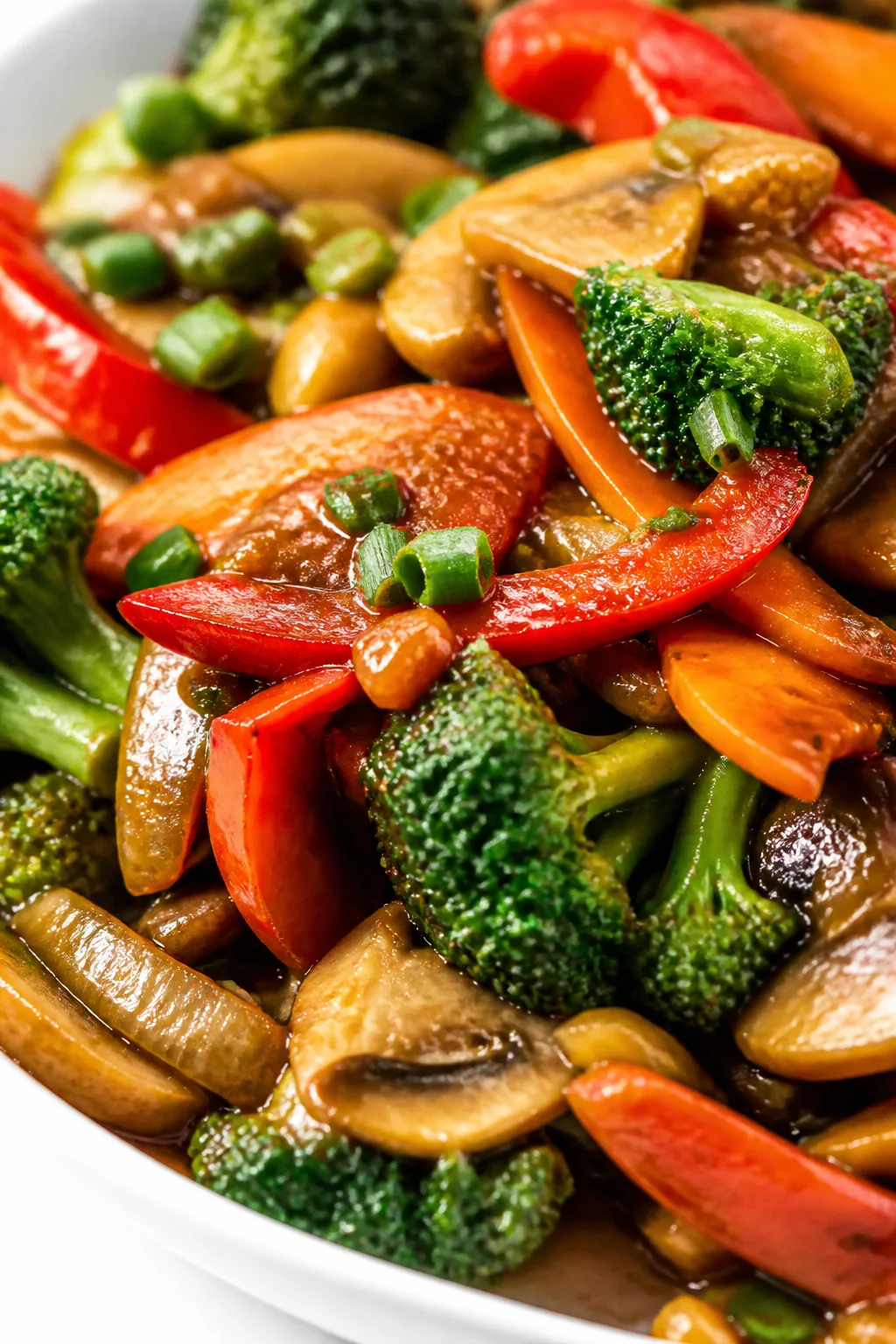
✓ Doneness: The sauce will glisten on the veggies, and the mixture will look glossy and appetizing.
Step 5
Give the cornstarch slurry (cornstarch mixed with water) a quick stir, then pour it into the wok. Stir constantly while the sauce thickens, about 1-2 minutes. This step creates a silky, clingy sauce that makes every bite more satisfying. Without this, the sauce may be too thin and watery, losing impact.
⏱ Time: 2
✓ Doneness: The sauce will visibly thicken and coat the vegetables smoothly without pooling.
Step 6
Add the sliced green onions last and toss everything together. Green onions add a fresh, subtle bite and a pop of color. Adding them too early would cause them to lose their crunch and vibrant green hue.
⏱ Time: 1
✓ Doneness: Green onions remain bright green and slightly crisp.
Step 7
Remove the wok from heat. If desired, sprinkle toasted sesame seeds on top for a nutty crunch and extra texture contrast. This small addition really elevates the dish’s presentation and flavor complexity.
⏱ Time: 1
✓ Doneness: Sesame seeds are evenly scattered and add a subtle sheen.
Step 8
Serve the stir fry immediately over a bed of cooked jasmine or brown rice. The rice soaks up the savory sauce, making each bite satisfying. Serving right away is important because the veggies will continue to soften if left standing, losing that crisp-tender texture.
⏱ Time: 1
✓ Doneness: Rice is fluffy and warm; stir fry is hot and fresh.
Step 9
Enjoy your colorful, healthy vegetarian stir fry! If you want to add some protein, tofu or tempeh can be pan-fried first and tossed in at the end. This recipe is flexible, so feel free to swap in your favorite fresh veggies or adjust the sauce to your taste.
⏱ Time: 1
✓ Doneness: Dish is visually vibrant and aromatic, ready to eat.
Pro Tips
Prep all ingredients before you start cooking.
Stir frying happens quickly over high heat, so having everything chopped and ready is essential. If you wait to prep during cooking, you risk overcooking the veggies or burning the aromatics. Mise en place keeps the process smooth and ensures perfect texture.
Use a wok or large skillet with a wide surface area.
A large pan allows you to spread the vegetables in a single layer, promoting even cooking and preventing steaming. Crowding the pan traps moisture and results in soggy vegetables instead of crisp-tender ones.
Cook veggies in batches if needed to avoid overcrowding.
Overcrowding reduces the pan temperature and causes vegetables to release water, steaming rather than frying. Cooking in smaller batches keeps the heat high and ensures each piece gets that delicious sear and crunch.
Keep the heat at medium-high to high throughout cooking.
High heat cooks vegetables quickly, preserving texture and color. Too low heat leads to mushy, dull veggies. However, watch carefully to prevent burning the garlic and ginger early on.
Add the cornstarch slurry gradually while stirring.
Adding it too fast or without stirring can cause lumps or uneven thickening. Stirring continuously helps the starch gelatinize uniformly, creating a smooth, glossy sauce.
Use fresh, firm vegetables for best texture.
Older veggies tend to be softer and release more water, which dilutes the sauce and results in soggy stir fry. Fresh produce retains crispness and bright flavor, elevating the dish.
Serve immediately to enjoy optimal texture.
Stir fry continues to soften as it sits, so serving right away maintains the contrast between tender-crisp vegetables and thick sauce, delivering the best mouthfeel.
Common Mistakes to Avoid
Overcrowding the pan
Why it happens Many cooks try to cook all vegetables at once to save time, assuming it won’t affect texture.
Fix Cook vegetables in batches if needed. This keeps heat high and prevents steaming, preserving crispness and color.
Burning garlic and ginger
Why it happens Cooking aromatics too long or at too high heat before adding other ingredients.
Fix Add garlic and ginger briefly in hot oil, just until fragrant (about 30 seconds), then add veggies immediately.
Skipping the cornstarch slurry
Why it happens Some skip this step thinking it’s optional or too complicated.
Fix Don’t skip it! Mix cornstarch with cold water and add at the end to thicken the sauce for better coating and flavor.
Using old or soft vegetables
Why it happens Using whatever is on hand without checking freshness.
Fix Choose fresh, firm veggies to ensure crisp texture and vibrant color in the final dish.
Overcooking vegetables
Why it happens Leaving veggies in the pan too long or cooking at low heat.
Fix Cook quickly over high heat, stirring constantly, and remove as soon as veggies are tender-crisp.
Variations
Tofu-Packed Vegetarian Stir Fry
Add firm tofu cubes pan-fried until golden for extra protein. Toss tofu in with the veggies when adding the sauce. This makes the dish more filling and adds a lovely crispy texture contrast.
Note: Pan-fry tofu separately to avoid sogginess, then combine at the end to keep it crisp.
Spicy Szechuan Style Stir Fry
Include chili flakes or fresh chopped chilies and a splash of chili oil to the sauce for a spicy kick. Add Szechuan peppercorns for authentic numbing heat. Expect a bolder, more complex flavor profile.
Note: Add spicy ingredients gradually and taste as you go to control heat level.
Peanut Sauce Stir Fry
Swap hoisin for 2 tablespoons of natural peanut butter and add a teaspoon of honey for a creamy, nutty twist. This variation adds richness and a slightly sweet depth.
Note: Warm peanut butter gently with soy sauce before adding to avoid clumps.
Low-Sodium Stir Fry
Use low-sodium soy sauce and reduce or omit hoisin sauce to lower salt content. Add more fresh herbs like cilantro or basil to boost flavor without sodium.
Note: Taste and adjust acidity or sweetness to balance reduced saltiness.
Seasonal Vegetable Stir Fry
Adapt the recipe to whatever veggies are in season—zucchini, asparagus, or baby corn work great. This keeps the dish fresh and exciting year-round.
Note: Adjust cooking times slightly depending on the firmness of seasonal vegetables.
Nutrition
Per Serving:
Nutritional values are estimates and may vary based on specific ingredients used.
Storage & Tips
Room Temperature
This stir fry is best eaten fresh but can sit covered at room temperature for up to 2 hours safely. Beyond that, bacterial growth increases, so refrigerate promptly.
Refrigerator
Store leftovers in an airtight container for up to 3 days. The vegetables may soften and lose some crispness when cold. Reheat gently in a skillet with a splash of water or broth to refresh the texture.
Freezer
Freezing is not recommended as the vegetables will become mushy upon thawing. If you must freeze, place in a sealed container for up to 1 month and thaw overnight in the refrigerator before reheating.
Reheating
Reheat on the stovetop over medium heat with a splash of water or broth to loosen the sauce. Avoid microwaving for best texture; stovetop reheating keeps veggies from becoming overly soggy.
Make Ahead
You can prep and chop all vegetables 1 day ahead, storing them in airtight containers in the fridge. Mix the sauce components in advance too. On the day, stir fry veggies quickly for best texture and flavor.
FAQ
Can I use frozen vegetables for this stir fry?
Frozen vegetables can be used but tend to release more water, which can make the stir fry watery and less crisp. If using frozen, thaw and drain them well, then cook quickly over high heat to reduce excess moisture.
How can I make this stir fry gluten-free?
Use tamari or a certified gluten-free soy sauce instead of regular soy sauce. Check that hoisin sauce is gluten-free or substitute with a mix of gluten-free sweet chili sauce and a bit of soy sauce.
What protein options work well with this recipe?
Firm tofu, tempeh, or cooked chicken are great protein additions. Pan-fry tofu or tempeh separately until crisp, then toss in at the end to keep texture intact.
Can I prepare the sauce in advance?
Yes! The sauce can be mixed and stored in the fridge for up to 3 days. Stir well before using, as some ingredients may settle or separate.
What if I don’t have hoisin sauce?
You can substitute hoisin with a mixture of soy sauce, peanut butter, a bit of honey, and a splash of rice vinegar for a similar sweet-savory flavor.
How do I keep the vegetables crisp?
Cook on high heat quickly without overcrowding the pan. Stir constantly to ensure even cooking and avoid steaming, which softens veggies.
Is it better to use fresh ginger or ground ginger?
Fresh ginger provides a brighter, more aromatic flavor and a slight heat that ground ginger can’t replicate. Use fresh grated ginger whenever possible for best results.
Can I add nuts or seeds to this stir fry?
Yes, toasted sesame seeds are a classic garnish here. You can also add chopped peanuts or cashews for crunch, but add them at the end to keep texture.
Final Thoughts
I hope you give this vibrant vegetarian stir fry a try soon — it’s quick, fresh, and packs a flavorful punch. Don’t forget to share how it turns out!