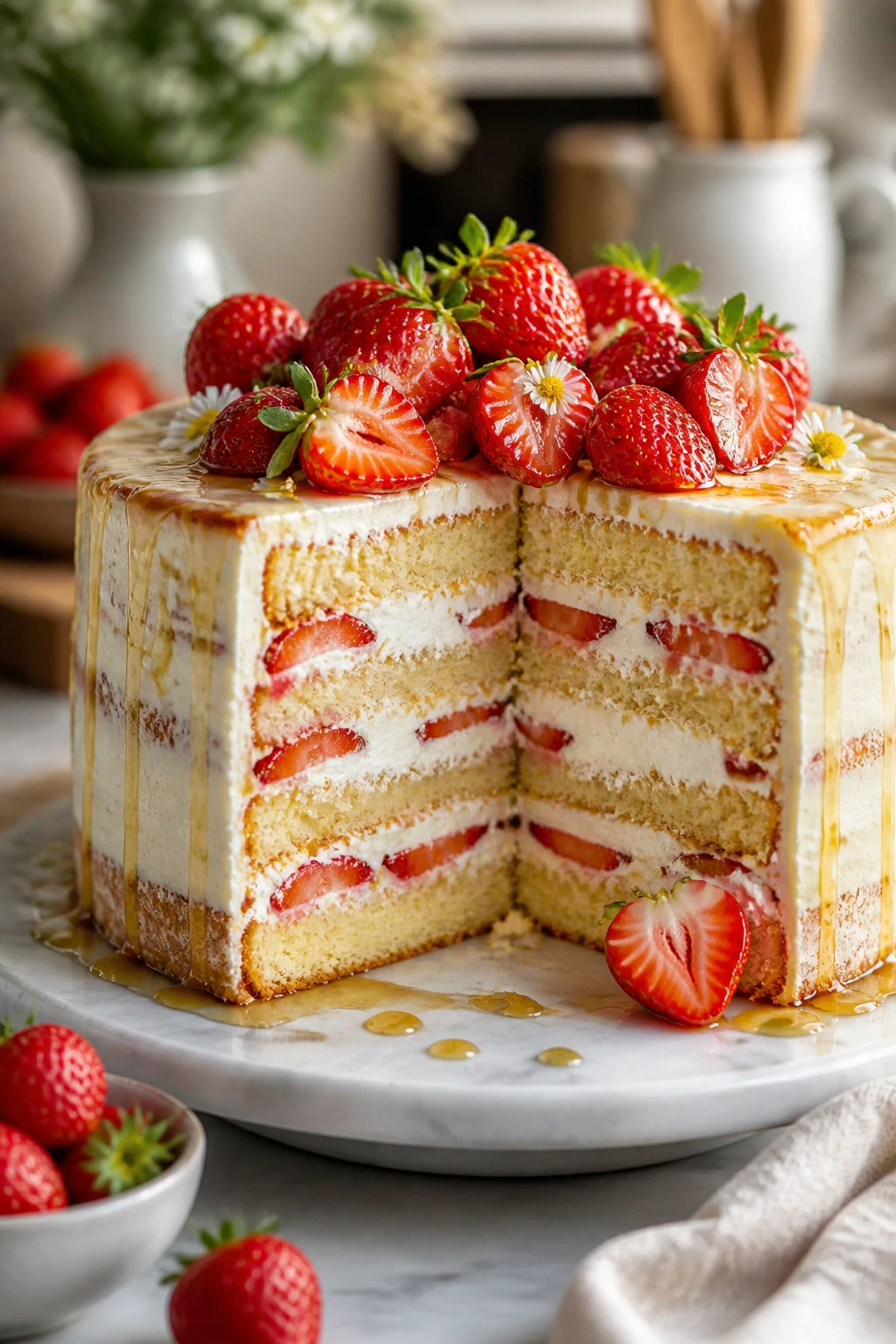
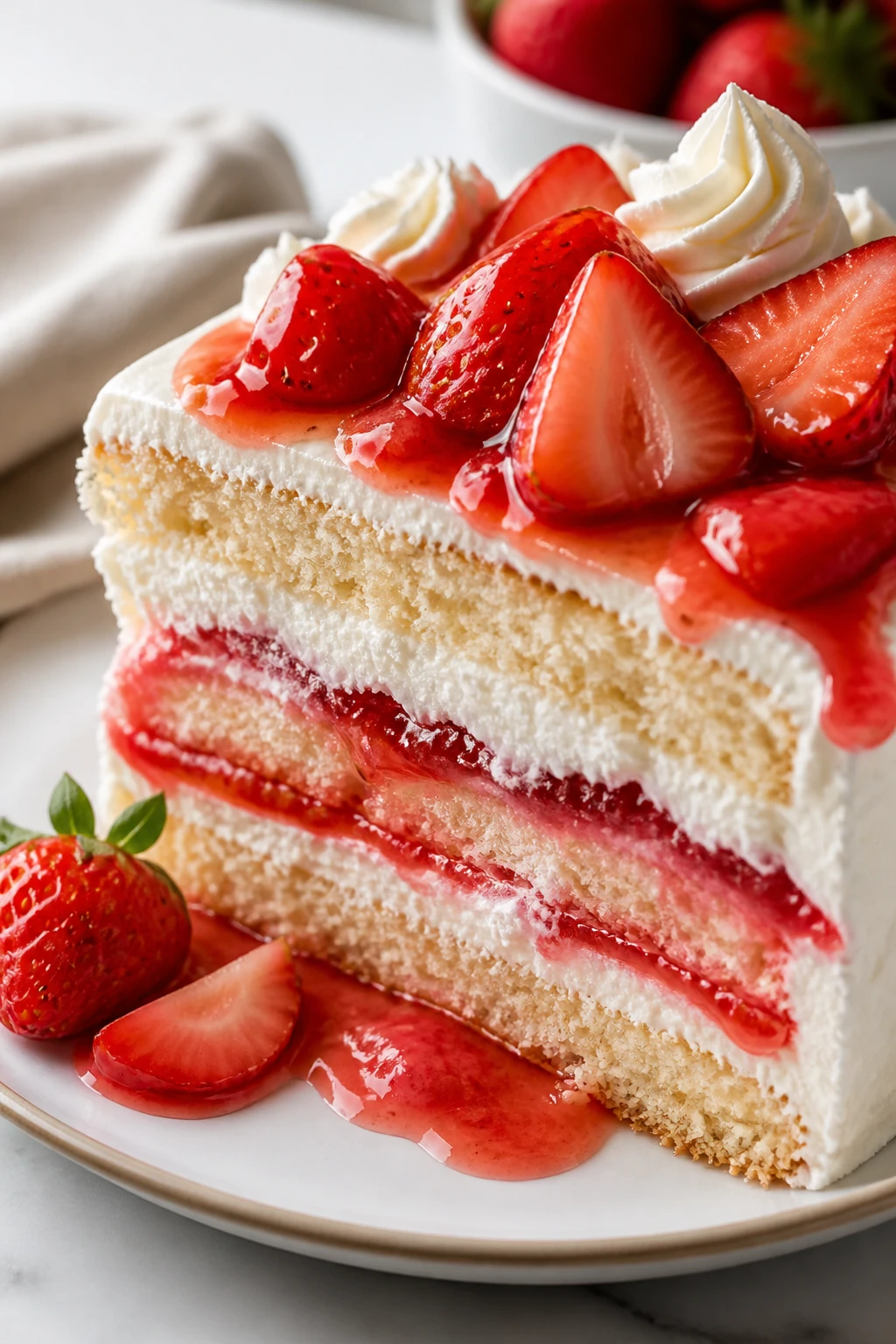
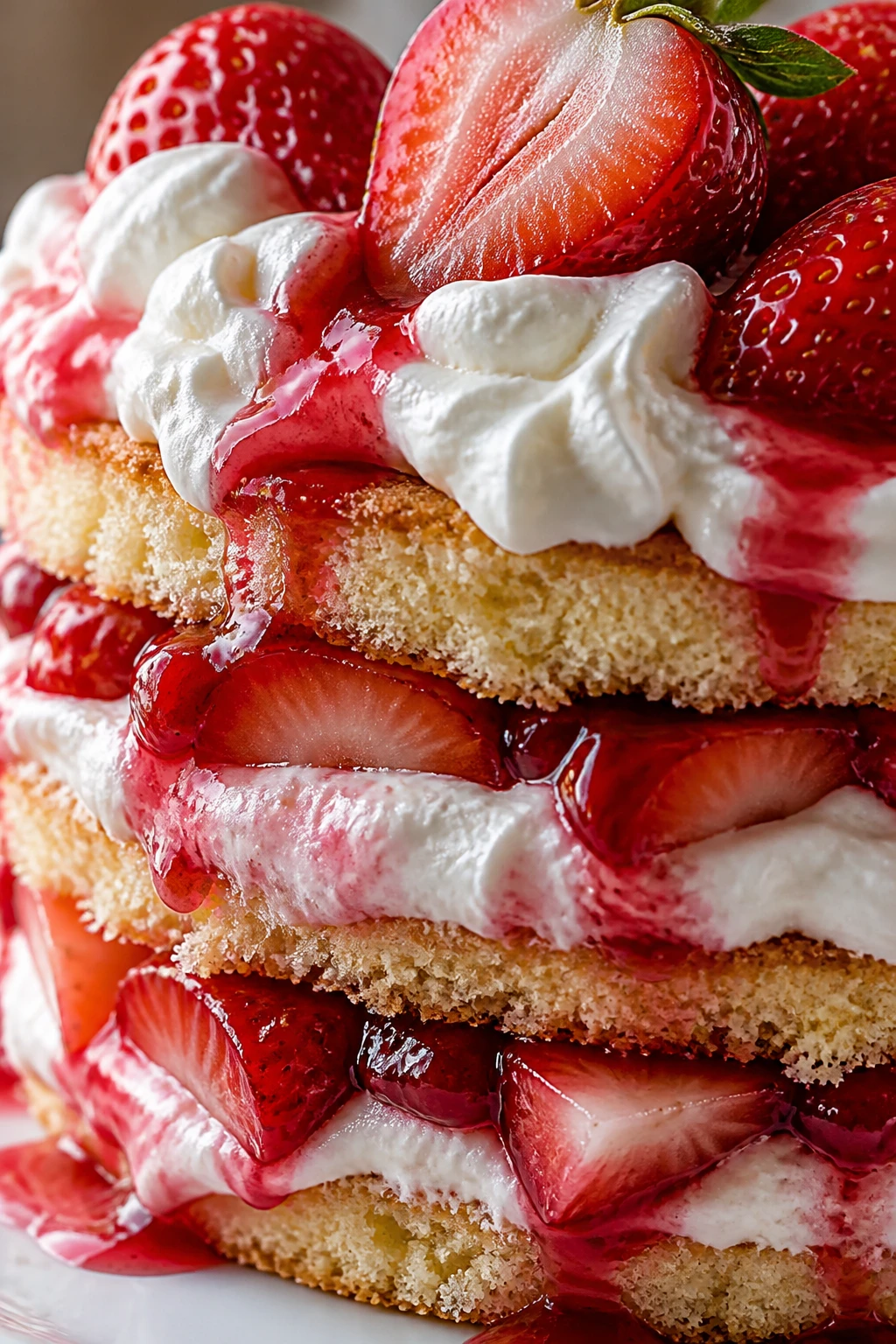
This strawberry layer cake is light and fresh, packed with real fruit flavor and a subtly sweet whipped honey cream. It’s a perfect homemade dessert for spring gatherings or anytime you want something bright and delightful.
Introduction
I first made this strawberry layer cake a couple of springs ago when I had a basket of fresh strawberries begging to be used. I wanted something light and fresh, not overly sweet like many traditional cakes. The idea of using whipped honey cream instead of heavy buttercream came from my love of subtle natural sweetness — it lets the strawberries shine without overpowering them. What makes this cake stand out for me is the balance: fluffy, tender cake layers with a gentle honey-scented cream and juicy fresh berries nestled between. I learned early on that overmixing the batter makes the cake dense, so I gently fold the flour mixture in. Also, chilling the whipped cream before whipping is a must to get that perfect billowy texture. When finished, the cake looks inviting with bright strawberry slices peeking through the cream layers. It’s perfect for spring parties or anytime you want a dessert that feels homemade and light. Honestly, it’s become a favorite in my family for birthdays and casual get-togethers alike.
What You'll Need
One 9-inch three-layer cake, 8 servings
- 2 1/2 cups all-purpose flour, sifted
- 2 1/2 teaspoons baking powder
- 1/2 teaspoon salt
- 1/2 cup unsalted butter, softened
- 1 cup granulated sugar
- 3 large eggs, room temperature
- 1 teaspoon pure vanilla extract
- 1 cup whole milk, room temperature
- 2 cups fresh strawberries, sliced
- 1 cup heavy cream, chilled
- 3 tablespoons honey
- 1 teaspoon vanilla extract (for whipped cream)
How To Do It
Step 1
Preheat your oven to 350°F (175°C). Grease and flour three 9-inch round cake pans to prevent sticking. Mixing the dry ingredients first—flour, baking powder, and salt—in a bowl ensures even distribution of leavening agents. This step is crucial because it helps the cake rise uniformly. If you skip sifting or mixing, you might get uneven pockets of baking powder, resulting in lumpy or uneven cakes.
⏱ Time: 10 minutes
✓ Doneness: Dry ingredients are evenly combined with no lumps or streaks
Step 2
In a large bowl, beat the softened butter and sugar together until light and fluffy, about 3-4 minutes. This creaming step incorporates air into the batter, which helps make the cake tender and airy. If you rush it or use cold butter, the texture will be dense and heavy. Once fluffy, add the eggs one at a time, beating well after each addition to ensure full incorporation and prevent curdling.
⏱ Time: 7 minutes
✓ Doneness: Mixture is pale, creamy, and slightly increased in volume
Step 3
Add the vanilla extract to the wet mixture. Then alternate adding the dry ingredients and milk in three parts, starting and ending with the flour mixture. Use a spatula to fold gently, mixing just until combined. Overmixing develops gluten, which toughens the cake. The batter should be smooth and slightly thick but not dense.
⏱ Time: 5 minutes
✓ Doneness: Batter is smooth, without streaks of flour or lumps
Step 4
Divide the batter evenly among the prepared pans, smoothing the tops with a spatula. Bake in the preheated oven for 25-30 minutes. Avoid opening the oven door too early to prevent the cakes from sinking. The cakes are done when a toothpick inserted in the center comes out clean or with a few moist crumbs attached.
⏱ Time: 25-30 minutes
✓ Doneness: Golden tops and toothpick comes out clean
Step 5
Remove the cakes from the oven and let them cool in the pans for 10 minutes before turning them out onto wire racks. Cooling in the pans prevents the cakes from breaking, but leaving them too long can make them soggy. Once on the racks, cool completely before assembling to prevent the cream from melting.
⏱ Time: 30 minutes
✓ Doneness: Cakes are cool to the touch and firm
Step 6
Prepare the whipped honey cream by chilling a mixing bowl and beaters in the fridge for at least 15 minutes. Pour in the cold heavy cream, add honey and vanilla extract, then whip on medium-high speed until soft peaks form. The cold bowl helps the cream whip faster and hold its shape. Be careful not to overwhip or it will turn grainy and start to separate.
⏱ Time: 10 minutes
✓ Doneness: Soft, billowy peaks that hold shape but fold gently
Step 7
Slice the fresh strawberries thinly and set aside. These will add a juicy, fresh texture and natural sweetness between the layers. Using ripe, fragrant strawberries is key because they infuse the cake with real fruit flavor. Avoid soggy or underripe berries as they can affect the cake’s texture and taste.
⏱ Time: 5 minutes
✓ Doneness: Bright, evenly sliced berries ready for layering
Step 8
Assemble the cake by placing one cake layer on a serving plate. Spread a generous layer of whipped honey cream over it, then arrange a layer of sliced strawberries on top. Repeat for the second layer, then top with the final cake layer. Finish by spreading the remaining whipped cream on top and sides, decorating with extra strawberries if desired. This layering ensures each bite has a perfect balance of cake, cream, and fruit.
⏱ Time: 15 minutes
✓ Doneness: Even layers with visible strawberries and smooth cream finish
Step 9
Chill the assembled cake in the refrigerator for at least 1 hour before serving. This resting time helps the cream set and the flavors meld together. Serving it too soon may cause the cream to be too soft and the cake to crumble. When ready, slice with a sharp knife dipped in hot water for clean cuts.
⏱ Time: 1 hour
✓ Doneness: Firm cream layers and chilled, ready-to-serve cake
Pro Tips
Always use room temperature eggs and milk for the batter.
Room temperature ingredients blend more easily with butter, creating a smoother batter and better rise. Cold ingredients can cause the butter to seize or the batter to curdle, resulting in a dense cake.
Chill your mixing bowl and beaters before whipping cream.
Cold equipment keeps the cream cold longer, allowing it to trap air more effectively and reach stiff peaks without turning grainy or separating.
Fold the flour mixture gently to avoid overdeveloping gluten.
Overmixing activates gluten which makes cakes tough and dense. Gentle folding preserves tenderness and gives you a light crumb.
Use a serrated knife dipped in hot water to slice the cake cleanly.
Hot water warms the blade, allowing it to cut through soft cream and cake layers smoothly without tearing or squishing.
Let the cake layers cool completely before assembling.
Warm cake causes whipped cream to melt and slide off, ruining the cake’s structure and appearance.
Add a little lemon zest to the whipped cream for a subtle citrus note.
Lemon zest brightens the cream and complements the strawberries, adding complexity without overpowering the natural sweetness.
Store the cake covered but not airtight in the fridge to keep the cream fresh.
Too airtight can trap moisture and make the cake soggy, while uncovered causes the cream to dry out. A loose cover balances freshness and texture.
Common Mistakes to Avoid
Overmixing the batter
Why it happens Many cooks think mixing longer makes a smoother batter, but it actually develops gluten, making the cake tough.
Fix Mix just until the flour disappears. Use a spatula to fold gently and stop as soon as the batter is uniform.
Whipping cream too long
Why it happens It’s easy to get carried away and beat past soft peaks, causing the cream to curdle.
Fix Stop whipping as soon as soft peaks form. If you overwhip, add a spoonful of fresh cream and gently beat to fix.
Using underripe or watery strawberries
Why it happens Sometimes fresh fruit isn’t fully ripe or is too juicy, which can make the cake soggy.
Fix Choose firm, ripe berries and pat dry before slicing. If very juicy, toss with a little sugar and drain excess liquid.
Assembling the cake before layers are cool
Why it happens Impatience leads to cream melting and sliding off.
Fix Allow cakes to cool completely on wire racks before assembling to keep cream stable.
Not chilling the whipped cream bowl
Why it happens Warm bowls cause cream to whip slowly or not hold peaks.
Fix Place bowl and beaters in the fridge for 15 minutes before whipping for best results.
Variations
Lemon-Infused Strawberry Layer Cake
Add fresh lemon zest and a tablespoon of lemon juice to the cake batter and whipped cream for a bright citrus twist. This variation adds a refreshing tang that pairs beautifully with strawberries.
Note: Adjust baking time slightly if adding extra liquid and ensure not to overmix to maintain cake tenderness.
Gluten-Free Strawberry Cake
Swap all-purpose flour for a gluten-free blend with xanthan gum. The texture will be slightly denser but still moist and delicious, perfect for gluten-sensitive guests.
Note: Gluten-free batters often need gentle mixing and may require a few extra minutes baking.
Vegan Strawberry Layer Cake
Use plant-based butter, a flax egg substitute, and coconut cream whipped with maple syrup instead of honey. This keeps the cake moist and flavorful without dairy or eggs.
Note: Vegan cakes often benefit from slightly longer baking and cooling times for best structure.
Strawberry and Mascarpone Layer Cake
Mix mascarpone cheese into the whipped cream for a richer, creamier filling. This adds a luscious texture and slight tang, enhancing the strawberry flavor.
Note: Keep the mascarpone cold and fold gently into whipped cream to maintain volume.
Chocolate Strawberry Layer Cake
Add 1/4 cup cocoa powder to the flour mixture for a chocolate version. The combination of chocolate and fresh strawberries is a classic crowd-pleaser.
Note: Reduce baking time by a few minutes and monitor closely as chocolate cakes can dry out faster.
Nutrition
Per Serving:
Nutritional values are estimates and may vary based on specific ingredients used.
Storage & Tips
Room Temperature
This cake should not be left at room temperature for more than 2 hours due to the whipped cream. Cover loosely to protect from drying but refrigerate promptly.
Refrigerator
Store in an airtight cake container or cover loosely with plastic wrap for up to 2 days. The cream may firm up and the cake slightly dry, so let it sit at room temp 15 minutes before serving.
Freezer
Freeze the cake wrapped tightly in plastic wrap and foil for up to 1 month. Thaw overnight in the refrigerator and rewhip the cream lightly if needed before serving to restore texture.
Reheating
Since this is a cream-based cake, reheating is not recommended. Serve chilled or at room temperature for best flavor and texture.
Make Ahead
Bake the cake layers 1-2 days ahead and store wrapped tightly at room temperature. Whip cream and assemble the cake the day of serving to keep it fresh and light.
FAQ
Can I use frozen strawberries instead of fresh?
Frozen strawberries release a lot of water when thawed, which can make the cake soggy and the whipped cream watery. If you must use frozen, thaw completely and drain excess liquid thoroughly before slicing and layering.
How do I prevent the whipped cream from melting on the cake?
Make sure the cake layers are completely cool before assembling and keep the cake refrigerated. Also, whip the cream just before assembling and serve chilled to maintain structure.
Can I make this cake gluten-free?
Yes! Use a gluten-free flour blend with xanthan gum to help with structure. The texture might be a bit denser but still delicious. Just be gentle mixing and adjust baking time slightly.
What’s the best way to slice this cake cleanly?
Use a serrated knife dipped in hot water and wiped dry between slices. This warms the blade and allows for smooth, clean cuts without squishing the cream layers.
Can I substitute honey with maple syrup in the whipped cream?
Absolutely! Maple syrup works well as a natural sweetener and adds a subtle unique flavor. Just use the same quantity and whip as usual.
How long does the assembled cake last in the fridge?
It’s best enjoyed within 2 days. After that, the cream may start to lose its texture and the cake can dry out. Keep it covered to preserve freshness.
Can I use a different fruit instead of strawberries?
Yes, try raspberries, blueberries, or peaches for a delicious twist. Just adjust the slicing and layering to suit the fruit’s texture and juiciness.
Why is my cake dense instead of fluffy?
Probably overmixing the batter or using cold ingredients. Make sure to cream butter and sugar well, use room temperature eggs and milk, and fold flour gently to keep it light.
Final Thoughts
I hope you enjoy making and sharing this fresh strawberry layer cake as much as I do. Don’t forget to share your beautiful results—I’d love to hear how it turns out!