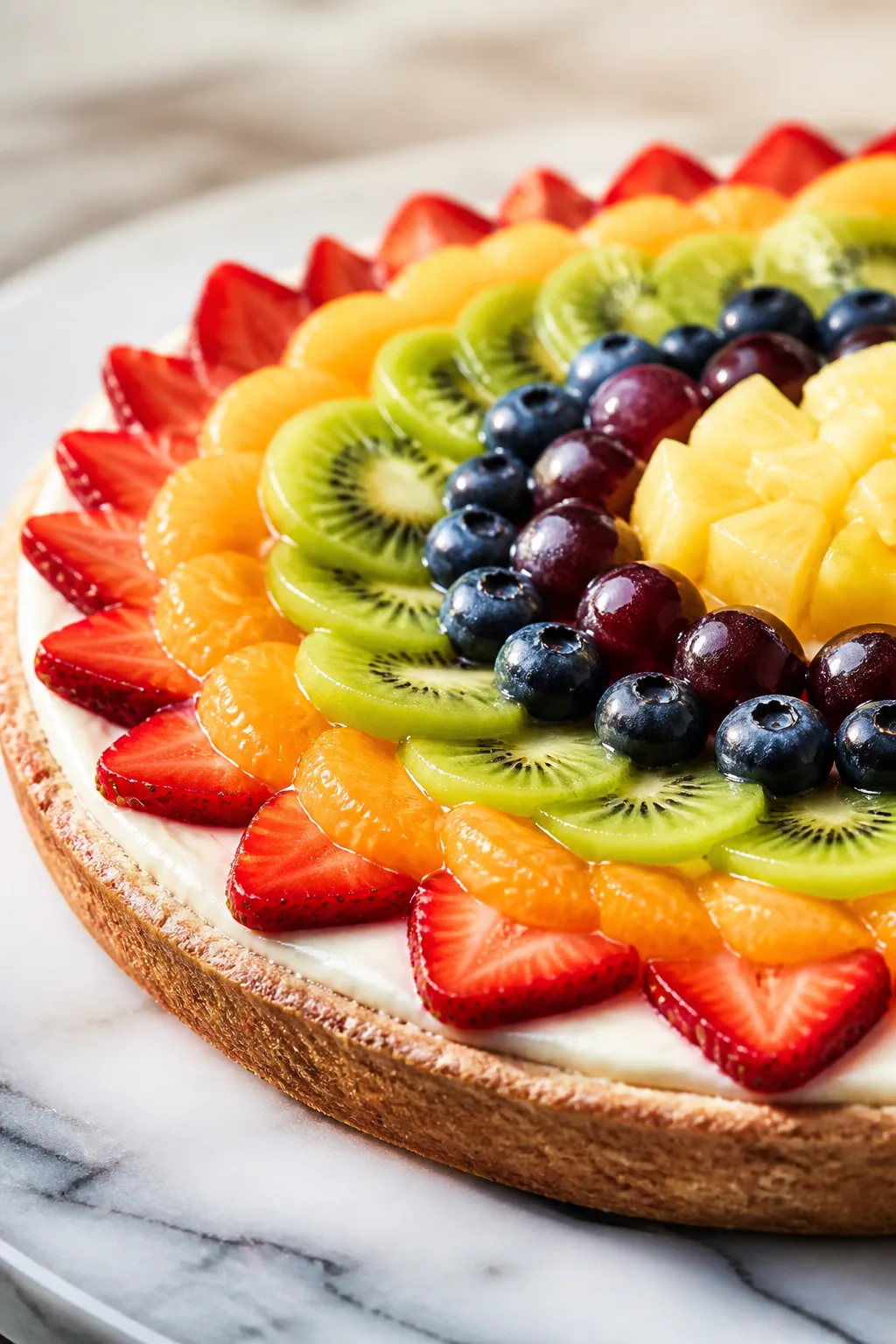
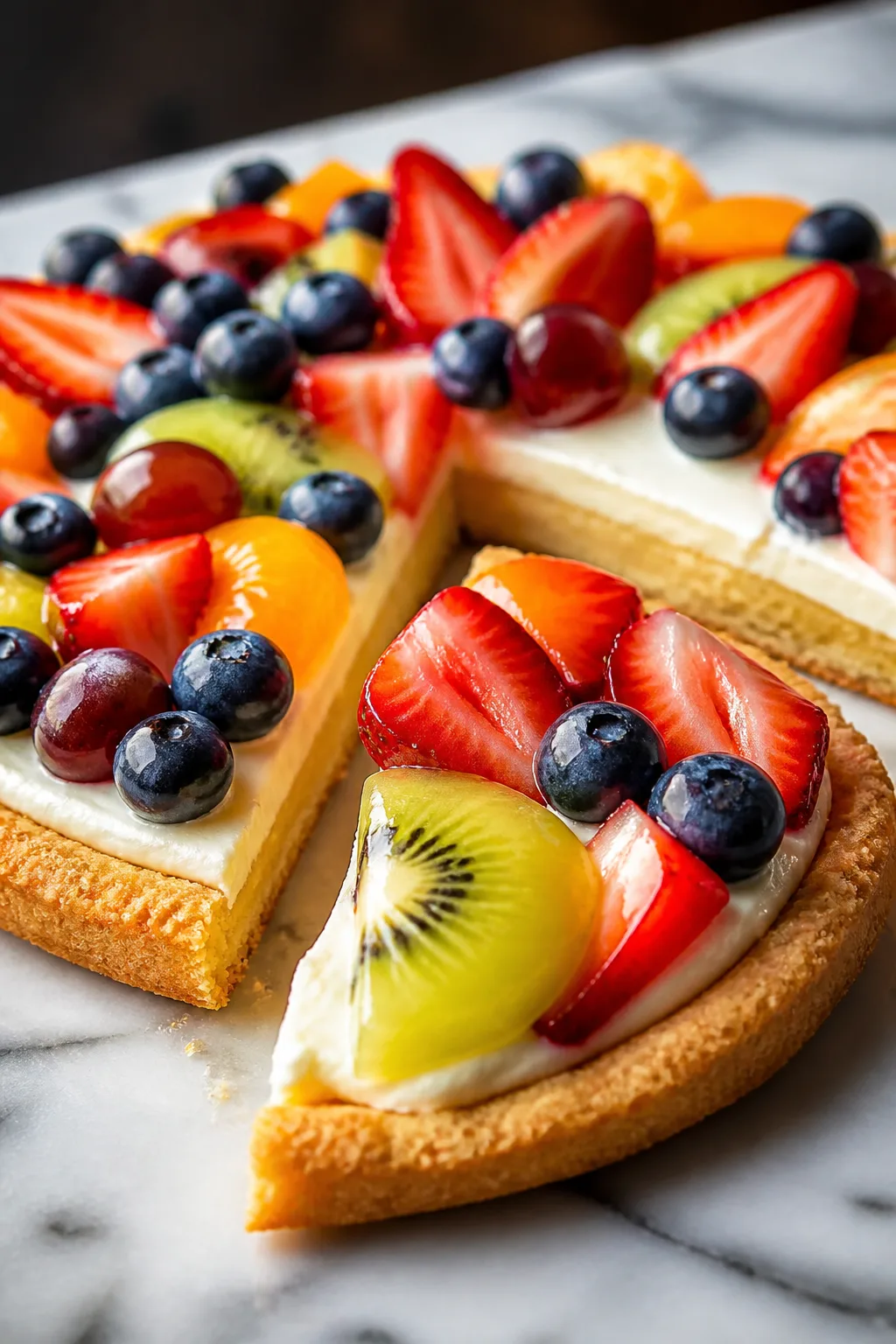
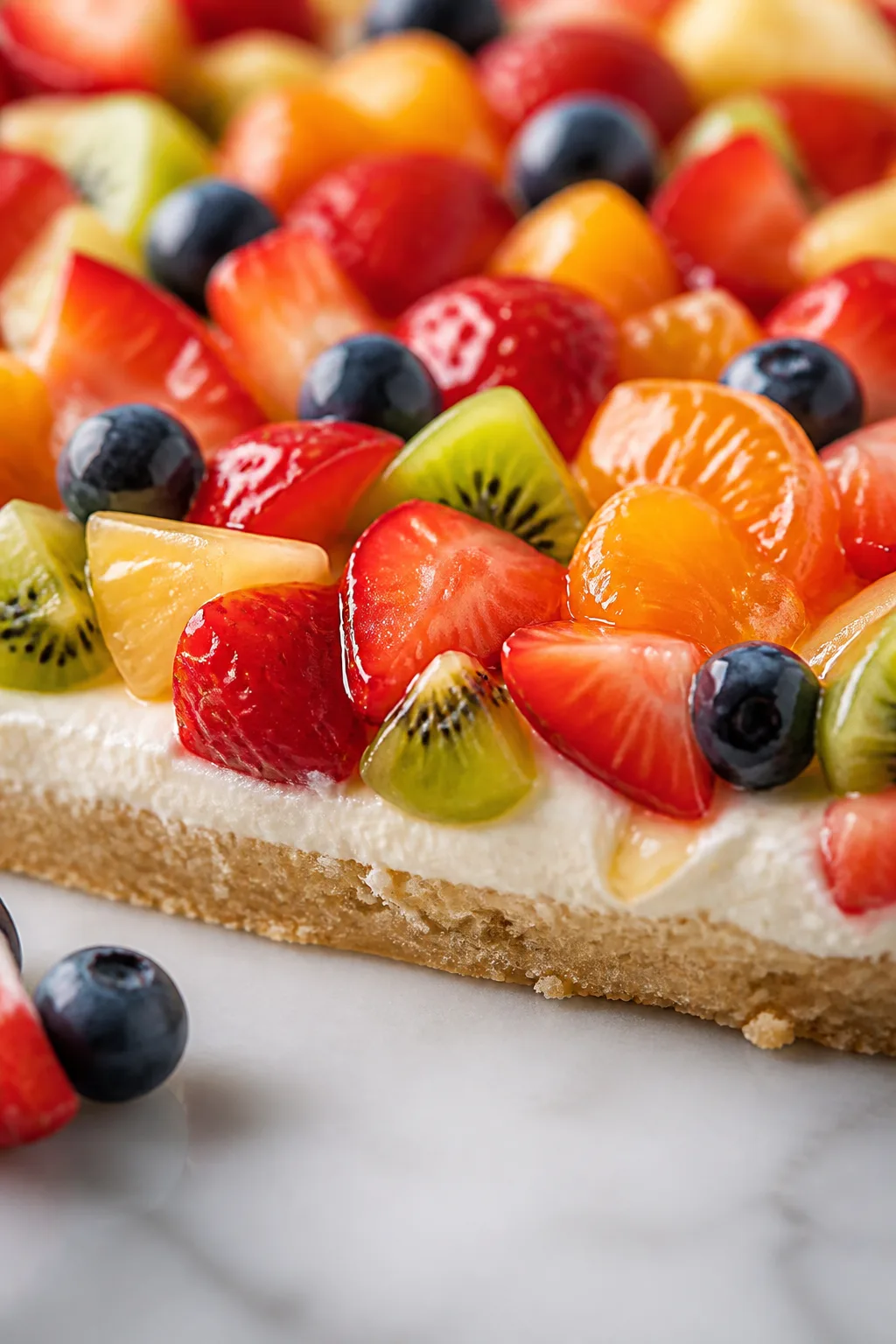
This fruit pizza is a delightful dessert with a soft sugar cookie base, creamy tangy cream cheese spread, and vibrant fresh fruit on top. It’s perfect for summer gatherings or an easy weekend treat that feels special.
Introduction
I first made fruit pizza years ago for a summer picnic, and it instantly became a favorite in my family. What makes this version special is the soft sugar cookie crust that bakes up tender and slightly chewy, unlike the usual crisp cookie base. The cream cheese topping has just the right amount of tang, thanks to a touch of powdered sugar and vanilla, which keeps it from being too sweet. I like to slice up a colorful variety of fresh fruit on top—strawberries, kiwi, blueberries, and pineapple—because the freshness balances the richness of the cream cheese and cookie. One trick I learned is to let the cookie cool completely before spreading the cream cheese layer; otherwise, it melts and gets runny. The finished fruit pizza looks like a vibrant, edible canvas and tastes like a bright, creamy dessert that’s perfect for warm days or any casual gathering. It’s always a hit, and I love how easy it is to customize with whatever fruit is in season. Honestly, it feels fancy but is actually super simple to make!
What You'll Need
One 12-inch fruit pizza, approximately 8 servings
- 1 cup unsalted butter, softened
- 1 cup granulated sugar
- 1 large egg
- 1 teaspoon vanilla extract
- 2 1/2 cups all-purpose flour
- 1/2 teaspoon baking powder
- 1/4 teaspoon salt
- 8 oz cream cheese, softened
- 1/4 cup powdered sugar
- 1 teaspoon vanilla extract
- Assorted fresh fruit (strawberries, kiwi, blueberries, pineapple), sliced
How To Do It
Step 1
Preheat your oven to 350°F (175°C). In a large bowl, cream together the softened butter and granulated sugar until light and fluffy. This step is crucial because creaming incorporates air into the butter, which helps create a tender, soft cookie crust. Use an electric mixer on medium speed for about 3-4 minutes, scraping down the sides occasionally to ensure everything is mixed well. Avoid rushing this step; under-creaming will result in a denser crust.
⏱ Time: 5
✓ Doneness: Mixture should be pale and fluffy, with no visible sugar granules.
Step 2
Add the egg and vanilla extract to the creamed butter mixture and beat until fully combined and smooth. The egg adds moisture and helps bind the dough, while vanilla enhances flavor depth. Mixing thoroughly ensures an even texture and prevents pockets of egg or vanilla. If you skip this or mix poorly, the dough can be uneven and the flavor less balanced.
⏱ Time: 2
✓ Doneness: Mixture should be smooth and homogeneous with no streaks.
Step 3
In a separate bowl, whisk together the flour, baking powder, and salt. This ensures the leavening agent and salt are evenly distributed, which prevents uneven rising and flavor pockets. Sifting is optional but recommended for a lighter texture.
⏱ Time: 3
✓ Doneness: Dry ingredients are well combined with no lumps.
Step 4
Gradually add the dry ingredients to the wet mixture, mixing on low speed until just combined. Overmixing here can develop gluten, making the crust tough rather than soft and tender. Watch for a dough that comes together but isn’t sticky or overly dense.
⏱ Time: 3
✓ Doneness: Dough forms a soft ball and pulls away slightly from the bowl.
Step 5
Press the dough evenly into a greased 12-inch pizza pan, smoothing the surface with your fingers or the back of a spoon. Even thickness is important so it bakes uniformly. Don’t stretch the dough too thin or it will crisp up too much, losing that soft texture we want.
⏱ Time: 5
✓ Doneness: Dough layer is smooth, even, and about 1/4 inch thick.
Step 6
Bake the crust in the preheated oven for 18-20 minutes, until the edges are lightly golden but the center still looks soft. This timing keeps the crust tender rather than hard or crunchy. Avoid overbaking, which dries out the base and makes spreading the cream cheese topping difficult.
⏱ Time: 20
✓ Doneness: Edges are golden brown, center is set but soft to touch.
Step 7
While the crust cools completely, prepare the topping by beating together the softened cream cheese, powdered sugar, and vanilla extract until smooth and creamy. This combination adds a subtle tang and sweetness that complements the fruit perfectly. Make sure the cream cheese is fully softened for a silky texture without lumps.
⏱ Time: 5
✓ Doneness: Topping is smooth, creamy, and spreadable.
Step 8
Once the crust is completely cool, spread the cream cheese mixture evenly over the surface. If the crust is even slightly warm, the topping may melt and become runny, so patience here is key. Use an offset spatula or the back of a spoon for a smooth finish.
⏱ Time: 5
✓ Doneness: Topping is evenly spread without streaks or lumps.
Step 9
Arrange the sliced fresh fruit on top in any pattern you like. I love mixing colors and shapes for a beautiful presentation. The fruit adds brightness and freshness that balances the richness of the cream cheese and sweetness of the crust. Serve immediately or chill briefly before serving for a refreshing treat.
⏱ Time: 10
✓ Doneness: Fruit is evenly distributed and vibrant in color.
Pro Tips
Make sure the cookie crust is completely cool before spreading the cream cheese topping.
If the crust is still warm, the cream cheese mixture will melt and become runny, ruining the texture and appearance. Cooling the crust fully allows the topping to stay thick and creamy, making it easier to spread evenly and hold the fruit.
Use room temperature cream cheese for the topping to avoid lumps.
Cold cream cheese is hard and doesn’t mix smoothly, resulting in a lumpy topping. Softened cream cheese blends easily with powdered sugar and vanilla for a silky, smooth texture that spreads perfectly on the crust.
Don’t overmix the dough once you add flour to keep the crust tender.
Overmixing develops gluten in the flour, which can make the cookie crust tough and chewy instead of soft and tender. Mixing just until combined preserves the delicate crumb texture that makes this dessert so enjoyable.
Arrange fruit just before serving to keep it fresh and vibrant.
Fruit releases moisture over time, which can make the crust soggy and cause the cream cheese topping to soften too much. Adding fruit right before serving keeps the pizza looking bright and ensures the crust stays crisp.
Use an offset spatula to spread the cream cheese evenly.
An offset spatula allows you to spread the topping smoothly without damaging the cookie crust. It gives better control compared to a regular spoon or knife, resulting in an even layer that holds the fruit perfectly.
Let the dough rest briefly before pressing it into the pan if it feels sticky.
Resting the dough for 10-15 minutes allows the flour to hydrate fully and gluten to relax, making the dough easier to handle and press evenly. This prevents tearing or uneven thickness in the crust.
Use a mix of colorful fruits for a visually appealing dessert.
Different colors and shapes of fruit create an inviting, vibrant look that makes the dessert more appetizing. It also adds varied flavors and textures, enhancing the overall eating experience.
Common Mistakes to Avoid
Spreading cream cheese topping on warm crust
Why it happens Many cooks get excited to assemble and forget that a warm crust melts the cream cheese, causing it to become runny and seep into the cookie.
Fix Always let the crust cool completely before adding the topping. You can speed up cooling by placing the crust on a wire rack in a cool spot. This keeps the cream cheese thick and spreadable.
Overmixing dough after adding flour
Why it happens It’s easy to keep mixing to incorporate flour fully, but this activates gluten and toughens the crust.
Fix Mix just until the flour disappears. Stop as soon as you have a uniform dough to maintain a soft, tender crust.
Using overripe or watery fruit
Why it happens Overripe fruit is tempting because it’s sweet, but it releases too much juice, making the dessert soggy.
Fix Pick firm, ripe fruit and pat it dry before slicing. Add fruit just before serving to keep crust crisp.
Not softening cream cheese properly
Why it happens Cold cream cheese makes it hard to get a smooth topping, leading to lumps and uneven spreading.
Fix Leave cream cheese out at room temperature for 30-60 minutes or microwave in short bursts to soften gently.
Baking crust too long
Why it happens Some bakers overbake to get a crisp cookie, but this dries out the crust and makes it hard.
Fix Bake until edges are just golden and center is soft but set. It will firm up as it cools.
Variations
Gluten-Free Fruit Pizza
Swap all-purpose flour for a gluten-free flour blend that includes xanthan gum. This keeps the crust tender and cohesive. Expect a slightly different texture—still soft but a bit crumbly. Perfect for gluten-sensitive guests!
Note: Gluten-free dough may need a bit more moisture or a short rest to hydrate fully before baking.
Vegan Fruit Pizza
Use vegan butter and a dairy-free cream cheese alternative. Replace the egg with a flax egg (1 tbsp ground flaxseed + 3 tbsp water). The crust may be a bit denser but still delicious. Choose fresh fruit as usual.
Note: Vegan cream cheese can be softer; chill topping slightly before spreading to thicken.
Chocolate Drizzle Fruit Pizza
After assembling, drizzle melted dark or white chocolate over the fruit for an extra touch of indulgence. This adds richness and a lovely contrast to the fresh fruit and tangy cream cheese.
Note: Allow chocolate to set at room temperature or briefly in the fridge before slicing.
Citrus Zest Cream Cheese Topping
Add lemon or orange zest to the cream cheese mixture for a bright, zesty flavor that complements the fruit beautifully. It adds a fresh twist that’s especially nice with berries or kiwi.
Note: Use finely grated zest to avoid bitterness and mix well to distribute flavor evenly.
Mini Fruit Pizzas
Divide dough into small rounds to make individual mini fruit pizzas. Perfect for parties or kids. Baking time will be shorter—watch carefully to avoid overbaking.
Note: Mini pizzas bake in about 10-12 minutes; cool completely before topping.
Nutrition
Per Serving:
Nutritional values are estimates and may vary based on specific ingredients used.
Storage & Tips
Room Temperature
Fruit pizza can safely sit out at room temperature for up to 2 hours if covered loosely with plastic wrap or a clean kitchen towel. Avoid leaving it longer to prevent fruit spoilage and cream cheese softening.
Refrigerator
Store leftover fruit pizza in an airtight container in the refrigerator for up to 3 days. The crust may lose some crispness, but chilling helps keep the cream cheese fresh. Serve cold or let it sit at room temperature for 10-15 minutes before eating.
Freezer
Freezing is not recommended for fruit pizza because the fresh fruit and cream cheese topping don’t freeze well. The texture and flavor will degrade significantly after thawing.
Reheating
Fruit pizza is best enjoyed cold or at room temperature. If you prefer a warm crust, carefully remove the fruit topping and cream cheese layer, warm the crust briefly in the oven at 300°F for 5-7 minutes, then reassemble with fresh cream cheese and fruit.
Make Ahead
You can prepare the cookie crust and cream cheese topping 1-2 days ahead. Store the crust wrapped tightly at room temperature and the topping in an airtight container in the fridge. Add the fruit and assemble just before serving for the freshest result.
FAQ
Can I use frozen fruit on this fruit pizza?
Frozen fruit tends to release a lot of moisture as it thaws, which can make the crust soggy and the cream cheese topping watery. If you must use frozen fruit, thaw it completely, drain excess liquid, and pat dry before arranging on the pizza. Fresh fruit is always best for texture and appearance.
What can I substitute for the egg in the cookie crust?
You can use a flax egg (1 tbsp ground flaxseed mixed with 3 tbsp water) as a vegan substitute. Let it rest for 5 minutes to thicken before adding to the dough. The crust may be slightly denser but still tasty and tender.
How do I prevent the cream cheese topping from becoming runny?
The key is to spread the cream cheese topping only after the cookie crust has completely cooled. Warm crust melts the cream cheese, making it runny. Also, use softened cream cheese, not melted, for the best texture.
Can I make this fruit pizza ahead of time?
You can bake the crust and prepare the cream cheese topping 1-2 days ahead. Store them separately—crust wrapped at room temperature and topping refrigerated. Add the fresh fruit and assemble just before serving to keep everything fresh and vibrant.
What’s the best way to slice fruit for this pizza?
Slice fruit thinly and evenly so it lays flat and looks pretty on the pizza. Small berries can be left whole or halved, while larger fruits like kiwi and strawberries should be sliced lengthwise or into thin rounds for easy eating.
Can I use a different type of flour for the crust?
All-purpose flour works best for a tender but structured crust. You can try a gluten-free blend if needed, but the texture may be slightly different. Avoid bread flour as it has too much gluten and makes the crust tough.
How long does this fruit pizza keep in the fridge?
Stored in an airtight container, fruit pizza will keep well for up to 3 days. The fruit may release some juice over time, which can soften the crust. For best texture, consume within 1-2 days.
Can I add other toppings besides fruit?
Absolutely! Nuts like sliced almonds or chopped pistachios add crunch, and a drizzle of honey or chocolate can elevate the flavor. Just add these right before serving to keep textures fresh.
Final Thoughts
I hope you enjoy making and sharing this fresh fruit pizza as much as I do! Don’t forget to tell me how yours turns out—I’d love to hear your favorite fruit combos.