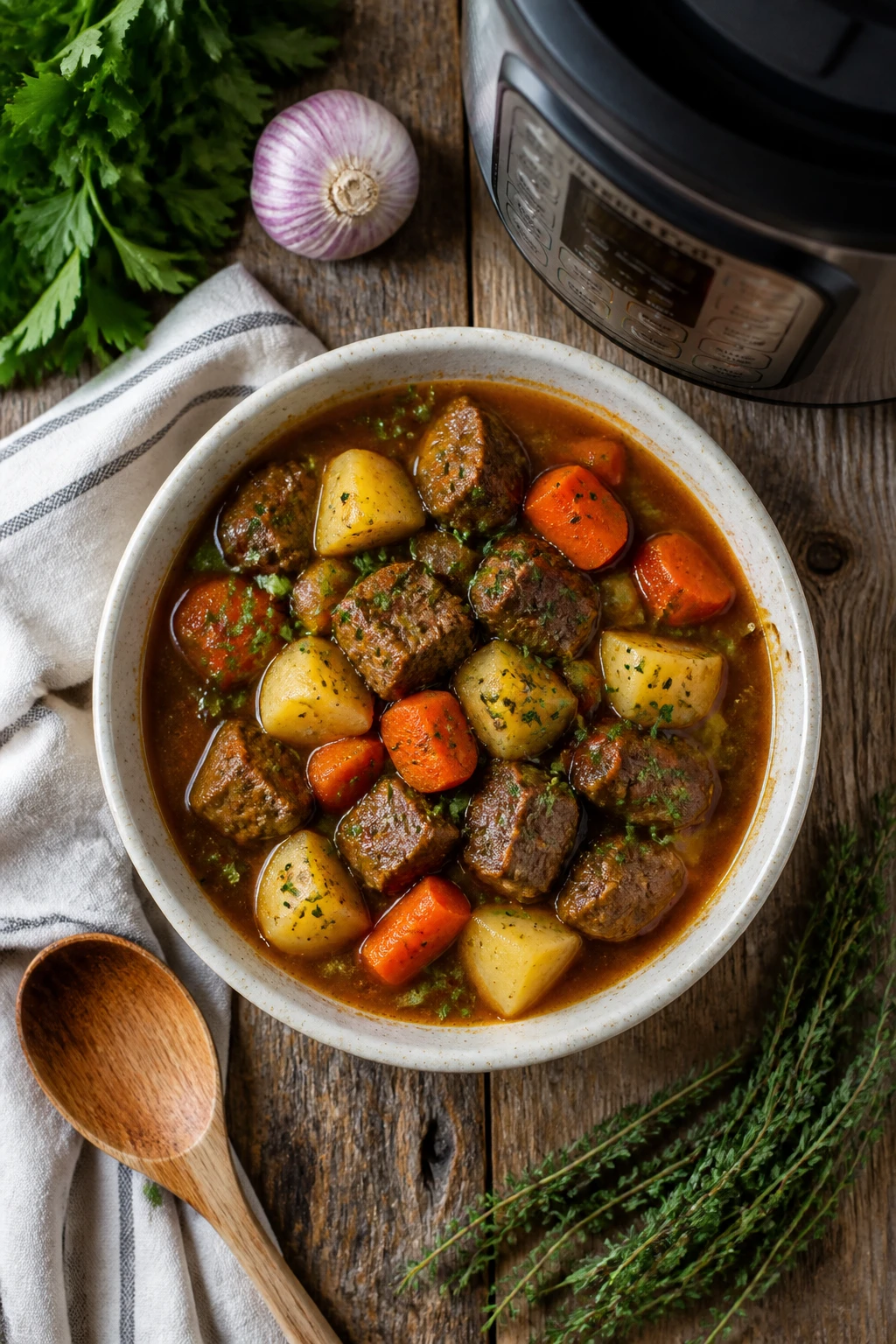
This Instant Pot chicken and veggie stew is a lifesaver when you want something nutritious but fast. It uses fresh vegetables and lean chicken, with the pressure cooker locking in flavors perfectly. Great for weeknight dinners or meal prep!
Introduction
I first made this Instant Pot chicken and veggie stew on a hectic weeknight when I needed something quick, healthy, and comforting. It became an instant favorite because it’s packed with fresh vegetables and lean protein, yet it comes together in under an hour. What makes this version special is how the pressure cooker locks in all the flavors and nutrients without turning the chicken rubbery or the veggies mushy. I learned that sautéing the onions and garlic first adds a depth of flavor that you just can’t get by dumping everything in at once. The key is also adding the peas at the end to keep their bright color and texture. The finished stew is hearty, aromatic, and perfect for chilly evenings or meal prepping for the week. I love how it’s both nourishing and fuss-free, and it always feels like a warm hug in a bowl. Plus, it’s super forgiving, so even if you’re new to pressure cooking, you’ll have no trouble making it taste great.
What You'll Need
Approximately 6 cups, 4 servings
- 1 lb boneless skinless chicken breasts, cut into chunks
- 2 cups baby carrots, peeled
- 1 cup diced celery
- 1 cup chopped onion
- 2 cups diced potatoes
- 3 cloves garlic, minced
- 4 cups low-sodium chicken broth
- 1 tsp dried thyme
- 1 tsp dried rosemary
- Salt and pepper to taste
- 2 tbsp olive oil
- 1 cup frozen peas (added after cooking)
How To Do It
Step 1
Start by setting your Instant Pot to the sauté function. Add the olive oil, then toss in the chopped onion and garlic. Cook them until they’re soft and fragrant, about 3-5 minutes. This step is crucial because it builds the flavor base—caramelizing the onions releases their natural sweetness and mellows the garlic’s sharpness. Avoid rushing this stage or cooking on too high heat, as burnt garlic can turn bitter and ruin the stew’s taste.
⏱ Time: 5
✓ Doneness: Onions should be translucent and soft, garlic fragrant but not browned
Step 2
Add the chicken chunks to the pot and sauté for about 3-4 minutes until they turn white on all sides but aren’t fully cooked through. This step seals in moisture and adds a nice texture to the chicken. If you skip this, the chicken can end up a bit bland and less tender after pressure cooking.
⏱ Time: 4
✓ Doneness: Chicken pieces should be opaque and lightly browned on edges
Step 3
Add the carrots, celery, potatoes, thyme, rosemary, salt, and pepper. Pour in the chicken broth, making sure the ingredients are submerged but not too crowded. This liquid is essential for building steam pressure and also infuses the stew with flavor. Don’t add too much salt here since broth can be salty already; you can adjust seasoning later.
⏱ Time: 3
✓ Doneness: Broth should cover veggies and chicken, herbs evenly distributed
Step 4
Secure the lid and set the Instant Pot to pressure cook on high for 10 minutes. The pressure cooking cooks the chicken and vegetables quickly while locking in moisture and flavor. If you don’t cook long enough, the potatoes and carrots might be underdone; too long and they become mushy.
⏱ Time: 10
✓ Doneness: Instant Pot reaches full pressure and timer counts down
Step 5
Once the cooking cycle finishes, allow a natural pressure release for 5 minutes, then carefully quick release any remaining pressure. This gradual release helps keep the chicken tender and prevents the broth from sputtering out too fast.
⏱ Time: 7
✓ Doneness: Pressure valve drops completely, lid opens easily
Step 6
Open the lid and stir in the frozen peas. The residual heat will cook them quickly while keeping their vibrant color and slight crunch. Adding them earlier would make the peas mushy and dull in flavor.
⏱ Time: 3
✓ Doneness: Peas are bright green and tender but not mushy
Step 7
Taste the stew and adjust seasoning with additional salt and pepper if needed. A quick tip: a squeeze of lemon or a splash of vinegar brightens the flavors if it tastes a bit flat.
⏱ Time: 2
✓ Doneness: Balanced savory flavor with a hint of brightness
Step 8
Serve the stew hot with crusty bread or over brown rice for a more filling meal. The stew has a lovely, hearty texture with tender chicken and perfectly cooked veggies that soak up the aromatic broth.
⏱ Time: 2
✓ Doneness: Stew is steaming and smells aromatic
Step 9
Store any leftovers in an airtight container once cooled. This stew reheats well in the microwave or on the stove with a splash of broth or water to loosen it up.
⏱ Time: 1
✓ Doneness: Leftovers maintain texture and flavor when reheated
Pro Tips
Always sauté onions and garlic before pressure cooking.
This step triggers the Maillard reaction, deepening the stew’s flavor. Skipping it results in a flatter, less aromatic final dish because raw vegetables lack the caramelized notes that develop during sautéing.
Cut chicken into uniform pieces for even cooking.
Uniform chicken chunks ensure they cook at the same rate under pressure. Uneven pieces can lead to some parts drying out while others remain undercooked, affecting texture and safety.
Use low-sodium broth to control saltiness.
Broths vary widely in salt content. Starting with low-sodium allows you to season gradually, preventing an overly salty stew which can’t be fixed after cooking.
Add delicate vegetables like peas after cooking.
Pressure cooking can easily overcook tender vegetables. Adding them at the end preserves their texture and color, keeping the stew vibrant and fresh.
Let the pressure release naturally for best texture.
Natural release lets the stew cool gradually, preventing the chicken from toughening and the broth from sputtering out, maintaining moisture and tenderness.
Use fresh herbs when possible for brighter flavor.
Fresh herbs add a lively aroma and taste that dried herbs can’t match. Add them after cooking or as garnish to preserve their brightness.
Don’t overfill the Instant Pot.
Overfilling can prevent proper pressure build-up and cause uneven cooking. Follow the manufacturer’s max fill line to ensure safety and best results.
Common Mistakes to Avoid
Skipping the sauté step
Why it happens People often want to save time and skip sautéing, assuming it’s unnecessary.
Fix Take the extra 5 minutes to sauté onions and garlic first. It really elevates flavor and prevents the stew from tasting bland or raw.
Adding all veggies at once
Why it happens It’s tempting to throw everything in to keep it simple.
Fix Add delicate veggies like peas after pressure cooking to maintain texture and color. Otherwise, they become mushy and dull.
Cooking frozen chicken directly
Why it happens For convenience, some cooks add frozen chicken chunks.
Fix Always thaw chicken before cooking so it cooks evenly and stays tender, avoiding a rubbery texture.
Not adjusting seasoning after cooking
Why it happens Assuming the broth seasoning is perfect out of the pot.
Fix Always taste and add salt or pepper after cooking to balance flavors perfectly.
Releasing pressure too quickly
Why it happens Impatience leads to quick pressure release.
Fix Letting pressure release naturally for 5 minutes helps keep chicken tender and broth from sputtering.
Variations
Spicy Mexican Style Stew
Add diced jalapeños, cumin, and chili powder to the base recipe. Swap potatoes for sweet potatoes and finish with fresh cilantro and a squeeze of lime. Expect a warmer, zestier stew with a hint of sweetness.
Note: Spices should be added during sauté for maximum flavor release; sweet potatoes cook faster, so reduce pressure cook time by 2 minutes.
Creamy Coconut Curry Stew
Stir in 1 cup coconut milk and 2 tbsp curry powder after pressure cooking. Add chopped spinach at the end for extra greens. This gives a rich, creamy texture with a fragrant curry twist.
Note: Add coconut milk after pressure cooking to prevent curdling; cook spinach just until wilted to keep color and nutrients.
Vegetarian Lentil and Veggie Stew
Replace chicken with 1.5 cups dried lentils and increase broth to 5 cups. Add extra carrots and potatoes. This hearty vegetarian version is protein-packed and comforting.
Note: Lentils require about 15 minutes pressure cooking; adjust time accordingly and skip sautéing chicken.
Italian Herb and Tomato Stew
Add 1 cup diced tomatoes, fresh basil, and oregano. Use Italian seasoning instead of thyme and rosemary. This variation is bright and herbaceous with a tomato-rich broth.
Note: Add tomatoes before pressure cooking; fresh basil is stirred in after cooking to preserve flavor.
Mushroom and Barley Stew
Add 1 cup sliced mushrooms and 1/2 cup pearl barley along with veggies. This creates a chewy, earthy stew with extra fiber and texture.
Note: Pearl barley requires about 20 minutes pressure cooking; increase broth to 5 cups and adjust cook time accordingly.
Nutrition
Per Serving:
Nutritional values are estimates and may vary based on specific ingredients used.
Storage & Tips
Room Temperature
The stew can safely sit at room temperature for up to 2 hours if covered loosely. Beyond that, refrigerate promptly to avoid spoilage.
Refrigerator
Store leftovers in an airtight container for up to 4 days. The flavors deepen over time, but the peas might soften more. Reheat gently to preserve texture.
Freezer
Freeze in portioned airtight containers for up to 3 months. To avoid freezer burn, wrap containers with an extra layer of foil or plastic wrap. Thaw overnight in the fridge before reheating.
Reheating
Reheat on the stovetop over medium heat or in the microwave. Add a splash of broth or water if it thickened too much. Avoid overheating to prevent drying out the chicken.
Make Ahead
You can chop vegetables and measure spices a day ahead, storing them separately. Chicken can also be pre-cut and stored, making assembly quick on the day you cook.
FAQ
Can I use chicken thighs instead of breasts?
Absolutely! Chicken thighs add more moisture and flavor due to higher fat content. Just adjust cooking time slightly if pieces are larger. Thighs tend to stay tender and juicy under pressure cooking.
What if I don’t have an Instant Pot?
You can make this stew in a slow cooker or on the stovetop. For slow cooker, cook on low for 6-8 hours or high for 3-4 hours. On stovetop, simmer gently until chicken and veggies are tender, about 45-60 minutes.
Can I freeze leftovers?
Yes, this stew freezes very well. Cool completely before freezing in airtight containers. Thaw in the fridge overnight and reheat gently to maintain texture and flavor.
How do I make this stew spicier?
Add diced jalapeños during sautéing or sprinkle in cayenne pepper or red chili flakes with herbs. Adjust amount to your heat preference, starting small to avoid overpowering the dish.
Why should I add peas at the end?
Peas cook very quickly and lose their bright green color and texture if pressure cooked for too long. Adding them at the end keeps them fresh and slightly crisp.
How do I avoid mushy vegetables?
Cut vegetables into uniform, bite-sized pieces and stick to the recommended cooking time. Overcooking or using very small cuts can cause veggies to break down too much.
Can I use homemade chicken broth?
Definitely! Homemade broth adds extra depth and richness. Just make sure it’s well strained and not too salty to control seasoning.
Is it okay to skip the olive oil?
Olive oil helps sauté the aromatics and adds richness. You can reduce it or substitute with another oil, but skipping it entirely may result in less flavor development.
Final Thoughts
Give this Instant Pot chicken and veggie stew a try—you'll love how simple and satisfying it is. Don’t forget to share how yours turns out!