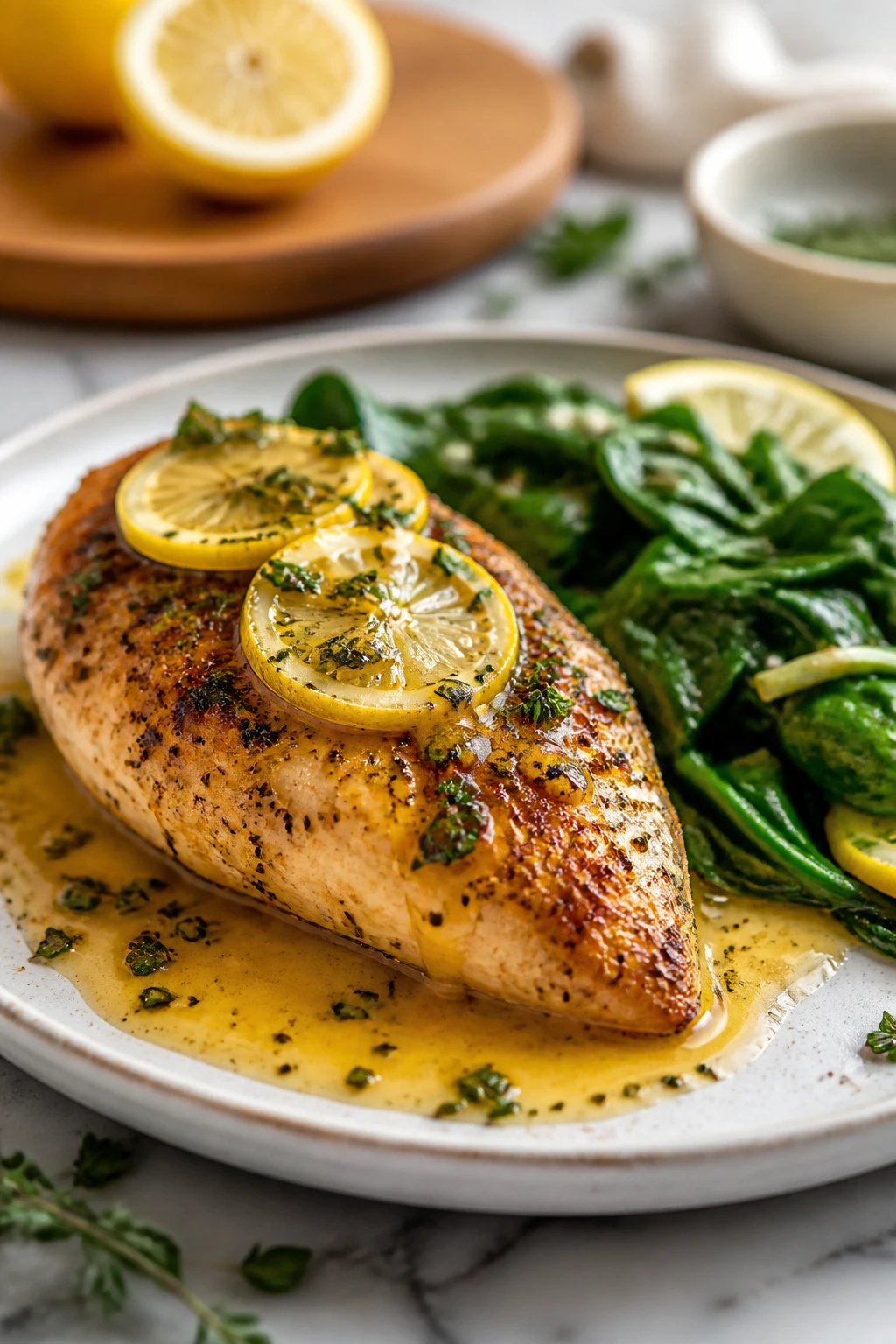
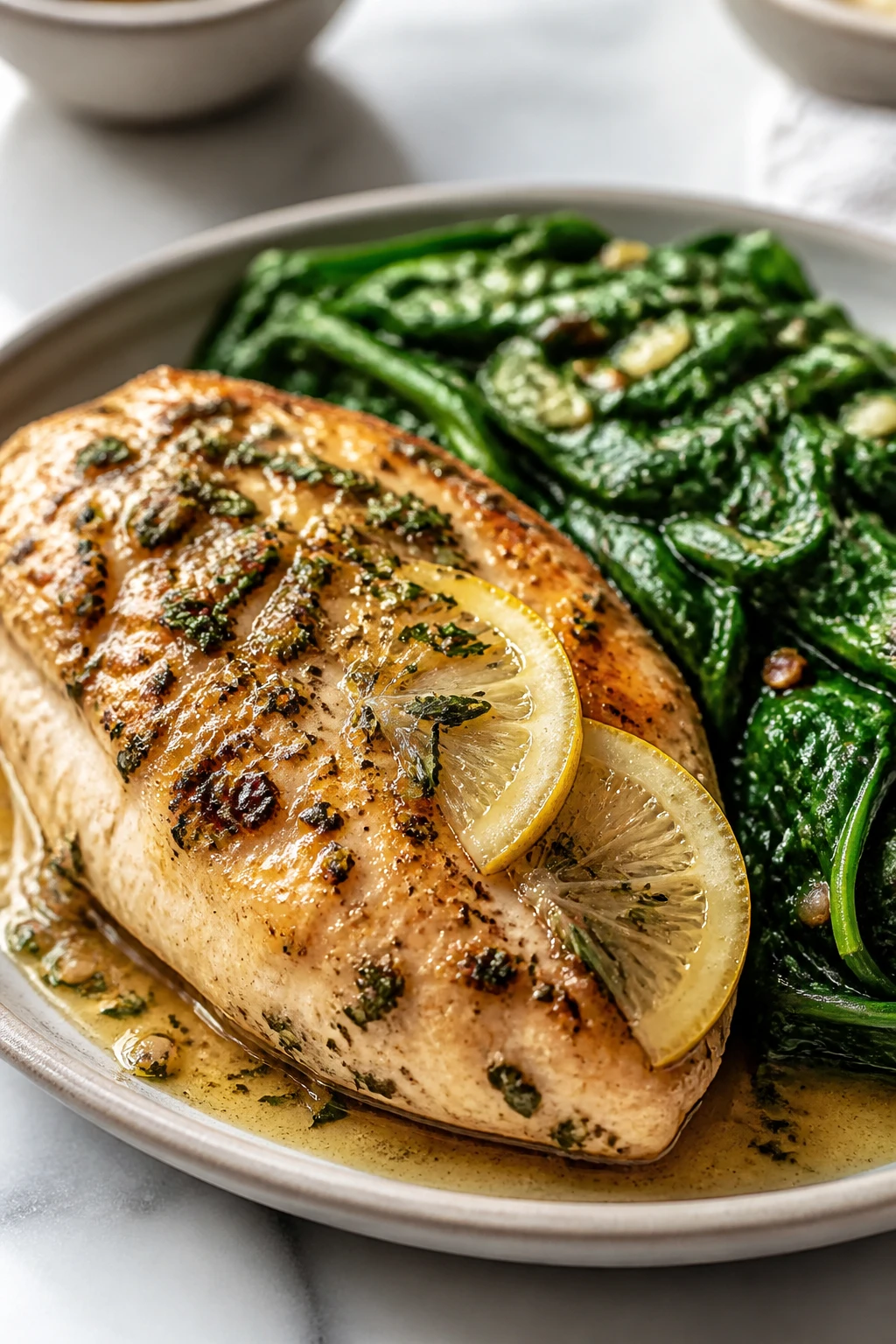
This lemon herb chicken is juicy and bright, paired with spinach sautéed just right. It’s a fresh, healthy dinner you can pull together in under 30 minutes. Great for those nights when you want simple but tasty.
Introduction
I first made this lemon herb chicken on a whim when I needed something quick yet fresh after a long day. What really sets this version apart is the way I marinate the chicken briefly with fresh lemon zest and herbs, giving it that bright, juicy flavor without needing hours. The spinach is sautéed quickly with garlic and a touch of butter, adding a silky texture that balances the tangy chicken perfectly. I’ve tried many lemon chicken recipes before, but this one hits the sweet spot between simple preparation and vibrant taste. The trick I learned is not to overcook the chicken; keeping it moist and tender makes all the difference. When it’s done, you get a gorgeous golden crust with juicy meat inside, paired with spinach that still has a bit of bite. It’s my go-to when I want something light but satisfying, especially on busy weeknights when time is tight but I don’t want to sacrifice flavor.
How To Do It
Step 1
Start by patting the chicken breasts dry with paper towels. This step is crucial because moisture on the surface prevents the chicken from browning properly. Next, season both sides generously with salt, pepper, dried oregano, and thyme. The herbs add a subtle earthiness that complements the lemon beautifully. Let the chicken rest while you zest and juice the lemon. This brief resting also helps the seasoning penetrate a bit before cooking.
⏱ Time: 5 minutes
✓ Doneness: Chicken surface looks evenly coated and slightly tacky from seasoning
Step 2
Heat one tablespoon of olive oil in a large skillet over medium-high heat. Once hot, add the chicken breasts. Sear without moving them for about 5-6 minutes per side. This forms a golden crust through the Maillard reaction, which locks in flavor and juices. Avoid flipping too often or pressing down on the chicken, as that squeezes out moisture. If your pan isn’t hot enough, the chicken will steam instead of sear, so watch for a nice golden color before turning.
⏱ Time: 12 minutes
✓ Doneness: Golden brown crust forms on both sides
Step 3
After both sides are nicely browned, reduce the heat to medium-low. Add the minced garlic and lemon juice over the chicken in the pan. The acidity helps tenderize the meat slightly and infuses it with brightness. Spoon the pan juices over the chicken as it finishes cooking to keep it moist. Cover the pan loosely and cook for an additional 5-7 minutes until the internal temperature reaches 165°F (74°C). Using a meat thermometer is the best way to ensure juiciness without overcooking.
⏱ Time: 7 minutes
✓ Doneness: Chicken registers 165°F internally and juices run clear
Step 4
While the chicken finishes, wipe out the skillet and heat the remaining tablespoon of olive oil over medium heat. Add the butter and let it melt completely. Then toss in the fresh spinach. Stir frequently to wilt the leaves evenly without turning them soggy. The butter adds richness that balances the bright lemon flavors of the chicken. If you want a little kick, sprinkle some red pepper flakes now. Cook for about 3-4 minutes until the spinach is tender but still vibrant green.
⏱ Time: 4 minutes
✓ Doneness: Spinach is wilted but bright green and glossy
Step 5
Plate the chicken breasts and spoon the garlicky sautéed spinach alongside. Drizzle any remaining pan juices over the chicken for extra flavor. This simple plating lets the fresh ingredients shine. Serve with lemon wedges if you like extra citrus zing. The contrast between tender chicken and silky spinach makes this dish feel both light and satisfying.
⏱ Time: 2 minutes
✓ Doneness: Dish looks vibrant with glossy spinach and golden chicken
Step 6
To add extra flavor, you can marinate the chicken in lemon juice, zest, garlic, and herbs for 20-30 minutes before cooking. This step isn’t necessary but deepens the lemony notes and tenderizes the meat more. Just avoid marinating longer than an hour as the acid can start to cook the chicken and change texture.
⏱ Time: Optional 20-30 minutes
✓ Doneness: Chicken surface feels slightly tacky and lemon aroma is noticeable
Step 7
If your chicken breasts are uneven thickness, pound them gently to even thickness before cooking. This helps them cook evenly and prevents the thinner parts from drying out while waiting for the thicker center to cook through. Use a meat mallet or rolling pin with a gentle touch.
⏱ Time: 5 minutes
✓ Doneness: Chicken breasts have uniform thickness about 1 inch
Step 8
When sautéing spinach, avoid overcrowding the pan to ensure even cooking. If you add too much at once, the spinach will steam in its own moisture and become soggy instead of nicely wilted. Cook in batches if needed, stirring frequently to prevent burning.
⏱ Time: 3-4 minutes
✓ Doneness: Spinach leaves are tender but not mushy or darkened
Step 9
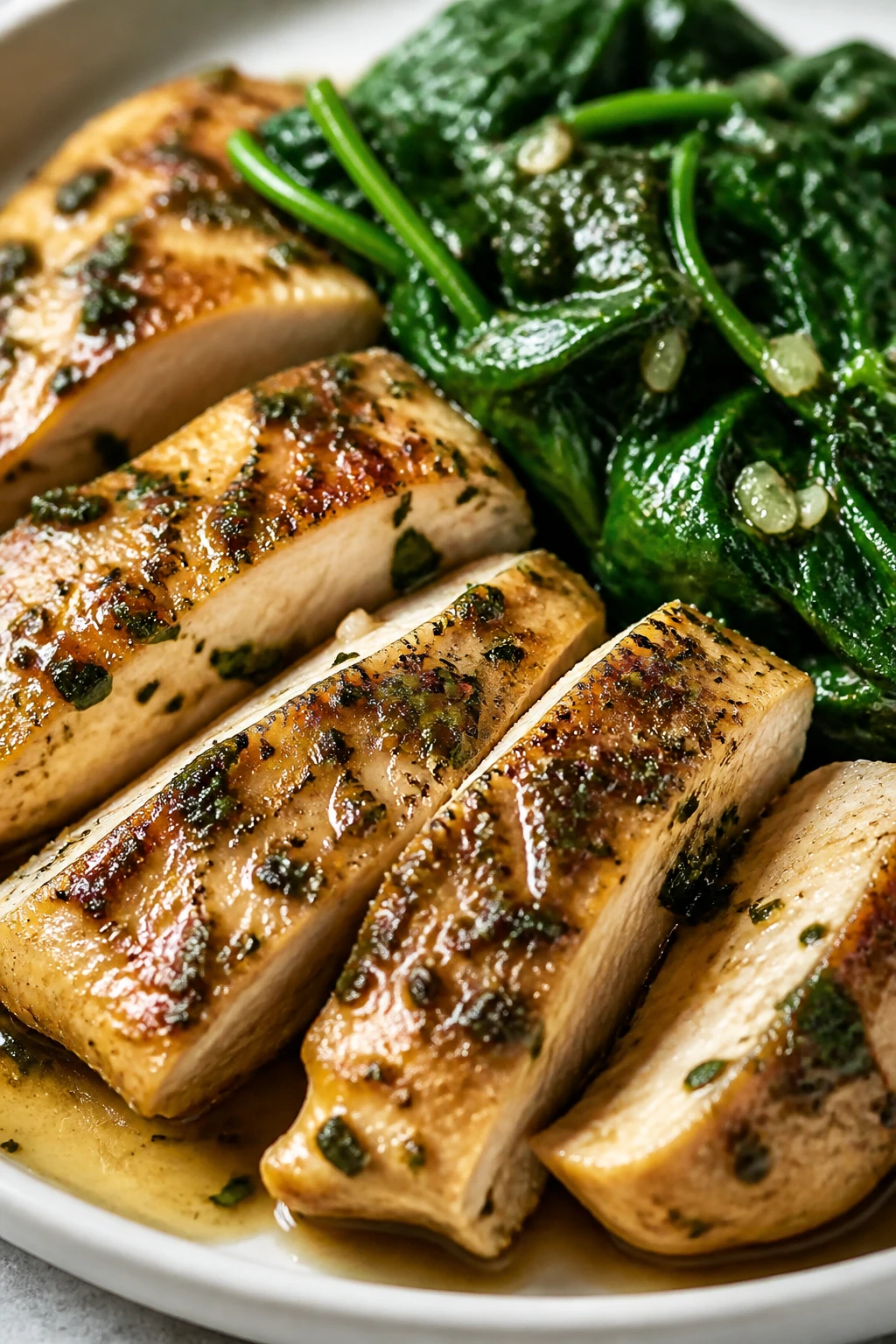
Let the chicken rest for 5 minutes after cooking before slicing or serving. Resting allows the juices to redistribute inside the meat, making it juicier and more tender. If you cut immediately, the juices run out and the chicken can feel dry.
⏱ Time: 5 minutes
✓ Doneness: Chicken surface is warm but not steaming, juices stay inside when sliced
Pro Tips
Pat the chicken dry before seasoning.
Removing surface moisture allows the chicken to brown properly, creating a flavorful crust. If the chicken is wet, it will steam in the pan rather than sear, resulting in a pale, soggy texture.
Use a meat thermometer to check doneness.
This ensures the chicken is cooked safely to 165°F without overcooking. Overcooked chicken becomes dry and tough, while undercooked is unsafe and unpleasant.
Don’t overcrowd the pan when cooking spinach.
Too much spinach at once releases excess moisture, causing steaming instead of sautéing. This makes the spinach soggy and less vibrant.
Let the chicken rest after cooking.
Resting lets juices redistribute inside the meat, making it juicy. Cutting immediately after cooking causes juices to spill out and dry the chicken.
Add lemon juice toward the end of cooking.
Adding acid too early can toughen meat proteins. Adding it later brightens flavor without affecting texture.
Use fresh lemon zest for intense aroma.
Zest contains essential oils that add bright, fresh citrus notes not found in lemon juice alone.
Pound chicken breasts to even thickness.
Even thickness ensures uniform cooking, preventing dry edges or raw centers.
Common Mistakes to Avoid
Skipping patting chicken dry
Why it happens Many assume rinsing or seasoning is enough without drying. Moisture prevents browning.
Fix Always use paper towels to dry chicken thoroughly before seasoning and cooking to get a golden crust.
Overcooking the chicken
Why it happens Without a thermometer, it’s easy to guess doneness incorrectly and cook too long.
Fix Use an instant-read thermometer and remove chicken at 165°F to keep it juicy.
Adding lemon juice too early
Why it happens Some add lemon juice at the start, not realizing acid can toughen meat.
Fix Add lemon juice after searing to tenderize gently without making chicken rubbery.
Overcrowding the spinach pan
Why it happens Trying to cook all spinach at once causes steaming and sogginess.
Fix Cook spinach in batches if needed, stirring often, to keep it vibrant and tender.
Not resting chicken before slicing
Why it happens Impatience leads to cutting right away, losing juices.
Fix Let chicken rest 5 minutes to keep it moist and flavorful when sliced.
Variations
Spicy Lemon Herb Chicken
Add red pepper flakes or cayenne to the herb seasoning for a spicy kick. This adds warmth that contrasts nicely with the lemon’s brightness. Serve with garlic sautéed kale instead of spinach for a heartier side.
Note: Be careful not to burn spices; add them with the garlic toward the end of cooking.
Creamy Lemon Herb Chicken
After cooking the chicken, remove it from the pan and stir in a splash of cream and grated Parmesan to the pan juices. Pour this sauce over the chicken for a richer, indulgent version.
Note: Reduce heat to low before adding cream to prevent curdling.
Grilled Lemon Herb Chicken
Marinate chicken breasts in lemon, herbs, and olive oil for an hour, then grill over medium heat. This adds smoky char and keeps the chicken juicy with a slightly different texture.
Note: Watch grilling time closely to avoid drying out; flip once for best grill marks.
Lemon Herb Chicken with Quinoa Salad
Serve the chicken over a bed of quinoa tossed with cucumbers, cherry tomatoes, and fresh herbs for a complete, light meal. It’s perfect for meal prep and adds a refreshing crunch.
Note: Cook quinoa separately and cool before mixing with veggies to retain texture.
One-Pan Lemon Herb Chicken and Veggies
Add chopped zucchini, bell peppers, and cherry tomatoes to the pan with chicken. Roast everything together for a colorful, easy dinner with minimal cleanup.
Note: Cut veggies into uniform sizes to ensure even cooking alongside chicken.
Nutrition
Per Serving:
Nutritional values are estimates and may vary based on specific ingredients used.
Storage & Tips
Room Temperature
Leftovers can safely sit at room temperature for up to 2 hours. Cover loosely to avoid drying out but avoid leaving out longer to prevent bacterial growth.
Refrigerator
Store cooked chicken and spinach separately in airtight containers for up to 3 days. Chicken may firm up when cold; reheat gently to restore juiciness.
Freezer
Freeze chicken breasts wrapped tightly in foil or plastic wrap, then in a freezer bag for up to 2 months. Spinach can be frozen but may lose some texture; best fresh.
Reheating
Reheat chicken gently in a skillet over low heat with a splash of water or broth to keep moist. Avoid microwave reheating at high power which can dry out meat.
Make Ahead
Marinate chicken up to 1 day ahead for deeper flavor. Sauté spinach fresh on the day to preserve texture and color. Cook chicken just before serving for best results.
FAQ
Can I use chicken thighs instead of breasts?
Yes! Boneless skinless thighs work well and tend to stay juicy. Adjust cooking time slightly as thighs are thicker and contain more fat. Sear and finish cooking until internal temp reaches 165°F for safe eating.
What can I substitute for fresh spinach?
Baby kale or Swiss chard are great alternatives. They require slightly longer cooking times to become tender. Add a splash of water when sautéing to help wilt tougher greens evenly.
How long can I marinate the chicken?
Marinate for 20-30 minutes up to 1 hour. Longer than that, the acid in lemon juice can start to break down the meat and change its texture, making it mushy.
Can I prepare this recipe gluten-free?
Absolutely! All ingredients are naturally gluten-free. Just double-check any packaged seasonings or broths to ensure they don’t contain gluten additives.
Is there a way to make this recipe dairy-free?
Yes, simply omit the butter when sautéing spinach and use olive oil instead. The flavor will still be delicious and the spinach will cook just fine.
What if I don’t have dried oregano and thyme?
You can use Italian seasoning or a mix of other dried herbs like rosemary and basil. Fresh herbs can also be used but add them toward the end of cooking to preserve flavor.
How do I know when the chicken is cooked without a thermometer?
Cut into the thickest part of the breast to check that juices run clear and meat is no longer pink. However, using a thermometer is more reliable and prevents overcooking.
Can I double this recipe for a larger crowd?
Yes, just cook the chicken in batches to avoid overcrowding the pan. Overcrowding lowers the pan temperature and prevents proper searing.
Final Thoughts
Give this lemon herb chicken a try for a quick, fresh dinner that doesn’t skimp on flavor. I’d love to hear how it turns out for you—don’t forget to share your experience!