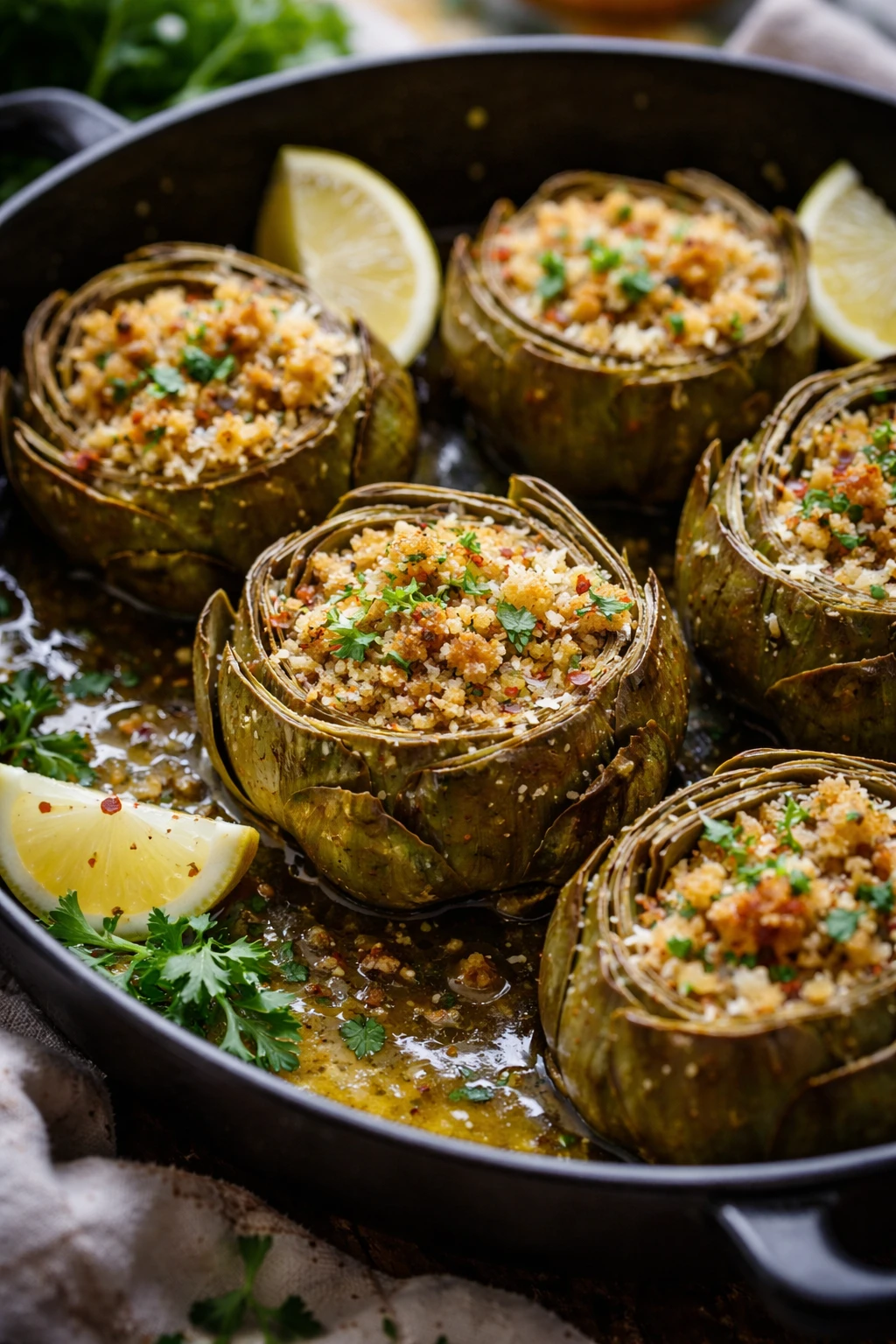
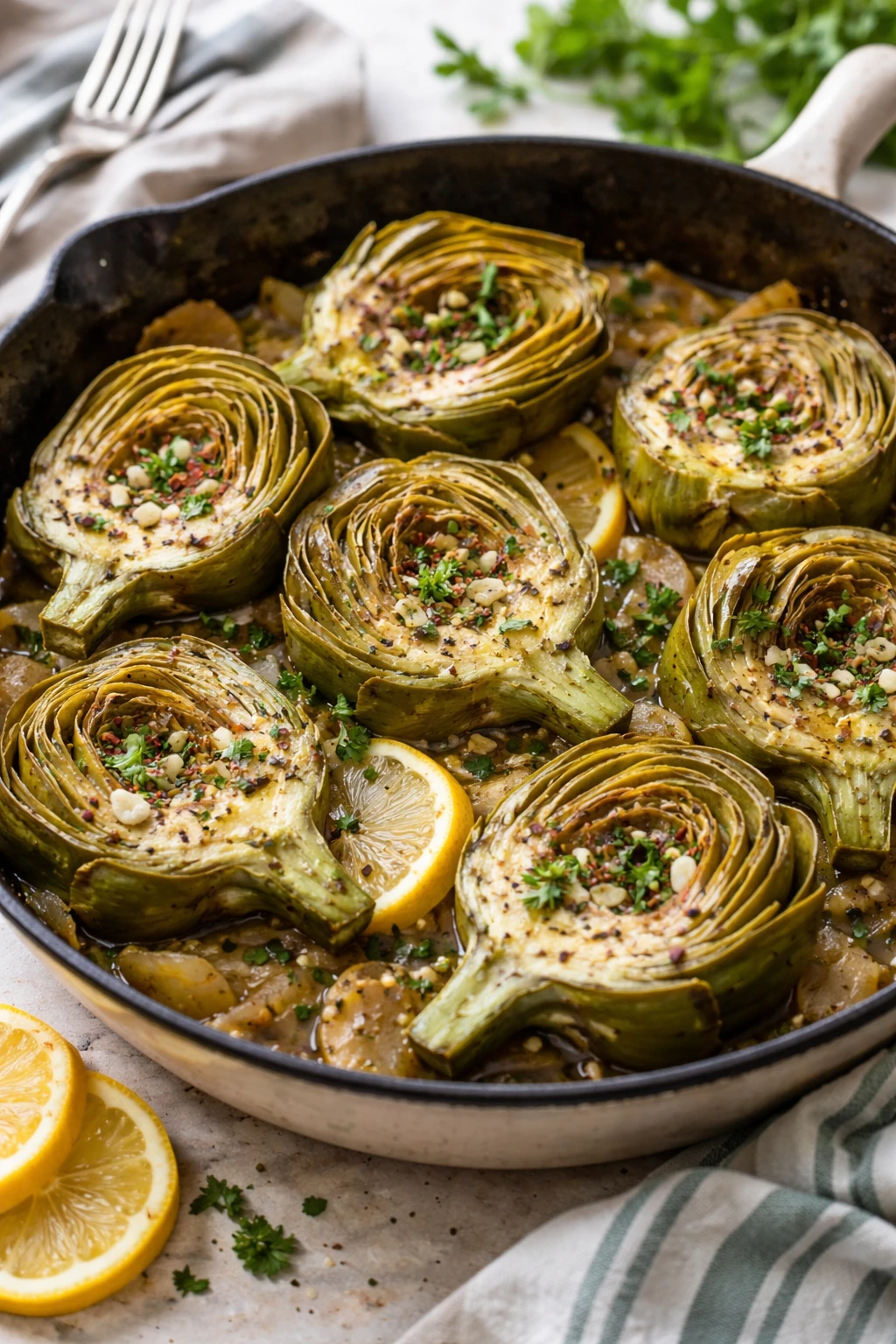
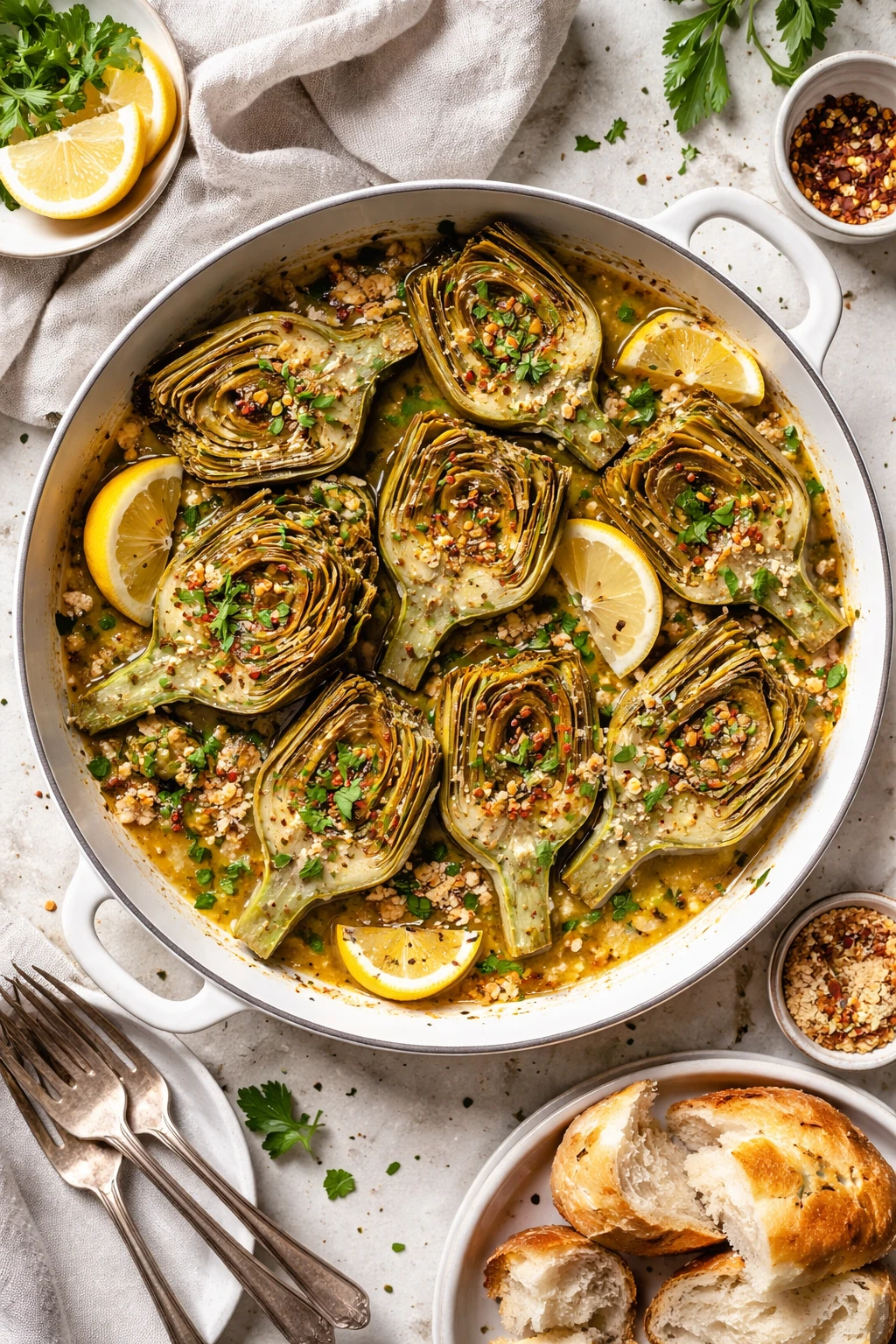
These one-pot artichokes are so simple yet packed with bright lemony and garlicky goodness. Slow simmering brings out their tender, flavorful heart—great for a chill weekend starter or side dish.
Introduction
I stumbled upon this one-pot artichoke recipe during a lazy weekend when I wanted something fresh and fuss-free. Artichokes can be intimidating, but this method is so straightforward and forgiving. The trick I learned is to simmer them slowly in a garlicky, herb-infused broth with a good squeeze of lemon—it really brightens the flavor and softens the tough leaves perfectly. I’ve tried steaming or boiling artichokes before, but this slow simmer in one pot makes the hearts tender and juicy, with a lovely aromatic garlic and herb undertone. Plus, the lemon slices add that fresh zing that keeps it from feeling heavy. It’s perfect as a casual appetizer or a side dish when you want something light but impressive. My family loves picking at them while chatting over drinks. If you’re new to artichokes, this is a great way to get comfortable with their texture and flavor. Expect tender leaves you can pull off easily and a soft heart that melts in your mouth. It’s one of those dishes that looks fancy but is actually super easy, which is exactly what I love about it.
How To Do It
Step 1
Start by prepping your artichokes: trim the stem to about an inch, remove any tough outer leaves, and snip the sharp tips with kitchen scissors. Rinse them under cold water to get rid of any grit trapped between the leaves. Prepping them right makes a big difference because it helps the flavors penetrate and ensures a tender bite. Don’t skip snipping the tips—it prevents any prickly surprises while eating.
⏱ Time: 10 minutes
✓ Doneness: Artichokes are trimmed cleanly with tips clipped and rinsed thoroughly
Step 2
Place the trimmed artichokes in a large pot with water or vegetable broth. Add smashed garlic cloves, lemon slices, olive oil, salt, pepper, and fresh thyme sprigs. The broth adds flavor and helps cook the artichokes evenly. Using broth instead of plain water gives a richer taste, and olive oil adds a silky finish. Don’t rush this step—the aromatics need time to infuse the cooking liquid.
⏱ Time: 5 minutes
✓ Doneness: Aromatic broth with floating lemon slices and garlic cloves visible
Step 3
Bring the pot to a gentle simmer over medium heat, then reduce to low and cover. Simmer slowly for about 30 minutes, turning the artichokes occasionally so they cook evenly on all sides. The slow simmer breaks down the tough fibers without making the artichokes mushy. Avoid boiling vigorously, which can toughen the leaves and dry them out.
⏱ Time: 30 minutes
✓ Doneness: Artichokes are tender when pierced with a knife and leaves pull away easily
Step 4
Once cooked, carefully remove the artichokes from the pot with tongs and let them drain upside down for a minute. This step prevents sogginess and lets excess liquid drip off. It also helps keep the olive oil coating intact for a better mouthfeel.
⏱ Time: 5 minutes
✓ Doneness: Artichokes feel tender but not soggy, with no pooling liquid
Step 5
Transfer the artichokes to a serving plate and drizzle with some of the cooking liquid strained through a fine sieve. Sprinkle fresh chopped parsley on top for a bright, herbal finish. This final drizzle adds moisture and flavor without overpowering the natural artichoke taste. The parsley adds a fresh pop of color and aroma.
⏱ Time: 5 minutes
✓ Doneness: Artichokes glisten lightly with herb-infused liquid and green parsley flakes
Step 6
Serve warm or at room temperature as an appetizer or side. To eat, pull off the outer leaves and scrape the tender flesh with your teeth, then enjoy the soft heart last. The lemon and garlic flavors linger beautifully with each bite, making it a crowd-pleaser every time.
⏱ Time: Immediate
✓ Doneness: Artichokes served attractively with garnish and ready to eat
Step 7
If storing leftovers, cool completely then refrigerate in an airtight container. Reheat gently with a splash of broth or olive oil to keep them moist. Avoid overheating, which can dry out the delicate leaves.
⏱ Time: N/A
✓ Doneness: Leftovers retain moisture and flavor after reheating
Step 8
Want to jazz it up? Try adding a pinch of red pepper flakes to the simmering liquid for a subtle kick, or toss with grated Parmesan just before serving for a richer taste. These tweaks add layers of flavor without complicating the recipe.
⏱ Time: Optional
✓ Doneness: Flavor enhancements complement the artichokes without overpowering
Step 9
For an extra touch, serve alongside a tangy aioli or lemon garlic dipping sauce. This adds a creamy texture and bright acidity that pairs perfectly with the tender artichoke leaves and heart.
⏱ Time: Optional
✓ Doneness: Dipping sauce complements and elevates the artichoke experience
Pro Tips
Don’t rush trimming the artichokes—it really affects the texture and eating experience.
Proper trimming removes tough outer leaves and sharp tips that can be unpleasant to bite into. It also exposes more of the tender parts to the cooking liquid, allowing flavors to penetrate better. Skipping this step can result in a chewy or prickly dish.
Simmer gently rather than boiling vigorously.
A gentle simmer slowly breaks down tough fibers without making the artichokes mushy or waterlogged. Boiling aggressively can toughen the leaves and cause uneven cooking, ruining the texture. Low heat ensures even tenderness throughout.
Use vegetable broth instead of plain water for cooking.
Broth adds umami and depth, enhancing the artichokes’ natural flavor. Water tends to dilute taste, so broth makes the final dish richer and more satisfying without extra effort or ingredients.
Add olive oil to the simmering liquid, not just at the end.
Simmering olive oil with garlic and herbs infuses it with flavor and helps coat the artichoke leaves for a silky texture. Adding oil only at the end won’t have the same depth or mouthfeel.
Let artichokes drain upside down after cooking.
Draining prevents sogginess and excess liquid pooling, which can dilute flavor and texture. It also helps the oil and aromatics cling better to the leaves for a more pleasant eating experience.
Serve with a fresh herb garnish for color and aroma.
A sprinkle of fresh parsley or similar herbs adds brightness and visual appeal, balancing the richness of the oil and the earthiness of the artichoke. It also adds a fresh aroma that enhances the overall sensory experience.
Try a squeeze of fresh lemon juice just before serving.
A last-minute squeeze of lemon juice adds a fresh, zesty note that lifts the dish and balances the richness. It also enhances the natural flavors without overpowering them.
Common Mistakes to Avoid
Skipping trimming and snipping the artichokes
Why it happens Many people find prepping artichokes intimidating and try to skip or rush trimming, not realizing how important it is for texture and flavor.
Fix Take your time to remove tough outer leaves, trim the stem properly, and snip the leaf tips with scissors. This ensures tenderness and prevents sharp bits that can be unpleasant to eat.
Boiling artichokes too fast
Why it happens Impatience often leads cooks to crank up the heat to speed cooking, but this can toughen leaves and cause uneven doneness.
Fix Maintain a gentle simmer rather than a rolling boil. Adjust heat so the liquid bubbles softly, allowing even cooking and tender texture.
Using water instead of broth
Why it happens Some assume water is fine for cooking vegetables, but it dilutes flavor significantly.
Fix Use vegetable broth or a light stock to add depth and umami to the artichokes. It makes a noticeable difference in taste.
Not draining artichokes after cooking
Why it happens In a hurry, people sometimes serve artichokes straight from the pot, leading to soggy texture.
Fix Drain artichokes upside down for a few minutes to remove excess liquid and keep the texture crisp and fresh.
Overcooking artichokes
Why it happens Leaving artichokes simmering too long can make them mushy and bland.
Fix Check tenderness with a knife after 25-30 minutes. The leaves should pull off easily but not fall apart. Remove from heat promptly when done.
Variations
Spicy One-Pot Artichokes
Add a pinch of red pepper flakes or a diced chili to the simmering broth for a subtle heat that complements the garlic and lemon. This adds a nice kick without overpowering the artichoke’s delicate flavor.
Note: Watch simmering closely to avoid burning the chili; adjust spice level to your taste.
Parmesan Herb Artichokes
Sprinkle freshly grated Parmesan over the artichokes just before serving for a savory, cheesy twist. This variation adds richness and a slightly nutty flavor that pairs well with the lemon and garlic.
Note: Add Parmesan after cooking to prevent it from melting into a sauce; serve immediately.
Mediterranean Style with Olives and Capers
Include a handful of chopped olives and capers in the simmering liquid for briny, salty notes. This variation brings a Mediterranean vibe and adds complexity to the broth’s flavor.
Note: Reduce added salt slightly to balance the saltiness from olives and capers.
Vegan Creamy Dip Served on the Side
Serve the artichokes with a side of vegan cashew cream dip flavored with garlic and lemon. This adds creaminess and richness without dairy, perfect for a plant-based meal.
Note: Prepare the dip ahead to let flavors meld; serve chilled alongside warm artichokes.
Grilled One-Pot Artichokes
After simmering, cut artichokes in half and grill them for a few minutes to add smoky char and texture. This adds a unique flavor dimension and makes the dish more rustic.
Note: Brush with olive oil before grilling to prevent sticking and enhance caramelization.
Nutrition
Per Serving:
Nutritional values are estimates and may vary based on specific ingredients used.
Storage & Tips
Room Temperature
Artichokes can safely sit covered at room temperature for up to 2 hours. To avoid drying out, cover loosely with foil or a clean kitchen towel.
Refrigerator
Store cooled artichokes in an airtight container for up to 3 days. They may lose some firmness but retain flavor. Reheat gently or serve cold as a salad ingredient.
Freezer
Freezing is not recommended as artichokes become mushy and lose texture. If necessary, freeze cooked hearts only in a sealed container for up to 1 month.
Reheating
Reheat gently on the stovetop over low heat with a splash of broth or olive oil to prevent drying. Avoid microwaving at high power, which can toughen leaves.
Make Ahead
You can trim and prep artichokes 1 day ahead, storing them in lemon water to prevent browning. The simmering step is best done fresh but can be done a day ahead and reheated gently.
FAQ
Can I use frozen artichokes for this recipe?
Frozen artichokes don’t work well here because they’re often pre-cooked or chopped, lacking the structure needed for slow simmering whole. For this recipe’s texture and presentation, fresh whole artichokes are best.
How do I know when the artichokes are fully cooked?
You’ll know they’re done when a knife easily pierces the base and the leaves pull away without resistance. The heart should be tender but not mushy. Usually, 25-30 minutes of gentle simmering is enough.
Can I substitute lemon juice for lemon slices?
Fresh lemon slices are preferred because they infuse flavor gradually and prevent browning. Lemon juice alone can be added at the end but won’t protect the artichokes during cooking or provide the same aromatic effect.
What if I don’t have fresh thyme?
You can substitute dried thyme but use about one-third the amount since dried herbs are more concentrated. Alternatively, rosemary or oregano can work but will change the flavor profile slightly.
Is it okay to peel the artichoke stems?
Yes, peeling the stems removes tough outer fibers, making them edible and delicious. If stems are tender and fresh, include them trimmed and peeled to add more edible parts.
How do I prevent artichokes from browning while prepping?
Rub cut surfaces with lemon juice or keep trimmed artichokes submerged in lemon water to slow enzymatic browning. Work quickly during prep for best results.
Can I cook these in a pressure cooker?
Pressure cooking cuts time but can result in softer, less textured artichokes. If using, reduce cooking time to about 10 minutes and release pressure carefully to avoid overcooking.
What dipping sauces go well with these artichokes?
Garlic aioli, lemon tahini sauce, or simple vinaigrettes complement the flavors nicely. Choose a sauce with acidity or creaminess to balance the artichokes’ earthiness.
Final Thoughts
I hope you give these one-pot artichokes a try—they’re such a simple way to enjoy a fresh, flavorful veggie. I’d love to hear how yours turn out, so don’t forget to share your experience!