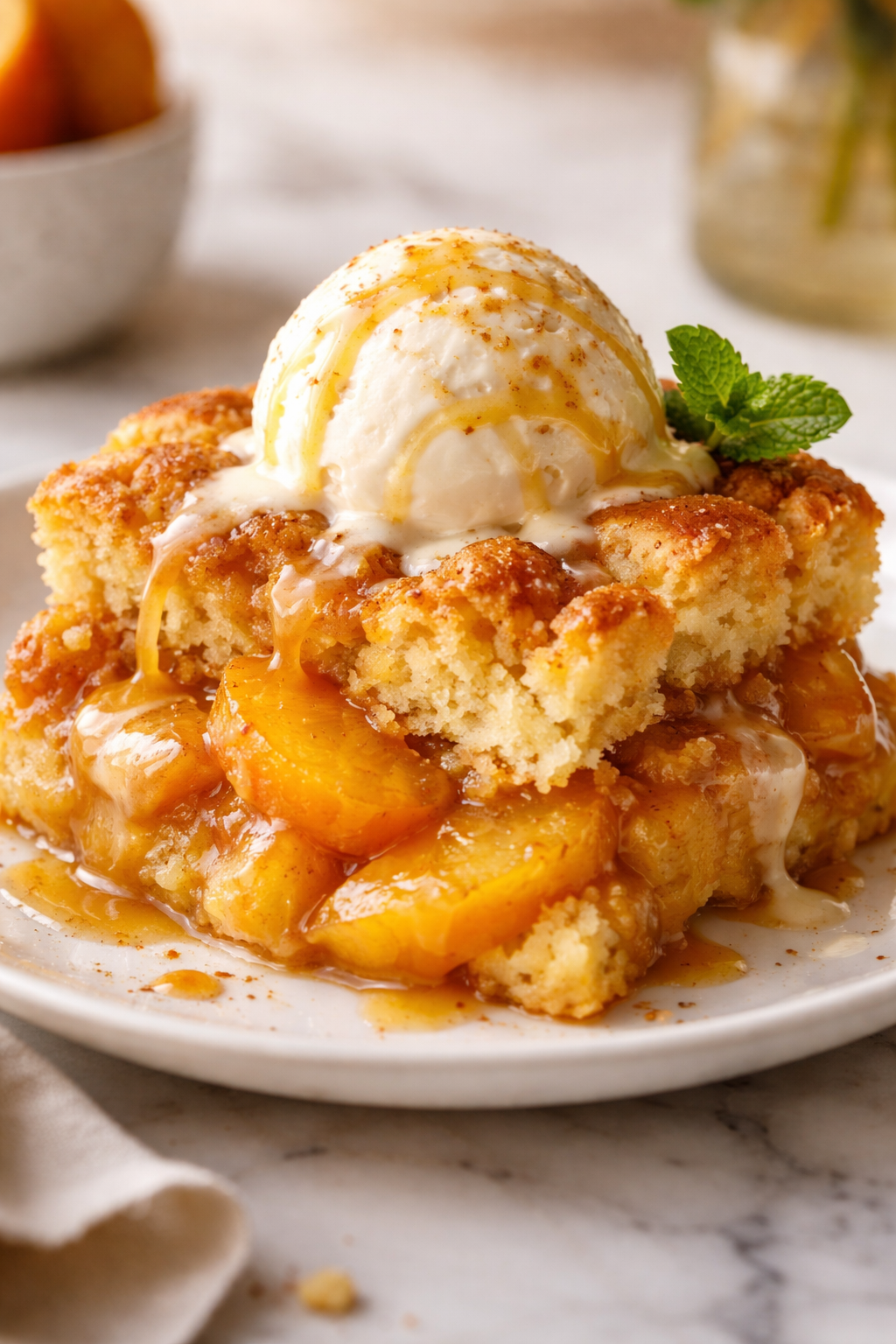
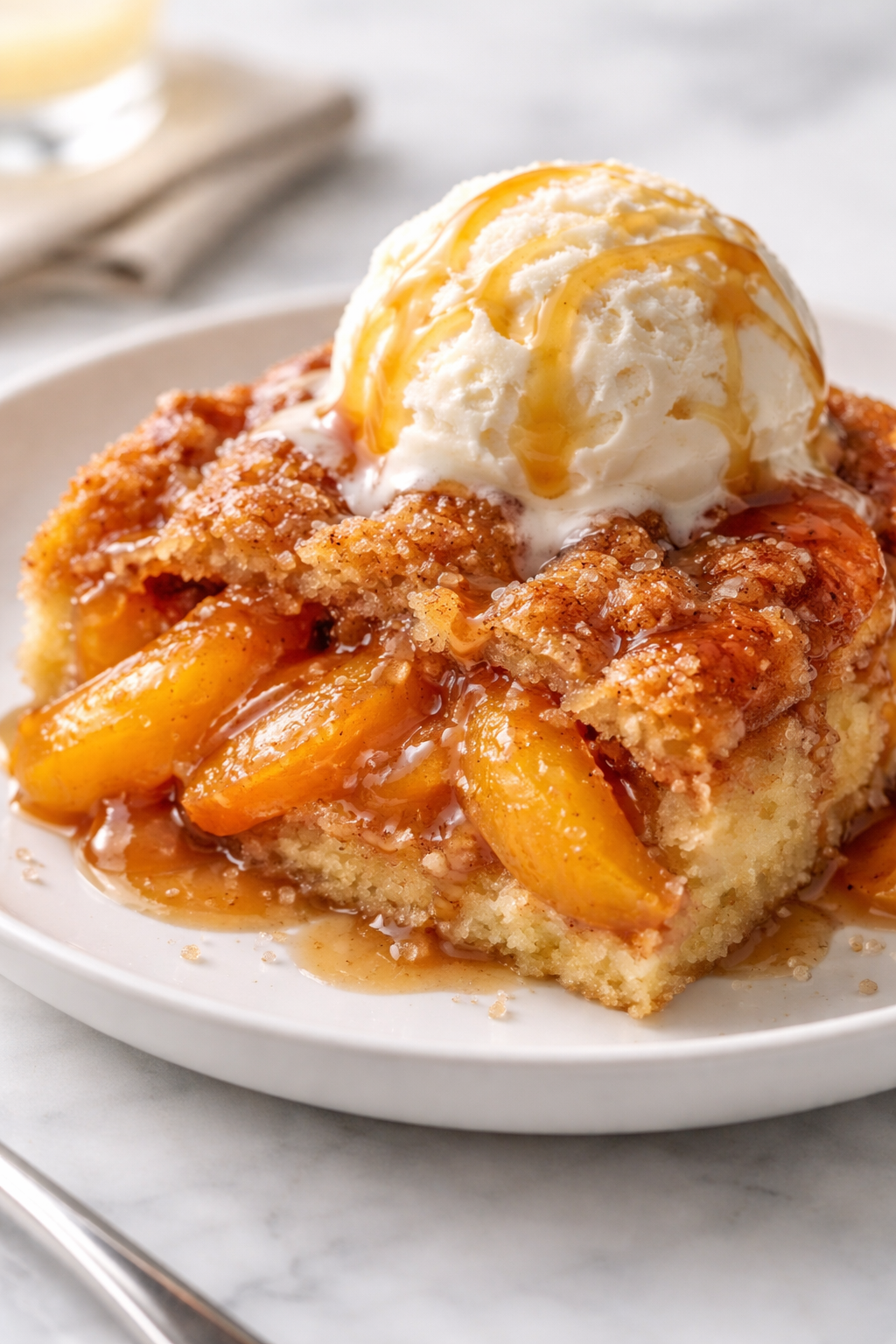
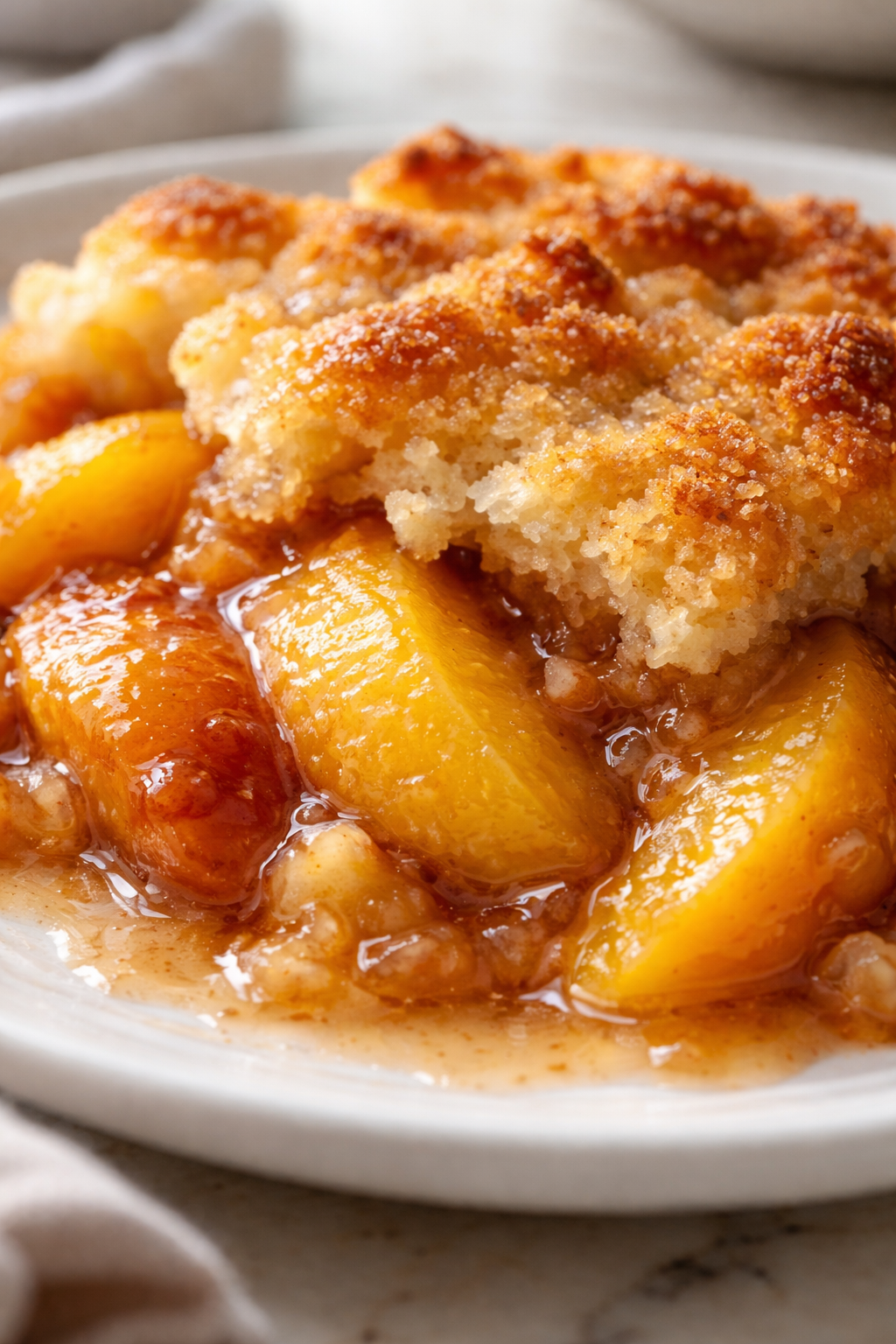
This peach cobbler cake is a delightful mix of juicy peaches and buttery cake, super easy to make with only five ingredients. It’s perfect for summer afternoons or casual family get-togethers when you want something sweet but fuss-free.
Introduction
I stumbled upon this peach cobbler cake recipe on a lazy summer afternoon when I had just a few ingredients on hand and a craving for something sweet. What I love about this version is how incredibly simple it is — just five ingredients and no complicated steps, yet it turns out incredibly moist and flavorful every time. The trick I discovered was to pour the melted butter right into the baking dish first, then sprinkle the dry batter over it, and finally top with peaches. This creates a beautiful golden crust with juicy fruit bubbling through. It's a perfect dessert for laid-back weekends or casual family dinners where you want something homemade but don’t want to fuss. Plus, it’s forgiving — I once forgot to drain the canned peaches properly, and while it was a bit wetter than usual, it still tasted amazing! The finished cake has a lovely balance of buttery richness and fresh peach sweetness, with a slightly crispy top that makes it irresistible. I think you’ll love how easy it is to pull together and how everyone always asks for seconds.
How To Do It
Step 1
Preheat your oven to 350°F (175°C). Start by melting the butter gently in a microwave-safe bowl or on the stovetop. Pour the melted butter evenly into the bottom of a 9-inch square baking dish. This step is crucial because the butter caramelizes during baking, creating that signature golden crust under the cake. Make sure the butter coats the dish evenly; otherwise, the texture won’t be quite right.
⏱ Time: 5 minutes
✓ Doneness: Butter should be fully melted and spread evenly across the bottom of the dish with no pooling.
Step 2
In a mixing bowl, combine the flour, sugar, and baking powder. Stir them together until evenly mixed to ensure your cake rises uniformly. Then, sprinkle this dry mixture evenly over the melted butter in the baking dish. Don’t stir it in; just let it sit on top. This layering technique allows the batter to bake into a cake while the butter underneath crisps up, giving the cobbler its classic texture.
⏱ Time: 5 minutes
✓ Doneness: Dry ingredients should cover the butter completely in a thin, even layer without clumps.
Step 3
Carefully arrange the sliced peaches over the dry batter layer. Spread them out evenly so each bite has a good balance of fruit and cake. If you're using canned peaches, make sure they’re well-drained to avoid sogginess. The peaches will sink slightly during baking, infusing the cake with their juicy sweetness.
⏱ Time: 5 minutes
✓ Doneness: Peach slices should be spread uniformly, covering the batter without overlapping heavily.
Step 4
Place the baking dish in the preheated oven and bake for about 30 minutes. During baking, the butter will bubble up through the batter, and the top will turn golden brown. Avoid opening the oven door frequently to keep the temperature steady. The cake is done when the edges are bubbling and the top is a beautiful golden color.
⏱ Time: 30 minutes
✓ Doneness: Golden crust on top with bubbling around edges; a toothpick inserted into the batter (not peaches) should come out mostly clean.
Step 5
Remove the cobbler from the oven and let it cool for about 10 minutes. This resting time helps the juices thicken slightly, making it easier to serve without it running everywhere. The cake will still be warm and perfect for scooping with ice cream or whipped cream.
⏱ Time: 10 minutes
✓ Doneness: Cobbler is warm but not steaming; juices have thickened slightly and cake feels set.
Step 6
Serve warm with a scoop of vanilla ice cream or a dollop of whipped cream if you like. The contrast between the warm cobbler and cold ice cream is heavenly. This dessert is best enjoyed fresh but also tastes great the next day if reheated gently.
⏱ Time: 0 minutes
✓ Doneness: Ice cream or cream melts slightly when served atop warm cobbler.
Step 7
If you want to make this ahead, prepare the cobbler up to the baking step, cover it tightly with foil, and refrigerate overnight. When ready to bake, remove the foil and bake as directed, adding a few extra minutes if chilled. This makes it a convenient dessert for busy days or unexpected guests.
⏱ Time: 0 minutes
✓ Doneness: Cobbler baked fully with golden crust after extended baking time.
Step 8
To get a crispier top, you can broil the cobbler for 1-2 minutes at the very end of baking. Watch it closely to avoid burning. This extra step adds a lovely toasted finish that contrasts nicely with the soft fruit and cake beneath.
⏱ Time: 2 minutes
✓ Doneness: Top is golden brown with slight toasted spots but not burnt.
Step 9
For a fun twist, try adding a pinch of cinnamon or nutmeg to the dry ingredients before sprinkling over the butter. This adds a warm spice note that complements the peaches beautifully. Just be careful not to overpower the fresh fruit flavor.
⏱ Time: 0 minutes
✓ Doneness: Aromatic spice scent noticeable but balanced with peach sweetness.
Pro Tips
Make sure to evenly pour the melted butter across the entire baking dish bottom before sprinkling the dry mix.
Even butter distribution is critical because it caramelizes and forms the cobbler’s signature crust. Uneven butter causes patchy texture and uneven browning, resulting in some parts soggy and others dry.
Don’t stir the dry ingredients into the melted butter; just sprinkle them on top.
This layering technique allows the cake to bake separately from the butter, creating a crisp crust underneath and a soft cake layer on top. Stirring would blend the layers, losing the cobbler’s characteristic texture.
Use ripe but firm peaches, and slice them evenly for uniform baking.
Even slices ensure consistent cooking time and texture. Overripe peaches may release too much juice, making the cake soggy, while underripe ones can be too firm and tart.
Let the cobbler rest for 10 minutes after baking before serving.
Resting allows the fruit juices to thicken and the cake to set slightly, making serving easier and preventing the dessert from running all over the plate.
If using canned peaches, drain them thoroughly to avoid excess moisture.
Too much liquid from the peaches can prevent the crust from forming properly and create a soggy texture. Pat the slices dry with paper towels if needed.
Try broiling the cobbler for a minute or two at the end for a crispier top.
Broiling adds a toasted finish that contrasts nicely with the soft fruit and cake. Watch it closely to avoid burning.
Add a pinch of cinnamon or nutmeg to the dry ingredients for extra depth of flavor.
Warm spices complement the peaches beautifully and add complexity without overpowering the dessert.
Common Mistakes to Avoid
Pouring cold butter instead of melted butter
Why it happens Sometimes cooks try to skip melting the butter to save time or by misunderstanding the instructions.
Fix Always melt the butter fully before pouring it into the dish. Cold or solid butter won’t spread evenly or caramelize, ruining the crust texture.
Not draining canned peaches properly
Why it happens People often use canned peaches straight from the can to save time.
Fix Drain canned peaches thoroughly and pat dry to avoid excess moisture that causes soggy cake and prevents crust formation.
Stirring the dry ingredients into the butter
Why it happens Some assume the batter should be mixed together before baking.
Fix For this recipe, layering without stirring is essential to create the classic cobbler texture. Sprinkle dry mix over melted butter without mixing.
Baking at too high a temperature
Why it happens Trying to speed up baking by increasing oven temperature.
Fix Stick to 350°F (175°C) for even cooking. Higher temps can burn the butter before the cake cooks through.
Cutting into the cobbler too soon after baking
Why it happens Impatience to dig in immediately.
Fix Let the cobbler rest at least 10 minutes after baking to allow juices to thicken and cake to set.
Variations
Spiced Peach Cobbler Cake
Add 1 teaspoon cinnamon and 1/4 teaspoon nutmeg to the dry ingredients for warm, cozy flavors that pair perfectly with peaches. This variation is great for cooler months or when you want a twist on the classic.
Note: Spices can slightly darken the crust and add aromatic depth; no change in baking time required.
Peach and Blueberry Cobbler Cake
Mix 1 cup fresh blueberries with the peaches for a colorful, tangy variation. The blueberries add a pop of flavor and moisture, balancing the sweetness of the peaches nicely.
Note: Because blueberries release extra juice, drain peaches well and consider slightly reducing baking time by 2-3 minutes to prevent sogginess.
Gluten-Free Peach Cobbler Cake
Swap all-purpose flour for a gluten-free baking blend, making sure it contains xanthan gum or similar binding agents. The texture will be slightly different but still delicious for those with gluten sensitivities.
Note: Gluten-free flours absorb moisture differently; batter may be a bit thicker. Keep an eye on baking time, adding a few extra minutes if needed.
Vegan Peach Cobbler Cake
Replace butter with a plant-based margarine and use a flax egg (1 tablespoon ground flaxseed + 3 tablespoons water) instead of eggs if your recipe includes them. This keeps the cake moist and rich without animal products.
Note: Vegan butter melts differently; ensure even spreading. Texture might be slightly less crisp but still tasty.
Peach Cobbler with Almond Topping
Sprinkle 1/4 cup sliced almonds over the peaches before baking for a crunchy, nutty finish. The almonds toast beautifully, adding texture and flavor contrast.
Note: Watch almonds closely near the end of baking to prevent burning; broil briefly if needed for extra crunch.
Nutrition
Per Serving:
Nutritional values are estimates and may vary based on specific ingredients used.
Storage & Tips
Room Temperature
This cobbler cake can safely sit at room temperature for up to 2 hours covered loosely with foil or plastic wrap. Beyond that, the fruit juices may encourage bacterial growth, so it's best to refrigerate.
Refrigerator
Store leftovers in an airtight container for up to 3 days. The cake’s texture firms up in the fridge and the fruit juices thicken, so it’s best served warmed up again rather than cold.
Freezer
Freeze the cobbler in a tightly wrapped container or freezer-safe bag for up to 2 months. To prevent freezer burn, wrap it first in plastic wrap then foil. Thaw overnight in the refrigerator before reheating.
Reheating
Reheat individual portions in the microwave for 30-45 seconds or warm the whole dish in a 325°F oven for 10-15 minutes. Add a splash of milk or cream if it seems dry. Avoid overheating to prevent drying out the cake.
Make Ahead
Prepare the cobbler up to the point before baking, cover tightly, and refrigerate overnight. Bake fresh the next day for best texture and flavor. This saves time on busy days and keeps the peaches fresh.
FAQ
Can I use frozen peaches instead of fresh or canned?
Yes, frozen peaches work well but should be thawed and drained thoroughly before using to avoid excess moisture. Frozen fruit tends to release more juice, so draining helps maintain the cobbler’s texture and prevents sogginess.
What if I don’t have baking powder? Can I substitute baking soda?
Baking soda requires an acid to activate, which this recipe lacks, so it’s not a good substitute. If you only have baking soda, you’d need to add an acidic ingredient like lemon juice or yogurt, which would change the recipe balance.
Can I double this recipe for a larger crowd?
Absolutely! You can double the ingredients and bake in a larger dish, like a 9x13 inch pan. Just keep an eye on baking time; it may need 5-10 extra minutes. Test doneness with a toothpick to be sure.
Why is my cobbler soggy or too wet?
This usually happens if the peaches weren’t drained well or if too much juice accumulated during baking. Make sure to drain canned or thawed frozen peaches thoroughly. Also, don’t stir the batter and butter mixture, as that can affect texture.
Can I make this cobbler gluten-free?
Yes, use a gluten-free all-purpose baking mix that includes xanthan gum for structure. Texture might be slightly different, a bit more crumbly, but it will still taste great.
Is it okay to add spices like cinnamon or nutmeg?
Definitely! Adding a teaspoon of cinnamon or a pinch of nutmeg to the dry ingredients adds warmth and depth, enhancing the peach flavor without overpowering it.
How do I store leftovers to keep them fresh?
Store leftovers in an airtight container in the fridge for up to 3 days. Reheat gently before serving to restore the soft texture and warm the fruit.
Can I use salted butter instead of unsalted?
Yes, but reduce any additional salt in the recipe or omit it if called for. Unsalted butter lets you control salt levels better, but salted butter works fine in a pinch.
Final Thoughts
I hope you give this peach cobbler cake a try soon — it’s one of those easy, no-fail desserts that always brings smiles. Don’t forget to share how yours turns out!