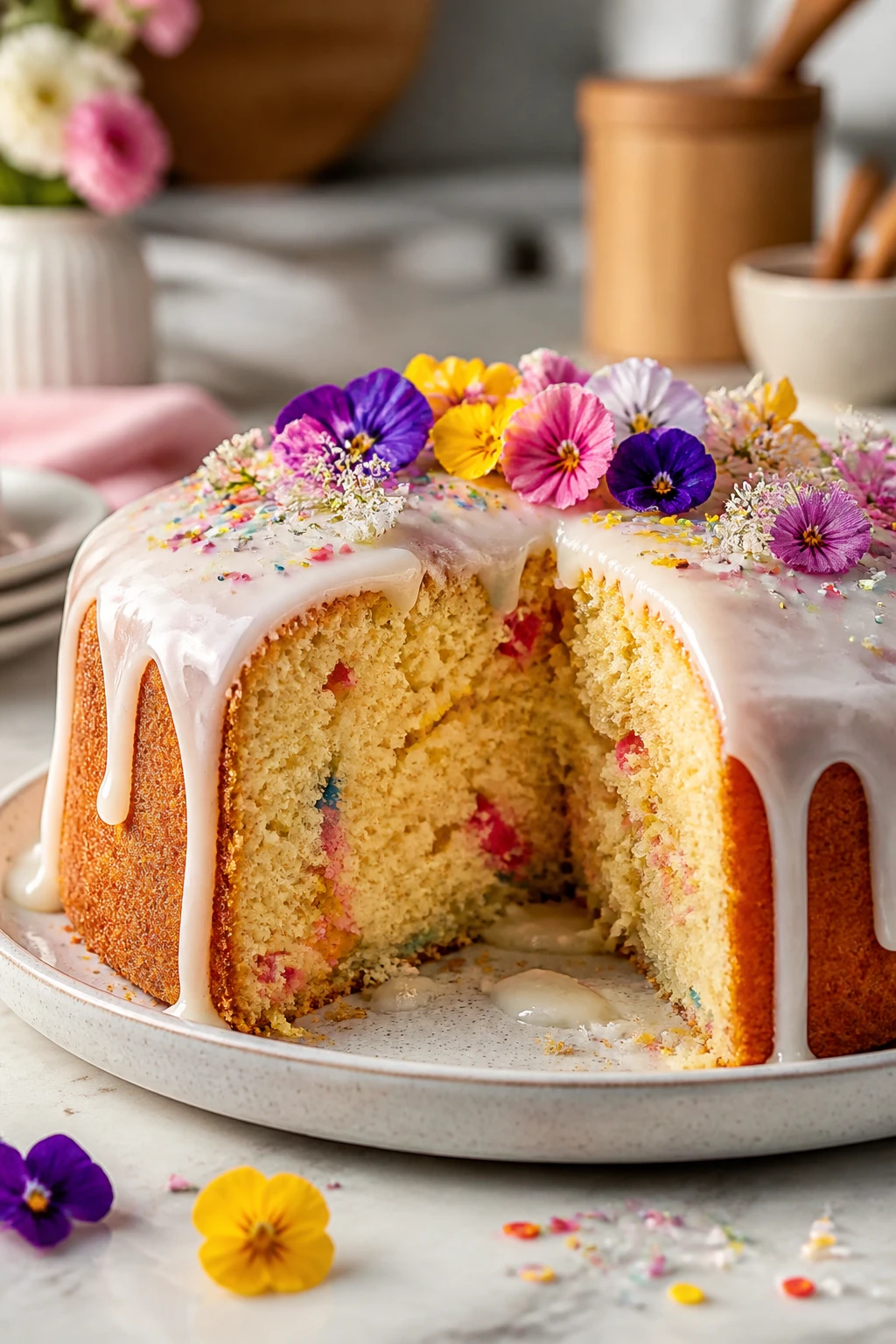
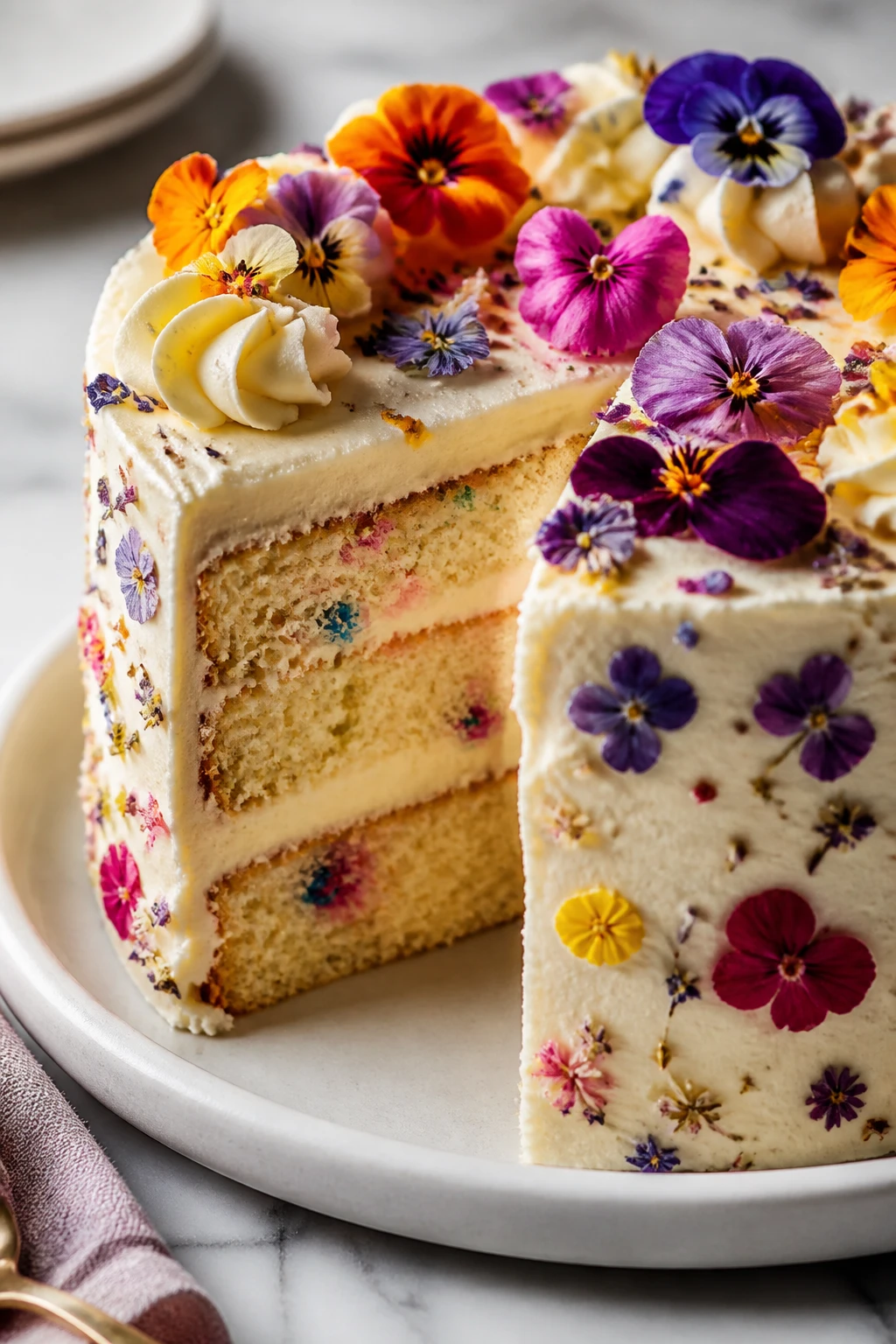
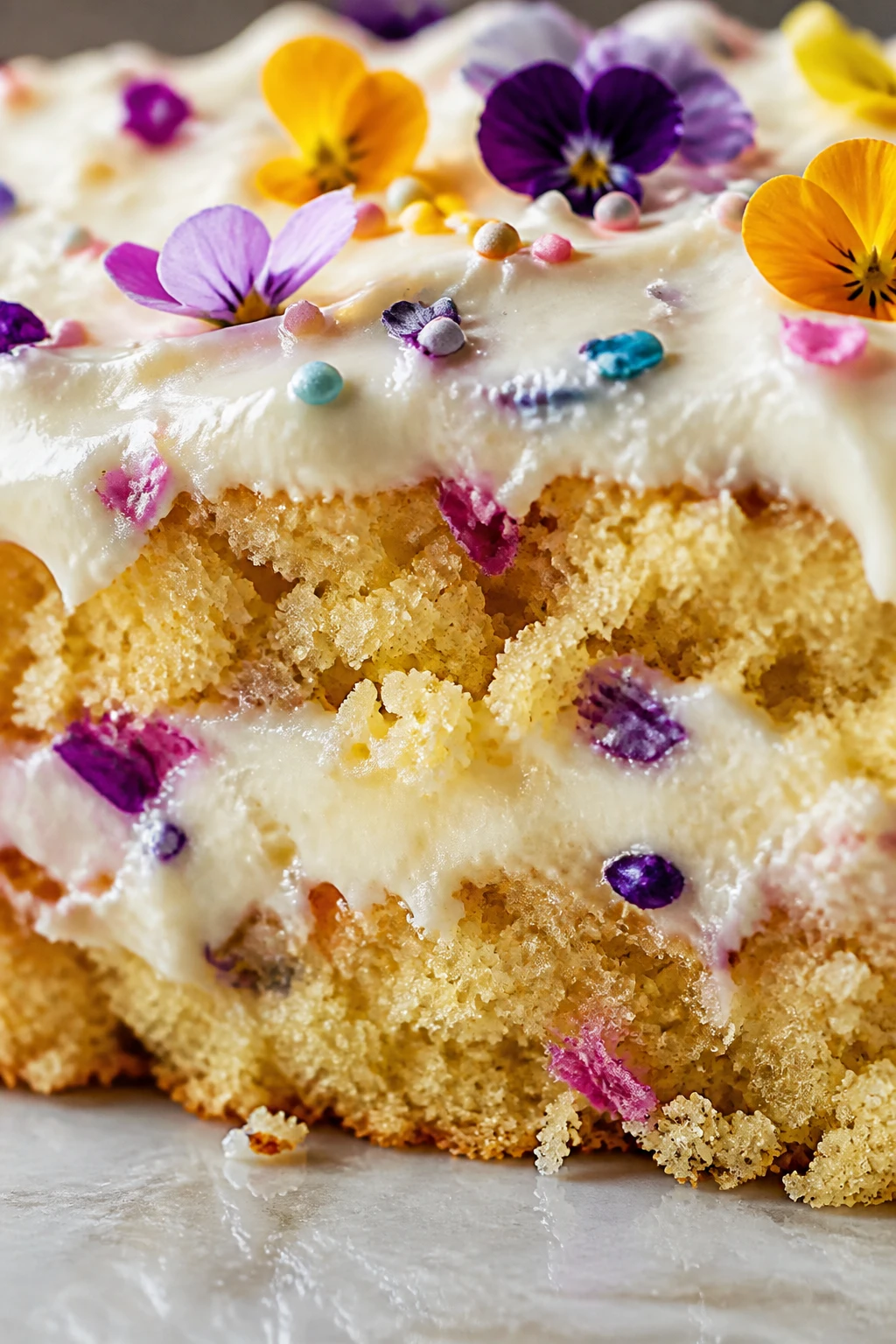
This vanilla birthday cake is delightfully simple yet feels extra special with pretty edible flowers on top. It uses just five ingredients and comes together in under an hour—perfect for those last-minute celebrations or whenever you want a fuss-free but charming dessert.
Introduction
I stumbled on this vanilla birthday cake recipe when I needed a quick dessert for a last-minute party. Honestly, I was skeptical that something so simple—with just five main ingredients—could taste so good and look so pretty. But the trick I learned was to use real vanilla extract and softened butter at just the right temperature, which makes the cake super moist and flavorful. Plus, topping it with edible flowers adds that wow factor without any extra fuss. It’s perfect when you want a charming, homemade cake but don’t have hours to bake or decorate. This cake has become my go-to for unexpected celebrations or when I want something sweet and simple. Every bite is tender and buttery with a delicate vanilla aroma, and the flowers make it feel special. I think you’ll love how easy it is and how it impresses everyone without stress.
What You'll Need
One 8-inch cake, approximately 8 servings
- 1 1/2 cups all-purpose flour, sifted
- 1 cup granulated sugar
- 1/2 cup unsalted butter, softened
- 2 large eggs
- 1/2 cup whole milk
- 1 1/2 teaspoons vanilla extract
- Edible flowers for decoration
How To Do It
Step 1
Preheat your oven to 350°F (175°C). Grease and flour an 8-inch round cake pan to prevent sticking. This step is crucial because it ensures your cake will release cleanly from the pan, keeping the edges smooth. Don’t skip the flour after greasing; it adds a thin barrier that stops the cake from clinging. If you don’t prepare the pan properly, your cake might break apart when you try to remove it.
⏱ Time: 10 minutes
✓ Doneness: Pan is evenly greased and dusted with flour, no clumps or bare spots
Step 2
In a large bowl, cream the softened butter and sugar together until light and fluffy using an electric mixer. This usually takes about 3-5 minutes on medium speed. Creaming incorporates air, which helps the cake rise and gives it a tender crumb. If you rush this step or skip it, the cake can turn out dense or heavy.
⏱ Time: 5 minutes
✓ Doneness: Mixture is pale in color and fluffy in texture
Step 3
Add the eggs one at a time, beating well after each addition. This ensures the eggs are fully incorporated and helps maintain the batter’s smooth texture. If you add both eggs at once, the batter might curdle or become uneven. Take your time here for the best results.
⏱ Time: 3 minutes
✓ Doneness: Batter is smooth, glossy, and homogenous
Step 4
Mix in the vanilla extract gently. Vanilla is the star flavor here, so use a good-quality extract for the best aroma and taste. Stir it in just until combined to keep the batter light.
⏱ Time: 1 minute
✓ Doneness: Evenly distributed vanilla scent in the batter
Step 5
In a separate bowl, whisk the flour and a pinch of salt. Gradually add this dry mixture to the wet ingredients, alternating with milk, beginning and ending with flour. Mix on low speed just until combined. Overmixing develops gluten and can make the cake tough, so stop as soon as you see no streaks of flour.
⏱ Time: 5 minutes
✓ Doneness: Batter is smooth and slightly thick, no lumps
Step 6
Pour the batter into the prepared pan and smooth the top with a spatula. Tap the pan gently on the counter to release any air bubbles trapped inside. This prevents holes or tunnels in your finished cake, ensuring an even texture.
⏱ Time: 2 minutes
✓ Doneness: Surface is smooth and even, no large air bubbles visible
Step 7
Bake in the preheated oven for 28-32 minutes. Avoid opening the oven door during the first 20 minutes to prevent the cake from collapsing. The cake is done when a toothpick inserted in the center comes out clean or with just a few moist crumbs. Overbaking will dry it out, so check carefully near the end.
⏱ Time: 30 minutes
✓ Doneness: Golden top and toothpick test passes
Step 8
Let the cake cool in the pan for 10 minutes, then run a knife around the edges and invert it onto a wire rack to cool completely. Cooling in the pan too long can cause sogginess from steam, so transfer it promptly for the best texture.
⏱ Time: 15 minutes
✓ Doneness: Cake releases easily and cools evenly without condensation
Step 9
Once cooled, decorate with fresh edible flowers. Place the flowers gently on top for a natural, charming look. Make sure the flowers are safe to eat and pesticide-free. This simple decoration elevates the cake’s appearance with minimal effort.
⏱ Time: 5 minutes
✓ Doneness: Flowers are fresh, vibrant, and arranged attractively
Pro Tips
Always use room temperature ingredients for even mixing.
Room temperature butter, eggs, and milk blend smoothly, creating a uniform batter. Cold ingredients can cause batter to curdle or mix unevenly, leading to dense spots or uneven texture.
Don’t overmix the batter once flour is added.
Overmixing develops gluten, making the cake tough and chewy instead of tender and soft. Mix just until the flour disappears for the best crumb.
Sift your flour before measuring.
Sifting aerates the flour and removes lumps, allowing for more accurate measurement and lighter batter, which helps the cake rise better and have a fine crumb.
Use fresh vanilla extract for best flavor.
Pure vanilla extract contains natural flavor compounds that enhance the cake’s aroma and taste. Imitation vanilla lacks depth and can taste artificial.
Grease and flour your pan thoroughly.
This step prevents sticking and ensures your cake releases cleanly, maintaining its shape and appearance. Skipping this can ruin the cake’s presentation.
Let the cake cool completely before decorating.
If the cake is warm, edible flowers can wilt or discolor. Cooling also helps the cake firm up, making it easier to handle and decorate.
Tap the pan gently before baking.
Tapping releases trapped air bubbles that could cause holes or tunnels in the cake, resulting in an even texture.
Use an oven thermometer to check temperature accuracy.
Many ovens run hotter or cooler than their dial indicates. An accurate temperature ensures perfect baking, avoiding undercooked or dry cakes.
Common Mistakes to Avoid
Using cold butter instead of softened.
Why it happens Many assume butter straight from the fridge works fine, but cold butter doesn’t cream with sugar properly, leading to dense cakes.
Fix Plan ahead and leave butter out for 30-60 minutes until soft but not melted. If in a hurry, cut into small pieces to soften faster.
Overmixing after adding flour.
Why it happens Eager cooks want to blend everything quickly and thoroughly, not realizing this develops gluten and toughens the cake.
Fix Mix just until the flour disappears. Stop as soon as the batter is uniform to keep the crumb tender.
Opening the oven door too early.
Why it happens Curiosity or impatience leads to opening the door before the cake sets, causing collapse.
Fix Wait at least 20 minutes before checking. Use the oven light to peek instead of opening the door.
Not preparing the pan properly.
Why it happens Skipping greasing or flouring can cause the cake to stick and break when removed.
Fix Always grease the pan with butter or nonstick spray, then dust with flour, tapping out excess.
Using imitation vanilla extract.
Why it happens Cheaper or older extracts lack the complex flavor, resulting in a bland cake.
Fix Invest in pure vanilla extract for a richer, more authentic vanilla flavor.
Variations
Lemon Vanilla Cake
Add 1 tablespoon of fresh lemon zest and replace half the milk with lemon juice for a bright, citrus twist. The cake stays moist but gains a refreshing zing perfect for spring or summer celebrations.
Note: Reduce baking time by 2-3 minutes due to added acidity and moisture.
Chocolate Chip Vanilla Cake
Fold in 1/2 cup mini chocolate chips into the batter before baking. This adds melty pockets of chocolate in every bite, making the cake extra fun and kid-friendly.
Note: Toss chips in a bit of flour before adding to prevent sinking.
Vegan Vanilla Cake
Replace eggs with flax eggs (1 tablespoon ground flax + 3 tablespoons water per egg) and use plant-based milk and vegan butter. The texture is slightly denser but still moist and flavorful.
Note: Increase baking time by 5 minutes and check doneness carefully.
Gluten-Free Vanilla Cake
Swap all-purpose flour with a gluten-free blend that includes xanthan gum. The cake remains tender but may be slightly crumbly. Perfect for gluten-sensitive guests.
Note: Ensure blend has xanthan gum; otherwise, add 1/4 teaspoon for structure.
Honey Vanilla Cake
Replace half the sugar with honey for a natural sweetness and subtle floral notes. The cake will be moister and slightly denser with a golden hue.
Note: Reduce oven temperature by 25°F to prevent over-browning.
Nutrition
Per Serving:
Nutritional values are estimates and may vary based on specific ingredients used.
Storage & Tips
Room Temperature
Keep the cake covered loosely with a cake dome or airtight container at room temperature for up to 2 days. Avoid direct sunlight or heat which can dry out the cake or wilt flowers.
Refrigerator
Store in an airtight container for up to 4 days. The cake may firm up and the flowers may lose freshness, so consider removing them before refrigerating and adding fresh flowers before serving.
Freezer
Wrap the cake tightly in plastic wrap and then foil to freeze for up to 2 months. Thaw overnight in the fridge and bring to room temperature before serving. Edible flowers don’t freeze well, so add fresh ones after thawing.
Reheating
Warm slices gently in the microwave for 10-15 seconds or in a low oven (300°F) for 5-7 minutes. Avoid overheating to keep the cake moist. A splash of milk or butter can refresh the texture if slightly dry.
Make Ahead
You can bake the cake layers 1-2 days ahead and store wrapped in plastic wrap at room temperature. Decorate with edible flowers just before serving to keep them fresh and vibrant.
FAQ
Can I use salted butter instead of unsalted?
Yes, but reduce or omit any added salt in the recipe to avoid oversalting. Unsalted butter gives you control over the salt level. Salted butter varies in salt content, which can affect the cake’s flavor balance.
What if I don’t have edible flowers?
No worries! You can decorate with fresh berries, a dusting of powdered sugar, or simple frosting. Edible flowers add beauty but aren’t required for a delicious cake.
How do I know when the cake is done?
Insert a toothpick in the center; if it comes out clean or with a few moist crumbs, the cake is ready. The top should be golden and spring back when lightly pressed.
Can I make this cake gluten-free?
Absolutely! Use a gluten-free flour blend with xanthan gum for best results. The texture might be a bit different but still delicious.
Why did my cake turn out dense?
Common causes are overmixing after adding flour, using cold butter, or skipping the creaming step. Follow the instructions carefully for a light, tender crumb.
How do I store leftover cake?
Store leftovers in an airtight container at room temperature for up to 2 days or in the fridge for up to 4 days. Bring to room temperature before eating for best flavor.
Can I use oil instead of butter?
Butter provides flavor and structure that oil can’t fully replicate. Using oil will change the texture and taste, making it more moist but less rich.
Is there a substitute for eggs in this recipe?
Yes, flax eggs or applesauce can work for vegan versions, but texture will be slightly different—often denser and less airy.
Final Thoughts
I hope you give this simple vanilla birthday cake a try—it’s truly a fuss-free way to celebrate with something homemade and pretty. Let me know how it turns out!