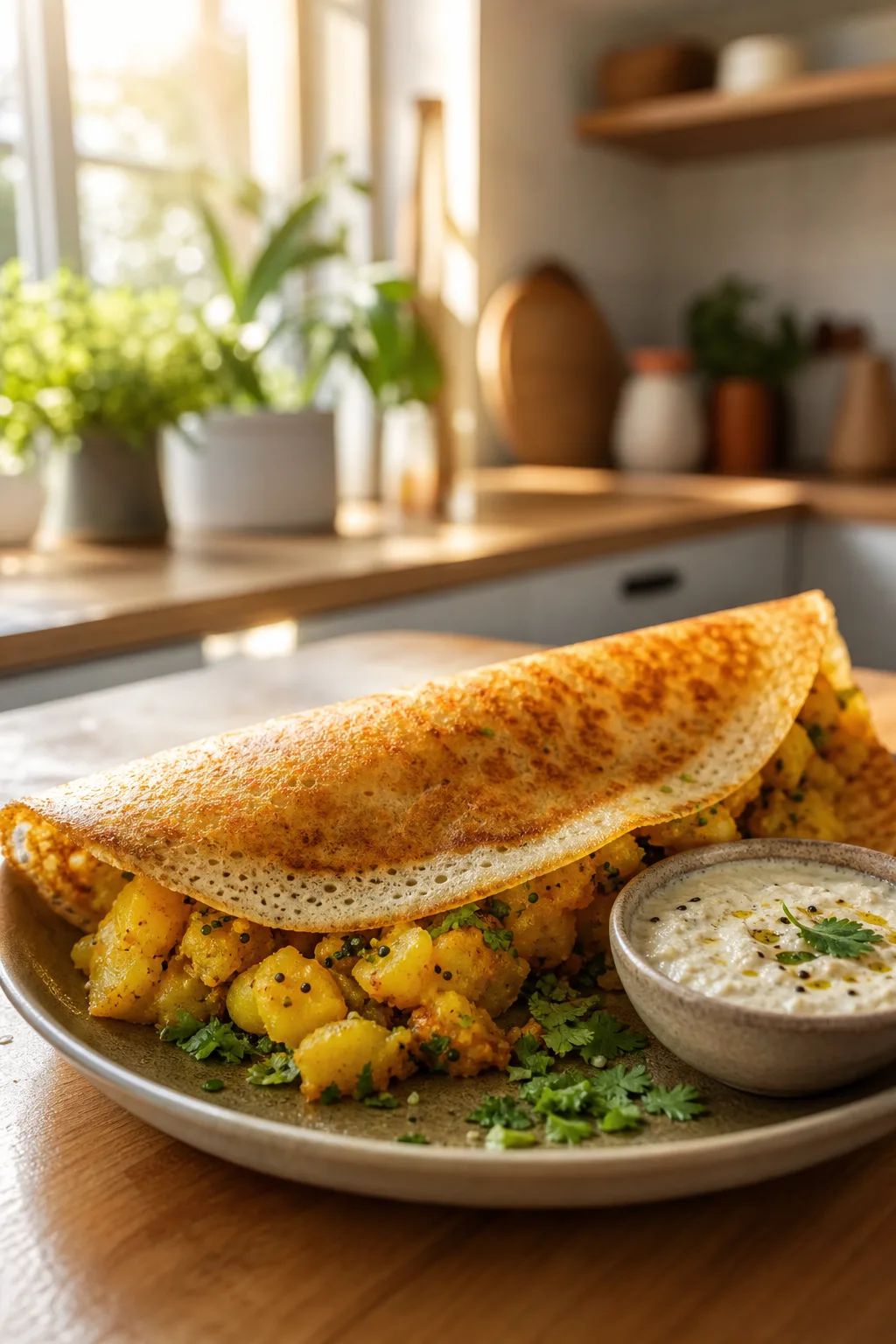
This masala dosa is my go-to for a quick, delicious morning. Crispy crepes filled with warm, spiced potatoes make it cozy and filling. Perfect when you want a wholesome start without fuss!
Introduction
I first tried making masala dosa years ago after a trip to South India, and it instantly became one of my favorite breakfasts. The crispy, golden crepe paired with a warm, spiced potato filling is just irresistible. Over time, I’ve tweaked the batter fermentation timing and potato masala seasoning to get that perfect balance of tangy, spicy, and crispy textures. The trick I learned is to soak the rice and dal properly and let the batter ferment just right—it makes all the difference for that light, airy dosa. Also, tempering the potato filling with mustard seeds and curry leaves adds a subtle, authentic aroma that’s hard to beat. When you make this, expect a dosa that’s delightfully crispy on the edges with a soft, flavorful center. It’s comforting, filling, and a great way to start any day, especially when you want something wholesome but not complicated. Plus, it’s vegetarian and packed with flavor, which makes it a hit with everyone I’ve shared it with!
What You'll Need
Approximately 8-10 dosas, serves 4
- 1 cup urad dal (split black gram), soaked overnight
- 2 cups parboiled rice, soaked overnight
- 1/2 teaspoon fenugreek seeds
- Salt to taste
- 3 medium potatoes, boiled and mashed
- 1 medium onion, finely chopped
- 2 green chilies, finely chopped
- 1 teaspoon mustard seeds
- 1/2 teaspoon turmeric powder
- 10 curry leaves
- 2 tablespoons oil
- Fresh coriander leaves, chopped
How To Do It
Step 1
Begin by soaking the urad dal, parboiled rice, and fenugreek seeds separately in water overnight. This soaking hydrates the grains, making them easier to grind and helps in fermentation, which is key for dosa’s characteristic tangy flavor and airy texture. Don’t rush this step—proper soaking for 8-12 hours is essential. If you skip or shorten soaking, the batter won’t ferment well, resulting in dense, less crispy dosas.
⏱ Time: 8-12 hours soaking
✓ Doneness: Ingredients should be soft and swollen, ready for smooth grinding
Step 2
Drain the soaked urad dal and rice. First, grind the urad dal with a little water to a smooth, fluffy batter. Transfer it to a large bowl. Then, grind the rice and fenugreek seeds to a slightly coarse batter and mix with the urad dal batter. The coarse texture of rice helps dosa crisp up. Add salt and mix well. Cover and let the batter ferment in a warm place for 8-10 hours or until it doubles in volume and has a slightly sour aroma, indicating good fermentation.
⏱ Time: 15-20 minutes grinding + 8-10 hours fermentation
✓ Doneness: Batter should be bubbly, thick but pourable, and lightly sour-smelling
Step 3
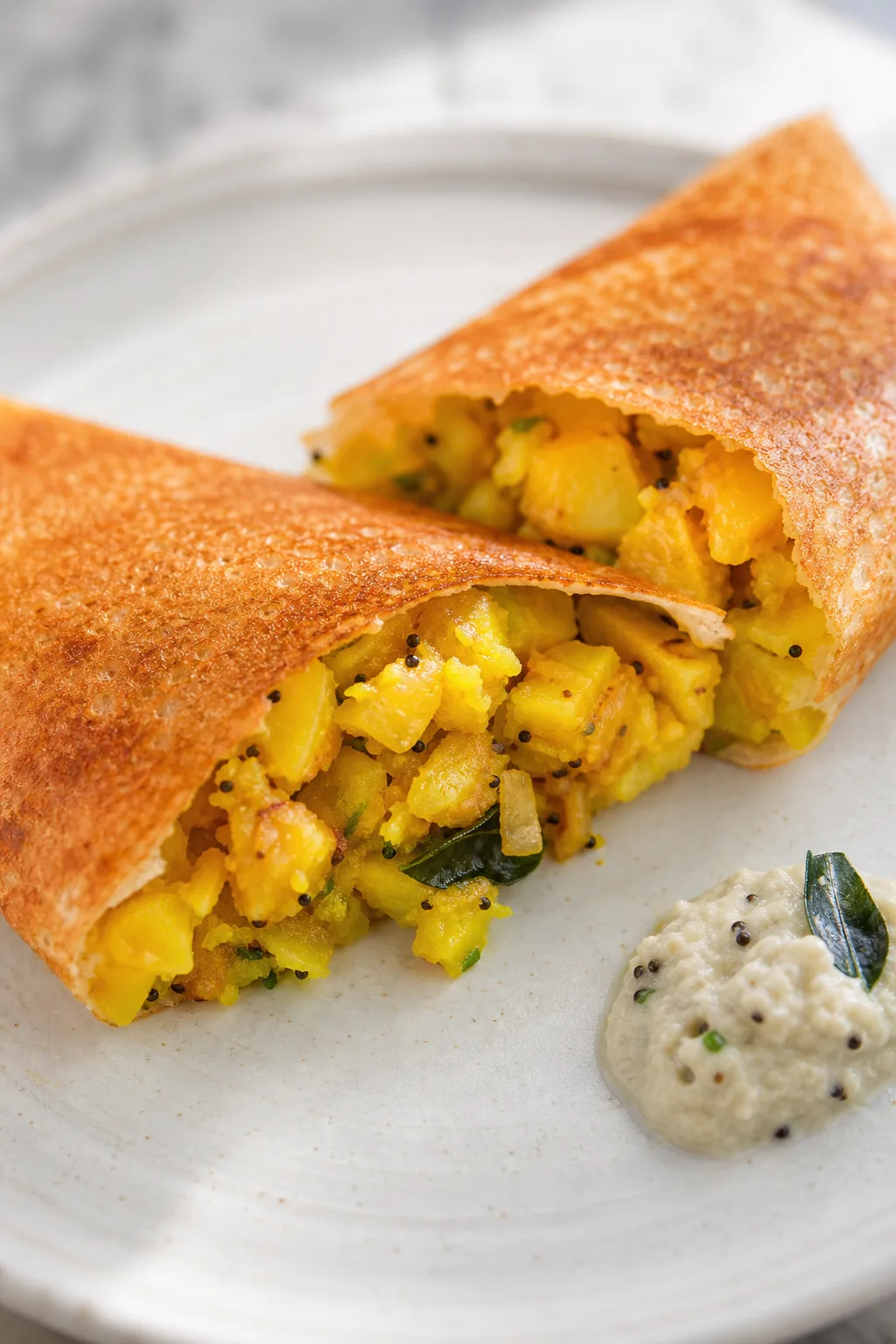
While the batter ferments, prepare the potato filling. Heat oil in a pan and add mustard seeds. When they start to pop, add curry leaves, chopped onions, and green chilies. Sauté until onions turn translucent, releasing sweetness that balances the spices. Add turmeric powder and mashed potatoes, mixing well. Cook for 3-4 minutes, allowing flavors to meld. Season with salt and add chopped coriander at the end for freshness.
⏱ Time: 10 minutes
✓ Doneness: Filling should be aromatic, well-mixed, and warm
Step 4
Heat a non-stick or cast-iron skillet over medium-high heat. To test if it’s ready, sprinkle a few drops of water on the surface—it should sizzle and evaporate immediately. Lightly grease the pan with oil. Pour a ladleful of batter in the center and spread it outward in a circular motion to form a thin crepe. The thin spreading is crucial to get crispy edges; if the batter is too thick or spread unevenly, the dosa will be dense or soggy.
⏱ Time: 2 minutes per dosa
✓ Doneness: Edges turn golden and start lifting from pan; center looks cooked and slightly browned
Step 5
Drizzle a little oil or ghee around the edges and cook until the dosa turns golden brown and crisp. This oil helps develop the Maillard reaction, giving dosa its signature color and flavor. Avoid flipping the dosa too early or too often, as this can tear the delicate crepe. Once the bottom is crisp and golden, spoon a portion of the potato filling over one half of the dosa.
⏱ Time: 2-3 minutes
✓ Doneness: Dosa surface is golden brown, edges crisp and slightly curled
Step 6
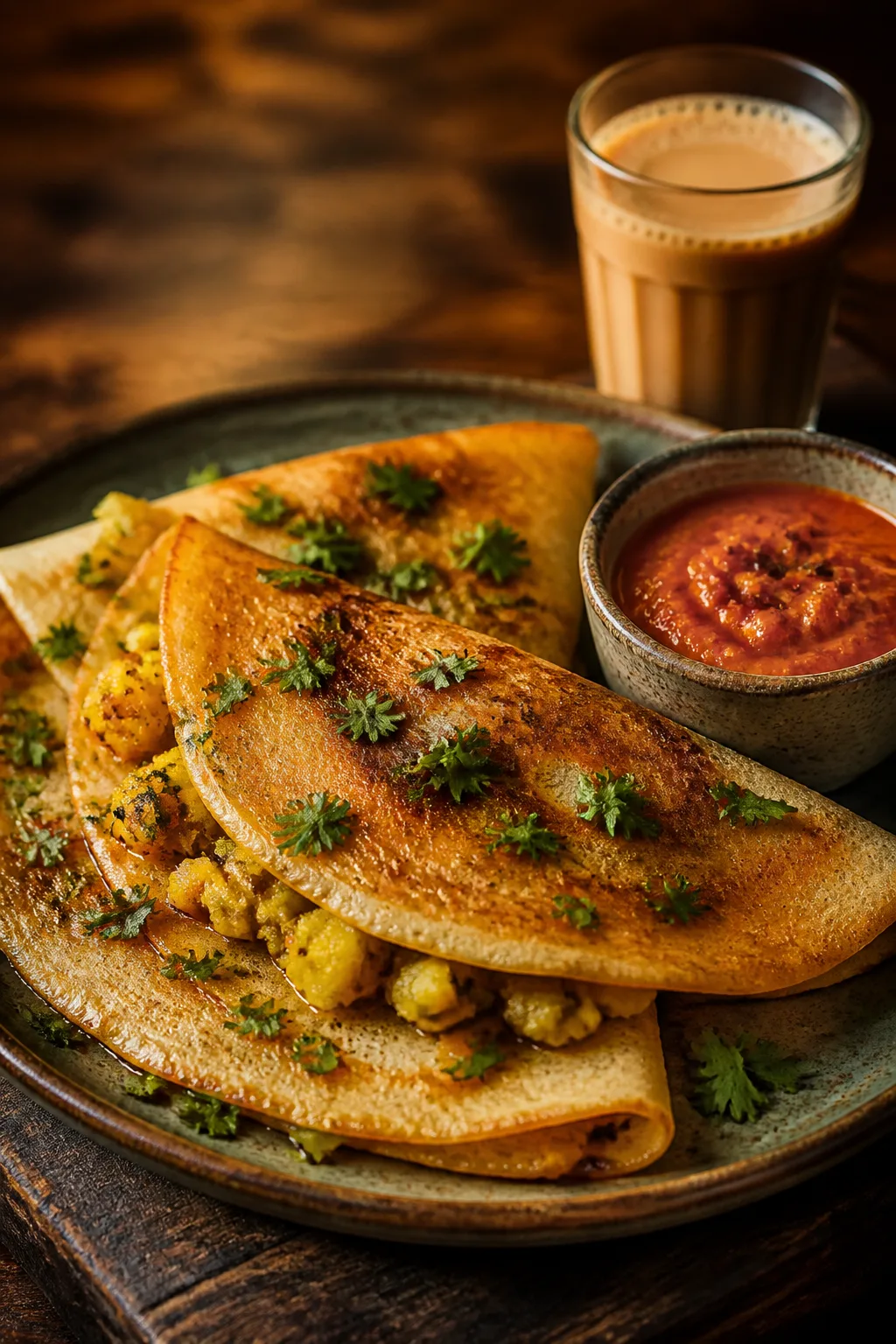
Carefully fold the dosa over the potato filling to create a semi-circle or roll it up. Press gently to seal. This folding keeps the filling warm and lets the dosa retain crispness. Serve immediately while it’s hot and crispy for the best texture contrast between the crepe and the soft filling.
⏱ Time: 1 minute
✓ Doneness: Dosa holds shape without tearing, filling is warm and evenly distributed
Step 7
Repeat the process with the remaining batter and filling. If the batter thickens while making dosas, add a little water and stir gently to maintain the right pouring consistency. Too thick batter will make thick, chewy dosas; too thin will tear easily. Adjust carefully to get that perfect thin crepe every time.
⏱ Time: Ongoing during cooking
✓ Doneness: Batter pours smoothly and spreads thin without breaking
Step 8
Serve the masala dosa hot with coconut chutney and sambar on the side. The cool, creamy chutney and tangy, spicy sambar complement the dosa’s crispiness and savory filling perfectly, creating a balanced and satisfying meal. Don’t skip these traditional accompaniments—they elevate the entire experience.
⏱ Time: Serve immediately
✓ Doneness: Chutneys are fresh and sambar is hot, enhancing flavors
Step 9
Clean your pan between dosas if residue builds up, wiping with a paper towel or lightly greasing again. This helps maintain even heat and prevents sticking, ensuring every dosa cooks evenly with a crisp bottom. Proper pan maintenance is key for consistent results.
⏱ Time: Throughout cooking
✓ Doneness: Pan surface remains clean and non-stick during cooking
Pro Tips
Always ferment the batter in a warm place for best results.
Fermentation is temperature-sensitive. A warm environment (around 80°F/27°C) encourages the growth of natural yeasts and bacteria, leading to a bubbly, airy batter with a pleasant tang. If it’s too cold, fermentation slows down or stalls, resulting in dense, bland dosas. To speed fermentation during colder months, place the batter near a warm oven or inside an insulated container.
Use a cast iron or non-stick pan for cooking dosas.
A well-seasoned cast iron or good-quality non-stick pan distributes heat evenly and prevents sticking, which is key for making thin, crispy dosas. Uneven heat causes uneven cooking and tearing. Cast iron pans also help develop a nice crust due to their heat retention. Avoid pans with damaged non-stick coatings as they can cause sticking and uneven browning.
Spread the batter quickly and evenly in a circular motion.
Spreading the batter thinly and fast ensures a uniform crepe that crisps evenly. If you spread too slowly, the batter sets unevenly, leading to thick or soggy spots. Using the right amount of batter also matters; too much will produce thick dosas, while too little makes them fragile. Practice helps develop a smooth, circular motion that yields perfect dosas every time.
Temper the potato filling with mustard seeds and curry leaves.
Tempering spices in hot oil releases their essential oils and enhances flavor depth. Mustard seeds popping add a nutty aroma, while curry leaves bring a fresh, citrusy note. Skipping tempering results in a bland filling lacking authentic South Indian flavor. Adding fresh coriander at the end brightens the dish and balances spices.
Do not flip the dosa too early or frequently.
Dosa is meant to cook on one side to develop crispness through Maillard browning. Flipping too soon or multiple times breaks the crepe and prevents proper browning. Wait until the edges lift and the surface looks cooked before removing or folding. This technique preserves texture and appearance.
Add a little water to the batter if it thickens during cooking.
Batter consistency impacts dosa texture. If it thickens, it won’t spread well and may create dense dosas. Adding water restores pourability and helps maintain thin, crispy crepes. Stir gently to avoid deflating the batter’s air bubbles, which are important for lightness.
Serve dosas immediately after cooking for best texture.
Dosas lose crispness quickly as they cool and absorb moisture. Serving them hot ensures the edges remain crisp and the filling warm. If you must hold them, keep dosas in a warm oven on a rack to prevent sogginess. Reheating dosas often results in soggy texture.
Common Mistakes to Avoid
Skipping or shortening the fermentation time
Why it happens Many rush the process due to impatience or lack of planning, assuming batter can be used immediately after grinding.
Fix Plan ahead and soak ingredients overnight. Allow at least 8 hours for fermentation in a warm spot. If it’s cold, use a warm oven or insulated container. Proper fermentation ensures light, airy batter with tangy flavor and crisp dosa texture.
Using too thick or too thin batter
Why it happens Inexperience leads to incorrect batter consistency, affecting dosa spread and texture.
Fix The batter should be pourable but not watery, like a thick pancake batter. Add water gradually if too thick, or add a little rice flour if too thin. Test by spreading on the pan to achieve thin, even crepes.
Not heating the pan properly before pouring batter
Why it happens Beginners often start cooking on a cold or unevenly heated pan, causing sticking and uneven cooking.
Fix Preheat the pan over medium-high heat until a few drops of water sizzle and evaporate instantly. This ensures even cooking and helps dosa release easily from the pan.
Flipping the dosa too soon or multiple times
Why it happens Impatience or misunderstanding dosa cooking technique leads to flipping before the dosa sets.
Fix Cook dosa on one side only until edges lift and surface is golden brown. Avoid flipping to preserve crispness and prevent tearing.
Not tempering the potato filling
Why it happens Some skip tempering spices due to time constraints or unfamiliarity with the technique.
Fix Temper mustard seeds, curry leaves, and chilies in hot oil before adding potatoes. This unlocks authentic flavors and aromas essential for traditional masala dosa.
Variations
Cheese Masala Dosa
Add grated cheese over the potato filling before folding the dosa. The cheese melts into the warm potatoes, creating a creamy, indulgent twist that kids and cheese lovers adore.
Note: Use a mild melting cheese like mozzarella or processed cheese. Fold quickly after adding cheese to ensure it melts without burning the dosa.
Mixed Vegetable Masala Dosa
Incorporate finely chopped carrots, peas, and beans into the potato filling for added texture and nutrition. This makes the filling more colorful and wholesome without changing the dosa batter.
Note: Par-cook the vegetables lightly before mixing with potatoes to ensure even cooking and avoid excess moisture.
Rava Dosa Masala
Replace regular rice with semolina (rava) in the batter for a crispier, lacy dosa texture. The potato filling remains the same, but the dosa has a slightly different crunch and flavor.
Note: Rava dosa batter doesn’t require fermentation. Mix batter fresh and use immediately for best crispiness.
Sweet Masala Dosa
Add a spoonful of jaggery or brown sugar to the potato filling for a sweet and savory contrast. This version is a delightful surprise for those who enjoy a hint of sweetness with their spices.
Note: Balance sweetness carefully to avoid overpowering the spices. Add jaggery after cooking the filling to melt smoothly.
Gluten-Free Masala Dosa
Use only urad dal and rice without any wheat flour or additives to keep the dosa naturally gluten-free. This traditional recipe suits gluten-sensitive diets perfectly without compromising taste or texture.
Note: Ensure batter fermentation and spreading techniques are followed carefully to maintain crispness.
Nutrition
Per Serving:
Nutritional values are estimates and may vary based on specific ingredients used.
Storage & Tips
Room Temperature
Dosas are best eaten fresh but can be kept at room temperature for up to 2 hours covered with a kitchen towel to prevent drying. Leaving them uncovered causes them to become hard and lose crispness.
Refrigerator
Store cooked dosas and potato filling separately in airtight containers for up to 2 days. Dosas will soften in the fridge; reheat on a hot pan to regain some crispness. Potato filling can be microwaved or warmed on stovetop.
Freezer
Freeze cooked dosas wrapped individually in foil or plastic wrap, then place in a freezer bag for up to 1 month. Thaw in the fridge overnight and reheat on a hot skillet to restore texture. Potato filling can also be frozen separately and thawed before reheating.
Reheating
Reheat dosas on a dry skillet over medium heat for 1-2 minutes each side until warm and slightly crisp. Avoid microwave reheating alone as it makes dosas soggy. Warm potato filling gently on stovetop or microwave, adding a splash of water if dry.
Make Ahead
Prepare the batter and potato filling a day ahead. Ferment the batter overnight, refrigerate the filling, and assemble dosas fresh in the morning for best crispness and flavor.
FAQ
Can I make masala dosa batter without fermentation?
Fermentation is key for dosa’s characteristic tang and crispness. Without it, dosas will be bland and dense. However, if short on time, you can add a pinch of baking soda or yeast to the batter and let it rest for 1-2 hours as a quick alternative, but the flavor and texture won’t be quite the same.
What if my dosa sticks to the pan?
Sticking usually happens if the pan isn’t hot enough, or if it’s not well-seasoned. Preheat your pan thoroughly and lightly grease it before pouring batter. Using a cast iron or non-stick pan also helps. Wiping the pan with a thin layer of oil between dosas can prevent sticking.
How do I know when the batter is fermented properly?
Properly fermented batter will have risen and appear bubbly with a slightly sour aroma, similar to yogurt. It should be thick yet pourable. If it smells off or has mold, discard and start fresh. Ambient temperature affects fermentation time.
Can I freeze the dosa batter?
Yes, you can freeze fermented batter in an airtight container for up to 2 weeks. Thaw overnight in the fridge and stir gently before using. Note that batter may lose some fermentation activity after freezing, so dosas might be less airy.
What can I use if I don’t have curry leaves?
Curry leaves add a unique citrusy aroma, but if unavailable, you can substitute with a little lime zest or fresh basil for a different but pleasant flavor. However, the authentic taste may be slightly altered.
How thin should I spread the batter for dosa?
Spread the batter as thin as possible without tearing it. Thin spreading ensures crisp edges and even cooking. Use a circular motion with the ladle and practice to get an even, paper-thin crepe.
What’s the best oil to use for tempering the potato filling?
Traditional recipes use mustard oil or vegetable oil for tempering, but neutral oils like sunflower or canola also work well. The oil should be hot enough for mustard seeds to pop quickly without burning, which releases the best flavors.
Can I make masala dosa vegan?
Yes, this recipe is naturally vegan as it uses no dairy or animal products. Just ensure the oil you use for cooking and tempering is plant-based. Avoid ghee if you want to keep it strictly vegan.
Final Thoughts
I hope you enjoy making and sharing this crispy masala dosa as much as I do! It’s such a comforting breakfast and I’d love to hear how yours turns out—don’t forget to share your experience!