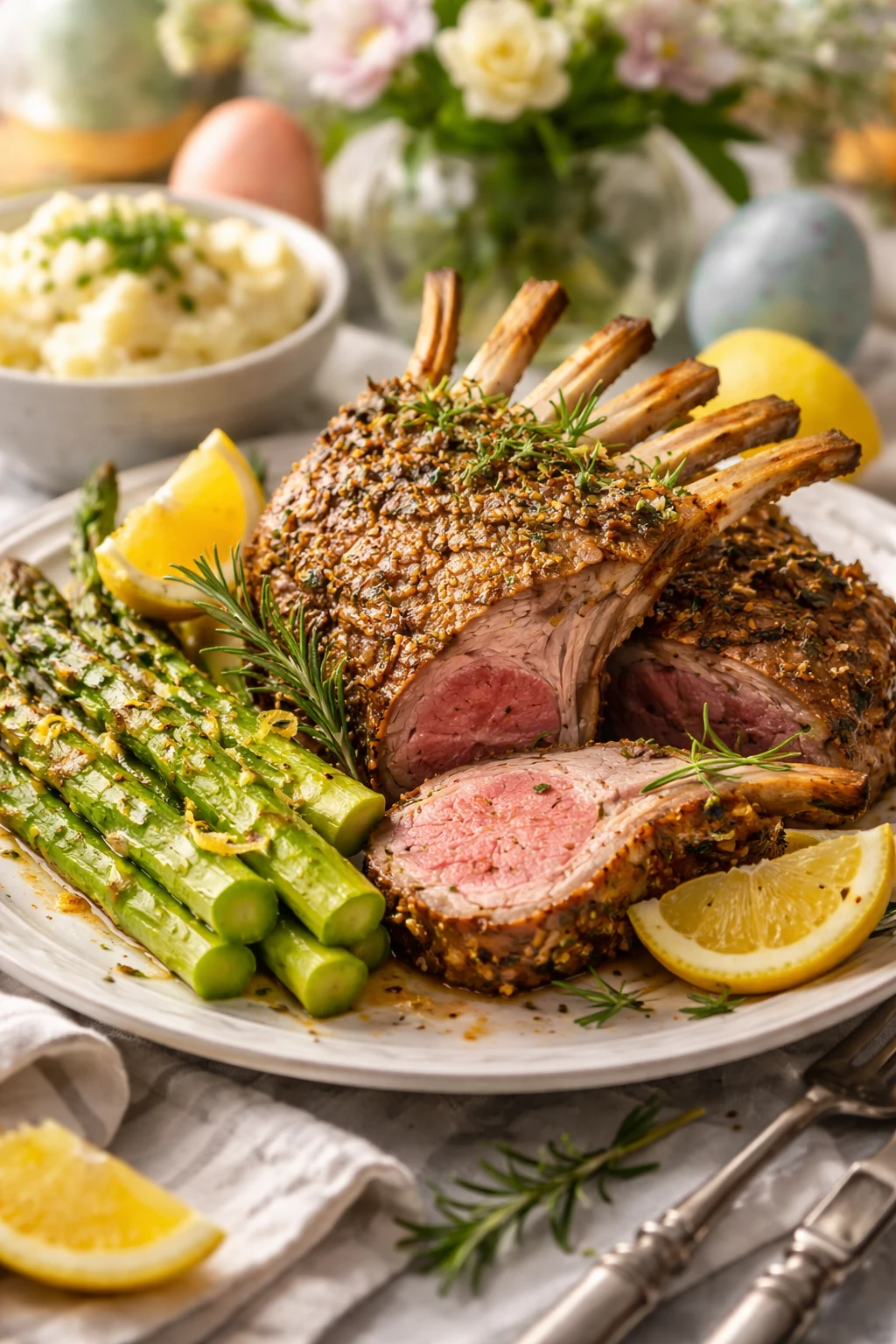
This Easter dinner features juicy herb-roasted chicken paired with colorful spring veggies. The fresh herbs bring bright flavor, and the sides add a festive touch. It’s quick enough for a stress-free celebration!
Introduction
I first made this herb-roasted chicken for an Easter gathering a few years ago when I wanted something both impressive and easy. My family loved how juicy and flavorful it was, thanks to the fresh herbs and lemon. Unlike some recipes that require hours of marinating or complicated steps, this one comes together quickly but still feels special. The secret I discovered was rubbing the chicken with a mix of rosemary, thyme, and garlic, then roasting it with lemon inside for extra brightness. Plus, roasting the spring veggies alongside the chicken means you get a vibrant, colorful plate with minimal cleanup. The finished dish looks gorgeous with golden skin and bright sides, perfect for a festive spring table. I’ve made it several times since, and it never fails to impress guests while keeping things relaxed in the kitchen. If you’re looking for a no-fuss yet celebratory Easter dinner, this is definitely one to try.
How To Do It
Step 1
Preheat your oven to 425°F (220°C). This high temperature helps the chicken skin become crispy and golden while locking in the juices. Make sure the chicken is patted dry with paper towels to remove excess moisture — this is key for crisp skin. Place the chicken on a rack in a roasting pan to allow even heat circulation underneath, which prevents sogginess. Avoid skipping the rack or the skin won’t crisp properly.
⏱ Time: 10 minutes
✓ Doneness: Oven is fully preheated and chicken is dry and ready
Step 2
In a small bowl, mix olive oil, chopped rosemary, thyme, and minced garlic. Rub this mixture all over the chicken, including under the skin where possible, for maximum flavor. Season generously with salt and pepper. Stuff the chicken cavity with the halved lemon to infuse citrus aroma during roasting. This step ensures the meat is flavorful and aromatic throughout, not just on the surface.
⏱ Time: 10 minutes
✓ Doneness: Chicken is evenly coated with herb oil and lemon is inside cavity
Step 3
Truss the chicken legs with kitchen twine to promote even cooking and keep the shape neat. This helps the chicken cook uniformly and makes for a nicer presentation. If you don’t have twine, you can tuck the wings under the body to prevent burning. Place the chicken breast-side up on the roasting rack in the pan.
⏱ Time: 5 minutes
✓ Doneness: Chicken legs are tied and wings are secured
Step 4
Roast the chicken in the preheated oven for about 45 minutes, or until an instant-read thermometer inserted into the thickest part of the thigh reads 165°F (74°C). Avoid opening the oven door frequently, as this lowers the temperature and extends cooking time. The skin should be golden brown and crispy, and the juices should run clear when pierced.
⏱ Time: 45 minutes
✓ Doneness: Thermometer reads 165°F; skin is golden and juices clear
Step 5
While the chicken roasts, prepare the vegetables. Toss baby carrots and trimmed asparagus with butter, salt, and pepper. These simple sides complement the chicken without overpowering it. The butter adds richness and helps the veggies caramelize in the oven.
⏱ Time: 10 minutes
✓ Doneness: Veggies are evenly coated and seasoned
Step 6
About 20 minutes before the chicken is done, spread the prepared vegetables around the chicken in the roasting pan or on a separate sheet pan. This timing ensures the veggies roast to tender-crisp perfection without overcooking. Stir them halfway through roasting to promote even browning.
⏱ Time: 20 minutes
✓ Doneness: Veggies are tender and lightly caramelized
Step 7
Once the chicken is done, remove it from the oven and let it rest for 10-15 minutes before carving. Resting allows the juices to redistribute, keeping the meat moist and tender. Don’t skip this step or the chicken will be dry when sliced.
⏱ Time: 15 minutes
✓ Doneness: Chicken feels warm but not hot to the touch, juices settle
Step 8
Carve the chicken by removing the legs and thighs first, then slicing the breasts. Arrange on a platter with the roasted vegetables. Garnish with fresh parsley for a pop of color and fresh flavor. Presentation matters here — it makes the meal feel special and inviting.
⏱ Time: 10 minutes
✓ Doneness: Chicken is neatly carved and platter looks colorful
Step 9
Serve immediately while warm, alongside your favorite spring salad or crusty bread. This meal pairs wonderfully with a light white wine or sparkling water with lemon. The combination of herbaceous chicken and vibrant veggies makes for a balanced and festive feast everyone will enjoy.
⏱ Time: 5 minutes
✓ Doneness: Plated meal is warm and ready to enjoy
Pro Tips
Always pat your chicken dry before seasoning.
Removing surface moisture helps the skin crisp up instead of steaming in the oven. Moisture creates steam that prevents the Maillard reaction, resulting in less flavorful, soggy skin. This simple step ensures a beautifully golden crust.
Rub herbs under the skin, not just on top.
Placing herbs and garlic beneath the skin allows their oils to infuse the meat directly during cooking, creating deeper, more aromatic flavor throughout rather than just seasoning the surface.
Use a meat thermometer to check doneness.
Relying on temperature rather than time prevents over- or undercooking. The safe internal temp of 165°F ensures the chicken is fully cooked but still juicy, avoiding dry meat or food safety risks.
Let the chicken rest before carving.
Resting allows juices to redistribute evenly within the meat fibers. Cutting immediately after roasting causes juices to spill out, resulting in dry slices. Resting keeps the meat tender and moist.
Add vegetables partway through roasting.
Roasting veggies too long can make them mushy, while too short leaves them undercooked. Timing their addition ensures they finish cooking perfectly alongside the chicken without overdoing it.
Truss the chicken legs with kitchen twine.
Trussing promotes even cooking by keeping the legs close to the body, preventing them from drying out or cooking faster than the breast. It also improves presentation.
Use fresh herbs for best flavor.
Fresh herbs contain volatile oils that become aromatic when heated. Dried herbs can be bitter or less fragrant. Fresh rosemary and thyme elevate the dish’s brightness and complexity.
Common Mistakes to Avoid
Not drying the chicken before roasting
Why it happens Many assume seasoning is enough and skip drying, unaware that moisture prevents crisp skin formation.
Fix Pat the chicken thoroughly with paper towels before applying oil and herbs. This step is essential for crispy, golden skin.
Skipping the resting period
Why it happens Eager to serve, cooks often carve immediately, losing precious juices.
Fix Let the chicken rest at least 10 minutes after roasting, tented loosely with foil, to keep meat moist.
Overcooking the vegetables
Why it happens Adding veggies too early or cooking too long makes them mushy and dull in color.
Fix Add vegetables 20 minutes before chicken is done and stir once halfway to get tender-crisp texture.
Using dried herbs instead of fresh
Why it happens Convenience or availability leads some to substitute dried herbs, which can overpower or taste flat.
Fix Use fresh rosemary and thyme whenever possible for bright, aromatic flavor and better texture.
Not trussing the chicken
Why it happens Many miss this step, not realizing it impacts cooking evenness and presentation.
Fix Tie the legs together with kitchen twine to ensure uniform cooking and a neat shape.
Variations
Lemon-Herb Butter Roasted Chicken
Mix softened butter with lemon zest, garlic, and herbs, then spread under the skin before roasting. This adds richness and extra citrus brightness, making the chicken luxuriously moist and flavorful.
Note: Butter under the skin melts during roasting, basting the meat and enhancing tenderness and flavor.
Garlic and Paprika Spiced Chicken
Swap rosemary and thyme for smoked paprika and extra garlic for a smoky, savory twist. The paprika gives the skin a beautiful color and a slightly smoky depth that’s perfect for autumn dinners.
Note: Paprika can burn if used in excess; mix with oil and garlic to protect it during roasting.
Mediterranean Style with Olives and Feta
Add pitted olives and crumbled feta cheese to the roasting pan alongside the vegetables for a salty, tangy touch. Finish with fresh oregano and lemon slices for a Mediterranean vibe.
Note: Add feta near the end of cooking to prevent melting completely and keep texture.
Honey-Glazed Herb Chicken
Brush the chicken with a mix of honey and herbs during the last 10 minutes of roasting for a sweet, caramelized finish. The honey adds a sticky glaze and balances savory herbs nicely.
Note: Apply honey glaze late to avoid burning due to sugar content.
Spicy Herb-Roasted Chicken
Add cayenne pepper or chili flakes to the herb rub for a gentle heat that contrasts the fresh herbs. This variation is great for those who enjoy a bit of spice without overpowering the dish.
Note: Adjust spice level carefully to maintain balance and avoid bitterness.
Nutrition
Per Serving:
Nutritional values are estimates and may vary based on specific ingredients used.
Storage & Tips
Room Temperature
The cooked chicken and vegetables can safely sit at room temperature for up to 2 hours if covered loosely with foil or a clean cloth to avoid contamination.
Refrigerator
Store leftovers in an airtight container for up to 3 days. The chicken may firm up and vegetables soften when cold. Reheat gently to preserve moisture and flavor.
Freezer
Freeze cooked chicken and vegetables separately in airtight containers or freezer bags for up to 3 months. Wrap tightly to prevent freezer burn. Thaw overnight in the fridge before reheating.
Reheating
Reheat chicken and veggies in a 350°F oven covered with foil for 15-20 minutes until warmed through. Add a splash of broth or water to keep moist. Avoid microwaving too long to prevent drying out.
Make Ahead
Prepare the herb rub and trim vegetables a day ahead. Season the chicken and keep refrigerated overnight for deeper flavor. Assemble and roast on the day of serving for best results.
FAQ
Can I use dried herbs instead of fresh for this recipe?
You can substitute dried herbs but use about one-third the amount since they’re more concentrated. However, fresh herbs provide brighter, more vibrant flavor and aroma. If using dried, mix them well with the oil to prevent burning during roasting.
How do I know when the chicken is fully cooked without a thermometer?
If you don’t have a meat thermometer, pierce the thickest part of the thigh and check that the juices run clear, not pink. The legs should move easily when wiggled. However, a thermometer is the most reliable way to avoid undercooking or overcooking.
Can I roast the vegetables separately from the chicken?
Yes, roasting veggies separately gives you more control over their doneness and prevents overcrowding the pan. Use a separate sheet pan and roast at the same temperature, adjusting timing as needed for even cooking.
What if I don’t have kitchen twine to truss the chicken?
If you don’t have twine, simply tuck the wing tips under the body to prevent burning and try to keep the legs close to the body. The chicken may cook a bit less evenly but will still be delicious.
Can I use chicken pieces instead of a whole chicken?
Absolutely! Adjust cooking times accordingly—bone-in thighs and drumsticks take about 35-40 minutes at 425°F. Coat pieces with the herb mixture and roast until internal temp reaches 165°F.
How do I keep the chicken skin crispy after resting?
Rest the chicken loosely tented with foil to retain heat without trapping steam, which can soften the skin. Serve soon after resting for best texture.
Can I prepare this recipe without lemon?
Yes, lemon adds brightness but you can omit it or replace with orange halves or a splash of white wine. The chicken will still be flavorful from the herbs and garlic.
What sides pair well with this herb-roasted chicken?
Roasted spring vegetables like asparagus and carrots are great, plus a fresh salad or crusty bread. Mashed potatoes or rice also complement well for a heartier meal.
Final Thoughts
I hope you enjoy making this fresh herb-roasted chicken as much as I do. It’s a simple, flavorful dish that brings everyone together—let me know how it turns out!