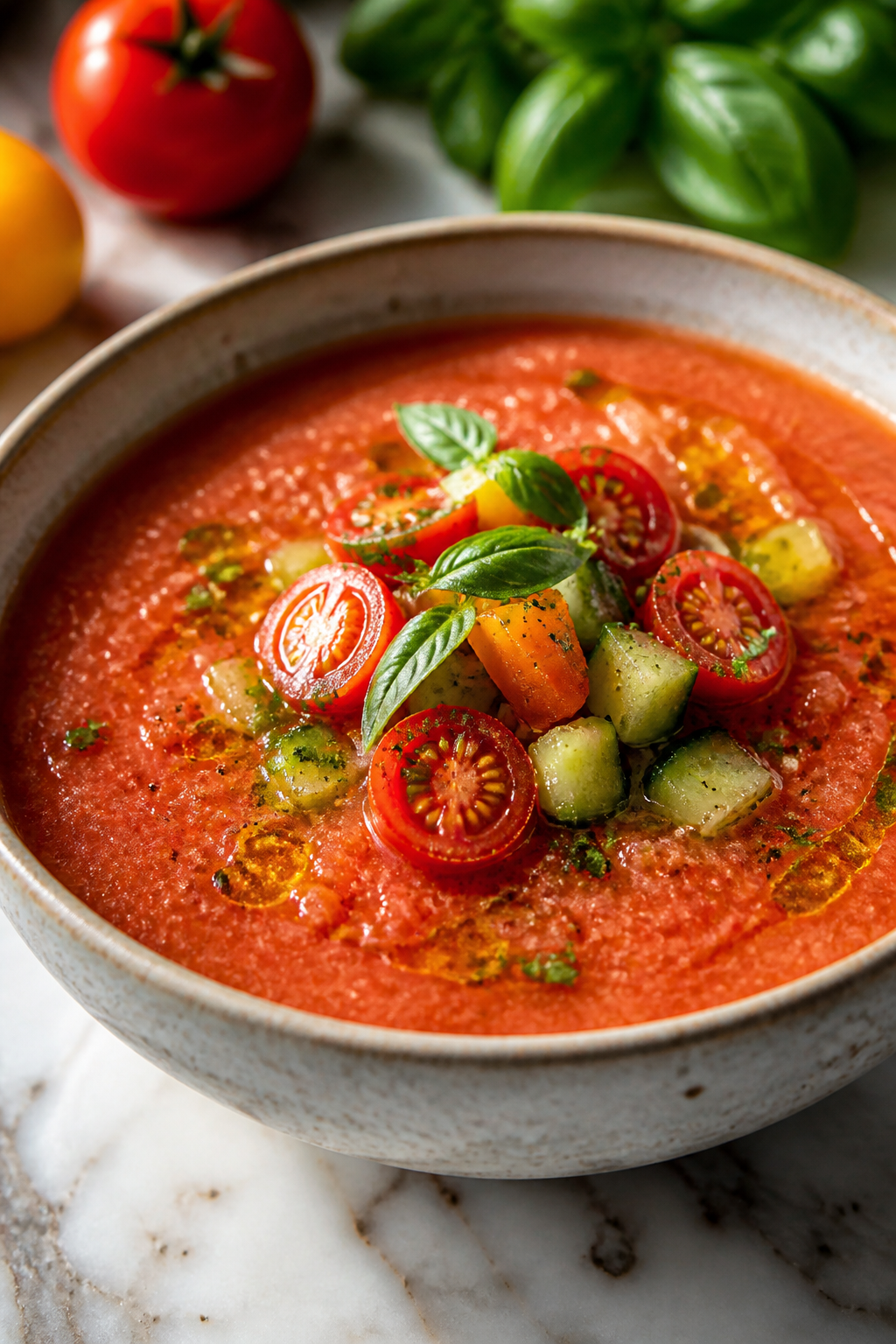
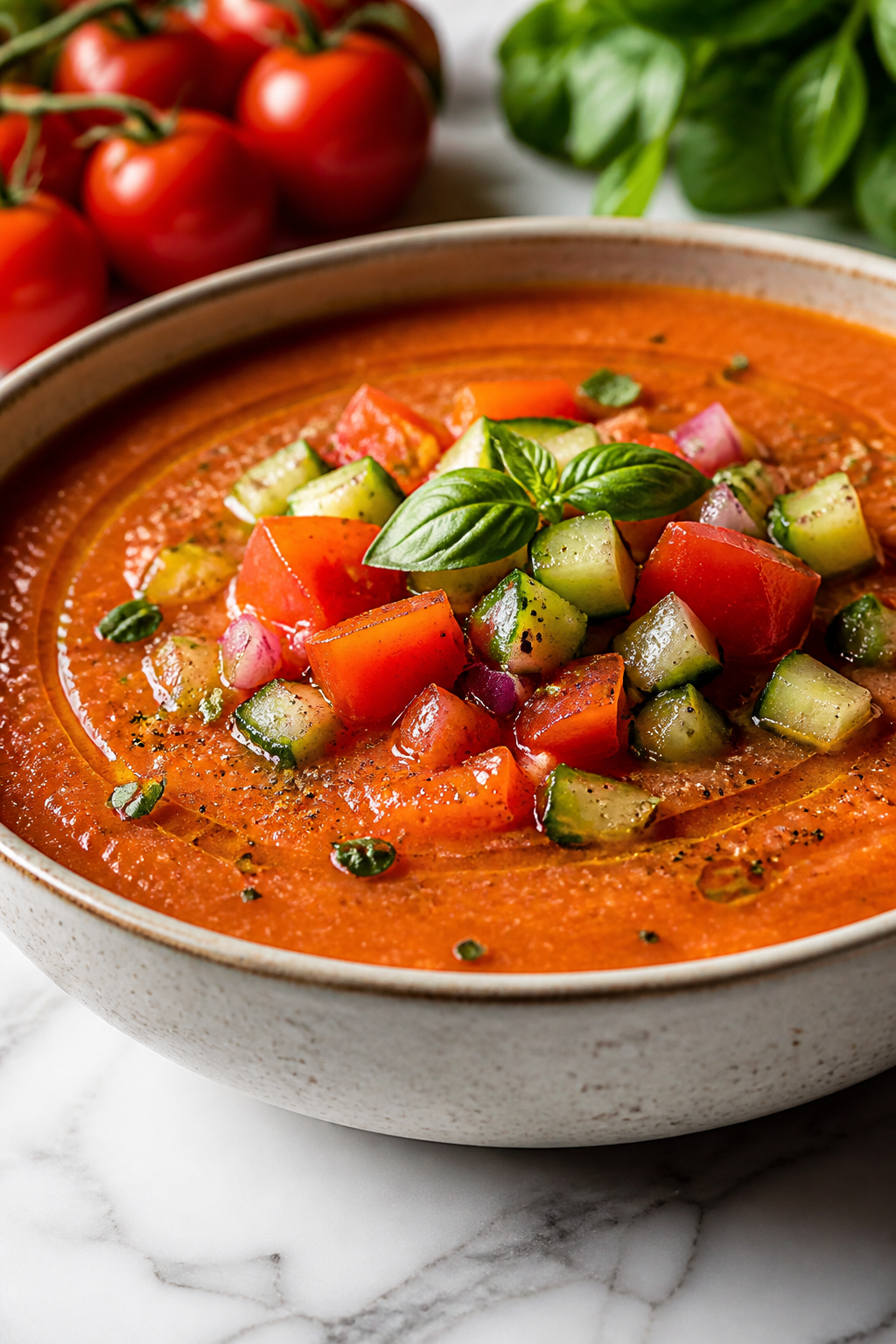
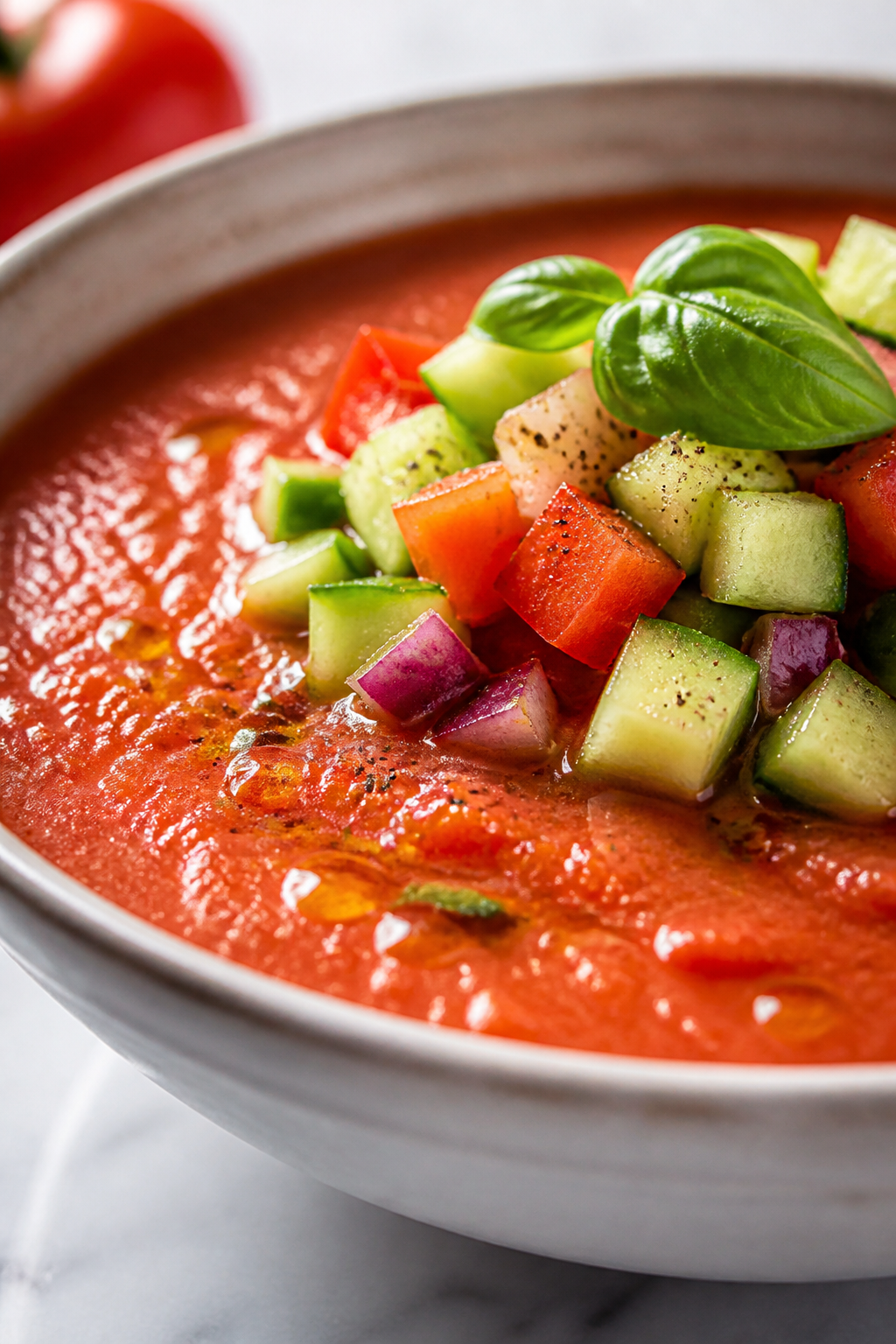
This chilled gazpacho is my absolute favorite on hot days—bright tomatoes, crunchy veggies, and just a splash of sherry vinegar make it so fresh and satisfying. Perfect for a light lunch or starter!
Introduction
I first stumbled upon gazpacho on a trip to Spain years ago, and it instantly became a summer staple in my kitchen. What I love most about this cold soup is how it’s incredibly refreshing yet packed with flavor without being heavy. Over time, I’ve tweaked the classic recipe to balance the acidity and sweetness perfectly—adding just the right amount of sherry vinegar to brighten the taste without overpowering the fresh veggies. One little trick I swear by is chilling the soup for at least an hour before serving; it really lets the flavors meld and makes every spoonful so cool and satisfying. The finished gazpacho is smooth but still has a bit of texture from the chopped veggies, which gives it a lovely, rustic feel. It’s my go-to when the weather’s blazing hot, and I want something light but still filling enough to feel like a real meal. Plus, it’s super quick to whip up, so it works great when you don’t want to turn on the stove or oven. Honestly, once you try this version, I think you’ll find it hard to go back to store-bought or overly processed cold soups!
How To Do It
Step 1
Start by roughly chopping the ripe tomatoes, cucumber, red bell pepper, and red onion. You want the pieces to be fairly uniform so they blend evenly. Fresh, ripe tomatoes are key here because they provide the natural sweetness and depth of flavor that defines great gazpacho. Avoid overripe or mealy tomatoes as they can make the soup watery and dull. Once chopped, place the vegetables in a large bowl or blender container.
⏱ Time: 10
✓ Doneness: Vegetables are evenly chopped and ready for blending, no large chunks remain.
Step 2
Add minced garlic, olive oil, sherry vinegar, salt, and pepper to the chopped veggies. The olive oil adds richness and a silky texture, while the sherry vinegar brings a subtle tang that brightens the whole soup. Blend everything together until smooth but still slightly textured—over-blending can lead to a loss of that fresh, rustic mouthfeel. If the soup feels too thick, add cold water gradually to reach your preferred consistency.
⏱ Time: 5
✓ Doneness: Soup is smooth with a slight texture; color is bright and vibrant.
Step 3
Taste and adjust seasoning if needed. Sometimes a pinch more salt or vinegar helps balance the flavors perfectly. Then cover the soup and chill in the refrigerator for at least 1 hour. This chilling step is important because it lets the flavors marry and the soup to become wonderfully cold, which is essential for that refreshing effect.
⏱ Time: 60
✓ Doneness: Soup is thoroughly chilled and flavors have melded.
Step 4
Before serving, give the gazpacho a good stir and check the texture again. If it’s too thick, add a splash of cold water or olive oil to loosen it slightly. Serve in bowls garnished with fresh basil or parsley for a pop of color and fresh herb aroma. You can also add a few diced veggies on top for crunch if you like that contrast.
⏱ Time: 5
✓ Doneness: Soup is smooth, vibrant, and garnished attractively.
Step 5
Enjoy immediately after chilling or store covered in the fridge for up to 2 days. Gazpacho flavors develop over time but are best fresh. Avoid freezing as texture and flavor will degrade.
⏱ Time: 0
✓ Doneness: Soup is fresh, cold, and flavorful.
Step 6
For an extra touch, you can toast some crusty bread cubes and sprinkle on top as a crunchy garnish. It adds a nice texture contrast and makes the soup feel heartier. Just make sure to add them right before eating so they don’t get soggy.
⏱ Time: 10
✓ Doneness: Bread cubes are golden and crispy.
Step 7
If you prefer a smoother gazpacho, you can strain the blended soup through a fine sieve to remove skins and seeds. This step is optional but makes for a silky finish that's easier to sip and more elegant for entertaining.
⏱ Time: 10
✓ Doneness: Soup is smooth and free of any coarse bits.
Step 8
Feel free to customize the veggies based on what’s fresh and in season. Adding a bit of celery or green bell pepper can add complexity, but keep the balance so the tomato flavor still shines through.
⏱ Time: 0
✓ Doneness: Balanced flavor with fresh vegetable notes.
Step 9
Serve your gazpacho with a drizzle of good-quality olive oil on top just before eating. This enhances the richness and gives a lovely glossy finish. Plus, it adds healthy fats that help your body absorb the vitamins from the veggies.
⏱ Time: 0
✓ Doneness: Soup has a shiny olive oil drizzle enhancing aroma and flavor.
Pro Tips
Use the ripest tomatoes you can find for maximum flavor.
Ripe tomatoes have higher sugar content and more developed flavors, which are essential for a bright, tasty gazpacho. Using underripe tomatoes results in a bland, overly acidic soup that lacks depth.
Chill the soup for at least an hour before serving.
Allowing the soup to chill lets the flavors meld and develop fully. Serving gazpacho too soon means the ingredients haven’t had time to marry, resulting in a less harmonious taste.
Don’t over-blend; keep some texture.
Leaving a bit of texture gives the gazpacho a rustic feel and pleasant mouthfeel. Over-blending can make the soup too watery and lose its fresh vegetable character.
Add olive oil slowly while blending.
Slowly incorporating olive oil helps emulsify it into the soup, creating a smooth, rich texture. Pouring it all at once can cause separation and a greasy mouthfeel.
Taste and adjust seasoning after blending.
Flavors can change once blended and chilled. Adjusting salt, pepper, or vinegar ensures the soup is perfectly balanced and bright.
Use sherry vinegar for authentic flavor.
Sherry vinegar’s mild acidity and nutty undertones complement the tomatoes and veggies better than harsher vinegars, resulting in a more nuanced taste.
Serve with fresh herbs or crunchy garnishes.
Fresh herbs add aroma and freshness, while crunchy toppings contrast the smooth soup, enhancing the eating experience.
Common Mistakes to Avoid
Using underripe or mealy tomatoes
Why it happens Sometimes cooks use what’s available or underripe tomatoes thinking any tomato will do, leading to a bland, watery soup.
Fix Always seek out ripe, firm tomatoes with deep color. If you can’t find fresh ripe ones, consider using canned high-quality tomatoes as a last resort to maintain flavor.
Skipping the chilling step
Why it happens Impatience or lack of planning often causes skipping refrigeration, resulting in a warmer, less refreshing soup.
Fix Plan ahead and chill the gazpacho for at least one hour. The cold temperature enhances flavor melding and the refreshing quality that defines gazpacho.
Over-blending the soup
Why it happens Trying to get the smoothest possible texture can lead to over-processing, losing desirable texture and making the soup watery.
Fix Blend just until mostly smooth but still a bit textured. This keeps the rustic character and a pleasant mouthfeel.
Adding too much vinegar at once
Why it happens Not tasting as you go or rushing the seasoning step causes an overly acidic, harsh taste.
Fix Add vinegar gradually, tasting frequently to balance acidity without overpowering the soup.
Using low-quality olive oil
Why it happens Trying to save money or using old oil can lead to off-flavors or greasy texture.
Fix Invest in a good extra virgin olive oil with fresh, fruity notes. It makes a significant difference in flavor and texture.
Variations
Spicy Gazpacho
Add a small diced jalapeño or a pinch of cayenne pepper to the blend for a spicy kick. This variation adds warmth and depth while keeping the refreshing qualities intact.
Note: Be cautious with spice amounts and taste frequently to avoid overpowering the delicate balance.
Green Gazpacho
Replace the red vegetables with cucumber, green bell pepper, green tomatoes, and fresh herbs like parsley and cilantro for a vibrant green version. It’s lighter and herbaceous with a fresh garden flavor.
Note: Adjust vinegar and olive oil quantities slightly to balance the milder vegetable flavors.
Roasted Vegetable Gazpacho
Roast the tomatoes, peppers, and garlic before blending to add smoky, caramelized notes and deeper flavor complexity. This version is richer and less bright but deliciously comforting.
Note: Cool the roasted veggies completely before blending to maintain the soup’s refreshing temperature.
Gazpacho with Bread
Add torn stale bread soaked in water or tomato juice to the blender to thicken the soup and add body. This traditional technique creates a creamier texture without cream.
Note: Soak the bread well and blend thoroughly to avoid lumps.
Fruit-Infused Gazpacho
Add diced watermelon or strawberries for a sweet, juicy twist that complements the savory veggies. It’s a fun summer variation with a bright, fresh flavor.
Note: Add fruit just before serving or blend lightly to keep some texture.
Nutrition
Per Serving:
Nutritional values are estimates and may vary based on specific ingredients used.
Storage & Tips
Room Temperature
Gazpacho should not be kept at room temperature for more than 2 hours due to the fresh vegetables and lack of cooking. Always cover and refrigerate promptly to keep it safe and fresh.
Refrigerator
Store gazpacho in an airtight container in the fridge for up to 2 days. The flavors may intensify but the soup remains delicious. Serve cold or slightly chilled; reheating is not recommended as it loses its refreshing quality.
Freezer
Freezing gazpacho is not recommended because the texture and flavor degrade significantly. The fresh veggies become watery and the soup loses its vibrant taste.
Reheating
Gazpacho is best served cold and does not require reheating. If you prefer a warm version, heat gently on the stove but note it will no longer be a refreshing cold soup.
Make Ahead
You can prepare the gazpacho base 1-2 days ahead and store it in the fridge. Add any fresh garnishes or bread cubes just before serving to maintain texture and freshness.
FAQ
Can I make gazpacho without a blender?
Yes! You can finely chop all the vegetables by hand for a chunkier, rustic gazpacho. It will have more texture and less smoothness but still taste great. Just be patient with the chopping and ensure even sizes for the best mouthfeel.
What if I don't have sherry vinegar?
If you don’t have sherry vinegar, a mild red wine vinegar or apple cider vinegar can work as substitutes. Use slightly less and add gradually to avoid overpowering the soup since these vinegars can be sharper.
How long can I store gazpacho in the fridge?
Gazpacho keeps well in the refrigerator for up to 2 days in an airtight container. The flavors will deepen but it’s best enjoyed fresh to retain its bright, refreshing quality.
Can I add bread to thicken the soup?
Absolutely! Adding soaked stale bread is traditional in some gazpacho recipes. It thickens the soup and adds creaminess without dairy. Just soak the bread well and blend smoothly to avoid lumps.
How spicy can I make gazpacho?
You can add jalapeños, cayenne, or hot sauce to taste. Start with small amounts and taste often so you don’t overpower the fresh flavors. Spicy gazpacho is delicious but should still be balanced.
Is gazpacho gluten-free?
Traditional gazpacho is naturally gluten-free unless you add bread. To keep it gluten-free, skip the bread or use gluten-free bread if you want to thicken the soup.
Can this soup be made vegan?
Yes, gazpacho is naturally vegan as it contains only vegetables, olive oil, and vinegar. Just ensure any garnishes or accompaniments are vegan-friendly.
What’s the best way to serve gazpacho?
Serve it well chilled in bowls or cups, garnished with fresh herbs, diced veggies, or crunchy bread cubes. It’s perfect as a light lunch, appetizer, or side on hot days.
Final Thoughts
I hope you give this fresh gazpacho a try—it’s such a simple way to enjoy summer’s best flavors. Let me know how it turns out and any fun twists you add!