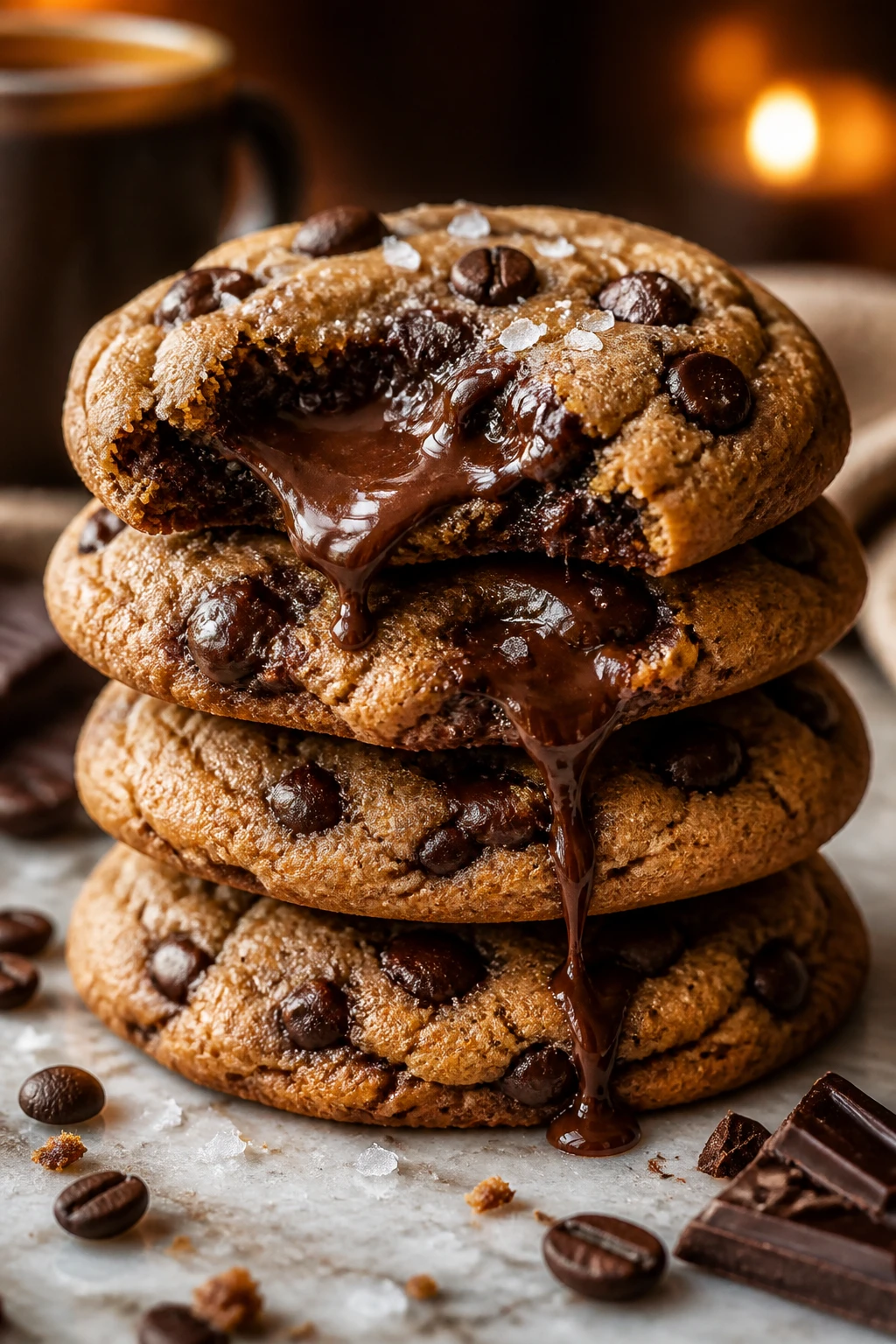
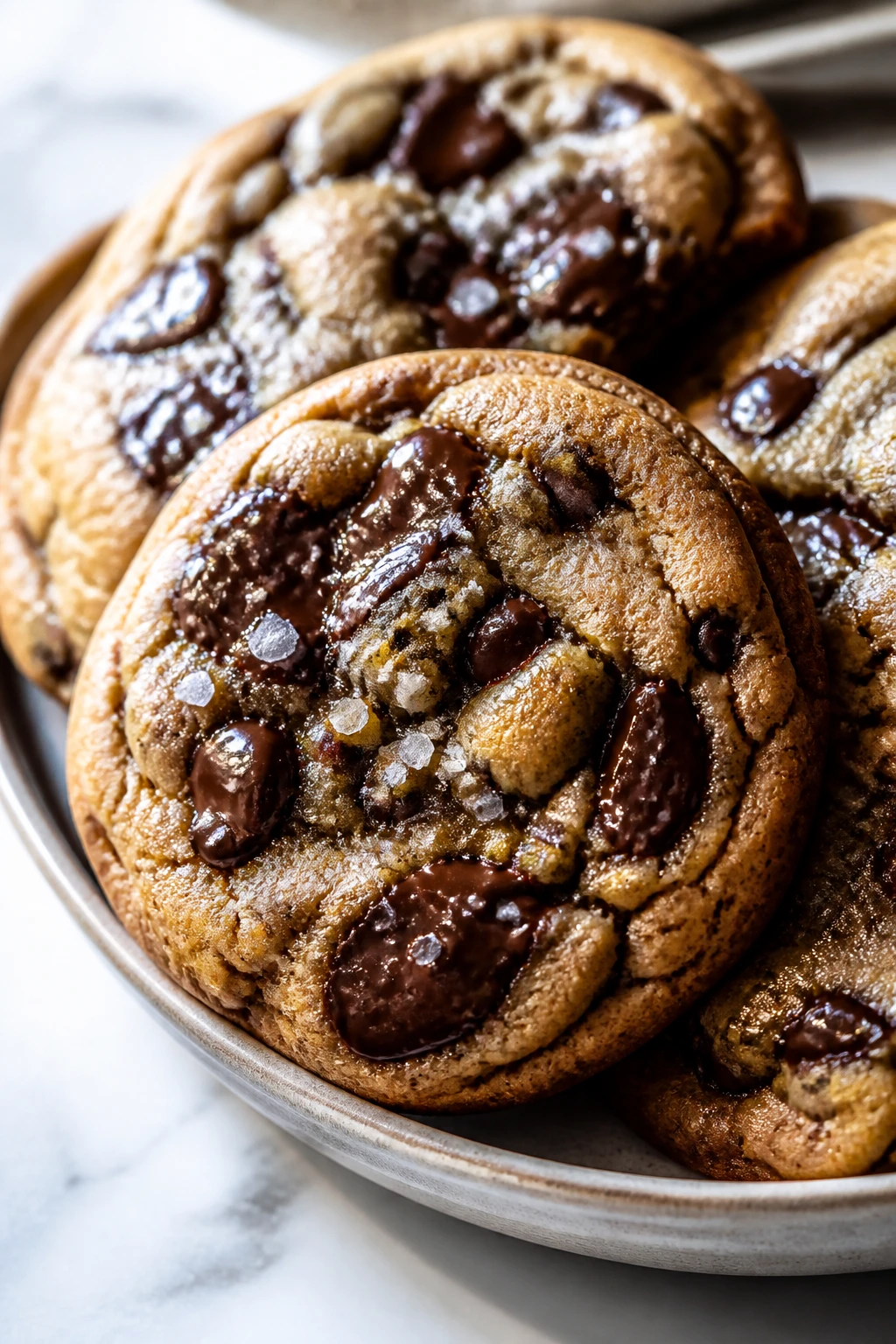
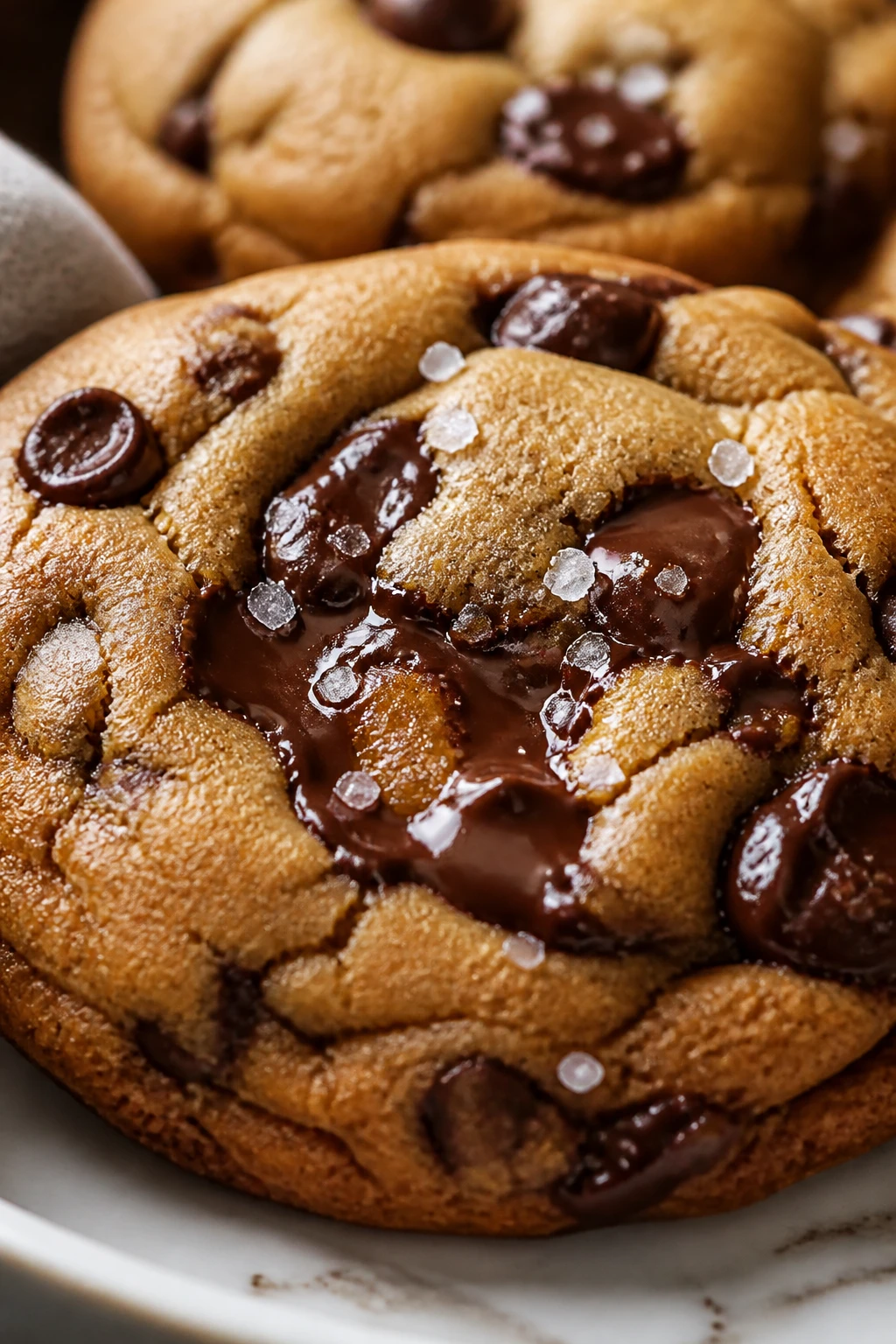
These cookies blend deep espresso flavor with melty chocolate chips and a sprinkle of sea salt for balance. They’re my favorite treat on chilly evenings when I want something cozy and indulgent.
Introduction
I first made these espresso chocolate chip cookies on a chilly autumn evening when I was craving something cozy yet a bit different from the usual chocolate chip. The idea to add espresso powder came from my love of coffee and how it deepens chocolate flavors. I remember the first batch came out a little flat because I didn’t cream the butter and sugars long enough, but once I fixed that, the texture was spot on—soft in the center with slightly crisp edges. What makes these cookies special is the sprinkle of sea salt on top, which cuts through the sweetness and enhances the espresso’s bitterness. Every bite feels like a warm hug with a little kick. They’re perfect for those evenings when you want to curl up with a cup of tea or coffee and just relax. Plus, they’re quick to whip up and don’t require fancy ingredients, making them my go-to when I want a cozy treat that feels a little indulgent but not over the top.
How To Do It
Step 1
Preheat your oven to 350°F (175°C) and line two baking sheets with parchment paper. This prep ensures even baking and easy cleanup. Make sure the oven is fully heated before baking to help the cookies rise properly and develop that perfect texture—soft inside with just crisp edges.
⏱ Time: 10 minutes
✓ Doneness: Oven preheated to 350°F and baking sheets ready
Step 2
In a medium bowl, whisk together the sifted flour, baking soda, sea salt, and instant espresso powder. Sifting helps eliminate lumps and evenly distributes the espresso so every cookie has that rich coffee flavor. Mixing the dry ingredients first keeps things organized and prevents overmixing later.
⏱ Time: 5 minutes
✓ Doneness: Dry ingredients fully combined and free of clumps
Step 3
In the bowl of a stand mixer, beat the softened butter, brown sugar, and granulated sugar on medium speed until light and fluffy, about 3-4 minutes. This creaming step is key for texture—it incorporates air and dissolves the sugars, leading to tender cookies with a nice rise. If you rush this, cookies can turn out dense.
⏱ Time: 4 minutes
✓ Doneness: Mixture is pale, fluffy, and smooth
Step 4
Add the eggs one at a time, beating well after each addition, then mix in the vanilla extract. Adding eggs slowly ensures they fully incorporate, preventing a curdled batter. The vanilla adds a warm sweetness that balances the espresso’s bitterness.
⏱ Time: 3 minutes
✓ Doneness: Batter is smooth and glossy without streaks of egg
Step 5
Gradually add the dry ingredients to the wet, mixing on low speed just until combined. Overmixing here develops gluten, which can make cookies tough. You want a soft dough that holds together but isn’t stiff.
⏱ Time: 2 minutes
✓ Doneness: Dough just comes together with no dry flour patches
Step 6
Fold in the chocolate chips by hand with a spatula. This ensures even distribution without overworking the dough, preserving the tender texture. Using good-quality semisweet chips gives that perfect balance of sweetness and richness.
⏱ Time: 2 minutes
✓ Doneness: Chocolate chips evenly scattered throughout dough
Step 7
Scoop dough onto prepared baking sheets using a tablespoon or cookie scoop, spacing cookies about 2 inches apart. This spacing allows them to spread without merging. If cookies bake too close, they lose their shape and texture.
⏱ Time: 5 minutes
✓ Doneness: Uniform cookie mounds spaced evenly on sheets
Step 8
Sprinkle a pinch of coarse sea salt on top of each cookie dough mound. This final touch enhances the espresso and chocolate flavors, creating a delightful sweet-salty contrast. Don’t skip this—it’s what sets these cookies apart.
⏱ Time: 1 minute
✓ Doneness: Visible sea salt crystals on each cookie
Step 9
Bake for 10-12 minutes, rotating sheets halfway through. Cookies should be golden around the edges but still soft in the center. Overbaking dries them out; underbaking leaves them doughy. Let cookies cool on the sheet for 5 minutes before transferring to a wire rack.
⏱ Time: 12 minutes
✓ Doneness: Edges golden, centers slightly puffed and soft
Pro Tips
Cream the butter and sugars thoroughly until pale and fluffy.
This step incorporates air into the dough, which helps create a lighter texture and better rise. If you skip or rush creaming, cookies can turn out dense and flat because the dough lacks the necessary aeration.
Use room temperature eggs for better mixing.
Cold eggs can cause the butter to seize up and curdle when combined, leading to uneven texture. Room temperature eggs blend smoothly, ensuring a uniform dough and consistent texture in the baked cookies.
Don’t overmix after adding flour.
Overmixing develops gluten, which makes cookies tough and chewy rather than tender. Mix just until the dry ingredients disappear to keep the crumb soft and delicate.
Chill the dough for 30 minutes if time allows.
Chilling solidifies the fats, which slows spreading during baking and enhances flavor development. It also makes dough easier to scoop and yields thicker, chewier cookies.
Use parchment paper or silicone mats for baking.
These surfaces prevent sticking and promote even browning on the cookie bottoms. Using greased pans can cause uneven cooking and greasy bottoms.
Rotate baking sheets halfway through baking.
Ovens often have hot spots, and rotating ensures cookies bake evenly, preventing some from overbaking while others remain underdone.
Sprinkle sea salt just before baking, not before mixing.
Adding salt on top preserves its texture and flavor burst. Mixing it in dilutes the effect and can make the cookies taste uniformly salty rather than pleasantly contrasted.
Common Mistakes to Avoid
Using melted butter instead of softened butter
Why it happens People often melt butter to speed up mixing, thinking it’s easier to combine, but this changes the dough’s texture.
Fix Always use butter softened to room temperature, not melted. Softened butter traps air during creaming, which leads to lighter, fluffier cookies. Melted butter causes cookies to spread too much and become thin and greasy.
Skipping the sea salt topping
Why it happens Some might think salt is optional or unnecessary in sweet cookies.
Fix Don’t skip the sea salt sprinkle. It balances sweetness and intensifies the chocolate and espresso flavors. Use coarse sea salt for texture and flavor bursts that elevate the cookie.
Overbaking the cookies
Why it happens It’s tempting to bake until cookies look fully set, but they continue cooking after removal.
Fix Remove cookies when edges are golden but centers still look slightly soft. They’ll firm up while cooling, resulting in a chewy interior rather than dry.
Not measuring flour properly
Why it happens Scooping flour directly with a measuring cup packs it too densely, leading to dry, crumbly cookies.
Fix Spoon flour into your measuring cup and level it off with a knife. This prevents packing and ensures the right flour amount for tender cookies.
Adding too much instant espresso powder
Why it happens Trying to get a stronger coffee flavor can lead to a bitter taste.
Fix Stick to the recommended 1 tablespoon. More can overpower the chocolate and make cookies bitter. The espresso should enhance, not dominate.
Variations
Mocha Walnut Cookies
Add 1 cup chopped toasted walnuts to the dough for a crunchy texture and nutty flavor that pairs beautifully with the espresso and chocolate. The nuts add a satisfying bite and a hint of earthiness.
Note: Fold walnuts in gently after chocolate chips. Toasting nuts beforehand intensifies flavor and prevents sogginess.
White Chocolate Espresso Cookies
Swap semisweet chocolate chips for white chocolate chunks for a sweeter, creamier contrast to the espresso. The white chocolate’s buttery notes highlight the coffee’s bitterness differently.
Note: Bake slightly less time as white chocolate can brown faster; watch closely to avoid burning.
Gluten-Free Espresso Cookies
Use a 1:1 gluten-free baking flour blend instead of all-purpose flour. This makes the cookies accessible for gluten-sensitive friends without sacrificing texture or flavor.
Note: Add 1/4 teaspoon xanthan gum if your blend doesn’t contain it to help with structure.
Vegan Espresso Cookies
Replace butter with vegan margarine and eggs with flax eggs (1 tablespoon flaxseed meal + 3 tablespoons water per egg). Use dairy-free chocolate chips to keep it fully vegan and delicious.
Note: Chilling the dough longer helps maintain shape since vegan fats behave differently.
Spiced Espresso Cookies
Add 1 teaspoon cinnamon and 1/4 teaspoon cayenne pepper to the dry ingredients for a warm, spicy kick that complements the espresso’s bitterness and chocolate’s sweetness.
Note: Adjust cayenne to taste; a little heat goes a long way.
Nutrition
Per Serving:
Nutritional values are estimates and may vary based on specific ingredients used.
Storage & Tips
Room Temperature
Store cookies in an airtight container at room temperature for up to 3 days. Keep them away from direct sunlight or heat sources to prevent melting chocolate or softening too much. They’re best enjoyed within this time for optimal texture.
Refrigerator
Refrigerate cookies in an airtight container for up to 7 days. Cookies may firm up and lose some chewiness when cold, so bring them to room temperature before serving for the best taste and texture.
Freezer
Freeze cookies in a sealed, airtight container or freezer bag for up to 3 months. Separate layers with parchment paper to prevent sticking. Thaw at room temperature for a few hours or overnight to restore texture.
Reheating
Warm cookies in a 300°F oven for 5-7 minutes to revive softness and melt chocolate slightly. Avoid microwaving, which can make cookies rubbery or dry. A splash of milk or coffee on the side pairs perfectly when reheated.
Make Ahead
You can prepare the dough 1-2 days ahead and refrigerate it tightly wrapped. This resting time deepens flavors and firms the dough for easier scooping. Bake fresh on the day you want to serve for perfect texture.
FAQ
Can I use brewed espresso instead of instant espresso powder?
Brewed espresso adds moisture, which can alter dough consistency and baking time. Instant espresso powder is preferred because it dissolves fully without affecting texture. If you must use brewed espresso, reduce other liquids slightly and expect a softer dough.
Why are my cookies spreading too much?
Spreading usually happens if butter is too warm or dough is not chilled. Make sure butter is softened, not melted, and chill the dough for at least 30 minutes before baking. Also, avoid using too much sugar or flour as measurement errors can affect spread.
Can I substitute the chocolate chips with chopped chocolate bars?
Yes! Chopped chocolate bars work great and can create pockets of gooey chocolate. Use a good-quality chocolate bar and chop into chunks roughly the size of chips. Be mindful that the texture may vary slightly, but the flavor is often richer.
How do I store cookies to keep them fresh longer?
Store cookies in an airtight container at room temperature for up to 3 days. For longer storage, refrigerate up to a week or freeze up to 3 months. Using parchment layers prevents sticking. Bring refrigerated or frozen cookies to room temperature before eating.
What if I don’t have sea salt for sprinkling?
While sea salt adds a nice crunch and flavor contrast, you can use flaky kosher salt or omit it altogether. The cookies will be sweeter without the salt’s balance, but still delicious.
Can I make the dough ahead and freeze it?
Absolutely! Freeze the dough balls on a baking sheet, then transfer to a freezer bag. Bake from frozen, adding a couple extra minutes to the baking time. This is great for making fresh cookies anytime without extra prep.
Why are my cookies dry or crumbly?
Dry cookies often result from overbaking or too much flour. Measure flour carefully and bake just until edges are golden, centers still soft. Also, ensure you cream butter and sugars well to retain moisture.
Is there a way to make these cookies vegan?
Yes! Use vegan butter and replace eggs with flax eggs (1 tbsp flaxseed meal + 3 tbsp water per egg). Also, select dairy-free chocolate chips. Dough may be firmer, so chilling helps with handling and baking.
Final Thoughts
I hope you give these espresso chocolate chip cookies a try—they’re a cozy, flavorful treat that never disappoints. Let me know how yours turn out!