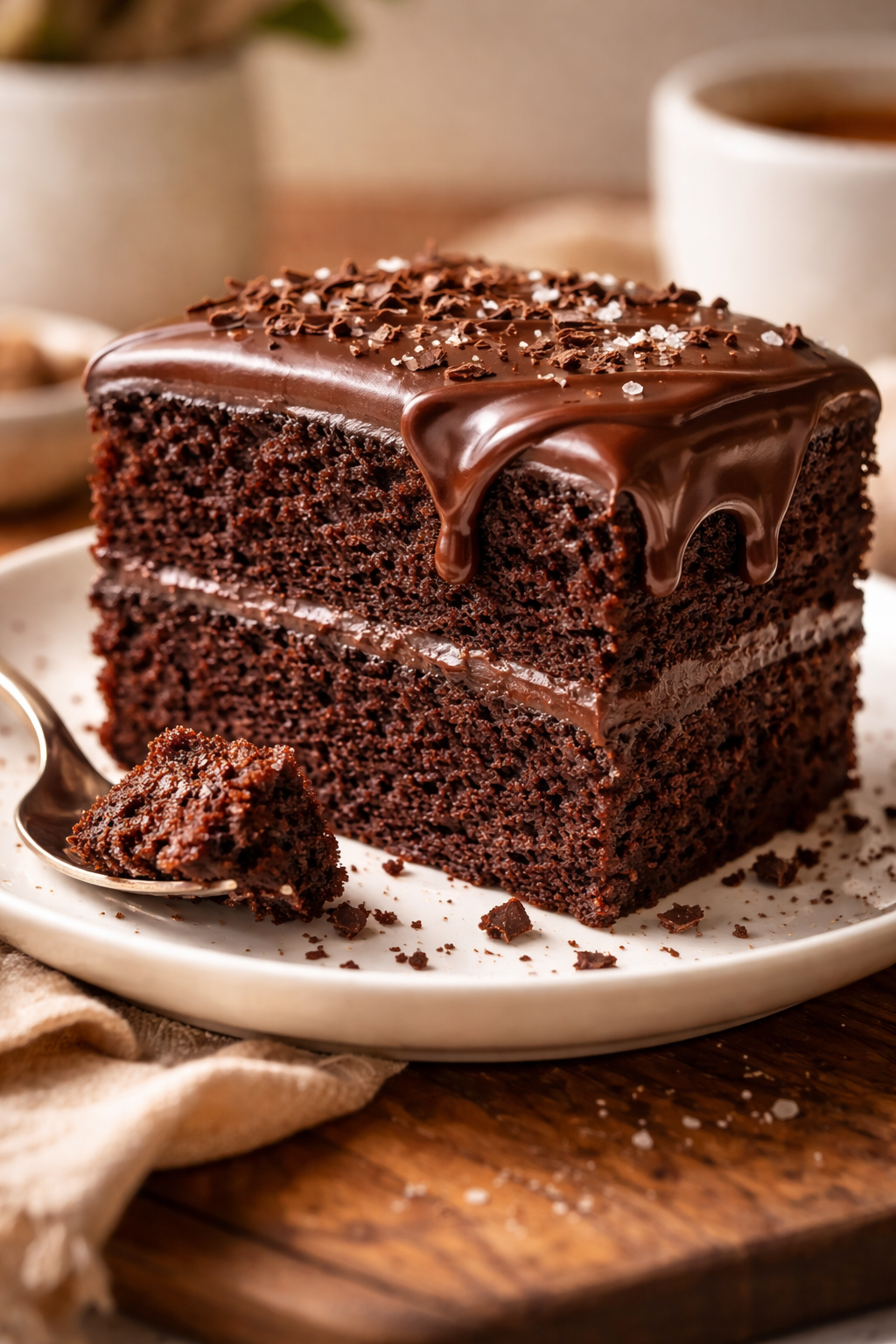
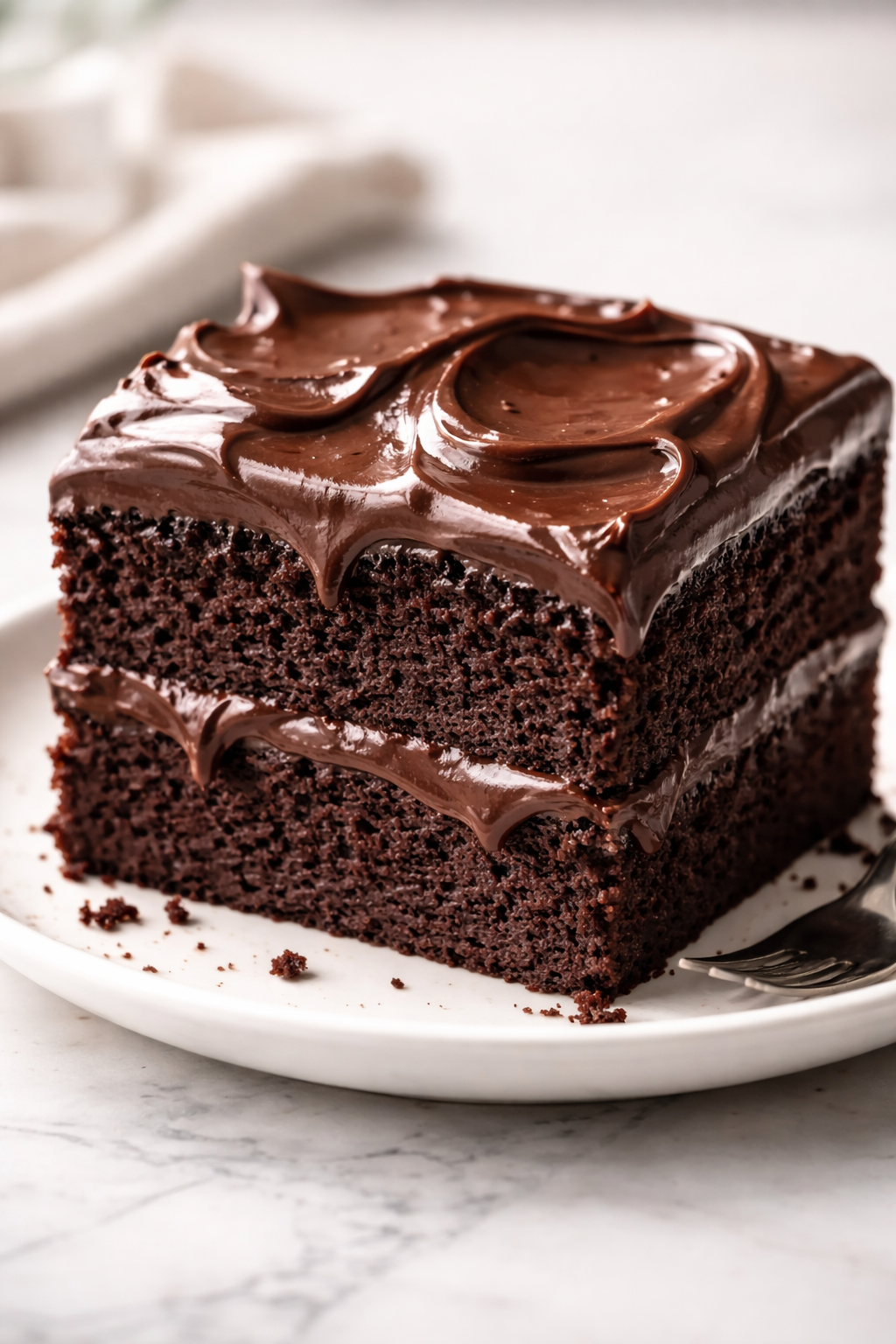
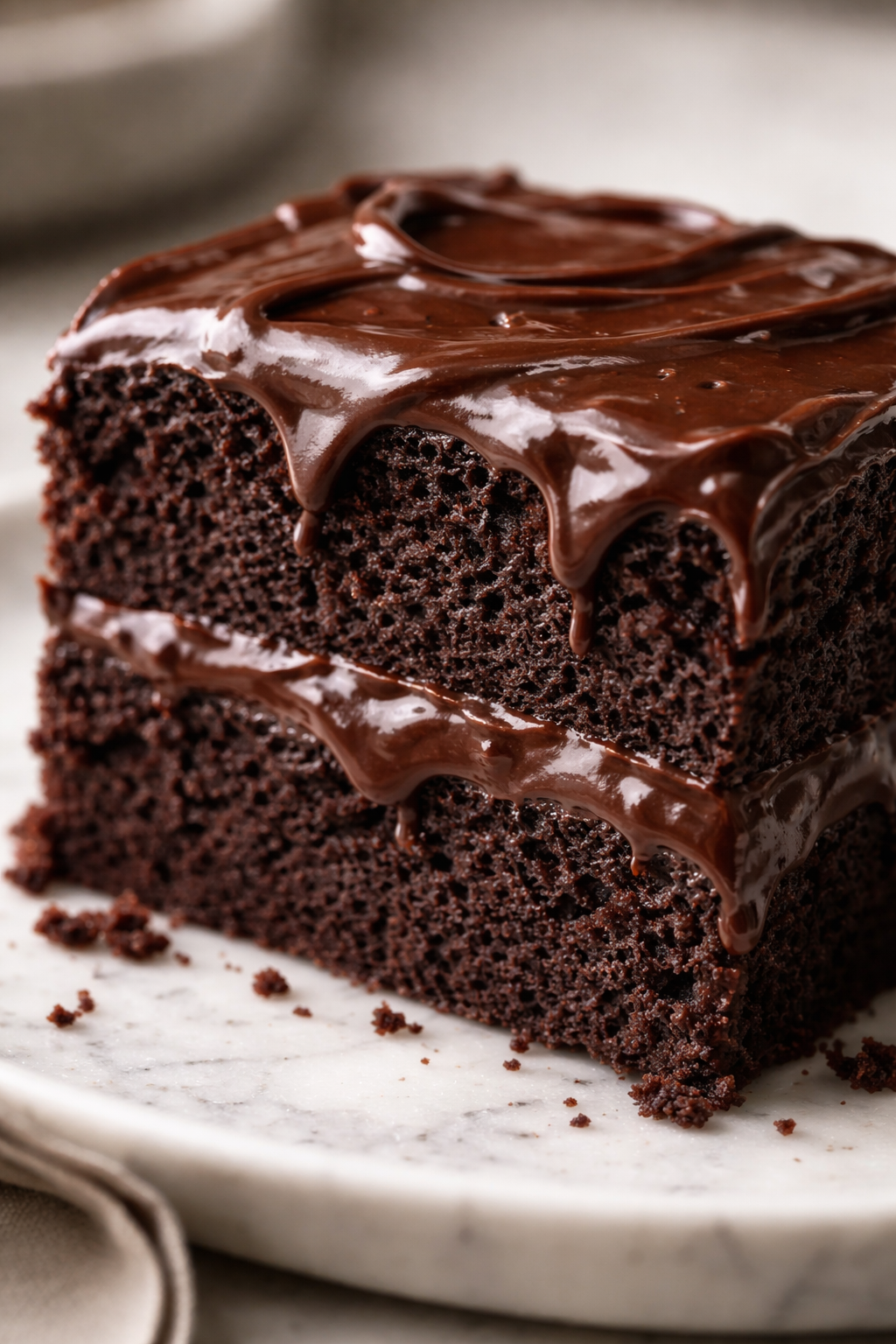
This chocolate cake is a simple, no-fuss dessert that packs big flavor with just five ingredients. The fudge frosting is silky and indulgent, making it perfect for cozy family nights or last-minute celebrations!
Introduction
I stumbled upon this chocolate cake recipe years ago when I needed something quick and fuss-free for a last-minute family gathering. What I love most is how it uses just five basic ingredients in the cake itself, yet delivers this rich, moist, and deeply chocolatey flavor that feels anything but simple. The trick I learned early on was sifting the cocoa and flour together to avoid clumps and ensure a tender crumb. Plus, the fudge frosting is silky and smooth without any complicated steps—just butter, powdered sugar, cocoa, and milk whisked together until perfectly indulgent. I remember one time I tried a more complex frosting but ended up with a grainy mess, so this easy fudge frosting became my go-to. When it’s done, the cake looks beautifully rustic with a shiny, luscious coating that invites you in. It’s exactly the kind of homemade dessert I like to serve for casual weekend dinners or when friends pop over unexpectedly. Trust me, once you try this, it’ll be your quick-fix chocolate cake for years to come!
What You'll Need
One 9-inch cake, 8 servings
- 1 1/2 cups all-purpose flour, sifted
- 1 cup granulated sugar
- 1/2 cup unsweetened cocoa powder, sifted
- 1 teaspoon baking soda
- 1/2 teaspoon salt
- 1 cup water, at room temperature
- 1/3 cup vegetable oil
- 1 teaspoon vanilla extract
- For the fudge frosting:
- 1/2 cup unsalted butter
- 2 cups powdered sugar, sifted
- 1/3 cup unsweetened cocoa powder
- 1/4 cup milk
- 1 teaspoon vanilla extract
How To Do It
Step 1
Preheat your oven to 350°F (175°C) and grease a 9-inch round cake pan. Sifting the flour, cocoa powder, baking soda, and salt together is key here—it helps break up lumps and aerates the dry ingredients, which leads to a lighter, more even crumb. Make sure you sift everything at least twice for the best texture. If you skip this, you might end up with dense pockets of cocoa or flour that don’t bake evenly.
⏱ Time: 10 minutes
✓ Doneness: Dry ingredients are well combined with no lumps visible
Step 2
In a separate large bowl, whisk together the sugar, water, oil, and vanilla extract until the sugar is mostly dissolved. The oil keeps the cake moist, and using room temperature water helps everything blend smoothly without shocking the dry ingredients. If you rush this step or use cold water, the batter might not come together as easily and could affect the final texture.
⏱ Time: 5 minutes
✓ Doneness: Mixture looks smooth and slightly glossy
Step 3
Gradually add the sifted dry ingredients into the wet mixture, stirring gently with a spatula. Don’t overmix—just combine until you see no streaks of flour. Overmixing develops gluten, which can make the cake tough instead of tender and soft. The batter should be smooth but slightly thick.
⏱ Time: 3 minutes
✓ Doneness: Batter is uniform in color and consistency with no dry spots
Step 4
Pour the batter into your prepared pan and smooth the surface with a spatula. Tap the pan gently on the counter to release any air bubbles trapped inside. This helps the cake bake evenly and prevents holes or tunnels in the crumb.
⏱ Time: 2 minutes
✓ Doneness: Batter surface is even and smooth
Step 5
Bake the cake in the preheated oven for about 28-30 minutes. Start checking at 25 minutes by inserting a toothpick into the center; it should come out clean or with a few moist crumbs but no wet batter. Avoid opening the oven door too often, or the cake might sink in the middle.
⏱ Time: 28-30 minutes
✓ Doneness: Toothpick inserted in center comes out clean or with moist crumbs
Step 6
Remove the cake from the oven and let it cool in the pan for 10 minutes. This resting time lets the cake firm up slightly, making it easier to remove from the pan without breaking. If you try to unmold it too soon, it might crumble or tear.
⏱ Time: 10 minutes
✓ Doneness: Edges start to pull away from the pan and cake feels set
Step 7
While the cake cools, prepare the fudge frosting. Melt the butter gently in a saucepan over low heat, then remove from heat and whisk in the cocoa powder and powdered sugar alternately with milk until smooth and creamy. Adding the sugar slowly helps prevent lumps and creates that silky texture we want.
⏱ Time: 10 minutes
✓ Doneness: Frosting is glossy, smooth, and spreadable
Step 8
Once the cake is cool to the touch but still slightly warm, spread the fudge frosting evenly on top using a spatula. Applying the frosting while the cake is warm helps it melt slightly into the surface, giving a fudgy finish rather than a thick coat. If the cake is too hot, the frosting will melt too much and slide off.
⏱ Time: 5 minutes
✓ Doneness: Frosting sets with a shiny, smooth surface
Step 9
Let the frosted cake sit at room temperature for about 20 minutes to allow the frosting to firm up a bit before slicing. This resting step ensures clean slices and the perfect bite of moist cake with creamy frosting. Serve with a glass of cold milk or your favorite coffee for the ultimate treat.
⏱ Time: 20 minutes
✓ Doneness: Frosting is set but still soft and cake slices cleanly
Pro Tips
Always sift your dry ingredients for a smoother batter.
Sifting breaks up lumps and aerates the cocoa and flour, which helps the cake bake evenly and prevents dense spots. Skipping this can lead to uneven texture and bitter clumps.
Use room temperature water to mix with dry ingredients.
Room temp water blends more easily, helping the sugar dissolve and the batter come together smoothly. Cold water can cause uneven mixing and affect rise.
Don’t overmix the batter once dry ingredients are added.
Overmixing develops gluten, which makes the cake tough. Stir just until combined to keep the crumb tender and soft.
Let the cake cool slightly before frosting.
Frosting on a warm cake melts too much and can slide off. Cooling slightly helps the frosting set nicely for a pretty finish.
Tap the cake pan on the counter before baking.
This releases air bubbles trapped in the batter, preventing holes or tunnels and ensuring an even crumb.
Use freshly sifted powdered sugar in frosting.
Sifting prevents lumps and ensures a silky smooth texture in the frosting, avoiding graininess.
Check cake doneness with a toothpick starting at 25 minutes.
Ovens vary, so testing early prevents overbaking, which dries the cake. Look for moist crumbs, not wet batter.
Common Mistakes to Avoid
Skipping sifting of dry ingredients
Why it happens Many cooks assume sifting is unnecessary and time-consuming, not realizing it affects texture.
Fix Always sift flour and cocoa powder to break up lumps and aerate the mixture. This leads to a lighter, more even crumb and avoids bitter clumps.
Overmixing batter after adding dry ingredients
Why it happens It’s tempting to mix thoroughly to avoid lumps, but this develops gluten.
Fix Mix just until no visible flour remains. Stop as soon as the batter looks uniform to keep the cake tender.
Applying frosting on a hot cake
Why it happens Impatience or lack of cooling time causes frosting to melt and slide off.
Fix Allow cake to cool at least 10 minutes before frosting. It should feel warm but not hot to touch.
Using expired baking soda
Why it happens Baking soda loses potency over time, but cooks often overlook expiration dates.
Fix Test baking soda by mixing a small amount with vinegar to see if it bubbles vigorously. Replace if weak.
Not tapping the pan before baking
Why it happens Skipping this step is common due to rushing or forgetting.
Fix Gently tap the pan on your counter 2-3 times after pouring batter to release air bubbles for an even bake.
Variations
Add Espresso Powder for a Mocha Twist
Stir 1 teaspoon of instant espresso powder into the wet ingredients to amplify the chocolate flavor with a subtle coffee note. This adds depth without overpowering the cake’s sweetness.
Note: Espresso powder dissolves quickly, so mix it fully to avoid graininess. Baking time remains the same.
Use Coconut Oil Instead of Vegetable Oil
Swap vegetable oil for melted coconut oil for a hint of tropical flavor and a slightly denser crumb. This is great if you want a subtle coconut aroma in your chocolate cake.
Note: Use refined coconut oil for a neutral taste or unrefined for more coconut flavor. Measure solid oil melted and cooled slightly.
Make a Vegan Version
Replace water with almond milk, use flax eggs (1 tbsp flaxseed meal + 3 tbsp water per egg), and substitute butter in frosting with vegan margarine. This keeps the cake moist and fudgy without animal products.
Note: Flax eggs need time to gel before mixing. Frosting texture may be slightly less creamy but still delicious.
Add Chopped Nuts for Texture
Fold in 1/2 cup of chopped walnuts or pecans into the batter before baking for a pleasant crunch that contrasts with the moist cake and smooth frosting.
Note: Chop nuts evenly and fold gently to avoid deflating batter. Baking time is unchanged.
Top with Fresh Berries
Serve the frosted cake topped with fresh raspberries or strawberries for a bright, tangy contrast that complements the rich chocolate flavor beautifully.
Note: Add berries just before serving to avoid moisture softening the frosting.
Nutrition
Per Serving:
Nutritional values are estimates and may vary based on specific ingredients used.
Storage & Tips
Room Temperature
The cake keeps well at room temperature for up to 2 days if covered tightly with plastic wrap or stored in an airtight cake container. This helps maintain moisture and prevents it from drying out.
Refrigerator
Store in an airtight container for up to 5 days. The frosting may firm up and the cake might feel denser when chilled. Let it sit at room temperature for 15-20 minutes before serving to soften.
Freezer
Freeze the cake (unfrosted) wrapped tightly in plastic wrap and foil for up to 3 months. Thaw overnight in the refrigerator, then bring to room temperature before frosting and serving to restore texture.
Reheating
If you prefer warm cake, microwave a slice for 15-20 seconds or warm in a low oven (300°F) for 5-7 minutes. Avoid overheating or the frosting may melt excessively; add a splash of milk if frosting dries out.
Make Ahead
Bake the cake layers a day ahead and keep them wrapped tightly. Prepare the frosting fresh on the day of serving for best texture and flavor. Assemble just before guests arrive for a perfect fresh finish.
FAQ
Can I use Dutch-processed cocoa instead of natural cocoa?
Dutch-processed cocoa is less acidic and won’t react properly with the baking soda in this recipe, which can affect the cake’s rise and texture. If you only have Dutch-processed, replace baking soda with baking powder for best results.
What if I don’t have a 9-inch cake pan?
You can use an 8-inch pan, but the cake will be taller and may need an extra 3-5 minutes baking time. Alternatively, use a square 8x8-inch pan and adjust baking time accordingly, checking for doneness early.
How do I know when the cake is fully baked?
Insert a toothpick in the center after 25 minutes. It should come out with moist crumbs but no wet batter. If it’s sticky or wet, bake for a few more minutes and test again every 2 minutes.
Can I make the cake gluten-free?
Yes, substitute the all-purpose flour with a gluten-free blend that includes xanthan gum. The texture might be slightly different—often a bit more crumbly—but still delicious.
How do I prevent the frosting from being grainy?
Sift powdered sugar before mixing and add it gradually to the butter and cocoa mixture. Whisk thoroughly to dissolve sugar crystals for a smooth, silky finish.
Can I double this recipe?
Absolutely! Just double all ingredients and bake in two pans or a larger pan. Baking time may vary—check doneness with a toothpick as usual.
What’s the best way to store leftover frosted cake?
Keep it in an airtight container at room temperature for up to 2 days or refrigerate for up to 5 days. Bring refrigerated slices to room temp before eating for best flavor.
Can I add chocolate chips to this cake?
Yes! Fold in 1/2 cup of chocolate chips gently into the batter before baking for extra bursts of melted chocolate. Be careful not to overmix after adding.
Final Thoughts
I hope you love this easy chocolate cake as much as my family does! Give it a try and let me know how it turns out in the comments.