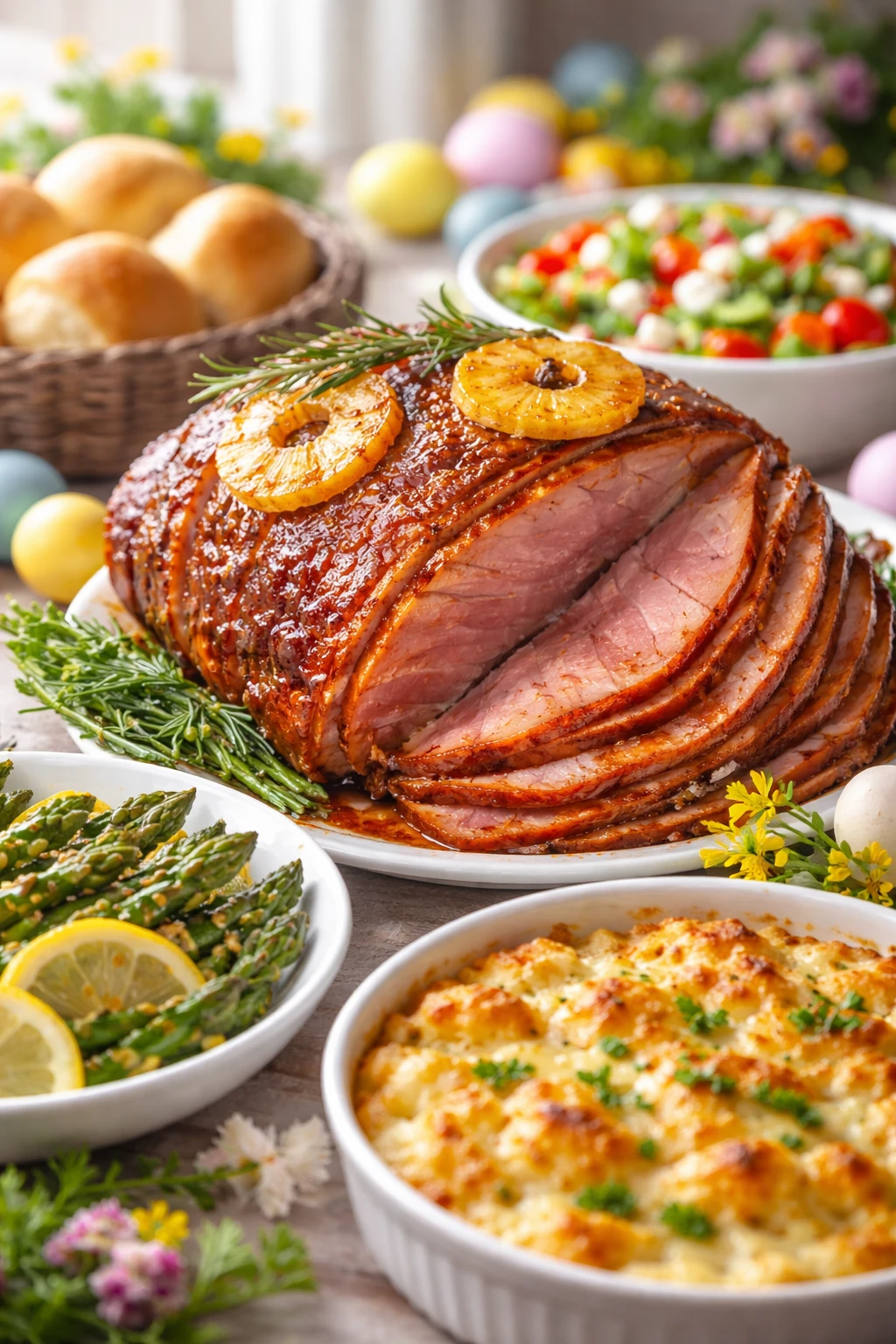
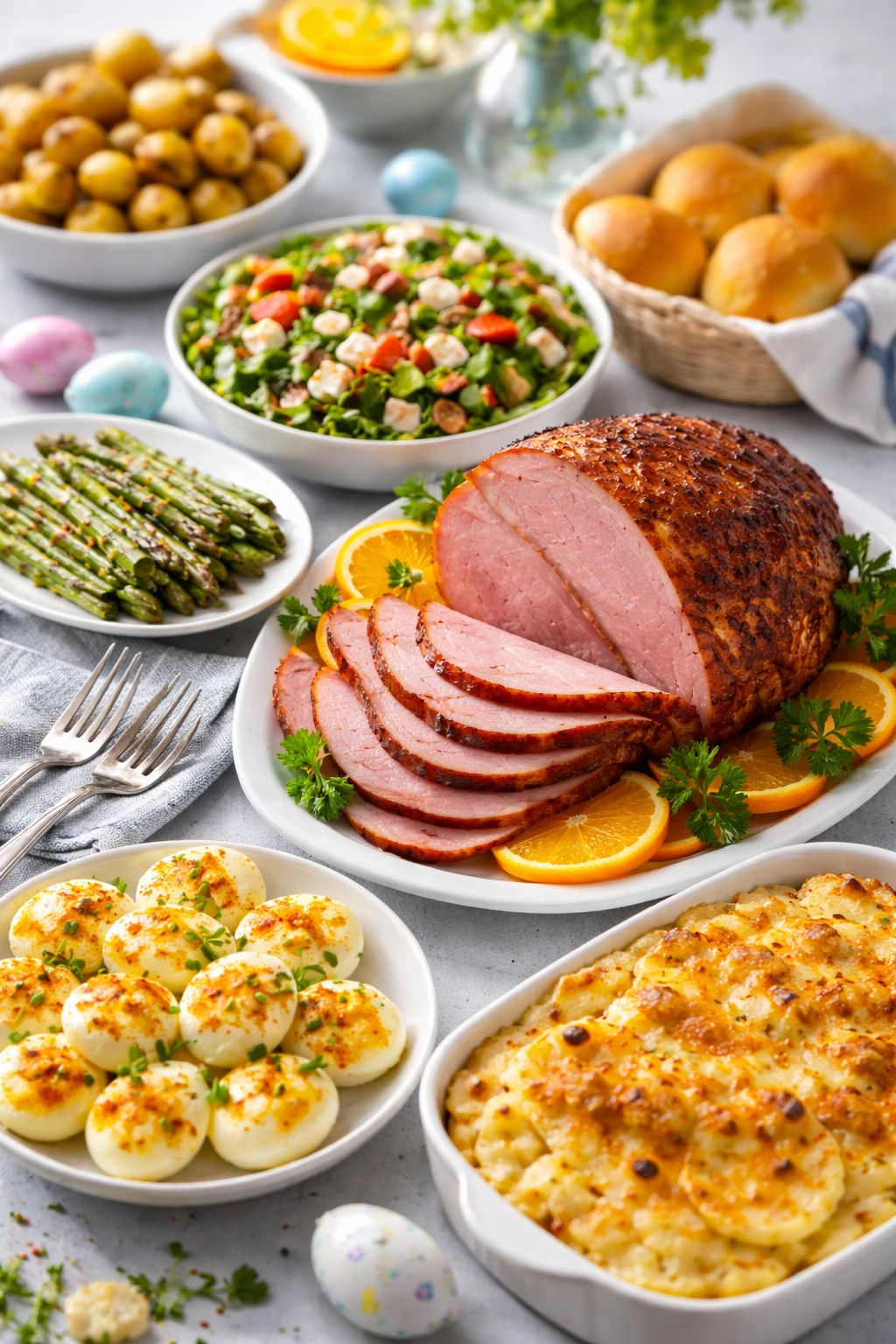
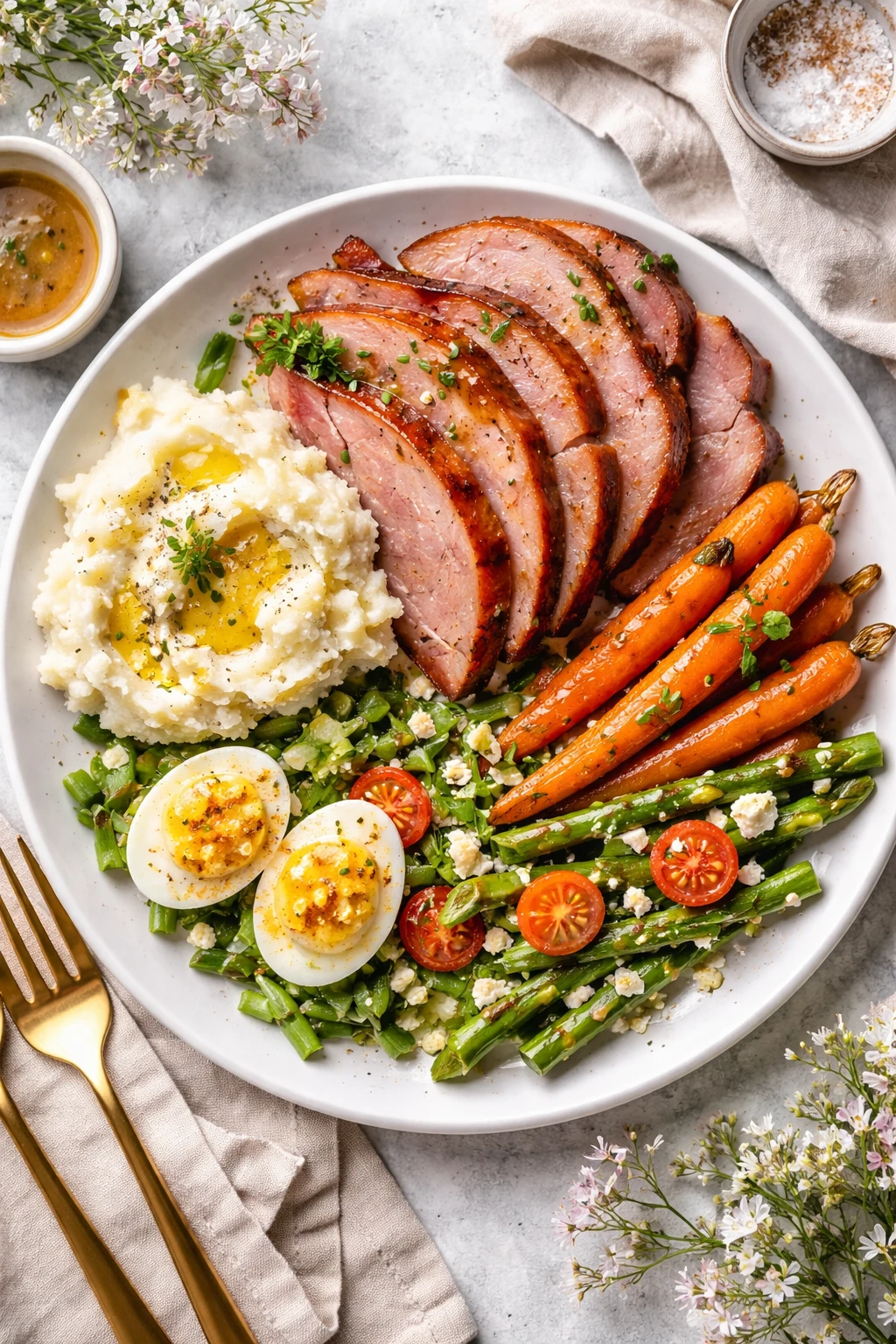
This Easter dinner features easy, delicious dishes that won’t keep you stuck in the kitchen all day. With simple ingredients and clever shortcuts, it’s perfect for a relaxed family celebration.
Introduction
I’ve always loved Easter dinners, but honestly, spending hours in the kitchen isn’t my thing. So a few years ago, I started experimenting with simple, flavor-packed dishes that don’t require a ton of prep or fancy ingredients. This easy Easter dinner menu is the result — it’s got juicy chicken breasts cooked just right, with bright lemon and garlic, plus tender veggies that soak up all the goodness. What makes this version special is that I toss everything into one pan to roast, which means less mess and more time with family. The trick I learned? Letting the chicken rest a bit after cooking keeps it juicy and tender. When you bite into this, you get that perfect balance of zesty, savory, and fresh flavors that feel festive but approachable. It’s exactly what you want on a holiday when you want to celebrate without the stress. I think you’ll love how easy it is, and your family will love how delicious it tastes — it’s become our go-to every Easter and honestly, anytime we want a fuss-free feast.
How To Do It
Step 1
Preheat your oven to 400°F (200°C). Pat the chicken breasts dry with paper towels; this helps the oil and seasonings stick better and ensures a nice sear. In a small bowl, mix the olive oil, lemon juice, lemon zest, minced garlic, dried thyme, salt, and pepper. This marinade is simple but packs a punch, infusing the chicken with bright, herby flavors. Don’t rush this step — even a quick mix lets the ingredients combine well, which means every bite will be flavorful.
⏱ Time: 10 minutes
✓ Doneness: The marinade should be well combined and evenly coat the chicken breasts
Step 2
Place the chicken breasts in a baking dish and pour the marinade over them, turning to coat evenly. Arrange the baby carrots and green beans around the chicken. Pour the chicken broth into the dish — this adds moisture and helps keep everything tender while roasting. If you skip the broth, you risk the veggies drying out or the chicken becoming tough. The broth also creates a lovely pan sauce as it reduces in the oven.
⏱ Time: 5 minutes
✓ Doneness: Chicken and vegetables are evenly coated, and broth is visible at the bottom of the dish
Step 3
Roast in the preheated oven for 25-30 minutes. The chicken should cook through but remain juicy, and the vegetables should be tender yet crisp. Keep an eye on the chicken’s thickness; thinner pieces will cook faster. Avoid opening the oven door too often, as this drops the temperature and can affect cooking times. Use a meat thermometer if you have one — 165°F (74°C) is the safe internal temperature for chicken breasts.
⏱ Time: 25-30 minutes
✓ Doneness: Chicken juices run clear when pierced and vegetables are tender but not mushy
Step 4
Remove the baking dish from the oven and let the chicken rest for 5 minutes before slicing. Resting allows the juices to redistribute throughout the meat, which keeps it moist and flavorful. Cutting into the chicken too soon can cause all those tasty juices to spill out onto the plate, leaving the meat dry. Cover loosely with foil while resting to keep warm.
⏱ Time: 5 minutes
✓ Doneness: Chicken feels firm but springy to the touch, juices are reabsorbed
Step 5
While the chicken rests, stir the vegetables gently in the pan juices to coat them in flavor. If you want, you can spoon some of the pan sauce over the chicken and veggies when plating. This adds an extra zing and ties the whole dish together. Don’t skip this step — the sauce is where all the magic happens, concentrating the lemon, garlic, and thyme notes.
⏱ Time: 2 minutes
✓ Doneness: Vegetables glisten with sauce and smell fragrant
Step 6
Garnish with freshly chopped parsley for a pop of color and fresh herbal brightness. This little finishing touch makes the dish feel more festive and visually appealing. Plus, parsley adds a subtle freshness that balances the rich roasted flavors. If you don’t have parsley, a sprinkle of fresh thyme or basil works well too.
⏱ Time: 1 minute
✓ Doneness: Bright green herbs evenly sprinkled over the dish
Step 7
Serve immediately with your favorite side like crusty bread or a simple salad. The chicken should be tender and juicy, with a bright lemon-garlic flavor, while the veggies offer a sweet, slightly caramelized contrast. This combination makes for a satisfying and balanced meal that feels special without being complicated.
⏱ Time: Serve right away
✓ Doneness: All components warm and plated attractively
Step 8
Clean up as you go to keep the kitchen manageable, especially if you’re hosting. Since everything cooks in one dish, cleanup is a breeze, which means more time to enjoy your guests and less time scrubbing pans. I always recommend prepping ingredients ahead to streamline the process.
⏱ Time: During and after cooking
✓ Doneness: Kitchen stays tidy, and dishwashing is minimal
Step 9
If you want to add a little extra something, a squeeze of fresh lemon juice over the plated dish just before serving brightens all the flavors and adds a fresh zing. It’s a small detail that really elevates the meal and makes it feel like a true celebration. Give it a try and see how it transforms the dish!
⏱ Time: Optional, right before serving
✓ Doneness: Bright citrus aroma and enhanced flavor balance
Pro Tips
Marinate the chicken for at least 10 minutes or up to 2 hours.
Allowing the chicken to sit in the lemon-garlic marinade lets the flavors penetrate the meat and tenderizes it slightly. Short marinating times still add flavor, but longer times develop deeper taste and juiciness, especially important for thicker breasts.
Pat chicken breasts dry before marinating.
Removing excess moisture helps the marinade stick better and promotes browning during roasting. If the chicken is wet, it steams instead of searing, which affects texture and flavor.
Use a meat thermometer to check doneness.
Chicken breasts can dry out easily if overcooked. A thermometer ensures you pull them out right at 165°F, yielding juicy, tender meat every time.
Roast vegetables cut to uniform size.
Evenly sized vegetables cook at the same rate, preventing some pieces from being underdone or mushy. This ensures a balanced texture and flavor in the final dish.
Rest chicken before slicing.
Resting allows juices to redistribute. Cutting immediately causes juices to spill out, resulting in dry meat.
Add fresh herbs as a garnish rather than cooking them.
Fresh herbs lose flavor and color with heat. Adding them at the end preserves their brightness and adds visual appeal.
Use low sodium broth to control saltiness.
Broth adds moisture and flavor but can quickly make the dish too salty if it’s already seasoned. Low sodium allows you to adjust seasoning to taste.
Common Mistakes to Avoid
Skipping the resting step after roasting chicken
Why it happens Many cooks want to serve immediately, assuming the chicken is done once out of the oven.
Fix Allow the chicken to rest covered loosely for 5 minutes. This helps the juices redistribute, keeping the meat juicy and tender rather than dry.
Using frozen chicken breasts without fully thawing
Why it happens People often rush meal prep and cook chicken straight from frozen.
Fix Always thaw chicken in the fridge overnight or use the cold water method. Cooking thawed chicken ensures even cooking and better texture.
Not patting chicken dry before marinating
Why it happens It’s easy to overlook this step in a hurry.
Fix Use paper towels to dry chicken before marinating to help the marinade stick and to promote browning in the oven.
Overcrowding the baking dish
Why it happens Trying to fit too much food in one pan to save time and dishes.
Fix Give chicken and veggies enough space to roast evenly. Overcrowding traps steam, leading to soggy veggies and less caramelization.
Not checking internal temperature
Why it happens Guessing doneness based on time alone.
Fix Use a meat thermometer to confirm chicken reaches 165°F, ensuring safety and perfect juiciness.
Variations
Herb-Roasted Easter Chicken with Rosemary and Sage
Swap thyme for fresh rosemary and sage to add an earthy, woodsy aroma. Use fresh herbs chopped finely and toss with the marinade. This variation brings a rustic, classic flavor perfect for spring celebrations.
Note: Fresh herbs release oils during roasting that deepen the flavor; avoid dried herbs here for best effect.
Garlic Butter Roasted Chicken with Parmesan Veggies
Add melted garlic butter over the chicken before roasting and sprinkle grated Parmesan over the veggies. This makes the dish richer and adds a savory, cheesy twist that’s irresistible.
Note: Butter browns faster than oil, so watch the chicken closely to avoid burning.
Spicy Lemon-Herb Chicken with Chili Flakes
Add a pinch of red chili flakes to the marinade for a subtle heat that contrasts nicely with the lemon. This is a great way to spice up the dish for those who like a bit of kick.
Note: Adjust chili flakes to taste; too much can overpower the delicate lemon flavor.
Vegetarian Easter Roasted Veggie Medley
Skip the chicken and roast a mix of seasonal veggies like asparagus, potatoes, and bell peppers with the lemon-garlic marinade. This keeps the meal vibrant and fresh, perfect for vegetarians.
Note: Roast veggies longer if needed until tender; watch smaller pieces to prevent burning.
One-Pan Easter Chicken with Potatoes and Asparagus
Add quartered baby potatoes and fresh asparagus spears to the pan. The potatoes soak up the lemon-garlic juices, and asparagus adds a crisp, fresh element to the plate.
Note: Add asparagus during last 10 minutes of roasting to avoid overcooking.
Nutrition
Per Serving:
Nutritional values are estimates and may vary based on specific ingredients used.
Storage & Tips
Room Temperature
This dish can safely sit at room temperature for up to 2 hours if covered loosely to avoid drying out. Beyond that, bacteria growth increases, so refrigerate promptly.
Refrigerator
Store leftovers in an airtight container for up to 3 days. The chicken may firm up slightly when cold; reheat gently to avoid drying it out. Veggies soften but remain tasty when warmed.
Freezer
Freeze cooked chicken and veggies in airtight containers or heavy-duty freezer bags for up to 2 months. Wrap tightly to prevent freezer burn. Thaw in the refrigerator overnight before reheating.
Reheating
Reheat gently in a 325°F oven for 10-15 minutes or microwave on medium power with a splash of broth or water to retain moisture. Avoid high heat which can dry the chicken.
Make Ahead
You can marinate the chicken up to 24 hours ahead and keep it covered in the fridge. Chop veggies and prepare the marinade a day before to save time on the day of cooking.
FAQ
Can I use chicken thighs instead of breasts for this recipe?
Absolutely! Chicken thighs are juicier and more forgiving when cooking. Adjust roasting time to about 30-35 minutes depending on thickness. Thighs have more fat, which adds flavor but can create more drippings, so keep an eye on the pan to avoid burning.
What if I don’t have fresh lemon juice?
Fresh lemon juice is best for its bright, natural acidity and flavor. If unavailable, use bottled lemon juice as a last resort but expect a slightly muted taste. Avoid lemon concentrates or artificial flavorings as they can alter the dish’s balance.
Can I prepare this dish entirely ahead of time?
You can marinate the chicken and prep the veggies up to 24 hours ahead, then assemble and roast just before serving. Fully cooking and reheating is possible but may reduce juiciness slightly, so fresh roasting is ideal for best texture.
How do I prevent the vegetables from getting mushy?
Cut vegetables into uniform pieces and avoid overcrowding the pan to allow proper roasting and caramelization. Roasting at a high temperature (400°F) helps keep veggies tender-crisp rather than soggy.
What sides go well with this Easter dinner?
Simple sides like crusty bread, a green salad, or steamed rice complement this dish beautifully. You could also add a light dessert to finish the meal without feeling too heavy.
Is it okay to skip the chicken broth?
You can use water instead, but broth adds flavor and helps create a tasty pan sauce. Without it, the dish might be less juicy and flavorful, so broth is recommended if possible.
How do I know when the chicken is fully cooked without a thermometer?
Pierce the thickest part of the chicken; juices should run clear, not pink. The meat should be opaque and firm but not rubbery. However, a meat thermometer is the safest and most reliable method.
Can I double the recipe for a larger group?
Yes! Use a larger baking dish or two pans to avoid overcrowding. Cooking times may vary slightly, so check the chicken and veggies for doneness accordingly.
Final Thoughts
Give this easy Easter dinner a try and enjoy a flavorful, stress-free holiday meal with your loved ones. Don’t forget to share how it turns out—I’d love to hear your thoughts!