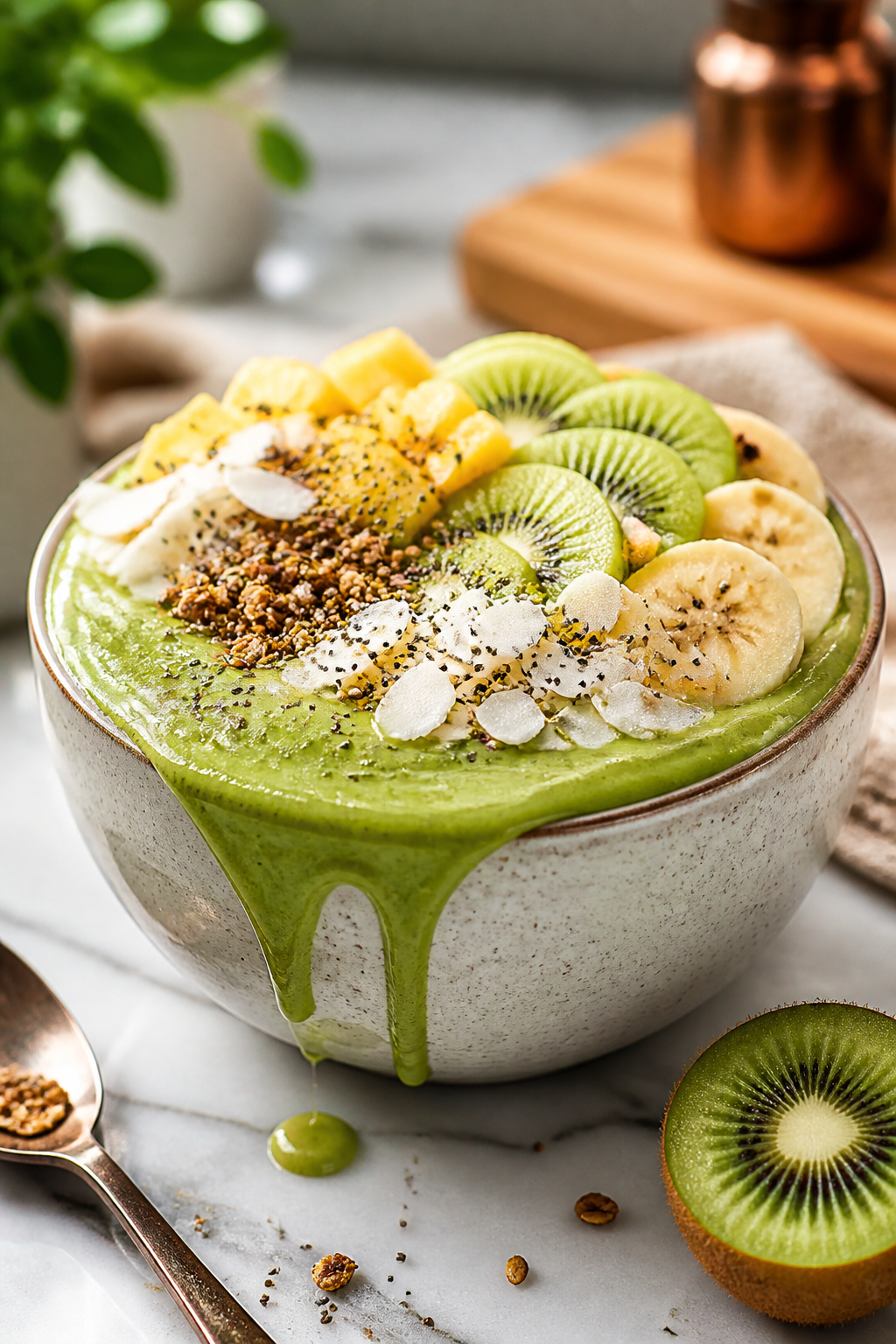
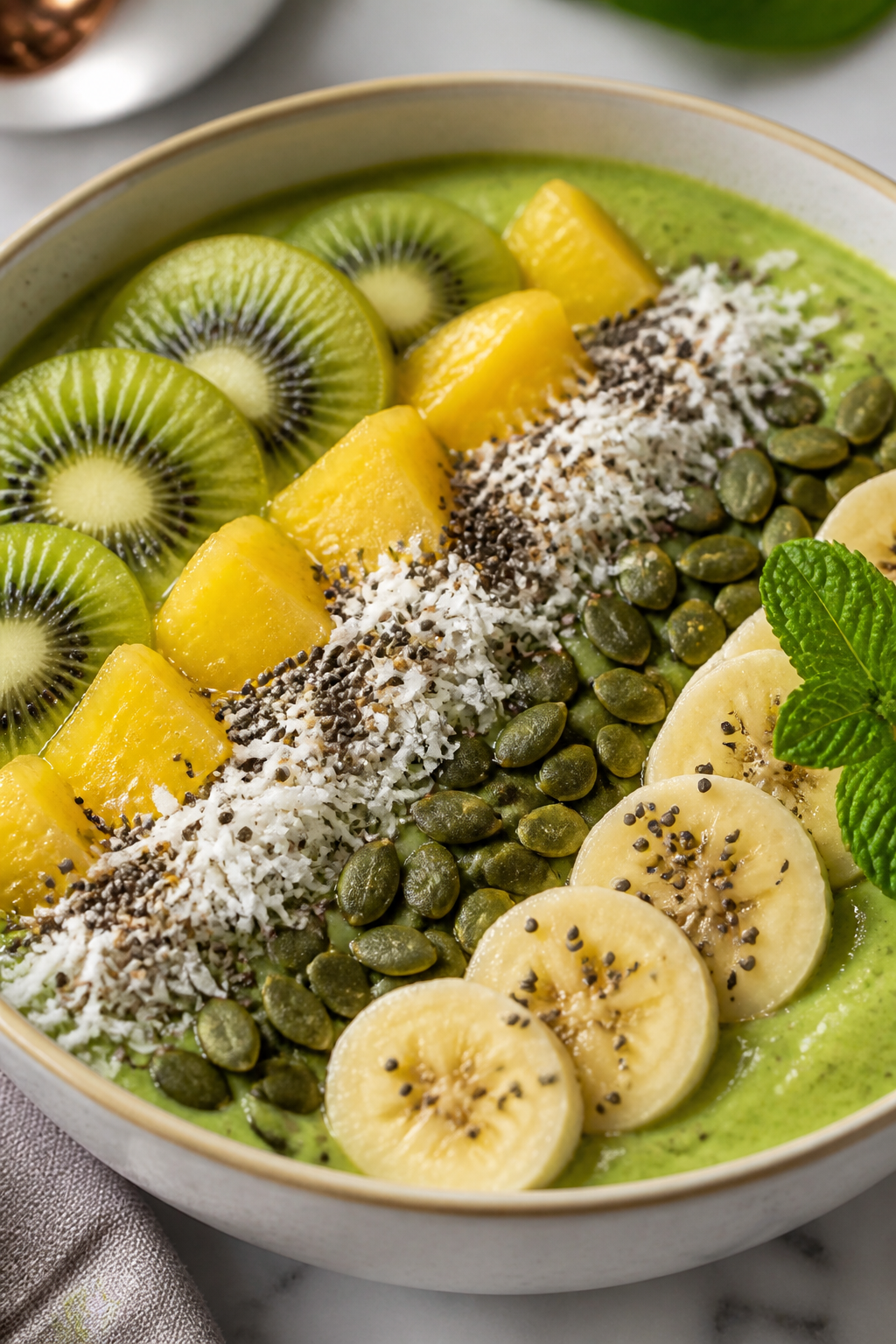
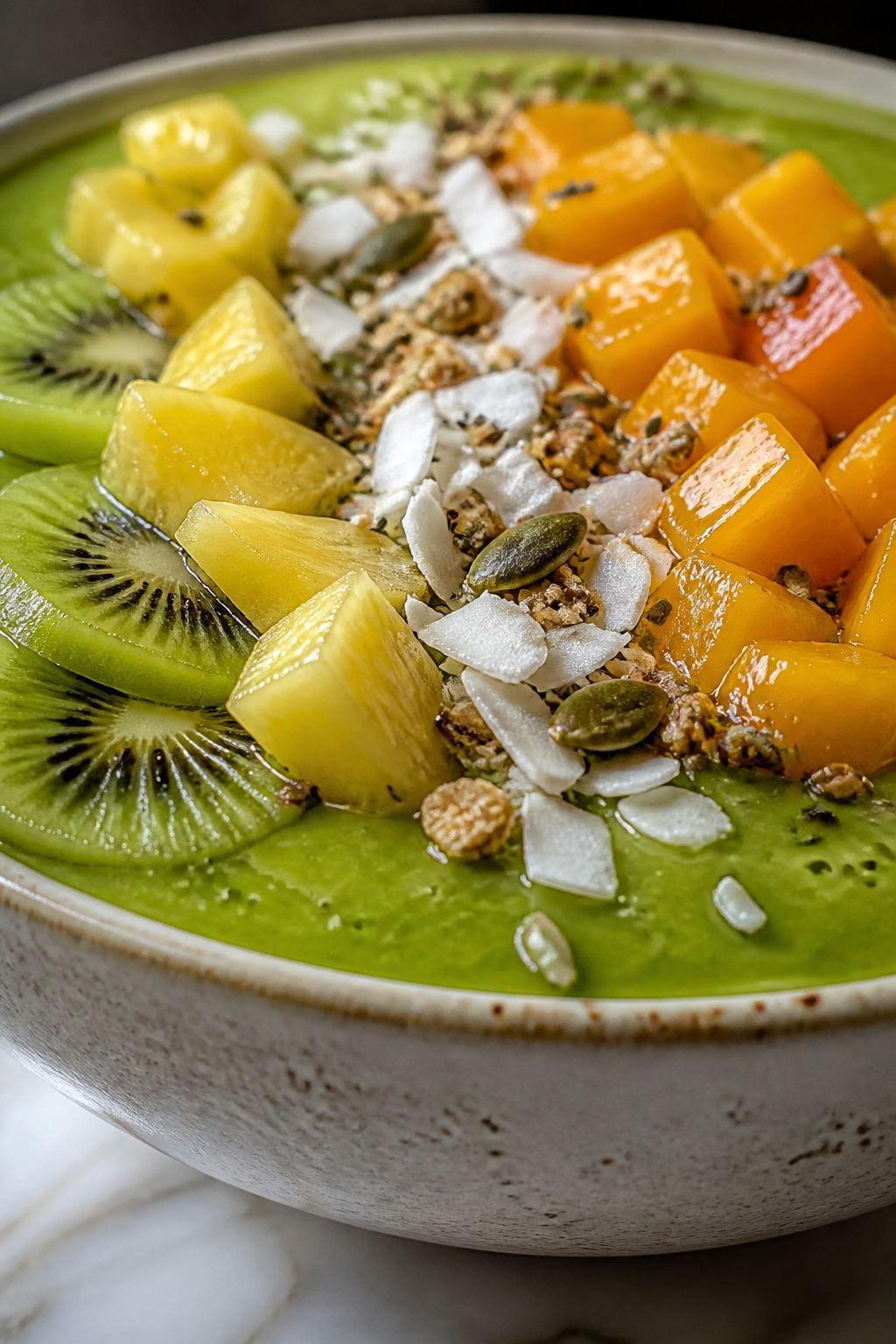
This green smoothie bowl mixes tropical fruits and fresh greens for a vibrant, low-calorie breakfast. The coconut water adds a subtle sweetness and keeps you hydrated. Great for a light, energizing morning start!
Introduction
I first tried making a green smoothie bowl a few years ago when I wanted a breakfast that felt light but still filling enough to keep me going until lunch. Since then, I've experimented a lot with different fruit and greens combos. This tropical green smoothie bowl is my favorite because it balances sweet and fresh flavors perfectly. The trick I learned was adding coconut water instead of plain water or juice—it gives a subtle sweetness and keeps everything super hydrating without extra calories. Plus, tossing in a bit of chia seeds adds a nice texture and boosts the nutrition. When you spoon it into a bowl and decorate with fresh fruit and granola, it feels like a little tropical getaway first thing in the morning. The result is smooth but thick enough to eat with a spoon, and the flavors are vibrant and refreshing. It’s my go-to when I want a breakfast that’s both nourishing and a little indulgent in a healthy way. I think you’ll love how easy and fun it is to make!
What You'll Need
Approximately 2 smoothie bowls
- 1 cup fresh spinach leaves, packed
- 1/2 cup frozen pineapple chunks
- 1/2 cup frozen mango chunks
- 1 small ripe banana
- 1/2 cup coconut water
- 1/4 cup plain Greek yogurt (optional for creaminess)
- 1 tablespoon chia seeds
- Toppings: sliced kiwi, shredded coconut, granola, fresh berries
How To Do It
Step 1
Add the fresh spinach leaves, frozen pineapple chunks, frozen mango chunks, and the ripe banana to a high-powered blender. Using frozen fruit helps create a thick, creamy texture without needing ice, which can water down the flavor. The spinach gives you that vibrant green color and adds nutrients without overpowering the sweetness. Blend on high until smooth and creamy, stopping to scrape down the sides if necessary to ensure everything is fully pureed.
⏱ Time: 3
✓ Doneness: Smooth mixture with no large fruit or spinach chunks visible, thick and creamy texture
Step 2
Pour in the coconut water and Greek yogurt (if using). Blend again until fully combined. The coconut water adds natural sweetness and electrolytes, while the yogurt makes the smoothie bowl silkier and adds protein. Be careful not to add too much liquid at once—you want a thick consistency that holds up under toppings, not a drinkable smoothie. If the mixture is too thick, add a little more coconut water, a tablespoon at a time.
⏱ Time: 2
✓ Doneness: Velvety texture that’s thick enough to hold toppings without sinking
Step 3
Add the chia seeds and pulse a few times just to mix them in without breaking them down completely. This keeps a bit of texture and helps the seeds absorb liquid slowly, thickening the bowl further as it sits. Chia seeds also add fiber and omega-3s, which boost the nutritional profile and keep you full longer.
⏱ Time: 1
✓ Doneness: Evenly distributed chia seeds throughout the smoothie base
Step 4
Spoon the smoothie mixture into bowls carefully. Use a spatula to get every last bit out of the blender. The thickness should allow the smoothie to sit nicely in the bowl without spreading too much, making it perfect for layering toppings.
⏱ Time: 2
✓ Doneness: Smoothie holds its shape in the bowl, not runny or watery
Step 5
Decorate the top of each bowl with sliced kiwi, shredded coconut, fresh berries, and granola. The toppings add contrasting textures and bursts of flavor, making each spoonful more exciting. Plus, they make the bowl look vibrant and inviting – which is half the fun of eating a smoothie bowl!
⏱ Time: 5
✓ Doneness: Evenly spread toppings that don’t sink into the smoothie base immediately
Step 6
Serve immediately for the best texture and freshness. If you let the bowl sit too long, the chia seeds will continue to absorb liquid, making the base even thicker and less smooth. Plus, fresh fruit toppings might release juices that could change the texture.
⏱ Time: 0
✓ Doneness: Fresh, vibrant colors and smooth texture when served
Step 7
If you want to prepare ahead, blend the smoothie base without the toppings and store it in the fridge for up to 24 hours. Stir well before serving and add fresh toppings just before eating. This keeps the bowl tasting fresh and looking colorful.
⏱ Time: 0
✓ Doneness: Smooth texture restored after stirring, toppings remain fresh when added later
Step 8
For a thicker bowl, you can freeze the banana and fruit chunks ahead of time. Using frozen fruit is key to getting that ice-cream-like texture without watering it down with ice cubes. Make sure your blender is powerful enough to handle frozen ingredients smoothly.
⏱ Time: 0
✓ Doneness: Thick, creamy texture achieved without grainy or icy bits
Step 9
Experiment with different greens like kale or swiss chard if you want a stronger green flavor, but start with small amounts as they can be bitter. Spinach is mild and blends seamlessly, which is why I prefer it for this recipe.
⏱ Time: 0
✓ Doneness: Smooth, balanced flavor without overpowering bitterness
Pro Tips
Use frozen fruit instead of fresh for a thicker, creamier smoothie bowl.
Frozen fruit helps create a thick, spoonable texture without diluting the flavor like adding ice would. It also chills the smoothie bowl, making it refreshing and satisfying. Using fresh fruit often requires ice, which waters down the taste and thins the texture.
Add coconut water gradually to control smoothie thickness.
Pouring in too much liquid at once can make the smoothie too runny, defeating the purpose of a bowl you eat with a spoon. Adding coconut water little by little allows you to achieve the perfect consistency—thick but scoopable.
Blend the greens thoroughly before adding liquids.
Blending spinach and other greens first ensures they break down completely, avoiding leafy chunks in the final bowl. This step also makes the smoothie visually vibrant and smooth, improving texture and flavor integration.
Include chia seeds for extra nutrition and natural thickening.
Chia seeds absorb liquid and swell, naturally thickening the smoothie bowl while adding fiber and omega-3s. This helps you feel full longer and improves digestion. However, too much chia or letting it sit too long can make the texture gummy.
Top with fresh fruit and crunchy granola just before serving.
Adding toppings right before eating keeps them fresh and crunchy, enhancing the textural contrast. If added too early, juicy fruits release moisture that can make the bowl soggy, and granola loses its crispness.
Use a high-powered blender for the smoothest texture.
Strong blenders break down frozen fruit and fibrous greens more thoroughly, giving you a creamy, lump-free smoothie bowl. Lower-powered blenders may leave chunks or a grainy texture, which can be less enjoyable.
Freeze banana slices ahead of time for extra creaminess.
Frozen banana acts like a natural thickener and sweetener, contributing to a luscious texture reminiscent of soft-serve ice cream. Fresh bananas won’t provide the same thickness and chill.
Common Mistakes to Avoid
Adding too much liquid at once.
Why it happens Many people pour the full amount of coconut water or juice at the start, thinking it will blend easier, but this often results in a thin, runny smoothie bowl rather than a thick one.
Fix Add liquids slowly while blending and check consistency frequently. Aim for a thick texture that holds toppings well. You can always add more liquid later if needed.
Using fresh fruit without ice or frozen fruit.
Why it happens Sometimes fresh fruit is used for convenience, but without ice or frozen fruit, the smoothie bowl ends up watery and less refreshing.
Fix Use frozen fruit or add a handful of ice cubes to keep the bowl thick and cold. Frozen fruit is preferable to avoid diluting the flavor.
Skipping the blending of greens first.
Why it happens People often add all ingredients at once, which can leave leafy chunks and uneven texture.
Fix Blend greens alone first until smooth, then add fruit and liquids. This ensures a smoother, more uniform bowl.
Adding toppings too early.
Why it happens Some prepare toppings ahead and add them to the bowl too soon, causing sogginess and loss of crunch.
Fix Add fresh toppings just before serving to maintain texture and appearance.
Overusing chia seeds.
Why it happens People sometimes add too many chia seeds, making the smoothie bowl overly gelatinous and gummy.
Fix Stick to about a tablespoon of chia seeds and consume the bowl soon after preparing to enjoy optimal texture.
Variations
Kale and Avocado Tropical Smoothie Bowl
Swap spinach for kale and add half an avocado for a richer, creamier texture with extra healthy fats. The kale adds a deeper green flavor and more fiber, while avocado smooths the mixture beautifully.
Note: Kale is tougher than spinach, so blend it longer to avoid fibrous bits. Avocado increases creaminess but also adds calories.
Berry-Pineapple Green Smoothie Bowl
Add a half cup of mixed berries like blueberries and raspberries for an antioxidant boost and a slight tartness that balances the tropical sweetness. The color contrast is beautiful too!
Note: Berries may thin the texture slightly, so reduce coconut water accordingly to maintain thickness.
Protein-Packed Tropical Smoothie Bowl
Boost protein by adding a scoop of your favorite unflavored or vanilla protein powder. This makes the bowl more filling and ideal for post-workout or busy mornings.
Note: Protein powder can affect texture, so blend thoroughly and adjust liquid to keep the right thickness.
Dairy-Free Coconut Yogurt Version
Swap Greek yogurt for coconut yogurt to keep this recipe vegan and dairy-free. Coconut yogurt adds a tropical flavor and creamy texture that complements the coconut water.
Note: Coconut yogurt is thinner than Greek yogurt, so reduce coconut water slightly to maintain thickness.
Spiced Tropical Green Smoothie Bowl
Add a pinch of ground ginger or cinnamon to introduce warm spice notes that contrast nicely with the sweet fruit. This variation feels cozy and unique.
Note: Start with a small amount of spice to avoid overpowering the fresh flavors; blend well for even distribution.
Nutrition
Per Serving:
Nutritional values are estimates and may vary based on specific ingredients used.
Storage & Tips
Room Temperature
This smoothie bowl is best enjoyed immediately and should not be kept at room temperature for more than 1 hour as the chia seeds will continue to absorb liquid and toppings may wilt or get soggy.
Refrigerator
Store the smoothie base (without toppings) in an airtight container in the fridge for up to 24 hours. Stir well before serving and add fresh toppings. The texture thickens but can be loosened with a splash of coconut water.
Freezer
You can freeze the smoothie base in a sealed container for up to 1 month. Thaw overnight in the fridge and blend again to restore creaminess before serving. Avoid freezing toppings.
Reheating
No reheating is needed or recommended for this smoothie bowl. If too thick after refrigeration, stir in a little coconut water to loosen the texture.
Make Ahead
Prepare the smoothie base 1 day ahead and keep refrigerated. Prepare toppings fresh on serving day for best texture and appearance.
FAQ
Can I use fresh fruit instead of frozen for this smoothie bowl?
You can, but the texture will be thinner and less creamy. To maintain thickness, add a handful of ice cubes or freeze the fruit ahead of time. Frozen fruit helps achieve that thick, spoonable consistency typical of smoothie bowls.
What can I substitute for coconut water if I don’t have any?
You can use plain water or a light fruit juice like apple or white grape juice, but this may change the flavor and add calories or sugar. Coconut water adds electrolytes and a subtle sweetness that’s hard to replicate exactly.
Is it okay to skip the chia seeds?
Yes, but chia seeds help thicken the bowl naturally and add nutrition like fiber and omega-3s. Without them, your bowl might be a bit thinner and less filling.
How long can I store the smoothie bowl after making it?
For best texture and freshness, eat it immediately. If storing, keep the base without toppings in the fridge up to 24 hours. Toppings should be added fresh before serving to avoid sogginess.
Can I make this recipe vegan?
Absolutely! Just omit the Greek yogurt or replace it with a plant-based yogurt like coconut or almond yogurt to keep it creamy and vegan-friendly.
What blender works best for smoothie bowls?
A high-powered blender is ideal for breaking down frozen fruit and greens smoothly, giving you a creamy, lump-free texture. Lower-powered blenders might leave chunks or graininess.
Can I add protein powder to this smoothie bowl?
Yes, adding a scoop of protein powder boosts protein content and makes the bowl more filling. Choose unflavored or vanilla varieties, and adjust the liquid to maintain thickness.
How can I make the smoothie bowl thicker?
Use frozen fruit, especially bananas, and add less liquid. You can also add more chia seeds but be careful not to add too many or the texture will become gummy.
Final Thoughts
I hope you give this tropical green smoothie bowl a try—it’s such a fresh and nourishing way to start your day! Let me know how yours turns out and what toppings you love the most.