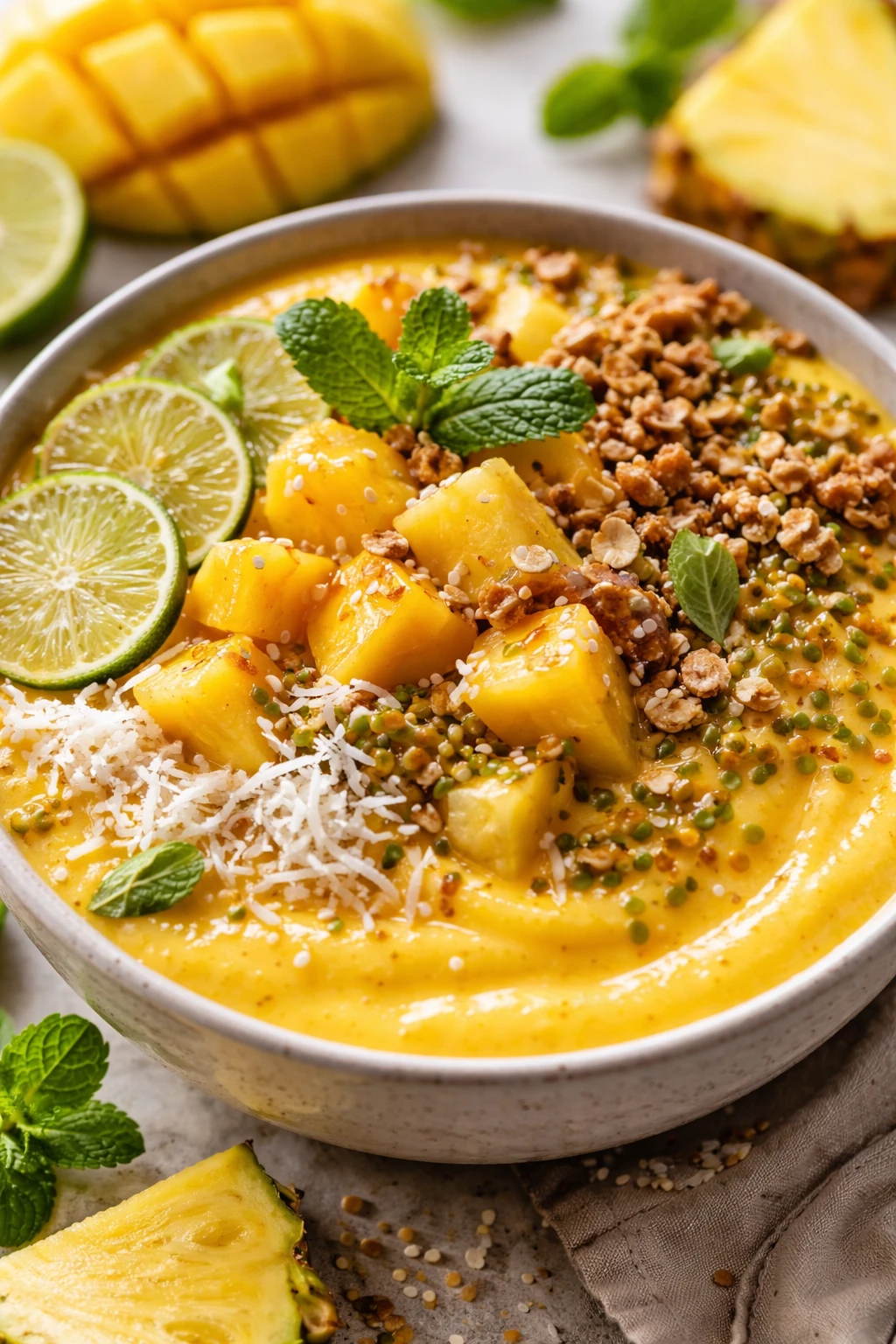
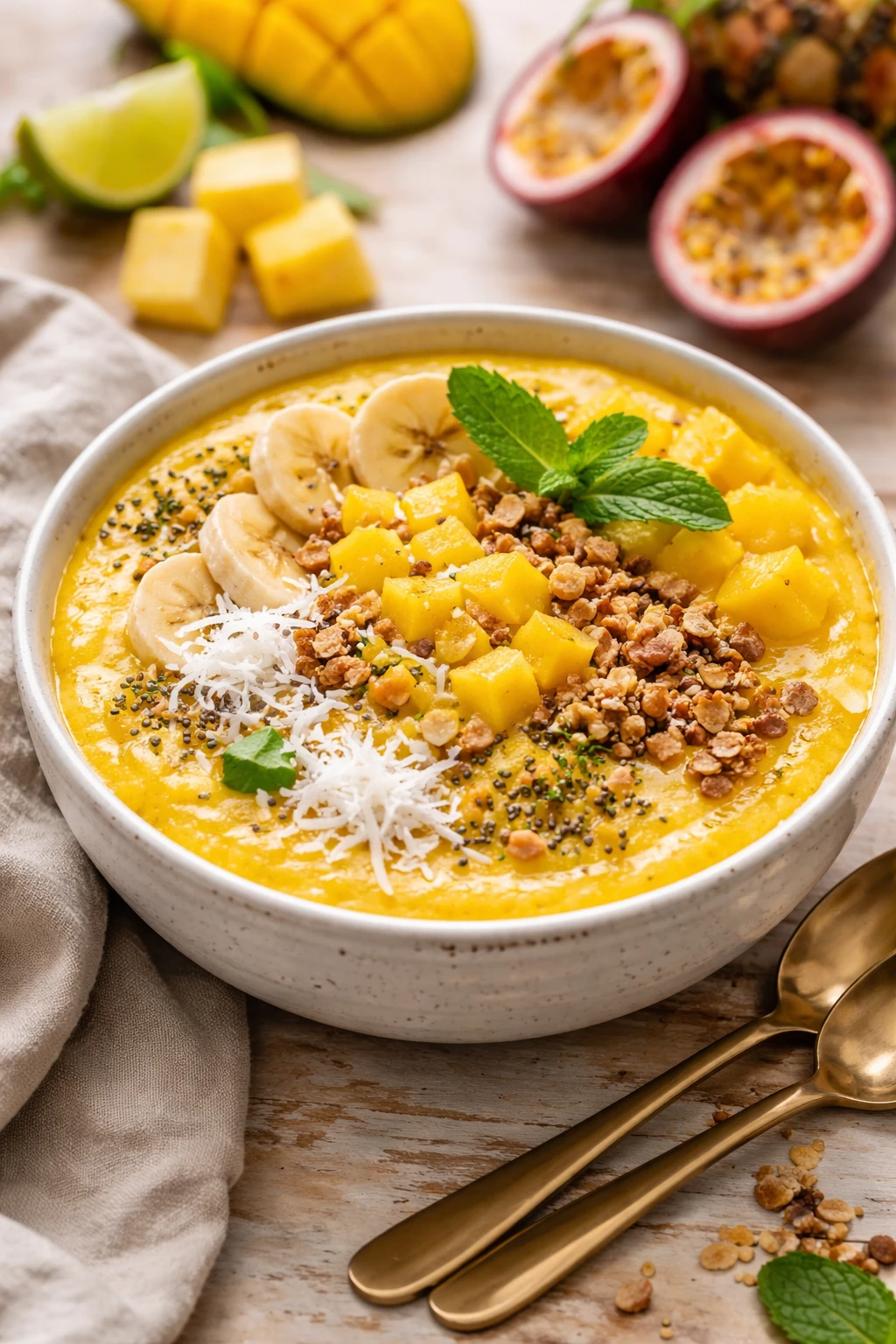
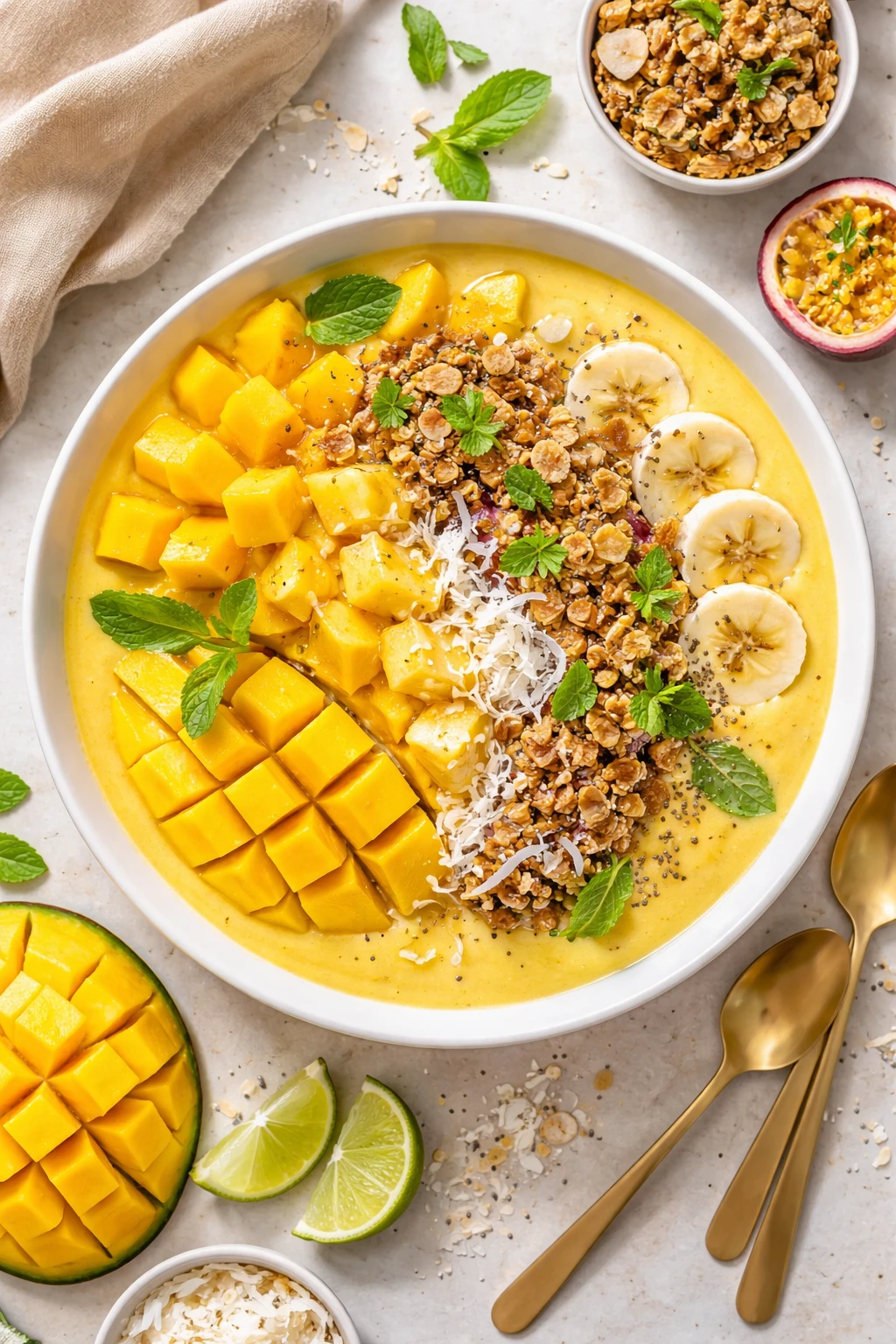
This tropical smoothie bowl is bursting with fresh mango and pineapple flavors, topped with crunchy coconut flakes for a delightful texture. It’s a refreshing way to start your day or enjoy a light snack when you want something bright and satisfying.
Introduction
I first stumbled upon smoothie bowls during a summer trip to Hawaii, and I immediately fell in love with their vibrant colors and refreshing flavors. Since then, I've been experimenting with different tropical fruits to recreate that island vibe at home. This mango pineapple smoothie bowl is my go-to because it’s bright, creamy, and just the right balance of sweet and tangy. What makes this version stand out is the addition of coconut milk and Greek yogurt, which gives it a luxuriously smooth texture without being overly heavy. Plus, topping it with shredded coconut flakes adds a delightful crunch that makes every bite interesting. I’ve tried making this bowl with just juice or water, but the coconut milk really elevates it, making it taste like a mini tropical escape. It’s perfect for those mornings when you want something light yet satisfying or as a quick afternoon pick-me-up. The colors alone make it worth the effort—golden mango, sunny pineapple, and snowy coconut flakes—it’s like eating a little sunshine. I love how easy it is to customize too. Whether you add chia seeds, fresh berries, or a sprinkle of granola, this bowl always feels fresh and fun. I’m excited for you to try it and make it your own!
What You'll Need
2 generous smoothie bowls
- 1 cup frozen mango chunks
- 1 cup frozen pineapple chunks
- 1/2 cup Greek yogurt, plain
- 1/4 cup coconut milk
- 1 tablespoon honey or maple syrup (optional)
- 2 tablespoons shredded coconut flakes
- Fresh fruit and seeds for topping (optional)
How To Do It
Step 1
Start by adding the frozen mango and pineapple chunks into your blender. Using frozen fruit is key here because it thickens the smoothie bowl without needing ice, which can water it down. Blend on high until the fruit breaks down into a chunky but smooth texture. You want it thick enough that it doesn’t run like a drink—think spoonable but creamy. If your blender struggles, pulse and scrape down the sides to ensure even blending.
⏱ Time: 2
✓ Doneness: Smoothie mixture is thick, creamy, and holds shape when scooped with a spoon.
Step 2
Add Greek yogurt and coconut milk to the blender. The Greek yogurt adds protein and creaminess, while the coconut milk brings subtle tropical flavor and richness. Blend again until fully combined. If the mixture is too thick, add a splash more coconut milk, but be careful not to make it too runny. This balance is what gives the bowl its luscious texture and satisfying mouthfeel.
⏱ Time: 1
✓ Doneness: Mixture is smooth, creamy, and thick enough to hold toppings without sinking.
Step 3
Taste your smoothie base and add honey or maple syrup if you want a touch more sweetness. Sometimes the frozen fruit is sweet enough, but a little drizzle can brighten it up. Blend briefly to mix the sweetener evenly. Remember, you can always add more, so start small to avoid over-sweetening.
⏱ Time: 1
✓ Doneness: Smoothie has balanced sweetness without overpowering the natural fruit flavors.
Step 4
Spoon the smoothie mixture into bowls. The thickness should allow you to create a nice surface for toppings without the smoothie sinking or spreading too thin. Use a spatula to smooth the surface if needed. This step is important because presentation counts, and a neat surface makes your toppings pop visually.
⏱ Time: 2
✓ Doneness: Smoothie base is evenly spread and thick enough to hold toppings in place.
Step 5
Sprinkle shredded coconut flakes generously over the top. The coconut adds a sweet, nutty crunch that contrasts beautifully with the creamy base. Don’t skimp here; the texture difference is what makes this bowl special. You can toast the coconut flakes lightly in a dry pan beforehand for extra flavor if you like.
⏱ Time: 2
✓ Doneness: Coconut flakes are evenly distributed and add visible texture contrast.
Step 6
Add any additional toppings you love—fresh fruit like sliced bananas or berries, chia seeds, or granola work wonderfully. These add texture, nutrients, and visual appeal. Be creative but keep in mind the balance of flavors and textures so the bowl doesn’t get too heavy or soggy.
⏱ Time: 3
✓ Doneness: Toppings are fresh, colorful, and balanced on the smoothie surface.
Step 7
Serve immediately for the best texture and freshness. Smoothie bowls are best enjoyed right away because the frozen fruit starts to thaw, and toppings can get soggy over time. If you need to wait, keep the bowl covered in the fridge but expect some texture changes.
⏱ Time: 0
✓ Doneness: Smoothie bowl is cold, fresh, and toppings remain crisp.
Step 8
If you want a thicker bowl, try adding a small frozen banana or a tablespoon of chia seeds soaked briefly before blending. These will thicken the mixture naturally and add a subtle sweetness and nutrition boost. Experiment to find your favorite thickness and taste.
⏱ Time: 0
✓ Doneness: Smoothie bowl thickness adjusted to personal preference.
Step 9
Clean your blender immediately after use to prevent fruit residue from sticking. Rinse with warm water and blend a bit of soapy water to easily remove any leftover pulp. This keeps your equipment in good shape and ready for your next tropical creation.
⏱ Time: 2
✓ Doneness: Blender is clean and free from sticky fruit residue.
Pro Tips
Use frozen fruit instead of ice for a thicker, creamier smoothie bowl.
Ice can water down your smoothie bowl, making it runny and less flavorful. Frozen fruit maintains the natural sweetness and fiber content while thickening the texture, giving you a satisfying spoonable consistency.
Add coconut milk slowly to control the thickness of your smoothie bowl.
Coconut milk adds richness and tropical flavor but too much can make the bowl runny. Adding it gradually while blending lets you achieve the perfect creamy texture without thinning the mixture.
Toast your coconut flakes before topping for extra flavor and crunch.
Toasting triggers the Maillard reaction, which develops nutty, caramelized notes in the coconut. This elevates the topping from just textural to deeply flavorful, making each bite more interesting.
Use a high-powered blender and pulse blend to avoid over-processing.
Pulsing allows you to control texture and avoid overheating, which can affect flavor and consistency. Over-blending can make the mixture too thin and lose that desirable thick, creamy bowl texture.
Add a splash of honey or maple syrup if your fruit isn’t sweet enough.
Sometimes frozen fruit can be slightly tart or bland depending on season and brand. A little natural sweetener balances flavors without overpowering the fresh fruit taste.
Serve immediately for the best texture and freshness.
Smoothie bowls start to melt and toppings can get soggy if left too long. Eating right away ensures a cold, refreshing bowl with crisp toppings and vibrant flavors.
Experiment with adding chia seeds or flaxseed for extra nutrition and thickness.
These seeds absorb liquid and thicken the bowl naturally while adding fiber and omega-3 fatty acids. They slightly change the texture, so add them gradually to find your favorite consistency.
Common Mistakes to Avoid
Using fresh fruit instead of frozen.
Why it happens Many people assume fresh fruit is better and don’t realize frozen fruit is essential for thickness.
Fix Freeze fresh fruit chunks for several hours or use store-bought frozen fruit to get the right texture. This prevents the smoothie bowl from being watery and runny.
Adding too much liquid at once.
Why it happens Rushing the liquid addition can thin the mixture beyond the desired thickness.
Fix Add coconut milk slowly while blending, stopping as soon as the mixture reaches a thick, spoonable consistency.
Over-blending the smoothie base.
Why it happens Trying to get perfectly smooth can make the bowl too thin and warm the ingredients.
Fix Pulse blend and scrape down the sides frequently to keep the mixture thick and cold.
Skipping the toppings or using soggy toppings.
Why it happens Some might underestimate how much texture matters in a smoothie bowl.
Fix Always add crunchy toppings like coconut flakes, nuts, or granola just before serving to maintain contrast.
Not serving immediately.
Why it happens People prepare smoothie bowls in advance for convenience but don’t realize texture changes quickly.
Fix Make the base ahead but add toppings and serve right away to enjoy the best flavor and texture.
Variations
Tropical Green Smoothie Bowl
Add a handful of fresh spinach or kale to the blender for a green boost without overpowering the tropical flavors. The greens add nutrients and a subtle earthiness that balances the sweetness.
Note: Blend the greens thoroughly with the frozen fruit to avoid leaf chunks. You may need a splash more coconut milk for smoothness.
Berry Mango Pineapple Bowl
Mix in frozen berries like strawberries or blueberries for a colorful twist and added antioxidants. This changes the flavor profile to a tangy-sweet mix with a deeper purple hue.
Note: Berries can add extra liquid, so adjust coconut milk accordingly to maintain thickness.
Vegan Smoothie Bowl
Use coconut yogurt or almond yogurt instead of Greek yogurt to keep it dairy-free. This keeps the bowl creamy but slightly lighter in texture and flavor.
Note: Plant-based yogurts vary in thickness, so pick a thick variety or reduce coconut milk to compensate.
Protein-Packed Smoothie Bowl
Add a scoop of vanilla or unflavored protein powder to the blend for an extra filling breakfast. This makes the bowl more substantial and perfect post-workout.
Note: Protein powder can thicken or dry out the mixture, so add a little extra coconut milk to balance texture.
Spiced Tropical Smoothie Bowl
Add a pinch of ground ginger or cinnamon to the blender for a warm spice note that complements the tropical fruits beautifully. This adds complexity and a cozy vibe.
Note: Use spices sparingly to avoid overpowering the fresh fruit flavors.
Nutrition
Per Serving:
Nutritional values are estimates and may vary based on specific ingredients used.
Storage & Tips
Room Temperature
Smoothie bowls should not be left at room temperature for more than 30 minutes as the fruit base will start to melt and lose texture. Cover loosely if you need to keep it briefly before serving.
Refrigerator
Store the smoothie base in an airtight container in the refrigerator for up to 24 hours. Toppings should be added fresh. The texture may thicken or separate slightly; stir gently before eating. Best served cold or at room temperature.
Freezer
You can freeze the smoothie base in a sealed container for up to 1 month. Thaw overnight in the fridge and stir well before serving. Fresh toppings should be added after thawing.
Reheating
Smoothie bowls are best served cold and are not suitable for reheating. If the texture is too thick after refrigeration, add a splash of coconut milk and stir to loosen before serving.
Make Ahead
Prepare and blend the smoothie base up to 1 day in advance, storing it in the fridge. Keep toppings separate and add just before serving to preserve texture and freshness.
FAQ
Can I use fresh mango and pineapple instead of frozen?
You can use fresh mango and pineapple, but to get the thick, creamy texture typical of smoothie bowls, you’ll need to freeze them first or add ice. Fresh fruit alone will make the bowl too runny and less satisfying to eat with a spoon.
What if I don’t have coconut milk? Can I substitute it?
You can substitute coconut milk with almond milk or any other plant-based milk, but the bowl may lose some of its tropical richness and creaminess. For best results, use a full-fat coconut milk or a creamy plant milk to maintain texture.
How do I make this smoothie bowl vegan?
Simply replace the Greek yogurt with a plant-based yogurt such as coconut or almond yogurt. Make sure to choose a thick variety to keep the creamy texture. Some plant yogurts are thinner, so you might need to adjust the amount of coconut milk accordingly.
Can I prepare this smoothie bowl the night before?
You can prepare the smoothie base the night before and store it in the fridge, but add the toppings fresh before serving. The texture might thicken or separate slightly overnight, so give it a good stir or add a splash of coconut milk to loosen.
Why is my smoothie bowl too runny?
This usually happens if there’s too much liquid added or if you used fresh fruit instead of frozen. To fix, blend less liquid, add more frozen fruit, or chill the bowl in the freezer for a few minutes before serving to firm it up.
What toppings work best with this tropical bowl?
Crunchy toppings like shredded coconut flakes, granola, nuts, or seeds contrast nicely with the creamy base. Fresh fruit slices like banana or berries add color and flavor. Toasted coconut flakes especially enhance the tropical vibe.
Can I add protein powder to this recipe?
Yes! Adding a scoop of protein powder is a great way to boost nutrition. Just be aware that protein powder can thicken or dry out the mixture, so you might need to add a bit more coconut milk to keep the right texture.
How thick should the smoothie bowl be?
The smoothie bowl should be thick enough to hold toppings without sinking or spreading too thin. Think of a texture like soft-serve ice cream—dense and creamy, spoonable but not liquid.
Final Thoughts
I hope you enjoy making and eating this tropical mango pineapple smoothie bowl as much as I do! Don’t forget to share your creations and any fun twists you try along the way.