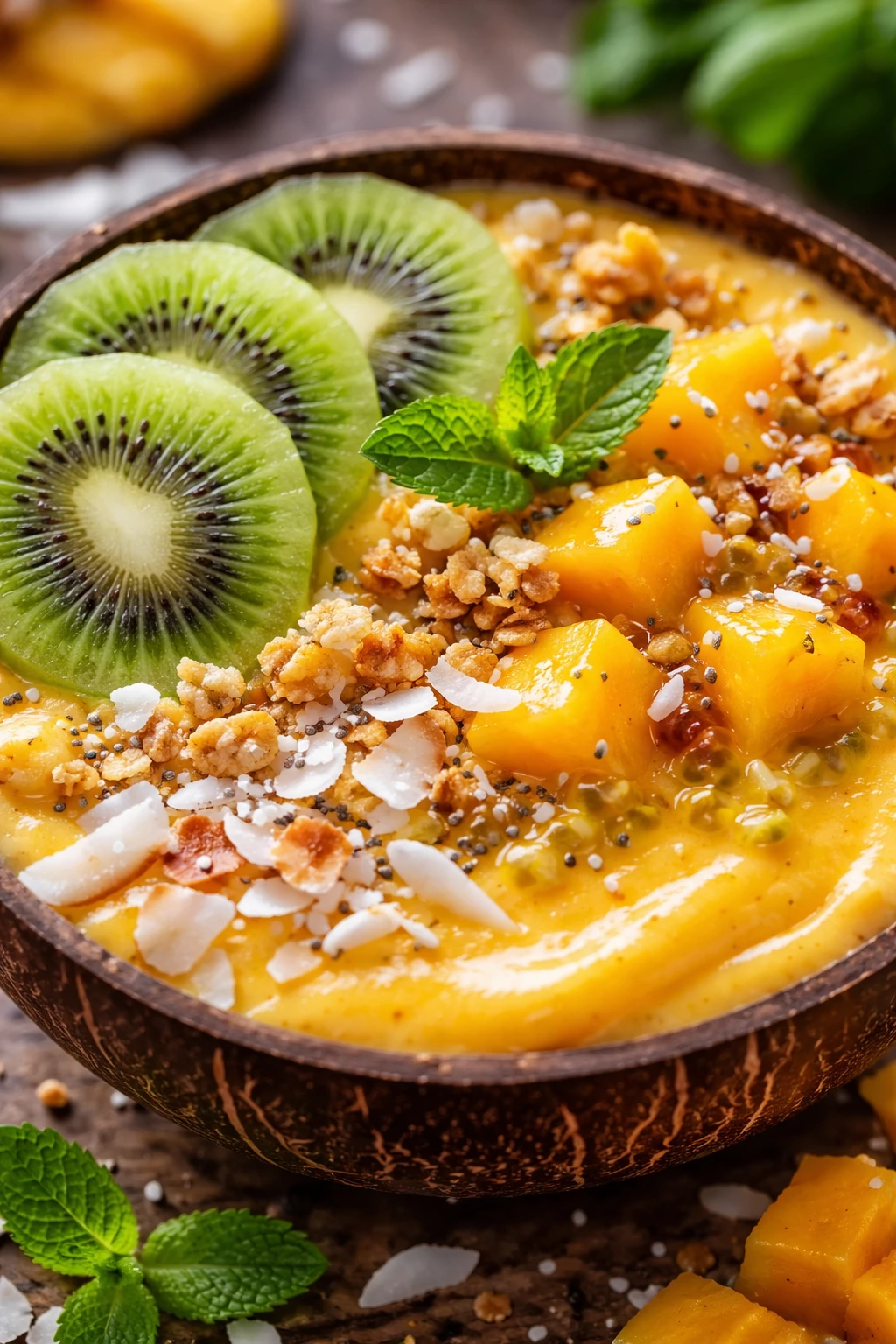
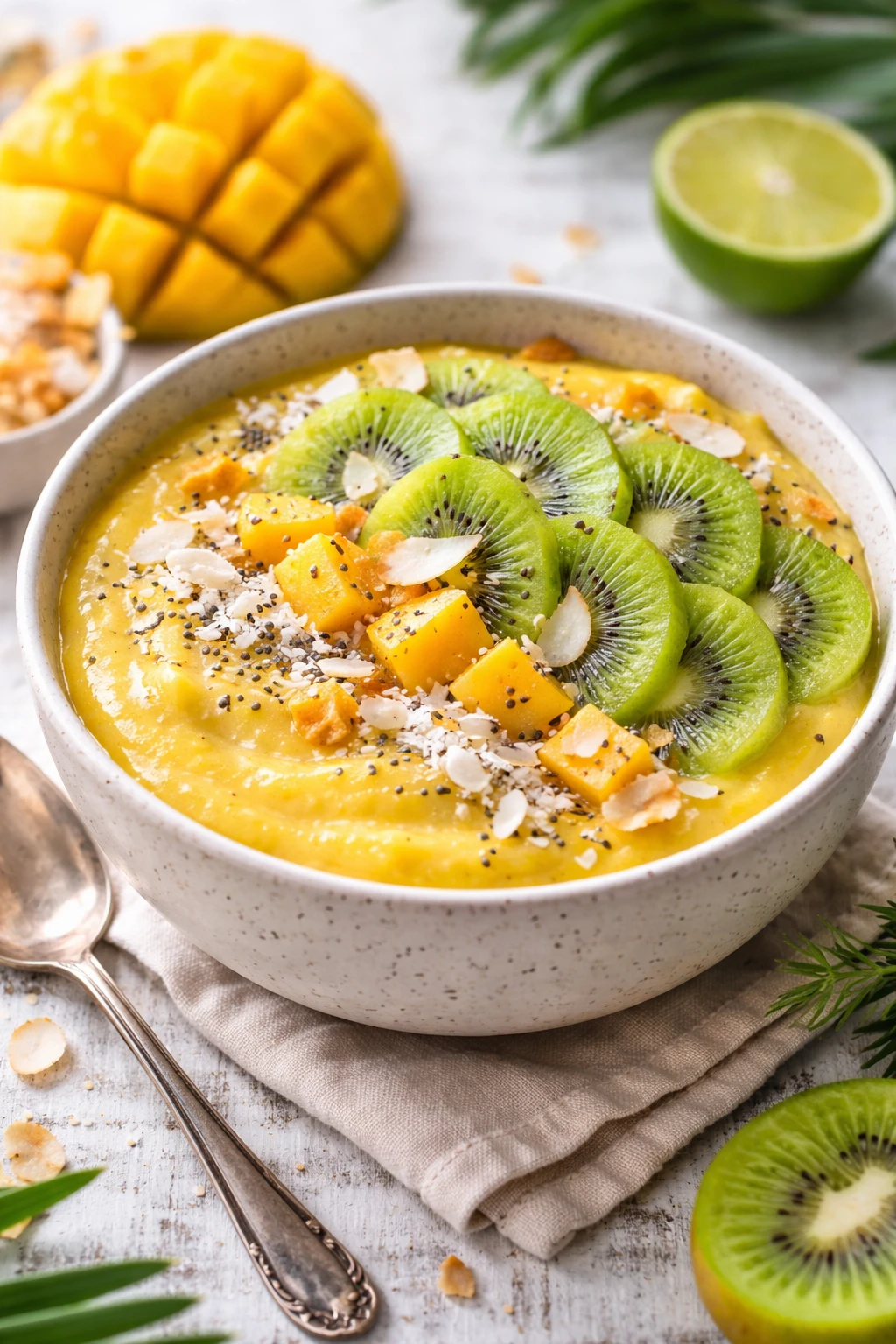
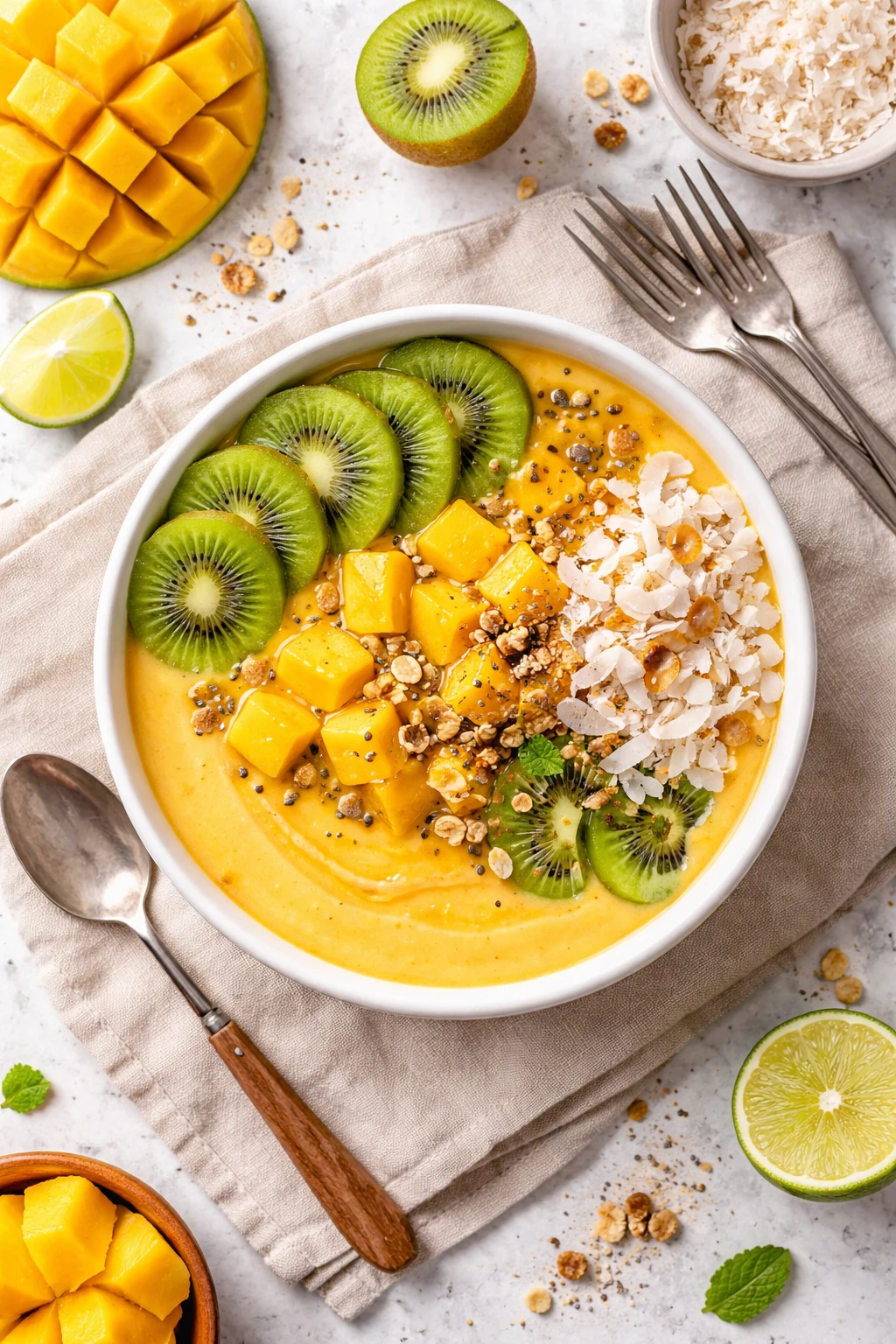
This mango smoothie bowl is like sunshine in a bowl! Creamy, tropical mango blends with crunchy coconut flakes and tangy kiwi for a refreshing start. Perfect for busy mornings or a light afternoon boost.
Introduction
I first tried this tropical mango smoothie bowl on a trip to a sunny beach town, and it instantly became my go-to for a fresh, energizing breakfast. It’s not your average smoothie bowl—the creamy mango base blends beautifully with coconut milk for a silky texture, while the crunchy coconut flakes and tangy kiwi slices add a fun contrast. I love how easy it is to whip up in under 10 minutes, making it perfect for rushed mornings or even a light afternoon snack. The trick I learned is to use frozen mango chunks straight from the freezer, which creates that thick, spoonable texture without needing ice. Plus, blending in a bit of Greek yogurt adds protein and creaminess without overpowering the tropical flavors. This bowl feels like a mini vacation in every bite, bright and refreshing with just enough sweetness. It's light but satisfying, so it keeps me going without feeling heavy. If you’re craving something healthy, colorful, and quick, this recipe is a winner every time. I’ve made it countless times, and it’s always a crowd-pleaser in my family, especially when we’re after something fresh and wholesome.
How To Do It
Step 1
Start by adding the frozen mango chunks, Greek yogurt, and coconut milk to your blender. Using frozen mango is key to getting that thick, creamy texture that feels indulgent but is still healthy. Blend on high until smooth, scraping down the sides if needed. Avoid adding too much coconut milk at once; you want a thick consistency that you can eat with a spoon, not a drinkable smoothie. If it's too thick, add a splash more coconut milk gradually.
⏱ Time: 3-4 minutes
✓ Doneness: Smooth, creamy texture with no large chunks; thick enough to hold shape in a bowl
Step 2
Taste the mango base and add honey or maple syrup if you want extra sweetness. Blend again briefly to combine. This step lets you adjust sweetness to your liking since mangoes can vary in natural sugar. Be careful not to oversweeten because the toppings add natural tartness and crunch that balance the flavors.
⏱ Time: 1 minute
✓ Doneness: Sweetness balanced but not overpowering; smooth and creamy base
Step 3
Pour the mango mixture into bowls, spreading evenly. This sets the stage for your toppings, so smooth it out nicely with the back of a spoon. Presentation matters here—make it inviting and colorful to boost that tropical vibe.
⏱ Time: 1 minute
✓ Doneness: Smooth surface with slight thickness, ready for toppings
Step 4
Slice the kiwi thinly and arrange over the smoothie base. The tangy, juicy kiwi adds a bright flavor contrast and a pop of green color. You can fan the slices or scatter them casually for a more natural look. Fresh kiwi is best here for that zingy freshness.
⏱ Time: 2 minutes
✓ Doneness: Evenly distributed kiwi slices with vibrant green color
Step 5
Sprinkle the coconut flakes over the top. Toasted coconut flakes add a lovely crunch and deepen the flavor with a hint of nuttiness. You can toast them lightly in a dry pan for a minute or two until golden and fragrant, but plain flakes work fine too. This step adds texture contrast, which is essential for a satisfying bowl.
⏱ Time: 2 minutes
✓ Doneness: Coconut flakes evenly scattered and slightly crisp
Step 6
Optional: sprinkle chia seeds over the bowl for an extra boost of fiber and omega-3s. They add a subtle crunch and a bit of nutritional punch without altering the flavor much. If you prefer, you can soak chia seeds in water beforehand to make them gelatinous, but dry seeds work well here.
⏱ Time: 1 minute
✓ Doneness: Chia seeds evenly sprinkled, adding visual interest
Step 7
Garnish with fresh mint leaves for a refreshing aroma and pretty presentation. Mint brightens the whole bowl and adds a lovely herbal note that pairs well with tropical fruits.
⏱ Time: 1 minute
✓ Doneness: Fresh mint leaves placed attractively on top
Step 8
Serve immediately to enjoy the fresh, vibrant flavors and textures. The smoothie base is best eaten right away before it starts to melt or separate. If you need to wait, cover loosely and refrigerate for up to an hour, but it tastes freshest freshly made.
⏱ Time: Immediate
✓ Doneness: Smoothie bowl fresh, cold, and vibrant in appearance
Step 9
If you want to prepare ahead, blend the mango base and store it in the fridge for up to 24 hours. Add toppings just before serving to keep them crisp and fresh. This way, you can save time on busy mornings but still enjoy a fresh bowl.
⏱ Time: Preparation step
✓ Doneness: Smooth base stored chilled without separation
Pro Tips
Use frozen mango chunks instead of fresh mango.
Frozen mango gives your smoothie bowl that thick, creamy texture without needing ice, which can water down the flavor. It also provides natural sweetness and keeps the bowl cold and refreshing.
Toast your coconut flakes lightly before adding.
Toasting coconut flakes brings out their natural oils and adds a deeper, nuttier flavor and crunch, elevating the texture and taste of the bowl significantly.
Add Greek yogurt for extra protein and creaminess.
Greek yogurt enriches the smoothie bowl with protein and a tangy flavor that balances the sweetness, while also thickening the texture for a satisfying mouthfeel.
Don’t overblend the smoothie base.
Overblending can warm the mixture and thin the texture. Blend just until smooth and creamy to keep the bowl cold and thick.
Add toppings just before serving.
Toppings like kiwi and coconut flakes stay fresh and crunchy only when added moments before eating. Adding them too early can cause sogginess.
Use ripe but firm kiwis for best texture.
Firm kiwis hold their shape better and provide a pleasant tartness that contrasts with the creamy mango base without becoming mushy.
Adjust sweetness after blending.
Mango sweetness can vary, so taste your smoothie base first and add honey or maple syrup as needed to avoid over-sweetening.
Common Mistakes to Avoid
Using fresh mango instead of frozen.
Why it happens People often assume fresh fruit is better, but fresh mango is too watery to create a thick smoothie bowl texture.
Fix Use frozen mango chunks to achieve the thick, creamy consistency necessary for a proper smoothie bowl. If you only have fresh mango, freeze it in chunks for a few hours before blending.
Adding too much coconut milk.
Why it happens To speed blending or loosen the mixture, cooks may pour in excess liquid, resulting in a runny smoothie bowl.
Fix Add coconut milk gradually and stop when the mixture is thick enough to eat with a spoon. You can always thin it slightly later if needed.
Skipping the yogurt or using flavored yogurt.
Why it happens Some skip yogurt to keep it dairy-free or use flavored yogurts for ease, which can add unwanted sugars.
Fix Use plain Greek yogurt to add creaminess and protein without extra sugars. For dairy-free, substitute with a plant-based yogurt but expect a different flavor and texture.
Adding toppings too early.
Why it happens In an effort to prep ahead, toppings are sometimes added hours before serving, leading to soggy, unappealing textures.
Fix Add crunchy toppings like coconut flakes and kiwi slices just before serving to maintain their texture and freshness.
Overblending the smoothie base.
Why it happens Trying to get an ultra-smooth texture, cooks blend too long, which warms the mixture and thins it out.
Fix Blend just until smooth and creamy. Stop as soon as the texture looks thick and uniform to keep the bowl cold and thick.
Variations
Berry Mango Smoothie Bowl
Add a handful of frozen mixed berries to the mango base for a vibrant twist. The berries add tartness and beautiful color, plus extra antioxidants. Top with fresh berries and granola for crunch.
Note: Blending berries with mango may thin the texture slightly; reduce coconut milk accordingly.
Dairy-Free Tropical Smoothie Bowl
Replace Greek yogurt with coconut or almond yogurt to make this bowl vegan and dairy-free. It will be a bit lighter but still creamy and delicious.
Note: Plant-based yogurts can be thinner, so use less coconut milk to maintain thickness.
Add Protein Boost Smoothie Bowl
Mix in a scoop of vanilla or unflavored protein powder to the base for a post-workout meal. It adds creaminess and keeps you fuller longer.
Note: Some protein powders thicken the mixture more; blend slowly to adjust texture.
Spiced Mango Smoothie Bowl
Add a pinch of ground ginger or cinnamon to the mango base for a warm spice note that complements the tropical fruit beautifully. Great for cooler mornings.
Note: Start with a small pinch and adjust to taste to avoid overpowering the fresh fruit flavors.
Green Mango Smoothie Bowl
Blend in a handful of spinach or kale for a green smoothie bowl packed with nutrients. The mild greens won’t overpower the mango but add vibrant color and health benefits.
Note: Add a little extra coconut milk if the greens make the mixture too thick.
Nutrition
Per Serving:
Nutritional values are estimates and may vary based on specific ingredients used.
Storage & Tips
Room Temperature
This smoothie bowl is best enjoyed immediately. If left at room temperature, it should not be kept longer than 1 hour to avoid spoilage and texture degradation. Cover loosely to protect from contaminants.
Refrigerator
Store the mango smoothie base in an airtight container in the fridge for up to 24 hours. Add fresh toppings just before serving since they may become soggy or lose texture when refrigerated together. The base may thicken when chilled; stir gently to loosen before eating.
Freezer
You can freeze the mango smoothie base for up to 2 months in a freezer-safe container. Thaw overnight in the fridge and stir well before serving. Avoid freezing toppings as they will lose texture and flavor.
Reheating
No reheating recommended. If the smoothie bowl is too thick after refrigeration, add a splash of coconut milk and stir to loosen. Serve cold for best flavor and texture.
Make Ahead
Prepare the mango smoothie base up to 24 hours in advance and store in the refrigerator. Keep toppings separate and add just before serving to ensure crispness and freshness.
FAQ
Can I use fresh mango instead of frozen?
Fresh mango can be used, but it won't give the thick, creamy texture typical of a smoothie bowl. To mimic the texture, freeze fresh mango chunks for a few hours before blending. This keeps the bowl thick and spoonable.
What can I substitute for Greek yogurt?
You can substitute Greek yogurt with plant-based yogurts like coconut or almond yogurt for a dairy-free version. Keep in mind these alternatives may be thinner and less tangy, so adjust the coconut milk quantity to maintain creaminess.
How do I prevent the smoothie bowl from being watery?
Avoid adding too much liquid like coconut milk or juice. Start with small amounts and blend until you reach a thick, spoonable consistency. Using frozen fruit instead of fresh helps keep the bowl thick.
Can I prepare this smoothie bowl the night before?
You can prepare the mango base the night before and store it in the refrigerator. However, add fresh toppings like kiwi and coconut flakes just before serving to keep them crisp and fresh.
How do I make this smoothie bowl sweeter if my mango isn't ripe?
Add a small amount of honey, maple syrup, or agave nectar to the smoothie base after blending. Blend again briefly to combine. Taste as you go to avoid over-sweetening.
What other toppings work well on this smoothie bowl?
Besides kiwi and coconut flakes, try fresh berries, sliced bananas, granola, chopped nuts, or chia seeds. These add texture, flavor, and nutritional benefits.
Can I add protein powder to this recipe?
Yes, adding a scoop of vanilla or unflavored protein powder blends well with the mango base and boosts protein content. Some powders may thicken the mixture, so add liquid as needed to maintain texture.
Is it possible to make this recipe vegan?
Absolutely! Use plant-based yogurt instead of Greek yogurt and maple syrup or agave instead of honey. This keeps the bowl vegan and still delicious.
Final Thoughts
I hope you give this tropical mango smoothie bowl a try—it’s such a bright and refreshing way to start your day! Don’t forget to share your creations and let me know your favorite toppings.