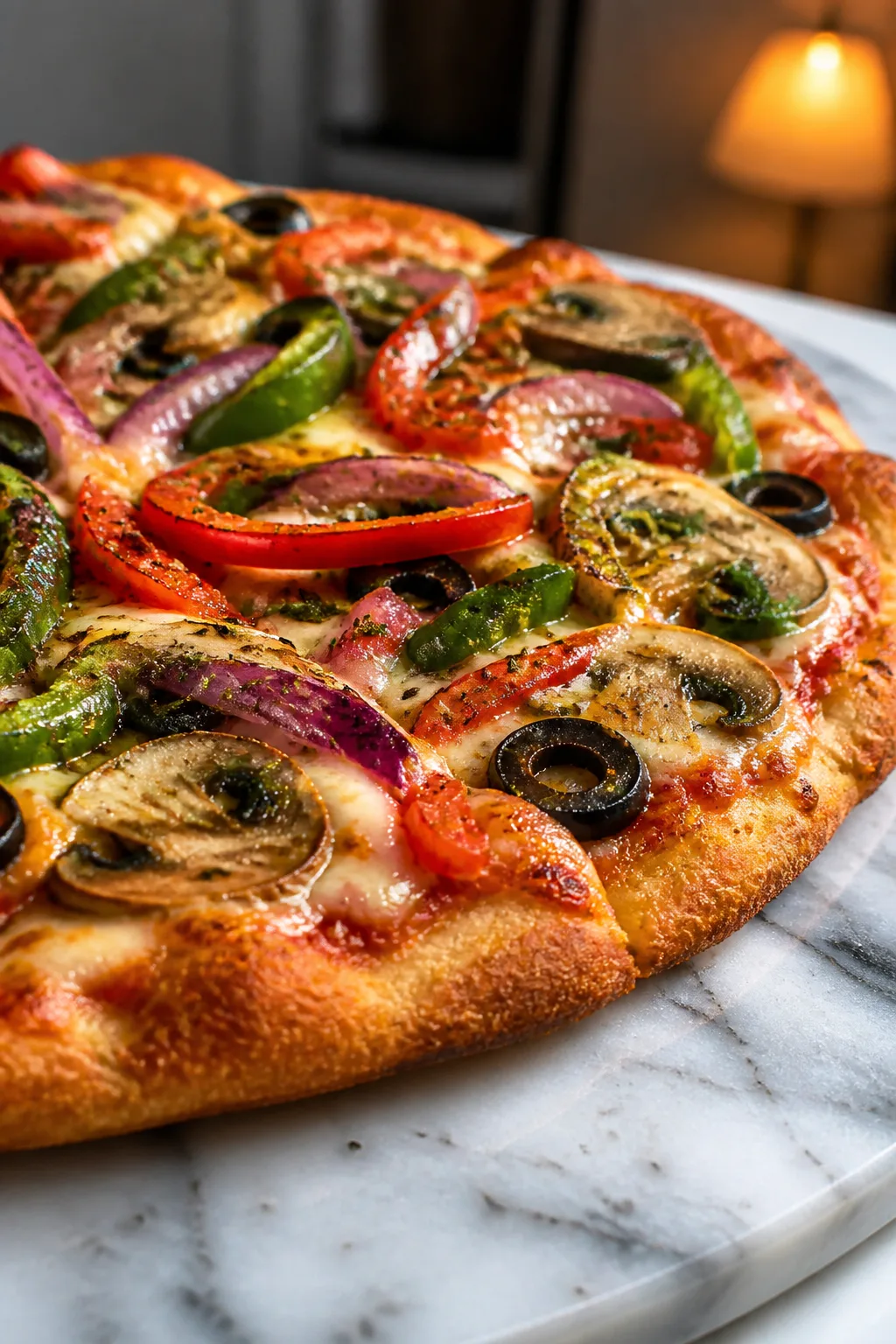
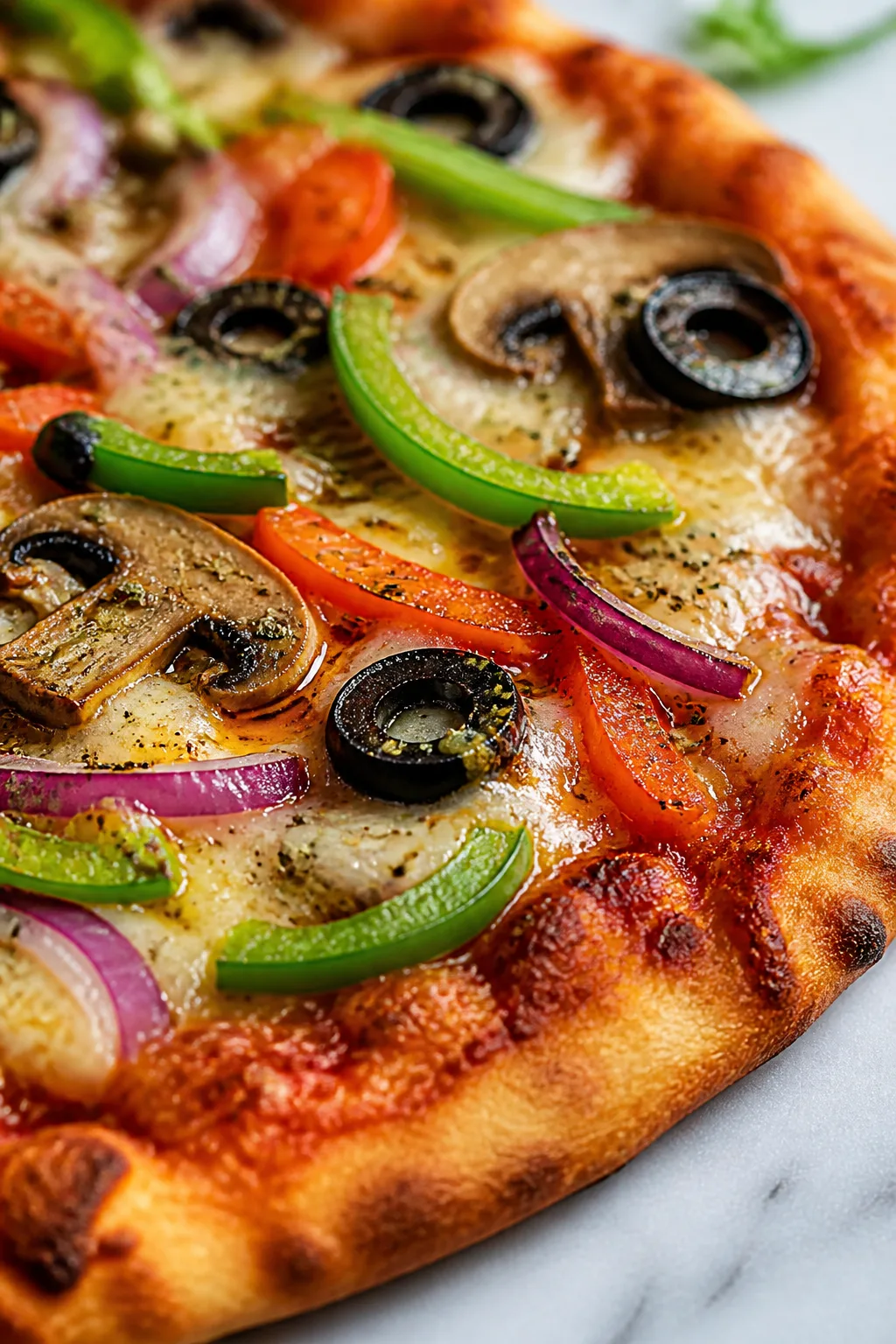
This veggie pizza is my favorite for a fresh, comforting meal. It’s loaded with colorful peppers, mushrooms, and gooey cheese on a homemade crust that’s crisp yet tender. Perfect for weekend dinners or casual get-togethers!
Introduction
I first made this veggie pizza years ago when craving something fresh but still cozy and satisfying at home. What really makes this recipe stand out is the homemade crust — it’s crisp on the outside but tender inside, which I think beats store-bought every time. I learned that letting the dough rise slowly gives it that perfect airy texture. Also, layering colorful peppers and mushrooms adds a fresh pop of flavor and texture, making each bite exciting. My family loves how the melty mozzarella ties everything together without overpowering the veggies. It’s become our go-to for casual dinners or weekend treats. Honestly, I’ve tried a few versions before, but this one just feels right — simple, fresh, and comforting. Plus, it’s a great way to use up veggies in the fridge. When it’s done, the crust has those golden brown spots, the cheese bubbles perfectly, and the veggies retain a little crunch. It’s a pizza that feels homemade and special, even on busy nights.
What You'll Need
One 12-inch pizza, serves 4
- 2 1/4 teaspoons active dry yeast
- 1 1/2 cups warm water (110°F/43°C)
- 3 1/2 cups all-purpose flour
- 2 tablespoons olive oil
- 1 teaspoon salt
- 1 teaspoon sugar
- 1/2 cup pizza sauce
- 1 cup sliced bell peppers (mixed colors)
- 1 cup sliced mushrooms
- 1 cup shredded mozzarella cheese
- 1/2 cup sliced red onion
- 1/4 cup black olives, sliced
- 1 teaspoon dried oregano
- Fresh basil leaves for garnish (optional)
How To Do It
Step 1
Start by activating your yeast: combine the active dry yeast with warm water (around 110°F) and a pinch of sugar. Stir gently and let it sit for about 5 to 10 minutes until it becomes foamy. This step proves your yeast is alive and ready to work, which is key for a good rise. If it doesn’t foam, your yeast might be old or the water too hot or cold, so start over to avoid dense dough.
⏱ Time: 10 minutes
✓ Doneness: Foamy, bubbly surface on the water and yeast mixture
Step 2
In a large mixing bowl, combine the flour and salt. Add the activated yeast mixture and olive oil. Stir until the dough starts to come together, then knead by hand or with a stand mixer fitted with a dough hook for about 8 to 10 minutes until the dough is smooth and elastic. Kneading develops gluten, which gives the crust its chewy texture and structure. Avoid rushing this or the dough may be tough or crumbly.
⏱ Time: 10 minutes
✓ Doneness: Smooth, slightly tacky dough that springs back when poked
Step 3
Lightly oil a large bowl and place the dough inside, turning it once to coat. Cover with a clean kitchen towel or plastic wrap and let it rise in a warm spot for about 1 to 1.5 hours, or until doubled in size. This slow rise helps develop flavor and creates a light, airy crust. Don’t skip this or your pizza will be dense.
⏱ Time: 1 hour 30 minutes
✓ Doneness: Dough has visibly doubled and feels soft and pillowy
Step 4
Preheat your oven to 475°F (245°C) and place a pizza stone or baking sheet inside to heat. Meanwhile, punch down the dough gently to release air bubbles, then roll it out on a floured surface to about 12 inches in diameter. A hot oven and preheated stone help create a crispy crust by quickly setting the dough’s structure.
⏱ Time: 15 minutes
✓ Doneness: Dough is rolled evenly, slightly springy, and easy to transfer
Step 5
Transfer the rolled dough onto a piece of parchment paper for easy handling. Spread the pizza sauce evenly over the surface, leaving a small border around the edges. Using parchment prevents sticking and makes sliding the pizza onto the stone effortless.
⏱ Time: 5 minutes
✓ Doneness: Sauce is evenly spread without pooling or dripping
Step 6
Scatter the sliced bell peppers, mushrooms, red onion, and olives evenly over the sauce. Don’t overload the pizza or the crust might get soggy. A balanced topping layer ensures everything cooks evenly and the crust stays crisp.
⏱ Time: 5 minutes
✓ Doneness: Toppings are evenly distributed and not piled too thick
Step 7
Sprinkle the shredded mozzarella cheese generously over the veggies, then add a pinch of dried oregano. The cheese melts into a creamy layer that holds the toppings together, while oregano adds an herby aroma that complements the veggies.
⏱ Time: 3 minutes
✓ Doneness: Cheese covers toppings evenly and looks fresh
Step 8
Carefully slide the pizza (with parchment) onto the preheated stone or baking sheet in the oven. Bake for 12 to 15 minutes until the crust is golden and crispy, and the cheese is bubbling and starting to brown. Keep an eye to avoid burning—oven temps vary.
⏱ Time: 12-15 minutes
✓ Doneness: Crust is golden brown with bubbly, slightly browned cheese
Step 9
Remove the pizza from the oven and let it cool for a couple of minutes. Garnish with fresh basil leaves if you like, then slice and serve. Resting allows the cheese to set slightly, making it easier to cut and eat without sliding toppings.
⏱ Time: 5 minutes
✓ Doneness: Pizza is warm but not scorching, basil adds fresh color
Pro Tips
Let your dough rise in a warm, draft-free spot.
Yeast thrives in warm environments, so placing dough where it’s cozy encourages proper fermentation and rising. Too cold, and it won’t rise well; too hot, and yeast can die. This affects texture and flavor deeply.
Use a pizza stone or steel for baking.
These surfaces retain and radiate heat evenly, mimicking a professional oven and producing a crisp, golden crust quickly. Baking on a regular sheet pan won’t give the same bottom crunch.
Don’t overload the pizza with toppings.
Too many toppings weigh down the dough and release excess moisture, leading to sogginess. Balanced toppings ensure even cooking and a crispy crust.
Preheat your oven fully before baking.
A hot oven is essential for setting the crust quickly and melting cheese properly. Starting cold leads to chewy, undercooked dough.
Roll dough evenly to avoid thick or thin spots.
Uneven dough cooks inconsistently—thick parts stay doughy, thin parts burn. Even rolling ensures uniform baking and texture.
Use parchment paper to transfer pizza to oven.
It prevents sticking and makes sliding the pizza onto a stone or pan effortless, reducing the risk of misshaping the crust.
Let the pizza rest briefly after baking.
Resting lets cheese set a bit, making slicing neater and preventing toppings from sliding off.
Common Mistakes to Avoid
Using water that’s too hot or cold for yeast activation.
Why it happens Many assume any warm water works, but yeast is sensitive; too hot kills it, too cold won’t activate it properly.
Fix Use a thermometer to check water temperature (ideal 105-110°F). If no thermometer, test water on wrist—it should feel warm but not hot.
Skipping the dough rising time.
Why it happens Impatience or rushed schedules lead cooks to skip or shorten rising, not realizing its impact.
Fix Plan ahead to allow full rise (1-1.5 hours). This develops flavor and texture. Use a warm spot to speed if needed.
Overloading pizza with too many toppings.
Why it happens Excited to add lots of veggies or cheese, people pile them on.
Fix Distribute toppings thinly and evenly. Less is more to keep crust crisp and toppings cooked.
Not preheating the oven and pizza stone.
Why it happens Rushing to bake without waiting for oven to reach temp.
Fix Preheat oven and stone at least 30 minutes to 475°F. This ensures proper crust bake and cheese melt.
Rolling dough unevenly.
Why it happens Inexperience or haste causes uneven thickness.
Fix Roll slowly and rotate dough as you go. Aim for consistent thickness to ensure even baking.
Variations
Spicy Veggie Pizza
Add sliced jalapeños and a sprinkle of red pepper flakes to the veggie mix for a spicy kick. Swap mozzarella for pepper jack cheese for extra heat. Expect a bolder, zestier flavor with the same crisp crust.
Note: Spicy ingredients won’t affect baking time but watch cheese melt carefully to avoid burning.
Vegan Veggie Pizza
Replace mozzarella with vegan cheese or cashew-based cheese sauce. Use olive oil and your favorite veggies as toppings. This keeps the pizza fresh and satisfying without dairy.
Note: Vegan cheeses melt differently; monitor baking to avoid over-browning or under-melting.
Whole Wheat Crust Veggie Pizza
Swap half or all-purpose flour for whole wheat flour for a nuttier flavor and more fiber. Dough will be denser but still tasty and wholesome with the same toppings.
Note: Whole wheat dough may need slightly more water and a bit longer kneading for elasticity.
Pesto Veggie Pizza
Use pesto instead of tomato sauce for a fresh herbal twist. Top with mozzarella, artichokes, and sun-dried tomatoes. This variation offers a vibrant, savory flavor profile.
Note: Pesto is oil-based, so use sparingly to avoid soggy crust.
Gluten-Free Veggie Pizza
Use a gluten-free flour blend formulated for pizza dough. The texture will be different—more crumbly—but still enjoyable with the classic veggie toppings and cheese.
Note: Gluten-free dough requires careful mixing and sometimes xanthan gum for structure; bake slightly longer at moderate temperature.
Nutrition
Per Serving:
Nutritional values are estimates and may vary based on specific ingredients used.
Storage & Tips
Room Temperature
You can safely keep leftover pizza at room temperature for up to 2 hours. Cover it loosely with foil or a clean kitchen towel to prevent drying out. Beyond 2 hours, refrigerate to avoid bacterial growth.
Refrigerator
Store pizza in an airtight container or wrapped tightly in plastic wrap for up to 3 days. The crust may lose some crispness but reheating in the oven restores texture nicely. Cold pizza is also delicious for a quick snack.
Freezer
Wrap pizza slices tightly in plastic wrap and then foil to prevent freezer burn. Freeze for up to 2 months. To thaw, place in the refrigerator overnight before reheating to maintain texture.
Reheating
Reheat pizza in a preheated oven at 375°F for 8-10 minutes to restore crispness. Avoid microwaving as it makes the crust soggy. You can add a splash of water on a pan and cover to steam cheese gently if needed.
Make Ahead
Prepare the dough and let it rise 1 day ahead, then refrigerate. Roll out and add toppings on the day of baking for freshest results. You can also assemble the pizza in advance and refrigerate for a few hours before baking.
FAQ
Can I use instant yeast instead of active dry yeast?
Yes! Instant yeast can be used but it doesn’t need to be activated in warm water first. You can mix it directly with the flour and other dry ingredients, then add water and oil. The rising time may be slightly shorter, so keep an eye on the dough doubling in size.
What if my dough is too sticky to roll out?
If your dough sticks, sprinkle a little flour on your work surface and on the dough as you roll. Avoid adding too much flour, which can make the crust tough. You can also chill the dough for 15-20 minutes to make it easier to handle.
Can I make this pizza without a pizza stone?
Absolutely. Use a heavy baking sheet or cast iron pan preheated in the oven. The crust won’t get quite as crispy but will still bake well. Just be sure to preheat the pan so the dough starts cooking immediately.
How do I prevent soggy crust from the veggies?
Use fresh, firm veggies sliced thinly and avoid piling them on thick. Preheating the oven and stone helps crisp the crust quickly, sealing moisture inside. You can also pat veggies dry if they seem watery before adding.
Can I prepare the dough ahead of time?
Yes! After kneading, let the dough rise, then punch down and refrigerate it in an airtight container for up to 24 hours. Bring it to room temperature before rolling out. This slow fermentation improves flavor and makes prep easier on baking day.
What’s the best way to store leftover pizza?
Wrap slices tightly in plastic wrap or place in airtight containers and refrigerate up to 3 days. Reheat in the oven for best texture. For longer storage, freeze wrapped slices up to 2 months.
Can I add other veggies or toppings?
Definitely! Feel free to swap or add your favorites like spinach, zucchini, or cherry tomatoes. Just keep toppings balanced to avoid soggy crust and uneven cooking.
How thick should I roll the dough?
Aim for about 1/4 inch thickness. Too thin and the crust may burn or become too crispy; too thick and it can be doughy and undercooked in the center.
Why is my crust sometimes chewy and sometimes tough?
Chewiness comes from proper gluten development and hydration. Over-kneading or adding too much flour can make it tough. Under-kneading results in dense dough. Follow kneading times and measure ingredients carefully.
Can I use pre-shredded cheese?
You can, but pre-shredded cheese often contains anti-caking agents that affect melting. Freshly shredded cheese melts smoother and gives better texture.
Final Thoughts
Give this veggie pizza a try—you’ll love how fresh and comforting it feels. Share your creations and let me know how it turns out!