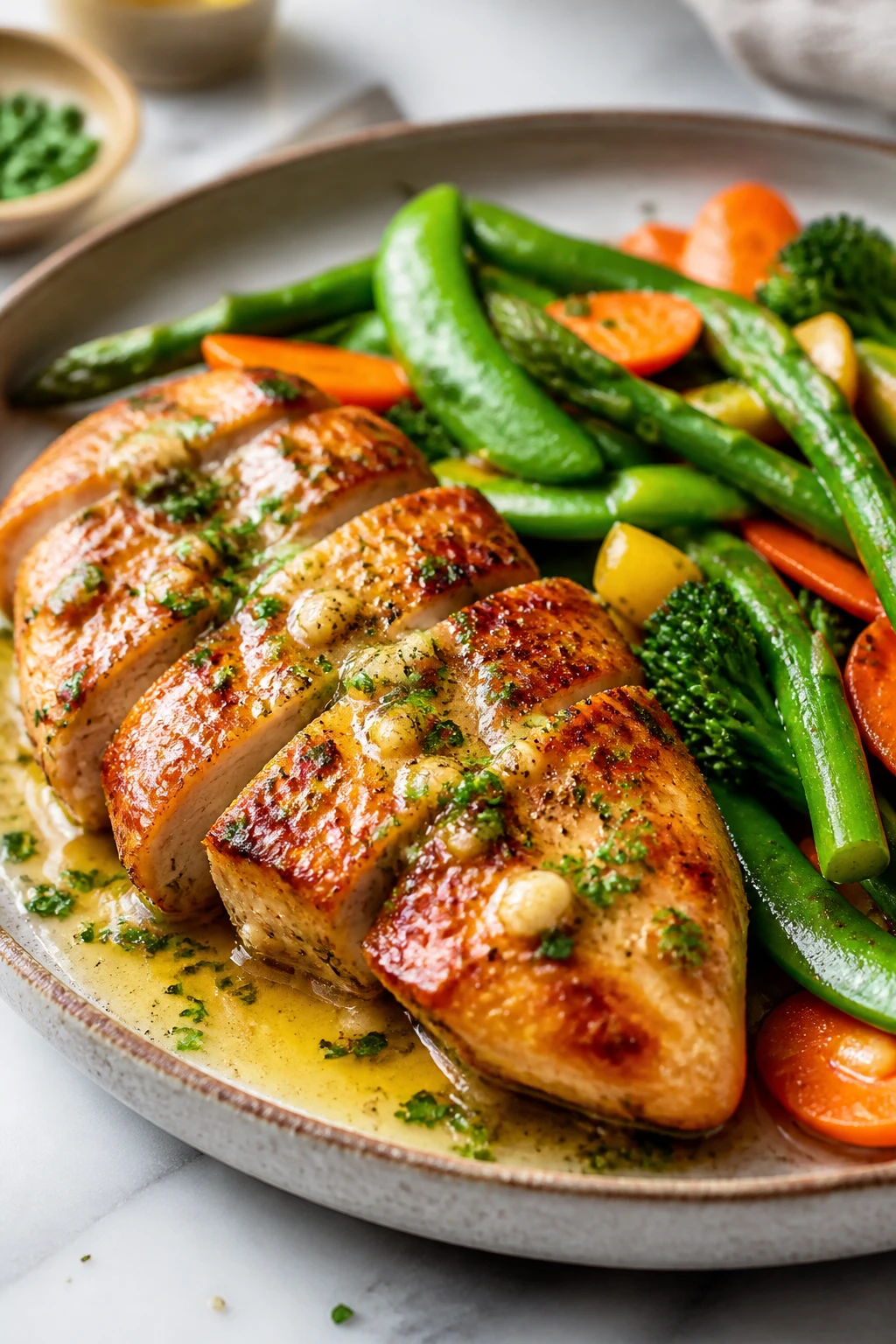
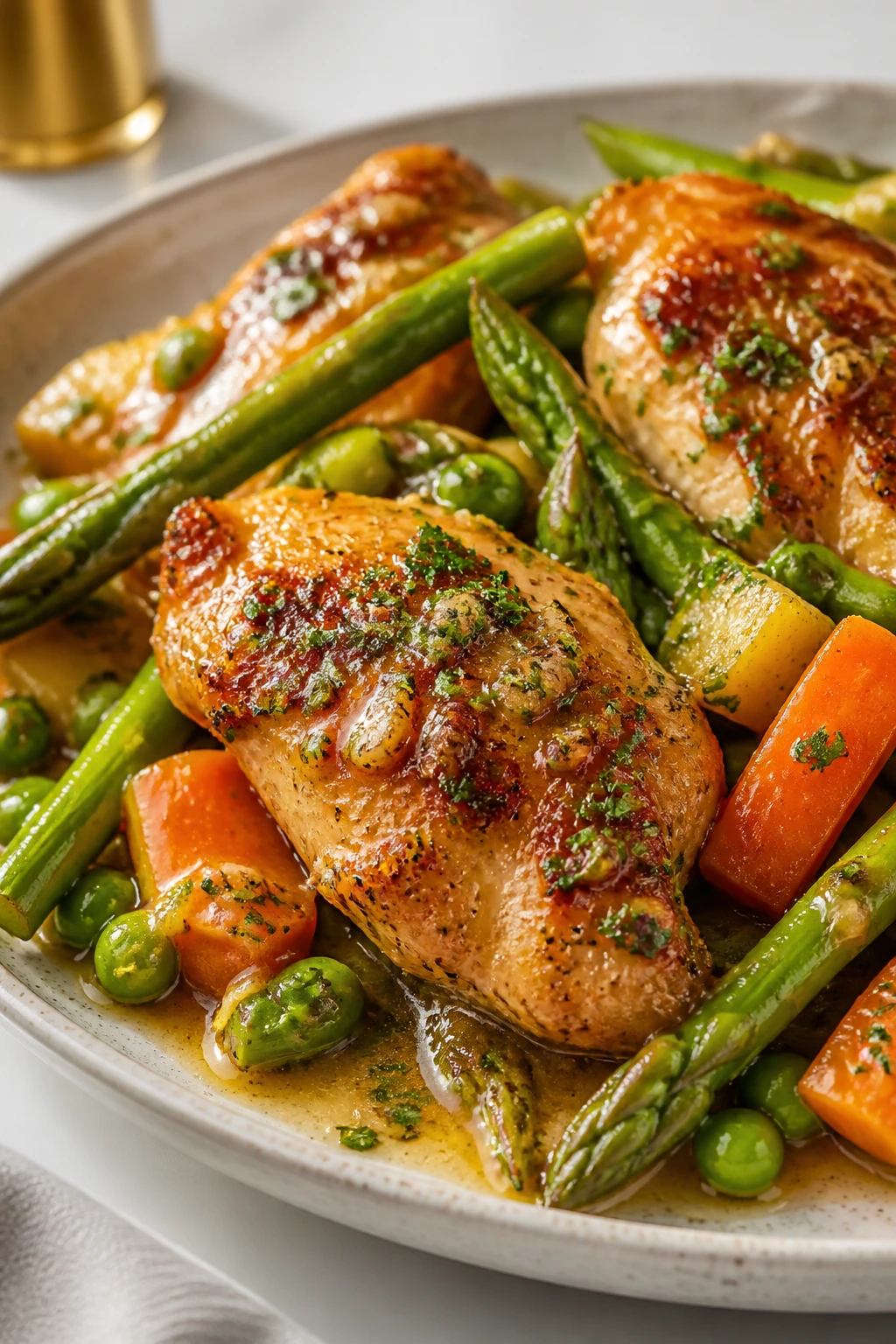
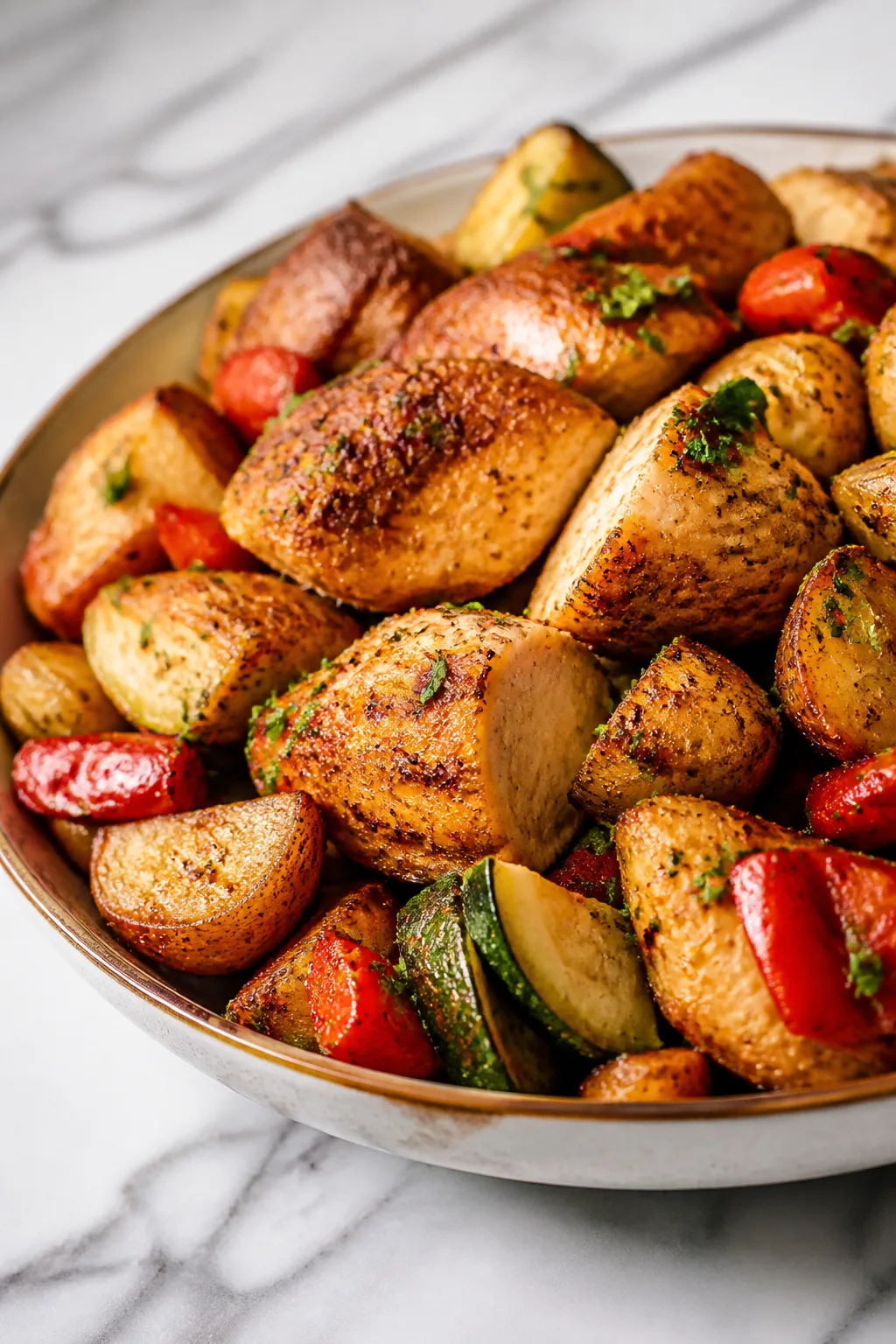
This garlic butter chicken comes together in just 15 minutes, making weeknight dinners a breeze. Tossed with crisp spring veggies, it’s light yet satisfying—perfect when you want something fresh and flavorful without the fuss.
Introduction
I first stumbled upon this quick garlic butter chicken recipe on a chaotic weeknight when I needed dinner on the table fast. I wanted something fresh but also comforting, and this hit the spot perfectly. What makes it stand out is the buttery garlic sauce paired with crisp spring veggies like snap peas and asparagus—such a bright combo that feels like a celebration on a plate. I learned that cooking the chicken in butter instead of oil gives it a richer flavor and a lovely golden crust, while adding the veggies at the end keeps them tender-crisp and vibrant. Over time, I tweaked the lemon juice amount to balance the richness, and now it’s become a family favorite for busy nights when I want a dish that’s quick, colorful, and satisfying. The finished meal is juicy chicken coated in garlicky butter with veggies that still have that fresh snap, making it feel special but without any fuss.
How To Do It
Step 1
Start by prepping all your ingredients: cut the chicken into bite-sized pieces and trim the veggies. This prep is key because once you start cooking, things move quickly. If you rush this step, you might end up overcooking the chicken or steaming the veggies instead of sautéing them properly. Having everything ready lets you focus on cooking the chicken evenly and getting that nice golden color on each piece, which locks in flavor and moisture.
⏱ Time: 10 minutes
✓ Doneness: Chicken pieces are no longer pink and have a golden-brown crust on the outside
Step 2
Heat the butter and olive oil over medium heat in a large skillet until melted and shimmering. Add the minced garlic and cook until fragrant—about 30 seconds to 1 minute. It’s important not to burn the garlic here because burnt garlic turns bitter and ruins the sauce. This gentle cooking releases the garlic’s flavor into the butter, creating that rich, aromatic base for the chicken.
⏱ Time: 2 minutes
✓ Doneness: Garlic is soft and golden but not browned or burnt; butter is foaming
Step 3
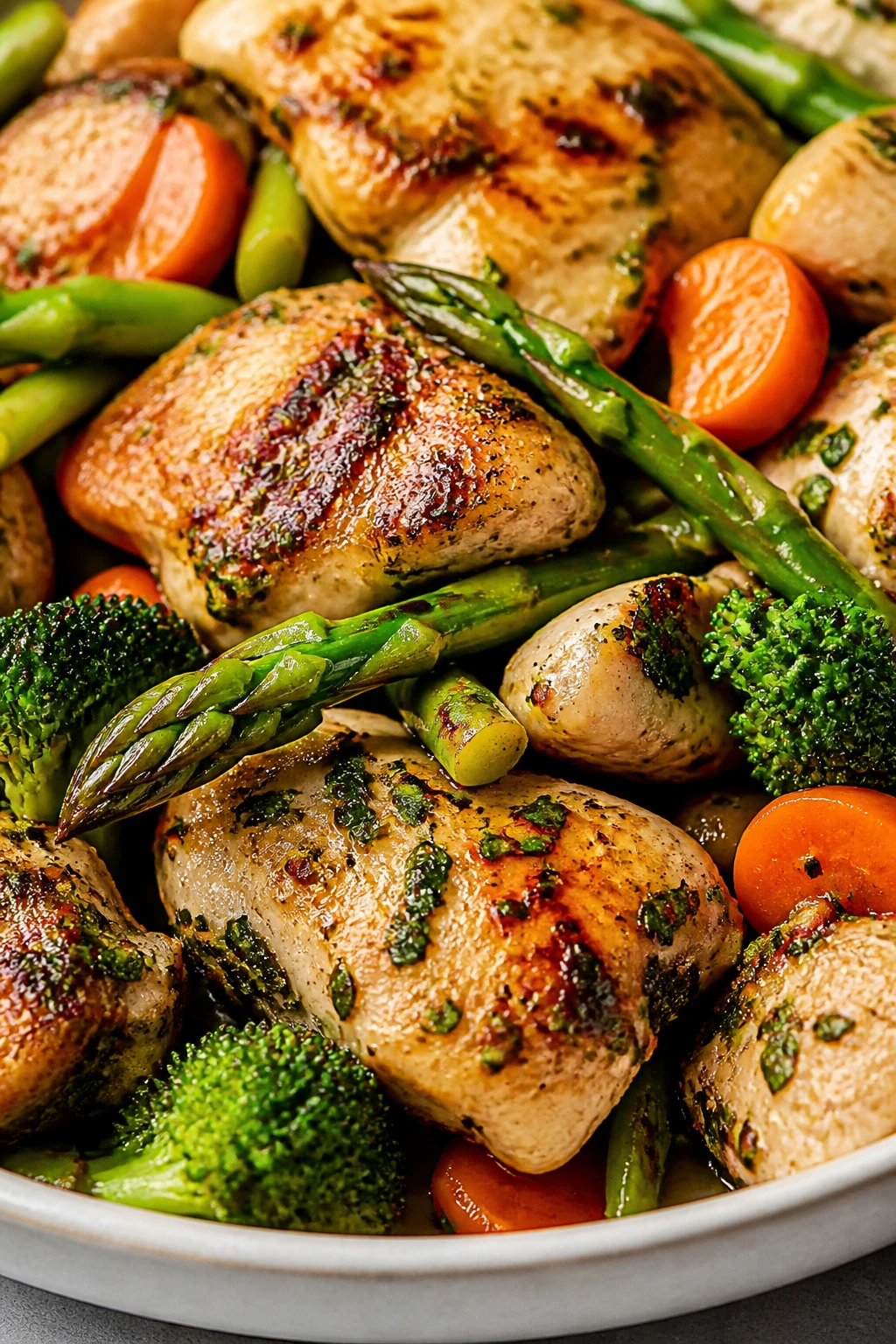
Add the chicken pieces to the skillet in a single layer. Don’t overcrowd the pan or the chicken will steam instead of sear. Let them cook undisturbed for 3-4 minutes to develop a golden crust before stirring or flipping. This step creates the Maillard reaction, which gives the chicken its savory, browned flavor and appealing texture.
⏱ Time: 4 minutes
✓ Doneness: Chicken bottoms are deep golden brown before you flip or stir
Step 4
Turn the chicken pieces to cook on the other side for another 3-4 minutes until cooked through. You want the internal temperature to reach 165°F (74°C). Rushing this step will leave the chicken undercooked or tough. Patience here ensures juicy, tender chicken without dryness.
⏱ Time: 4 minutes
✓ Doneness: Chicken pieces are opaque and firm, no pink inside
Step 5
Add the trimmed snap peas, sliced carrots, and asparagus to the skillet. Toss everything together gently and cook for 3-4 minutes more. The goal is to heat the veggies through while keeping their snap and bright color—overcooking will make them mushy and dull. Stir occasionally to coat veggies in the buttery sauce.
⏱ Time: 4 minutes
✓ Doneness: Veggies are tender-crisp and vibrant in color
Step 6
Season the dish with salt, freshly ground black pepper, and thyme. Stir in the fresh lemon juice right at the end to add brightness and balance the richness of the butter. Don’t add lemon too early or it can curdle the sauce. This final touch lifts the whole dish and makes it taste fresh and lively.
⏱ Time: 1 minute
✓ Doneness: A fresh, slightly tangy aroma and balanced seasoning
Step 7
Taste and adjust seasoning if needed. If it feels a bit too rich, a pinch more lemon juice or a sprinkle of fresh herbs can brighten it up. This final tasting is your chance to personalize the flavor before serving. Don’t skip it!
⏱ Time: 1 minute
✓ Doneness: Balanced flavors with no overpowering butter or lemon
Step 8
Serve immediately, spooning the garlic butter chicken and veggies onto plates. This dish is best enjoyed fresh while the chicken is juicy and the veggies are crisp. If left too long, the sauce thickens and veggies soften, losing that fresh vibe.
⏱ Time: 2 minutes
✓ Doneness: Serve hot with glistening sauce and bright veggies
Step 9
Optional: garnish with extra fresh thyme or a lemon wedge for an added pop of color and flavor. This step isn’t necessary but makes the plate look inviting and adds a subtle fresh note when squeezed over before eating.
⏱ Time: 1 minute
✓ Doneness: Visual appeal enhanced with fresh herb sprigs or lemon wedges
Pro Tips
Prep all ingredients before heating the pan.
Since this recipe cooks quickly, having everything ready prevents overcooking the chicken or veggies. If you start cooking before prepping, the chicken can dry out or the veggies can get mushy because you're scrambling to chop while food is in the pan.
Use a mix of butter and olive oil for cooking.
Butter alone burns easily due to its low smoke point. Mixing in olive oil raises the smoke point, allowing you to brown the chicken without bitterness while still enjoying that rich butter flavor.
Don’t overcrowd the pan when cooking chicken.
Crowding traps steam and prevents proper browning. Searing chicken pieces in a single layer ensures a crispy, flavorful crust and juicy interior rather than soggy, steamed meat.
Add veggies at the end to keep them crisp.
Vegetables cook faster than chicken and lose color and texture if overcooked. Tossing them in the pan just before finishing ensures they stay tender-crisp and retain their natural sweetness.
Use fresh lemon juice added at the end.
Lemon juice brightens and balances the richness but can curdle butter if added too early. Adding it last preserves its fresh aroma and prevents sauce separation.
Season gradually and taste before serving.
Butter adds richness but not saltiness, so seasoning carefully lets you avoid over- or under-salting. Tasting at the end helps adjust balance and achieve perfect flavor.
Rest the chicken briefly after cooking.
Letting the chicken rest for a couple of minutes allows juices to redistribute, keeping the meat moist and tender when served.
Common Mistakes to Avoid
Overcooking the chicken and drying it out.
Why it happens Many assume cooking chicken quickly means high heat and fast flipping, which can lead to toughness and dryness.
Fix Cook the chicken over medium heat, searing one side without moving it for a few minutes to develop a crust, then flip and finish cooking gently. Use a meat thermometer to reach 165°F without guessing.
Burning the garlic in butter.
Why it happens Garlic cooks faster than other ingredients and can burn if the heat is too high or if cooked too long.
Fix Add garlic after butter melts and cook on medium or medium-low heat for just 30 seconds to 1 minute until fragrant and golden, then add chicken immediately.
Overcrowding the pan leading to steaming.
Why it happens Trying to cook all chicken pieces at once traps moisture, preventing browning.
Fix Cook chicken in batches if needed, or use a larger pan to keep pieces spaced apart for proper searing.
Adding lemon juice too early causing sauce to curdle.
Why it happens Acid destabilizes butter if added during cooking, resulting in separation.
Fix Add lemon juice only at the end, off heat, to preserve a smooth sauce and fresh flavor.
Overcooking vegetables until mushy and dull.
Why it happens Cooking veggies too long or at too high heat breaks down their texture and color.
Fix Add veggies towards the end and cook just until tender-crisp, stirring frequently to coat but not overcook.
Variations
Spicy Garlic Butter Chicken
Add a pinch of red pepper flakes or a diced jalapeño when cooking the garlic to give the sauce a spicy kick. This variation adds warmth without overpowering the buttery garlic flavor. It’s great if you like a little heat with your meal.
Note: Be careful not to burn the chili flakes or jalapeño; add them with the garlic and cook gently to release flavor without bitterness.
Creamy Garlic Butter Chicken
Stir in 1/4 cup heavy cream or coconut cream after adding the lemon juice for a richer, creamier sauce. This makes the dish feel more indulgent and pairs well with steamed rice or mashed potatoes.
Note: Add cream off heat to avoid curdling, then warm gently before serving.
Herb Mix Upgrade
Swap thyme for a combination of fresh rosemary, oregano, and parsley for a more complex herb flavor. This variation changes the aromatic profile and adds freshness that complements the garlic butter beautifully.
Note: Use fresh herbs added at the end to preserve their bright flavor and color.
Vegetarian Garlic Butter Veggie Stir Fry
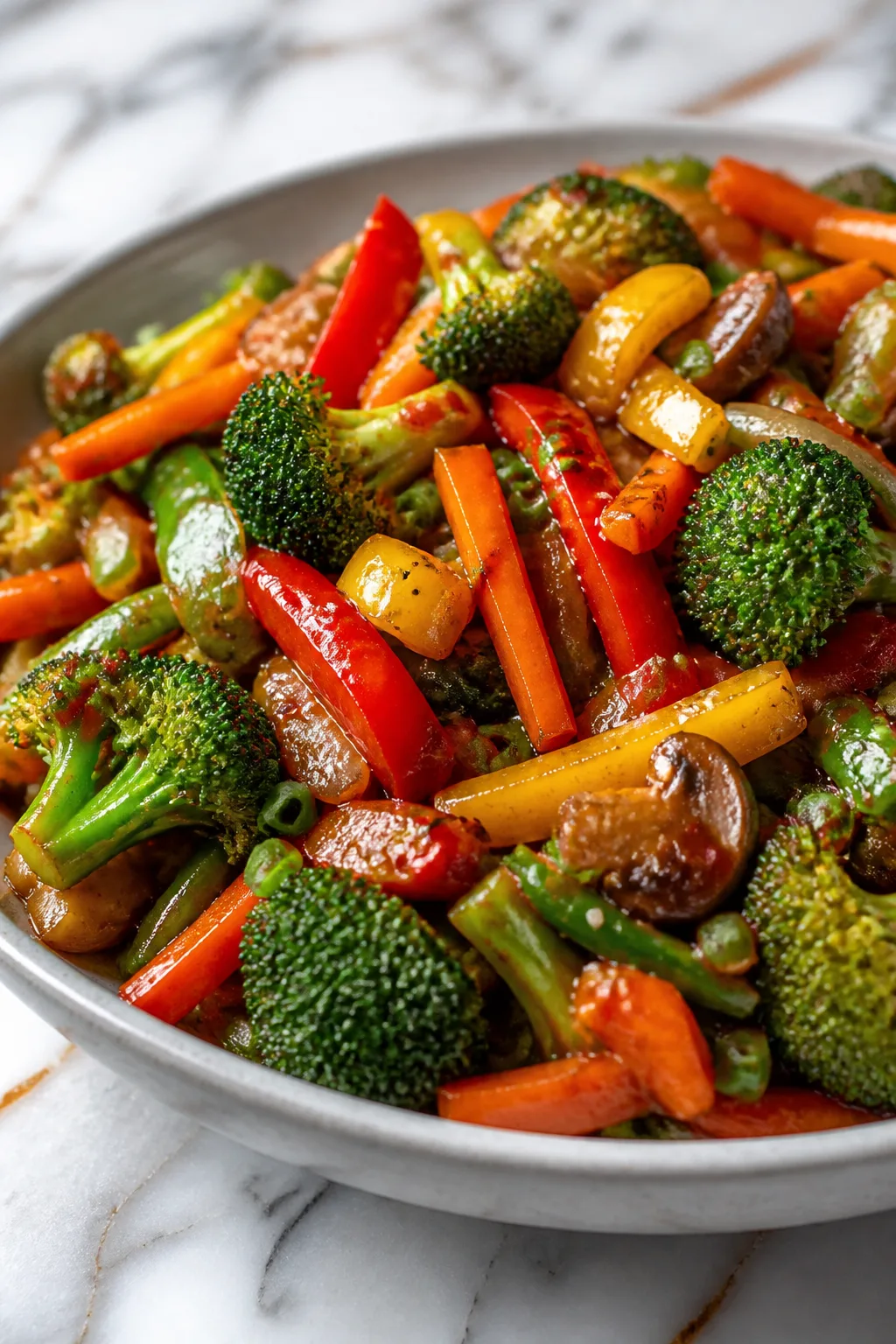
Skip the chicken and double up on the spring veggies, adding mushrooms and zucchini for extra texture. Cook everything in garlic butter as usual for a quick, satisfying vegetarian option.
Note: Increase cooking time slightly for mushrooms to release moisture and develop flavor.
Lemon Butter Chicken with Parmesan
After cooking, sprinkle freshly grated Parmesan over the chicken and veggies for a salty, nutty finish. This adds a lovely umami boost and pairs well with pasta or crusty bread.
Note: Add Parmesan off heat and toss gently to melt slightly without clumping.
Nutrition
Per Serving:
Nutritional values are estimates and may vary based on specific ingredients used.
Storage & Tips
Room Temperature
This dish can safely sit covered at room temperature for up to 2 hours. Beyond that, bacteria growth increases, so it’s best to refrigerate promptly after serving.
Refrigerator
Store leftovers in an airtight container for up to 3 days. The chicken may firm slightly and the veggies soften when cold. Reheat gently to restore texture, or enjoy cold in a salad.
Freezer
Freeze cooked garlic butter chicken in airtight containers or heavy-duty freezer bags for up to 2 months. Wrap tightly to prevent freezer burn. Thaw overnight in the fridge before reheating.
Reheating
Reheat gently on the stovetop over low heat with a splash of water or broth to loosen the sauce. Microwave is fine but may dry the chicken; cover to retain moisture. Avoid overheating which toughens the meat.
Make Ahead
You can chop all veggies and chicken 1 day ahead and store separately in the fridge. Assemble and cook fresh to preserve texture and flavor. Alternatively, cook fully and refrigerate; reheat before serving.
FAQ
Can I use chicken thighs instead of breasts?
Absolutely! Chicken thighs are juicier and more forgiving if slightly overcooked. Just adjust the cooking time slightly, as thighs may take a couple more minutes to cook through. They also add richer flavor to the dish.
What can I substitute for butter if I’m dairy-free?
You can use ghee, coconut oil, or a neutral oil like avocado oil. Keep in mind butter adds a distinct flavor and richness, so substitutes will change the taste slightly. Ghee is a great dairy-free option that still gives a buttery flavor.
How do I prevent the chicken from sticking to the pan?
Make sure your pan and fat are hot before adding the chicken. Don’t move the chicken too soon—let it develop a golden crust which naturally releases from the pan. Using enough fat (butter and oil) also helps prevent sticking.
Can I use frozen vegetables?
While fresh veggies are best for texture and color, frozen can work in a pinch. Thaw and drain excess water before adding to avoid sogginess. Cook frozen veggies a bit longer to heat through, but watch for overcooking.
Is this recipe suitable for meal prep?
Yes! It reheats well and keeps its flavor. Store chicken and veggies together in airtight containers. Just be aware the veggies soften over time, so they’re best eaten within a few days for optimal texture.
Can I add a sauce or serve it with something else?
This dish is flavorful on its own, but you can serve it over rice, pasta, or quinoa for a fuller meal. A light drizzle of extra lemon juice or a sprinkle of fresh herbs before serving can also enhance it.
How do I make it spicier?
Add red pepper flakes, cayenne, or diced fresh chili peppers with the garlic. Start small and adjust to taste to avoid overpowering the garlic butter flavor.
What’s the best way to reheat leftovers without drying them out?
Reheat gently on low heat with a splash of water or broth to keep the sauce loose. Cover the pan or container to trap steam and prevent drying. Avoid high heat or prolonged reheating which can toughen the chicken.
Final Thoughts
I hope you give this quick garlic butter chicken a try soon—it’s one of those easy dishes that feels special every time. Let me know how it turns out and what veggies you add!