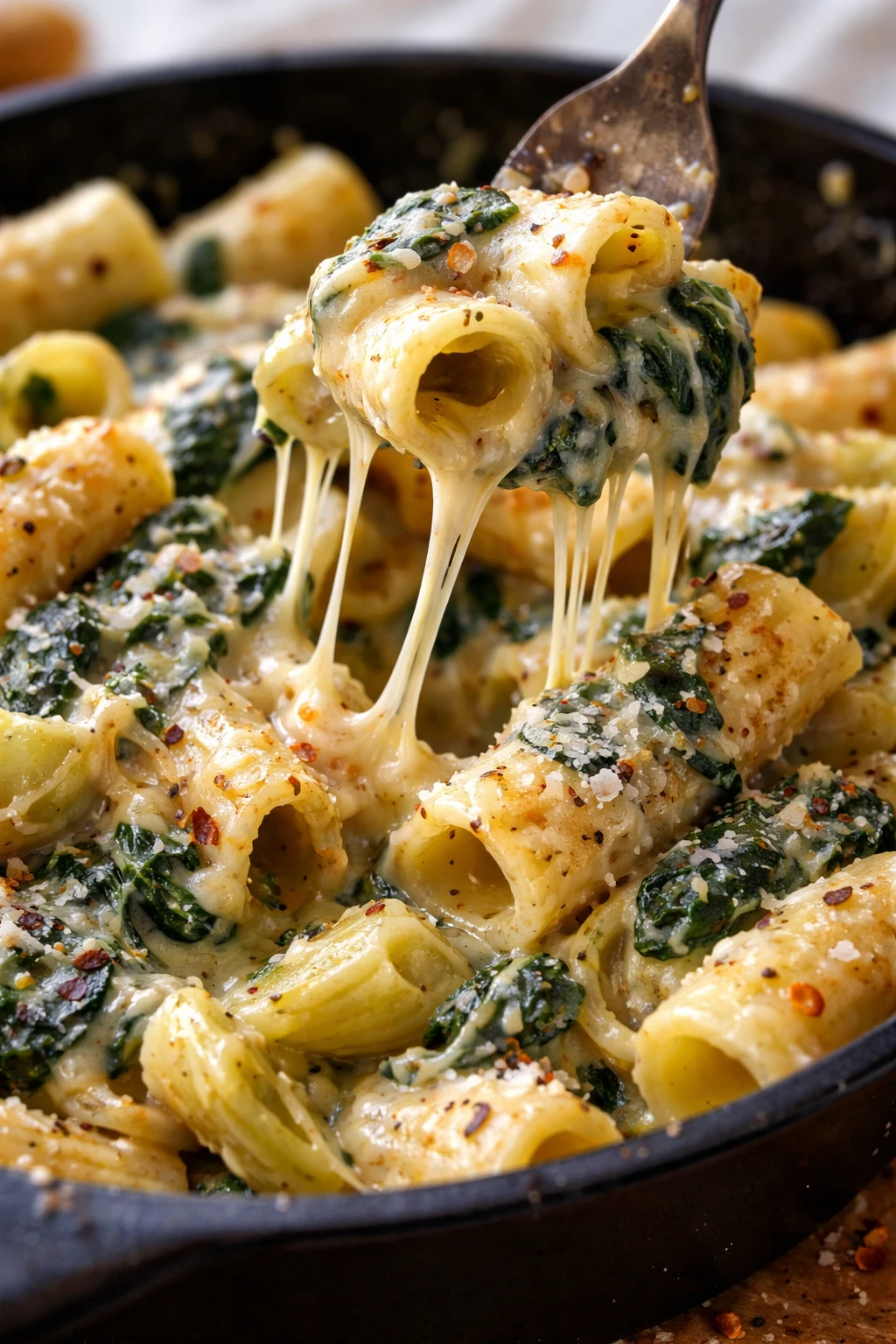
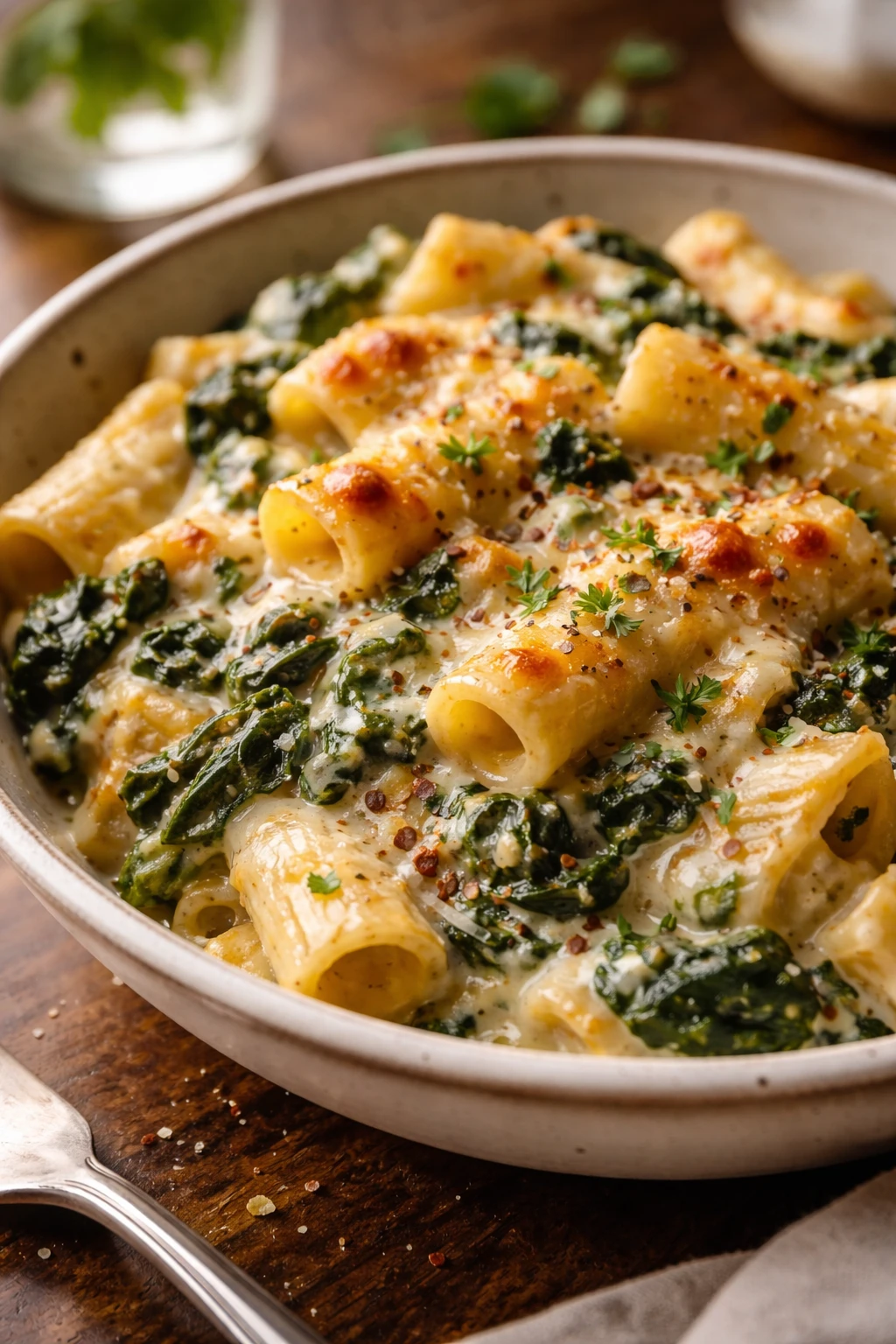
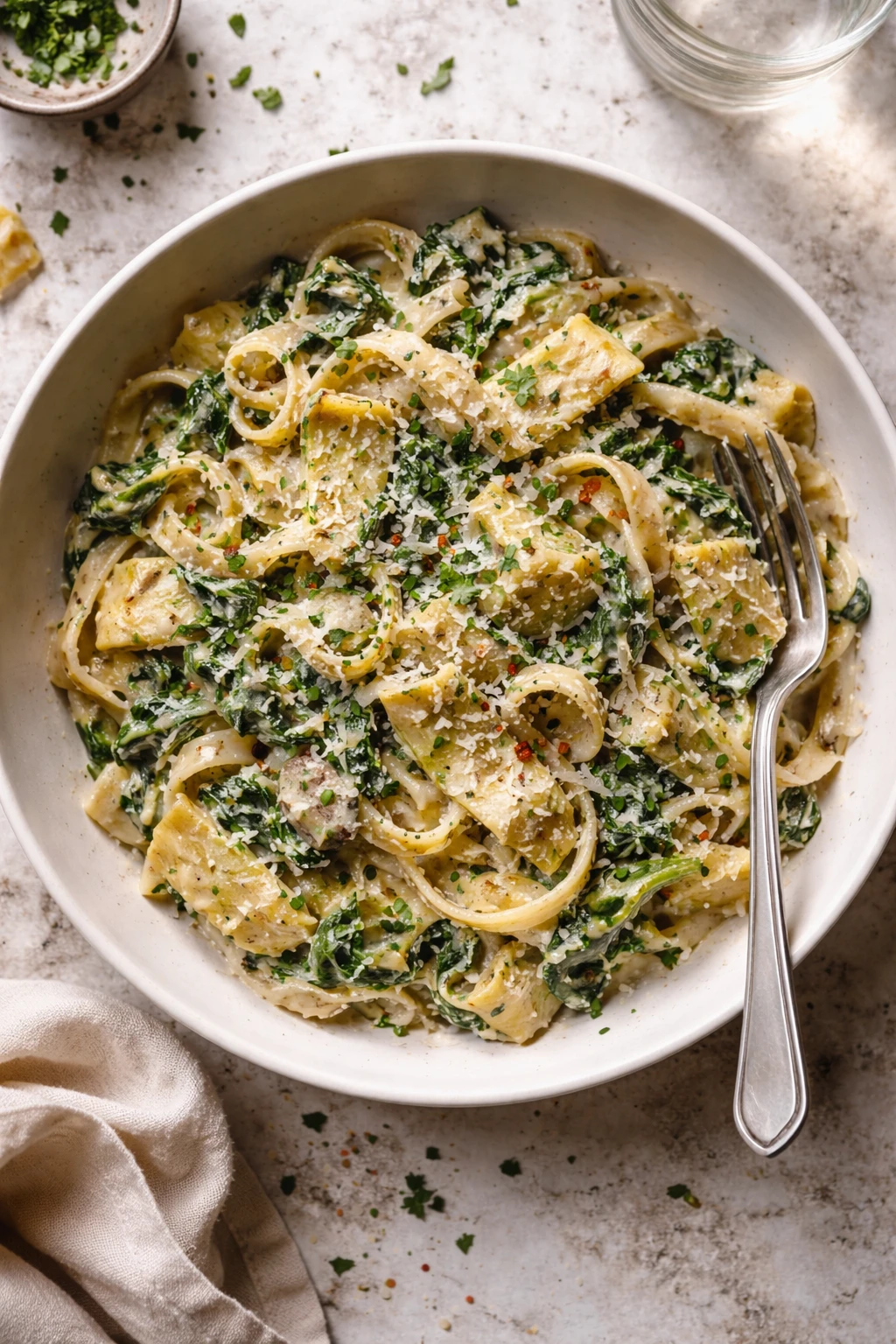
This creamy spinach and artichoke pasta is the ultimate weeknight comfort food. The sauce is luxuriously smooth thanks to cream cheese, and those tender artichokes add a subtle tang. Perfect when you want something cozy but quick!
Introduction
I first stumbled upon this creamy spinach and artichoke pasta on a hectic weeknight when I desperately needed something comforting but quick. I’ve always loved the classic dip, so I thought, why not turn it into a pasta sauce? This version is creamier and tangier than any standard pasta I’d made before, thanks to the cream cheese and artichokes. A little trick I learned is to soften the cream cheese in the pan with the garlic and olive oil before adding the cream — it makes the sauce incredibly smooth without lumps. Plus, I toss in fresh spinach at the last minute so it wilts perfectly without losing its vibrant color. When it’s done, you get a rich, silky sauce coating every bite of pasta, with just the right tang from the artichokes that keeps it fresh and interesting. It’s cozy, satisfying, and perfect for those nights when you want something homemade but don’t want to spend an hour in the kitchen. Honestly, it’s become a staple in my house because it’s so easy and delicious.
How To Do It
Step 1
Bring a large pot of salted water to a boil and cook the pasta according to package instructions until al dente. This step is crucial because overcooked pasta will become mushy once mixed with the creamy sauce. Make sure to taste the pasta a minute or two before the package time to avoid overcooking. Once done, reserve about a cup of pasta water and drain the rest. The reserved water is great for adjusting the sauce consistency later.
⏱ Time: 10-12 minutes
✓ Doneness: Pasta should be tender but still have a slight firmness when bitten
Step 2
While the pasta cooks, heat olive oil in a large skillet over medium heat. Add minced garlic and cook gently for about 1-2 minutes until fragrant but not browned — burnt garlic will give a bitter taste. Then add the chopped artichoke hearts and sauté for 3-4 minutes to warm them through and release some of their tangy flavor. This step builds the base flavor for your sauce, so don’t rush it or turn the heat too high.
⏱ Time: 5-6 minutes
✓ Doneness: Garlic is aromatic and artichokes are warmed with slight golden edges
Step 3
Reduce heat to low and add the softened cream cheese to the skillet. Stir constantly to melt it smoothly into the oil and garlic mixture. This creates a creamy texture for the sauce and prevents lumps. If the cream cheese feels too stiff, you can add a splash of the reserved pasta water to help it melt evenly. The goal is a silky base that will coat the pasta beautifully.
⏱ Time: 3-4 minutes
✓ Doneness: Cream cheese is fully melted and sauce looks smooth and creamy
Step 4
Pour in the heavy cream and stir to combine, letting the sauce gently bubble for a couple of minutes. The cream adds richness and helps thin the sauce so it’s not too thick or sticky. Keep the heat low to avoid curdling. If the sauce seems too thick, add more reserved pasta water a little at a time until you reach your desired consistency.
⏱ Time: 2-3 minutes
✓ Doneness: Sauce is smooth, creamy, and slightly thickened but pourable
Step 5
Add the grated Parmesan cheese and stir until melted and fully incorporated. Parmesan brings a nutty, salty depth that balances the creaminess. Be sure to use freshly grated cheese because pre-grated varieties often don’t melt as well and can make the sauce grainy.
⏱ Time: 2 minutes
✓ Doneness: Cheese is melted, and sauce looks glossy and cohesive
Step 6
Season the sauce with salt, freshly ground black pepper, and red pepper flakes if you want a little kick. Taste as you go — the artichokes and Parmesan already add some saltiness, so add salt carefully. This seasoning step is what brings all the flavors together.
⏱ Time: 1-2 minutes
✓ Doneness: Sauce tastes balanced with a slight tang and gentle heat if added
Step 7
Add the chopped fresh spinach to the sauce and stir until just wilted. Spinach cooks very quickly; overcooking will make it soggy and dull in color. The bright green leaves add freshness and a nice texture contrast to the creamy sauce.
⏱ Time: 1-2 minutes
✓ Doneness: Spinach is vibrant green and just wilted, not mushy
Step 8
Add the drained pasta directly into the skillet with the sauce. Toss gently to coat every piece with that creamy goodness. If needed, add a splash of reserved pasta water to loosen the sauce and help it cling better to the pasta. This final tossing ensures every bite is flavorful and perfectly sauced.
⏱ Time: 2-3 minutes
✓ Doneness: Pasta is evenly coated with sauce and looks glossy
Step 9
Serve immediately while warm, garnished with extra Parmesan or fresh herbs if you like. Cream-based sauces tend to thicken as they cool, so it’s best eaten right away for that luscious texture and flavor. Pair with a simple side salad or crusty bread for a full meal.
⏱ Time: Immediate
✓ Doneness: Dish is hot, creamy, and visually appealing with fresh garnish
Pro Tips
Always reserve some pasta water before draining.
The starchy pasta water helps loosen and emulsify the sauce, allowing it to cling beautifully to the noodles. Without it, the sauce can be too thick or separate, leading to a less cohesive dish.
Don’t overcook the spinach; add it last.
Spinach wilts quickly and loses its vibrant color and fresh flavor if cooked too long. Adding it at the end keeps the dish visually appealing and adds a nice textural contrast.
Use softened cream cheese and melt it gently.
Softened cream cheese blends smoothly into the warm oil and garlic, preventing lumps. High heat or adding cold cream cheese directly can cause clumping and grainy sauce.
Grate Parmesan fresh for best melt and flavor.
Pre-grated Parmesan often doesn’t melt well and can make the sauce gritty. Freshly grated cheese melts evenly and contributes a richer, nuttier taste.
Season carefully after cheese is added.
Cheese adds saltiness, so seasoning before adding it might result in an overly salty dish. Taste and adjust salt and pepper after incorporating Parmesan.
Use moderate heat throughout cooking.
High heat can burn garlic and curdle dairy, ruining the sauce’s smooth texture. Keeping the temperature moderate preserves flavor and consistency.
Toss pasta in the sauce immediately after draining.
This allows the warm pasta and sauce to marry, with starch helping the sauce adhere. Waiting too long can cause the sauce to thicken and become less appetizing.
Common Mistakes to Avoid
Overcooking the pasta
Why it happens People often follow package times exactly or cook until very soft, assuming softer pasta is better.
Fix Check pasta a minute or two before the package’s minimum time to ensure it's al dente. This prevents mushiness once mixed with sauce.
Burning the garlic
Why it happens High heat or inattentiveness causes garlic to brown quickly and taste bitter.
Fix Cook garlic over medium or medium-low heat, stirring frequently until fragrant but not browned.
Adding cream cheese cold and in large chunks
Why it happens Some add cold cream cheese directly, leading to lumps.
Fix Soften cream cheese beforehand and melt it gently with oil and garlic to ensure a smooth sauce.
Skipping pasta water
Why it happens Many forget to reserve pasta water, missing its thickening and binding effect.
Fix Always save about 1 cup of pasta water before draining to adjust sauce consistency.
Overcooking spinach
Why it happens Adding spinach too early or cooking too long makes it soggy and dull.
Fix Add spinach at the very end and cook just until wilted to keep color and texture.
Variations
Add Grilled Chicken for Protein Boost
Toss in sliced grilled chicken breasts to make this pasta a more filling meal. The smoky char from the chicken pairs wonderfully with the creamy sauce and veggies, turning it into a perfect dinner for meat lovers.
Note: Ensure chicken is cooked through separately and added at the final tossing stage to keep it juicy.
Make It Vegan with Cashew Cream
Substitute cream cheese and heavy cream with a smooth cashew cream blend and use nutritional yeast instead of Parmesan. This keeps the sauce creamy and flavorful while making it entirely plant-based.
Note: Blend soaked cashews with water until silky and warm gently to incorporate into the sauce.
Add Mushrooms for Earthiness
Sauté sliced mushrooms with garlic and artichokes to add a meaty, earthy depth to the sauce. This variation adds texture and umami, enhancing the overall flavor complexity.
Note: Cook mushrooms until golden and their moisture evaporates before adding cream cheese.
Use Gluten-Free Pasta
Swap regular pasta for your favorite gluten-free variety to make this dish suitable for gluten-sensitive diets. The creamy sauce works just as well with rice, corn, or chickpea-based pastas.
Note: Follow package cooking times carefully, as gluten-free pasta can cook faster or become mushy if overdone.
Spicy Kick with Chili Flakes and Jalapeños
Add a pinch of red pepper flakes and diced jalapeños for some heat. This gives the creamy pasta a lively edge that balances the richness perfectly.
Note: Add chili flakes with garlic and jalapeños early to infuse the oil with spice.
Nutrition
Per Serving:
Nutritional values are estimates and may vary based on specific ingredients used.
Storage & Tips
Room Temperature
The pasta should not be left out at room temperature for more than 2 hours. Cover it with a clean lid or plastic wrap to prevent drying out if serving shortly after cooking.
Refrigerator
Store leftovers in an airtight container for up to 3 days. The sauce may thicken and the spinach will soften further when chilled. Reheat gently to restore creaminess.
Freezer
Freeze in a sealed container for up to 2 months. To prevent freezer burn, wrap the container in foil or place inside a freezer bag. Thaw overnight in the fridge before reheating.
Reheating
Reheat on the stovetop over low heat, adding a splash of milk or reserved pasta water to loosen the sauce. Avoid microwaving at high heat to prevent curdling or drying out.
Make Ahead
You can prepare the sauce and chop ingredients 1-2 days ahead and store separately. Cook the pasta fresh on serving day and combine everything just before serving for best texture.
FAQ
Can I use frozen spinach instead of fresh?
Frozen spinach tends to release more water and can dilute the sauce, making it thinner and less creamy. If you use frozen, thaw it completely and squeeze out excess moisture before adding to the sauce to avoid a watery dish.
What can I substitute for cream cheese?
You can substitute ricotta or mascarpone for a similar creamy texture, though the tanginess will be milder. For a dairy-free option, use blended soaked cashews or a vegan cream cheese alternative, but expect a slightly different flavor and texture.
How do I prevent the sauce from becoming grainy?
Graininess usually happens when cheese isn’t melted properly or cream cheese is added cold. Make sure cream cheese is softened and melt it gently with garlic and oil. Also, use freshly grated Parmesan and stir continuously when adding to the warm sauce.
Can I make this pasta ahead of time?
You can prepare the sauce and chop veggies a day or two ahead, but it’s best to cook and toss the pasta just before serving. This keeps the pasta from getting mushy and preserves the fresh spinach’s texture.
What pasta shape works best?
Short, ridged pastas like penne, rotini, or rigatoni work best because their grooves hold onto the creamy sauce nicely. Thin pastas like spaghetti can be used but won’t hold the sauce as well.
How spicy can I make this recipe?
You can add as much red pepper flakes or fresh jalapeños as you like. Start with a small amount and taste, since the creamy sauce mellows heat but too much can overpower the other flavors.
Is it okay to skip the Parmesan?
Skipping Parmesan will reduce the salty, nutty depth of the sauce. You can replace it with nutritional yeast for a vegan option or another hard cheese like Pecorino, but avoid omitting cheese entirely as it’s key to the sauce’s flavor.
How do I store leftovers properly?
Store leftovers in an airtight container in the fridge for up to 3 days. The sauce may thicken; reheat gently with a splash of milk or water to restore creaminess. Avoid leaving the pasta at room temperature for extended periods to prevent spoilage.
Final Thoughts
Give this creamy spinach and artichoke pasta a try — I promise it’ll become a weeknight favorite! Don’t forget to share how it turns out in your kitchen.