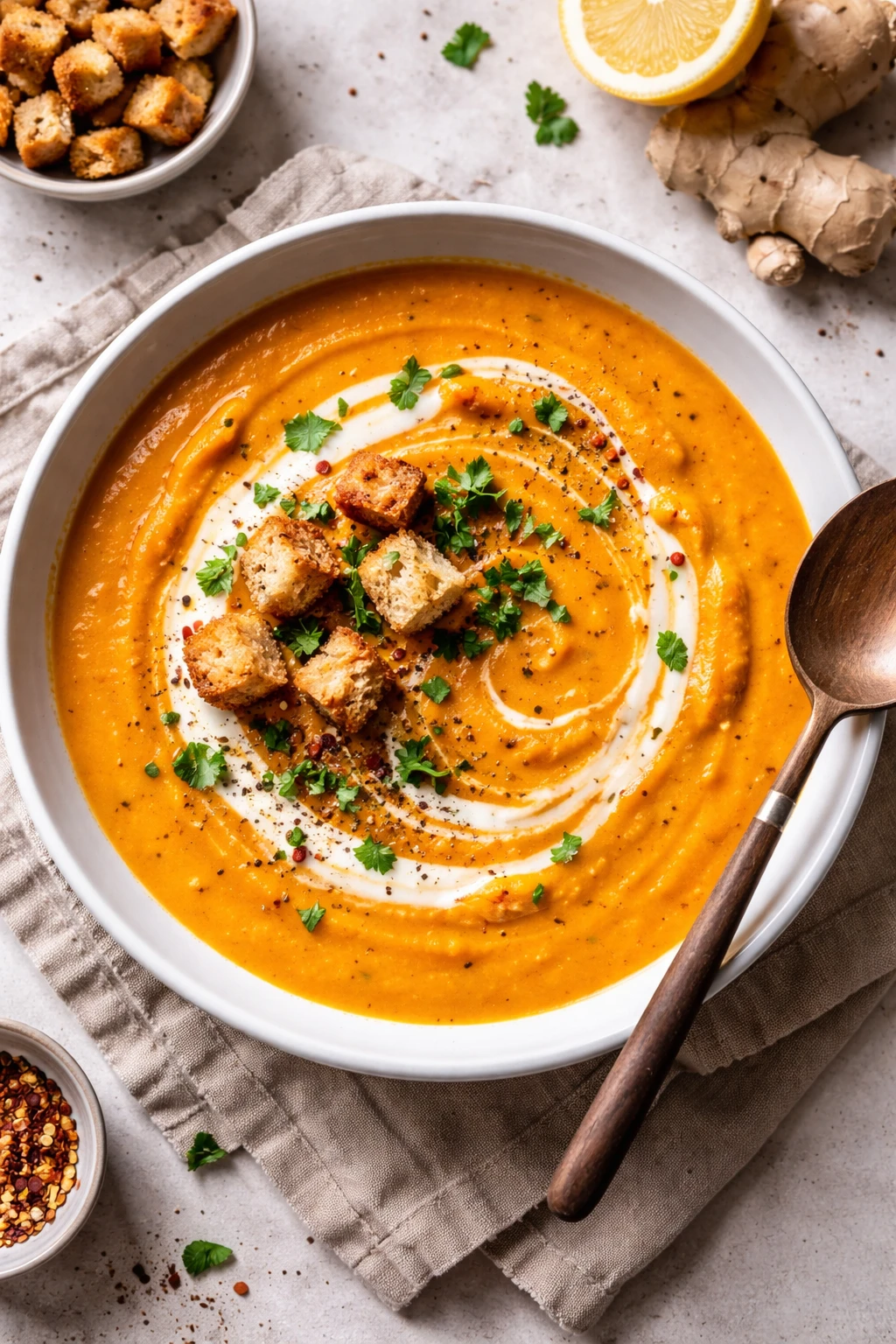
This carrot and ginger soup is velvety smooth with a fresh zing from ginger. Slow simmering brings out deep, comforting flavors that are perfect for chilly evenings or when you need a little warmth.
Introduction
I first made this carrot and ginger soup on a chilly fall evening when I needed something soothing but with a little kick. The fresh ginger adds just the right zing without overpowering the natural sweetness of the carrots. Over time, I realized that slow simmering the soup really deepens the flavors, making it richer and more satisfying than quick versions I tried before. One trick I love is adding a splash of coconut milk at the end to give it a creamy texture without dairy. It’s a simple soup, but it feels special—a little bowl of warmth that’s perfect for curling up with on a cold night or whenever you want a comforting boost. The bright orange color and fresh herbs on top just make it feel like a hug in a bowl. I’ve made this for friends and family, and it’s always a hit, especially when served with crusty bread. It’s also great for meal prep because the flavors meld even better the next day. Honestly, the first time I made it, I rushed the simmering and it was a bit bland, so don’t skip that slow cook step—it really makes all the difference!
What You'll Need
Approximately 6 cups, 4 servings
- 1 tablespoon olive oil, room temperature
- 1 medium onion, chopped
- 2 cloves garlic, minced
- 1 tablespoon fresh ginger, grated
- 5 large carrots, peeled and chopped
- 4 cups vegetable broth
- Salt to taste
- Freshly ground black pepper to taste
- 1/2 cup coconut milk (optional, for creaminess)
- Fresh parsley or chives for garnish
How To Do It
Step 1
Heat the olive oil in a large pot over medium heat. Add the chopped onion and cook gently, stirring occasionally, until soft and translucent, about 7-8 minutes. This slow cooking of onions is crucial because it builds the soup’s base flavor without any harshness. Avoid rushing this step or turning the heat too high; burnt onions will give a bitter taste. You want them tender and sweet, which sets the stage for the carrots and ginger.
⏱ Time: 7-8 minutes
✓ Doneness: Onions should be soft, translucent, and slightly glossy without browning.
Step 2
Add the minced garlic and grated fresh ginger to the pot. Stir for about 1 minute until fragrant but not browned. Garlic and ginger release their essential oils quickly, so keep stirring to prevent burning. Burnt garlic can turn bitter and ruin the soup’s delicate balance. This step infuses the oil with those fresh flavors that will permeate the entire soup.
⏱ Time: 1 minute
✓ Doneness: You’ll smell a bright, fresh aroma from the garlic and ginger without any bitterness.
Step 3
Add the chopped carrots to the pot and stir well to coat them in the onion, garlic, and ginger mixture. Cooking them briefly with the aromatics helps the carrots start releasing their natural sugars, which adds sweetness to the soup. This step also ensures that every spoonful is packed with flavor, not just the broth.
⏱ Time: 3-4 minutes
✓ Doneness: Carrots look glossy and slightly softened but still hold their shape.
Step 4
Pour in the vegetable broth and increase the heat to bring the soup to a gentle boil. Once boiling, reduce to a low simmer and cover the pot. Let it simmer slowly for about 25-30 minutes until the carrots are very tender. Slow simmering is key because it allows the flavors to fully develop and meld together. Rushing by boiling hard can break down flavors and make the soup taste flat.
⏱ Time: 25-30 minutes
✓ Doneness: Carrots should be fork-tender and the soup’s aroma rich and inviting.
Step 5
Remove the pot from heat and let it cool slightly before blending. Use an immersion blender directly in the pot or transfer the soup in batches to a blender. Blend until completely smooth and silky. This step transforms the soup from chunky to velvety, which is what makes it feel so comforting. Be careful when blending hot liquids—work in small batches and vent the blender lid slightly to avoid pressure buildup.
⏱ Time: 5-7 minutes
✓ Doneness: Soup is perfectly smooth with no lumps, creamy in texture.
Step 6
Return the blended soup to low heat. Stir in the coconut milk if using, then season with salt and freshly ground black pepper to taste. Warming it gently again lets the flavors marry and the coconut milk adds a luscious creaminess that balances the ginger’s zing. Don’t skip seasoning here—you want that final layer of flavor to shine through.
⏱ Time: 3-5 minutes
✓ Doneness: Soup is warm and creamy, with balanced seasoning and no raw taste.
Step 7
Ladle the soup into bowls and garnish with fresh parsley or chives. The herbs add a pop of color and a fresh, bright note that contrasts beautifully with the warm, smooth soup. Serving immediately keeps the herbs vibrant and the soup at its best temperature.
⏱ Time: 1-2 minutes
✓ Doneness: Soup looks vibrant with herb garnish and is steaming hot.
Step 8
Serve with crusty bread or your favorite side. The bread’s texture complements the soup’s smoothness perfectly and makes the meal more filling. I like to serve this as a starter or a light dinner paired with a salad. It’s a versatile dish that fits many occasions.
⏱ Time: Optional
✓ Doneness: Meal feels balanced with smooth soup and crunchy bread.
Step 9
Store any leftovers in an airtight container once cooled. This soup tastes even better the next day as the flavors continue to meld. When reheating, warm gently on the stove to preserve the texture and add a splash of broth if it thickened too much. Avoid boiling again to keep that silky mouthfeel intact.
⏱ Time: N/A
✓ Doneness: Soup reheats evenly, smooth and flavorful without separation.
Pro Tips
Don’t rush cooking the onions; cook them low and slow until soft and translucent.
Slow cooking onions breaks down their sugars and softens their pungency, creating a sweet, mellow base without bitterness. If you rush or use high heat, onions can burn, turning the soup bitter and unpleasant.
Grate fresh ginger just before adding it to preserve its bright flavor.
Fresh ginger contains volatile oils responsible for its zing. Grating it fresh maximizes aroma and taste, while pre-ground or older ginger loses this intensity and can taste dull or harsh.
Simmer the soup gently rather than boiling to deepen flavors without breaking them down too fast.
A gentle simmer allows flavors to meld and develop complexity. Boiling aggressively can cause harsh flavors and degrade the natural sweetness of carrots, resulting in a less balanced soup.
Blend the soup in batches if using a blender and vent the lid slightly to avoid pressure buildup.
Hot liquids expand and steam can build pressure in a blender, risking splatters or burns. Blending in small batches with vented lids ensures safety and smooth texture.
Add salt and pepper after blending to better control seasoning.
Seasoning after blending lets you taste the soup’s true flavor and adjust saltiness precisely. Adding salt too early can concentrate flavors unevenly during cooking.
Add coconut milk at the end for creaminess without curdling.
Coconut milk emulsifies smoothly when gently warmed into the soup after blending. Adding it early or boiling can cause separation and grainy texture.
Garnish with fresh herbs just before serving for a fresh flavor and color contrast.
Herbs lose vibrancy and flavor if cooked too long. Adding them last keeps them bright and aromatic, enhancing the soup’s sensory appeal.
Common Mistakes to Avoid
Skipping the slow cooking of onions.
Why it happens Many rush to add all ingredients at once, thinking it saves time.
Fix Take the time to cook onions slowly until translucent and soft. This builds sweetness and a flavorful base. If onions are raw or burnt, the soup will taste flat or bitter.
Using powdered ginger instead of fresh.
Why it happens Powdered ginger is convenient and shelf-stable.
Fix For best flavor, always use fresh ginger root. It provides a bright, fresh zing that powdered ginger can’t match. If unavailable, increase powdered ginger cautiously to avoid overpowering.
Boiling the soup aggressively during simmering.
Why it happens High heat is often used to speed cooking.
Fix Maintain a gentle simmer to allow flavors to develop fully. Boiling breaks down sugars and soft flavors, making the soup less balanced. Reduce heat once boiling starts.
Blending hot soup too quickly or without venting blender lid.
Why it happens Inattention to safety or impatience.
Fix Blend in small batches and leave the blender lid slightly open or vented to release steam. This prevents splatters and burns, and ensures smooth blending.
Adding salt too early or too late without tasting.
Why it happens Assuming seasoning is not crucial or guessing amounts.
Fix Season after blending and taste carefully. Adjust salt and pepper gradually to balance sweetness and ginger zing perfectly.
Variations
Spicy Carrot Ginger Soup
Add a pinch of cayenne pepper or a chopped fresh chili when cooking the onions for a warming spicy kick. This variation adds heat that complements the ginger’s zing, perfect for cold days when you want extra warmth.
Note: Add chili early with onions to infuse oil with heat; adjust spice level carefully to avoid overpowering.
Curried Carrot Ginger Soup
Include 1 teaspoon of curry powder with the garlic and ginger for a fragrant twist. This adds a subtle earthiness and complexity that pairs beautifully with the sweetness of carrots and the zing of ginger.
Note: Toast curry powder briefly in oil to release flavors before adding liquids.
Roasted Carrot and Ginger Soup
Roast carrots in the oven until caramelized before adding to the pot. This brings out a deeper, sweeter flavor and a smoky note that enriches the soup’s taste and texture.
Note: Roast at 400°F for 25-30 minutes until browned; reduce broth slightly to concentrate flavors.
Carrot Ginger Soup with Orange Zest
Add a teaspoon of finely grated orange zest at the end with coconut milk for a bright citrus note that lifts the soup’s flavor, making it fresh and vibrant without overpowering the ginger.
Note: Add zest after blending to preserve brightness and aroma.
Vegan Creamy Carrot Ginger Soup
Use coconut milk or cashew cream instead of dairy for a creamy, dairy-free option. This keeps the soup smooth and rich while accommodating vegan diets.
Note: Blend soaked cashews with some broth for cashew cream if preferred over coconut milk.
Nutrition
Per Serving:
Nutritional values are estimates and may vary based on specific ingredients used.
Storage & Tips
Room Temperature
The soup can safely sit at room temperature for up to 2 hours if covered to avoid contamination. Beyond that, it’s best to refrigerate to prevent bacterial growth.
Refrigerator
Store in an airtight container in the fridge for up to 4 days. The flavors deepen overnight, but the soup may thicken. Reheat gently on the stove, adding a splash of broth or water if needed to loosen it.
Freezer
Freeze the soup in airtight, freezer-safe containers for up to 3 months. Leave some headspace for expansion and seal tightly to prevent freezer burn. Thaw overnight in the fridge before reheating gently.
Reheating
Warm the soup on low heat in a pot, stirring occasionally to prevent sticking. Add a splash of broth or water if it’s too thick. Avoid boiling again as it can separate the coconut milk and change texture.
Make Ahead
You can prepare the soup base (cooked carrots, onions, ginger, broth) up to 2 days ahead and refrigerate. Blend and add coconut milk just before serving for the freshest texture and flavor.
FAQ
Can I use powdered ginger instead of fresh?
While powdered ginger can be used in a pinch, it won’t provide the same fresh, bright zing that fresh ginger does. If you must use powdered, start with about 1/2 teaspoon and adjust to taste, but expect a slightly different flavor profile.
What if my soup is too thick after blending?
Simply add a little more vegetable broth or water to thin it out. Warm gently while stirring until you reach the desired consistency. Avoid adding too much liquid at once to keep the flavor balanced.
How do I avoid a bitter taste in the soup?
Bitterness often comes from burnt onions or garlic. Cook onions slowly over medium-low heat until soft and translucent without browning. Also, don’t let garlic or ginger burn during sautéing; stir constantly and remove from heat if needed.
Can I make this soup in a slow cooker?
Yes! Sauté the onions, garlic, and ginger first, then add carrots and broth to the slow cooker. Cook on low for 6-8 hours or high for 3-4 hours until carrots are tender. Blend and add coconut milk just before serving.
Is coconut milk necessary?
Coconut milk adds creaminess and balances the ginger’s sharpness, but it’s optional. You can substitute with cashew cream, heavy cream, or omit it for a lighter soup. Just know the texture and flavor will be slightly different.
Can I add other vegetables to this soup?
Absolutely! Sweet potatoes, butternut squash, or parsnips work well and add complexity. Adjust cooking time as needed and keep the carrot-to-other veg ratio roughly balanced to maintain the signature flavor.
How long does this soup keep in the fridge?
Stored properly in the fridge, this soup lasts about 4 days. It tastes even better after a day as the flavors meld. Always reheat gently to maintain the silky texture.
Can I freeze this soup?
Freeze in airtight containers for up to 3 months. Thaw overnight in the fridge and reheat gently to preserve texture.
Final Thoughts
I hope you enjoy making and savoring this cozy carrot and ginger soup as much as I do. Don’t forget to share your cozy moments and any tweaks you try!