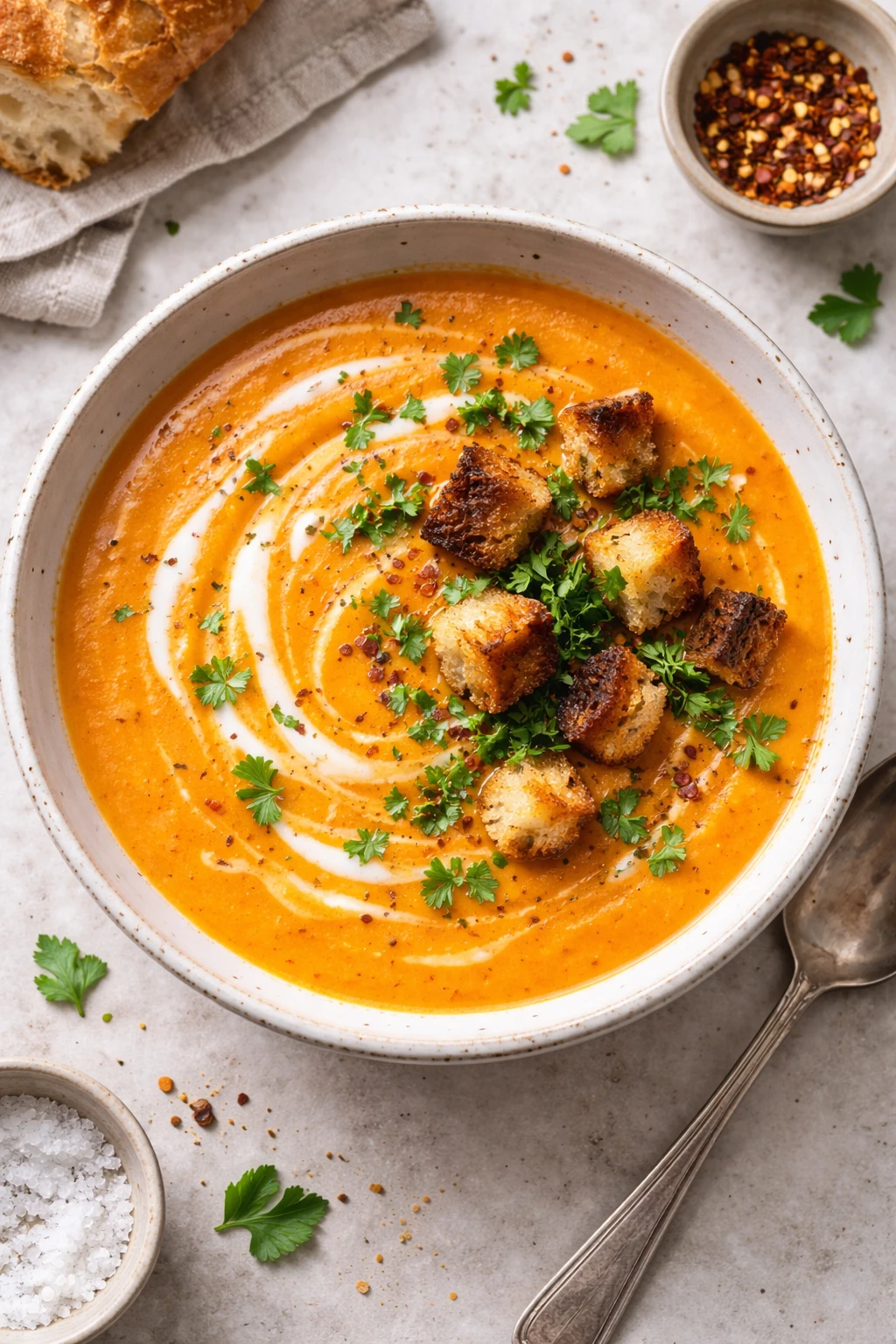
This creamy carrot soup is a comforting bowl of warmth with a fresh twist from herbs. Slow-roasting the carrots brings out their natural sweetness, making it perfect for chilly evenings or a light lunch.
Introduction
I first made this roasted carrot soup on a chilly fall evening when I was craving something warm but not too heavy. What I love about this recipe is how the slow roasting of carrots transforms their flavor—bringing out a natural sweetness that just isn’t there with boiling alone. It’s a little trick I stumbled upon after a few trial runs where boiling the carrots left the soup a bit flat. Roasting adds that depth and richness without extra sugar or cream. Another thing I like is the fresh herbs added at the end, which brighten the whole bowl and keep it feeling light and fresh. The finished soup is silky smooth, slightly sweet, and herbaceous with a comforting warmth that makes it perfect for cozy dinners or even a quick, light lunch. It’s easy to make, doesn’t require fancy ingredients, and always feels like a little hug in a bowl. Plus, it’s vegetarian and can easily be made vegan by swapping the cream for coconut milk. I think you’ll love how simple ingredients and a bit of patience turn into something so satisfying and delicious.
What You'll Need
Approximately 6 cups, 4 servings
- 1.5 pounds fresh carrots, peeled and cut into chunks
- 2 tablespoons olive oil
- 1 medium onion, chopped
- 2 cloves garlic, minced
- 4 cups vegetable broth
- 1/2 cup heavy cream or coconut milk
- 1 teaspoon fresh thyme leaves
- 1/4 cup fresh parsley, chopped
- Salt and freshly ground black pepper, to taste
How To Do It
Step 1
Preheat your oven to 400°F (200°C). Toss the peeled and chopped carrots with 2 tablespoons of olive oil and a pinch of salt on a baking sheet. Spread them out in a single layer so they roast evenly. Slow roasting the carrots caramelizes their natural sugars, giving the soup a deeper, sweeter flavor that boiling can’t match. Keep an eye on them to avoid burning; you want them tender and golden, not blackened. This step usually takes about 25 minutes but check at 20 minutes to avoid overcooking.
⏱ Time: 25 minutes
✓ Doneness: Carrots are tender when pierced with a fork and have a golden, slightly caramelized surface
Step 2
While the carrots roast, heat a large pot over medium heat and add a tablespoon of olive oil. Sauté the chopped onion until it becomes translucent and soft, about 5-7 minutes. This gentle cooking releases the onion’s natural sweetness and builds a flavor base for the soup. Avoid browning the onion too much as it can make the soup bitter. Then add the minced garlic and cook for another minute, just until fragrant. Garlic cooks quickly, so stirring constantly helps prevent burning.
⏱ Time: 8 minutes
✓ Doneness: Onions are translucent and soft, garlic is fragrant but not browned
Step 3
Once the carrots are roasted, add them to the pot with the onions and garlic. Pour in the vegetable broth and bring everything to a gentle boil. Then reduce the heat to a simmer and let it cook for 10 minutes to meld the flavors together. This simmering step helps the roasted carrots infuse their sweetness into the broth, creating a more cohesive soup. Don’t rush this part—skipping it can leave the flavors feeling separate and less developed.
⏱ Time: 10 minutes
✓ Doneness: Soup gently simmers with aroma of carrots and herbs filling the kitchen
Step 4
Remove the pot from heat and use an immersion blender to puree the soup until silky smooth. If you don’t have an immersion blender, carefully transfer the soup in batches to a blender, then return it to the pot. Pureeing while the soup is hot ensures a creamy texture and helps the flavors meld together fully. Be cautious with hot liquids in a blender to avoid splashes. The goal is a smooth, velvety soup with no lumps.
⏱ Time: 5 minutes
✓ Doneness: Soup texture is smooth and creamy without chunks
Step 5
Stir in the heavy cream or coconut milk to add richness and balance the sweetness of the carrots. This also adds a lovely silkiness to the soup. Heat the soup gently over low heat so the cream blends in without curdling. If you skip this step, the soup might taste a bit flat or thin. Season with salt and freshly ground black pepper to taste, adjusting gradually so the seasoning complements but doesn’t overpower the natural carrot flavor.
⏱ Time: 5 minutes
✓ Doneness: Soup is warm, creamy, and well-seasoned with balanced flavor
Step 6
Add the fresh thyme leaves and half of the chopped parsley to the soup, stirring gently. Fresh herbs add brightness and a subtle earthiness that lifts the soup from simple to special. Adding them at the end preserves their fresh flavor and vibrant color. Overcooking herbs can dull their taste, so it’s best to add them just before serving.
⏱ Time: 2 minutes
✓ Doneness: Herbs look fresh and vibrant, aroma is bright and inviting
Step 7
Ladle the soup into bowls and garnish with the remaining fresh parsley for a pop of color and fresh flavor. This finishing touch makes the soup visually appealing and adds a fresh herbaceous note with every bite. It’s a simple step that elevates the presentation and taste.
⏱ Time: 2 minutes
✓ Doneness: Soup looks inviting with fresh green garnish on top
Step 8
Serve the soup warm with crusty bread or a side salad for a complete meal. This soup works great as a light lunch or a starter for a cozy dinner. The creamy texture and sweet roasted carrot flavor make it perfect for chilly days when you want something soothing but not heavy.
⏱ Time: Immediate serving
✓ Doneness: Soup is served warm and ready to enjoy
Step 9
If you have leftovers, cool the soup quickly and store it in an airtight container in the refrigerator. When reheating, do so gently on the stove with a splash of broth or water to restore the creamy texture. Avoid boiling to keep the flavors fresh and the texture smooth.
⏱ Time: 5 minutes reheating
✓ Doneness: Soup is heated through without separating or curdling
Pro Tips
Roast carrots evenly spaced on the baking sheet.
Crowding carrots traps steam and prevents caramelization, resulting in steaming rather than roasting. Proper spacing ensures dry heat exposure for that golden, sweet crust which enhances flavor.
Use an immersion blender for pureeing directly in the pot.
This method minimizes mess and heat loss, preserving the soup’s warmth and texture. Transferring hot soup to a blender risks spills and burns, plus more cleanup.
Add fresh herbs at the end of cooking.
Fresh herbs lose their bright flavor and color when cooked too long. Adding them at the last moment keeps their aroma sharp and colors vibrant, enhancing the soup’s appeal.
Simmer the soup gently after adding broth.
A gentle simmer allows flavors to meld without breaking down the ingredients too much. Boiling can cause bitterness and a cloudy texture, so slow cooking is key to smooth soup.
Season gradually and taste frequently.
Carrots’ sweetness can vary, so adding salt and pepper little by little prevents over-seasoning. Tasting as you go ensures balanced flavor that complements the natural carrot sweetness.
Cool soup quickly before refrigerating.
Rapid cooling reduces the risk of bacterial growth and preserves freshness. Leaving soup out too long can lead to spoilage and off flavors.
Serve with a swirl of cream or a sprinkle of fresh herbs.
These finishing touches elevate presentation and add fresh flavor contrasts that make the soup feel special and inviting.
Common Mistakes to Avoid
Skipping the roasting step
Why it happens Many assume boiling is faster and simpler, so they skip roasting to save time.
Fix Roasting is essential for flavor depth. Even if short on time, roast carrots for at least 15 minutes to develop sweetness. This step transforms the soup and is worth the extra few minutes.
Overcooking garlic and onions
Why it happens Rushing the sauté can lead to burning garlic or browning onions too much, causing bitterness.
Fix Cook onions on medium heat until soft and translucent, then add garlic last and cook briefly. Stir constantly to prevent burning and maintain sweetness.
Adding herbs too early
Why it happens Some cooks add fresh herbs at the start, which dulls their flavor and color.
Fix Add fresh herbs at the end of cooking or just before serving to keep their aroma and brightness intact.
Blending hot soup without caution
Why it happens Transferring hot soup to a blender without venting can cause splatters or burns.
Fix Use an immersion blender or blend in small batches with vented lids, allowing steam to escape safely.
Not seasoning gradually
Why it happens Over-seasoning happens when salt and pepper are added all at once without tasting.
Fix Season little by little, tasting as you go. This prevents overpowering the natural carrot sweetness.
Variations
Spicy Roasted Carrot Soup
Add a pinch of cayenne pepper or a diced jalapeño while sautéing the onions for a spicy kick. This variation adds warmth and depth, perfect if you like a little heat balanced with sweetness.
Note: Adjust spice level carefully; too much heat can overpower the carrot’s natural flavor.
Ginger Carrot Soup
Add 1 tablespoon of freshly grated ginger when cooking the onions and garlic. The ginger adds a zesty brightness and slight warmth that complements the roasted carrots beautifully.
Note: Fresh ginger works best; dried ginger can be too intense and less fresh-tasting.
Vegan Coconut Carrot Soup
Replace heavy cream with full-fat coconut milk and use vegetable broth to keep it vegan. This makes the soup creamy with a subtle coconut flavor that pairs well with the sweetness of the carrots.
Note: Stir coconut milk in at the end over low heat to prevent curdling.
Carrot and Orange Soup
Add the zest and juice of one orange just before blending for a citrusy twist. This brightens the soup and adds a refreshing note that pairs wonderfully with roasted carrots.
Note: Add orange juice gradually to avoid making the soup too acidic.
Carrot and Sweet Potato Soup
Substitute half the carrots with peeled and chopped sweet potatoes for extra sweetness and creaminess. This variation adds body and a slightly different flavor profile while keeping the soup comforting.
Note: Roast sweet potatoes alongside carrots to match cooking times.
Nutrition
Per Serving:
Nutritional values are estimates and may vary based on specific ingredients used.
Storage & Tips
Room Temperature
You can keep the soup covered at room temperature for up to 2 hours safely. Make sure it’s in a sealed container to avoid contamination and drying out.
Refrigerator
Store the soup in an airtight container in the fridge for up to 4 days. The flavor may deepen but the texture can thicken—reheat gently with a splash of broth or water to restore creaminess.
Freezer
Freeze the soup in freezer-safe containers for up to 3 months. Leave some space at the top for expansion. Thaw overnight in the fridge and reheat on the stovetop gently to preserve texture.
Reheating
Reheat on low heat on the stove, stirring occasionally. Add a splash of broth, water, or cream if the soup is too thick. Avoid boiling to prevent separation or curdling of the cream.
Make Ahead
Roast the carrots and sauté the aromatics a day ahead, then store separately. Blend and add cream and herbs just before serving for the freshest flavor and best texture.
FAQ
Can I make this soup without an immersion blender?
Absolutely! You can carefully transfer the soup in batches to a regular blender. Make sure to vent the lid slightly to allow steam to escape and blend in small portions to avoid spills. Alternatively, a food processor works but may require blending in smaller batches for smoothness.
What can I use instead of heavy cream for a dairy-free version?
Full-fat coconut milk is a great substitute that keeps the soup creamy and adds a subtle tropical note. You can also use cashew cream or unsweetened almond milk, but coconut milk tends to give the best texture and richness.
How do I store leftover soup to keep it fresh?
Cool the soup quickly and store it in an airtight container in the fridge for up to 4 days. For longer storage, freeze it in portions. When reheating, warm gently and add a bit of liquid if needed to restore the creamy texture.
Why is roasting the carrots better than boiling?
Roasting caramelizes the carrots' natural sugars through the Maillard reaction, deepening their flavor and sweetness. Boiling can dilute the flavor and make the soup taste bland, so roasting adds richness and complexity.
Can I add other vegetables to this soup?
Definitely! Sweet potatoes, butternut squash, or parsnips work well roasted alongside the carrots. They add sweetness and creaminess but adjust roasting time as needed for even cooking.
How do I prevent the soup from separating when reheating?
Reheat gently over low heat and avoid boiling. Stir often and add a splash of broth or cream if the soup looks too thick or starts to separate. High heat causes the fats and liquids to separate, affecting texture.
Can I prepare this soup ahead for a dinner party?
Yes! Roast carrots and sauté aromatics a day ahead, store separately, then blend and finish with cream and herbs just before serving. This keeps flavors fresh and the texture perfect for guests.
What fresh herbs work best besides thyme and parsley?
Chives, tarragon, or a bit of fresh basil can add interesting flavor twists. Add them at the end of cooking to preserve their brightness. Experiment to find your favorite combination!
Final Thoughts
I hope you enjoy making and savoring this cozy roasted carrot soup as much as I do. Don’t forget to share your results and any twists you try—I’d love to hear how it turns out!