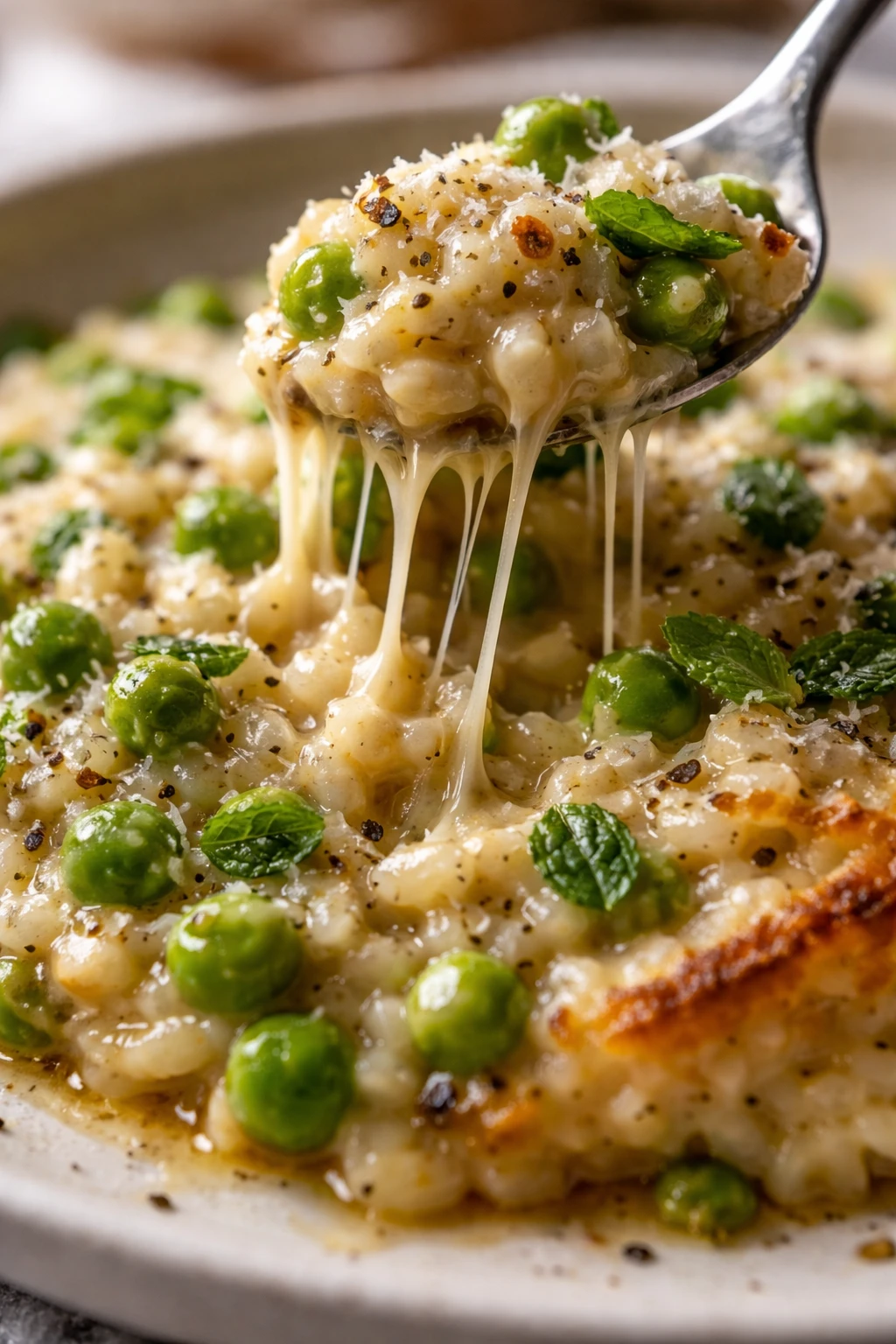
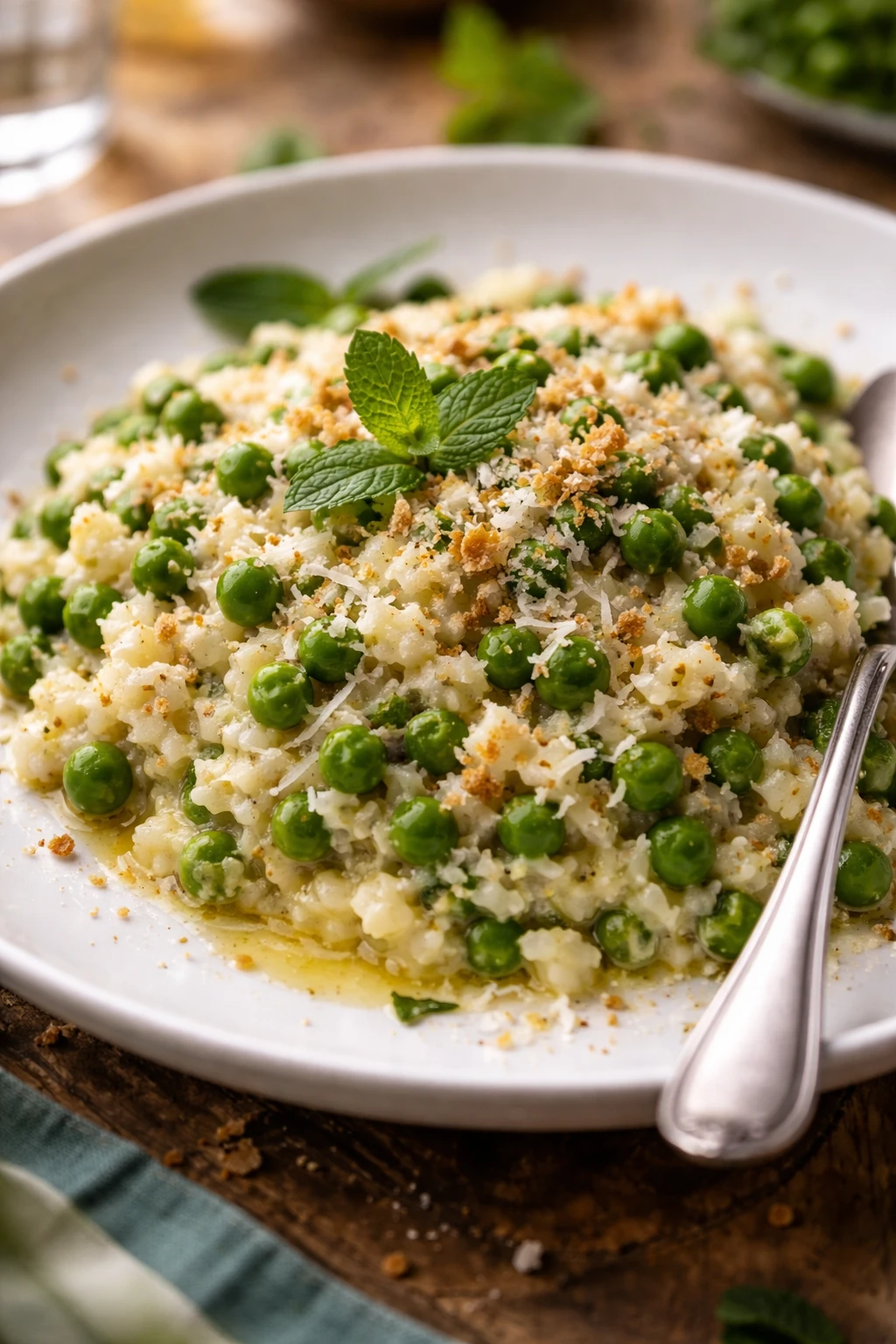
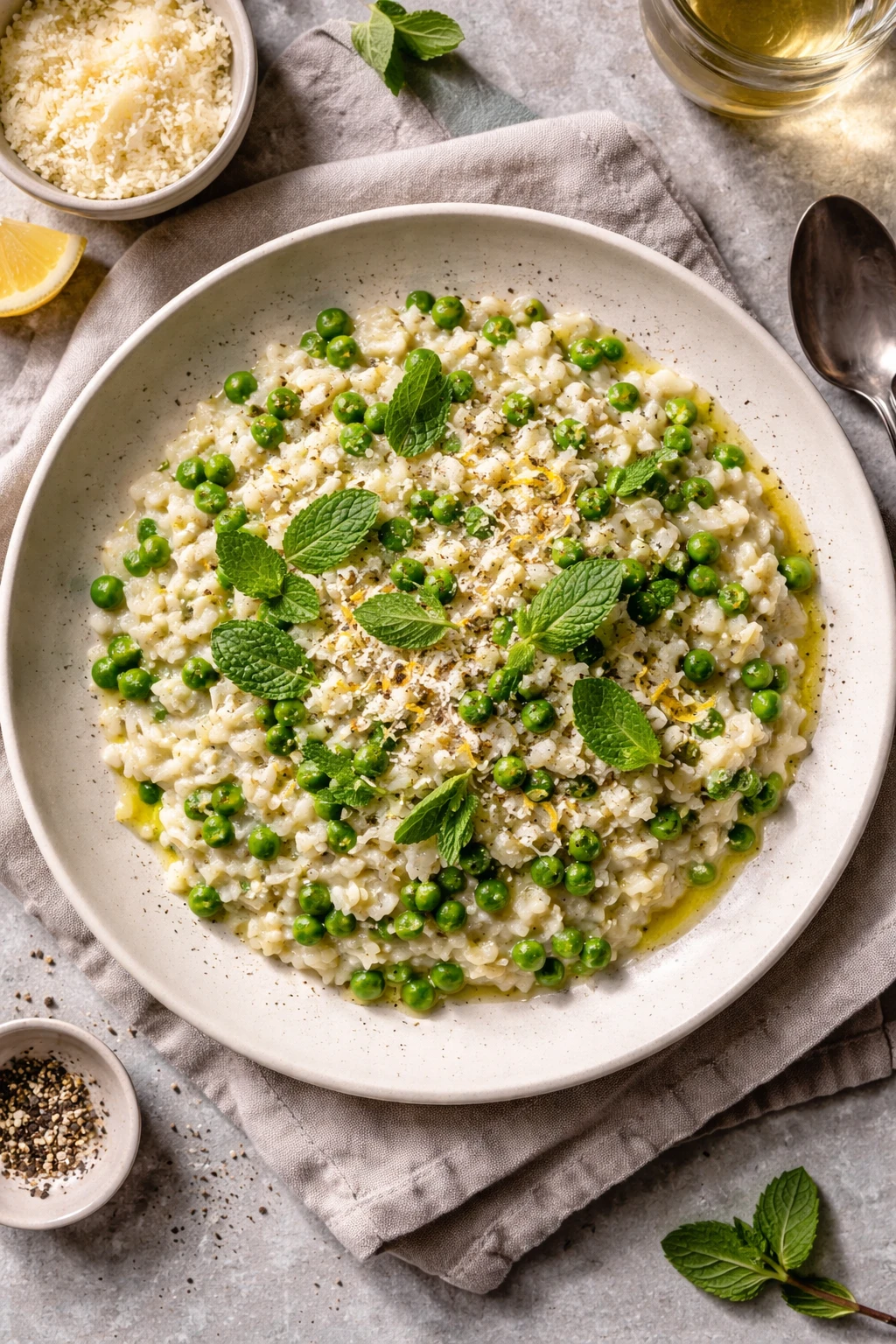
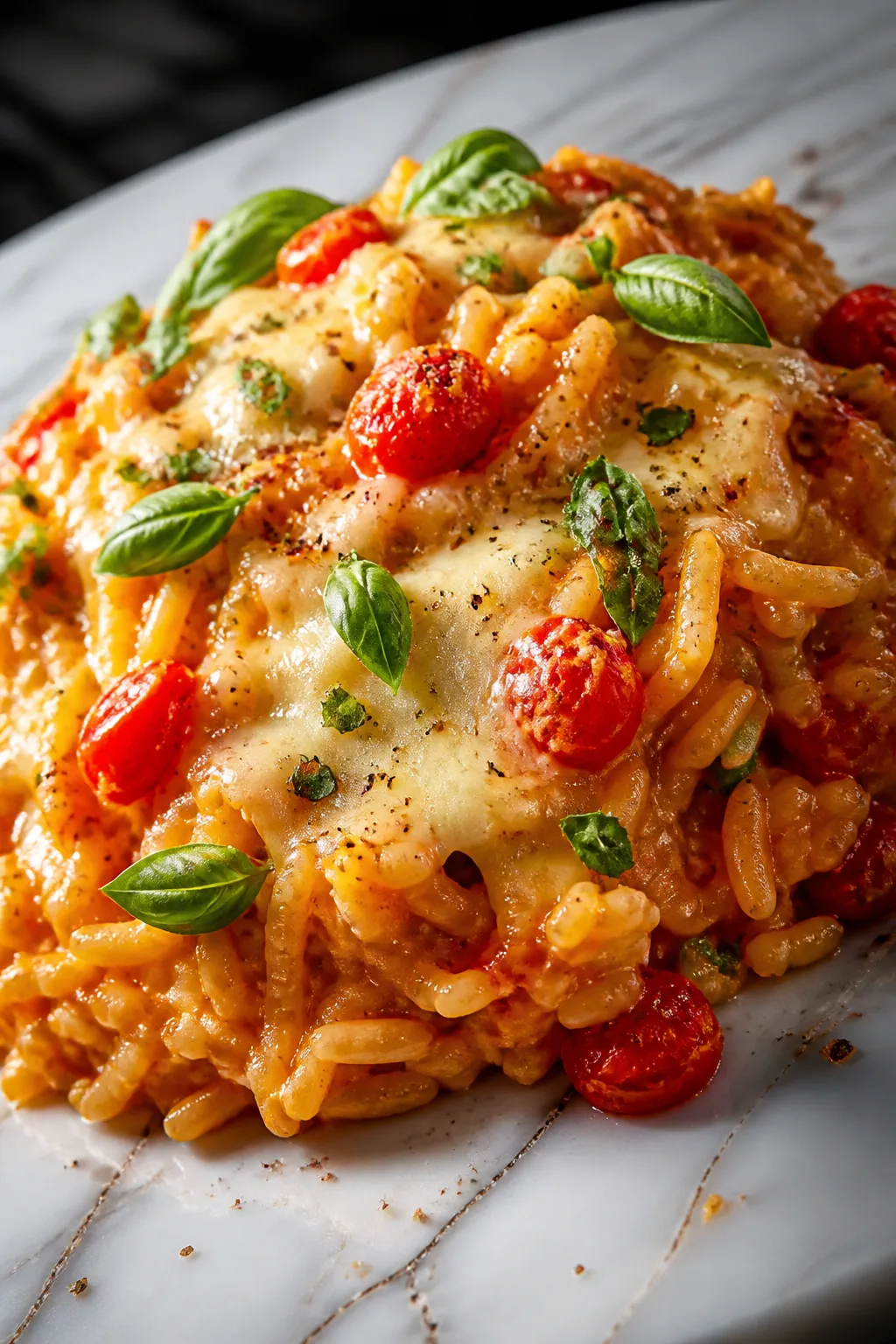
This light, creamy risotto is packed with fresh spring peas and a burst of minty brightness. The trick is adding fresh mint at the end to keep that vibrant pop. Great for a quick dinner or a tasty side.
Introduction
I first made this spring pea risotto a few years ago when I found a bag of fresh peas at the farmer's market and wanted something light but satisfying. It quickly became a favorite in my house because it’s creamy without being heavy, and that fresh mint at the end just brightens everything up. I’ve tried risotto recipes that feel dense or overly rich, but this one strikes the perfect balance. The key I learned is adding the mint right at the last minute so it keeps its fresh flavor instead of cooking away. Also, stirring the rice patiently while gradually adding warm broth helps the risotto develop that silky texture everyone loves. The finished dish is comforting and creamy with bursts of sweet peas and a fresh herbal note that feels like spring in every bite. It’s perfect for a cozy dinner or a fancy side when you want something special but easy. I think you’ll love how approachable this recipe is, even if risotto feels intimidating at first. Just take it slow, keep the broth warm, and you’ll get a luscious, bright dish every time.
How To Do It
Step 1
Heat the olive oil in a large, heavy-bottomed pan over medium heat. Add the finely chopped onion and cook gently until soft and translucent, about 5 minutes. Avoid browning the onion as this will keep the risotto’s flavor delicate and fresh. Stir occasionally to prevent sticking and burning. This step builds a flavorful base and softens the onion to melt into the creamy texture later.
⏱ Time: 5
✓ Doneness: Onions are translucent, soft, and slightly glossy without any browning.
Step 2
Add the minced garlic to the pan and cook for about 30 seconds until fragrant. Then stir in the Arborio rice, coating each grain with oil and onion mix. Toast the rice gently for 1-2 minutes until the edges become translucent but the center stays opaque. This step is crucial because it starts the starch release that gives risotto its creaminess. Don’t rush it or the rice won’t cook evenly later.
⏱ Time: 3
✓ Doneness: Rice grains look glossy and almost translucent on the edges.
Step 3
Pour in the white wine and stir continuously until it’s mostly absorbed by the rice. The acidity of the wine adds brightness and depth to the dish. If you skip this, the risotto may taste flat. Let the alcohol cook off, about 2-3 minutes, before moving on.
⏱ Time: 3
✓ Doneness: Wine is fully absorbed, rice looks slightly creamy and glossy.
Step 4
Begin adding the warm vegetable broth one ladle at a time, stirring constantly. Wait until each addition is almost fully absorbed before adding the next ladle. This slow absorption encourages the rice to release starch, creating that signature creamy texture. Stirring also prevents sticking and promotes even cooking. This step takes patience but is key for perfect risotto.
⏱ Time: 20
✓ Doneness: Rice is tender but still has a slight bite (al dente) and the mixture looks creamy.
Step 5
About halfway through cooking, stir in the fresh or frozen peas. They’ll cook quickly in the hot risotto and add a sweet, fresh pop. Using fresh peas is best for flavor, but frozen work fine too. Avoid adding them too early or they’ll lose their vibrant color and texture.
⏱ Time: 5
✓ Doneness: Peas are bright green and tender but not mushy.
Step 6
Once all broth is absorbed and the rice is creamy and tender, remove the pan from heat. Stir in the butter and grated Parmesan cheese vigorously to enrich and thicken the risotto. This final step adds a silky finish and depth of flavor. Make sure the butter and cheese are well incorporated for the best texture.
⏱ Time: 2
✓ Doneness: Risotto looks glossy, thick, and creamy with no dry spots.
Step 7
Fold in the chopped fresh mint leaves gently at the very end, right before serving. Adding mint earlier will cause it to lose its bright, fresh aroma and flavor. This herb adds a refreshing lift that balances the creamy richness perfectly.
⏱ Time: 1
✓ Doneness: Mint is vibrant and fragrant without wilting or discoloring.
Step 8
Taste the risotto and season with salt and freshly ground black pepper to your liking. Seasoning at the end lets you control the final flavor since Parmesan already adds saltiness. Adjust carefully to avoid oversalting.
⏱ Time: 1
✓ Doneness: Balanced seasoning with no overwhelming saltiness.
Step 9
Serve immediately while hot and creamy. Risotto doesn’t hold well once cooled, so enjoy it fresh for the best texture and flavor. Garnish with extra mint or Parmesan if desired for an inviting presentation.
⏱ Time: 0
✓ Doneness: Risotto is hot, creamy, and visually appealing on the plate.
Pro Tips
Keep your broth warm throughout the cooking process.
Adding cold broth to the rice can lower the temperature suddenly, which stalls the cooking and disrupts the starch release that creates risotto’s creamy texture. Keeping broth warm helps maintain a steady cooking environment and ensures the rice cooks evenly and smoothly.
Stir constantly but gently while adding broth.
Stirring encourages the rice to release starch, but stirring too vigorously can break the grains and make the risotto gluey instead of creamy. Gentle, consistent stirring helps create the perfect silky texture without damaging the rice grains.
Add fresh mint only at the very end.
Mint’s delicate oils and flavor fade quickly when exposed to heat. Adding it just before serving preserves its vibrant aroma and brightness, giving the risotto a fresh lift that contrasts nicely with the creamy richness.
Use fresh Parmesan cheese, not pre-grated.
Freshly grated Parmesan melts better and has a richer flavor. Pre-grated often contains anti-caking agents that affect how it melts and can result in a less smooth texture. Fresh cheese enhances both flavor and creaminess.
Toast the rice lightly before adding liquid.
Toasting the rice coats each grain with oil, which helps the grains cook evenly and adds a subtle nutty note. It also starts the starch release process, which is essential for creamy risotto.
Don’t rush the broth additions.
Adding all the broth at once or too quickly prevents the rice from absorbing liquid properly and releasing starch. Slow, gradual additions allow the rice to cook perfectly and develop the signature creamy texture.
Season at the end to avoid oversalting.
Parmesan cheese and broth already contain salt, so seasoning before cooking can lead to an overly salty dish. Tasting and adjusting salt at the end ensures balanced flavor.
Common Mistakes to Avoid
Adding cold broth to the rice
Why it happens Many cooks don't realize temperature affects starch release and just add broth straight from the fridge.
Fix Always keep your broth warm on the stove. This helps maintain a steady cooking temperature and allows the rice to release starch gradually, resulting in creamy risotto instead of dry or unevenly cooked rice.
Skipping the toasting step
Why it happens Some think toasting rice is unnecessary or time-consuming.
Fix Toast the rice for 1-2 minutes until edges look translucent. This step develops flavor and helps the rice cook evenly, preventing a gummy texture.
Overcooking peas
Why it happens Adding peas too early or cooking too long.
Fix Add peas halfway through to keep their bright color and tender bite.
Adding mint too early
Why it happens Assuming herbs can be cooked in from the start.
Fix Add fresh mint right at the end to preserve its fresh aroma and flavor.
Variations
Lemon Zest and Basil Risotto
Swap fresh mint for basil and add lemon zest for a bright, summery twist. The basil adds a sweet herbal note while lemon zest brings a fresh citrus punch. This variation feels lighter and more fragrant.
Note: Add lemon zest and chopped basil at the end, just like the mint, to preserve their fresh flavors.
Mushroom and Pea Risotto
Add sautéed mushrooms along with peas for an earthier, heartier risotto. Mushrooms add umami depth that pairs beautifully with the sweet peas and creamy rice.
Note: Sauté mushrooms separately with garlic and add them in during the last 5 minutes of cooking.
Vegan Spring Pea Risotto
Skip the butter and Parmesan and use nutritional yeast for a cheesy flavor. Use olive oil instead of butter. This keeps the risotto creamy and flavorful without dairy.
Note: Add nutritional yeast at the end and stir well to mimic cheesy richness.
Pea and Mint Risotto with Crispy Pancetta
Top the creamy risotto with crispy pancetta for a salty, crunchy contrast. The pancetta’s savory punch balances the fresh peas and mint perfectly.
Note: Cook pancetta separately until crisp and sprinkle on top just before serving.
Asparagus and Pea Risotto
Add chopped asparagus tips along with peas for extra spring veggies and texture. The asparagus adds a subtle bitterness that complements the sweet peas.
Note: Add asparagus during the last 5 minutes of cooking to keep them tender-crisp.
Nutrition
Per Serving:
Nutritional values are estimates and may vary based on specific ingredients used.
Storage & Tips
Room Temperature
Risotto should not be kept at room temperature for more than 2 hours to avoid bacterial growth. If you plan to serve later, cool quickly and refrigerate promptly in an airtight container.
Refrigerator
Store leftover risotto in an airtight container for up to 3 days. The texture will firm up in the fridge, so gently reheat with a splash of broth or water to restore creaminess. It can be served slightly chilled but reheating improves flavor and texture.
Freezer
Risotto can be frozen for up to 1 month. Cool completely before transferring to a freezer-safe container. To thaw, place in the refrigerator overnight. Reheat slowly with added liquid to regain creaminess. Freezing may slightly change texture but is still delicious.
Reheating
Reheat risotto gently on the stovetop over low heat, stirring often and adding a splash of broth or water to loosen the texture. Microwave reheating is possible but stir halfway through to heat evenly. Avoid overheating as risotto can dry out or become gluey.
Make Ahead
You can prepare the risotto base (onions, garlic, rice toasted) a day ahead and refrigerate. Warm the broth and finish cooking with broth additions and peas on the day of serving for freshest texture. Add mint and cheese just before serving.
FAQ
Can I use frozen peas instead of fresh?
Yes! Frozen peas work great if fresh aren’t available. Just add them a little later in the cooking process to avoid overcooking and losing their bright color and texture.
What if I don’t have white wine?
You can substitute with extra broth plus a splash of lemon juice or white wine vinegar for acidity. The wine adds brightness, but these alternatives keep the flavor balanced.
How do I know when the risotto is done?
The rice should be tender but still slightly firm in the center (al dente), with a creamy, loose texture overall. Taste a grain to check doneness and adjust broth accordingly.
Can I make risotto ahead of time?
Risotto is best served fresh, but you can partially prepare it and finish cooking just before serving. Leftover risotto can be refrigerated and reheated with added liquid.
Why is my risotto too dry or sticky?
This usually happens if broth is added too quickly or if you don’t stir enough. Add broth gradually and stir gently but constantly to coax out starch and achieve creaminess.
Can I use a different type of rice?
Arborio rice is best because of its high starch content. Other short-grain rices like Carnaroli work too. Avoid long-grain rice, which won’t produce the creamy texture.
What’s the best way to chop fresh mint for risotto?
Remove the leaves from stems and roughly chop just before adding to preserve fresh flavor and aroma. Avoid chopping too finely, which can bruise the leaves.
Can I make this risotto vegan?
Absolutely! Skip the butter and Parmesan and use olive oil and nutritional yeast instead for cheesy flavor. The texture will still be creamy and delicious.
Final Thoughts
Give this spring pea risotto a try and enjoy a creamy, fresh dinner that’s surprisingly simple. I can’t wait to hear how it turns out for you!