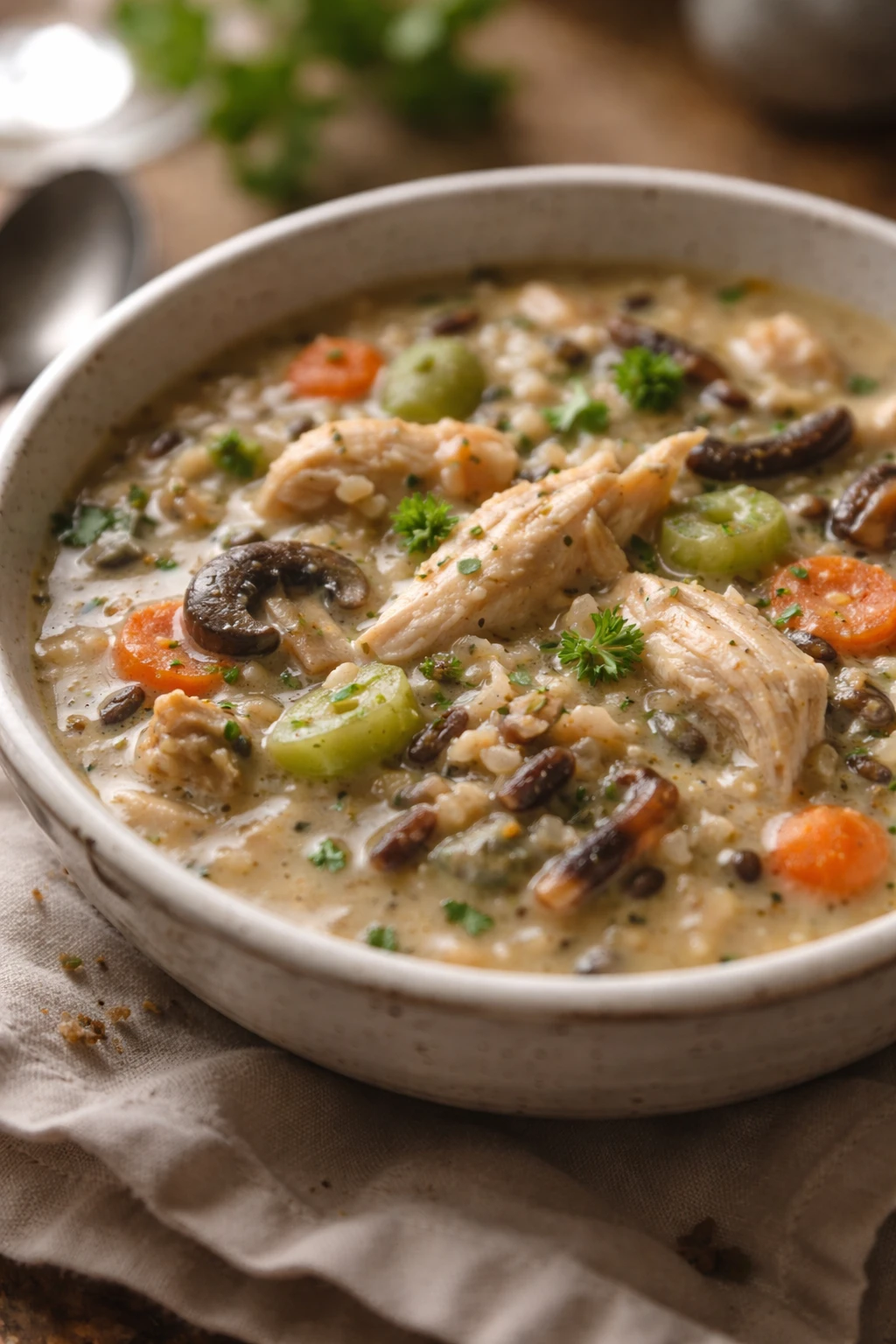
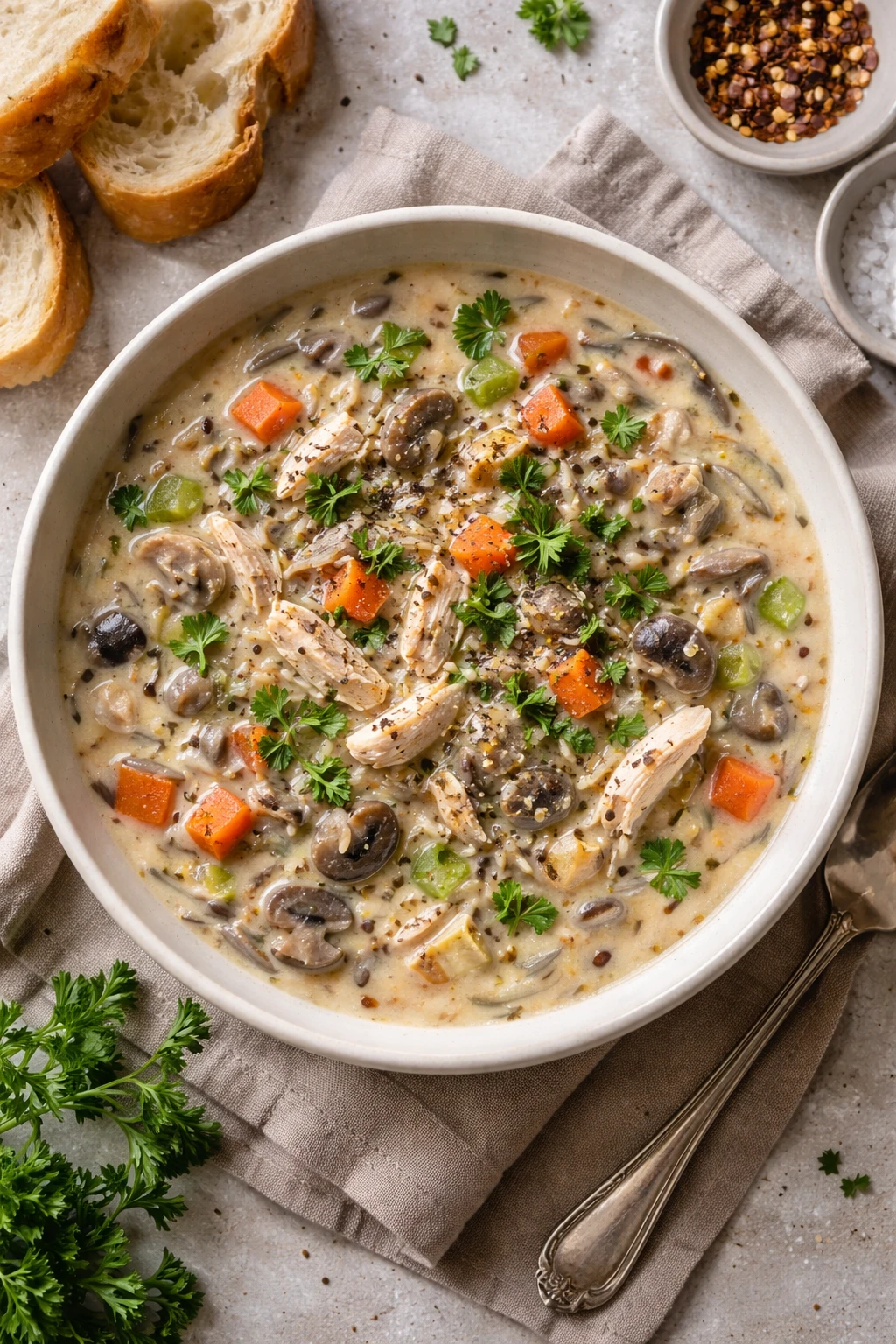
This chicken and wild rice soup is everything you want on a chilly night—rich, hearty, and packed with tender chicken and nutty wild rice. Slow-simmered with fresh herbs, it’s a soothing bowl of comfort any time you need a little warmth.
Introduction
I first made this chicken and wild rice soup on a cool spring evening when I was craving something warm and hearty but fresh enough to feel like spring. It quickly became a favorite in my family because it’s both comforting and packed with flavor. What I love most about this version is the slow simmer that allows the wild rice to open up and soak in the rich broth, making every spoonful satisfying. The mix of fresh herbs and tender chicken gives it a homey feel that’s perfect for dinner or even a casual lunch. I used to rush the cooking process and ended up with undercooked rice or bland broth, but letting it simmer gently is the trick that really brings everything together. When it’s done, you get a creamy, earthy, and savory bowl that feels like a warm hug. Plus, it’s incredibly easy to make, which is a bonus for busy weeknights. You’ll love how the flavors deepen the longer it cooks, so it’s great for leftovers too!
What You'll Need
Approximately 6 cups, serves 4
- 1 tablespoon olive oil, room temperature
- 1 medium onion, finely chopped
- 2 celery stalks, diced
- 2 carrots, diced
- 3 garlic cloves, minced
- 6 cups low-sodium chicken broth
- 1 cup wild rice, rinsed
- 2 cups cooked chicken, shredded
- 1 teaspoon dried thyme
- 1 teaspoon dried parsley
- Salt and pepper to taste
- 1/2 cup heavy cream (optional)
- Fresh parsley for garnish
How To Do It
Step 1
Heat the olive oil in a large pot over medium heat. Add the chopped onion, celery, and carrots, and cook for about 5-7 minutes until the vegetables are softened and fragrant. This step builds the soup’s flavor base by gently caramelizing the veggies, which enhances their sweetness. Stir occasionally to prevent sticking or burning, as burnt vegetables will add bitterness. Softening the aromatics first is key to a rich broth later.
⏱ Time: 7 minutes
✓ Doneness: Onions become translucent and vegetables are tender but not browned
Step 2
Add the minced garlic and cook for another minute, stirring constantly to avoid burning. Garlic burns quickly and turns bitter, so keep the heat moderate and watch closely. This step infuses the soup with a warm, savory note that complements the other ingredients perfectly.
⏱ Time: 1 minute
✓ Doneness: Garlic is fragrant but not browned
Step 3
Pour in the chicken broth and bring the mixture to a gentle boil. Adding the broth now helps deglaze the pot, lifting all those flavorful browned bits off the bottom. This step is important for depth of flavor. Once boiling, reduce heat to a simmer to cook the rice evenly without toughening the chicken later.
⏱ Time: 5 minutes
✓ Doneness: Broth is bubbling gently
Step 4
Stir in the rinsed wild rice, dried thyme, and parsley. Cover the pot and let the rice cook at a low simmer for about 25 minutes. Cooking at low heat allows the rice to absorb the broth fully and become tender without breaking apart. Avoid stirring too much during this time to prevent the rice from becoming mushy.
⏱ Time: 25 minutes
✓ Doneness: Wild rice grains are tender but still slightly chewy
Step 5
Add the shredded cooked chicken to the pot and stir gently to combine. The chicken is already cooked, so this step just warms it through without drying it out. Adding it too early can make the meat tough, so timing here preserves moistness and tenderness.
⏱ Time: 3 minutes
✓ Doneness: Chicken is heated through and tender
Step 6
Season the soup with salt and pepper to taste. Taste as you go because the broth and chicken add natural saltiness. Adjust seasoning gradually to avoid over-salting. If using, stir in the heavy cream now for a richer, silkier texture that rounds out the flavors beautifully.
⏱ Time: 2 minutes
✓ Doneness: Flavors are balanced and broth is creamy if cream is added
Step 7
Simmer the soup uncovered for another 5 minutes to let the flavors meld. This final simmer helps thicken the broth slightly and deepen the herbal notes. Keep the heat low to avoid boiling off the cream or toughening the chicken.
⏱ Time: 5 minutes
✓ Doneness: Soup has a slightly thickened consistency and rich aroma
Step 8
Remove from heat and let the soup sit for a few minutes before serving. This resting time allows the flavors to settle and the rice to absorb any last bits of broth, enhancing texture and taste. Serve hot garnished with fresh parsley for a bright, fresh finish.
⏱ Time: 5 minutes
✓ Doneness: Soup is warm and flavors have melded nicely
Step 9
Ladle the soup into bowls and enjoy with crusty bread or a light salad. This soup pairs wonderfully with simple sides and makes for a comforting meal that feels homemade and nourishing. Store leftovers in airtight containers and reheat gently to preserve texture.
⏱ Time: 0 minutes
✓ Doneness: Soup is served hot and ready to enjoy
Pro Tips
Rinse wild rice thoroughly before cooking.
Rinsing removes surface starch and any debris, which helps prevent the soup from becoming cloudy or gummy. It also ensures the rice cooks evenly and maintains a nice chewy texture.
Simmer the soup gently instead of boiling.
Boiling can break down the wild rice and toughen the chicken. A gentle simmer cooks ingredients evenly and preserves texture and flavor, resulting in a balanced, comforting soup.
Add cooked chicken near the end of cooking.
Adding chicken too early makes it dry and stringy. Adding it last just warms it through while keeping it moist and tender, improving the soup’s overall texture.
Use fresh herbs for garnish and flavor.
Fresh herbs add brightness and a fresh aroma that dried herbs can’t replicate. Adding them at the end preserves their delicate oils and color.
Don’t skip the resting time before serving.
Letting the soup sit off heat allows flavors to meld and the rice to absorb extra broth, enhancing taste and texture for a more cohesive dish.
Adjust seasoning gradually, especially salt.
Broth and chicken add natural saltiness. Adding salt little by little prevents over-seasoning, ensuring a balanced and flavorful soup.
Use a heavy-bottomed pot for even heat distribution.
A good pot prevents hot spots that can burn the vegetables or rice. Even heat helps develop flavors gently without scorching.
Common Mistakes to Avoid
Cooking wild rice too fast or at high heat
Why it happens Many cooks rush the rice cooking process, thinking higher heat means faster cooking.
Fix Simmer the soup gently and allow at least 25 minutes for the rice to cook slowly. This prevents mushiness and uneven texture.
Adding raw chicken too early
Why it happens Assuming chicken needs long cooking time in soup leads to dry, tough meat.
Fix Use pre-cooked chicken and add it near the end just to warm through, keeping it tender.
Skipping the sauté of aromatics
Why it happens Some skip this step to save time, missing out on flavor development.
Fix Take time to soften onions, celery, and carrots first to build a rich flavor base.
Over-salting the soup
Why it happens Not tasting as you go or using salty broth leads to too much salt.
Fix Use low-sodium broth and season gradually, tasting frequently.
Burning garlic
Why it happens Adding garlic too early or cooking on high heat causes bitterness.
Fix Add garlic after vegetables soften and cook briefly on medium-low heat.
Variations
Creamy Mushroom Chicken and Wild Rice Soup
Add sautéed mushrooms along with the vegetables for an earthy twist. Stir in cream and a splash of white wine for richness. This adds depth and a velvet texture, perfect for mushroom lovers.
Note: Sauté mushrooms separately to avoid excess moisture and add them just before the chicken.
Spicy Cajun Chicken and Wild Rice Soup
Incorporate Cajun seasoning and diced bell peppers for a spicy kick. Use smoked paprika and cayenne to give the soup a bold flavor profile that’s lively and warming.
Note: Adjust spice levels gradually and add peppers with the aromatics for balanced heat.
Vegetarian Wild Rice Soup
Skip the chicken and use vegetable broth instead. Add extra mushrooms, carrots, and celery for hearty texture. This version is just as comforting and perfect for plant-based diets.
Note: Simmer rice longer if needed and add plant-based cream or coconut milk for creaminess.
Lemon Herb Chicken and Wild Rice Soup
Add fresh lemon juice and zest at the end for a bright, fresh flavor. Increase fresh herbs like dill and parsley to complement the citrus notes, making it lighter and refreshing.
Note: Add lemon juice off heat to preserve brightness and avoid bitterness.
Slow Cooker Chicken and Wild Rice Soup
Combine all ingredients except cream and fresh herbs in a slow cooker. Cook on low for 6-7 hours. Add cream and herbs just before serving for convenience and rich flavor.
Note: Use pre-cooked chicken to prevent it from drying out during the long cooking time.
Nutrition
Per Serving:
Nutritional values are estimates and may vary based on specific ingredients used.
Storage & Tips
Room Temperature
This soup can safely sit at room temperature for up to 2 hours covered to prevent contamination. Beyond that, it should be refrigerated promptly to avoid bacterial growth.
Refrigerator
Store in an airtight container and refrigerate for up to 3 days. The flavors deepen but the rice may absorb more broth, so you might want to add a splash of broth or water when reheating to loosen the texture.
Freezer
Freeze the soup in freezer-safe containers for up to 3 months. Leave some headspace as the soup expands. Thaw overnight in the fridge and reheat gently to avoid breaking down the rice or curdling the cream.
Reheating
Reheat on the stovetop over low heat, stirring occasionally. Add a little broth or water if the soup is too thick. Avoid boiling to keep chicken tender and prevent cream from separating.
Make Ahead
Prepare the soup base and cook the rice ahead of time, storing separately if possible. Add chicken and cream just before serving to maintain texture and freshness. This saves time on busy days.
FAQ
Can I use white rice instead of wild rice?
Yes, you can substitute white rice, but it cooks faster and becomes softer. Adjust cooking times accordingly to avoid mushiness, and expect a milder flavor since wild rice has a nuttier taste.
Is it okay to use leftover chicken?
Absolutely! Leftover cooked chicken works perfectly. Just add it near the end to warm through without drying out. This also makes the soup quick and convenient.
Can I make this soup vegan?
Yes, substitute vegetable broth for chicken broth and skip the chicken or use plant-based proteins like tofu or mushrooms. Use coconut milk or cashew cream instead of heavy cream for richness.
How do I prevent the soup from becoming too thick after refrigeration?
The rice absorbs liquid as it sits. When reheating, add a splash of broth or water and warm gently to restore a soup-like consistency without thinning the flavor.
Can I freeze this soup with cream added?
Cream can separate when frozen, affecting texture. For best results, freeze the soup without cream and add fresh cream when reheating.
What if I don’t have fresh herbs?
You can substitute dried herbs, but reduce the quantity and add them early during cooking since they need time to infuse their flavors.
Why does my soup sometimes taste bland?
Under-seasoning or using low-quality broth can cause blandness. Taste and season gradually with salt and pepper, and consider using a richer broth or adding a splash of lemon juice or vinegar to brighten flavors.
Can I use chicken thighs instead of breast?
Yes, thighs offer more flavor and stay moist longer. Just shred the cooked meat and add at the end to avoid overcooking.
Final Thoughts
I hope you give this comforting chicken and wild rice soup a try soon—it’s such a cozy, satisfying meal. Don’t forget to share how it turns out for you!