This soup is pure comfort in a bowl, with roasted cauliflower adding a deep, nutty flavor. It’s smooth, creamy, and perfect for chilly spring nights or anytime you want something soothing and simple.
Introduction
I first made this roasted cauliflower soup on a chilly spring evening when I wanted something warm and comforting but light. Roasting the cauliflower before blending it was a game changer — it brings out a deep, nutty flavor that plain boiled cauliflower just can’t match. Since then, it’s become a go-to whenever I crave something creamy but not heavy. What I love most is how simple it is to make, yet it feels so special. The trick I learned is roasting the veggies until they get those golden brown edges, which adds a richness that makes the soup feel indulgent without needing tons of cream or butter. When it’s done, the soup is silky and smooth, with a subtle sweetness from the roasted cauliflower and a gentle garlicky warmth. It’s perfect for cozy dinners or anytime you want a bowl of comfort that’s both satisfying and nourishing. Plus, it’s easy to customize with your favorite herbs or toppings, so it never gets boring. Honestly, I think this soup is one of those recipes that makes you feel like you’re treating yourself, even on an ordinary day.
What You'll Need
Approximately 6 cups, 4 servings
- 1 large head cauliflower, chopped into florets
- 2 tablespoons olive oil
- 1 medium onion, chopped
- 3 cloves garlic, minced
- 4 cups vegetable broth
- 1/2 cup heavy cream or coconut milk
- Salt and freshly ground black pepper, to taste
- Optional garnish: chopped parsley or toasted nuts
How To Do It
Step 1
Preheat your oven to 425°F (220°C). Toss the cauliflower florets with 2 tablespoons of olive oil and a pinch of salt. Spread them out evenly on a baking sheet. Roasting the cauliflower caramelizes the natural sugars, giving the soup a deeper, nuttier flavor that boiling can’t achieve. Make sure the florets are in a single layer and not crowded to get nice browning instead of steaming. Roast for about 25 minutes or until the edges are golden brown and the cauliflower is tender. Keep an eye on them after 20 minutes to avoid burning, which would turn the soup bitter.
⏱ Time: 25
✓ Doneness: Cauliflower should be tender and nicely browned around the edges
Step 2
While the cauliflower roasts, heat a large pot over medium heat and add a splash of olive oil. Add the chopped onion and cook gently until soft and translucent, about 5-7 minutes. Stir frequently to prevent browning, as you want the onions sweet and mellow rather than caramelized. Add the minced garlic and cook for another 1-2 minutes until fragrant but not browned, since burnt garlic tastes bitter. This step builds the flavor base for your soup, so don’t rush it or skip it.
⏱ Time: 8
✓ Doneness: Onions are soft and translucent, garlic is aromatic but not browned
Step 3
Once the cauliflower is roasted, add it to the pot with onions and garlic. Pour in 4 cups of vegetable broth and bring the mixture to a gentle boil. Using broth instead of water adds a savory depth to the soup. Reduce the heat and let it simmer uncovered for about 10 minutes to let the flavors meld and ensure the cauliflower is completely tender. Don’t rush this simmer; it helps the flavors marry and makes the soup taste more rounded.
⏱ Time: 10
✓ Doneness: Soup is simmering gently, cauliflower is very soft
Step 4
Remove the pot from heat and let the soup cool slightly before blending. Carefully transfer the soup in batches to a blender or use an immersion blender right in the pot. Puree until completely smooth and creamy. This step is key because blending the roasted cauliflower creates that velvety texture that makes the soup feel luxurious. If you don’t blend thoroughly, the soup can be grainy or lumpy, which changes the mouthfeel.
⏱ Time: 10
✓ Doneness: Soup is smooth, creamy, and lump-free
Step 5
Return the pureed soup to the pot over low heat. Stir in 1/2 cup of heavy cream or coconut milk for a dairy-free option. This adds richness and balances the roasted flavor with a gentle creaminess. Warm through gently but don’t boil after adding cream to avoid curdling. Taste and season with salt and freshly ground black pepper to your preference. Seasoning at this stage ensures the flavors are balanced and the soup isn’t bland.
⏱ Time: 5
✓ Doneness: Soup is heated through with a silky, creamy consistency
Step 6
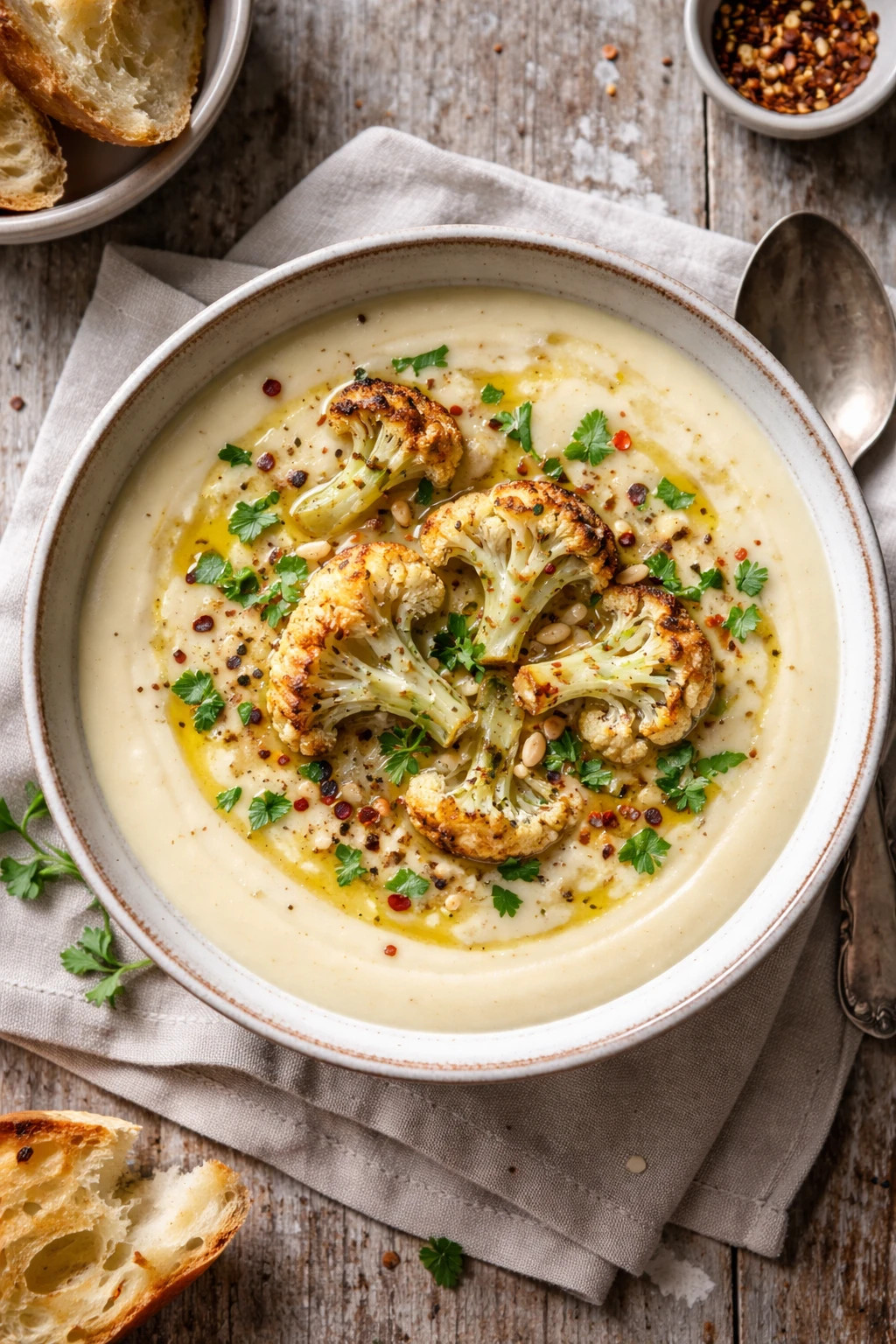
Serve the soup hot, garnished with chopped parsley or toasted nuts if you like a bit of texture. The garnish adds a fresh or crunchy contrast to the smooth soup, elevating the overall experience. Plus, it makes for a pretty presentation if you’re serving guests or want to snap a photo. Enjoy immediately for the best flavor and texture.
⏱ Time: 2
✓ Doneness: Soup is steaming hot with garnish adding color and texture
Step 7
If you want to prep ahead, roast the cauliflower and sauté the onions and garlic in advance. Store them separately in the fridge for up to two days. This saves time on the day you plan to serve the soup and lets the flavors develop even more when combined. Just add the broth, simmer, blend, and finish with cream when ready.
⏱ Time: 0
✓ Doneness: Prep ingredients are cooled and stored properly
Step 8
For a thicker soup, reduce the broth slightly by simmering longer before blending. If you prefer it thinner, add a splash more broth or water after blending until you reach your desired consistency. Adjusting the liquid lets you customize the soup to your liking, whether you want it spoonable or more like a light broth.
⏱ Time: 0
✓ Doneness: Soup consistency matches your preference
Step 9
Experiment with adding spices like smoked paprika, nutmeg, or a pinch of chili flakes during the sauté step to add warmth or a subtle kick. These additions can change the soup’s character and make it your own. Just add sparingly and taste as you go to avoid overpowering the delicate roasted cauliflower flavor.
⏱ Time: 0
✓ Doneness: Spices are well integrated without overpowering
Pro Tips
Don’t overcrowd the cauliflower on the baking sheet when roasting.
Overcrowding traps steam and prevents the cauliflower from browning properly. Browning creates those delicious caramelized flavors through Maillard reactions, so giving each floret enough space ensures a deeper, richer taste.
Use an immersion blender for easier pureeing right in the pot.
An immersion blender saves time and reduces mess by allowing you to blend the soup without transferring hot liquid to a stand blender. It also lets you control the texture more precisely, from chunkier to silky smooth.
Add cream or coconut milk off the heat to avoid curdling.
Heating cream too high causes it to separate and curdle, ruining the texture. Stirring it in over low heat keeps the soup silky and smooth, preserving that luxurious mouthfeel.
Season gradually and taste as you go.
Salt enhances flavor but adding too much at once can oversalt the soup. By seasoning gradually, you can balance the flavors perfectly and adjust to your personal preference.
Use fresh garlic and add it after the onions soften.
Garlic burns quickly and turns bitter if cooked too long or on high heat. Adding it after the onions have softened lets it release its aroma without bitterness, creating a mellow, inviting flavor.
Let the soup cool slightly before blending.
Blending very hot liquids can be dangerous due to steam pressure. Cooling slightly prevents splatters and makes blending safer and easier.
Toast nuts for garnish to add crunch and flavor contrast.
Toasted nuts add a pop of texture and a nutty flavor that complements the creamy soup, making each bite more interesting and satisfying.
Common Mistakes to Avoid
Skipping the roasting step
Why it happens Some cooks want to save time and just boil the cauliflower, thinking it’s quicker.
Fix Roast the cauliflower to develop caramelized flavors and avoid a bland soup. It only takes 25 minutes, and the flavor difference is huge.
Burning the garlic
Why it happens Adding garlic too early or cooking on too high heat causes it to brown quickly.
Fix Add garlic after onions soften and cook briefly on medium-low heat to avoid bitterness.
Not blending thoroughly
Why it happens Rushing the blending step or using a blender that isn’t powerful enough.
Fix Blend until completely smooth for that velvety texture. Use an immersion blender or blend in batches carefully.
Adding cream while boiling
Why it happens Heating cream at too high a temperature causes curdling.
Fix Add cream off the heat or on very low heat and stir gently to keep it smooth.
Overcrowding the baking sheet
Why it happens Trying to roast all cauliflower at once without spreading it out.
Fix Use two baking sheets or roast in batches to get even browning and avoid steaming.
Variations
Vegan Version with Coconut Milk
Swap heavy cream for full-fat coconut milk to keep it vegan and add a subtle tropical richness. Use vegetable broth and double-check all ingredients are vegan-friendly. The coconut milk adds a lovely creaminess without overpowering the roasted cauliflower flavor.
Note: Use coconut milk at room temperature and stir in gently off heat to prevent separation.
Add a Spicy Kick with Red Pepper Flakes
For a bit of heat, add a pinch of red pepper flakes when sautéing the onions. This adds warmth and complexity without overpowering the soup. Perfect if you want to spice things up on chilly nights.
Note: Add sparingly and taste as you go to avoid too much heat.
Cheesy Cauliflower Soup
Stir in shredded sharp cheddar or Parmesan cheese after blending for a rich, cheesy twist. This variation is indulgent and comforting, great for cheese lovers looking for a creamy texture with a punch.
Note: Add cheese off heat to avoid clumping and stir until melted and smooth.
Herb-Infused Soup
Add fresh thyme or rosemary sprigs to the broth while simmering for an herbal aroma. Remove before blending. This adds a fragrant, woodsy note that complements the roasted cauliflower beautifully.
Note: Simmer herbs gently for 10 minutes to infuse without overpowering.
Chunky Cauliflower Soup
Blend only half the soup for a smooth base and leave the rest chunky for texture. This variation gives you creamy soup with little bites of tender cauliflower, adding interest and body.
Note: Use pulse function when blending to control texture.
Nutrition
Per Serving:
Nutritional values are estimates and may vary based on specific ingredients used.
Storage & Tips
Room Temperature
The soup can sit safely at room temperature for up to 2 hours if covered tightly to avoid contamination. Beyond that, it’s best to refrigerate promptly to prevent bacterial growth.
Refrigerator
Store in an airtight container for up to 3 days. The soup thickens as it cools; reheat gently on the stove with a splash of broth or water to loosen it. Flavor remains great, but texture is best when served warm.
Freezer
Freeze in a freezer-safe container for up to 2 months. Leave some headspace for expansion. Thaw overnight in the fridge and reheat gently. Texture might be slightly grainier but still delicious.
Reheating
Reheat on the stovetop over low heat, stirring occasionally. Add a splash of broth or cream if it’s too thick. Avoid boiling to preserve creaminess and prevent separation.
Make Ahead
Roast cauliflower and sauté onions and garlic 1-2 days ahead. Store separately in airtight containers. On serving day, combine with broth, simmer, blend, and finish with cream for a quick, fresh soup.
FAQ
Can I use frozen cauliflower for this soup?
Yes, frozen cauliflower works in a pinch, but it tends to be more watery and less flavorful. If using frozen, skip roasting and sauté it directly with onions, then simmer longer to concentrate flavor. The soup might be less rich but still tasty.
What can I substitute for heavy cream if I’m lactose intolerant?
You can use canned coconut milk or cashew cream as dairy-free alternatives. Both add creaminess without lactose. Coconut milk gives a slight coconut flavor, while cashew cream is more neutral. Add these off heat to avoid curdling.
How do I make the soup thicker or thinner?
To thicken, reduce the broth by simmering longer before blending. To thin it out, add extra broth or water after blending until you reach your preferred consistency. Adjust gradually to avoid over-thinning.
Can I prepare this soup in a slow cooker?
You can, but roasting the cauliflower first is key for flavor, so roast separately. Then add all ingredients to the slow cooker and cook on low for 4-6 hours. Blend at the end for a creamy texture.
Why does my soup taste bland?
Blending the soup thoroughly and seasoning at the end are important. Also, roasting the cauliflower develops flavor. If bland, try adding more salt gradually or a splash of acid like lemon juice to brighten it.
Can I make this soup spicy?
Absolutely! Add red pepper flakes when sautéing onions or a dash of cayenne pepper. Start with a small amount and taste as you go to avoid overpowering the delicate cauliflower flavor.
Is this soup suitable for meal prep?
Yes, it stores well in the fridge for about 3 days and freezes nicely. Just reheat gently and add liquid if it’s too thick. It’s great for quick lunches or dinners throughout the week.
What’s the best way to garnish this soup?
Fresh herbs like parsley or chives add color and freshness. Toasted nuts or seeds add crunch and complement the creamy texture. A drizzle of olive oil or a sprinkle of smoked paprika also works well.
Final Thoughts
I hope you try this roasted cauliflower soup soon — it’s one of those recipes that feels like a warm hug in a bowl. Let me know how yours turns out!