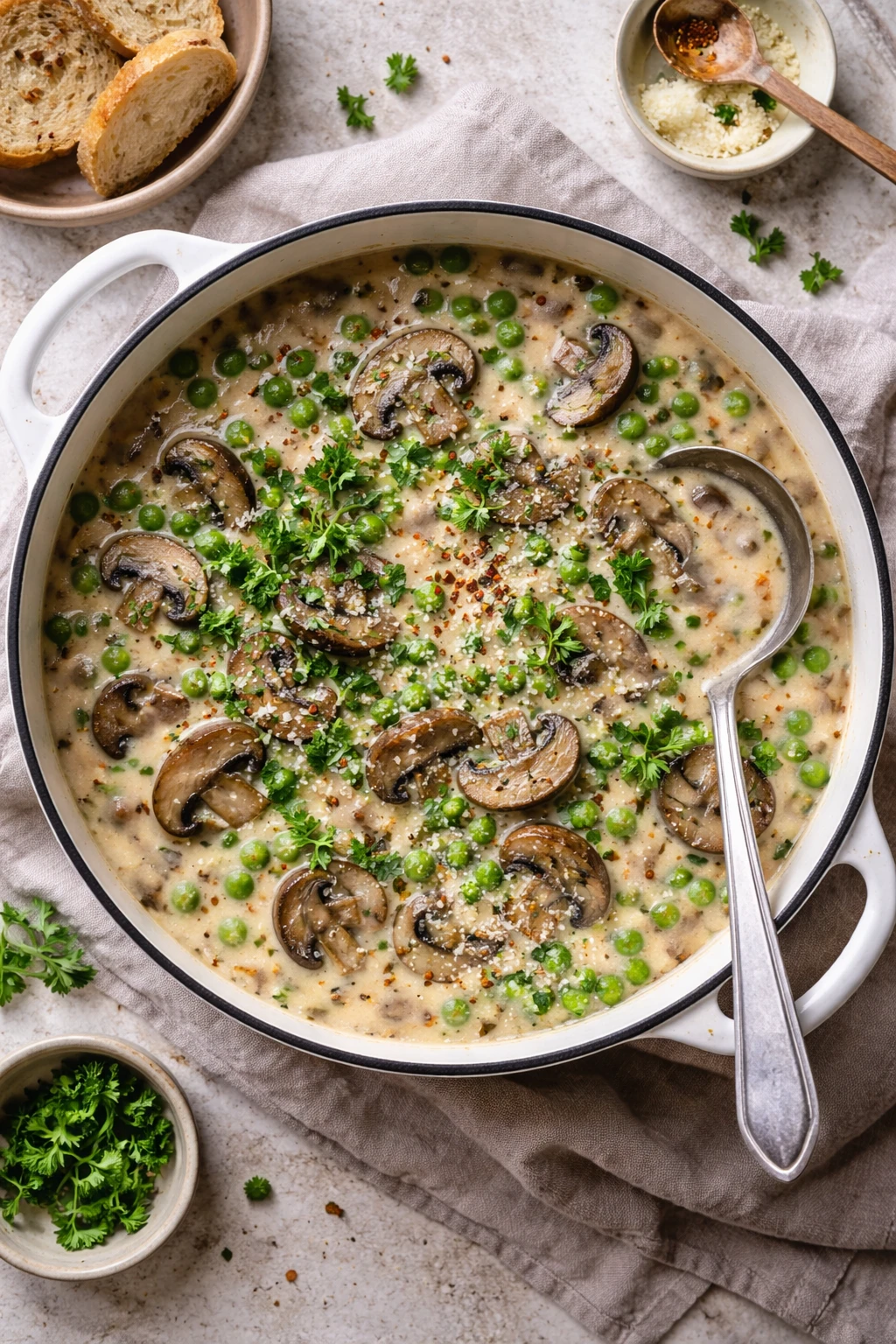
This creamy mushroom and pea soup is a cozy, easy one-pot meal packed with fresh peas and earthy mushrooms. It’s perfect for chilly nights when you want something warm and comforting without fuss.
Introduction
I remember the first time I tried this creamy mushroom and pea soup—it was a chilly autumn evening, and I just wanted something simple but satisfying. Most mushroom soups I’d tried were either too thin or lacked that fresh, bright flavor. What makes this version stand out is the addition of fresh peas, which add a subtle sweetness and a lovely pop of color. Plus, it’s all made in one pot, which means less cleanup and more time to relax.
One trick I learned early on is to sauté the mushrooms really well until they release their moisture and start to caramelize. This step builds a rich, deep flavor that you won’t get if you just boil them. Then, blending part of the soup while leaving some pieces chunky gives it that perfect creamy texture without being too heavy. When it’s done, you get this velvety, earthy soup that feels like a warm hug in a bowl—ideal for those evenings when you want comfort without fuss. I love serving it with some crusty bread to dip in, making it a simple but memorable meal.
What You'll Need
Approximately 4 generous bowls, 4 servings
- 2 tablespoons olive oil
- 1 medium onion, finely chopped
- 3 garlic cloves, minced
- 12 ounces cremini mushrooms, sliced
- 4 cups vegetable broth
- 2 cups fresh or frozen peas
- 1/2 cup heavy cream
- Salt and freshly ground black pepper, to taste
- 1 teaspoon fresh thyme leaves
- Optional: crusty bread for serving
How To Do It
Step 1
Heat the olive oil in a large pot over medium heat. Once hot, add the chopped onion and sauté gently until it becomes translucent and soft, about 5-7 minutes. This step is crucial because it builds the soup’s flavor base. Avoid browning the onions too much as that can make the soup bitter. Stir frequently to ensure the onions cook evenly and release their natural sweetness.
⏱ Time: 7
✓ Doneness: Onions are soft, translucent, and fragrant without any brown edges
Step 2
Add the minced garlic to the pot and stir for about 30 seconds until fragrant, being careful not to let it burn. Immediately add the sliced mushrooms and increase the heat to medium-high. Cook the mushrooms, stirring occasionally, until they release their moisture and start turning golden brown, about 8-10 minutes. This caramelization adds depth and richness to the soup’s flavor.
⏱ Time: 10
✓ Doneness: Mushrooms are golden brown, reduced in size, and have a rich aroma
Step 3
Pour in the vegetable broth and bring the mixture to a gentle boil. Add the fresh or frozen peas and thyme leaves. Reduce the heat to low and let it simmer for 10 minutes. This allows the flavors to meld and the peas to cook through but remain vibrant. Avoid boiling vigorously to keep the peas from turning mushy.
⏱ Time: 10
✓ Doneness: Soup simmers gently with peas tender but still bright green
Step 4
Using an immersion blender, blend about half the soup directly in the pot until smooth and creamy. Leaving some chunks gives the soup a nice texture and prevents it from feeling too heavy. If you don’t have an immersion blender, you can transfer half the soup to a blender, puree it, and then return it to the pot.
⏱ Time: 5
✓ Doneness: Soup is creamy with a few visible mushroom and pea pieces
Step 5
Stir in the heavy cream and season the soup with salt and freshly ground black pepper to taste. Heat gently over low heat until warmed through but do not boil, as boiling after adding cream can cause it to curdle. Adjust seasoning as needed to balance the earthiness and sweetness.
⏱ Time: 3
✓ Doneness: Soup is hot, creamy, and well-seasoned with no curdling
Step 6
Taste the soup and add more salt, pepper, or thyme if desired. If the soup feels too thick, add a splash of broth or water to loosen the texture. This final adjustment ensures the flavor and consistency are just right before serving.
⏱ Time: 2
✓ Doneness: Soup tastes balanced and has a smooth, spoonable consistency
Step 7
Ladle the soup into bowls and, if you like, garnish with a sprinkle of fresh thyme or a drizzle of olive oil. Serve warm with crusty bread on the side for dipping. This adds a satisfying crunch and makes the meal feel complete.
⏱ Time: 2
✓ Doneness: Soup is steaming hot, garnished attractively, and ready to enjoy
Step 8
To store leftover soup, let it cool to room temperature before transferring it to an airtight container. This prevents condensation and maintains freshness. Proper storage keeps the soup tasting fresh for several days.
⏱ Time: 0
✓ Doneness: Soup cooled and sealed in container without condensation
Step 9
When reheating, warm the soup gently on the stovetop over low heat, stirring occasionally. Add a splash of broth or cream if it’s too thick. Avoid boiling during reheating to keep the cream smooth and prevent separation.
⏱ Time: 5
✓ Doneness: Soup is evenly heated, creamy, and smooth without separation
Pro Tips
Sauté mushrooms until golden brown for maximum flavor.
The Maillard reaction during sautéing creates complex, savory flavors that deepen the soup’s taste. If you skip this or undercook, the mushrooms will taste bland and the soup watery. Proper browning also removes excess moisture, preventing a diluted broth.
Blend only half the soup for a creamy yet textured finish.
Blending half the soup thickens it naturally while leaving some chunks for mouthfeel. This balance prevents the soup from becoming too heavy or gluey, making it more satisfying and fresh-tasting.
Add cream last and avoid boiling afterward.
Cream can curdle if boiled, ruining the smooth texture. Adding it at the end and warming gently keeps the soup silky and stable, enhancing richness without separation.
Use fresh thyme instead of dried for a brighter herbal flavor.
Fresh thyme has a more delicate and vibrant aroma that blends well with mushrooms. Dried thyme can taste harsh and overpower the soup’s natural earthiness.
Season gradually and taste often.
Vegetable broth varies in saltiness, so adjusting seasoning slowly helps avoid over-salting. Tasting as you go ensures balanced flavors and a perfectly seasoned soup.
Don’t rush simmering the peas.
Gentle simmering cooks peas through without turning them mushy or dulling their color. High heat can break down their texture and sweetness, making the soup less appealing.
Serve with crusty bread for dipping.
The crunchy bread contrasts the creamy soup texture and makes the meal more filling. It also helps soak up the flavorful broth, enhancing the eating experience.
Common Mistakes to Avoid
Skipping the mushroom browning step
Why it happens Some cooks want to speed up the process and just add mushrooms directly to the broth. This shortcut sacrifices flavor development.
Fix Take the time to sauté mushrooms over medium-high heat until golden and caramelized. This step is essential for deep, savory flavor and a less watery soup.
Over-blending the soup
Why it happens It’s tempting to blend the entire soup for smoothness, but this makes the texture heavy and dull.
Fix Blend only half of the soup to maintain some chunkiness. This creates a creamy yet lively texture that’s more enjoyable.
Boiling after adding cream
Why it happens Some don’t realize cream curdles if boiled, ruining the texture.
Fix Add cream last and gently warm on low heat without boiling. Stir often to keep it smooth.
Using dried thyme instead of fresh
Why it happens Dried herbs are convenient but can overpower delicate mushroom flavors.
Fix Use fresh thyme leaves for a subtle, fresh herbal note that complements the soup perfectly.
Overcooking peas
Why it happens Leaving peas simmering too long or at too high heat makes them mushy and dull.
Fix Add peas late and simmer gently for just 10 minutes to keep their sweet flavor and bright color.
Variations
Vegan Version
Swap the heavy cream for coconut milk or cashew cream to keep it creamy without dairy. Use olive oil or vegan butter for sautéing. This version is just as rich and comforting with a subtle coconut undertone.
Note: Coconut milk can sometimes separate if boiled; add it last and warm gently to maintain smoothness.
Add Fresh Herbs
Try adding fresh parsley or chives at the end for a bright, fresh flavor boost. These herbs add a pop of color and freshness that complements the earthiness of mushrooms.
Note: Add herbs just before serving to preserve their vibrant flavor and color.
Spicy Twist
Add a pinch of red pepper flakes or a dash of smoked paprika during sautéing for a smoky, spicy kick. This variation adds warmth and depth without overpowering the soup.
Note: Adjust spice level gradually and taste often to avoid overwhelming the delicate flavors.
Chunky Vegetable Addition
Add diced carrots and celery along with onions for extra texture and flavor. This makes the soup heartier and adds natural sweetness and crunch.
Note: Sauté these vegetables with onions until softened before adding mushrooms to ensure even cooking.
Use Different Mushrooms
Try shiitake or portobello mushrooms for a more intense, meaty flavor. These varieties add complexity and richness to the soup’s profile.
Note: Adjust sautéing time slightly as some mushrooms release more moisture and may need longer to brown.
Nutrition
Per Serving:
Nutritional values are estimates and may vary based on specific ingredients used.
Storage & Tips
Room Temperature
This soup can safely sit covered at room temperature for up to 2 hours. To avoid bacterial growth, refrigerate promptly after this time. Cover with a lid or plastic wrap to prevent contamination.
Refrigerator
Store leftover soup in an airtight container for up to 4 days. The flavors will deepen, but the peas may soften slightly. Reheat gently on the stovetop and add a splash of broth if it thickens too much.
Freezer
Freeze soup in airtight containers or freezer bags for up to 3 months. Leave some headspace for expansion. Thaw overnight in the fridge and reheat slowly on the stove to restore creamy texture.
Reheating
Reheat on the stovetop over low to medium heat, stirring occasionally. Add a splash of vegetable broth or cream if the soup is too thick. Avoid boiling to prevent cream curdling and preserve smoothness.
Make Ahead
You can prepare the soup base (sautéed mushrooms and broth) a day ahead and refrigerate. Add peas and cream just before reheating and serving for maximum freshness and vibrant color.
FAQ
Can I use dried mushrooms instead of fresh?
Yes, but you’ll need to rehydrate dried mushrooms in warm water for about 20 minutes before using. The soaking liquid can be added to the broth for extra flavor. Keep in mind dried mushrooms have a more concentrated flavor, so adjust seasoning accordingly.
How can I make this soup gluten-free?
This recipe is naturally gluten-free as long as your vegetable broth doesn’t contain gluten additives. Always check labels to be sure. Serve with gluten-free bread if you want a side.
Can I substitute heavy cream with milk or yogurt?
Milk can be used but won’t be as rich or creamy. Yogurt adds tang but may curdle if heated too much. If using yogurt, stir it in off the heat and serve immediately for best texture.
Why is my soup watery after cooking?
This usually happens if mushrooms aren’t sautéed long enough to release and evaporate their moisture. Make sure to brown them well to concentrate flavors and reduce excess liquid.
Can I make this soup in advance?
Absolutely! It actually tastes better the next day after flavors meld. Store in the fridge and reheat gently, adding a splash of broth or cream if needed to adjust consistency.
What if I don’t have an immersion blender?
You can carefully transfer half the soup in batches to a regular blender, blend until smooth, then return it to the pot. Just be cautious with hot liquids to avoid spills.
How do I prevent the cream from curdling?
Add cream at the end of cooking and warm gently without boiling. Stir often and keep the heat low to maintain a smooth texture.
Can I add other vegetables to this soup?
Yes! Diced carrots, celery, or potatoes work well. Sauté them with onions first until softened, then continue with the recipe as usual.
Final Thoughts
I hope you enjoy this creamy mushroom and pea soup as much as my family does. Give it a try and let me know how it warms up your dinner table!