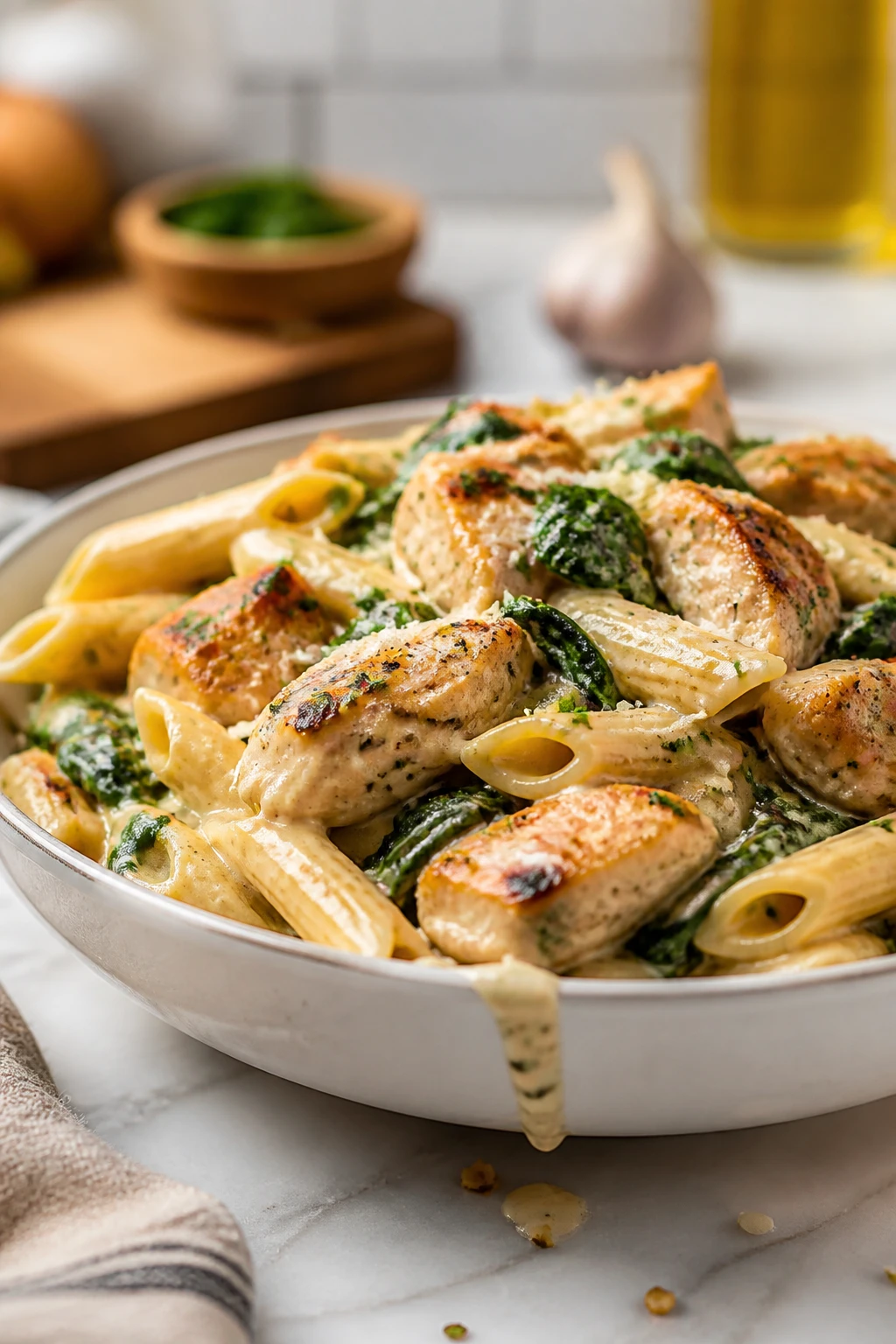
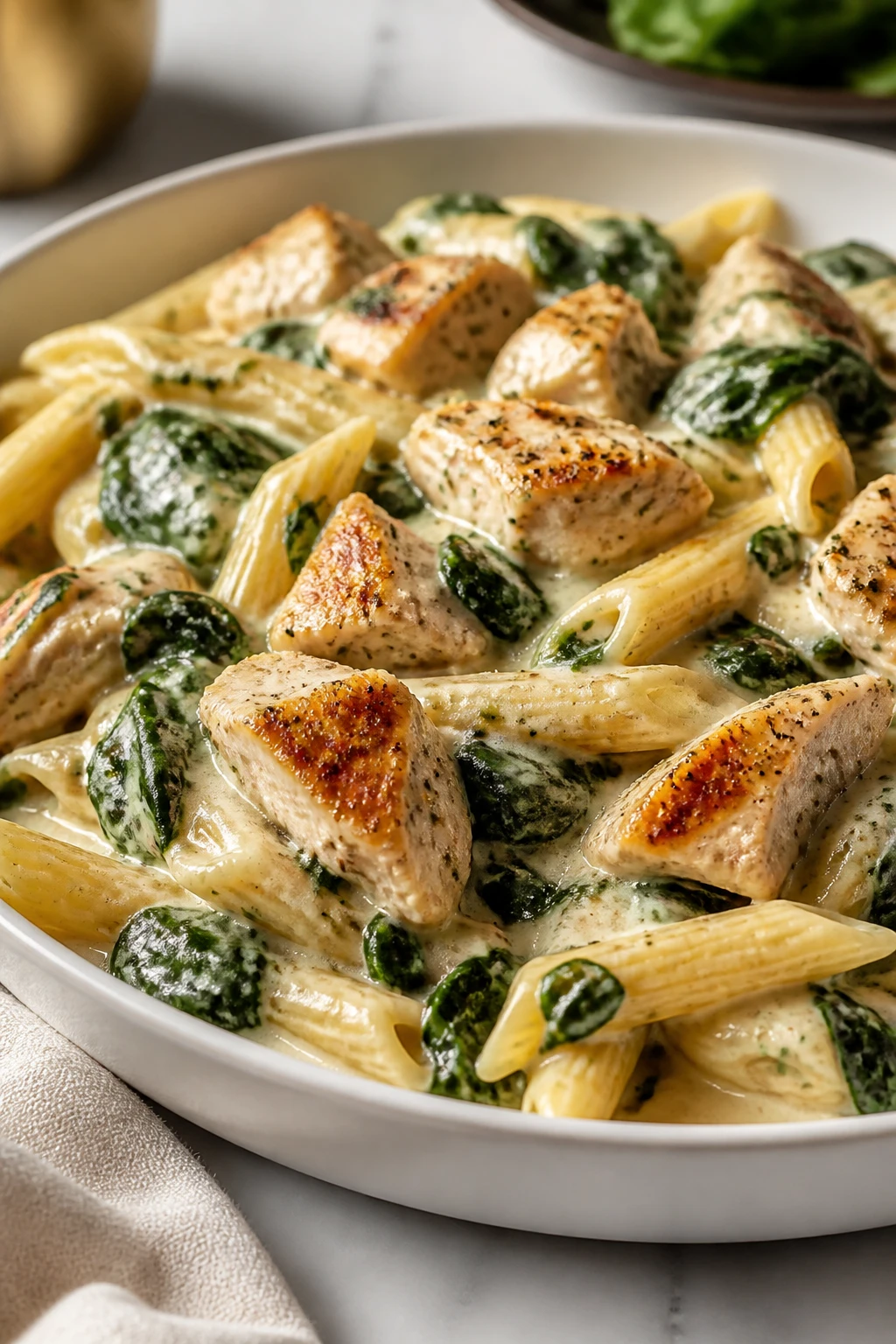
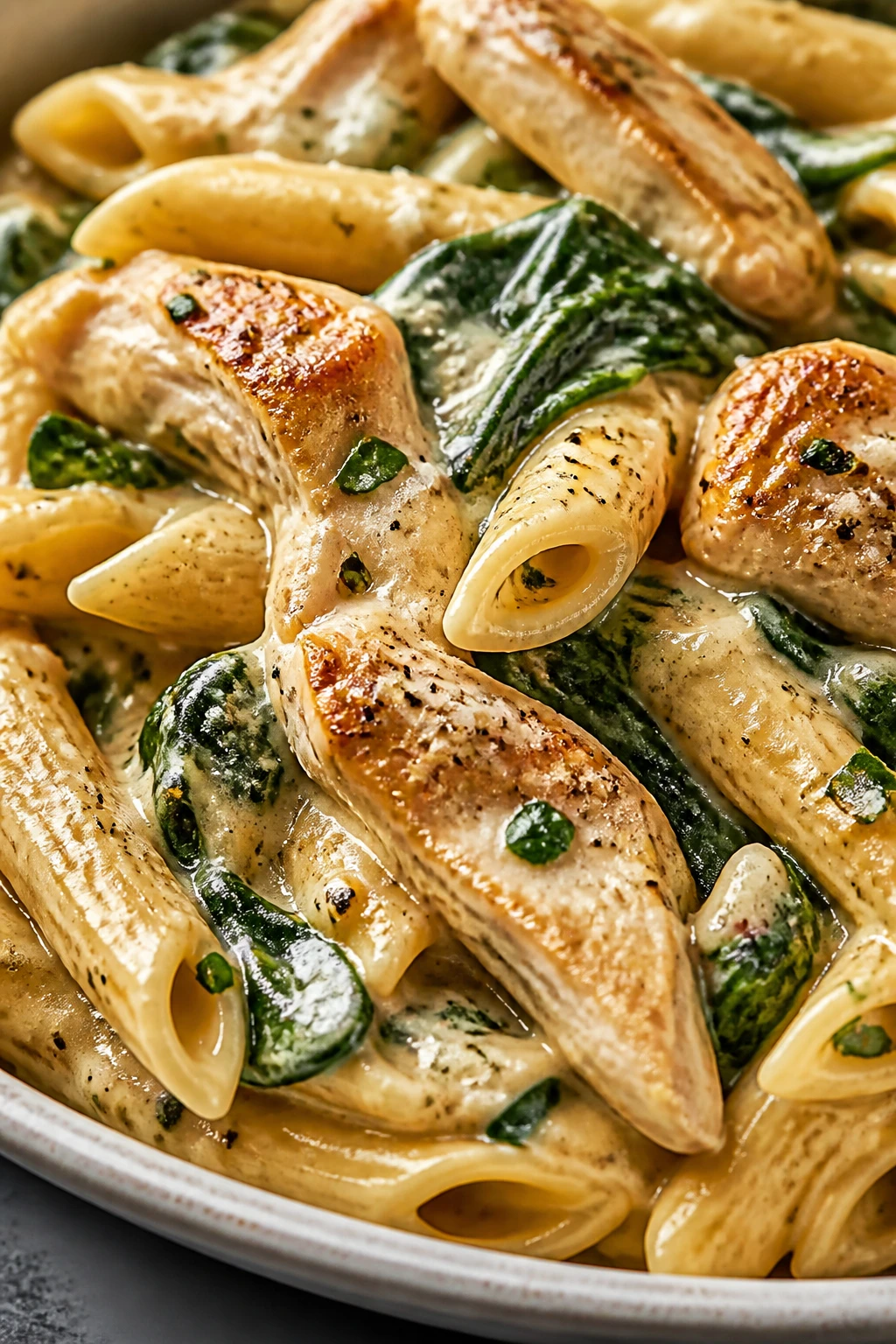
This creamy spinach and chicken pasta is my go-to when time’s tight but I still want something comforting. The fresh spinach adds a lovely pop of green and the quick cream sauce feels indulgent without fuss. Great for a cozy dinner any night!
Introduction
I first stumbled upon this creamy spinach and chicken pasta recipe during a hectic weeknight when I desperately needed something quick but satisfying. I used to rely on jarred sauces and frozen veggies, but this version with fresh spinach and a homemade cream sauce totally changed the game for me. The secret is really in how you balance the cream with just enough Parmesan to give it a silky texture without being too heavy. Plus, cooking the chicken separately and then tossing it all together at the end keeps every bite tender and flavorful. I remember the first time I made it, I was worried the sauce might be bland, but the garlic and a pinch of red pepper flakes add this subtle warmth that makes it so comforting. It’s perfect for those nights when you want a cozy dinner but don’t have hours to spend cooking. The finished dish is creamy, with bright green spinach and juicy chicken pieces, all coated in a luscious sauce that clings to the pasta beautifully. It’s become a staple in my house, and I think you’ll love how easy and rewarding it is to make.
How To Do It
Step 1
Bring a large pot of salted water to a boil and cook the penne pasta according to package instructions until al dente, usually about 10 minutes. Be sure not to overcook the pasta because it will continue to cook slightly when mixed with the sauce later. Reserve about half a cup of the pasta cooking water before draining — this starchy water is a secret weapon for loosening the sauce if it gets too thick. Drain the pasta and set aside.
⏱ Time: 12
✓ Doneness: Pasta should be tender but still have a slight bite when tested.
Step 2
While the pasta cooks, heat olive oil in a large skillet over medium-high heat. Add the bite-sized chicken pieces and season with salt and pepper. Cook until golden brown and cooked through, about 5-7 minutes, turning occasionally for even browning. Avoid overcrowding the pan, or the chicken will steam instead of sear, losing that lovely caramelized flavor. Once cooked, remove the chicken from the skillet and set aside.
⏱ Time: 8
✓ Doneness: Chicken is opaque throughout with a golden crust on the outside.
Step 3
In the same skillet, reduce heat to medium and add the minced garlic. Cook for about 1 minute until fragrant but not browned — burnt garlic will add bitterness. This step infuses the oil with flavor, which forms the base of your sauce. Stir frequently to prevent burning and to release the garlic’s aroma.
⏱ Time: 1
✓ Doneness: Garlic is soft and aromatic without any brown spots.
Step 4
Pour in the heavy cream and stir to combine with the garlic-infused oil. Bring the mixture to a gentle simmer over medium-low heat, stirring occasionally. This slow simmer helps thicken the cream without curdling it. If you rush this step or use high heat, the sauce may separate or scorch.
⏱ Time: 5
✓ Doneness: Sauce thickens slightly and coats the back of a spoon.
Step 5
Add the grated Parmesan cheese to the cream sauce and stir until melted and smooth. The cheese not only thickens the sauce but adds a savory depth and slight nuttiness. Be patient and stir gently to avoid clumping. If the sauce looks too thick, add a splash of the reserved pasta water to loosen it.
⏱ Time: 3
✓ Doneness: Sauce is creamy, smooth, and glossy with no lumps.
Step 6
Stir in the chopped fresh spinach a handful at a time, allowing it to wilt down before adding more. Fresh spinach cooks quickly and adds a vibrant color and fresh taste that really brightens the dish. Cooking it directly in the sauce helps it absorb flavor rather than steaming it separately.
⏱ Time: 3
✓ Doneness: Spinach is wilted but still bright green and tender.
Step 7
Return the cooked chicken to the skillet and toss everything together gently to combine. The chicken will warm through as it mingles with the sauce and spinach. This step ensures every bite is balanced with protein and veggies coated in creamy sauce.
⏱ Time: 2
✓ Doneness: Chicken is heated through and evenly coated with sauce.
Step 8
Add the drained pasta to the skillet and toss well to coat with the sauce. If the sauce feels too thick or sticky, gradually add reserved pasta water a tablespoon at a time until you reach your desired consistency. This starchy water also helps the sauce cling to the pasta better, making each bite luscious.
⏱ Time: 2
✓ Doneness: Pasta is evenly coated and glossy with sauce.
Step 9
Season the entire dish with salt, freshly ground black pepper, and crushed red pepper flakes if using. Taste and adjust seasoning as needed. Serve immediately for the best texture and flavor, garnished with extra Parmesan if desired.
⏱ Time: 1
✓ Doneness: Dish tastes balanced with a subtle kick if red pepper is added.
Pro Tips
Don’t skip reserving pasta water.
Pasta water contains starch that helps emulsify the sauce, making it cling to the pasta better and preventing it from becoming gluey or dry. Without it, the sauce can quickly thicken and lose its creamy texture.
Cook chicken in batches if needed.
Overcrowding the pan lowers the temperature, causing the chicken to steam rather than sear. Searing develops flavor through the Maillard reaction, giving the chicken a golden crust and more complex taste.
Add spinach gradually to the sauce.
Adding spinach in batches allows it to wilt evenly without overcrowding the pan. This preserves its vibrant color and prevents excess water from diluting the sauce, maintaining the dish’s rich texture.
Use freshly grated Parmesan cheese.
Freshly grated Parmesan melts smoothly and adds authentic flavor. Pre-grated cheese often contains anti-caking agents that can create clumps or gritty texture, impacting the creaminess of the sauce.
Simmer cream sauce gently over medium-low heat.
High heat can cause the cream to curdle or scorch, ruining the texture. A gentle simmer thickens the sauce evenly and preserves its silky consistency.
Season gradually and taste often.
Cheese and cream add saltiness, so seasoning little by little prevents over-salting. Tasting as you go ensures balanced flavors and avoids a dish that’s too salty or bland.
Serve pasta immediately after combining.
The sauce thickens as it cools, so serving right away preserves the perfect creamy texture and prevents the pasta from sticking together.
Common Mistakes to Avoid
Overcooking the pasta
Why it happens Many assume pasta should be very soft but overcooking leads to mushy texture that doesn’t hold up in a saucy dish.
Fix Cook pasta until al dente, firm to the bite but cooked through. This keeps the pasta’s structure intact when tossed with sauce and prevents a gummy final dish.
Skipping the reserved pasta water
Why it happens People often drain pasta and forget to save the water, not realizing its role in sauce consistency.
Fix Always reserve at least 1/2 cup pasta water before draining. Add it gradually to your sauce to loosen it and help it coat the pasta evenly.
Cooking chicken on too low heat
Why it happens Starting chicken on low heat to be 'safe' leads to steaming instead of searing, losing flavor and texture.
Fix Use medium-high heat and avoid overcrowding the pan to get a golden crust that locks in juices and adds flavor.
Burning the garlic
Why it happens Garlic cooks quickly and cooks unevenly if not watched, turning bitter when burnt.
Fix Add garlic after chicken is cooked and stir constantly on medium heat for just about one minute until fragrant but not browned.
Adding spinach all at once
Why it happens Dumping all spinach at once causes it to steam unevenly and release water, thinning the sauce.
Fix Add spinach in batches, letting each portion wilt before adding more to maintain color and texture.
Variations
Creamy Mushroom and Spinach Chicken Pasta
Add sliced mushrooms along with the garlic to introduce a deep, earthy flavor that complements the creamy sauce. Sauté mushrooms until golden before adding cream to build layers of taste. The mushrooms add a meaty texture that pairs beautifully with the tender chicken and spinach.
Note: Cooking mushrooms first helps release moisture and concentrate flavor, preventing a watery sauce.
Spicy Cajun Chicken Pasta
Season the chicken with Cajun spice blend before cooking for a smoky, spicy kick. Add a pinch more crushed red pepper flakes to the sauce to amp up the heat. This variation brings a lively warmth that balances the creamy spinach sauce perfectly.
Note: Use a balanced Cajun seasoning to avoid overpowering the cream sauce.
Lemon Garlic Spinach Chicken Pasta
Finish the dish with a squeeze of fresh lemon juice and a sprinkle of lemon zest for a bright, refreshing twist. The citrus cuts through the richness and highlights the garlic and spinach flavors, making it feel lighter and more vibrant.
Note: Add lemon juice off the heat to preserve its fresh flavor.
Pesto Spinach Chicken Pasta
Stir in a few tablespoons of your favorite basil pesto into the cream sauce for an herby, fragrant upgrade. This adds depth and a lovely green color, enhancing the spinach’s natural flavor while keeping the sauce creamy and smooth.
Note: Add pesto at the end of cooking to preserve its fresh herbaceous notes.
Gluten-Free Spinach Chicken Pasta
Swap regular penne for your favorite gluten-free pasta to accommodate dietary needs. Cook according to package instructions and reserve pasta water as usual. The creamy sauce and tender chicken remain just as comforting and delicious.
Note: Gluten-free pastas vary in texture; avoid overcooking to prevent mushiness.
Nutrition
Per Serving:
Nutritional values are estimates and may vary based on specific ingredients used.
Storage & Tips
Room Temperature
This dish can safely sit at room temperature for up to 2 hours if covered. Beyond that, bacteria growth increases, so refrigerate promptly. Cover with foil or a lid to prevent drying out.
Refrigerator
Store leftovers in an airtight container for up to 3 days. The sauce may thicken or separate slightly when cold; reheat gently on the stovetop with a splash of cream or water to restore creaminess.
Freezer
Freeze in a freezer-safe container for up to 2 months. Wrap tightly to prevent freezer burn. Thaw overnight in the fridge before reheating. Texture may slightly change but reheating with added liquid helps recover creaminess.
Reheating
Reheat over low heat on the stovetop, stirring frequently. Add a splash of cream, milk, or pasta water to loosen the sauce. Avoid microwaving at high power to prevent curdling or drying out.
Make Ahead
You can cook the chicken and prepare the cream sauce up to 2 days ahead, storing separately. Cook pasta fresh to avoid sogginess. Reheat sauce and chicken gently, then toss with freshly cooked pasta before serving.
FAQ
Can I use frozen spinach instead of fresh?
Yes, you can use frozen spinach but be sure to thaw it completely and squeeze out excess water before adding it to the sauce. This prevents the sauce from becoming watery and diluting the flavors. Fresh spinach is preferred for texture and color, but frozen works in a pinch.
What can I substitute for heavy cream?
If you want a lighter option, you can use half-and-half or a mixture of milk and cream cheese, but the sauce will be less rich and may not thicken as well. Another alternative is coconut cream for a dairy-free twist, but this will change the flavor profile significantly.
How do I prevent the sauce from curdling?
Cook the cream sauce gently over medium-low heat and avoid boiling it vigorously. Adding cheese gradually and stirring constantly helps maintain a smooth texture. High heat or rapid temperature changes can cause the dairy to separate.
Can I make this recipe vegetarian?
Absolutely! Simply omit the chicken and consider adding extra vegetables like mushrooms, zucchini, or roasted bell peppers. You might also add a plant-based protein like chickpeas or tofu for more substance.
What pasta works best for this recipe?
Medium shapes like penne, rigatoni, or fusilli work best because their ridges and tubes hold the creamy sauce well. Avoid thin pastas like angel hair as they can get lost in the sauce and overcook quickly.
How do I reheat leftovers without drying them out?
Reheat slowly on the stovetop over low heat, stirring often. Add a splash of cream, milk, or reserved pasta water to loosen the sauce and restore creaminess. Avoid high heat or microwaving on full power to prevent drying or curdling.
Can I prepare this dish ahead of time?
Yes, cook the chicken and sauce up to two days ahead and store separately in the fridge. Cook the pasta fresh just before serving to avoid sogginess. Reheat the sauce and chicken gently, then toss with the hot pasta.
What if I don’t have Parmesan cheese?
You can substitute with Pecorino Romano or Asiago for a similar salty, nutty flavor. Avoid pre-shredded cheeses with anti-caking agents as they don’t melt smoothly and can affect sauce texture.
Final Thoughts
Give this creamy spinach and chicken pasta a try — it’s cozy, quick, and always a hit! I’d love to hear how yours turns out, so don’t forget to share your experience.