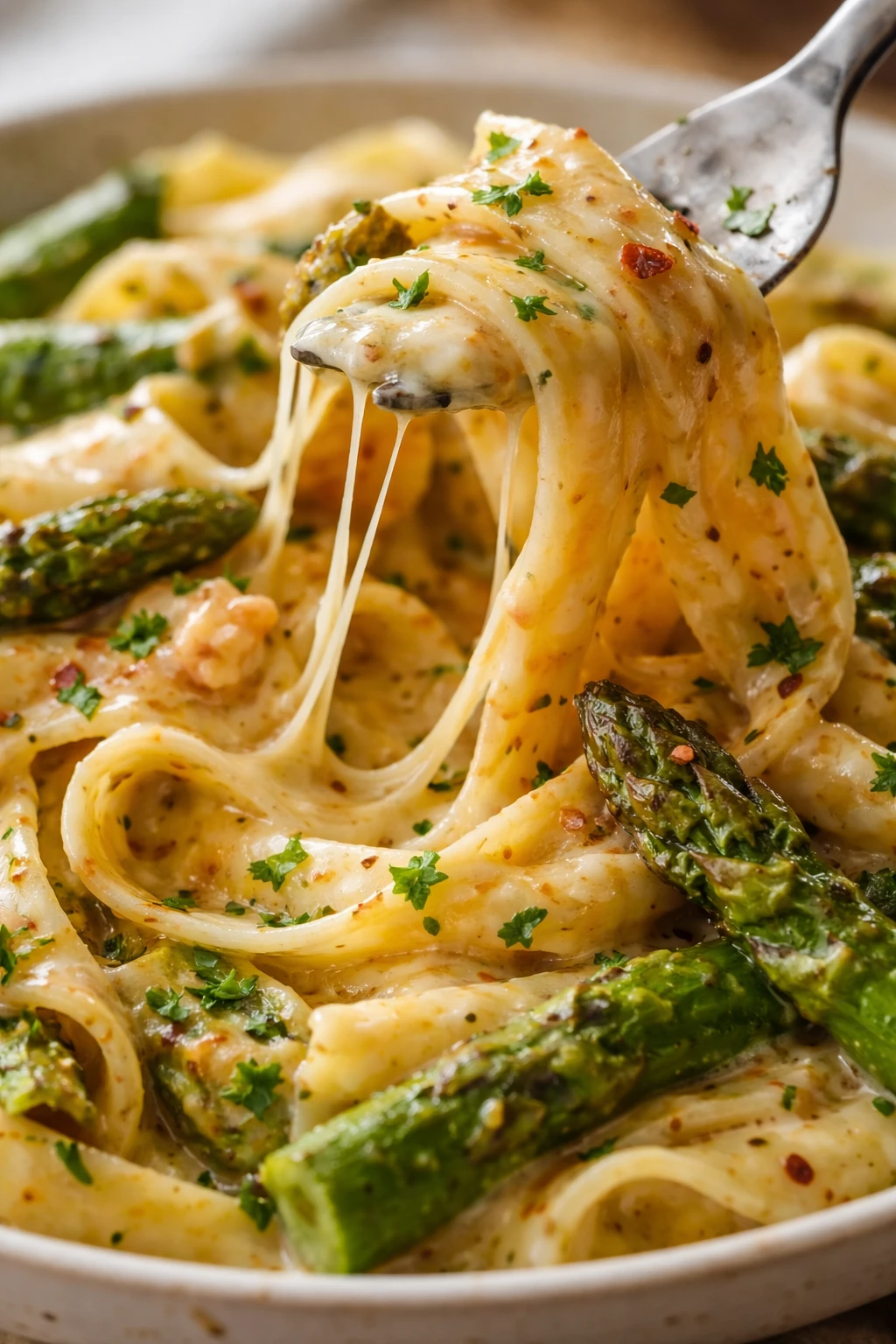
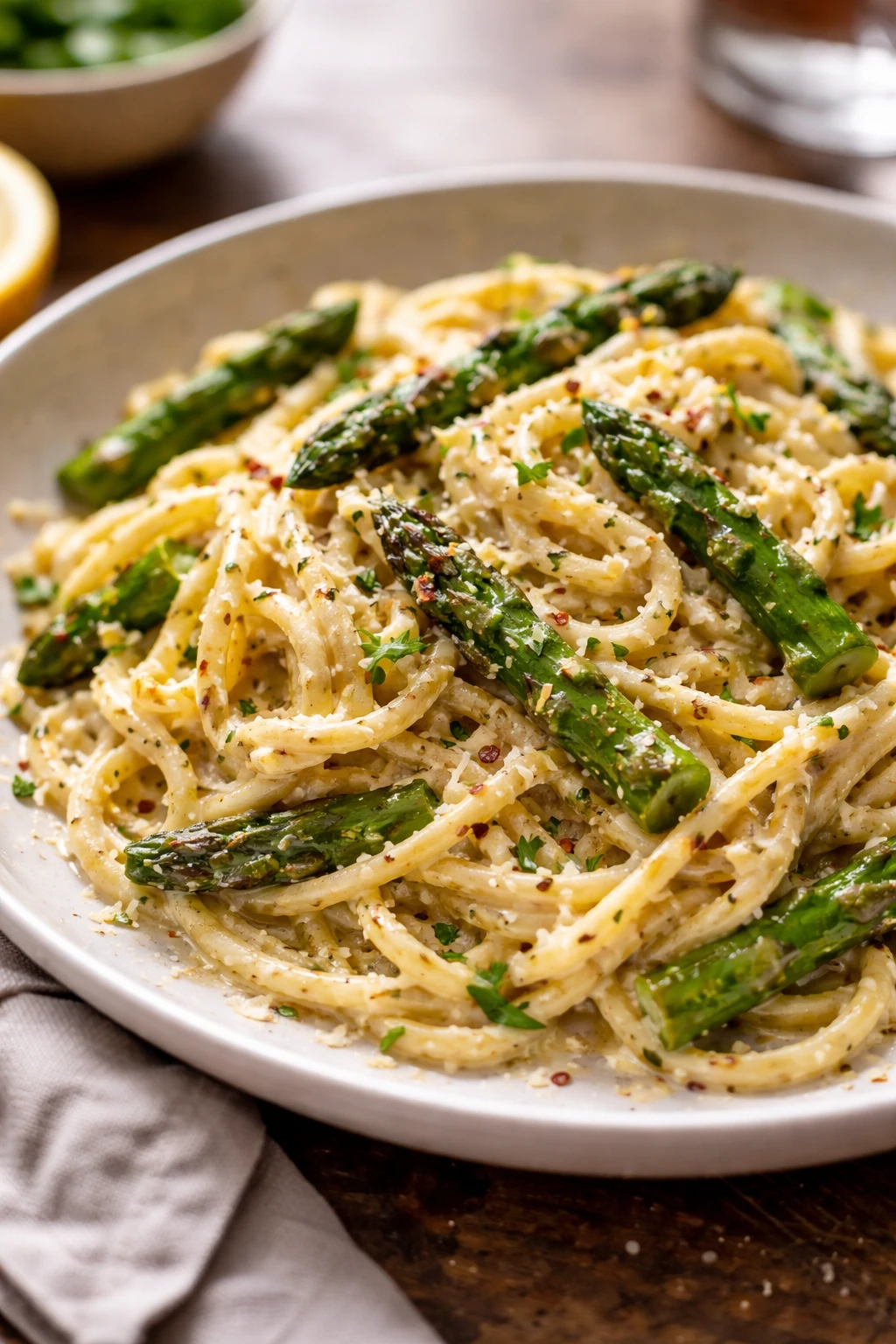
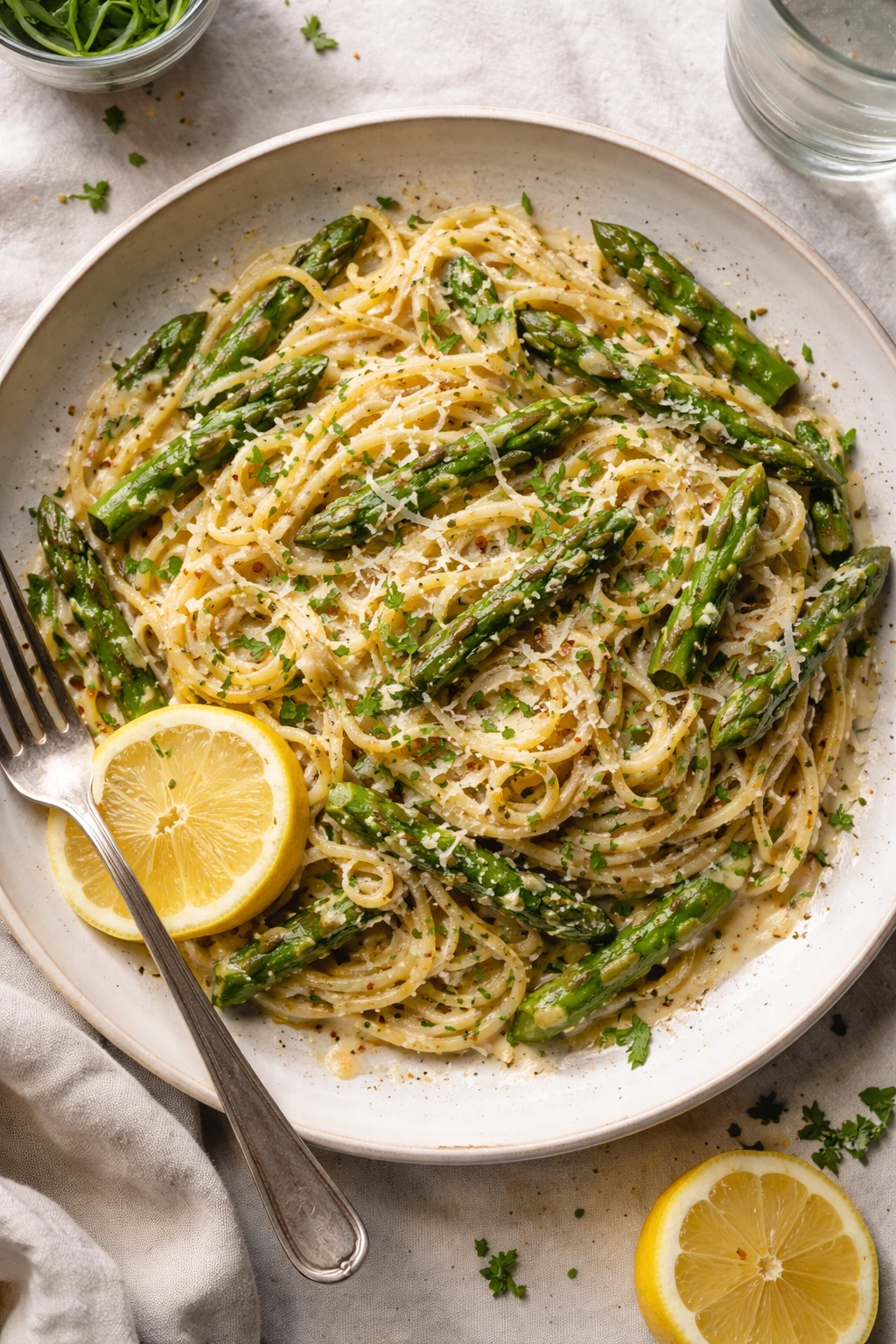
A straightforward recipe for creamy lemon herb pasta enhanced with fresh asparagus and a hint of zesty lemon. This dish balances richness with brightness and incorporates fresh herbs added at the end to preserve their aroma and flavor.
Introduction
I often turn to this creamy lemon herb pasta when I want a satisfying dinner that feels light yet comforting. The fresh asparagus adds a pleasant snap and a vibrant green color that brightens the plate, while the lemon juice and zest provide a subtle acidity that cuts through the richness of the cream. What sets this recipe apart is adding fresh herbs at the very end, preserving their bright aroma and preventing any bitterness. It’s a dish I prepare especially during spring when asparagus is at its peak, making it a refreshing change from heavier pasta meals. Whether it’s a quick weeknight dinner or a simple weekend lunch, this pasta strikes a balance between indulgence and freshness.
How To Do It
Step 1
Bring a large pot of salted water to a boil. Add the pasta and cook according to package instructions until al dente, usually 8-10 minutes. Two minutes before the pasta is done, add the asparagus pieces to the boiling water to cook until just tender but still crisp.
⏱ Time: 8-10 minutes total; add asparagus last 2 minutes
✓ Doneness: Pasta is firm to the bite but cooked through; asparagus is bright green and tender-crisp
Step 2
Reserve 1/2 cup (120 ml) of pasta cooking water and drain the pasta and asparagus together in a colander. The reserved water will help adjust the sauce consistency later.
⏱ Time: 1-2 minutes
✓ Doneness: Water drains quickly; pasta and asparagus retain structure
Step 3
In a large skillet over medium heat, melt the butter. Add the minced garlic and sauté for 30-45 seconds until fragrant but not browned, releasing a gentle savory aroma.
⏱ Time: 30-45 seconds
✓ Doneness: Garlic is soft and aromatic without any browning or bitterness
Step 4
Pour in the heavy cream and bring to a gentle simmer. Let the cream reduce slightly for about 3-4 minutes, stirring occasionally to prevent sticking. The sauce will thicken and develop a richer mouthfeel.
⏱ Time: 3-4 minutes
✓ Doneness: Sauce slightly thickened, coats the back of a spoon
Step 5
Remove the skillet from heat and stir in the lemon zest and juice. Then add the drained pasta and asparagus to the skillet, tossing gently to combine. If the sauce feels too thick, add reserved pasta water a tablespoon at a time until the desired consistency is reached.
⏱ Time: 2-3 minutes
✓ Doneness: Pasta and asparagus are evenly coated with a creamy, glossy sauce
Step 6
Fold in the chopped fresh parsley and basil, seasoning with salt and freshly ground black pepper to taste. Stir in the grated Parmesan cheese if using, allowing it to melt and enrich the sauce further.
⏱ Time: 1-2 minutes
✓ Doneness: Herbs remain bright green and aromatic; cheese is fully incorporated
Step 7
Serve immediately while warm, garnished with additional Parmesan or a light drizzle of olive oil if desired.
⏱ Time: 0 minutes
✓ Doneness: Dish is steaming, with vibrant colors and fresh herb aroma
Pro Tips
Add asparagus to the pasta water only during the last few minutes of cooking.
This ensures asparagus stays tender-crisp and retains its bright color instead of becoming mushy or dull.
Reserve some pasta cooking water before draining.
The starchy water helps loosen the sauce and improves its ability to coat the pasta evenly without thinning it excessively.
Add fresh herbs off heat at the end of cooking.
Heat can cause herbs to lose their vibrant color and develop bitterness; adding them last preserves their bright aroma and flavor.
Use unsalted butter and adjust salt later.
Butter and Parmesan already contain salt; seasoning gradually prevents over-salting and balances overall flavor.
Use freshly grated Parmesan cheese rather than pre-grated.
Freshly grated cheese melts better and contributes a creamier texture and more nuanced flavor.
Common Mistakes to Avoid
Overcooking the asparagus until soft and pale.
Why it happens Adding asparagus too early to boiling water or simmering it too long causes loss of texture and vibrant color.
Fix Add asparagus during the final 2 minutes of pasta cooking and immediately drain to stop cooking.
Adding herbs while the sauce is still hot on the stove.
Why it happens Sustained heat breaks down delicate herb oils, causing bitterness and dulling their aroma.
Fix Remove sauce from heat before folding in herbs to preserve freshness.
Not reserving pasta water before draining.
Why it happens Without pasta water, the sauce can become too thick or separate, failing to coat pasta evenly.
Fix Always set aside some cooking water to adjust sauce consistency as needed.
Using bottled lemon juice instead of fresh.
Why it happens Bottled juice lacks brightness and can taste flat or artificial, reducing the dish’s freshness.
Fix Use freshly zested and squeezed lemon for best flavor.
Variations
Vegan Version
Use plant-based cream (such as cashew or oat cream) and vegan butter substitutes. Replace Parmesan with nutritional yeast or vegan cheese alternatives.
Note: Plant-based creams vary in thickness; adjust cooking time to achieve desired sauce consistency.
Gluten-Free Pasta
Substitute regular pasta with gluten-free varieties made from rice, corn, or legumes.
Note: Cooking times and textures differ; monitor closely to avoid overcooking gluten-free pasta, which can become mushy.
Add Protein with Grilled Chicken
Top the pasta with sliced grilled chicken breast seasoned simply with salt, pepper, and lemon zest.
Note: Grilled chicken adds texture and protein, complementing the bright and creamy sauce without overpowering it.
Spring Vegetable Medley
Include peas, thinly sliced zucchini, or baby spinach along with asparagus for added color and variety.
Note: Adjust cooking times for vegetables to maintain individual textures; add delicate greens last to avoid wilting.
Nutrition
Per Serving:
approximately 480
Calories
Values are estimates and may vary depending on exact ingredients and portion sizes.
Storage & Tips
Room Temperature
Do not leave the pasta at room temperature for more than 2 hours to avoid bacterial growth.
Refrigerator
Store leftovers in an airtight container for up to 2 days. The sauce may thicken upon cooling.
Freezer
Not recommended to freeze this dish as cream-based sauces can separate and lose texture.
Reheating
Reheat gently on the stovetop over low heat, adding a splash of cream or water to loosen the sauce. Microwave reheating is possible but can cause uneven heating and sauce separation.
Make Ahead
Prepare the sauce and cook the asparagus separately ahead of time. Reheat the sauce gently, then toss with freshly cooked pasta and asparagus just before serving to maintain texture and flavor.
FAQ
Can I make creamy lemon herb pasta ahead of time?
You can prepare the sauce and asparagus in advance, but it's best to cook and combine with pasta just before serving to preserve texture and freshness.
Why is my sauce separating when reheating?
Cream-based sauces can separate if reheated too quickly or at high heat. Reheat gently over low heat and stir continuously, adding a little liquid if needed.
Can I use frozen asparagus instead of fresh?
Frozen asparagus can be used but tends to be softer. Add it at the end of cooking to avoid overcooking and losing texture.
How long does leftover creamy lemon herb pasta last in the fridge?
Stored properly in an airtight container, leftovers keep well for up to 2 days.
Can I substitute heavy cream with milk or half-and-half?
Milk or half-and-half can be used but will result in a thinner sauce. Consider adding a small amount of flour or cornstarch to thicken if needed.
Final Thoughts
This creamy lemon herb pasta offers a simple yet satisfying way to enjoy fresh spring produce with a light, textured sauce. I welcome any feedback or questions you might have after trying this recipe—feel free to share your experiences in the comments.