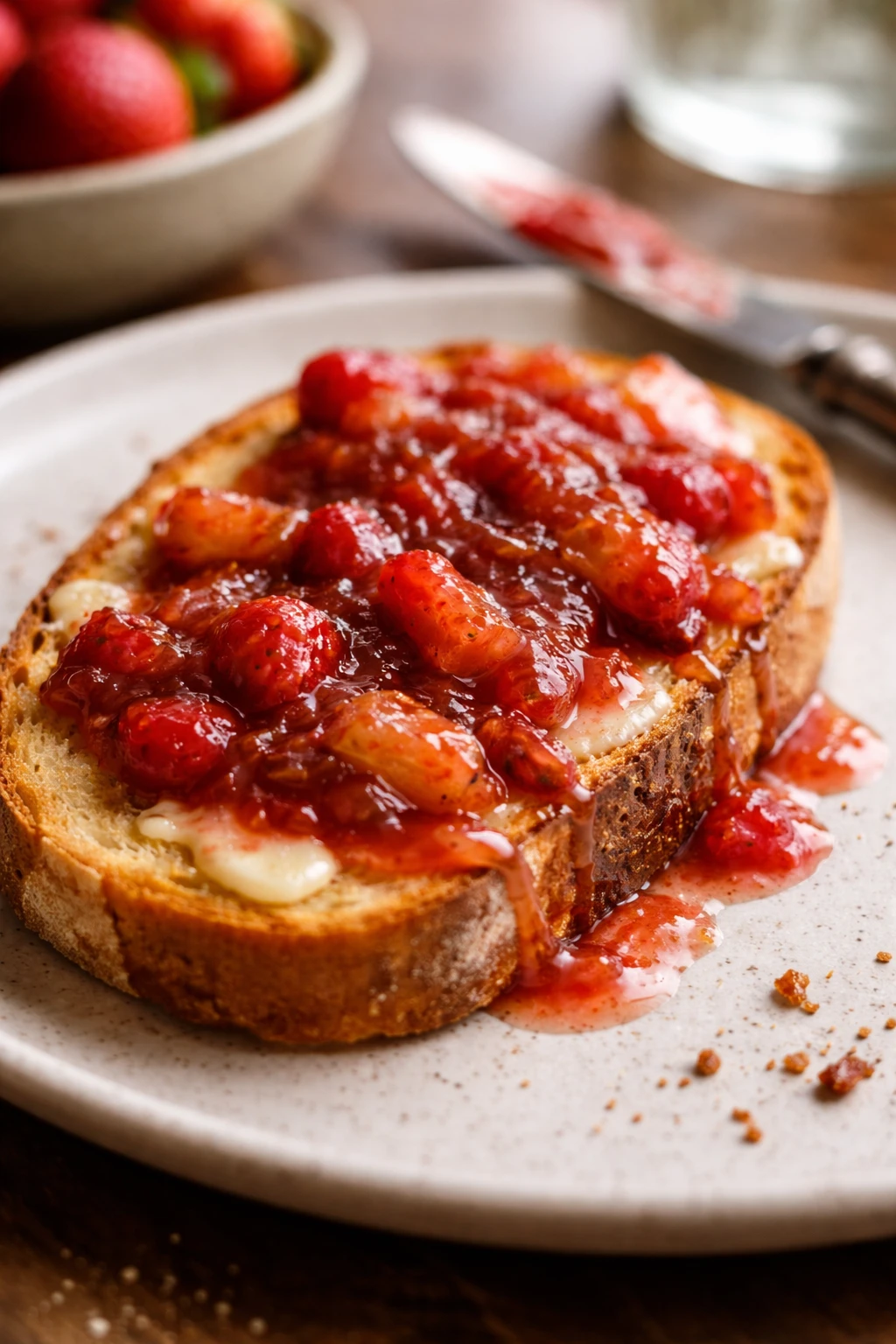
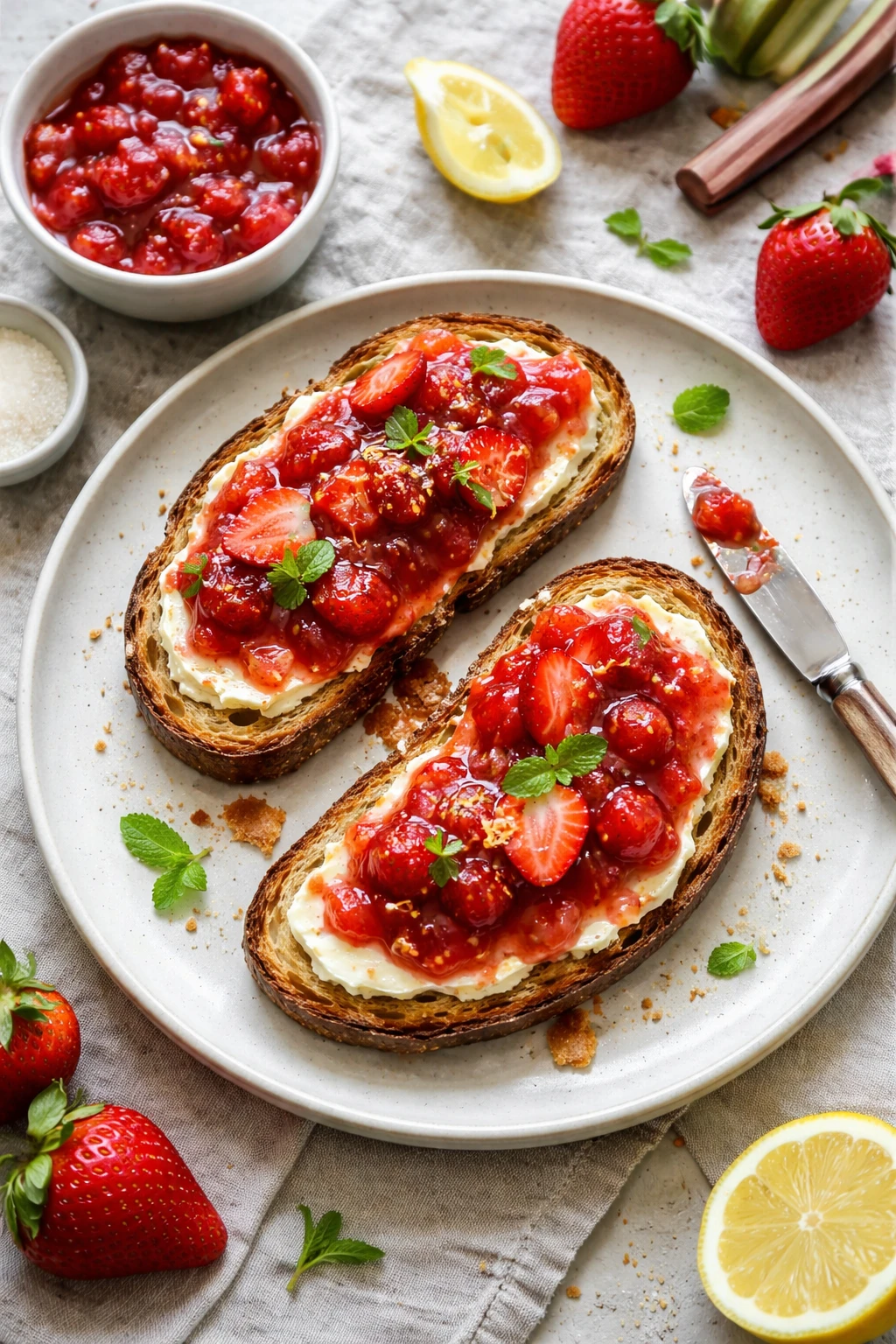
A straightforward recipe for rhubarb and strawberry jam that combines the tartness of rhubarb with the sweetness of ripe strawberries. This guide explains ingredient roles, cooking techniques, and timing to achieve a thick, balanced preserve ideal for morning toast or yogurt additions.
Introduction
Every spring, when rhubarb stalks first appear at the market alongside the earliest strawberries, I find myself drawn to their contrasting flavors. This rhubarb and strawberry jam recipe is one I've made repeatedly over the years, especially during quiet weekend mornings when the kitchen fills with the sweet, tangy aroma of simmering fruit. What makes this version stand out is the careful balance between the rhubarb's sharpness and the strawberries' natural sweetness, achieved without relying on artificial pectin or excessive sugar. The resulting jam has a vibrant color and a smooth yet slightly textured consistency, ideal for spreading on toast or stirring into yogurt. I appreciate how the cooking process gently concentrates the flavors while preserving the fresh fruit character. Below, I share the details that have helped me consistently create this jam with reliable texture and flavor.
What You'll Need
About 2 cups (500 ml) of jam
- component
- Fruit Base
- items
- 300g (10.5 oz) fresh rhubarb, trimmed and chopped into 1/2-inch (1.25 cm) pieces
- 400g (14 oz) ripe strawberries, hulled and halved
- component
- Sweetener and Pectin
- items
- 350g (1 3/4 cups) granulated sugar
- 1 tablespoon (15 ml) lemon juice, freshly squeezed
- Optional: 1 teaspoon powdered pectin (if a firmer set is desired)
How To Do It
Step 1
Prepare the fruit by trimming rhubarb stalks and cutting them into 1/2-inch pieces. Hull and halve the strawberries. Combine both fruits in a large, heavy-bottomed saucepan.
⏱ Time: 5 minutes
✓ Doneness: Fruit pieces are uniform in size, ensuring even cooking.
Step 2
Add the granulated sugar and lemon juice to the fruit in the saucepan. Stir gently to combine and let the mixture sit for 10 minutes. This maceration step helps dissolve sugar and draws out fruit juices, creating a syrupy base.
⏱ Time: 10 minutes
✓ Doneness: Fruit is slightly softened, and liquid begins to accumulate around the pieces.
Step 3
Place the saucepan over medium heat and bring the mixture to a gentle boil, stirring frequently to prevent sticking or burning on the bottom. Once boiling, reduce heat to maintain a steady simmer. Continue cooking, stirring occasionally, until the mixture thickens and reaches a jam-like consistency. This typically takes 15-20 minutes.
⏱ Time: 15–20 minutes
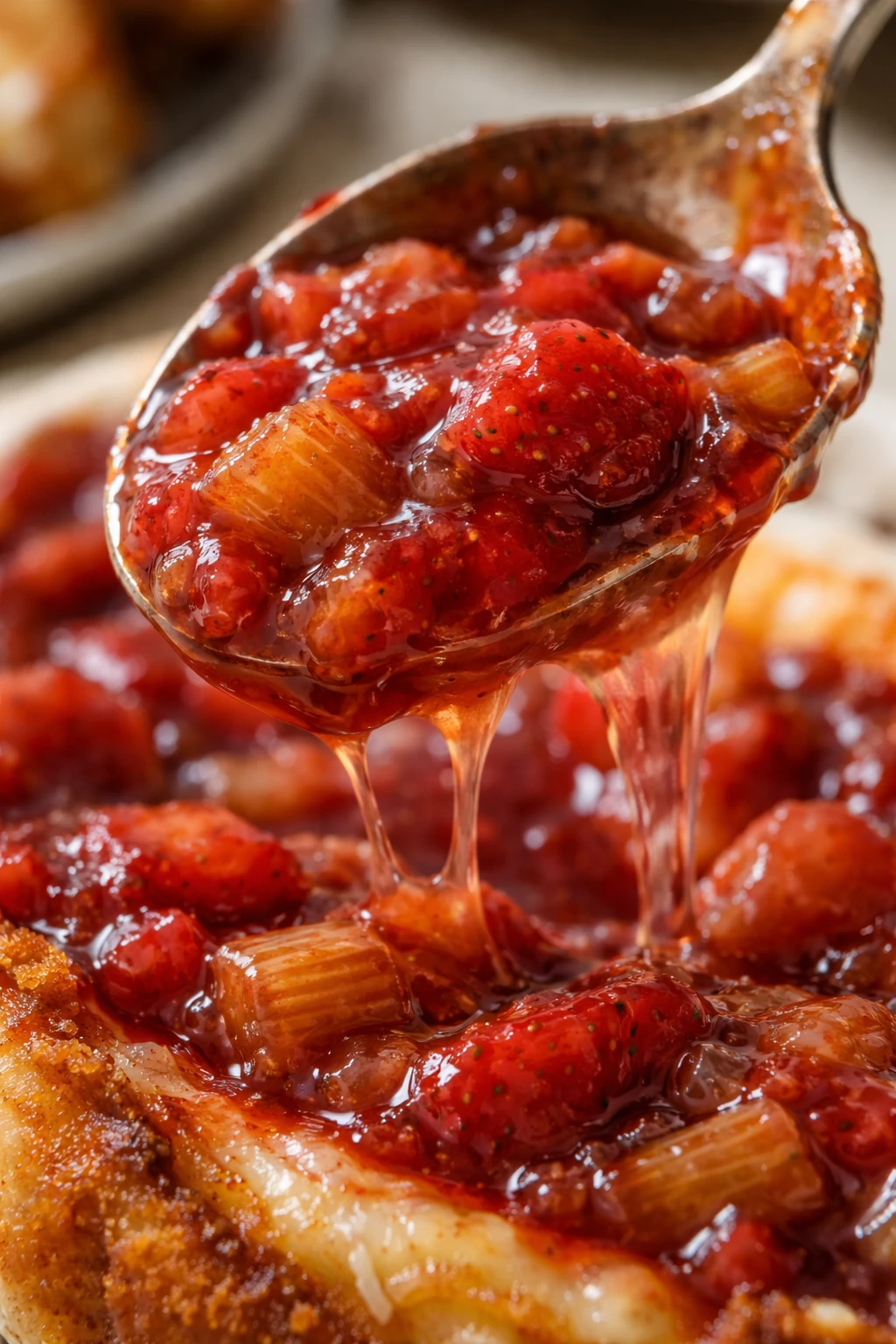
✓ Doneness: Jam thickens, coats the back of a spoon, and the surface shows slow-moving bubbles indicating gel formation.
Step 4
If using powdered pectin, stir it in during the last 5 minutes of cooking, ensuring it dissolves completely. Continue simmering for the remaining time, monitoring thickness.
⏱ Time: 5 minutes (optional)
✓ Doneness: Jam firms slightly more and holds shape better when tested on a cold plate.
Step 5
To test for doneness, place a small spoonful of jam on a chilled plate and let it cool for a minute. Run your finger through the jam; if it wrinkles and holds its shape, the jam is ready. If not, continue simmering for a few more minutes and retest.
⏱ Time: 2-3 minutes per test
✓ Doneness: Jam wrinkles and does not flood back when pushed with a finger.
Step 6
Remove the saucepan from heat and skim off any foam from the surface with a spoon. Let the jam cool slightly before transferring it to sterilized jars. Seal jars while still warm to ensure proper preservation.
⏱ Time: 5 minutes
✓ Doneness: Foam is removed, jam appears clear and glossy.
Pro Tips
Use a heavy-bottomed pan to prevent hot spots and burning during simmering.
Even heat distribution avoids scorching the sugar and fruit, which can cause bitter flavors and uneven texture.
Do not rush the simmering process; gradual thickening ensures better flavor concentration and gel formation.
High heat can break down pectin and cause the jam to become runny or taste cooked rather than fresh.
Test jam set by chilling a small amount on a plate rather than relying solely on cooking time.
Ambient temperature, fruit ripeness, and batch size affect setting time; testing ensures consistency.
Sterilize jars by boiling or washing in a dishwasher cycle just before filling to prevent spoilage.
Proper sterilization reduces bacterial contamination, extending the jam's shelf life.
Allow jam to cool uncovered at room temperature before sealing lids tightly.
Cooling prevents condensation inside jars, which can dilute the jam and encourage mold growth.
Common Mistakes to Avoid
Adding sugar too late or skipping the maceration step.
Why it happens Some think cooking fruit alone is enough; however, sugar needs time to dissolve and extract juices for proper syrup formation.
Fix Mix sugar with fruit and let rest for 10 minutes before heating to allow juices to release.
Boiling jam too vigorously or for too long.
Why it happens High heat is assumed to speed thickening, but excessive boiling breaks down pectin and degrades flavor.
Fix Maintain a steady simmer and monitor thickness with frequent stirring and testing.
Not removing foam before jarting the jam.
Why it happens Foam can form naturally during boiling and is often overlooked.
Fix Skim foam off the surface before filling jars to improve jam clarity and shelf life.
Filling jars that are not properly sterilized or sealing jars before jam cools.
Why it happens Inadequate sterilization or sealing while hot can cause spoilage or condensation.
Fix Sterilize jars thoroughly and allow jam to cool slightly before sealing tightly.
Variations
Low-Sugar Rhubarb and Strawberry Jam
Reduce sugar quantity by 25% and add 1 teaspoon of powdered pectin to compensate for reduced sweetness and help achieve a firm set.
Note: Lower sugar affects preservation and gel strength; pectin addition is necessary to maintain texture and shelf life.
Vegan Rhubarb and Strawberry Jam with Agave
Replace granulated sugar with an equal amount of agave syrup and increase lemon juice by 1 teaspoon to balance sweetness and acidity.
Note: Liquid sweeteners change the cooking dynamics; reduce simmering time slightly and monitor thickness closely.
Spiced Rhubarb and Strawberry Jam
Add 1/2 teaspoon ground cinnamon and 1/4 teaspoon ground ginger during cooking for warm spice notes that complement the fruit's tang.
Note: Spices add aroma and complexity; add early in cooking to allow flavors to infuse evenly.
Rhubarb and Strawberry Jam with Orange Zest
Incorporate 1 tablespoon finely grated orange zest during the maceration step to introduce citrus brightness and depth.
Note: Zest oils add fragrance and enhance acidity; avoid adding too much to prevent bitterness.
Freezer Jam Version
Use fruit pectin designed for freezer jams and reduce cooking time to preserve fresh fruit flavor. Store jam in airtight containers in the freezer and thaw before use.
Note: Freezer jams require less cooking and no sterilization but have shorter shelf life and must be kept frozen.
Nutrition
Per Serving:
approximately 150
Calories
Values are estimates and may vary depending on fruit ripeness and exact sugar quantities used.
Storage & Tips
Room Temperature
Jam should not be left at room temperature uncovered for more than 2 hours to prevent bacterial growth.
Refrigerator
Store sealed jars in the refrigerator for up to 3 weeks once opened. Unopened sterilized jars can last up to 1 year in a cool, dark place.
Freezer
For longer storage, freeze jam in airtight containers for up to 6 months. Thaw in the refrigerator before use.
Reheating
Jam does not require reheating before serving. If desired, gently warm in a saucepan over low heat to loosen consistency.
Make Ahead
Prepare jam up to two weeks in advance and store sealed jars in the refrigerator or freezer to allow flavors to meld.
FAQ
Can I make rhubarb and strawberry jam ahead of time?
Yes, jam can be prepared and stored in sterilized jars for several months unopened. Once opened, keep refrigerated and consume within three weeks.
Why is my jam too runny and not setting?
This often occurs due to insufficient cooking time, low pectin levels in fruit, or incorrect sugar-to-fruit ratio. Extending cooking time or adding commercial pectin can help.
Can I use frozen strawberries instead of fresh?
Frozen strawberries can be used but may release more water, requiring longer cooking to reach desired thickness. Fresh fruit is preferred for best texture.
How long does homemade jam last in the fridge?
Once opened, homemade jam should be stored in the refrigerator and typically lasts up to 3 weeks.
Can I substitute honey for sugar in this jam?
Honey can be substituted for sugar but alters cooking time and texture. Use less honey than sugar and monitor jam thickness closely during cooking.
Is it necessary to sterilize jars before filling jam?
Yes, sterilizing jars reduces the risk of contamination and extends the jam's shelf life.
Final Thoughts
This rhubarb and strawberry jam recipe captures the essence of spring mornings with its balance of tart and sweet flavors and satisfying texture. I welcome your thoughts and experiences with this recipe in the comments below.