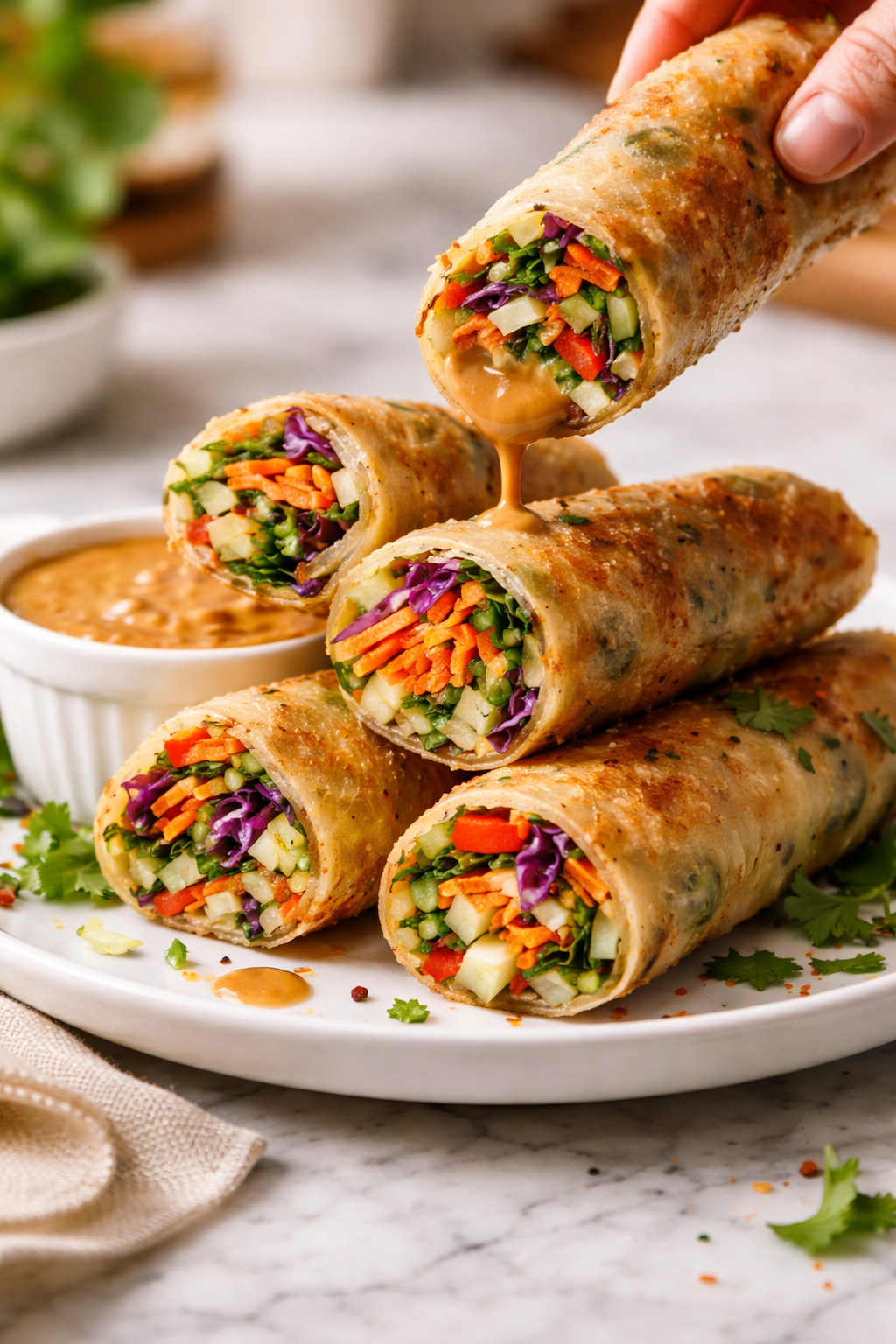
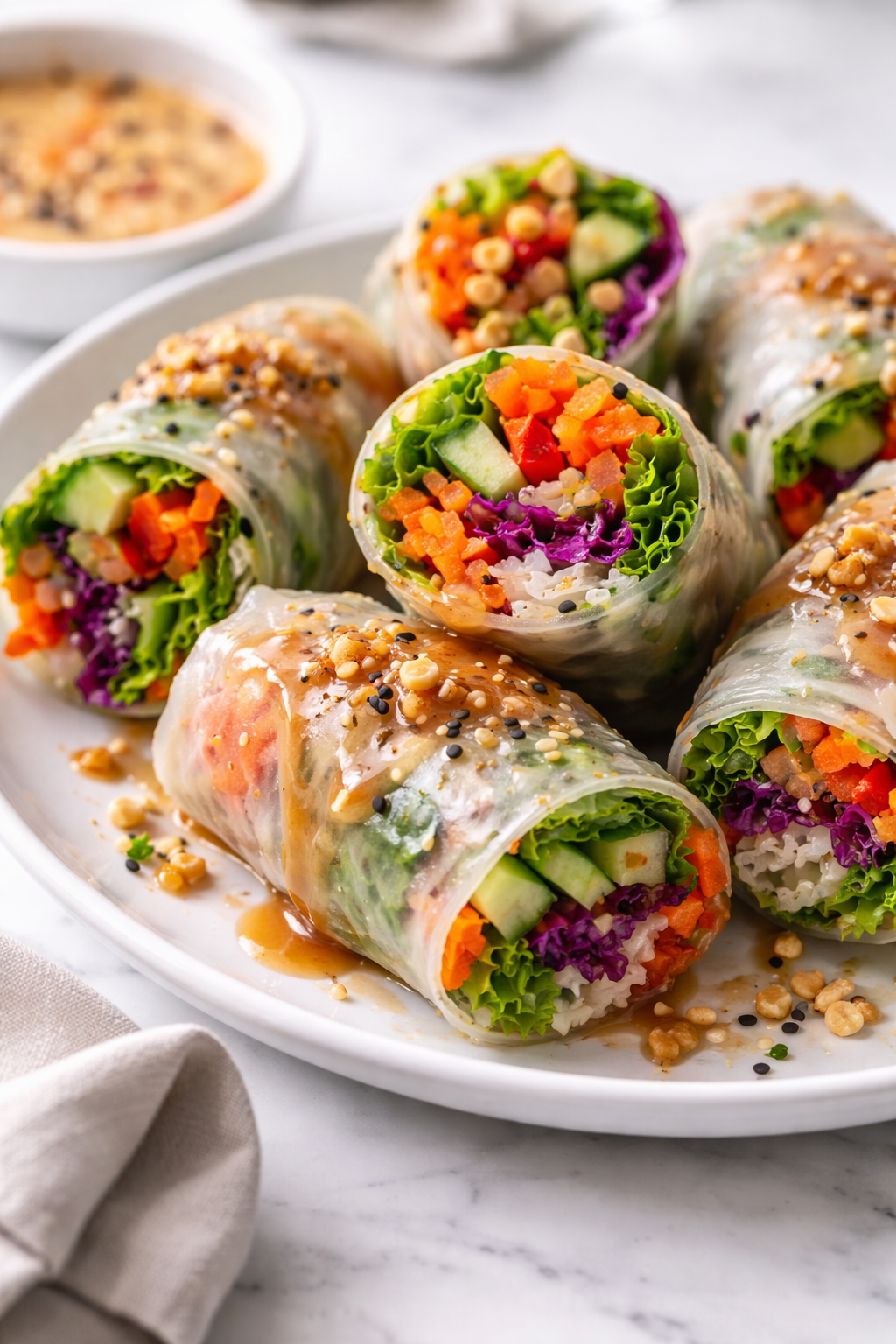
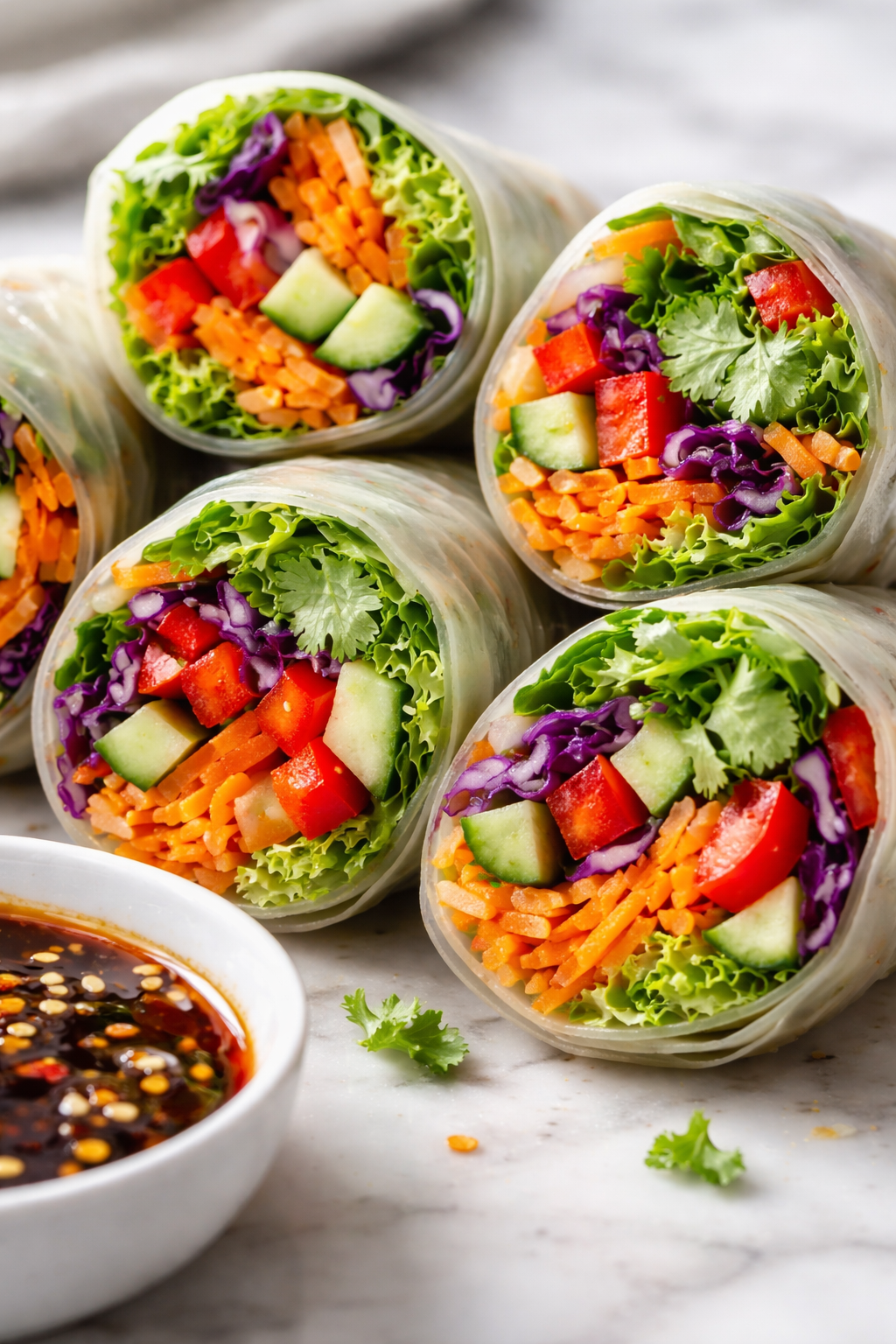
These spring rolls are super fresh and light, packed with crunchy veggies wrapped in delicate rice paper. Perfect for a quick snack or a colorful appetizer at your next gathering!
Introduction
I first discovered these fresh veggie spring rolls at a friend's summer barbecue, and I was instantly hooked. The combination of crisp, fresh veggies wrapped in tender yet slightly chewy rice paper felt like such a light, refreshing bite — perfect for warm days or when you want something healthy but flavorful. Over time, I tweaked the veggie mix to keep it simple but vibrant, focusing on crunchy carrots, cool cucumber, and sweet bell pepper with fresh mint to brighten every bite. The trick I learned for the best rolls is soaking the rice paper just long enough so it's pliable but not sticky or tearing; it makes rolling so much easier. These rolls come together in about 15 minutes, which is great when you want a fast appetizer or a healthy snack. They’re colorful, fresh, and a little addictive. Plus, they’re naturally vegan and gluten-free, which is always a win in my book. When you bite into one, you get that satisfying crunch followed by the cool, herbal mint flavor that ties everything together. Honestly, they’re one of my go-to recipes for potlucks or light lunches, and I think you’re going to love how easy and fresh they feel.
What You'll Need
8 spring rolls, 4 servings
- 8 sheets rice paper, softened
- 1 cup shredded carrots, fresh
- 1 cup cucumber, julienned
- 1 cup red bell pepper, thinly sliced
- 1/2 cup fresh mint leaves
How To Do It
Step 1
Fill a large shallow dish or pie plate with warm water. Dip one rice paper sheet into the water for about 10 seconds until it just begins to soften but is still slightly firm. Be careful not to soak it too long, or it will become too fragile and tear easily when rolling. The rice paper should be pliable and slightly tacky to the touch but not sticky. This step is crucial because a properly softened wrapper will hold all the veggies without breaking and ensure a nice chewy texture once rolled.
⏱ Time: 2 minutes
✓ Doneness: Wrapper is flexible, slightly soft but not sticky or overly limp
Step 2
Lay the softened rice paper flat on a clean surface or damp towel. Arrange about 2 tablespoons each of shredded carrots, julienned cucumber, sliced bell pepper, and a few fresh mint leaves in a line about 2 inches from the bottom edge of the wrapper. Don’t overfill or the roll will be hard to seal and may burst. The even spacing helps create a neat roll and balanced bite of flavors in every piece. This layering also lets you control the veggie ratios to your liking.
⏱ Time: 3 minutes
✓ Doneness: Veggies neatly arranged in a compact line, not spilling over edges
Step 3
Fold the bottom edge of the rice paper over the filling, then fold in the sides snugly toward the center. Begin rolling the wrapper tightly upward, keeping the filling compact and enclosed. Rolling firmly but gently helps seal the edges and keeps the roll intact without squishing the vegetables. If the wrapper tears, it might have been soaked too long or rolled too aggressively. Practice makes perfect here, so don’t get discouraged if your first few rolls aren’t perfect.
⏱ Time: 3 minutes
✓ Doneness: Roll is tight, sealed, and holds shape without gaps or tears
Step 4
Place the finished spring roll on a plate and cover with a clean, damp kitchen towel to prevent drying out while you prepare the remaining rolls. Dry rice paper becomes brittle and cracks, so keeping them covered is important, especially if you’re making a batch. This also preserves the fresh texture of the veggies inside.
⏱ Time: 1 minute
✓ Doneness: Rolls remain soft and pliable without drying edges
Step 5
Repeat the softening, filling, and rolling steps with the remaining rice paper sheets and vegetables. Work efficiently so the rice paper wrappers don’t dry out before rolling. If you find the wrappers drying too fast, lightly dampen your kitchen towel again to keep them moist. This batch method keeps everything fresh and ready to serve together.
⏱ Time: 10 minutes
✓ Doneness: All rolls are uniform, fresh, and ready to plate
Step 6
Serve the fresh veggie spring rolls immediately with your favorite dipping sauce, like hoisin peanut or a simple soy-lime dip. The contrast between the cool, crunchy rolls and the savory, slightly sweet sauce is what makes this dish so addictive. If you need to hold them for a short while, keep them covered in the fridge and bring to room temperature before serving for best texture.
⏱ Time: 2 minutes
✓ Doneness: Sauce paired and rolls served fresh and chilled
Step 7
If you want to add a little protein, try adding cooked shrimp or tofu slices inside before rolling. Just be sure to pat these dry so they don’t make the wrapper soggy. Adding protein turns these from appetizer to light meal. The technique for rolling stays the same, just layer the protein evenly with the veggies.
⏱ Time: 3 minutes
✓ Doneness: Protein layer integrated without tearing wrapper
Step 8
For extra flavor, consider sprinkling a pinch of toasted sesame seeds or chopped peanuts inside the roll before folding. The crunch and nuttiness add a lovely texture contrast. Just don’t add too much or it will be hard to roll tightly. These little touches elevate the simple veggie spring roll into something a bit more special.
⏱ Time: 2 minutes
✓ Doneness: Nuts or seeds evenly distributed without overwhelming filling
Step 9
To store leftovers, wrap each spring roll tightly in plastic wrap to keep moisture in and refrigerate. They’re best eaten within 24 hours to maintain crispness. When ready to eat, unwrap and serve cold or at room temperature. Avoid stacking them to prevent sticking or crushing.
⏱ Time: 1 minute
✓ Doneness: Rolls remain fresh, moist, and intact after storage
Pro Tips
Don’t over-soak the rice paper; 10-15 seconds is enough.
Over-soaking causes the rice paper to become too soft and fragile, making it prone to tearing during rolling. Under-soaking makes it stiff and hard to fold. Finding the sweet spot ensures the wrapper is pliable but strong enough to hold the filling securely.
Use a damp towel to cover rolls as you work.
Rice paper dries out quickly when exposed to air, turning brittle and difficult to eat. Keeping the rolls covered with a damp towel maintains moisture and freshness, which is essential for that tender, chewy texture that makes spring rolls so enjoyable.
Slice veggies thinly and evenly for easy rolling.
Uniform, thin vegetable strips help the filling stay compact and allow the rice paper to roll tightly without tearing. Thick or uneven pieces can create pressure points that break the wrapper or cause uneven bites.
Roll tightly but gently to avoid tearing the wrapper.
Firm rolling compresses the filling to prevent loose rolls that fall apart, but too much force can tear the delicate rice paper. A gentle, consistent tension while rolling ensures a neat, sealed spring roll.
Pat cucumber dry before rolling to prevent sogginess.
Cucumbers have a high water content that can seep into the rice paper, making it limp and soggy. Drying the cucumber strips with paper towels removes excess moisture and keeps the rolls crisp.
Serve immediately or keep covered in the fridge for short periods.
Spring rolls are best fresh; however, if you must store them, covering prevents drying and preserves texture. Refrigeration slows moisture loss but can cause the wrapper to stiffen, so bring rolls to room temperature before serving.
Try adding fresh herbs like basil or cilantro for extra flavor.
Herbs add aromatic complexity and freshness that complement the veggies. Basil lends sweetness, while cilantro adds a citrusy note. Including herbs enhances flavor without complicating the recipe.
Common Mistakes to Avoid
Soaking rice paper too long
Why it happens Many cooks soak rice paper for too long thinking it will make rolling easier, but it actually becomes too fragile and sticky.
Fix Limit soaking time to 10-15 seconds in warm water. The wrapper should be soft but still slightly firm. This balance prevents tearing and makes rolling manageable.
Overfilling the spring rolls
Why it happens It’s tempting to pack as many veggies as possible, but too much filling causes the wrapper to tear or the roll to burst.
Fix Use moderate amounts of filling and arrange it in a neat line near the edge. This controlled filling lets you roll tightly and keep the roll intact.
Not covering rolls as you work
Why it happens Leaving finished rolls uncovered exposes them to air, drying out the rice paper and making it brittle.
Fix Cover rolls with a damp towel immediately after rolling to maintain moisture and softness.
Using wet or watery veggies without drying
Why it happens Some veggies release water during prep, which can soak the wrapper and make it soggy.
Fix Pat vegetables like cucumber dry with paper towels before rolling to keep the wrapper crisp.
Rolling too loosely or too tightly
Why it happens Loose rolls fall apart, while overly tight rolls tear the rice paper.
Fix Aim for firm but gentle rolling, folding the sides in before rolling to seal the filling securely.
Variations
Shrimp and Veggie Spring Rolls
Add cooked, peeled shrimp inside the rolls for extra protein and a seafood twist. Layer the shrimp with the veggies and mint for a fresh, satisfying bite that’s still light and healthy.
Note: Make sure the shrimp are dry and cool before rolling to avoid soggy wrappers. The rolling technique remains the same.
Peanut Butter Dipping Sauce
Swap your usual dipping sauce for a creamy peanut butter blend with hoisin and lime juice. This adds richness and a hint of sweetness that pairs beautifully with the crisp rolls.
Note: Mix peanut butter with hoisin, lime juice, water, and a touch of chili to reach a smooth, dippable consistency.
Add Rice Vermicelli Noodles
Include cooked and cooled rice vermicelli noodles inside for a more filling roll. The noodles add a soft texture that balances the crunch of the veggies.
Note: Drain noodles well and mix with veggies before rolling to ensure even distribution.
Spicy Sriracha Spring Rolls
For a kick, add a thin line of sriracha or chili paste inside the roll before folding. It livens up the fresh flavors and adds depth without overpowering the veggies.
Note: Be cautious with quantity to avoid sogginess or overpowering heat.
Avocado and Herb Spring Rolls
Add creamy avocado slices and extra fresh herbs like basil and cilantro for a rich, fragrant variation. The avocado adds softness and healthy fats.
Note: Use ripe but firm avocado to prevent mushiness and roll carefully to avoid tearing.
Nutrition
Per Serving:
Nutritional values are estimates and may vary based on specific ingredients used.
Storage & Tips
Room Temperature
Spring rolls can be kept at room temperature for up to 1 hour if covered with a damp towel to prevent drying out. Beyond that, the rice paper may become brittle and the vegetables lose crispness.
Refrigerator
Store spring rolls in an airtight container lined with damp paper towels to maintain moisture. They keep well for up to 24 hours but are best eaten the same day. The wrapper may stiffen when chilled; bring to room temperature before serving for best texture.
Freezer
Freezing fresh spring rolls is not recommended because the rice paper becomes tough and the vegetables watery upon thawing. For longer storage, freeze individual components separately and assemble fresh when ready to eat.
Reheating
Spring rolls are best served cold or at room temperature. If desired, bring refrigerated rolls to room temp before serving. Avoid microwaving as it makes the rice paper chewy and soggy. Serve with fresh dipping sauce for best flavor.
Make Ahead
You can prep and slice all vegetables 1-2 days ahead and store them separately in airtight containers. Soften and roll the rice paper fresh on the day of serving to ensure the best texture and avoid tearing issues.
FAQ
Can I make these spring rolls ahead of time?
You can prep the veggies a day ahead and keep them refrigerated, but it’s best to soften and roll the rice paper just before serving. Pre-rolled spring rolls tend to dry out or become soggy if stored too long. If you must store them, wrap individually in plastic wrap and keep in the fridge up to 24 hours, covered with a damp towel.
What dipping sauce goes best with fresh veggie spring rolls?
Classic options include hoisin-peanut sauce, soy-lime dipping sauce, or sweet chili sauce. Each adds a savory, sweet, or tangy contrast that enhances the fresh flavors. You can customize the sauce with garlic, ginger, or chili to suit your taste.
How do I prevent the rice paper from tearing when rolling?
Make sure to soak the rice paper just long enough to soften but not too long to become fragile. Also, roll gently but firmly, folding in the sides before rolling up tightly. Using fresh, good-quality rice paper helps as well.
Can I add protein to these spring rolls?
Absolutely! Cooked shrimp, grilled chicken, tofu, or tempeh work well. Just add the protein slices along with the veggies before rolling. Make sure the protein is dry to avoid sogginess.
What vegetables work best inside these rolls?
Crunchy, fresh vegetables like carrots, cucumber, bell pepper, and lettuce are ideal. You can also add herbs like mint, basil, or cilantro for extra flavor. Avoid watery veggies that may make the wrapper soggy if not dried well.
Can I freeze these spring rolls?
Freezing fresh spring rolls is not recommended because the rice paper becomes tough and the veggies lose texture once thawed. Instead, freeze ingredients separately and assemble fresh when needed.
How do I store leftover spring rolls?
You should consume leftover spring rolls within 24 hours of refrigeration. Wrap them individually in plastic wrap and place in an airtight container to maintain moisture. Avoid stacking them to prevent sticking or crushing.
What if my rice paper sheets stick together?
Separate rice paper sheets with parchment or wax paper when storing. During soaking, handle one sheet at a time and avoid stacking wet wrappers. If they stick during rolling, gently peel apart with wet fingers.
Final Thoughts
Give these fresh veggie spring rolls a try — they’re simple, fresh, and so satisfying. I’d love to hear how yours turn out, so don’t forget to share your thoughts!