This fresh basil pesto pasta is my go-to for a quick, flavorful meal. The secret? Toasted pine nuts and a splash of lemon juice that give it a bright, nutty kick. Perfect for those busy nights when you want comfort without fuss!
Introduction
I first fell in love with basil pesto during a summer trip to Italy, where every meal seemed to feature that vibrant, herby flavor. Since then, I’ve been making my own version at home, tweaking it to get that perfect balance between fresh basil, nutty pine nuts, and tangy lemon. What sets my pesto apart is the little trick of toasting the pine nuts just until golden—it releases those deep, buttery flavors that make the sauce so irresistible. Plus, adding a splash of lemon juice brightens everything up and keeps it fresh-tasting, even after chilling leftovers. It’s super simple but feels special, which is why it’s become a staple for weeknight dinners in my house. When tossed with al dente pasta, it creates a silky, flavorful coating that’s both comforting and light. I love how this dish comes together quickly but tastes like you spent hours in the kitchen. It’s perfect for those evenings when you want something homemade without the fuss, and it always impresses guests too!
How To Do It
Step 1
Start by toasting the pine nuts in a dry skillet over medium heat. Stir constantly to ensure they brown evenly and don’t burn—this usually takes about 3-5 minutes. Toasting is crucial because it intensifies their nutty flavor and adds a subtle crunch to your pesto. If you skip this step, the pesto can taste flat or raw. Keep a close eye because pine nuts can go from golden to burnt very quickly, which would give your pesto a bitter taste.
⏱ Time: 5 minutes
✓ Doneness: Pine nuts are fragrant and golden brown but not dark or burnt.
Step 2
Cook your pasta in plenty of salted boiling water according to the package instructions until al dente. Salt the water generously; this is your only chance to season the pasta itself and it makes a big difference. Overcooking the pasta will result in a mushy texture that won’t hold up well once you mix it with the pesto. Drain the pasta, reserving about half a cup of the cooking water, which you'll use later to loosen the pesto sauce if needed.
⏱ Time: 8-10 minutes
✓ Doneness: Pasta is tender but still has a slight bite in the center.
Step 3
In a food processor or blender, combine the fresh basil leaves, toasted pine nuts, minced garlic, and grated Parmesan cheese. Pulse until everything is coarsely chopped and well mixed. This step helps release the basil’s essential oils and evenly distributes the flavors. Don’t over-process here; you want some texture, not a puree.
⏱ Time: 2 minutes
✓ Doneness: Mixture looks roughly chopped and uniformly blended.
Step 4
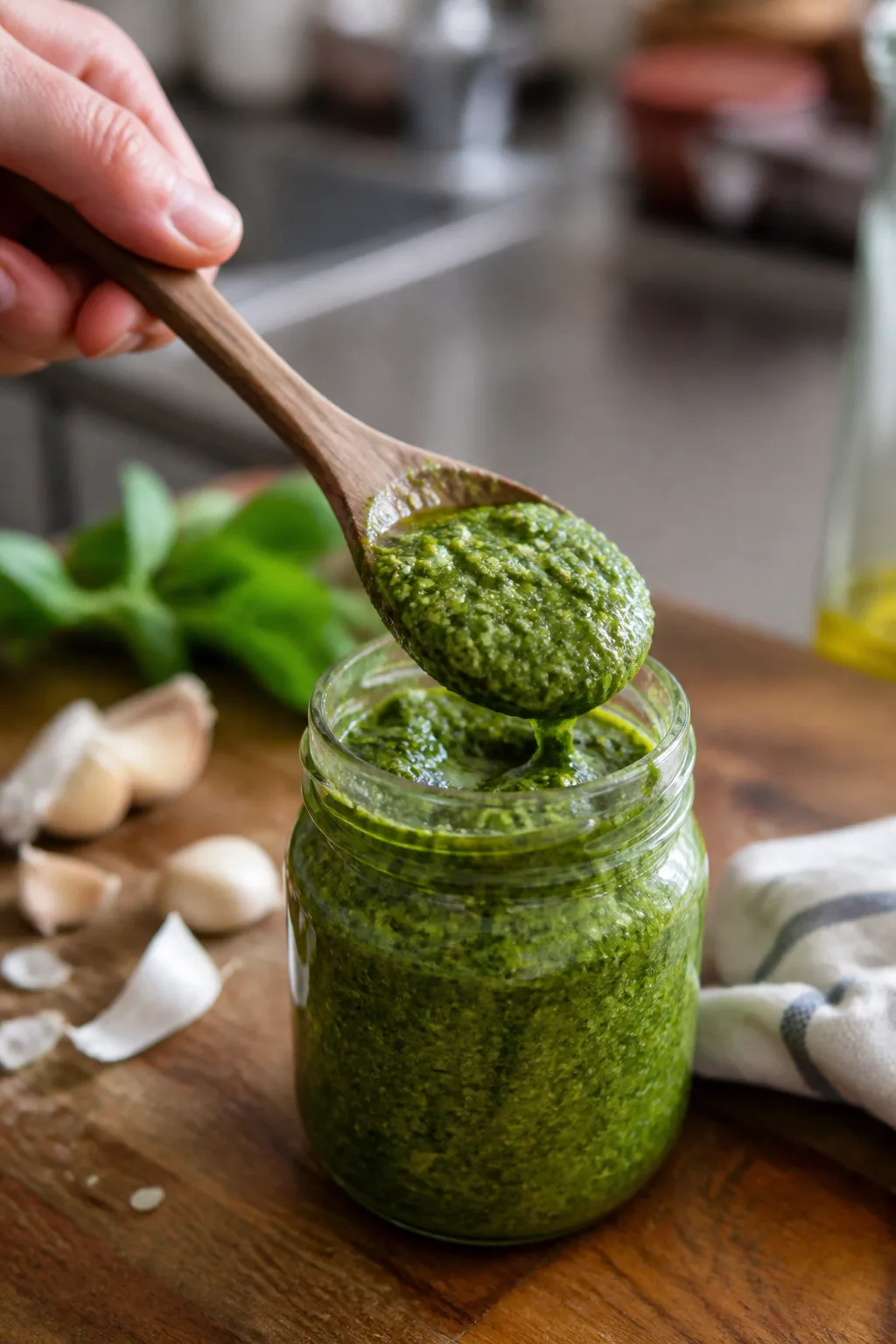
With the processor running, slowly pour in the olive oil to emulsify the sauce. This gradual addition helps the oil bind with the basil and cheese, creating a creamy, silky texture. If you add the oil too quickly, the sauce might separate or become oily. Stop once the pesto reaches your desired consistency—smooth but still with a bit of body.
⏱ Time: 2 minutes
✓ Doneness: Pesto is creamy and well combined without pooling oil.
Step 5
Add the fresh lemon juice, then season with salt and freshly ground black pepper to taste. The lemon juice brightens the pesto and balances the richness of the cheese and nuts. Taste as you go to make sure the flavors are well balanced. You can add more lemon or salt if needed, but add gradually to avoid overpowering the basil’s delicate flavor.
⏱ Time: 1 minute
✓ Doneness: Pesto tastes fresh, balanced, and vibrant.
Step 6
Transfer the cooked pasta to a large mixing bowl and toss it with the pesto sauce. Use tongs or a large spoon to evenly coat every strand. If the pesto feels too thick or the pasta seems dry, add a little reserved pasta water a tablespoon at a time to loosen the sauce and help it cling beautifully to the noodles.
⏱ Time: 3 minutes
✓ Doneness: Pasta is evenly coated with a glossy layer of pesto.
Step 7
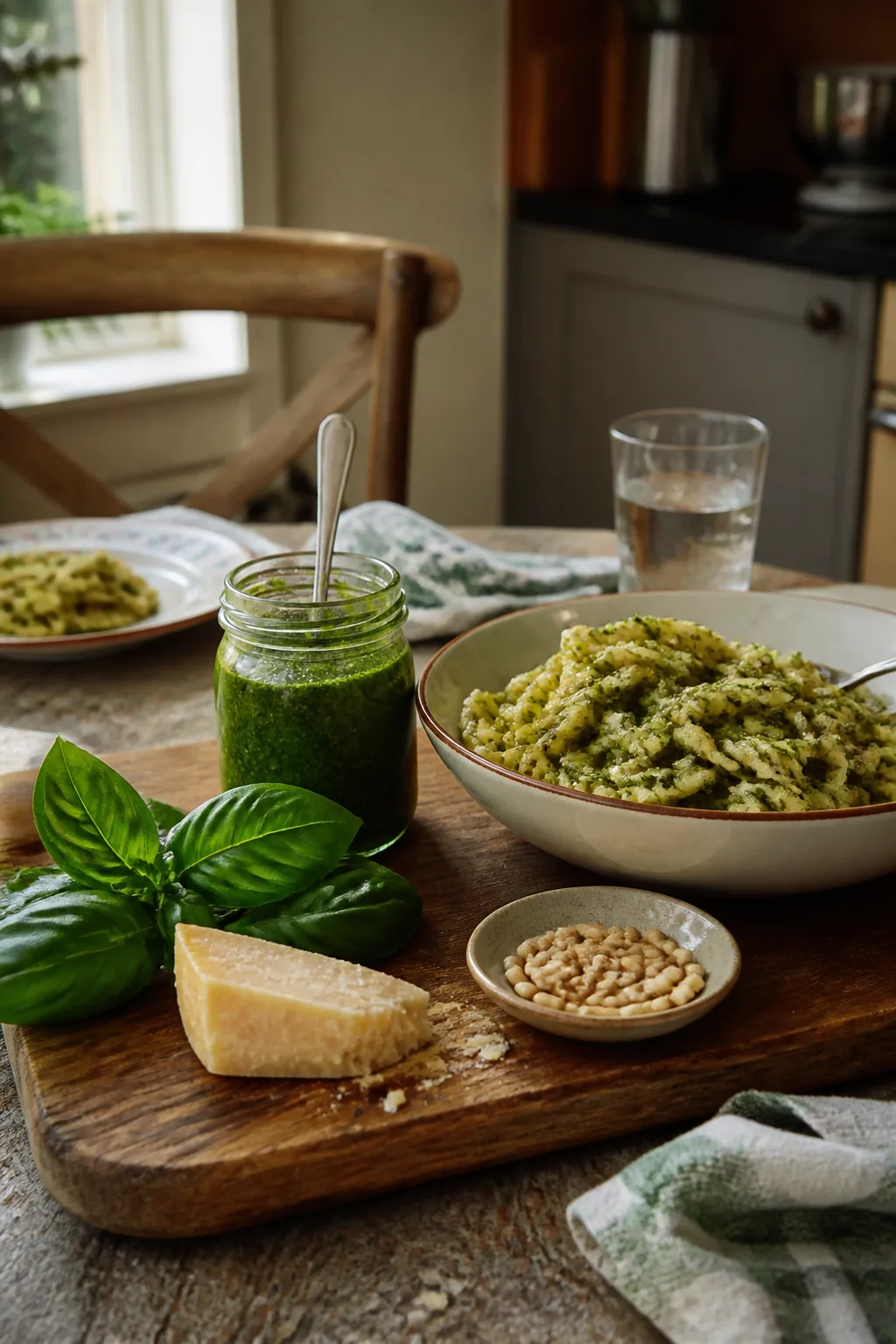
Serve the pesto pasta immediately while it’s still warm. Garnish with some extra grated Parmesan and a few whole basil leaves for a pretty presentation. This dish is best enjoyed fresh, but leftovers can be stored and reheated gently. If you want to add a protein, grilled chicken or shrimp pair wonderfully with this bright, herbal sauce.
⏱ Time: 2 minutes
✓ Doneness: Dish looks vibrant with fresh green pesto and melted cheese.
Step 8
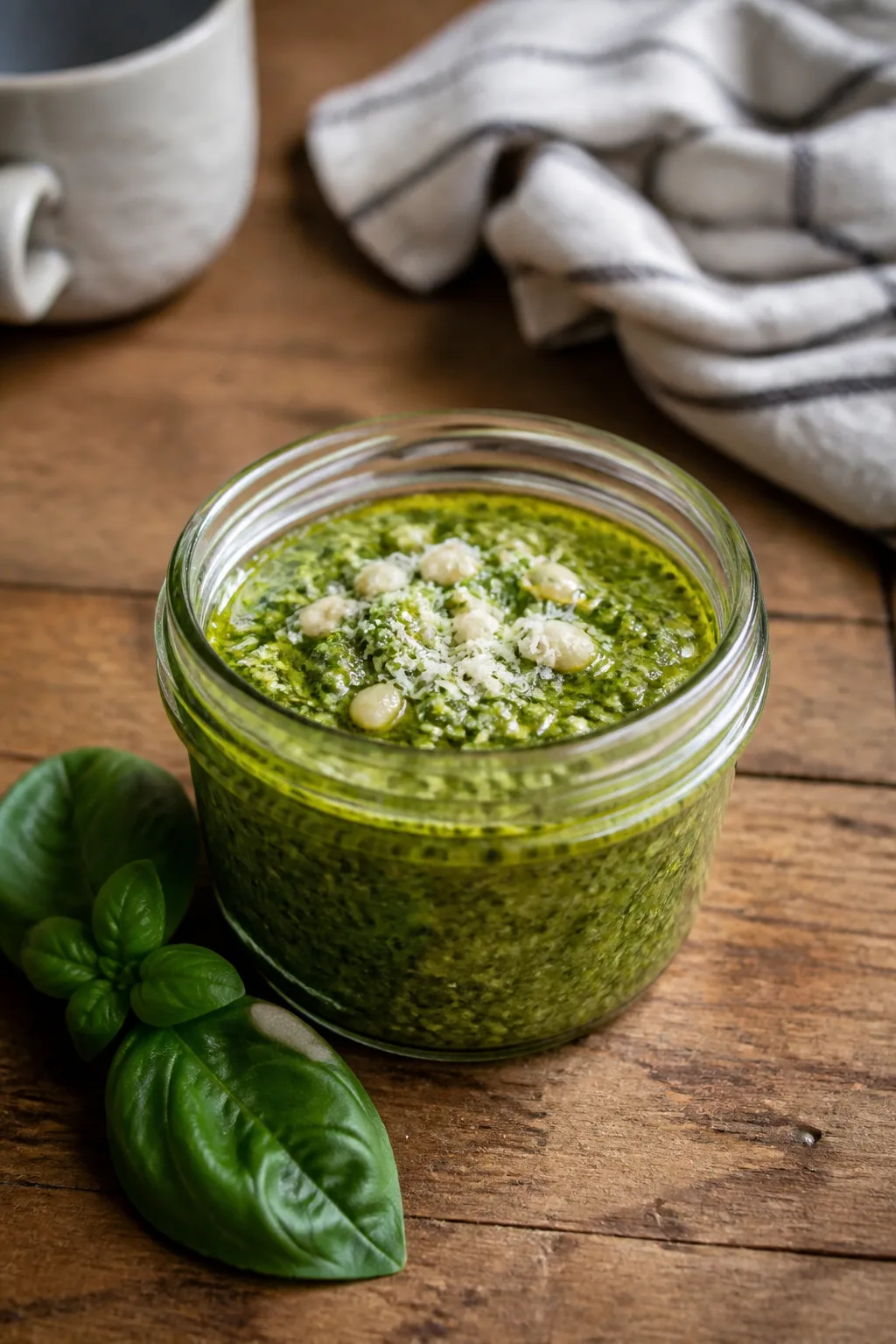
Clean up your workspace and store any leftover pesto in an airtight container. To keep it from browning, pour a thin layer of olive oil on top before sealing. This simple step locks in the vibrant green color and fresh flavor, so your pesto stays appetizing for several days in the fridge.
⏱ Time: 2 minutes
✓ Doneness: Pesto surface is smooth with a protective oil layer.
Step 9
If reheating leftover pesto pasta, warm it gently in a skillet over low heat with a splash of water or olive oil to prevent drying out. Avoid microwaving at high heat as this can dull the bright basil flavor and make the pasta gummy. Stir frequently to heat evenly and serve immediately for best texture and taste.
⏱ Time: 3-4 minutes
✓ Doneness: Pasta is warm, glossy, and fresh-tasting without drying out.
Pro Tips
Toast the pine nuts just until golden, not brown.
Toasting pine nuts releases their oils and enhances their flavor, but if you let them brown too much, they develop a bitter taste that can ruin the pesto. Keep stirring and watch closely—pine nuts can go from perfect to burnt in seconds.
Use reserved pasta water to loosen the pesto sauce.
Pasta water contains starch that helps the pesto cling to the noodles and creates a silky texture. Adding it gradually prevents the sauce from becoming watery while improving adhesion and mouthfeel.
Add olive oil slowly while blending for a creamy emulsion.
Drizzling oil gradually while blending allows it to emulsify with the basil and cheese, creating a smooth, creamy sauce. Pouring oil too quickly can cause the pesto to separate or become greasy.
Salt your pasta water generously before cooking.
Salting the water seasons the pasta internally, which is crucial because pesto is delicate and not overly salty. This step ensures balanced flavor in every bite.
Use freshly grated Parmesan cheese for best flavor.
Pre-grated cheese often contains anti-caking agents that affect texture and flavor. Freshly grated Parmesan melts better and adds authentic umami richness to the pesto.
Add a splash of lemon juice to brighten the pesto.
Lemon juice adds acidity that balances the richness of nuts and cheese, keeping the pesto tasting fresh and vibrant even after refrigeration.
Serve pesto pasta immediately for best texture.
Pesto tends to darken and lose vibrancy when exposed to air for too long. Serving immediately preserves the bright green color and fresh flavor.
Common Mistakes to Avoid
Using wilted or old basil leaves
Why it happens Sometimes cooks grab whatever basil is available without checking freshness, assuming it won’t affect the flavor much.
Fix Always use fresh, vibrant basil leaves with a strong aroma. If your basil is wilted, refrigerate it properly or buy fresh before making pesto to avoid bitter or dull-tasting sauce.
Overtoasting pine nuts until dark brown
Why it happens It’s easy to get distracted and let pine nuts burn because they toast quickly and unevenly.
Fix Toast pine nuts over medium heat while stirring constantly. Remove from heat as soon as they turn golden and smell nutty to keep flavor bright and avoid bitterness.
Adding olive oil too fast when blending
Why it happens In a rush, some add all oil at once, thinking it speeds things up.
Fix Drizzle oil slowly while blending to create a smooth emulsion. This prevents separation and ensures creamy pesto texture.
Not salting pasta water enough
Why it happens Many underestimate how much salt pasta water needs, leading to bland noodles.
Fix Add a generous amount of salt to boiling water before adding pasta. It should taste like seawater to properly season the pasta from within.
Skipping lemon juice in the recipe
Why it happens Some think lemon juice isn’t traditional or worry about acidity.
Fix Add fresh lemon juice to brighten and balance the pesto’s richness. It’s a subtle addition that elevates the overall flavor.
Variations
Walnut Basil Pesto
Swap pine nuts for toasted walnuts for a more robust, earthy flavor. Walnuts are usually more affordable and add a slightly bitter note that pairs well with sharp Parmesan. The texture will be a bit chunkier but just as delicious.
Note: Toast walnuts similarly to pine nuts but watch carefully as they can burn faster. Expect a thicker pesto that might need slightly more olive oil to reach a creamy consistency.
Vegan Basil Pesto
For a dairy-free version, replace Parmesan with nutritional yeast or a blend of toasted cashews. This keeps the cheesy umami flavor without animal products. Works great tossed with gluten-free pasta too!
Note: Nutritional yeast adds flavor but less creaminess, so increase olive oil slightly for smoothness. Blend cashews finely to mimic the cheese texture.
Spicy Basil Pesto
Add a pinch of red pepper flakes or a small fresh chili to the blender for a subtle heat kick. This variation is fantastic on grilled chicken or roasted vegetables, adding warmth to the fresh herb notes.
Note: Start with a small amount of chili and adjust to taste. The heat will intensify if pesto sits, so add cautiously.
Lemon Basil Pesto with Arugula
Mix fresh arugula leaves with basil for a peppery twist. The lemon flavor becomes more pronounced, and the pesto has a nice bite. Perfect for summer salads or as a sandwich spread.
Note: Use equal parts basil and arugula to balance flavors. Arugula has more water content, so you may need less olive oil.
Sun-Dried Tomato Basil Pesto
Blend in a few sun-dried tomatoes to add sweetness and depth. This colorful pesto variation pairs beautifully with grilled meats or as a dip for crusty bread.
Note: Drain sun-dried tomatoes well and chop finely before adding. The pesto will be thicker and more intensely flavored.
Nutrition
Per Serving:
Nutritional values are estimates and may vary based on specific ingredients used.
Storage & Tips
Room Temperature
Pesto pasta should not be left at room temperature for more than 2 hours due to the dairy and fresh herbs. Cover with a clean towel if serving buffet-style briefly.
Refrigerator
Store leftovers in an airtight container in the fridge for up to 3 days. The pesto may darken slightly but will still taste good. Reheat gently before serving to restore texture.
Freezer
You can freeze leftover pesto (without pasta) for up to 3 months in a sealed container or ice cube trays. Thaw in the fridge overnight and stir well before use. Pasta with pesto does not freeze well due to texture changes.
Reheating
Warm pesto pasta gently in a skillet over low heat with a splash of olive oil or reserved pasta water to loosen the sauce. Avoid microwave reheating at high power to preserve fresh flavor and texture.
Make Ahead
Prepare the pesto sauce 1-2 days ahead and store in an airtight container with a thin olive oil layer on top. Cook and toss pasta with pesto just before serving for best texture and freshness.
FAQ
Can I use dried basil instead of fresh?
Dried basil lacks the bright flavor and essential oils fresh basil provides, so it’s not recommended for pesto. If you must, use a very small amount and expect a muted taste. Fresh basil is key to the vibrant flavor and color.
How do I keep pesto from turning brown?
Pesto oxidizes quickly when exposed to air. To prevent browning, store it in an airtight container and pour a thin layer of olive oil on top before sealing. Refrigerate and use within a few days for best color and flavor.
Can I make pesto without a food processor?
Yes! You can finely chop basil, garlic, and nuts by hand and then mix with cheese and olive oil. It takes more time but gives a rustic texture. A mortar and pestle works beautifully too for a traditional method.
What pasta shapes work best with pesto?
Long noodles like linguine or spaghetti are classic, but short shapes like fusilli or penne also work well since they hold the sauce in their crevices. Choose your favorite pasta; the key is that it’s cooked al dente.
Can I freeze pesto pasta?
It’s best to freeze pesto and pasta separately because freezing pasta with pesto can alter the texture and make it mushy. Freeze pesto in small portions and thaw as needed, then toss with freshly cooked pasta.
How long does homemade pesto last in the fridge?
Stored properly with a layer of olive oil on top, homemade pesto lasts about 3-4 days refrigerated. Beyond that, it may lose freshness and develop off flavors, so it’s best to consume it quickly.
Can I substitute other nuts for pine nuts?
Yes, walnuts, almonds, or cashews are common substitutes. Each nut brings a different flavor and texture—walnuts are earthier, almonds add sweetness, and cashews make it creamier. Toast them lightly before use.
Why is my pesto too oily or separated?
This usually happens if olive oil is added too quickly or blended excessively. Add oil slowly while blending to form a stable emulsion. Over-blending can break the sauce and cause separation.
Final Thoughts
I hope you give this fresh basil pesto pasta a try soon—it’s one of those simple dishes that feels like a little celebration every time. Don’t forget to share how it turns out!