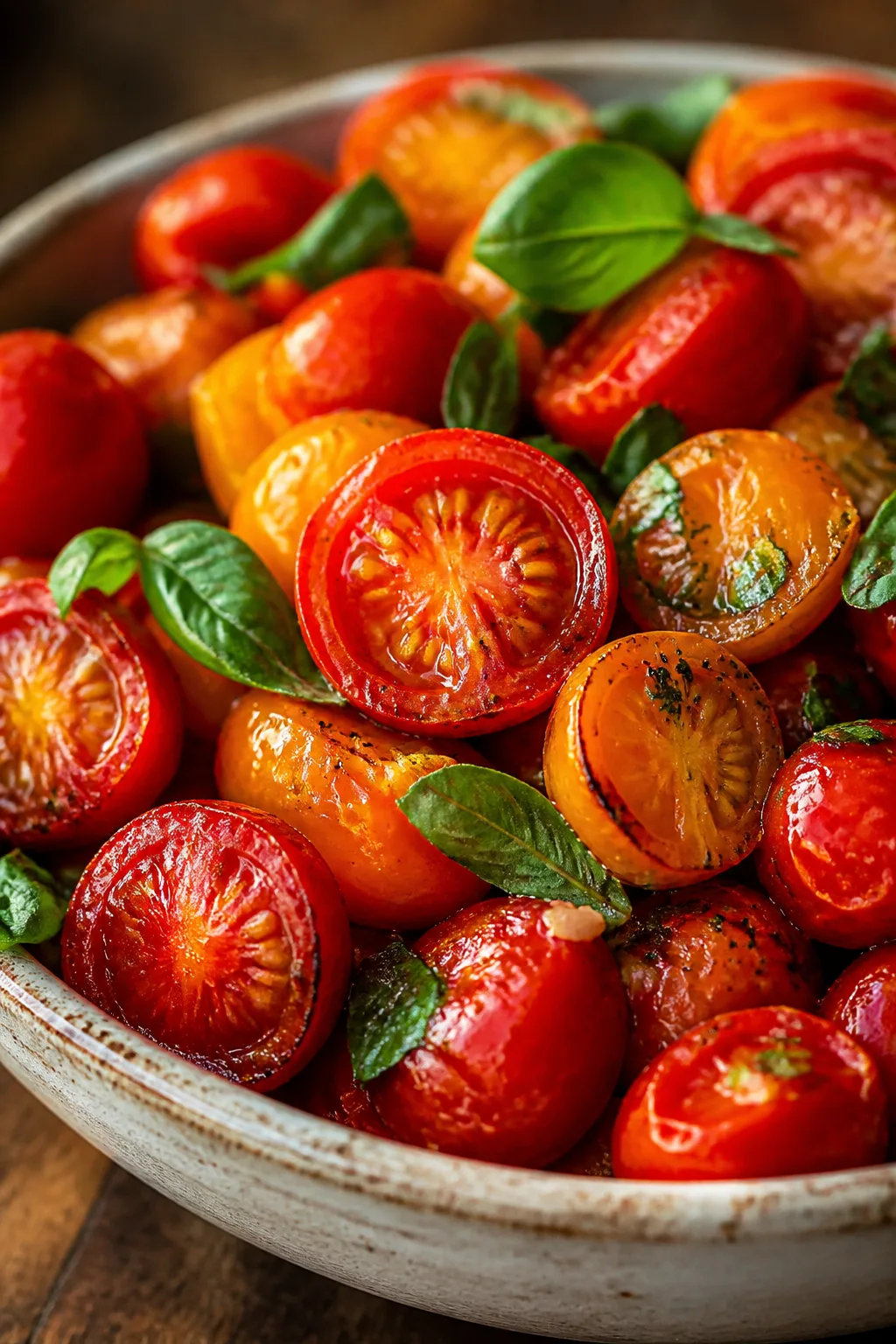
These roasted cherry tomatoes are a tiny burst of sunshine on your plate. Slow roasting brings out their natural sweetness, paired with fresh herbs for a bright, fresh finish. Great as a side or tossed in salads!
Introduction
I first stumbled upon this roasted cherry tomato recipe during a lazy summer afternoon when I wanted something light but full of flavor. What I love about this version is how gentle roasting at a low temperature unlocks the tomatoes' natural sweetness without turning them mushy. The trick I learned is to roast them slowly with a bit of garlic and fresh herbs like thyme and basil, which adds this lovely fragrant note that's just irresistible. I remember my first attempt was a bit rushed, and the tomatoes ended up dry and tough—definitely not what I was going for! Since then, I make sure to roast them low and slow, which gives them that perfect juicy burst in every bite. They’re fantastic served warm alongside grilled chicken or tossed into a salad for a fresh, vibrant lunch. The finished dish looks so pretty with those glossy, caramelized tomatoes and specks of green herbs. It’s one of those recipes that’s deceptively simple but feels special every time I make it.
What You'll Need
Approximately 2 cups roasted tomatoes, 4 servings
- 2 cups cherry tomatoes, halved
- 2 tablespoons olive oil
- 1 teaspoon sea salt
- 1/2 teaspoon freshly ground black pepper
- 2 cloves garlic, thinly sliced
- 1 tablespoon fresh thyme leaves
- 1 tablespoon fresh basil, chopped
- 1 teaspoon balsamic vinegar (optional)
How To Do It
Step 1
Preheat your oven to 275°F (135°C). This low temperature is key because it allows the cherry tomatoes to slowly release their juices and caramelize gently without drying out. Spread the halved tomatoes evenly on a baking sheet lined with parchment paper, cut side up. This positioning helps them roast evenly and prevents the juices from escaping too quickly. Avoid crowding the pan to ensure each tomato has room to roast properly.
⏱ Time: 5 minutes prep
✓ Doneness: Tomatoes should be evenly spaced and cut side facing up, ready for roasting
Step 2
Drizzle the olive oil over the tomatoes, then sprinkle with sea salt and freshly ground black pepper. Add the thinly sliced garlic cloves on top, distributing them evenly. The olive oil helps the tomatoes caramelize beautifully while the garlic infuses a subtle, savory aroma. Tossing the tomatoes gently with the oil and seasonings ensures every bite is flavorful. Don’t skip the salt here—it enhances the natural sweetness.
⏱ Time: 5 minutes
✓ Doneness: Tomatoes glisten with oil and seasonings, garlic slices are evenly scattered
Step 3
Place the baking sheet in the oven and roast the tomatoes slowly for about 30 minutes. Keep an eye on them after 20 minutes; you want them to soften and start to caramelize but not burn. The slow roasting allows the sugars in the tomatoes to concentrate, creating that rich, sweet flavor. If your oven runs hot, check earlier to avoid drying out the tomatoes. The garlic will also become golden and fragrant, adding a perfect mellow bite.
⏱ Time: 30 minutes
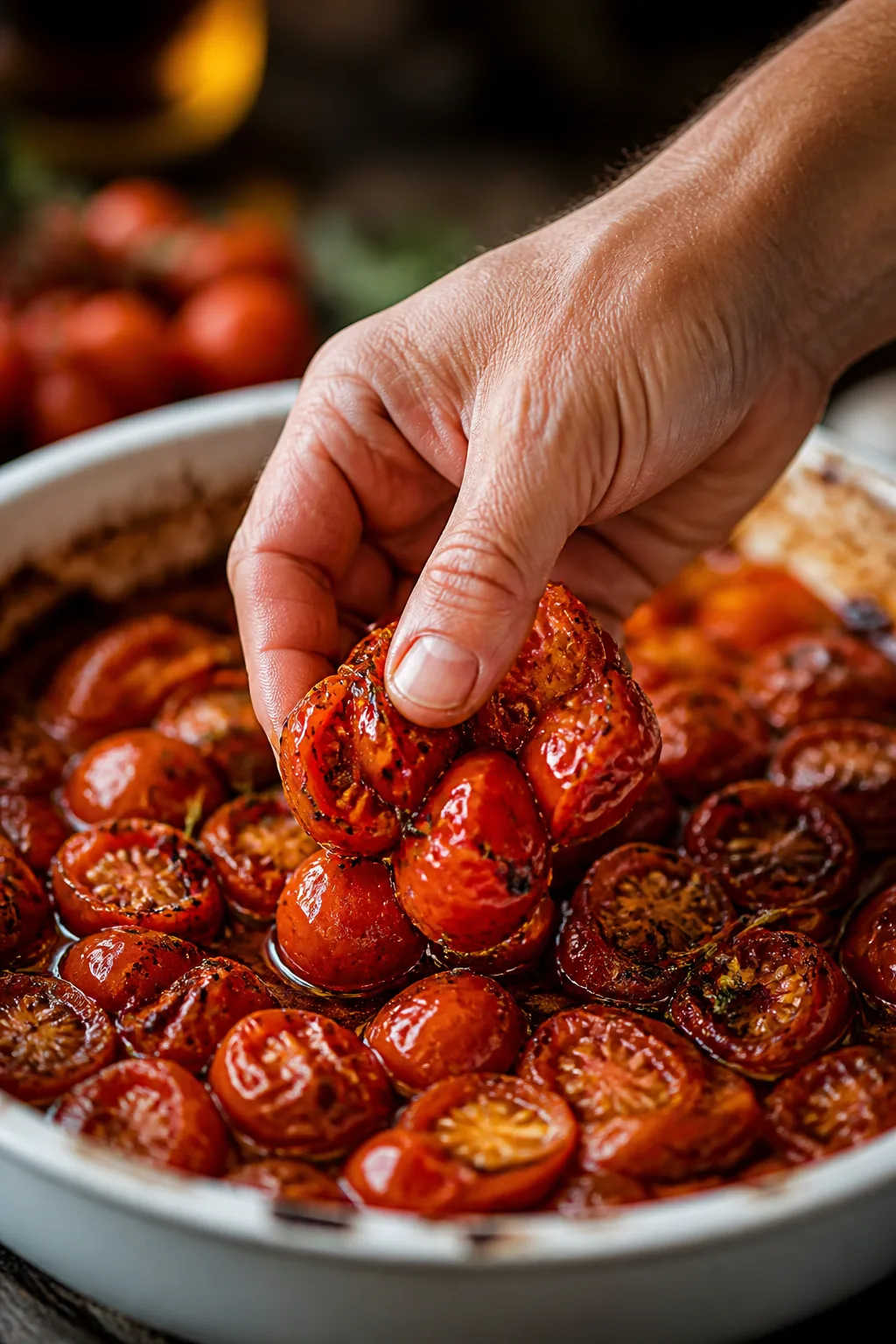
✓ Doneness: Tomatoes are softened, slightly shriveled, with golden edges and a sweet aroma
Step 4
Once roasted, remove the tomatoes from the oven and immediately sprinkle fresh thyme leaves over them. The heat will release the herb’s essential oils, enhancing the flavor without cooking it away. Toss gently to combine. Adding herbs at the end keeps their freshness and brightness intact, balancing the rich roasted flavors.
⏱ Time: 2 minutes
✓ Doneness: Fresh herbs look vibrant and fragrant on warm tomatoes
Step 5
Let the tomatoes cool slightly, then transfer them to a serving bowl. Chop fresh basil and sprinkle it on top. The basil adds a sweet, aromatic finish that lifts the dish. If you like, drizzle a teaspoon of balsamic vinegar over everything for a tangy contrast that highlights the tomato’s sweetness. This step is optional but really takes the flavor to another level.
⏱ Time: 3 minutes
✓ Doneness: Bright green basil leaves contrast beautifully with the deep red tomatoes
Step 6
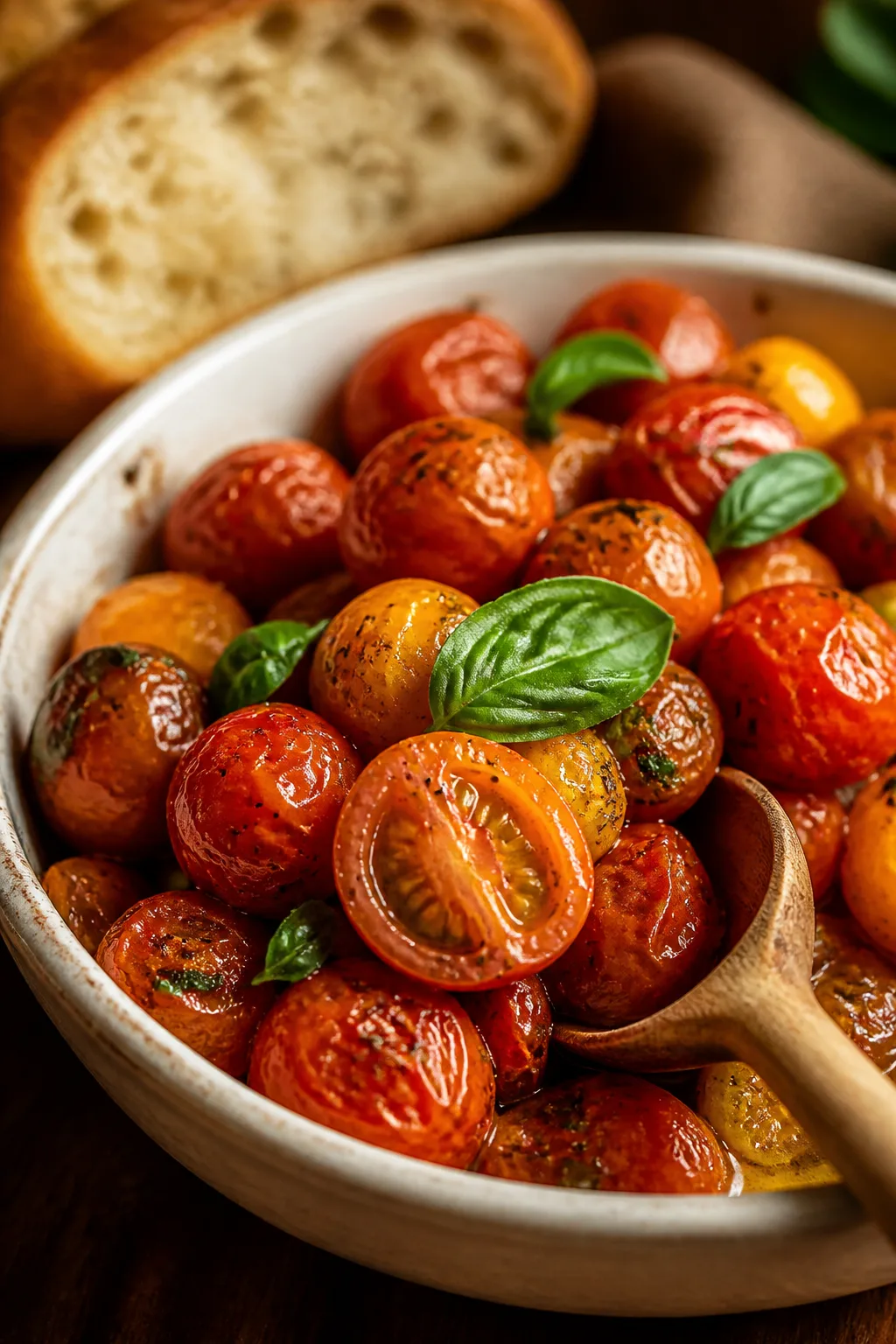
Serve these roasted cherry tomatoes warm or at room temperature. They make a fantastic side dish for grilled meats, a topping for bruschetta, or a fresh addition to salads. The slow roasting brings out a deep, natural sweetness that pairs wonderfully with savory dishes, and the herbs add a fresh, fragrant touch that keeps every bite interesting.
⏱ Time: Immediate serving
✓ Doneness: Tomatoes are juicy, tender, and bursting with flavor
Step 7
If storing leftovers, cool the tomatoes completely before placing them in an airtight container. This prevents condensation that can make them soggy. Keep refrigerated and consume within 3 days for best flavor. When reheating, warm gently to avoid breaking down the texture further.
⏱ Time: 5 minutes
✓ Doneness: Tomatoes cooled and properly stored in container
Step 8
For an extra flavor boost, try stirring these roasted tomatoes into cooked pasta or spooning them over creamy polenta. The concentrated sweetness and fresh herbs add complexity to simple dishes. Just be gentle when mixing to retain the tomatoes’ shape and texture.
⏱ Time: 5 minutes
✓ Doneness: Tomatoes maintain texture and enhance the dish without becoming mushy
Step 9
Want to make this recipe your own? Experiment with herbs like oregano or rosemary, or add a pinch of chili flakes before roasting for a spicy kick. These small tweaks can personalize the dish and keep it exciting every time you prepare it.
⏱ Time: 2 minutes
✓ Doneness: Herbs and spices are evenly distributed, ready for roasting
Pro Tips
Use parchment paper to line your baking sheet.
Parchment prevents the tomatoes from sticking and makes cleanup easier. It also helps distribute heat more evenly across the pan surface, ensuring consistent roasting and preventing burnt spots on the tomatoes.
Don’t overcrowd the pan when roasting.
Crowding traps steam and prevents proper caramelization, leading to soggy tomatoes instead of the desired roasted texture. Give each tomato enough space so the heat can circulate and create those delicious caramelized edges.
Let the tomatoes cool slightly before serving.
Allowing them to rest helps the flavors meld and the juices thicken slightly, improving texture and taste. Serving them too hot can mask the delicate herb aromas and make the tomatoes feel watery.
Use fresh herbs rather than dried for finishing.
Fresh herbs add brightness and freshness that dried herbs can’t replicate. Adding them at the end preserves their volatile oils and vibrant flavor, giving the dish a fresh, aromatic lift.
Slice garlic thinly for even roasting.
Thin slices roast more evenly and become sweet and mellow rather than bitter. Larger chunks can remain raw or burn quickly, which can impart harsh flavors.
Try adding a splash of balsamic vinegar after roasting.
The acidity balances the tomatoes’ sweetness and adds complexity. It also enhances the overall flavor profile, making the dish more versatile and interesting.
Roast tomatoes at low temperature for best results.
Low temperature allows gradual caramelization and moisture retention, preventing the tomatoes from drying out or burning. This slow process produces tender, juicy tomatoes bursting with flavor.
Common Mistakes to Avoid
Roasting at too high temperature
Why it happens Many cooks think higher heat means faster cooking, but it often causes tomatoes to shrivel and dry out, losing their juicy texture.
Fix Roast at a low temperature (around 275°F) to allow slow caramelization and moisture retention. This keeps tomatoes tender and maximizes sweetness.
Overcrowding the pan
Why it happens It’s tempting to roast everything at once, but crowding traps steam and prevents proper browning.
Fix Spread tomatoes out evenly on the baking sheet with space between each piece to encourage caramelization and avoid sogginess.
Adding fresh herbs too early
Why it happens Adding herbs before or early in roasting causes them to lose flavor and aroma.
Fix Add fresh herbs after roasting or near the end to preserve their bright, fresh taste and fragrance.
Using underripe or overripe tomatoes
Why it happens Underripe tomatoes lack sweetness; overripe ones become mushy and watery.
Fix Choose ripe, firm tomatoes with vibrant color for best texture and flavor.
Skipping the olive oil
Why it happens Some might omit oil for health reasons, but it’s essential for texture and flavor.
Fix Use a good quality olive oil to help caramelize the tomatoes and add richness to the dish.
Variations
Spicy Roasted Cherry Tomatoes
Add a pinch of red chili flakes or a dash of cayenne pepper before roasting for a subtle heat that complements the tomatoes’ sweetness. This variation adds a little kick without overpowering the dish, perfect for those who like a bit of spice.
Note: Watch the chili quantity carefully; too much can overwhelm the delicate tomato flavor. Roast as usual.
Roasted Cherry Tomatoes with Balsamic Glaze
After roasting, drizzle the tomatoes with a balsamic reduction or glaze for a tangy, sweet finish. This adds a syrupy texture and rich flavor that pairs beautifully with the natural sweetness of the tomatoes.
Note: Make sure to add the glaze after roasting to preserve its texture and flavor.
Herby Roasted Tomatoes with Oregano and Rosemary
Swap thyme and basil for fresh oregano and rosemary for a more robust, earthy flavor. Great alongside Mediterranean dishes or grilled meats, this twist gives the tomatoes a woodsy aroma and deeper taste.
Note: Add rosemary early in roasting as it needs more time to release flavor; add oregano at the end.
Roasted Cherry Tomatoes with Parmesan
Sprinkle freshly grated Parmesan cheese over the tomatoes in the last 5 minutes of roasting. The cheese melts and crisps slightly, adding a salty, umami-rich layer that enhances the dish’s complexity.
Note: Keep a close eye to prevent cheese from burning; remove as soon as it melts and browns lightly.
Slow-Roasted Cherry Tomatoes with Garlic and Shallots
Add thinly sliced shallots along with garlic for a sweeter, more delicate aromatic profile. The shallots caramelize beautifully, adding subtle depth and complexity to the roasted tomatoes.
Note: Roast the shallots along with the tomatoes to allow even caramelization.
Nutrition
Per Serving:
Nutritional values are estimates and may vary based on specific ingredients used.
Storage & Tips
Room Temperature
These roasted cherry tomatoes can safely sit at room temperature for up to 2 hours if covered loosely. Beyond that, bacteria growth increases, so it’s best to refrigerate promptly.
Refrigerator
Store leftovers in an airtight container in the refrigerator for up to 3 days. The tomatoes will firm up slightly when cold but can be reheated gently or enjoyed at room temperature for best taste.
Freezer
You can freeze roasted cherry tomatoes in a sealed container or freezer bag for up to 2 months. To prevent freezer burn, remove as much air as possible and freeze flat. Thaw overnight in the fridge and reheat gently to restore texture.
Reheating
Reheat gently on the stovetop over low heat or in the microwave at medium power for 30-60 seconds. Add a splash of olive oil or water if they seem dry. Avoid overheating to keep tomatoes from becoming mushy.
Make Ahead
Roast the tomatoes 1-2 days ahead and store in the fridge. Add fresh herbs and balsamic vinegar just before serving to preserve freshness and vibrant flavor.
FAQ
Can I use frozen cherry tomatoes for this recipe?
Frozen cherry tomatoes tend to release excess water when thawed, which can make roasting less effective and the texture mushy. For best results, use fresh tomatoes. If frozen is all you have, thaw thoroughly and pat dry before roasting to remove moisture.
What if I don’t have fresh herbs?
Dried herbs can be used but add them earlier in the roasting process to allow their flavors to infuse. Fresh herbs added at the end provide a bright, fresh note that dried herbs can’t replicate, so consider adding a small pinch of dried herbs before roasting.
How do I know when the tomatoes are done roasting?
Look for tomatoes that have softened, slightly shriveled skins, and caramelized edges with a sweet, roasted aroma. They should be tender but not falling apart. If they look dry or burnt, the temperature was too high or they roasted too long.
Can I roast other types of tomatoes this way?
Yes, grape tomatoes or small plum tomatoes work well. Larger tomatoes can be roasted but may require longer time and should be cut into smaller pieces to ensure even cooking and caramelization.
Is olive oil necessary, or can I use another oil?
Olive oil is preferred for its flavor and roasting properties, but you can substitute with avocado or grapeseed oil. Avoid oils with low smoke points or strong flavors that might overpower the tomatoes.
Can I add other vegetables to roast with the tomatoes?
Absolutely! Vegetables like sliced bell peppers, zucchini, or shallots roast well alongside tomatoes. Just consider their cooking times and cut sizes to ensure even roasting without overcooking.
How do I prevent the garlic from burning?
Slice garlic thinly and spread evenly to avoid clumping. Roasting at a low temperature helps prevent burning. You can also add garlic halfway through roasting if you’re worried about it getting too dark.
What’s the best way to serve these roasted tomatoes?
They’re fantastic warm or at room temperature as a side dish, tossed into salads, on toasted bread, or mixed into pasta. Adding fresh herbs and a drizzle of balsamic vinegar just before serving elevates the flavor.
Final Thoughts
I hope you give these roasted cherry tomatoes a try soon—they’re a little slice of summer on a plate! Please share how it turns out for you, I’d love to hear your tweaks and favorites.