A detailed recipe for vegan spring roll bowls featuring fresh, crunchy vegetables and a creamy peanut sauce. This recipe emphasizes technique for crisp textures and balanced flavors, perfect for light meals during warmer seasons.
Introduction
I first made these vegan spring roll bowls during an early spring weekend when the weather began to warm up, craving something light yet satisfying. What sets this version apart is the balance of crisp, fresh vegetables paired with a creamy, subtly tangy peanut sauce that ties everything together without overpowering the natural flavors. The preparation of each vegetable—whether julienned, shredded, or thinly sliced—ensures a variety of textures that keep each bite interesting. These bowls work well for casual lunches or quick dinners when you want something refreshing but nourishing. The recipe is straightforward but benefits from attention to detail, especially in preparing the noodles and sauce. Here’s how I approach making them.
How To Do It
Step 1
Prepare the rice vermicelli noodles by placing them in a large bowl and covering with warm water (around 40-45°C / 104-113°F). Let them soak for 7-8 minutes, stirring gently halfway through to prevent clumping. Once tender but still slightly firm, drain and rinse under cold water to stop cooking. Set aside to drain thoroughly.
⏱ Time: 10 minutes total
✓ Doneness: Noodles are pliable and tender but retain slight chew; not mushy or sticky
Step 2
While the noodles soak, prepare all vegetables. Shred the red cabbage finely, julienne the carrot and cucumber, slice the red bell pepper thinly, and slice the avocado just before assembling to prevent browning. Rinse and pat dry the fresh herbs and bean sprouts.
⏱ Time: 10-15 minutes
✓ Doneness: Vegetables are crisp, vibrant in color, and uniformly cut for even texture
Step 3
Make the peanut sauce by whisking together peanut butter, soy sauce, maple syrup, lime juice, toasted sesame oil, minced garlic, grated ginger, and red pepper flakes if using. Gradually add warm water, stirring until the sauce reaches a smooth, pourable consistency that will coat ingredients evenly without clumping.
⏱ Time: 5 minutes
✓ Doneness: Sauce is glossy, smooth, and easily drizzled or tossed with other ingredients
Step 4
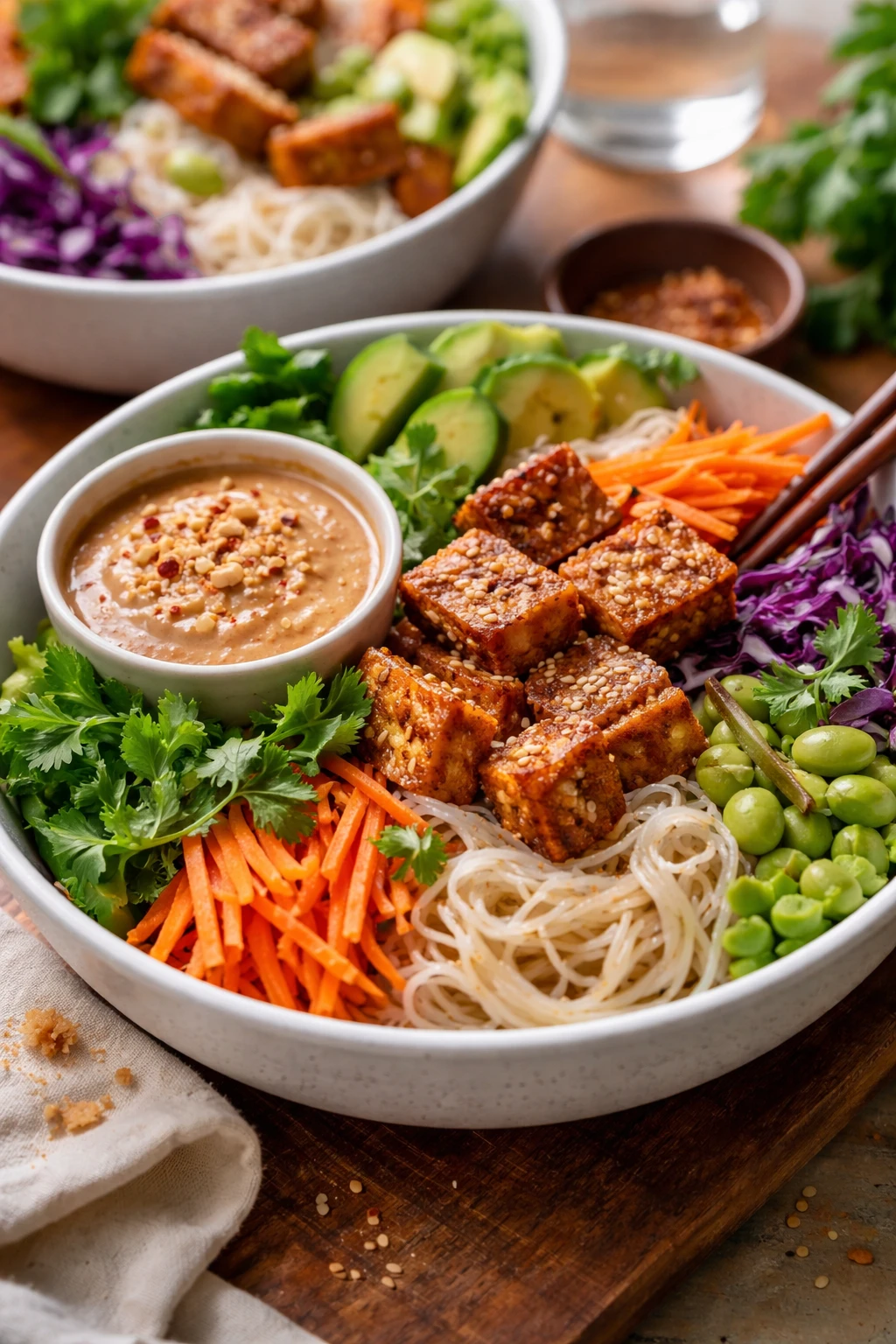
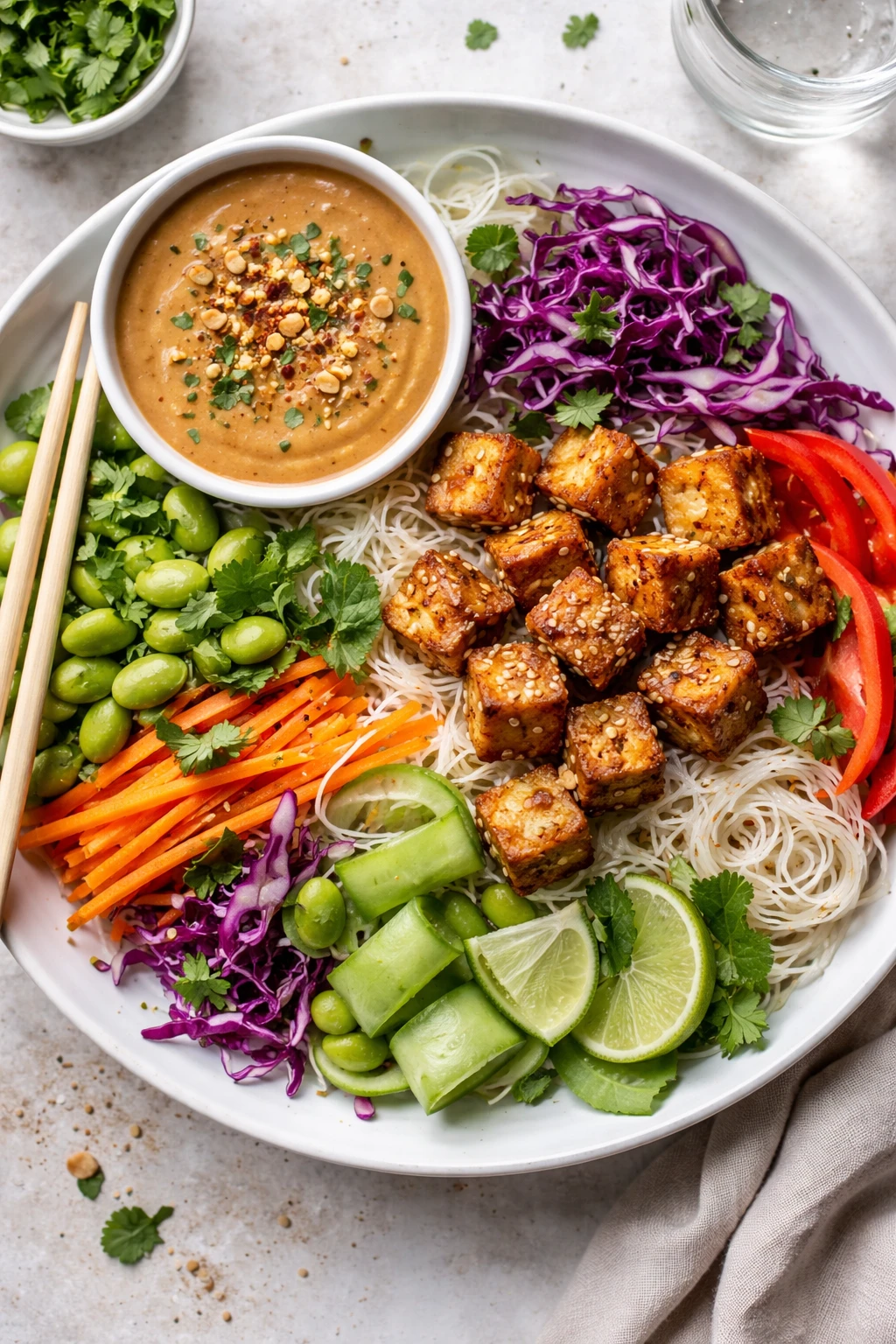
Assemble the bowls by dividing the mixed salad greens among four bowls. Add an even layer of drained rice noodles on top. Arrange the prepared vegetables and fresh herbs attractively over the noodles. Add avocado slices last to maintain their shape and color.
⏱ Time: 5 minutes
✓ Doneness: Ingredients are layered with visible color contrast and varied textures
Step 5
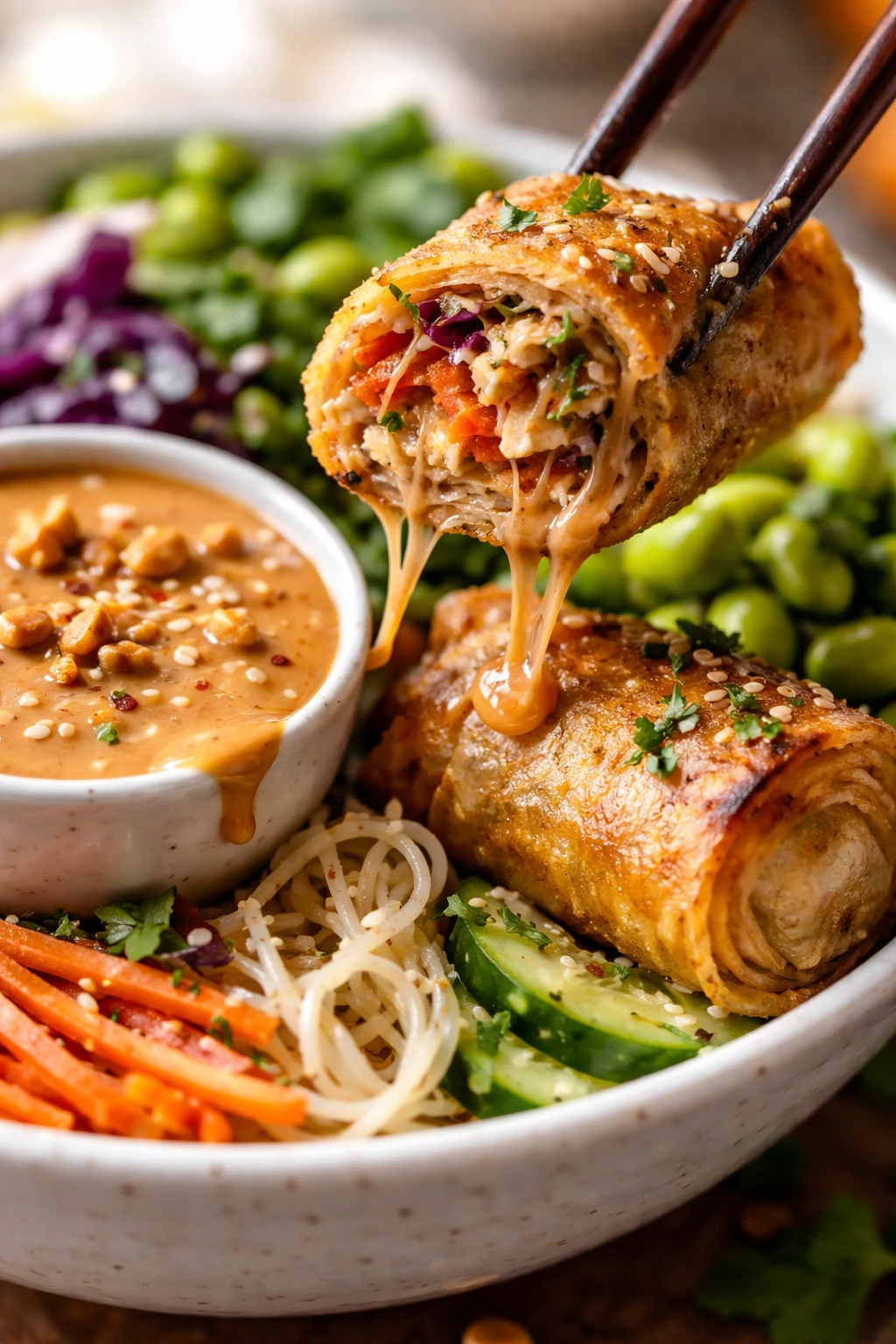
Drizzle each bowl with the peanut sauce, or serve it on the side for dipping. Sprinkle chopped roasted peanuts and toasted sesame seeds over the top, and provide lime wedges for additional acidity if desired.
⏱ Time: 2 minutes
✓ Doneness: Sauce evenly coats ingredients or is available for dipping; toppings add visible crunch
Pro Tips
Soak rice noodles just until tender and rinse in cold water immediately.
This prevents overcooking and keeps the noodles from becoming mushy or sticky, preserving a pleasant chew that contrasts with crisp vegetables.
Slice vegetables uniformly to ensure consistent texture and ease of eating.
Evenly cut vegetables cook and soften evenly if briefly blanched or marinated, and they provide a balanced mouthfeel in the bowl.
Add avocado slices last and only just before serving.
Avocado oxidizes quickly, turning brown and losing its fresh flavor. Adding it last maintains its creamy texture and vibrant color.
Gradually thin the peanut sauce with warm water instead of cold.
Warm water helps the peanut butter emulsify smoothly, preventing lumps and creating a glossy sauce that coats ingredients evenly.
Use fresh herbs generously and add them at the end.
Herbs like cilantro, mint, and basil lose their aroma and wilt if exposed to moisture or heat for too long, so adding them last preserves their bright flavor.
Toast peanuts and sesame seeds lightly before adding.
Toasting enhances their nutty aroma and adds a pleasant crunch, elevating the overall texture and flavor complexity of the dish.
Common Mistakes to Avoid
Over-soaking or overcooking the rice noodles.
Why it happens Leaving noodles in hot water too long softens them excessively, causing them to break apart and lose texture.
Fix Monitor soaking time carefully and rinse noodles in cold water immediately after to stop cooking.
Using wilted or old herbs and vegetables.
Why it happens Freshness is critical for flavor and texture; older produce becomes limp and dull in color.
Fix Choose fresh, crisp vegetables and herbs, and prepare them just before assembly to maintain vibrancy.
Making peanut sauce too thick or lumpy.
Why it happens Adding cold water or not mixing thoroughly can cause clumps and uneven texture.
Fix Use warm water and whisk continuously to achieve a smooth, pourable consistency.
Adding avocado too early causing browning.
Why it happens Exposure to air causes enzymatic browning and softening.
Fix Slice avocado last and add immediately before serving; optionally toss slices in a little lime juice to slow browning.
Variations
Gluten-Free Variation
Use gluten-free tamari instead of soy sauce in the peanut sauce to accommodate gluten sensitivities.
Note: Tamari provides similar umami and saltiness without gluten, maintaining the sauce's balance.
Spicy Peanut Sauce
Add 1 tsp (5ml) sriracha or chili garlic sauce to the peanut sauce for a spicy kick.
Note: Adjust spice levels gradually; the heat complements the creamy peanut flavor without overpowering the fresh vegetables.
Seasonal Vegetable Swaps
Replace cucumber and bell pepper with thinly sliced radishes, snap peas, or asparagus tips in spring or early summer.
Note: Choose crisp, fresh vegetables that maintain texture and color; adjust cutting sizes to maintain balance with noodles.
Tofu Addition
Add pan-seared or baked firm tofu cubes for extra protein and texture.
Note: Press tofu to remove excess moisture before cooking to achieve a firm, golden crust that contrasts with fresh veggies.
Nut-Free Sauce Alternative
Replace peanut butter with sunflower seed butter and omit peanuts for nut-free diets.
Note: Sunflower seed butter provides similar creaminess and richness but with a different flavor profile; ensure no cross-contamination if allergies are severe.
Nutrition
Per Serving:
approximately 350
Calories
Values are estimates and may vary based on exact ingredient brands and portion sizes. Nutritional content is influenced by peanut butter type and amount of added salt in soy sauce.
Storage & Tips
Room Temperature
Do not leave assembled bowls at room temperature for more than 1 hour to prevent vegetable wilting and avocado browning.
Refrigerator
Store components separately in airtight containers for up to 2 days. Keep peanut sauce refrigerated and stir well before using.
Freezer
Not recommended to freeze assembled bowls due to fresh vegetables and avocado. Peanut sauce can be frozen for up to 1 month in a sealed container.
Reheating
This dish is best served cold or at room temperature. If preferred, reheat noodles briefly in warm water, drain, and assemble with fresh vegetables and sauce.
Make Ahead
Prepare and store each component separately up to one day in advance. Assemble bowls just before serving to maintain freshness and texture.
FAQ
Can I make vegan spring roll bowls ahead of time?
You can prepare the ingredients and peanut sauce up to one day ahead, storing them separately. Assemble the bowls just before serving to keep vegetables crisp and avocado fresh.
Why is my peanut sauce lumpy?
Lumps often form if cold water is added too quickly or if the peanut butter is not well mixed. Use warm water and whisk continuously to achieve a smooth sauce.
Can I substitute peanut butter with almond butter?
Yes, almond butter can be used but it has a milder flavor and different texture. You may need to adjust the amount of lime juice and sweetener to balance the sauce.
How long do spring roll bowls last in the fridge?
Prepared ingredients stored separately will last 1-2 days refrigerated. Once assembled, consume immediately for best texture and flavor.
Can I use pre-shredded vegetables for this recipe?
Pre-shredded vegetables can save time but may be less crisp and fresh. If using, rinse and drain well to remove excess moisture and maintain texture.
Is it necessary to soak rice vermicelli noodles before assembling?
Yes, soaking softens the noodles to an edible texture. Avoid over-soaking to prevent mushiness and rinse with cold water to stop cooking.
Final Thoughts
Preparing vegan spring roll bowls is a rewarding way to enjoy fresh, seasonal vegetables combined with a flavorful peanut sauce. I welcome your thoughts or questions about the recipe—feel free to share your experiences or adjustments in the comments below.