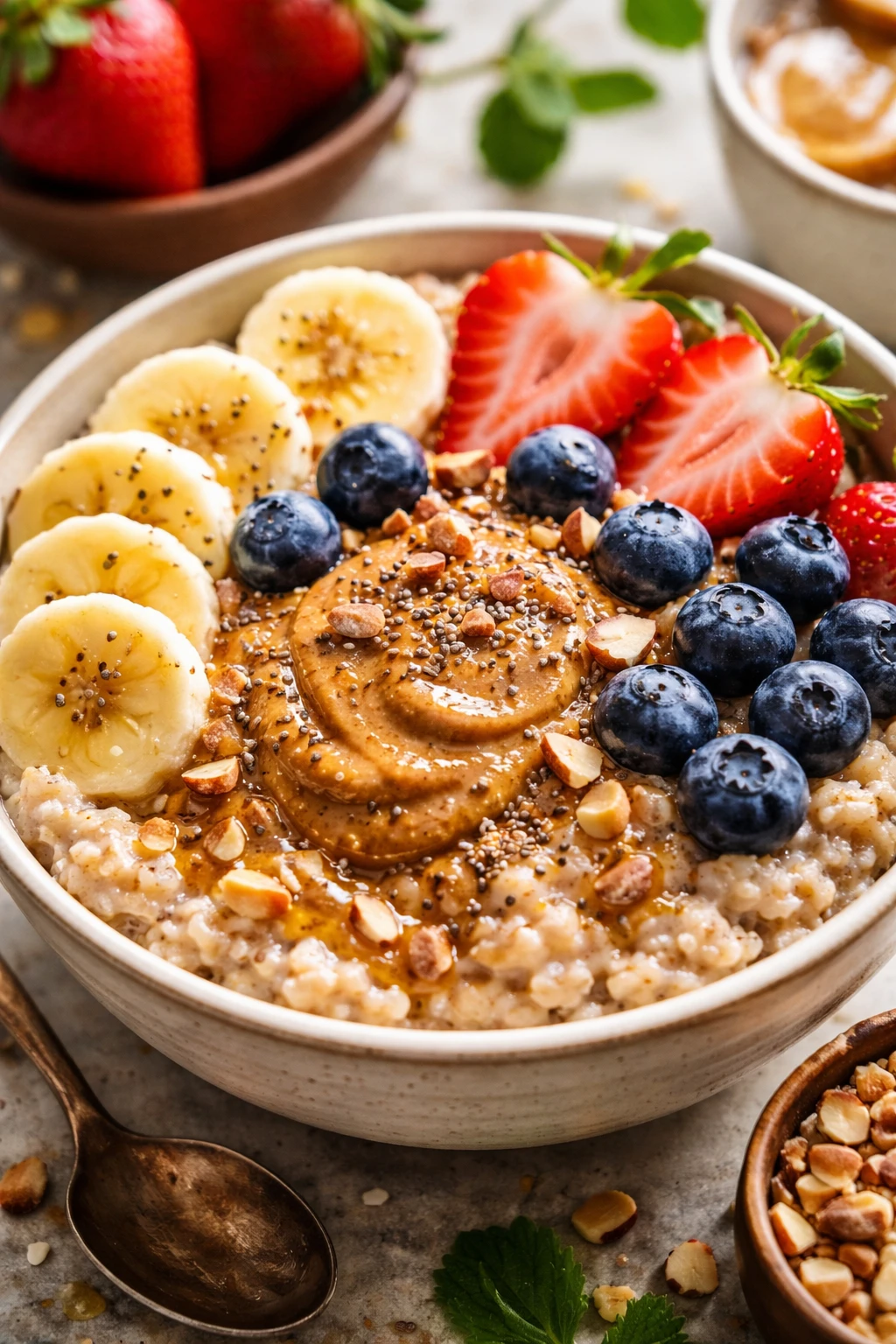
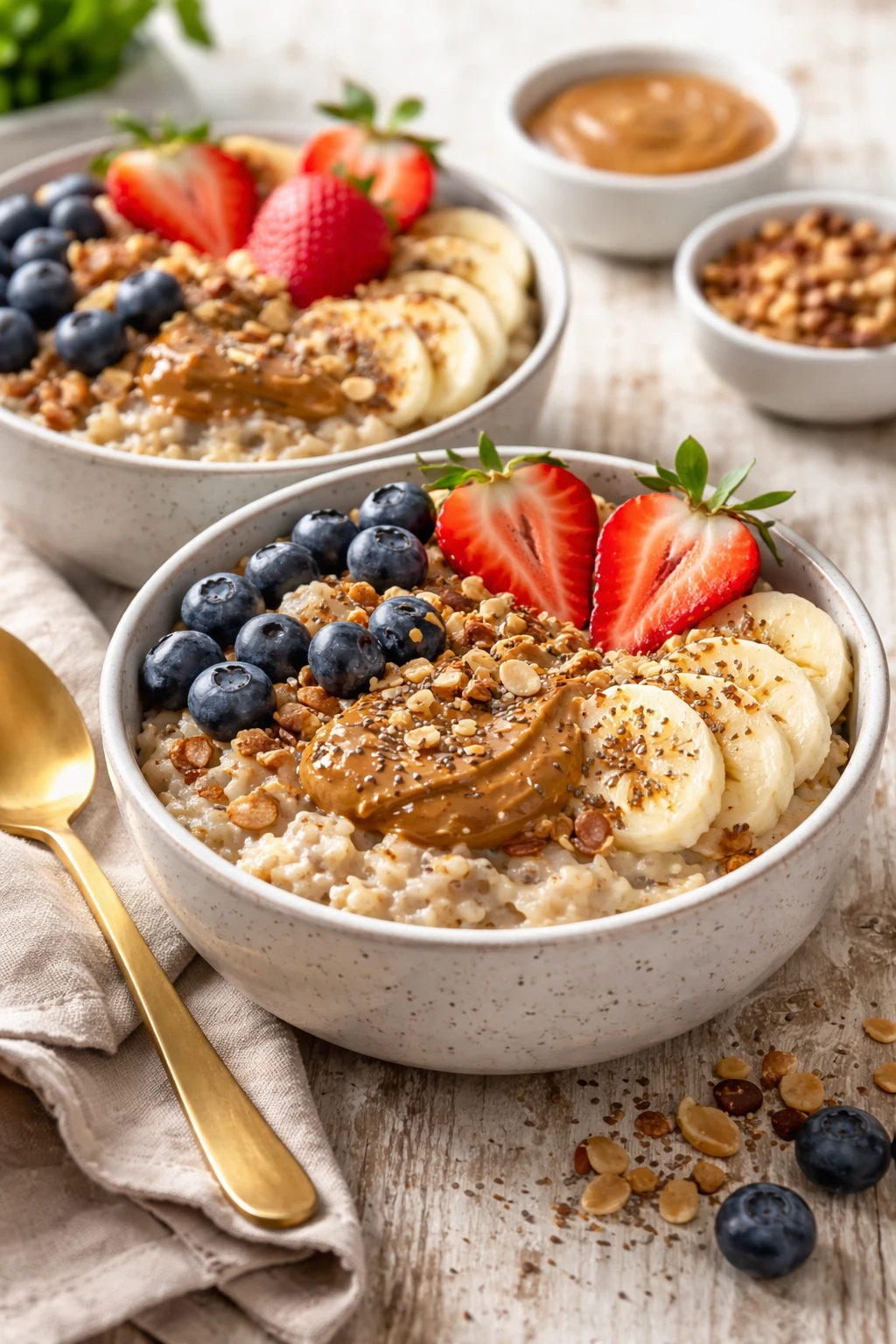
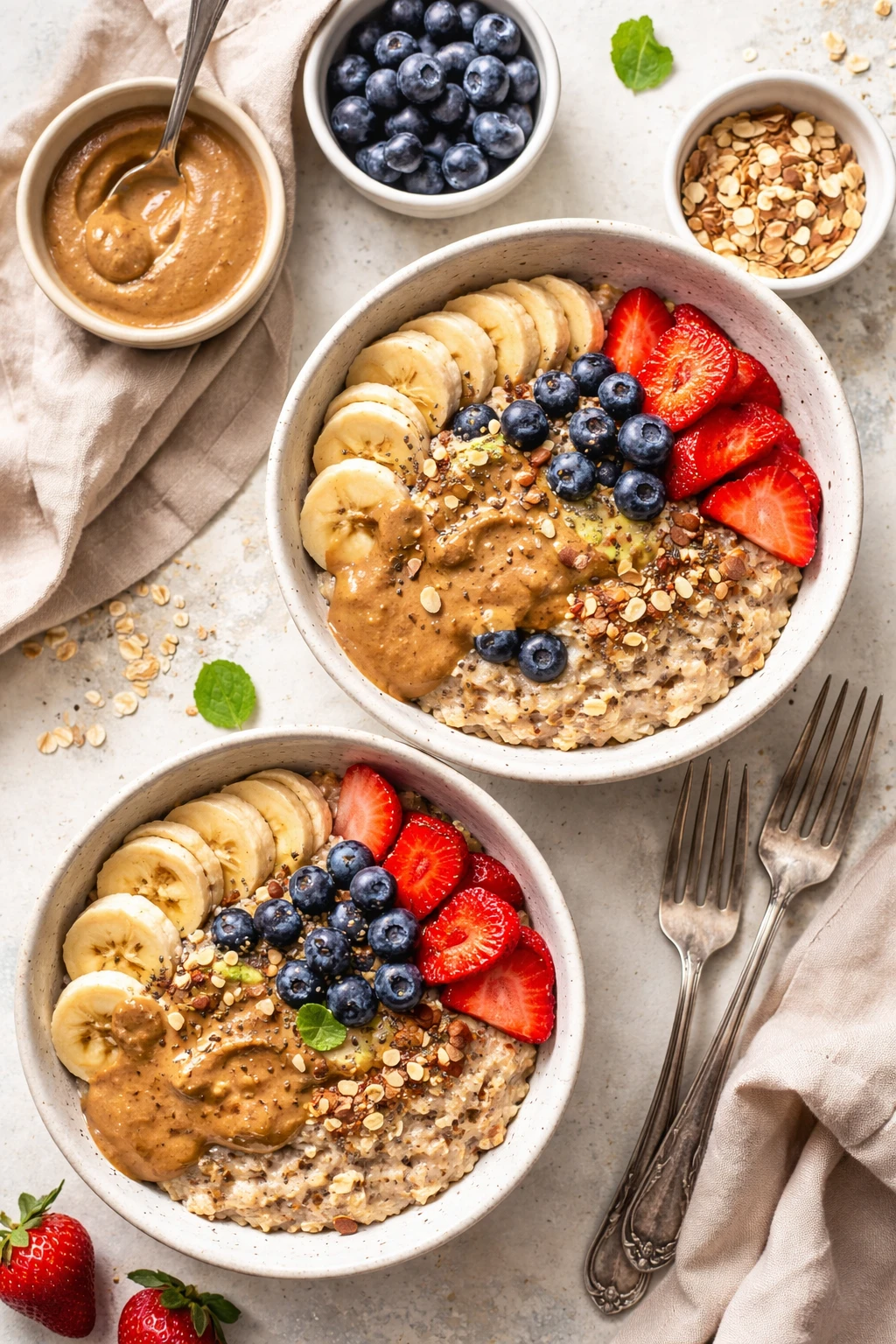
These oatmeal bowls are a delicious way to start your day with protein-rich almond butter and hearty oats. A sprinkle of chia seeds gives a nice texture and nutrition boost. Great for busy mornings when you want something quick and filling!
Introduction
I first started making these almond butter oatmeal bowls when I needed a quick, satisfying breakfast that could keep me full through busy mornings. What I love about this version is how creamy and rich it gets without any heavy cream—just good old almond butter does the trick. The trick I learned is to stir in the almond butter right at the end so it melts perfectly into the oats, giving a smooth, nutty flavor without overpowering the dish. Plus, adding chia seeds gives it a little texture and a nice nutritional boost, which I think makes it feel a bit more special. These bowls are super forgiving too, so you can make them your own by adding whatever fruit or sweetener you like. The finished oatmeal is thick but not gloopy, with a comforting warmth and just the right touch of almond nuttiness. Honestly, it’s become my go-to when I want something cozy but don’t want to spend forever in the kitchen.
How To Do It
Step 1
Start by bringing the water or milk to a gentle boil in a small saucepan. Using milk will make your oatmeal creamier, but water works great if you want it lighter. Keep an eye on it so it doesn’t boil over—stir occasionally to prevent sticking at the bottom. This step is crucial because the liquid temperature affects how the oats cook and absorb moisture evenly.
⏱ Time: 5 minutes
✓ Doneness: The liquid is simmering gently with no rolling boil, ready for the oats.
Step 2
Add the rolled oats and a pinch of salt to the simmering liquid. Stir well to combine. Reduce the heat to low and let the oats cook uncovered, stirring occasionally. This slow simmer helps the oats soften evenly without becoming mushy. If you rush this step or use high heat, the oats might stick or cook unevenly.
⏱ Time: 5-7 minutes
✓ Doneness: Oats look plump, soft, and the mixture has thickened to a creamy consistency.
Step 3
Once the oats are cooked, remove the pan from heat. Stir in the creamy almond butter while the oats are still hot. The residual heat melts the almond butter perfectly, creating a luscious texture and rich flavor that coats every bite. Avoid adding the almond butter too early or the heat may break down its flavor and texture.
⏱ Time: 1 minute
✓ Doneness: Oatmeal looks smooth and glossy with almond butter fully incorporated.
Step 4
Mix in the chia seeds and sweetener if using. Chia seeds soak up moisture and add a subtle crunch, plus extra fiber and omega-3s. Stirring them in at this stage lets them soften slightly without becoming gelatinous, which keeps the texture pleasant.
⏱ Time: 1-2 minutes
✓ Doneness: Chia seeds are evenly distributed but still visible for texture.
Step 5
Spoon the oatmeal into bowls and top with your favorite fresh fruit like berries or sliced banana. The fresh fruit adds brightness and natural sweetness, balancing the rich almond butter and creamy oats. This final touch is what makes the bowl feel fresh and inviting.
⏱ Time: 2 minutes
✓ Doneness: Bowls are visually appealing with colorful fruit on top.
Step 6
Serve immediately while warm. If you prefer, you can let it cool slightly for a thicker texture. Eating it warm provides a comforting start, but a slightly cooled bowl can be just as delicious with a spoonful of yogurt on top.
⏱ Time: Immediate
✓ Doneness: Oatmeal is warm and inviting, ready to enjoy.
Step 7
If making ahead, cool the oatmeal completely and store in an airtight container in the fridge. Reheat gently with a splash of milk or water to loosen the texture. This prevents it from drying out and keeps it creamy.
⏱ Time: N/A
✓ Doneness: Oatmeal reheated to creamy, spoonable consistency.
Step 8
For a thicker oatmeal, use less liquid or cook a bit longer, stirring frequently to prevent burning. Thicker oats hold up better to toppings and make the bowl more filling. Adjust liquid to your preference, but be careful not to overcook or it may become gluey.
⏱ Time: Adjust as needed
✓ Doneness: Oatmeal has a thick but creamy texture, not watery or dry.
Step 9
Experiment with different nut butters or add-ins like cinnamon, vanilla extract, or nuts. These variations can add depth and change the flavor profile while keeping the creamy, protein-packed base intact. Always add delicate flavors at the end to preserve their aroma.
⏱ Time: N/A
✓ Doneness: Flavorful, personalized oatmeal bowl ready to enjoy.
Pro Tips
Use rolled oats instead of instant for better texture.
Rolled oats retain a pleasant chewiness and develop a creamier texture when cooked slowly. Instant oats tend to become mushy quickly because they are pre-cooked and cut finer. Choosing rolled oats ensures your oatmeal has body and isn’t overly soft or gluey.
Stir in almond butter off the heat.
Adding almond butter after removing the pan from heat prevents the oils from separating and preserves its rich flavor. Heating almond butter too much can cause it to become oily and lose its smooth consistency, which affects the final texture of the oatmeal.
Simmer oats gently rather than boiling hard.
A gentle simmer allows the oats to absorb liquid gradually and release starches that thicken the mixture. Boiling vigorously can cause uneven cooking, burning at the bottom, or a gummy texture. Slow cooking yields a creamier, more consistent bowl.
Add chia seeds near the end to keep texture.
Chia seeds swell and gel when soaked. Adding them too early results in a slimy or overly thick texture. Stirring them in at the end lets them soften just enough to add crunch and nutrition without overpowering the oatmeal’s creaminess.
Use a pinch of salt to enhance flavor.
Salt balances sweetness and brings out the nutty flavors in almond butter and oats. Even a small amount makes a big difference by reducing any blandness and creating depth in taste.
Top with fresh fruit for contrast.
Fresh berries or bananas add brightness and natural sweetness, balancing the richness of almond butter and the creamy oats. The contrast in temperature and texture keeps each bite exciting and satisfying.
Reheat with a splash of milk or water.
When reheating stored oatmeal, adding a little liquid helps loosen the texture that thickens in the fridge. This prevents dryness and restores creaminess, making leftovers just as enjoyable as freshly made bowls.
Common Mistakes to Avoid
Using instant oats instead of rolled oats
Why it happens Many people grab instant oats for speed, assuming they’re similar, but instant oats cook differently and can turn mushy quickly.
Fix Switch to rolled oats for a better balance of creaminess and texture. They take a bit longer to cook but yield a much more satisfying bowl that isn’t gluey or too soft.
Adding almond butter too early during cooking
Why it happens It’s tempting to mix everything together at once, but heat affects almond butter’s oils and texture.
Fix Wait until the oats are cooked and off the heat to stir in almond butter. This keeps the flavor fresh and the texture smooth without oil separating.
Skipping the pinch of salt
Why it happens People often think salt isn’t needed in sweet dishes or forget it.
Fix Always add a pinch of salt when cooking oats. It enhances all the other flavors, especially the nuttiness of almond butter and sweetness of added honey or syrup.
Overcooking chia seeds causing a slimy texture
Why it happens Chia seeds swell and gel quickly. Cooking them too long makes the oatmeal gluey.
Fix Add chia seeds at the end of cooking or stir them in after removing from heat to keep the texture pleasant and slightly crunchy.
Not stirring often enough, causing sticking or uneven cooking
Why it happens Oats can settle and stick to the bottom if left unattended, especially on higher heat.
Fix Stir occasionally during simmering to prevent burning and ensure even cooking. Use a non-stick pan if possible.
Variations
Peanut Butter & Banana Oatmeal
Swap almond butter for creamy peanut butter and top with sliced bananas for a classic combo. The peanut butter adds a slightly stronger nutty flavor while bananas bring natural sweetness and creaminess.
Note: Peanut butter behaves similarly to almond butter, so add it off heat to preserve texture and flavor.
Cinnamon Apple Almond Oatmeal
Add diced apples and a teaspoon of ground cinnamon while cooking the oats. This creates a warm, spiced flavor perfect for cooler mornings and adds a bit of natural sweetness and texture.
Note: Cook the apples with the oats to soften them slightly; reduce liquid slightly to compensate for moisture from apples.
Chocolate Almond Oatmeal
Stir in a tablespoon of cocoa powder with the oats and top with dark chocolate chips. This variation gives a rich, dessert-like feel while keeping the protein and creaminess intact.
Note: Mix cocoa powder with oats before cooking to prevent clumping and ensure even flavor distribution.
Savory Almond Oatmeal Bowl
Skip the sweetener and add a pinch of black pepper, nutritional yeast, and chopped herbs. Top with a soft-boiled egg for a savory, protein-packed breakfast alternative.
Note: Use water or unsweetened plant milk and adjust salt to taste for best savory balance.
Tropical Coconut Almond Oatmeal
Cook oats in coconut milk and stir in shredded coconut and diced mango. This tropical twist adds creaminess and a fresh, fruity flavor that transports you to the beach.
Note: Reduce other liquids slightly to accommodate the richness of coconut milk.
Nutrition
Per Serving:
Nutritional values are estimates and may vary based on specific ingredients used.
Storage & Tips
Room Temperature
Oatmeal bowls should not be left out at room temperature for more than 2 hours as they contain perishable ingredients like milk and almond butter. Cover with a lid or plastic wrap if you need to keep it briefly.
Refrigerator
Store leftovers in an airtight container in the fridge for up to 3 days. The oatmeal thickens when chilled; reheat gently with a splash of milk or water to restore creaminess. Flavor may mellow slightly but remains delicious.
Freezer
Freeze cooked oatmeal in portioned containers for up to 1 month. Wrap tightly to avoid freezer burn. Thaw overnight in the fridge and reheat on stovetop or microwave with added liquid to regain texture.
Reheating
Reheat in a saucepan over low heat or microwave in short bursts, stirring frequently. Add a splash of milk or water to loosen the texture and avoid drying out. Avoid high heat to prevent scorching or curdling.
Make Ahead
You can prepare the oats up to 2 days ahead and store them in the fridge. Add almond butter, chia seeds, and toppings fresh before serving for best texture and flavor. This saves time on busy mornings.
FAQ
Can I use steel-cut oats instead of rolled oats?
Steel-cut oats have a chewier texture and require longer cooking time, usually around 25-30 minutes. If you want to use them, increase cooking time and liquid accordingly. The final texture will be different—heartier and less creamy—but still delicious.
Is almond butter necessary, or can I skip it?
Almond butter adds richness, protein, and creaminess, making the oatmeal more filling and flavorful. You can skip it or substitute with other nut butters like peanut or cashew butter, but leaving it out will result in a thinner, less rich bowl.
How do I make this recipe vegan?
Use plant-based milk such as almond, oat, or soy milk instead of dairy milk, and ensure your sweetener (like maple syrup) is vegan-friendly. Almond butter is naturally vegan, so no changes needed there.
Can I prepare this oatmeal in a slow cooker or instant pot?
Yes! For slow cooker, combine oats and liquid and cook on low for 6-8 hours. For Instant Pot, use the porridge setting with the same ratio of oats to liquid. Add almond butter and chia seeds after cooking for best texture.
Why did my oatmeal turn out watery?
Watery oatmeal usually means too much liquid or undercooking. Make sure to measure liquid accurately and cook the oats until they absorb most of the liquid and thicken. Stir occasionally to prevent sticking and promote even cooking.
Can I add protein powder to increase protein content?
Absolutely! Stir in a scoop of your favorite protein powder after cooking and before adding almond butter. Just be aware it may change the texture slightly, so add extra liquid if the mixture becomes too thick.
How do I prevent the oatmeal from sticking to the pan?
Use a non-stick or heavy-bottomed saucepan and stir frequently during cooking. Cooking on medium-low heat helps prevent burning. You can also add a little extra liquid if the oats start sticking.
What’s the best way to store leftovers?
Store cooled oatmeal in an airtight container in the fridge for up to 3 days. Reheat with a splash of milk or water to loosen the texture. Avoid storing at room temperature for extended periods to prevent spoilage.
Final Thoughts
Give this almond butter oatmeal a try for a cozy, protein-packed breakfast. I’d love to hear how you customize it—share your favorite toppings or tweaks!