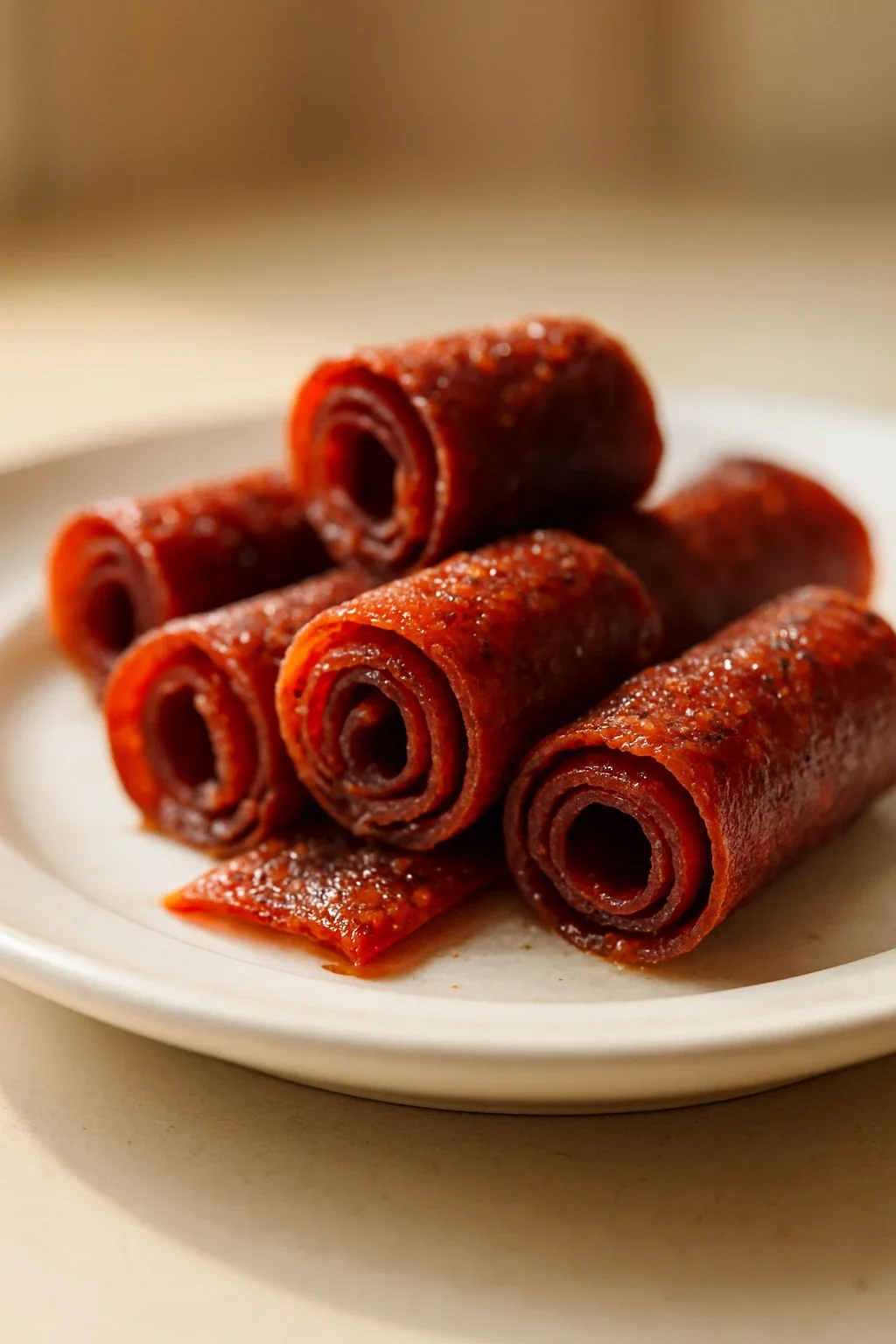
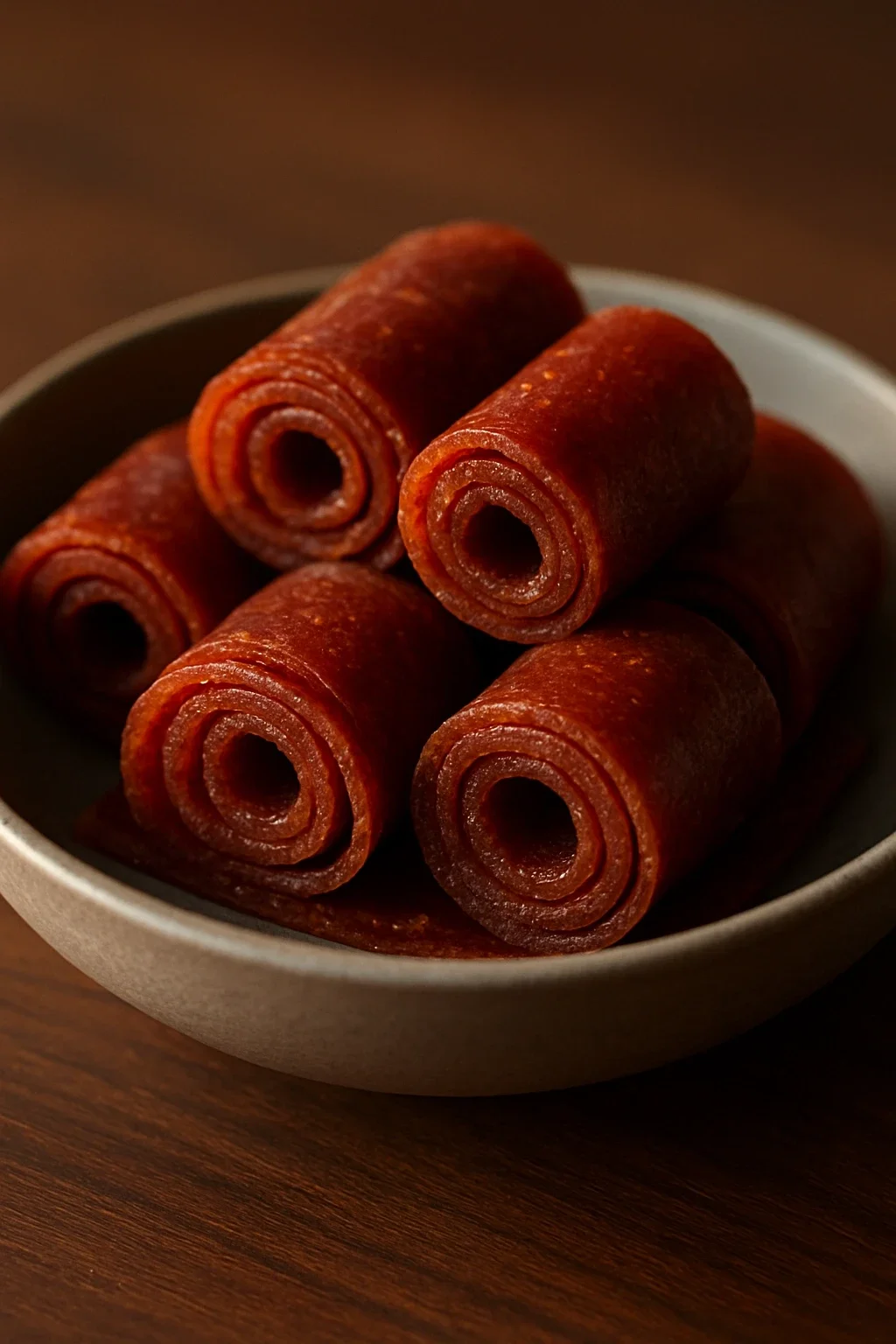
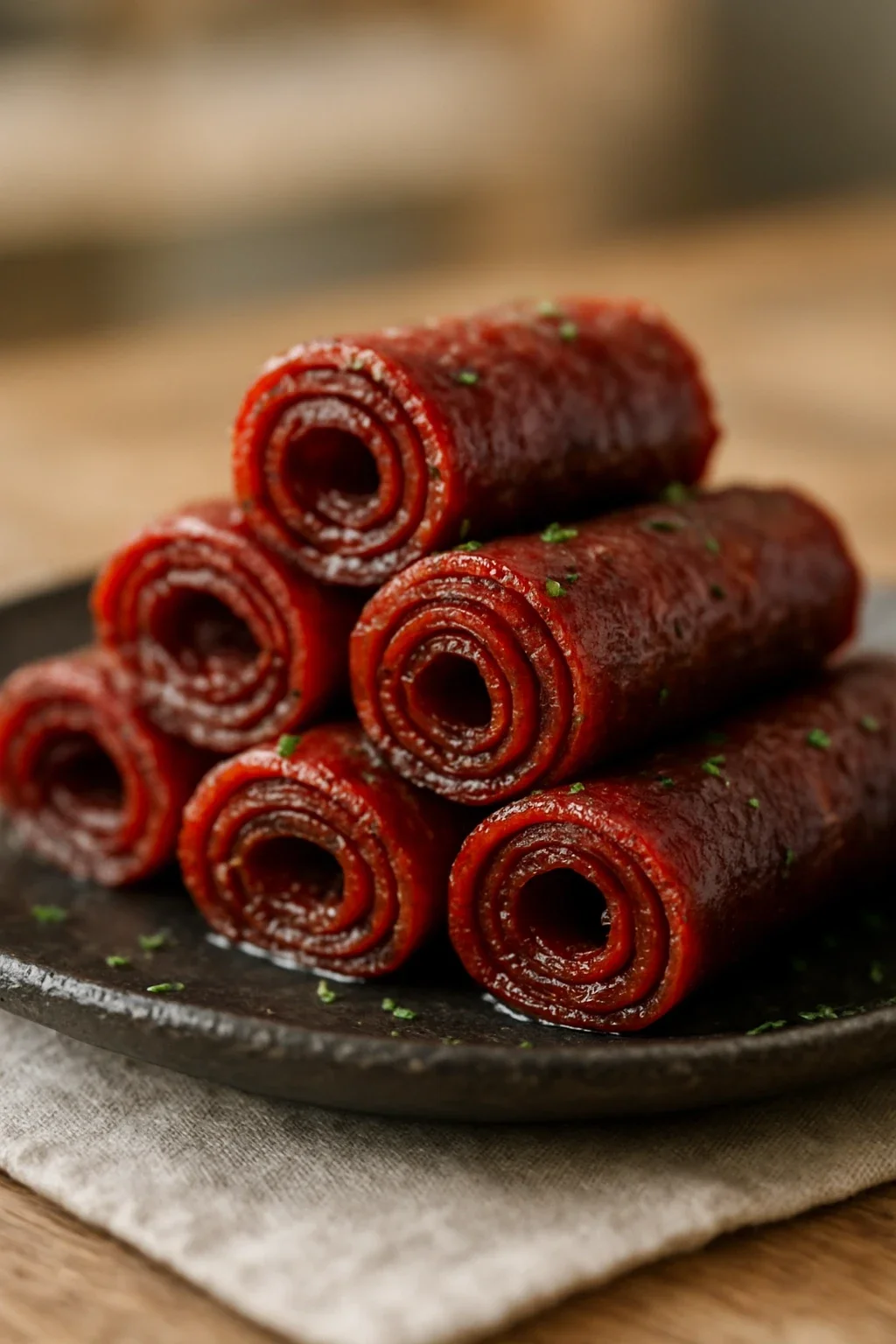
A guide to making fruit leather rolls from pure fruit puree without any added sugar. This recipe covers the drying process that preserves natural sweetness and chewiness, making these rolls a healthy and convenient snack for kids and adults alike.
Introduction
I have fond memories of making fruit leather rolls during summer afternoons when the kitchen would fill with the sweet aroma of ripe fruit. This snack is straightforward and relies entirely on the natural sugars in fruit, making it a wholesome option without added sugars. I've experimented with various fruits and drying times, which helped me understand how to achieve chewy texture and rich flavor. These rolls are ideal for packing in kids’ lunchboxes, offering a nutritious and portable fruit option. The drying step is key, as it concentrates the fruit’s flavors and transforms the puree into a pliable, chewy sheet that’s satisfying to eat. If you enjoy simple, natural snacks, this homemade fruit leather is a recipe worth keeping in your repertoire.
What You'll Need
About 8 rolls, depending on thickness
- 4 cups (600g) fresh or frozen fruit puree (such as strawberries, mango, or mixed berries)
- 2 tbsp (30ml) lemon juice (optional, for brightness and preservation)
- 1-2 tbsp (15-30ml) natural sweetener like honey or maple syrup (optional, depending on fruit sweetness)
- Optional spices: 1 tsp ground cinnamon or 1/2 tsp ground ginger for flavor variations
How To Do It
Step 1
Prepare the fruit by washing, peeling (if needed), and pureeing it until very smooth using a blender or food processor. Strain if you want an extra smooth texture without seeds or pulp.
⏱ Time: 5-10 minutes
✓ Doneness: Puree should be completely smooth and pourable without lumps.
Step 2
Stir in lemon juice and sweetener if using, along with any spices. Taste and adjust sweetness or acidity as desired.
⏱ Time: 2-3 minutes
✓ Doneness: Mixture is well combined with balanced flavor.
Step 3
Line a baking sheet or dehydrator tray with parchment paper or a non-stick silicone mat. Pour the fruit puree into the tray and spread it evenly with a spatula to about 1/8 inch (3 mm) thickness. Smooth the surface for uniform drying.
⏱ Time: 5 minutes
✓ Doneness: Surface is even and smooth, no puddles or thick spots.
Step 4
Dry the puree in a food dehydrator at 135°F (57°C) or in a conventional oven set to its lowest temperature with the door slightly ajar to allow moisture to escape. Dry for 4 to 6 hours, checking periodically after 3 hours.
⏱ Time: 4-6 hours
✓ Doneness: Fruit leather is no longer sticky to touch, peels away easily from the parchment, and has a consistent pliable texture without wet spots.
Step 5
Once dried, carefully peel the fruit leather from the parchment. Cut into strips about 1.5 inches (4 cm) wide and roll them up with parchment or wax paper to prevent sticking.
⏱ Time: 5-10 minutes
✓ Doneness: Rolls hold together without cracking and peel easily from the paper wrapping.
Step 6
Store the rolls in an airtight container at room temperature or in the refrigerator to keep them fresh and chewy.
⏱ Time: 0 minutes (storage preparation)
✓ Doneness: Rolls remain flexible and do not harden or become brittle.
Pro Tips
Ensure the puree is as smooth as possible to prevent uneven drying and tough spots.
Chunks or seeds can cause the leather to dry unevenly, which may result in chewy or brittle patches.
Spread the puree in a thin, even layer no thicker than 1/8 inch (3 mm).
Thicker layers take much longer to dry and risk remaining sticky inside, while too thin layers dry out brittle and crack.
Use a food dehydrator if you have one for consistent low heat and airflow.
Ovens can be uneven and may dry the leather too quickly on the edges, causing cracking or color changes.
Add lemon juice to protect the color and enhance the flavor brightness.
Acidity slows oxidation which causes browning and dullness in the fruit leather.
Roll the leather while still slightly warm and pliable to avoid cracking.
When fully cooled and dried, the leather becomes less flexible and can break if rolled too tightly.
Store the rolls separated by parchment paper or wax paper to prevent sticking.
Fruit leather can be sticky and moisture-sensitive, so separating them avoids clumping or tearing.
Common Mistakes to Avoid
Spreading the puree unevenly or too thickly.
Why it happens Pouring without smoothing or using too much puree causes uneven drying times and sticky spots.
Fix Use a spatula to spread the puree evenly and keep thickness consistent around 1/8 inch (3 mm).
Drying at too high a temperature or with the oven door closed tight.
Why it happens High heat cooks or scorches the puree instead of drying it, and no airflow traps moisture causing sogginess.
Fix Dry at low temperature (about 135°F/57°C) with oven door slightly open or use a dehydrator for airflow.
Not letting the leather fully dry before peeling or rolling.
Why it happens Removing it too soon results in tearing or sticky, wet texture.
Fix Check texture by touching and peeling the edge carefully; it should feel dry, pliable, and not tacky.
Using underripe or watery fruit puree.
Why it happens Watery puree takes longer to dry and can result in leathery but weak flavor and texture.
Fix Use ripe fruit and if needed, reduce puree by gently simmering to intensify flavor and reduce water.
Variations
Tropical Mango-Pineapple Leather
Use a puree blend of ripe mango and pineapple with a splash of lime juice. Omit additional sweetener if fruit is ripe.
Note: Pineapple contains bromelain, an enzyme that can affect gelatin setting in some recipes but here it does not impact drying. Lime juice helps balance acidity and preserve color.
Mixed Berry with Cinnamon
Blend strawberries, blueberries, and raspberries with 1 tsp ground cinnamon for a warm spice note.
Note: Berries have natural pectin and antioxidants which help the fruit leather maintain color and flexible texture during drying.
Apple-Ginger Leather
Use cooked apple puree with fresh grated ginger for a zingy twist.
Note: Cooking apples before pureeing reduces moisture and intensifies sweetness, speeding drying time.
Vegan Sweetener-Free Option
Use naturally sweet ripe fruit puree only, such as ripe mango or peach, without any added sweetener.
Note: Some fruits have enough natural sugar to create a satisfying leather without added sweeteners, which keeps the snack fully natural.
Citrus-Infused Leather
Add orange or lemon zest to the fruit puree for a bright, aromatic flavor.
Note: Zest adds essential oils that intensify aroma without affecting drying properties.
Nutrition
Per Serving:
approximately 80
Calories
These values are estimates and vary depending on fruit variety and optional added sweeteners. No added sugar means the carbohydrate content comes entirely from natural fruit sugars and fiber.
Storage & Tips
Room Temperature
Store fruit leather rolls in an airtight container at room temperature for up to 1 week. Keep away from direct sunlight and humidity to avoid stickiness or mold.
Refrigerator
Fruit leather can be stored in the refrigerator for up to 1 month. This helps preserve freshness and prevent moisture absorption in humid environments.
Freezer
For longer storage, freeze rolls wrapped individually in parchment paper and placed in a freezer-safe bag for up to 6 months. Thaw at room temperature before eating.
Reheating
Reheating is not necessary. If the leather becomes stiff, warming slightly between hands or a few seconds in a low-temperature oven (below 150°F/65°C) can soften it.
Make Ahead
Prepare the fruit puree and spread it on trays up to 24 hours in advance, refrigerating until ready to dehydrate. This saves time on busy days without affecting drying quality.
FAQ
Can I make fruit leather rolls ahead of time?
Yes, you can prepare the puree and spread it on drying trays a day ahead, keeping it refrigerated. Once dried, rolls store well for weeks when kept airtight.
Why is my fruit leather sticky or not drying properly?
This usually means the drying temperature was too low or the puree layer was too thick. Try drying longer at a consistent low heat and thinly spreading the puree.
Can I use frozen fruit for this recipe?
Yes, thaw and drain excess water before pureeing. Frozen fruit works well but fresh fruit often has a brighter flavor.
How long does fruit leather last in the fridge?
Stored in an airtight container, fruit leather lasts up to 1 month refrigerated without losing texture or flavor.
Can I use other sweeteners instead of honey or maple syrup?
Yes, natural sweeteners like agave or date syrup work similarly. Adjust quantity to taste but keep amounts small to avoid stickiness.
Is it necessary to add lemon juice?
Lemon juice is optional but recommended for color preservation and flavor balance. It also helps slow browning over time.
Final Thoughts
Making fruit leather rolls is a simple way to transform fresh fruit into a portable, wholesome snack. The process highlights how patience and attention to drying can bring natural fruit flavors forward while creating a satisfying texture. I’d love to hear your experiences or variations in the comments.